



Rating and value of sculptures and bronzes by Hélène Bertaux

Key takeaways
- Bronze and marble sculptures by Hélène Bertaux (1825–1909) sell for between €40 and €28,320, with prices on the rise since 2023.
- A pioneer of feminist art, she was the first woman to receive a French public commission in 1873 and to be awarded the Legion of Honor in 1893.
- Her works demonstrate mastery of the neoclassical academic style, featuring a unique interpretation of femininity, particularly in her mythological and allegorical nudes.
If you own a work by or after the artist Hélène Bertaux, and would like to know its value, our state-approved experts and auctioneers will offer you their appraisal services.
Our specialists will carry out a free appraisal of your work, and provide you with an accurate estimate of its value on the current market.
Then, if you'd like to sell your work, we'll direct you to the best possible arrangement to get the best price for it.
Rating and value of artist Hélène Bertaux
Hélène Bertaux is a well-known artist among lovers of classical sculpture. Now, the prices of her sculptures are rising at the auctioneers' gavel.
Her bronze and copper sculptures are particularly prized, especially by French buyers, and the price at which they sell on the art market ranges from €40 to €28,320, a significant delta but one that speaks volumes about the value that can be attributed to the artist's works.
In 2023, his sculpture Jeune fille au bain sold for €29,320, while it was estimated at between €14,160 and €23,600. His stock is rising.
Order of value from a simple work to the most prestigious
Technique used | Result |
|---|---|
Result | From €40 to €28,320 |
Estimate in less than 24h
Style and technique by artist Hélène Bertaux
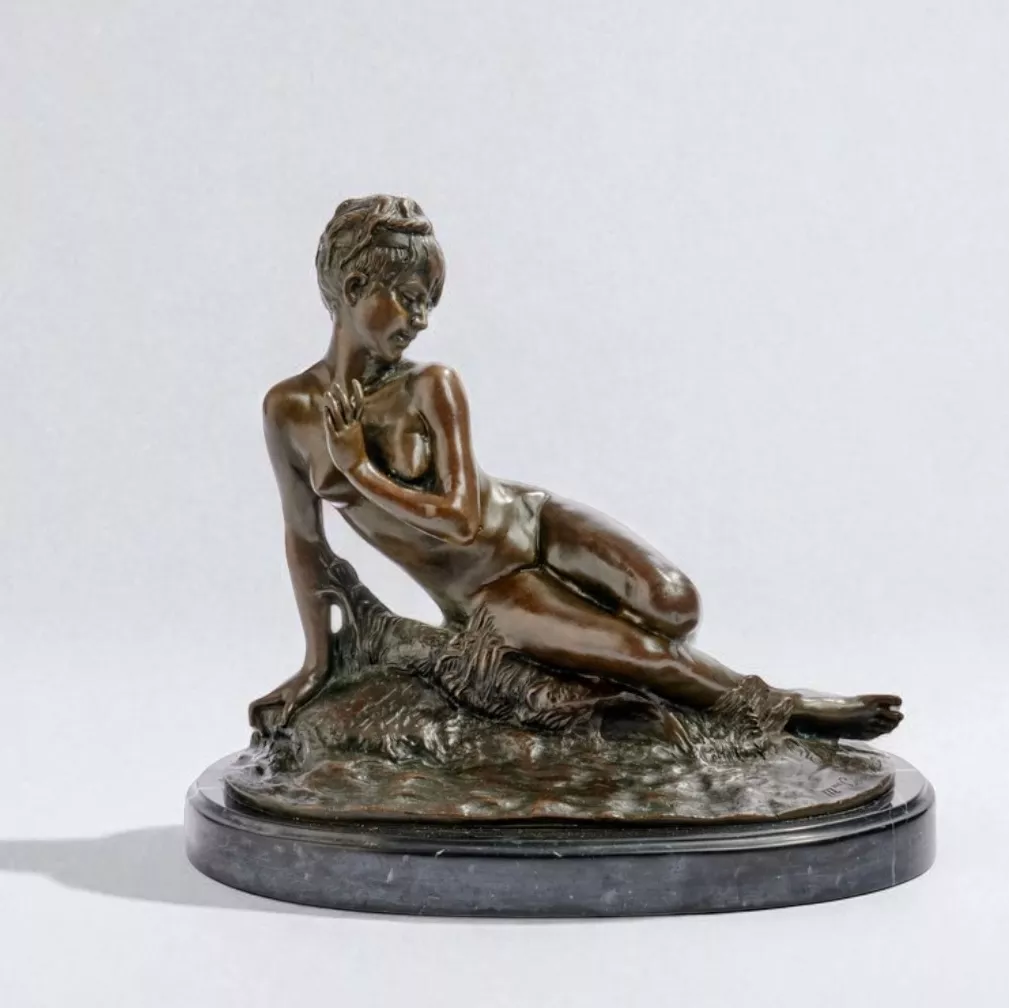
Hélène Bertaux (1825 - 1909) was a major sculptural artist of the 19th century. She practiced sculpture in the round, in noble materials (marble, plaster, terracotta and sometimes bronze).
She mastered modeling with particular care for supple flesh, fluid drapery and anatomical precision. She works with meticulous reproduction of details (hair, hands, fabrics and expressions) in a desire to achieve an idelized yet embodied beauty.
She is an heiress of neoclassicism in the tradition of her male contemporaries such as James Pradier or Jean-Baptiste Carpeaux. She was influenced by Antiquity, with poses borrowed from Greco-Roman Venuses, mythological inspirations or frequent allegories.
She was careful to respect academic canons (proportions, balanced postures, formal elegance), but with her own attention to the femininity of the subject.
The female nude occupies a central place in her work, which was very daring for a woman artist of her time. She sculpts the body with a blend of sensuality and modesty, always dignified and classical, with no concession to traviality.
Her work bears witness to an ability to create a dialogue between tension and balance, notably in the raised arms, the twists of the torso or the tilt of the faces. She often sculpts figures in slight movement, suggesting a suspended momentum or an action stopped in time.
She also works with subtle plays of light on volumes, thanks to delicate polishing work and a clear three-dimensional composition. Her classical style has enabled her to enter male-dominated salons, while asserting an artistic identity of her own.
Hélène Bertaux uses academic technique as strategic levers to legitimize the place of women in the fine arts. Her style thus both conforms to academic expectations and carries a empowerment ambition.
The career and world of Hélène Bertaux
Hélène Bertaux, born Joséphine Charlotte Hélène Pilate in 1825 in Paris, was the daughter of a sculptor. She began modeling clay and taking an interest in the plastic arts at an early age, and trained as a sculptor largely on her own, as art schools were forbidden to women at the time.
She was better known as Madame Léon Bertaux, but later took the pseudonym Hélène Bertaux in order to exhibit and establish herself in an exclusively male milieu. She began exhibiting at the Salon in the 1860s, and her success continued in the following decades.
Her works are mainly female nudes, allegorical or mythological subjects, sculpted in a highly accomplished academic style. In 1873, she was the first woman to receive a public commission from the French state for a monumental work.
In 1893, she was the first woman sculptor to receive the Légion d'honneur. Hélène Bertaux quickly became a leading figure in artistic feminism, and actively campaigned for institutions to be opened up to women.
In 1881, she founded the Union des peintres femmes et sculpteurs, which she headed for over 20 years. Thanks to her efforts, women were allowed to compete for the Prix de Rome in 1897. She played a key role in the admission of women to the École des Beaux-Arts, obtained in 1897 after a long struggle.
Her artistic work is inseparable from her fight for the institutional recognition of women artists. She won the respect of her peers by asserting herself on their own turf : great academic sculpture.
Her influence extends beyond her production insofar as she paved the way for entire generations of women sculptors. She died in 1909 in Saint-Michel-de-Chaillol. Her name remains associated with the conquest of a place for women in French art history. Today, she is being rediscovered for her decisive role in the institutional history of art.
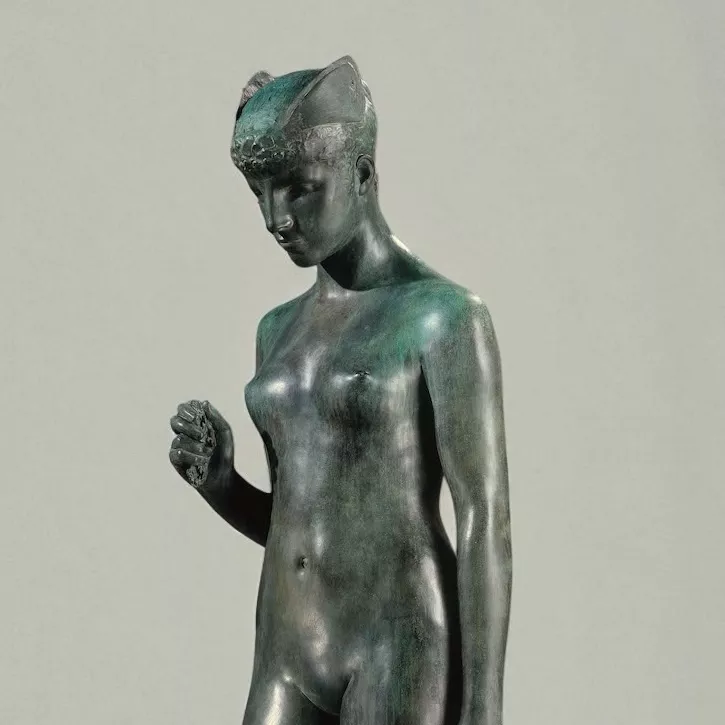
Focus on Psyché sous l'empire du mystère, Hélène Bertaux
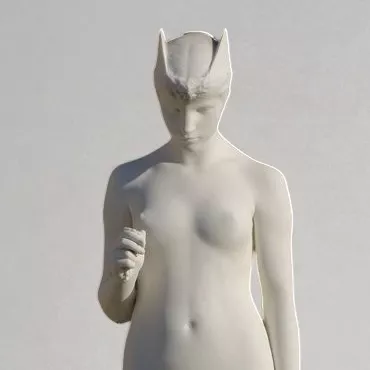
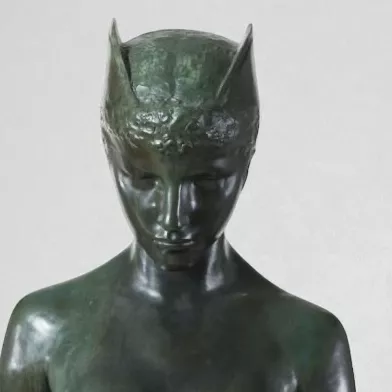
The original plaster of Psyché sous l'empire du mystère is without doubt Bertaux's most famous sculpture, presented at the Salon of 1863. The subject is taken from Greek mythology at the moment when Psyche discovers the true identity of Eros, whom she has hitherto only loved in the dark.
It is a work preserved in French national collections, and contributed to Bertaux's official recognition. Her posture is supple and meditative; Psyché is depicted seated, bending her torso slightly forward in a pose of introspection.
The drapery work is particularly meticulous, the folds of fabric falling naturally, emphasizing both the movement of the body and the purity of the form. The face is treated with fine lines, lowered eyes, closed mouth, aiming to express mystery, turmoil and interiority.
She pays great attention to the modulation of volumes and the polychromy of the marble, which gives an almost living rendering to the figure. The frozen moment is one of revelation, as Psyche holds the lamp with which she will discover Eros.
Bertaux transforms this mythological moment into an allegory of knowledge, desire, learning and emancipation. Mystery is no longer an obstacle but an invitation to see, making the work a subtle echo of Bertaux's fight for women artists.
The sculpture was presented at the 1863 Salon, and aroused admiration and surprise : a woman managed to rival the best sculptors of her time. The work is in the neoclassical tradition, yet introduces a modern tension, as the subject is familiar but treated with a rare psychological interiority.
This work marks a decisive step in Bertaux's career, and establishes her legitimacy in the masculine world of Beaux-Arts. It is often compared to Pradier's Venuses or Carrier-Belleuse's allegorical figures, but with a fresh feminine take on the female psyche.
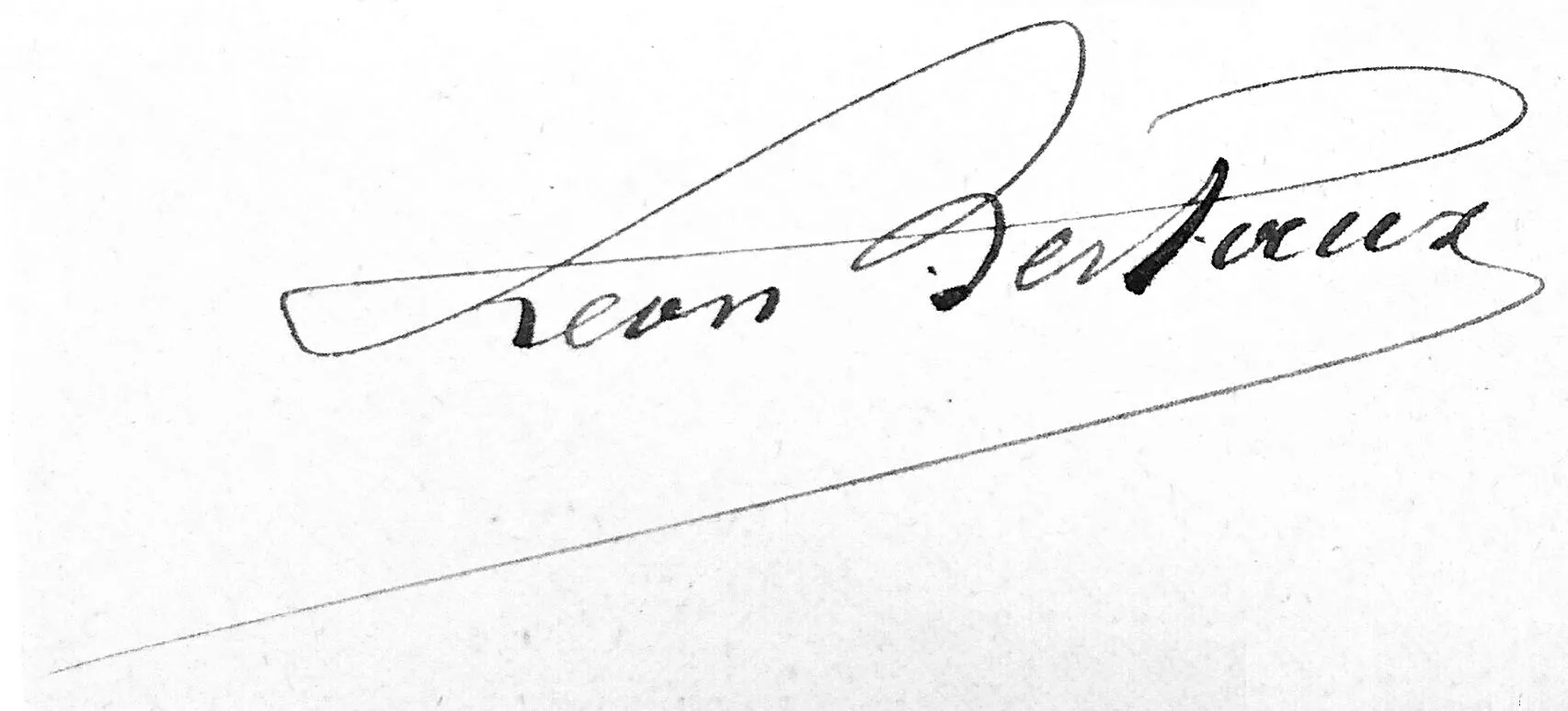
Recognizing the artist's signature
Hélène Bertaux does not necessarily sign her works. Copies may exist, which is why expertise remains important.
Knowing the value of a work
If you happen to own a work by or after Hélène Bertaux, don't hesitate to request a free appraisal using our form on our website.
A member of our team of experts and certified auctioneers will contact you promptly to provide you with an estimate of the market value of your work, as well as ad hoc information about it.
If you are considering selling your work, you will also be accompanied by our specialists in order to benefit from alternatives for selling it at the best possible price, taking into account market inclinations.
Estimate in less than 24h
Discover in the same theme

Ratings and values of paintings by Alfred Roll
Alfred Roll was a 19th-century realist painter who produced drawings and oils on canvas that are valued at auction.
Learn more >

Rating and value of works, sculptures, bronzes by Antoine Bo...
Antoine Bourdelle is a twentieth-century sculptor who produced works that are highly valued at auction. Estimate in 24h.
Learn more >

Rating and value of sculptures and paintings by Alfred Bouch...
Alfred Boucher was a 19th-century painter and sculptor who produced a variety of works that are highly valued at auction.
Learn more >
D'autres bronzes anciens vendus aux enchères

Estimated Between €5,000 and €8,000
Agathon LEONARD (1841-1923), Dancer with scarf, bronze lamp, ed. Susse frères

Estimated 3.000 - 5.000
Raoul LARCHE (1860-1912) The fisherman, Bronze with green patina

Estimated 600 - 800
Hercules Farnese, bronze, reproduction after Glycon of Athens

Estimated 1.500 - 3.000
Jules FRANCESCHI (1825-1893) Hébé et l'aigle de Jupiter, gilded bronze

Estimated 800 - 1.500
Henry Étienne DUMAIGE (1830-1888), bronze print

Estimated 1.500 - 3.000
Antoine Louis BARYE (1796-1875) Eagle and heron, bronze print with shaded brown-green patina

Secure site, anonymity preserved

Auctioneer approved by the State

Free and certified estimates
Frequently asked questions
-
Who was Hélène Bertaux, and what is her significance in art history?Hélène Bertaux (1825–1909) was a leading 19th-century sculptor and a pioneer of feminist art in France. She was the first woman to receive a public commission from the French government (1873) and the first female sculptor to be awarded the Legion of Honor (1893). She founded the Union of Women Painters and Sculptors in 1881 and played a decisive role in securing women’s admission to the École des Beaux-Arts in 1897, thereby permanently transforming the institutional landscape of the French fine arts.
-
What are the prices and market value of Hélène Bertaux's sculptures?Hélène Bertaux’s sculptures range in price from €40 to €28,320, depending on their size and condition. The artist’s market value is currently on the rise, as evidenced by the 2023 sale of “Jeune fille au bain,” which sold for 29,320 € against a pre-auction estimate of between 14,160 and 23,600 €. Her bronze and marble sculptures are particularly sought after by French buyers.
-
How does the appraisal of a sculpture by Hélène Bertaux work at Auctie's?Auctie's offers a free, no-obligation appraisal of your Hélène Bertaux artwork. Simply fill out the form on the website; a state-certified expert or auctioneer will contact you shortly to provide a precise assessment of your sculpture’s market value, usually within 48 hours. Our specialists will also provide you with all relevant information about the artwork.
-
What were Hélène Bertaux's artistic style and technique?Hélène Bertaux was a master of sculpture in the round using fine materials (marble, plaster, terracotta, bronze), in the tradition of Neoclassicism. She distinguished herself through her anatomical precision, the fluidity of her drapery, meticulous attention to detail, and a bold yet sensitive and dignified depiction of the female nude. Her style, in keeping with academic standards, allowed her to establish herself in a male-dominated field while asserting her own artistic identity, which is particularly evident in her psychological portrayal of femininity.
-
How do you sell a sculpture by Hélène Bertaux, and what support does Auctie's offer?If you’d like to sell a work by Hélène Bertaux, Auctie’s will guide you through the entire process—from appraisal to auction—as an auction house. Following a free appraisal, our specialists will guide you toward the best options for selling your sculpture at the highest possible price, taking current market trends into account. We manage the entire sales process to maximize your return.
