



Rating and value of sculptures, bronzes and marbles by James Pradier

Key takeaways
- James Pradier (1790–1852), a leading Swiss Neoclassical sculptor, sees his works fetch prices ranging from 100 to 127,280€ at auction.
- Marble sculptures are the most prestigious and highly valued pieces, while bronzes (€100–58,665) and gilded bronzes (€210–10,070) are more affordable.
- His work is characterized by idealized female nudes inspired by mythology, rendered with sensuality and anatomical precision without dramatization.
If you own a work by or after the artist James Pradier, and would like to know its value, our state-approved experts and auctioneers will offer you their appraisal services. Our specialists will carry out a free appraisal of your work, and provide you with a precise estimate of its current market value. Thereafter, if you wish to sell your work, we will guide you towards the best possible arrangement to obtain the optimum price.
Rating and value of artist James Pradier
Considered one of the leaders of neoclassical sculpture, Pradier leaves behind a unique artistic repertoire, within which bronze works occupy a prominent place. Today, prices for his works are rising dramatically under the auctioneer's hammer. His creations are particularly prized, and the price at which they sell on the art market ranges from €100 to €127,280, a considerable gap but one that speaks volumes about the value that can be attributed to James Pradier's works. A marble statue, Pandora - Hebe - Flora - Venus, sold for €127,280, whereas it was estimated at between €42,425 and €70,700.
Order of value from a simple work to the most prestigious
Technique used | Result |
|---|---|
Golden bronze | From 210 to 10 070€ |
Bronze | From 100 to 58,665€ |
Marble | From €2,200 to €127,280 |
Estimate in less than 24h
Artist's style and technique
James Pradier is an early 19th-century artist who produced various sculptures as part of the neoclassical movement. His work is linked to Greek mythology and nature, drawing inspiration from other currents.
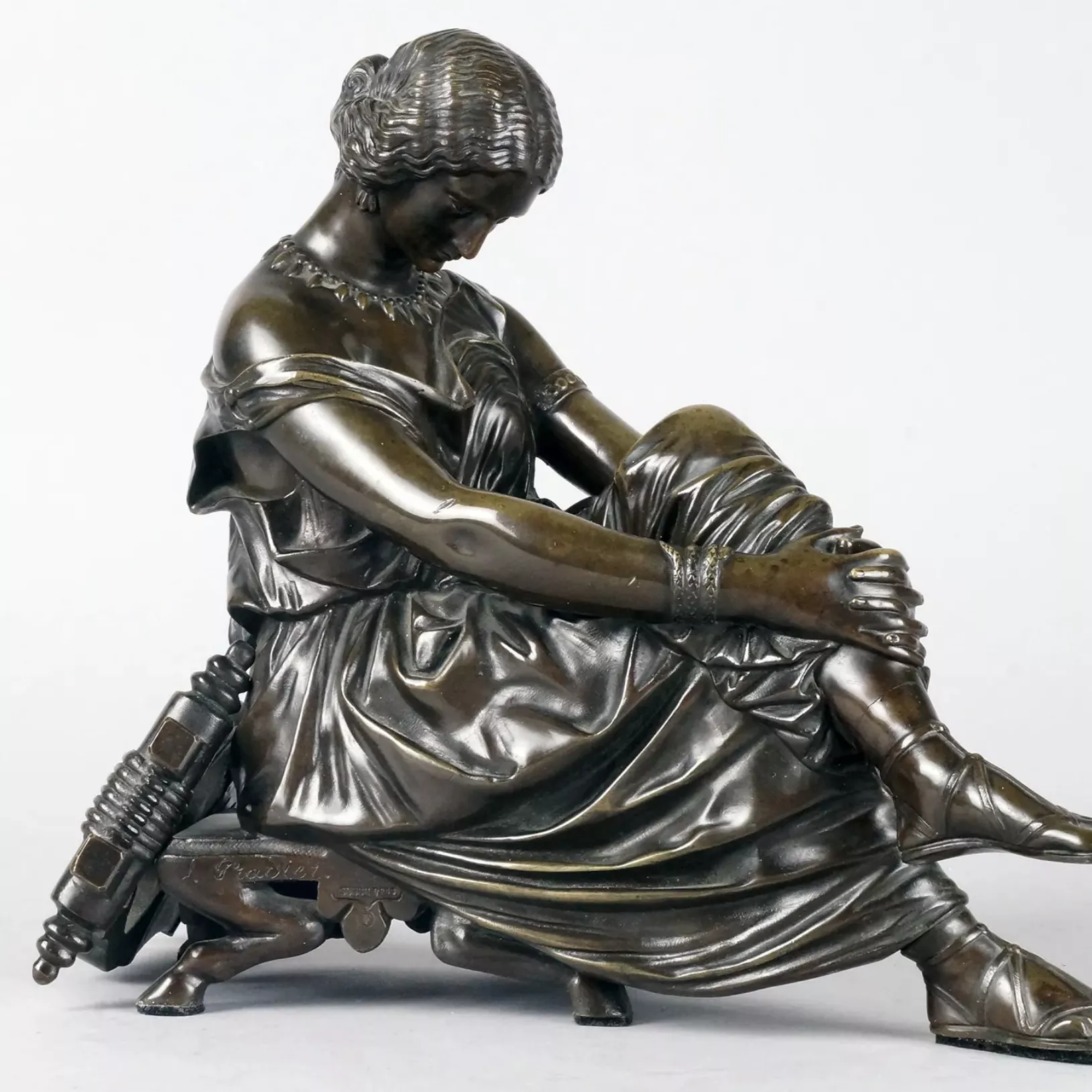
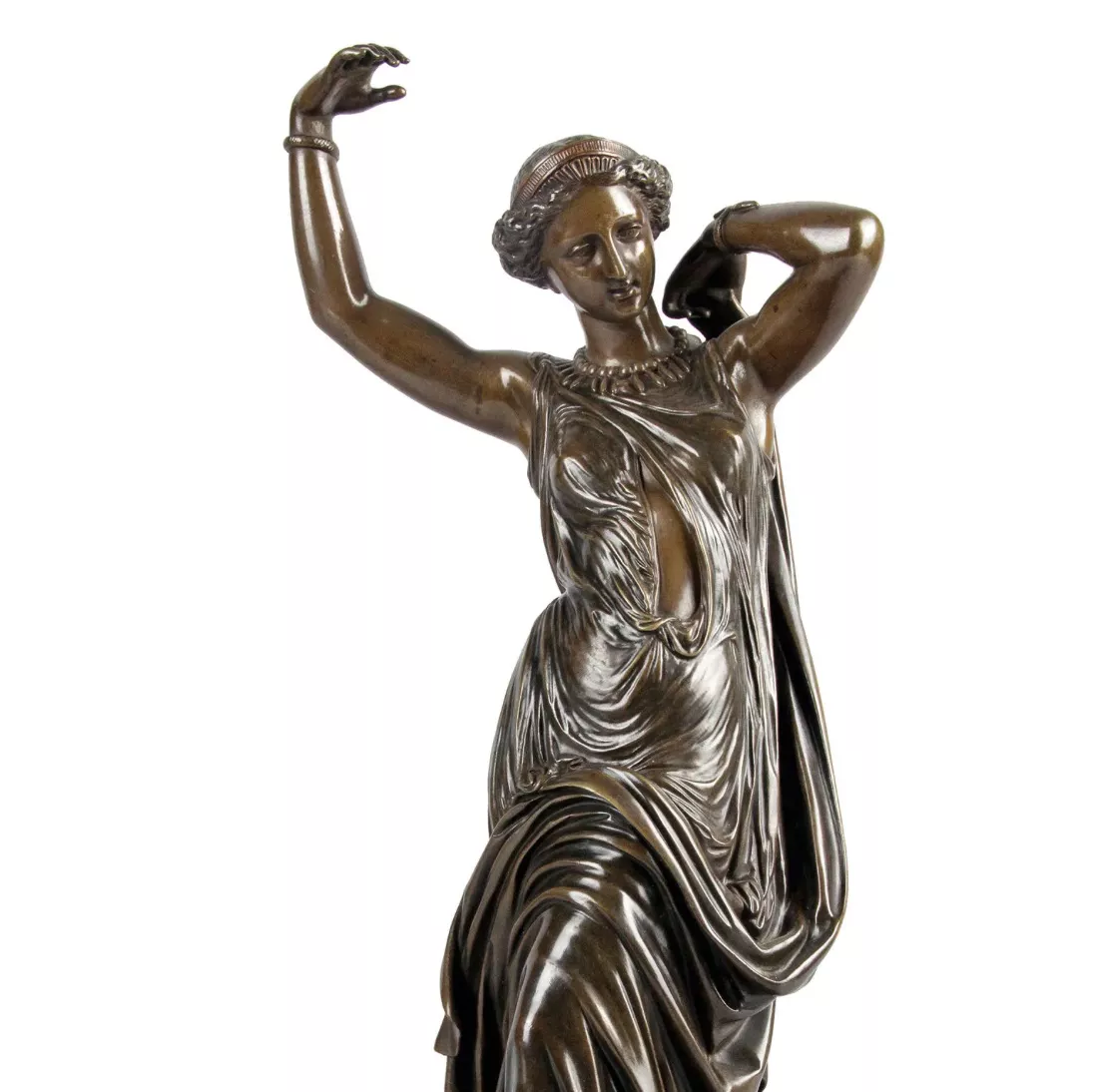
James Pradier, his life, his work
James Pradier (1790-1852), a Swiss artist, became a leading figure in 19th-century sculpture.
Born in Geneva, he was apprenticed to a watch engraver at the age of 12. He enrolled in a public drawing school with his brother, who decided to take up painting. James Pradier decided to follow him to Paris, where he worked for François-Frédéric Lemot. He is admitted to the École des Beaux-Arts, where he is trained by François Rude and David d'Angers. He produced several works for the Prix de Rome, which gave him access to the Académie de France in Rome. In addition to his work as a sculptor, he perfected his drawing skills at the Académie de Saint-Luc.
In 1819, he returned to Paris and won a gold medal at the Salon, making a name for himself and enabling him to receive commissions, first private and then public, from the various political regimes he experienced during his career.
James Pradier's imprint on his period
James Pradier is an artist known to lovers of sculpture and painting, he is the author of a fairly small artistic output. Today, most of his works are kept by private collectors, which increases the value and success of his works on the auction market.
His bronzes are particularly prized because they are absolutely unique pieces that reveal the artist's inspiration and way of working, but his marbles are indisputably his most famous and prized works, which are constantly breaking records on the auction market.
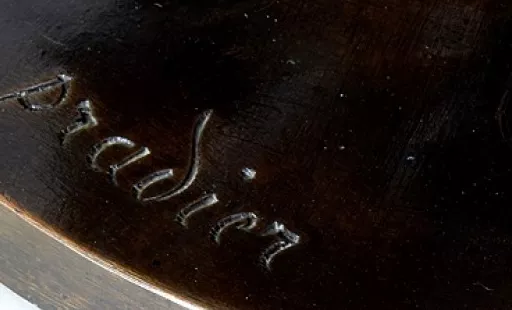
Recognizing James Pradier's signature
It's not always easy to decipher or even be lucky enough to come across a signed work by Pradier, which is why expertise is important.
Market segmentation and artist rating
The market is hierarchical and highly polarized. The distinction between unique works (marbles, original plasters) and published works (bronzes, reductions) is fundamental.
The typology of works in circulation includes original marbles, which are extremely rare on the market, and mostly held in public collections. Original or studio plaster casts are a highly sought-after segment, and are important for art history.
Edited bronzes (reductions or posthumous fonts) are the main segment actually accessible to the private market. Mythological or allegorical female nudes are a highly sought-after category, while portraits and busts belong to a narrower category, with a value dependent on the model represented.
Marble is the absolute pinnacle of the quotation. Plaster has a very high heritage value, especially if it is autographed. Bronzes are highly variable, depending on the casting date, the quality of the chasing and the identified caster. Castings from Pradier's lifetime or chronologically close to it have a significant premium.
James Pradier belongs to the upper segment of the 19th century sculpture market. The quotation is based on the rarity of unique works and the centrality of the female nude in the history of sculpture.
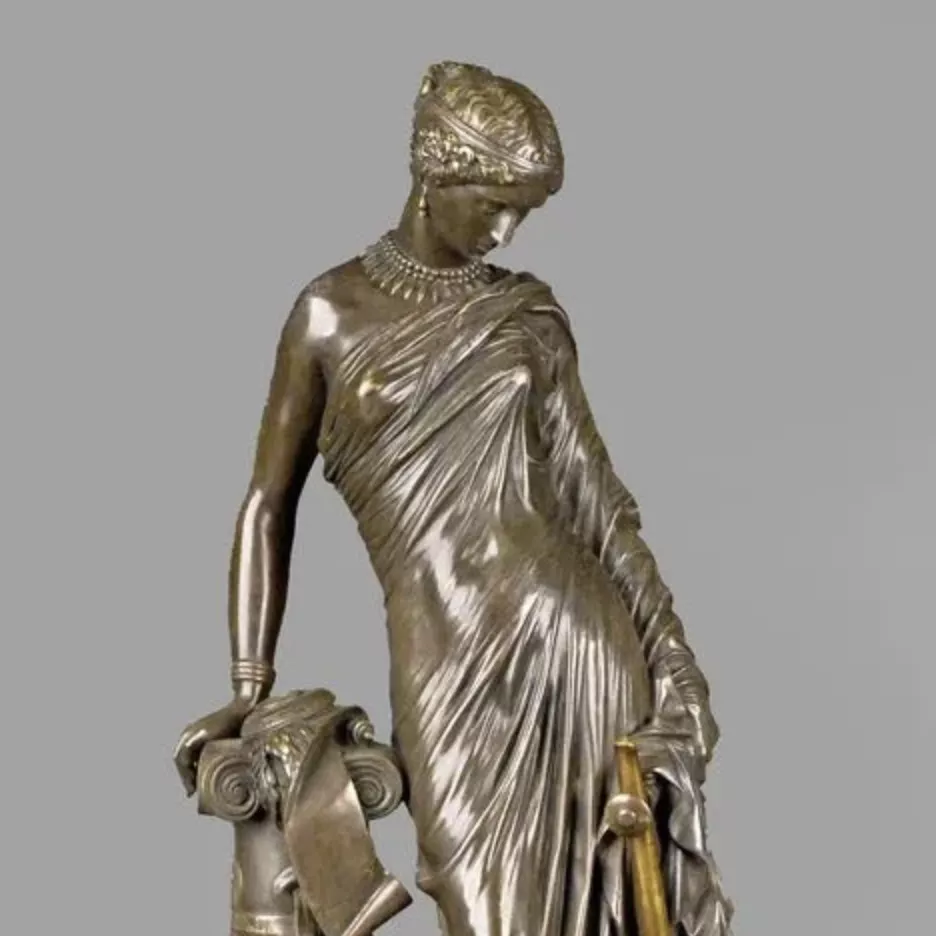
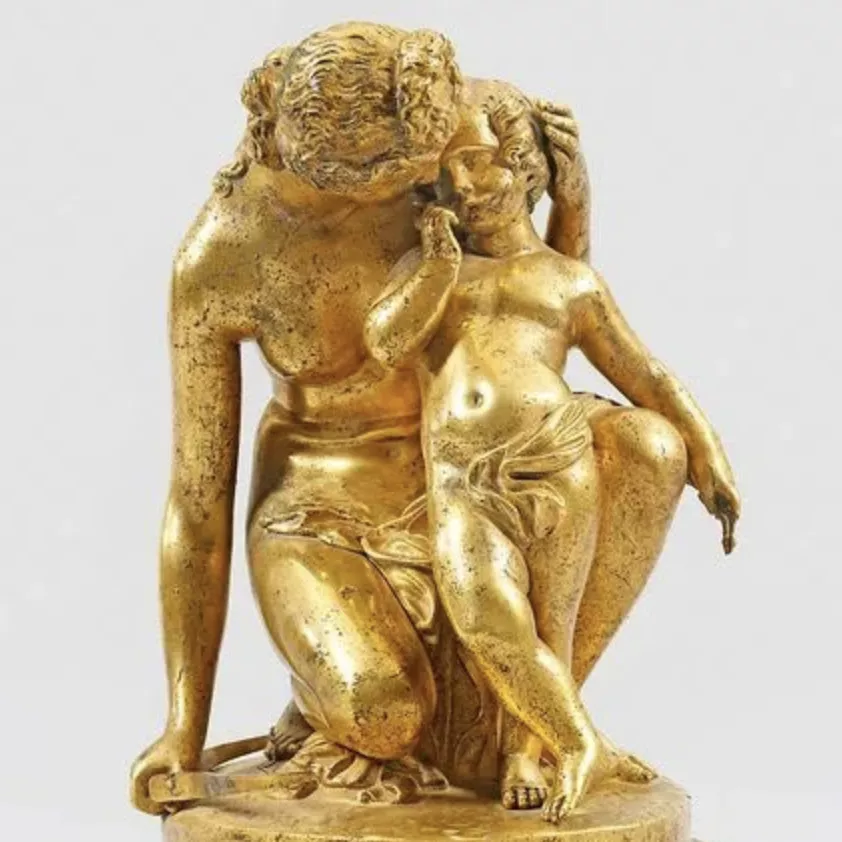
Recognizing James Pradier's signature
It's not always easy to decipher or even to be lucky enough to come across a work signed by Pradier, which is why expertise is important.
Getting to know the value of a work
If you happen to own a work by James Pradier, ask for a free appraisal without delay, using the form on our website. A member of our team will contact you promptly with an estimate of the value of your work, and provide you with all the relevant information. If you're thinking of selling your work, our specialists will also be on hand to help you find alternatives for selling it at the best possible price.
Estimate in less than 24h
Discover in the same theme

Rating and value of works, drawings, paintings by Jean-Bapti...
Corot was a landscape painter and founder of the Barbizon School, who produced drawings and oil paintings that were highly prized at auction.
Learn more >

Rating and value of paintings by Boris Grigoriev
Boris Grigoriev is a twentieth-century Russian painter who produced works of the Russian avant-garde that are listed and valued at auction.
Learn more >

Rating and value of paintings by Ivan Aïvazovski
Ivan Aïvazovsky is a Russian realist painter who produced paintings that are highly valued at auction. Estimated in 24h.
Learn more >
Works from the same period sold at auction

Estimated Between €2,000 and €4,000
Edouard Marcel SANDOZ (1881-1971) curly stingray, bronze print

Estimated Between €5,000 and €8,000
Agathon LEONARD (1841-1923), Dancer with scarf, bronze lamp, ed. Susse frères

Estimated Between €1,500 and €3,000
Renato CARVILLANI (1896-1986), seated woman, gilded bronze print

Estimated 800 - 1.500
Henry Étienne DUMAIGE (1830-1888), bronze print

Secure site, anonymity preserved

Auctioneer approved by the State

Free and certified estimates
Frequently asked questions
-
Who is James Pradier, and what is his artistic background?James Pradier (1790–1852) was a Swiss sculptor considered one of the leading figures of 19th-century Neoclassical sculpture. Trained in Paris at the École des Beaux-Arts by François Rude and David d’Angers, he established himself as a major figure by winning a gold medal at the Salon in 1819. His work, centered on the idealized female nude depicting mythological and allegorical figures, combines classical idealism with a distinctive, sensual naturalism.
-
What is the price range for James Pradier's sculptures?The prices of James Pradier’s works vary considerably depending on the technique and rarity: gilded bronzes sell for between €210 and €10,070, bronzes for between €100 and €58,665, and marble sculptures for between €2,200 and €127,280. Marble sculptures command the highest prices, particularly major works such as depictions of Venus, Hebe, or Flora, which can fetch record prices.
-
How can you authenticate a sculpture or bronze by James Pradier?Authenticating a work by James Pradier requires professional expertise, as it is not always easy to decipher or locate his signature. Auctie's offers a free, no-obligation appraisal via a form on its website: a certified auctioneer will examine your artwork and provide you with a precise authentication and valuation within 48 hours.
-
Is this the right time to sell a work by James Pradier?Yes, this is an excellent time to sell a work by James Pradier. Prices for his sculptures are rising significantly on the auction market, particularly for high-quality marble and bronze editions. The rarity of his pieces and their central role in the history of 19th-century sculpture ensure sustained demand from collectors.
-
How does the sale of a work of art work at Auctie's?Auctie's supports you from start to finish: after you request a free, no-obligation estimate, our expert auctioneers will appraise your artwork within 48 hours. If you decide to sell, we’ll guide you toward the best marketing strategy and assist you through the auction process to ensure you achieve the best possible price.
