



Classical Art: Appraisal and Auction

Key takeaways
- The value of French Classicist art ranges from 1,000 to tens of millions of euros, depending on attribution, subject matter, and provenance, with Nicolas Poussin dominating the market at a minimum of €500,000.
- Attribution is the most decisive factor: a certified Poussin is worth 10 to 100 times more than a work by one of his associates, even one of high formal quality.
- History painting (mythology, religion, allegories) tops the hierarchy of genres, followed by official portraits, while landscapes and still lifes are experiencing a growing revaluation.
Large-scale subjects, balance, and elegance of design: the value of Classicist works varies significantly depending on attribution, subject matter, and provenance.
Below, you’ll find all our valuation guides dedicated to Classicism—master paintings, antique drawings, and sculptures. Each guide details the price ranges observed at auction and the factors that determine a work’s value before it is entrusted to our state-certified auctioneers.
Guides on this art movement
See all guides >
Rating and value of drawings and paintings by Nicolas Gysis
Nicolas Gysis is a Greek painter from the Munich School whose paintings command high prices at auction. 24-hour estimate
Learn more >

Rating and value of drawings and paintings by Pierre Mignard
Pierre Mignard was a Classical-style artist who worked during the reign of Louis XIV and produced numerous portraits of great value.
Learn more >

Rating and value of drawings and paintings by Nicolas de Lar...
Nicolas de Largillierre is a classical and Baroque painter who produced numerous portraits that command high prices at auction.
Learn more >

Rating and value of sculptures and bronzes by Paul Howard Ma...
Paul Howard Manship is an American sculptor who created sculptures—primarily in bronze—that command high prices and values at auction.
Learn more >

Rating and value of drawings and paintings by Charles Le Bru...
Charles Le Brun was the official painter to Louis XIV, and he created a body of work that commands high prices and is highly valued at auction.
Learn more >

Rating and value of drawings and paintings by Salomon de Bra...
Salomon de Bray was a painter of the Dutch Golden Age who produced numerous works that command high prices at auction.
Learn more >

Rating and value of sculptures, bronzes and marbles by Édoua...
Édouard Drouot is a figurative sculptor on the border between the 19th and 20th centuries, who produced many highly-prized works.
Learn more >

Rating and value of sculptures, bronzes and marbles by Henri...
Henri Honoré Plé was a sculptor who made the transition from 19th to 20th century sculpture. His works are highly regarded.
Learn more >

Rating and value of sculptures, marbles and bronzes by Josep...
Joseph Antoine Bernard is a sculptor somewhere between Art Deco and Symbolism, who produced numerous works of great value.
Learn more >

Rating and value of paintings by Jean-Baptiste Siméon Chardi...
Jean-Baptiste Siméon Chardin is a French still-life painter who produced many works of great value.
Learn more >

Rating and value of Raymond Sudre's sculptures, bronzes and...
Raymond Sudre is a French academic sculptor who has produced many works that are highly regarded and valued at auction.
Learn more >

Rating and value of paintings, drawings and engravings by Re...
Rembrandt Van Rijn is one of the most famous artists of the Dutch Golden Age. Today, he is one of the most highly-rated and sought-after artists of hi...
Learn more >
Understanding the Value of a Classicist Work
What Is Market Value in the French Classicist Art Market?
The market value of a Classicist work refers to the benchmark value assigned to it by the secondary market at a given moment, based on the combination of factors that make each piece unique.
For 17th-century French Classicism, this market is one of the most demanding and specialized in existence: it brings together museums, foundations, and a small number of highly knowledgeable private collectors capable of navigating the complexities of attribution and documentation specific to works dating back three to four centuries.
French Classicism established itself during the reign of Louis XIV as the official aesthetic of the absolute monarchy. Embodying this style—through Nicolas Poussin and Claude Gellée, known as Le Lorrain, in painting, and Charles Le Brun in decorative arts and ceremonial painting—it is defined by the primacy of reason over passion, of line over color, and of rigorous composition over Baroque exuberance.
This aesthetic of moderation and order, championed by the Royal Academy of Painting and Sculpture founded in 1648, produced works of remarkable formal coherence, whose increasing rarity on the open market sustains a demand that is structurally greater than supply.
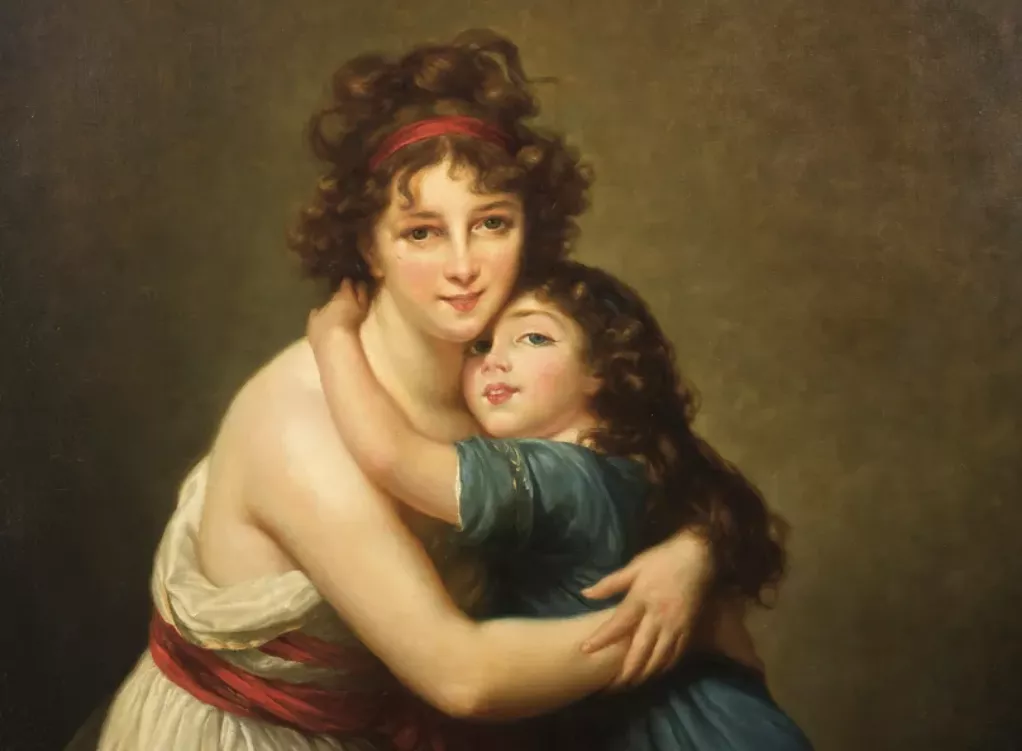
The 17th century, the reign of Louis XIV, and the Royal Academy: a benchmark market
The market for French Classicism is structured around a handful of major artists whose works have, over the centuries, become essential benchmarks in the history of Western art.
Nicolas Poussin, who died in Rome in 1665, is the leading figure of French Classicism: his mythological compositions and historical landscapes, when they appear on the market with impeccable provenance, command exceptional auction prices. Claude Lorrain, a master of luminous landscapes in the classical style, enjoys comparable international renown.
Philippe de Champaigne, Simon Vouet, Eustache Le Sueur, Charles Le Brun, and Pierre Mignard comprise the generation of great painters from the reign of Louis XIV, whose works—largely preserved in public museum collections—rarely surface on the secondary market.
This exceptional nature of their appearances at public auction is precisely what makes the market for French Classicism so unique: the scarcity of supply, combined with the depth of institutional demand, can lead to spectacular auction results even for works of secondary quality, provided their attribution and provenance are well-documented.
Artist | Primary Pictorial Genre | Indicative Auction Price Range |
Nicolas Poussin (1594–1665) | History painting, historical landscape, mythology | €500,000 — tens of millions |
Claude Gellée, known as Le Lorrain (1600–1682) | Luminous landscape in the classical style, seaport | €200,000 — several million |
Philippe de Champaigne (1602–1674) | Official portrait, religious scene, ex-voto | €50,000 — €500,000 |
Simon Vouet (1590–1649) | History painting, allegory, religious scene | €30,000 — €300,000 |
Eustache Le Sueur (1616–1655) | Religious scenes, mythology, portraits | €20,000 — €200,000 |
Charles Le Brun (1619–1690) | Ceremonial painting, allegory, royal portrait | €30,000 — €400,000 |
Pierre Mignard (1612–1695) | Court portrait, religious scene, decorative ceiling painting | €15,000 — €150,000 |
Artist from the artist’s circle or anonymous French 17th-century artist | Varies by category | €1,000 — €30,000 |
Estimate in less than 24h
The criteria that determine the market value of a classicist painting
The market value of a classicist work is determined by a hierarchy of criteria, of which attribution is by far the most decisive factor. The difference between the market value of a certified Poussin and that of a work by one of his associates—even one of high formal quality—is considerable: it can represent a multiplier of ten to one hundred, depending on the case.
For works whose attribution is uncertain or disputed, value rests primarily on the intrinsic quality of the execution, the state of preservation, and the strength of the provenance.
The observed price ranges illustrate this breadth. A religious scene signed by a well-documented 17th-century French academic artist can range from 10,000 to 100,000 euros.
A classical landscape attributed to a follower of Poussin or Le Lorrain ranges from 5,000 to 50,000 euros. A high-quality official portrait by a pupil of Le Brun ranges from 3,000 to 30,000 euros. Certified works by the great masters consistently exceed these ranges and constitute market events in their own right.
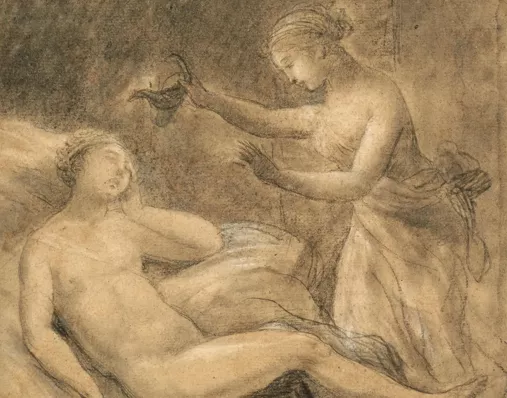
Portraits, landscapes, still lifes: all genres appraised
The hierarchy of pictorial genres and its impact on market valuations
French Classicism inherited from the Royal Academy a strict and codified hierarchy of genres, which is directly reflected in secondary market valuations.
At the top of this hierarchy stands history painting, which encompasses mythological compositions, religious scenes, allegorical subjects, and episodes from ancient or national history.
These large-scale compositions, which require the artist to possess extensive cultural knowledge and consummate technical mastery, are the most ambitious works of Classicism and the most sought-after by museums.
Portraiture occupies the second rank in this hierarchy, with an important distinction between the official court portrait—depicted with pomp and the trappings of power—and the intimate or bourgeois portrait, which is more accessible but often of superior psychological quality.
Genre painting, landscape, and still life bring up the rear in this hierarchy, but these categories are currently undergoing a significant reevaluation on the market: Dutch and Flemish still lifes influenced by classicism, classical landscapes with figures, and intimate genre scenes are seeing growing demand from collectors who view them as an accessible alternative to large-scale history paintings.
Genre | Characteristics | Level of Demand | Indicative Price Range |
History painting (mythology, religion) | Noble genre, scholarly composition, idealized figures | Institutional, highly competitive | €10,000 — several million |
Official court portrait | Ceremonial, symbols of power, large format | Well-supported, collectors and museums | €5,000 — €200,000 |
Intimate or bourgeois portrait | Psychological portrayal of the subject, small format, intimacy | Active market, broad spectrum of buyers | €2,000 — €40,000 |
Classical landscape with figures | Orderly nature, ancient ruins, allegorical figures | Strong market, European collectors | €5,000 — €150,000 |
Classical-style genre scene | Idealized daily life, well-appointed interior | Moderate, specialized collectors | €2,000 — €25,000 |
Classical still life | Balanced composition, rich use of materials | On the rise, strong demand for decorative pieces | €1,500 — €30,000 |
Classicism, Baroque, and Caravaggism: What Are the Differences in the Market?
French Classicism, Italian and Flemish Baroque, and Caravaggism are three aesthetic movements that coexisted in the first half of the 17th century, each with significantly different market dynamics.
The Baroque, championed by Rubens, Van Dyck, and their followers, emphasizes movement, flamboyant color, and decorative exuberance: its works appeal to collectors drawn to formal vitality and chromatic richness, and enjoy a very active market, particularly for the Flemish Primitives and paintings from the High Antwerp period.
Caravaggism, spread from Rome by Caravaggio and his direct disciples—from Bartolomeo Manfredi to Artemisia Gentileschi, including French Caravaggists such as Valentin de Boulogne and Nicolas Tournier—constitutes a distinct segment: its works—dark, dramatic, and at times brutally realistic—appeal to collectors fascinated by the tension between light and darkness.
French Classicism occupies a distinct position: more austere and more intellectual, it appeals to cultured art lovers who appreciate the formal rigor and philosophical depth of Poussin’s compositions as much as their visual beauty.
Estimate in less than 24h
Get a Free Appraisal of a Classicist Artwork
A certified appraisal by a licensed auctioneer in less than 24 hours
Appraising a classicist artwork is one of the most complex tasks in the antique art market.
It requires in-depth knowledge of the history of 17th-century French and European painting, familiarity with the painting techniques and materials of the period, mastery of the attribution tools specific to the classicist corpus, and constant monitoring of international auction results.
A licensed auctioneer possesses all these skills: their training, market experience, and state certification make their appraisal a legally binding document, valid before a notary, a tax authority, or a court.
Auctie’s offers this expertise free of charge, with a certified response within 24 hours.
Whether you wish to evaluate a painting formerly attributed to the School of Poussin, have a court portrait from the reign of Louis XIV appraised, or compile an inventory of a collection of old master paintings, the process is the same: submit your piece to a trained eye, capable of assessing its value and clarifying the issues surrounding its attribution.
What you need to provide for an online appraisal
For a classical painting, clear photographs of the front and back of the work are essential, as well as a close-up of the signature if it is visible, the precise dimensions of the composition and the support— canvas or panel, and any known provenance details: an old collection label on the back, handwritten inscriptions, a sale stamp, a purchase invoice, or a reference in an auction catalog or specialized publication.
The nature of the support—canvas on a stretcher or a wooden panel—and the condition of the stretcher or panel can provide valuable information about the piece’s age and geographical origin.
For works whose attribution is uncertain or for which an in-depth appraisal is necessary, a physical examination of the piece will be offered at a later stage.
This examination may include observation under raking light and ultraviolet light, and, if necessary, an analysis of the pigments or support by a specialized laboratory. These additional steps incur no cost to the owner as long as no decision to sell has been made.
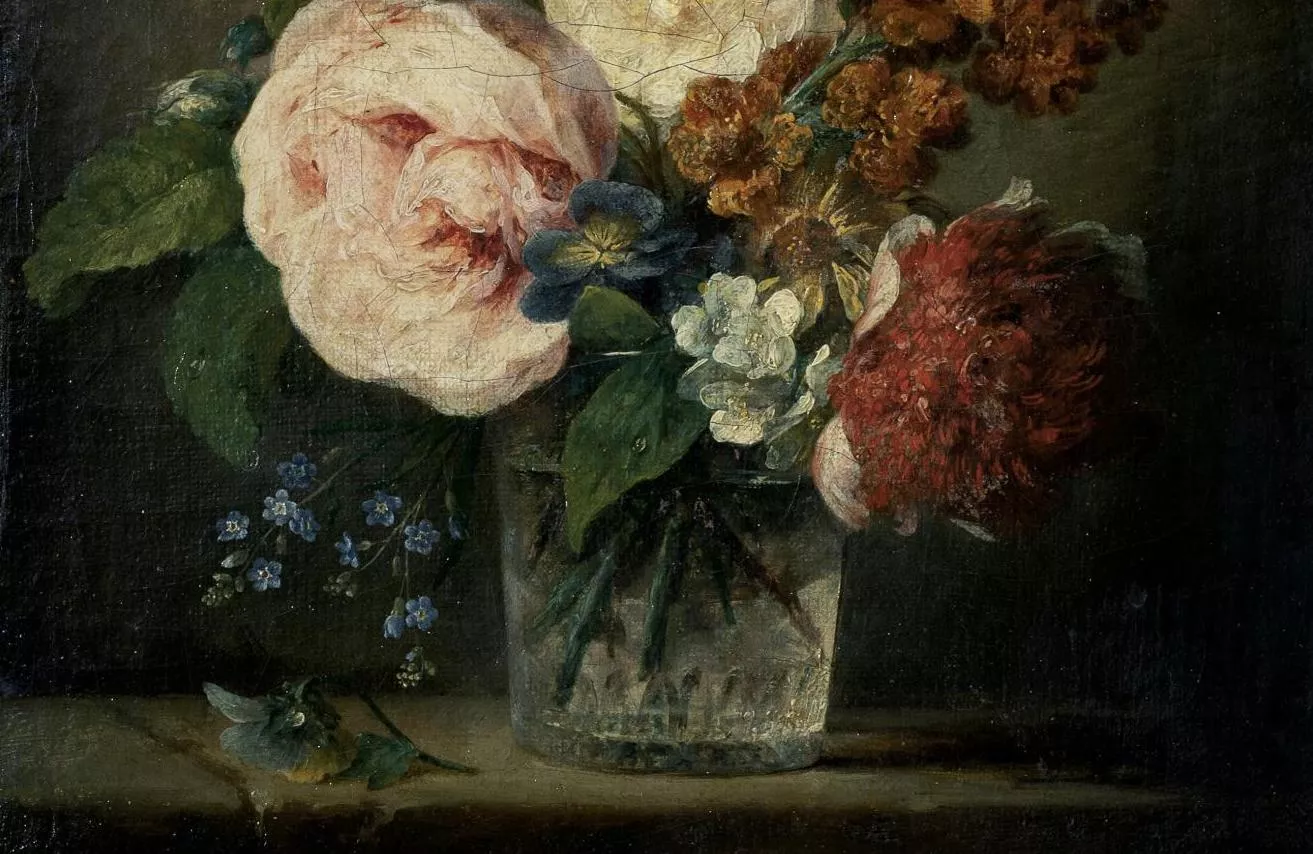
Attribution, provenance, and authenticity: the pillars of valuation
Signature, catalog raisonné, and expert appraisal of the artist
Authenticating a classical work is a process that involves several complementary levels of analysis. The signature is the first point of entry, but its probative value is limited for 17th-century works: the practice of signing works was not yet universal, and antique forgeries bearing the signatures of great masters have been circulating on the market for several centuries.
In-depth stylistic analysis, comparison with documented works by the artist and his circle, examination of materials and the support, and consultation of historical inventories and collection archives are the essential tools of any serious appraisal.
For Nicolas Poussin, the catalogue raisonné compiled by Anthony Blunt—revised and expanded by Pierre Rosenberg and Louis-Antoine Prat—is the definitive authority on the international market.
Any Poussin work not listed there must undergo an extremely rigorous authentication process before being offered for sale. For Claude Lorrain, the *Liber Veritatis*—a register kept by the artist himself and housed at the British Museum—is the primary documentary reference.
For Philippe de Champaigne, Bernard Dorival’s works serve as the reference framework. These documentary collections, which the auctioneer consults systematically, form the foundation of any serious attribution in this field.
Level of Documentation | Impact on the valuation |
Work listed in the authoritative catalogue raisonné | Maximum guarantee; substantial premium, sometimes a factor of x10 to x100 |
Work mentioned in the Liber Veritatis (for Lorrain) | Absolute documentary certainty; international benchmark value |
Work published in specialized literature or exhibited in a retrospective | Strong scholarly endorsement; value increases significantly |
Work accompanied by a written appraisal from a recognized expert on the body of work | Good guarantee; facilitates the sale and provides security for the buyer |
Work with documented provenance dating back to the 17th or 18th century | Rare and valuable traceability; has a very positive impact on value |
Work without documentation or confirmed attribution | Estimate based solely on formal quality; maximum uncertainty |
Provenance and Condition: Their Impact on Value
The provenance of a classicist work is a factor of exceptional importance in determining its value and ensuring its legal security.
For works that have spanned three to four centuries, tracing the chain of ownership from the artist’s studio to the current seller is a difficult but crucial task.
A work that can be shown to have belonged to a royal collection, to a major Parisian mansion documented in post-mortem inventories from the 17th or 18th century, or to an aristocratic collection whose archives have been preserved, enjoys a legitimacy that even the most discerning buyers directly factor into their offers.
The state of preservation of a 17th-century classicist painting presents specific challenges. These works have often undergone numerous interventions over the centuries: re-stretching, repainting, abrasive cleaning, and thickened, yellowed varnishes.
Examination under raking light and ultraviolet light reveals these interventions and allows for an assessment of their impact on the integrity of the original pictorial surface. For works on wood panel, the condition of the support itself is critical: cracks, warping, and wood conservation treatments.
A classicist painting that has retained most of its original pictorial surface, without extensive repainting or major alterations, is consistently worth several times more than a work of the same subject and attribution but one that has been heavily restored.
Selling a Classicist Work at Auction with Auctie's
From the reserve price to the hammer price: how the price is determined
Auction is the most suitable method of sale for high-quality classicist works. It yields a public price certified by a court-appointed auctioneer, resulting from the direct interplay of supply and demand.
For well-documented classicist works—whose rarity is inherent and for which demand is concentrated among a limited number of highly qualified buyers—the quality of the catalog entry, targeted promotion to the right audience, and the setting of the reserve price are decisive factors in achieving an optimal result.
The reserve price must be set with particular care in this segment: if set too high, it may discourage the few potential buyers and leave a rare work unsold; if set too low, it risks raising suspicion about the work’s quality or attribution.
This is where the auctioneer’s experience is irreplaceable: he is familiar with active collections in the field of Classicism, follows international sales of old master paintings, and knows how to curate a sale that fosters productive competition among the few buyers capable of fully appreciating the value of a work from this period.
Hôtel Drouot and Online Auctions: Reaching the Right Bidders
Auctie’s holds its auctions at Hôtel Drouot, the leading auction house in continental Europe, founded in 1852 and frequented by a dense network of dealers, experts, and collectors specializing in old master paintings.
For a classicist work, Drouot offers optimal visibility among specialists in 17th-century French painting: museum curators seeking acquisitions, dealers specializing in old master art, and private collectors who have been following this market for decades.
The catalog is distributed in advance, allowing potential buyers, both in France and abroad, to prepare their bids before the auction.
Auctie’s auctions are also accessible online in real time, extending the reach of each sale to the entire international market.
An American collector specializing in French Grand Siècle painting, a European museum seeking a court portrait from the reign of Louis XIV, or a British private buyer passionate about Lorrain’s landscapes can bid from their office.
For classical works—whose most active collectors are often based outside France—this international dimension is often decisive.
Estimate in less than 24h
Estate Planning, Inheritance: Valuing an Inherited Classicist Painting
Inventory and Distribution of an Estate
Classical works are sometimes found in family estates whose collections date back to the 18th or 19th century, a time when old French paintings were collected by a cultured bourgeoisie eager to assert its cultural legitimacy.
These pieces, preserved for generations in family homes—often without their current owners being fully aware of their precise value—can represent a significant asset in an estate.
A work previously identified as a copy or a second-rate painting may, upon expert appraisal, prove to have a much higher attribution and value than initially estimated.
Auctie’s regularly collaborates with notaries to compile comprehensive estate inventories that include old master paintings.
Each work is appraised individually with the rigor required for this type of painting: identification of the support and technique, analysis of the state of preservation, attribution research through comparison with documented bodies of work, and estimation of the market value as of the reference date. The resulting report is an official document that is legally enforceable and may be included in the estate file without reservation.
Confidentiality of the process and preservation of anonymity
The circumstances that lead to having a classical work appraised are often personal and sensitive: an estate, asset restructuring, a decision to sell after a long period of ownership, or simply curiosity about the value of a painting that has been a familiar part of one’s life since childhood.
Auctie’s handles each case with absolute discretion. The owner’s identity is never disclosed to third parties without their explicit consent, and the works may be offered for sale under complete anonymity if the owner so desires.
This confidentiality is a fundamental commitment of Auctie’s, applicable at every stage of the relationship, from the initial contact through to the receipt of the proceeds from the sale.
It is particularly valuable in the context of old master paintings, where the disclosure of an impending sale can sometimes raise questions about provenance or attract unwanted attention before the artwork’s legal status has been fully verified.
Entrust the appraisal of your classicist artwork to Auctie’s
A classicist work deserves an appraisal commensurate with its complexity and age.
The difficulty of attribution in a market where the scarcity of certified works makes every appearance at public auction potentially exceptional; the sensitivity of valuations to even the slightest variations in documentation; and the legal issues related to the provenance of paintings dating back several centuries: these are all factors that only a licensed auctioneer, well-versed in the specifics of old master paintings, can address with the rigor and caution they require.
Auctie’s guides you from the initial appraisal through to the final auction, offering the expertise of a state-certified appraiser and the discretion your financial decisions deserve. The appraisal is free, confidential, and non-binding, and you’ll receive a response within 24 hours.
Discover in the same theme
Rating and value of sculptures, marbles and bronzes by Josep...
Joseph Antoine Bernard is a sculptor somewhere between Art Deco and Symbolism, who produced numerous works of great value.
Learn more >
Rating and value of paintings by Jean-Baptiste Siméon Chardi...
Jean-Baptiste Siméon Chardin is a French still-life painter who produced many works of great value.
Learn more >
Rating and value of Raymond Sudre's sculptures, bronzes and...
Raymond Sudre is a French academic sculptor who has produced many works that are highly regarded and valued at auction.
Learn more >
Estimate in less than 24h
Frequently asked questions
-
What are the price ranges for classical artworks at auction?Prices vary considerably depending on the artist and the attribution. Great masters such as Nicolas Poussin fetch prices ranging from €500,000 to tens of millions, while Claude Lorrain’s works range from €200,000 to several million. Second-tier artists or those associated with the masters range from €1,000 to €300,000 depending on genre and quality. The scarcity of supply on the open market creates structurally higher demand, which can lead to spectacular auction results even for well-documented works of secondary quality.
-
How do you have a classicist artwork authenticated?Auctie's offers a free, no-obligation appraisal by a state-certified auctioneer. Simply submit clear photographs of the front and back, the exact dimensions, the type of support (canvas or panel), and any known provenance information (labels, stamps, invoices). For works requiring in-depth expertise, a physical examination may be offered—including observation under raking light and chemical analyses if necessary—at no additional cost prior to the decision to sell.
-
Is this the right time to sell a classicist artwork?Yes. The market for French Classicism remains structurally robust, characterized by an increasing scarcity of supply and stable institutional demand from museums and discerning collectors. Classical still lifes and landscapes are even experiencing a significant resurgence in value at present, benefiting from growing demand as a more accessible alternative to large-scale history paintings. The scarcity of supply on the open market continues to foster favorable conditions for sales.
-
How does the appraisal of a classicist artwork work at Auctie's?The appraisal is free and non-binding. You submit photographs and information about your artwork, and an expert auctioneer will provide you with a certified appraisal within 24 hours. This appraisal, which is valid before a notary or tax authority, is based on in-depth knowledge of the 17th century, painting techniques, attribution methods, and international auction results. For complex cases, a thorough physical examination may be offered at no additional cost.
-
How do I sell a classicist artwork through Auctie's?Auctie's, an auction house, guides you from the initial free appraisal all the way through to the final sale. After appraising your antique painting, the auctioneer will advise you on its market value and help you prepare it for public auction. Auctie's solid expertise builds confidence among institutional buyers and collectors, maximizing the auction’s results.
