



Rating and value of sculptures, bronzes and marbles by Édouard Drouot

Key takeaways
- Sculptures by Drouot (1859–1945), an academic figurative sculptor, sell for between €50 and €44,400, depending on the material and size.
- Marble commands the highest prices (up to €44,400), while bronze—a favored material—ranges from €50 to €25,000 depending on quality.
- Small-to-medium-sized (30–80 cm) allegorical and symbolist female figures form the core of the French market, with good liquidity and original patina highly valued.
If you own a work by or after the artist Édouard Drouot, and would like to know its value, our state-approved experts and auctioneers will offer you their appraisal services.
Our specialists will carry out a free appraisal of your work, and provide you with an accurate estimate of its value on the current market.
Then, should you wish to sell your work, we will direct you to the best possible arrangement to obtain the optimum price.
Rating and value of the artist Édouard Drouot
Édouard Drouot was recognized during his lifetime. He belongs to the artistic vein of figurative sculptors at the frontier between the 19th and 20th centuries. His legacy therefore consists mainly of sculptures made from several types of material, especially bronze.
At present, the prices of his works are rising recurrently at auctioneers' gavels. His sculptures are prized above all by French and French buyers, and the price at which they sell on the art market ranges from €50 to €44,400, a considerable delta, which nevertheless speaks volumes about the value that can be attributed to Édouard Drouot's works.
One of his marble sculptures, Hebe, sold for €44,400 in 2015, while it was estimated at between €20,820 and €27,750.
Order of value from a simple work to the most prestigious
Technique used | Result |
|---|---|
Baked clay | From €55 to €450 |
Bronze | 50 to €25,000 |
Porcelaine | 105 to 2,000€ |
Marble | From 500 to 44,400€ |
Estimate in less than 24h
Style and technique of artist Édouard Drouot
Édouard Drouot is a French sculptor active between the end of the 19th century and the first third of the 20th century. His work is part of a late academic figurative style, enriched by Symbolist and Naturalist inflections.
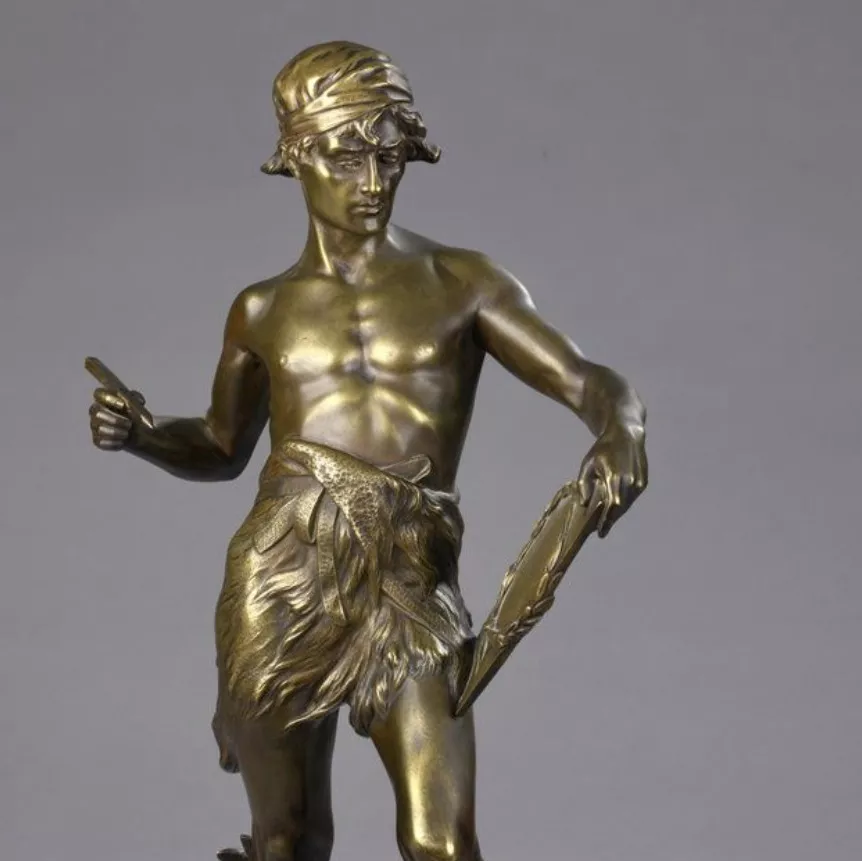
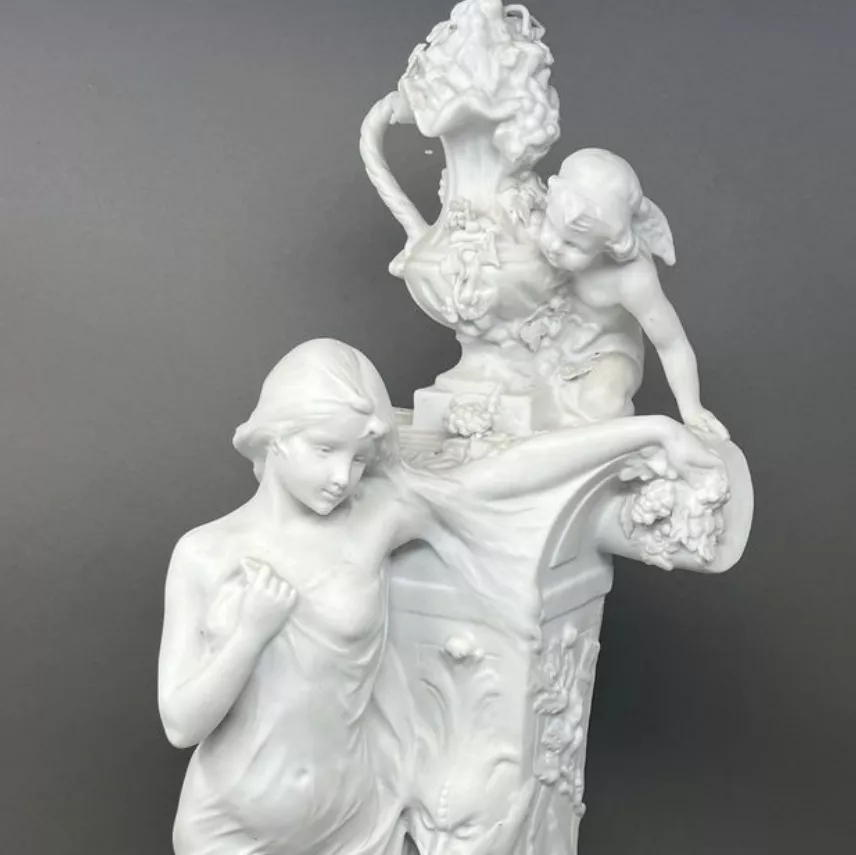
His work lies at the crossroads between the official sculpture of the Third Republic and more expressive sensibilities. The dominant themes in his iconographic vocabulary are allegorical figures, mythological subjects and idealized female figures.
His work shows a pronounced taste for the human figure, often isolated and treated as a support for moral or symbolic content. In his relationship to the figure, anatomy is mastered and conforms to academic teaching.
The figures are slender, sometimes hieratic, emphasizing legible attitudes. The emotional charge is conveyed through posture and gesture rather than facial pathos. He makes recurrent use of female figures as vehicles for abstract ideas (memory, pain, peace).
The sculptor is influenced by the symbolist currents of the late 19th century, integrated within an academic framework. His compositions are clear and often cold, and he seeks a stable balance between mass and line.
The relationship between the body and its base is important, particularly in monumental sculpture. Volumes are full, continuous and unfragmented, with line and contour predominating over surface effects.
Bronze is the preferred material for salon sculptures and monumental works. Plaster is the working and presentation material he uses for Salons. Surfaces are relatively smooth, with no attempt at pictorial effects. The finish aims for formal clarity rather than the vibration of the material.
He maintains a stylistic proximity to sculptors such as Barrias, Frémiet or Mercié, and his symbolist sensibility is tempered by the demands of the official commission. His aesthetic intention is to give sculpture a moral, commemorative or allegorical function.
The life of Édouard Drouot
Édouard Drouot (1859 - 1945) was born.in Sommevoire in the Haute Marne, a region marked by a tradition of craftsmanship and metallurgy, favorable to the sculpture and foundry trades. This context was conducive to a technical training before accessing the Parisian circuits.
He moved to Paris to follow an academic artistic training. He was a pupil of Mathurin Moreau, a sculptor renowned for his decorative and allegorical figures. His training was based on life drawing, the study of anatomy and classical modeling.
He fully embraced the standards of late 19th-century sculptural education. He began exhibiting at the Salon des Artistes Français in the 1880s, and gained recognition for his figurative sculptures, which combine academic rigor with expressive sensitivity.
He received several awards and mentions, attesting to his integration into the official art system of the Third Republic. He received public commissions, notably for commemorative monuments, funerary sculptures and allegorical works for urban spaces.
He developed a body of work focused on symbolic figures, allegorical subjects and monuments to the dead. His work meets the ideological and aesthetic expectations of republican public sculpture.
His activity is also marked by the great historical ruptures of his time: the Third Republic and the First World War. He participated in the post-war commemorative effort through monumental and funerary sculpture.
He achieved a stable position in the official French artistic landscape at the beginning of the 20th century, and his style, deliberately legible and dignified, corresponded to the expectations of public institutions and local authorities.
He continued to produce until the inter-war years, then gradually withdrew from the active artistic scene.
Market segmentation and artist rating
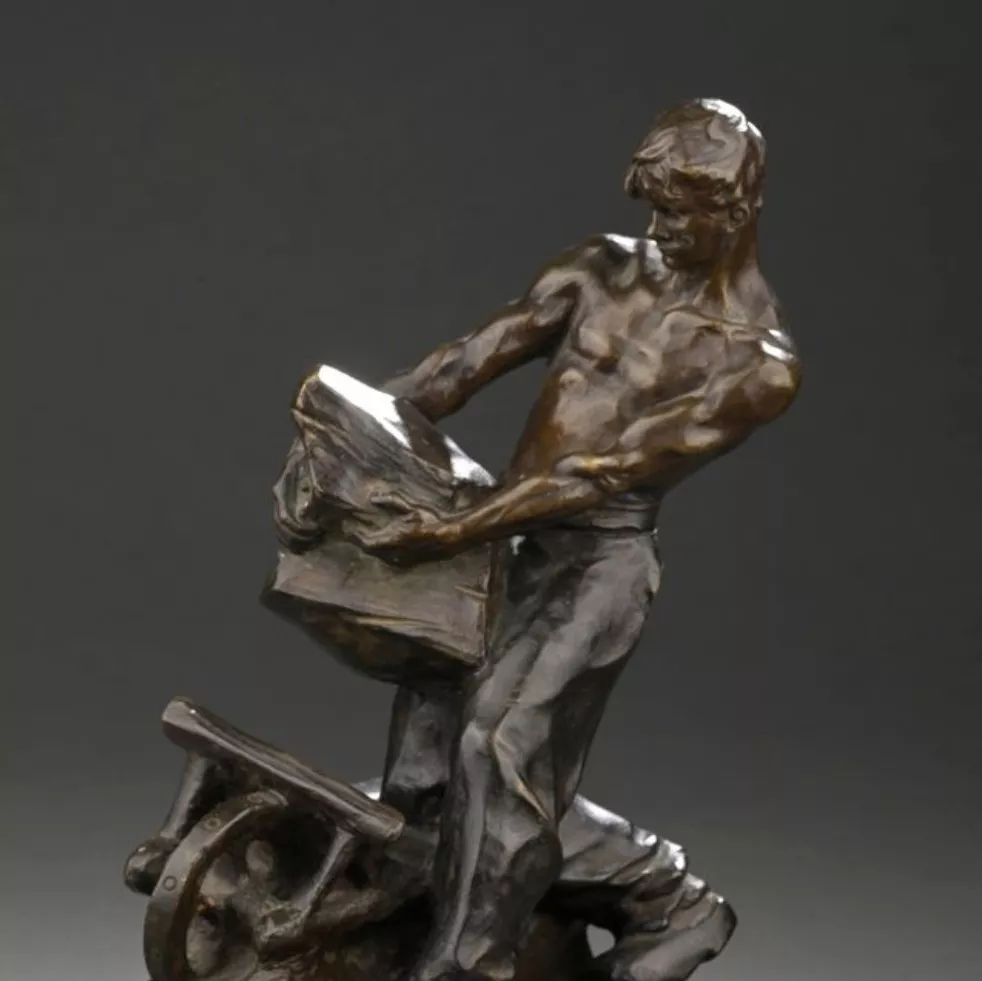
Edition bronzes are the main market segment, comprising allegorical figures, busts and symbolist subjects. Plasters are a secondary market, often studio models or Salon proofs.
Monumental works are almost exclusively preserved in situ or in public collections, and are very rarely offered for sale. Marbles are extremely rare on the private market.
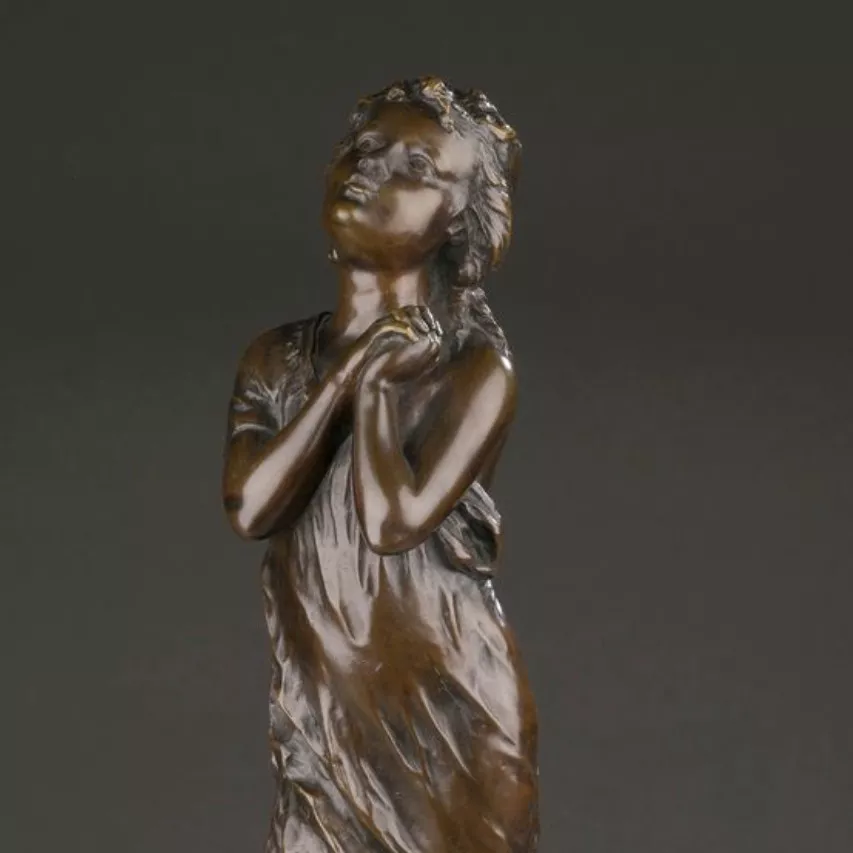
Small and medium formats (30 - 80 cm) form the core of the market and have good liquidity. Large formats over 80 cm are part of a narrower market, and their value is highly dependent on quality and condition.
The most sought-after subjects are allegorical female figures (pain, memory, ideal), symbolist subjects from the late 19th century, expressive busts, particularly of a funerary or commemorative nature. Complex monuments and groups are not very accessible to the private market.
Bronzes with an original patina are a major criterion of value, with the presence of a signature and sometimes a founder's stamp. Casting quality and state of preservation are also important.
The geographic market is mainly in France, but also in Belgium and Switzerland. The international market is limited and essentially European. The market is stable, without any spectacular surges, and there is constant interest in late 19th-century figurative bronzes.
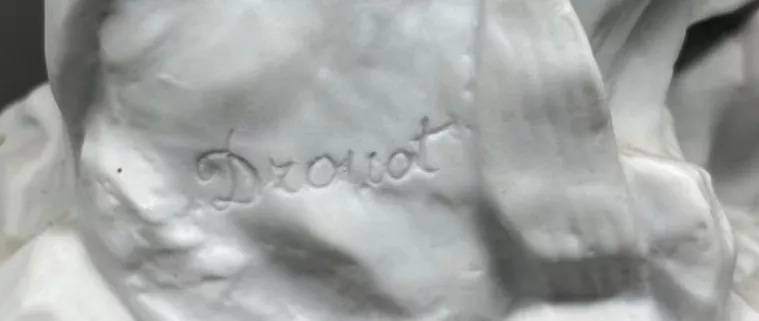
Recognizing the signature of Édouard Drouot
The artist signs " Drouot" on his sculptures, most of the time. There are, however, many copies, which is why expertise is important.
Knowing the value of a work
If you happen to own a work by Édouard Drouot or after the artist, don't hesitate to request a free appraisal using our form on our website.
A member of our team of experts and certified auctioneers will contact you promptly to provide you with an estimate of the market value of your work, as well as any relevant information about it.
If you are considering selling your work, you will also be accompanied by our specialists in order to benefit from alternatives for selling it at the best possible price, taking into account the inclinations of the market.
.Estimate in less than 24h
Discover in the same theme

Rating and value of paintings by Richard Parkes Bonington
Richard Parkes Bonington was a 19th-century marine painter. His works are quoted on the auction market, and their value is high.
Learn more >

Rating and value of sculptures and bronzes by Alexandre Léon...
Alexandre Léonard is a twentieth-century animal sculptor who produced animal sculptures that are highly prized and valued.
Learn more >

Rating and value of drawings and paintings by Henri Jossot
Henri Jossot was a 19th-century painter and draftsman who produced caricatures and Orientalist paintings that are highly valued.
Learn more >
D'autres bronzes anciens vendus aux enchères

Estimated Between €5,000 and €8,000
Agathon LEONARD (1841-1923), Dancer with scarf, bronze lamp, ed. Susse frères

Estimated 3.000 - 5.000
Raoul LARCHE (1860-1912) The fisherman, Bronze with green patina

Estimated 600 - 800
Hercules Farnese, bronze, reproduction after Glycon of Athens

Estimated 1.500 - 3.000
Jules FRANCESCHI (1825-1893) Hébé et l'aigle de Jupiter, gilded bronze

Estimated 800 - 1.500
Henry Étienne DUMAIGE (1830-1888), bronze print

Estimated 1.500 - 3.000
Antoine Louis BARYE (1796-1875) Eagle and heron, bronze print with shaded brown-green patina

Secure site, anonymity preserved

Auctioneer approved by the State

Free and certified estimates
Frequently asked questions
-
Who was Édouard Drouot, and what is his artistic style?Édouard Drouot (1859–1945) was a French sculptor who achieved recognition during his lifetime; he was active from the late 19th century through the first third of the 20th century. His work falls within the tradition of late academic figurative art, enriched with Symbolist and Naturalist influences, featuring a vocabulary dominated by allegorical figures, mythological subjects, and idealized female figures. His work bridges the gap between the official sculpture of the Third Republic and expressive sensibilities, characterized by rigorous anatomical mastery and a moral or commemorative intent.
-
What is the price range for Édouard Drouot's sculptures?The prices of Édouard Drouot’s works range from €50 to €44,400, depending on the type of material and the size. Bronze sculptures range from €50 to €25,000, marble sculptures from €500 to €44,400, terracotta sculptures from €55 to €450, and porcelain sculptures from €105 to €2,000. Small and medium sizes (30–80 cm) make up the core of the market and are readily tradable.
-
How can you authenticate a sculpture by Édouard Drouot?To authenticate a work by Édouard Drouot, we recommend that you request a free, no-obligation appraisal using the form on our Auctie's website. A state-certified expert or auctioneer will contact you and provide you with a detailed appraisal within 48 hours. This authentication is particularly important because there are many copies of his sculptures.
-
Is this the right time to sell a sculpture by Édouard Drouot?Yes, now is a good time to sell a work by Édouard Drouot. Prices for his sculptures are consistently rising at auction, and market interest remains steady, particularly in France, Belgium, and Switzerland. The market for late 19th-century figurative bronzes remains stable and in demand, particularly for allegorical female figures.
-
How does the sales process work at Auctie's?At Auctie's, the sales process begins with a free, no-obligation appraisal: our experts will contact you within 48 hours. If you decide to sell, our specialists will guide you through the entire process—from the appraisal to the auction—to ensure you have the best options for selling your artwork at the highest possible price based on current market conditions.
