



Rating and value of works, drawings, paintings by Louis Hersent

Key takeaways
- Works by Louis Hersent (1777–1860), a Neoclassical painter trained by Jacques-Louis David, sell for between €160 and €98,000, depending on the technique used.
- Oil paintings on canvas are his most valuable works, reaching up to €98,000 in 2023, while prints and drawings are valued lower.
- A member of the Academy of Fine Arts since 1822 and a renowned professor, Hersent remains highly regarded by French and English collectors despite being less well-known today.
If you own a work by or after Louis Hersent, and would like to know its value, our state-approved experts and auctioneers will offer you their appraisal services.
Our specialists will carry out a free appraisal of your work, and provide you with a precise estimate of its value on the current market.
Then, should you wish to sell your work, we will direct you to the best possible arrangement to obtain the optimum price.
Rating and value of the artist Louis Hersent
Louis Hersent leaves behind a rather singular body of work, in the neo-classical vein. From now on, prices for his works are rising under auctioneers' gavels.
Hersent's paintings are particularly prized, especially by English and French buyers. The price at which they sell on the art market ranges from €160 to €98,000, a substantial gap but one that says a lot about the value that can be attributed to Hersent's works.
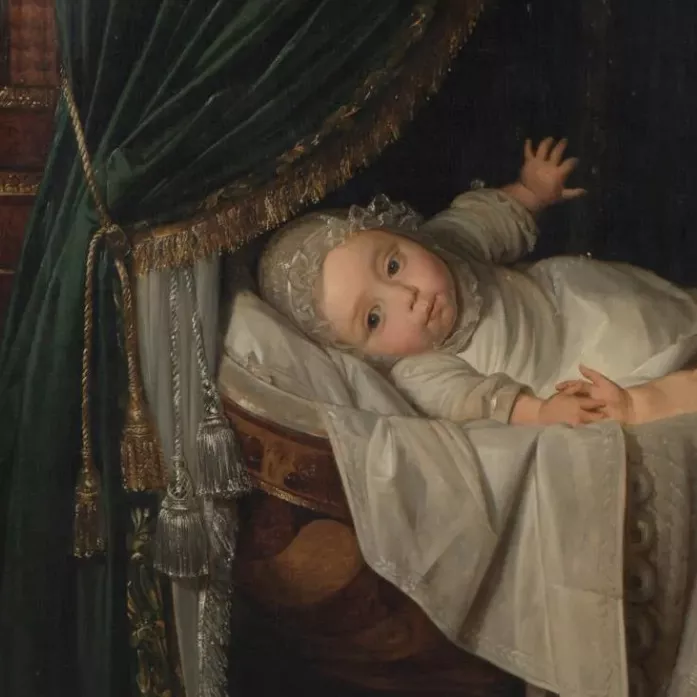
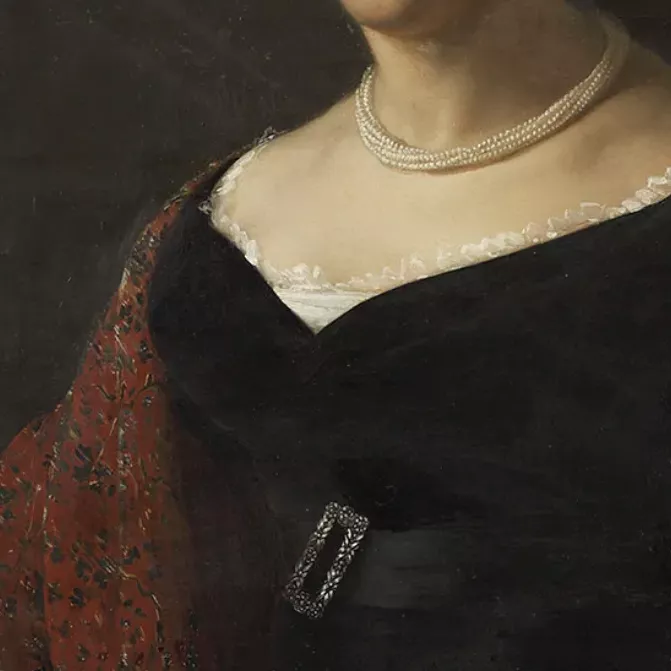
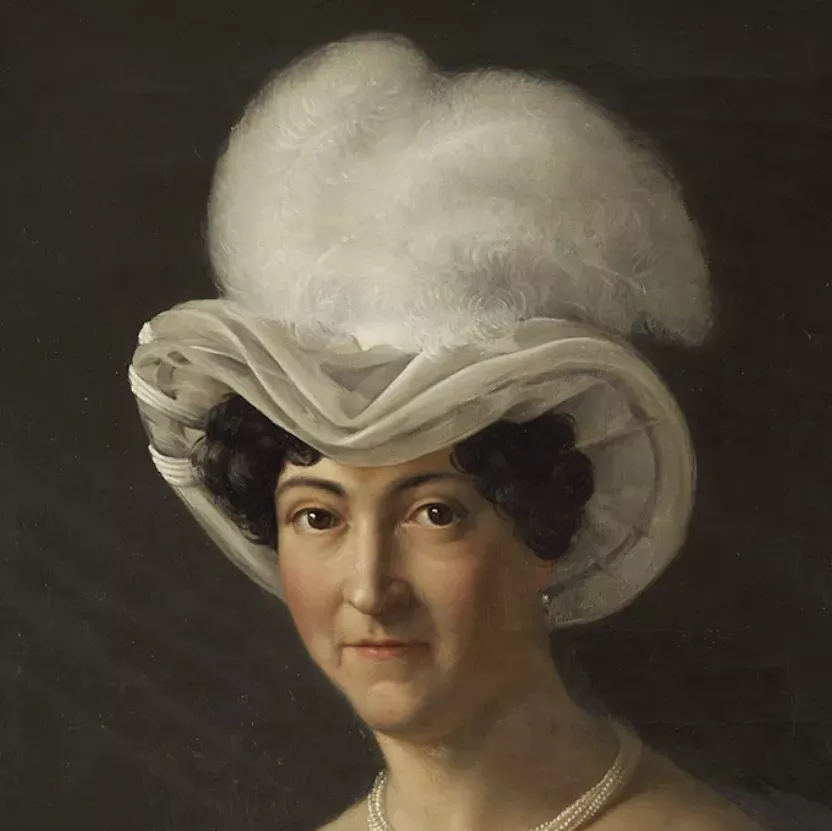
In 2023, his oil on canvas Portrait de la comtesse Wlash de Serrant sold for €98,000, while it was estimated at €40,000 to €60,000.
Order of value from a simple work to the most prestigious
Technique used | Result |
|---|---|
Estamp | From 160 to 220€ |
Drawing - watercolor | From €150 to €2,650 |
Painting | From €1,070 to €98,000 |
Estimate in less than 24h
Style and technique of Louis Hersent
Louis Hersent (1777 - 1860) was a neoclassical history painter of the 19th century. He was trained by Jacques Louis David, among others, who was to have a major influence on his career.
Hersent produced mainly drawings and oils on canvas, although there were a few prints.
Hersent's works were mainly executed in oil on canvas, with large formats intended for public commissions (churches, institutions). His preparatory drawings are made in pencil, black stone and red chalk, and are often highly precise and detailed.
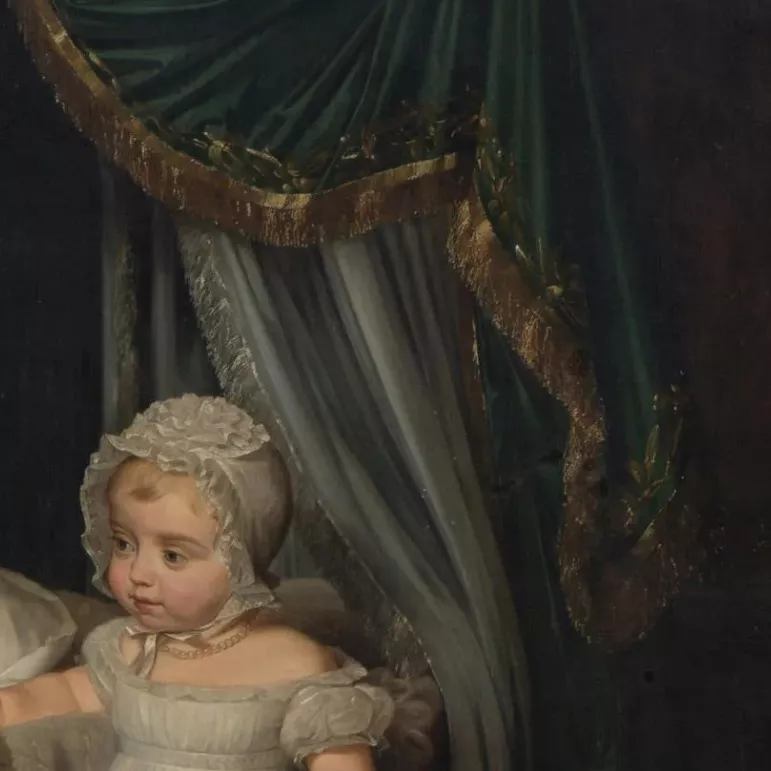
He uses successive glazes to achieve a smooth, luminous finish devoid of any roughness. The finish is extremely polished, with no visible brush marks, inherited from the Davidian school. The modeling is regular, with a certain idealization of forms, particularly in the treatment of faces and bodies.
The precision is meticulous in the rendering of textile details, with drapery and accessories. The composition is balanced and hierarchical, and each figure has a clear place in the whole.
The geometric construction of space is influenced by Jacques-Louis David, his master. The figures are arranged according to an academic logic: frontality, symmetry, visual hierarchy.
The importance of rhetorical gestures with hands and attitudes, among others, to express narrative meaning is noted. The sets are meticulous, often borrowing from classical architecture or theatrical settings.
The palette is dominated by sober, harmonious tones (browns, ochres, deep reds, bright blues and whites). The light-dark contrasts are inherited from Caravaggio, but softened by diffused light.
Color is used to emphasize the hierarchy of the figures (the main character highlighted by light and light hues). Hersent is faithful to the principles of Davidian neoclassicism, with rigor of drawing, sharpness of outline and rejection of picturesque blur.
However, there is a certain tendency towards romantic softening from the 1820s onwards, with more sensitive expression and a more dramatic atmosphere.
.
The life of Louis Hersent
Louis Hersent (1777 - 1860), is a 19th-century painter who is relatively unknown to the general public.
He was born in Paris to an engraver father, who introduced him to art. He studied painting at the École des Beaux-Arts in Paris, in the studios of Jacques Louis David and Jean-Baptiste Regnault. Like Géricault, he was nevertheless influenced by his time, borrowing elements from Romanticism.
Hersent won the second Prix de Rome in 1797 for La mort de Canton d'Utique. His specialty gradually takes shape it's portraits of historical figures known as en pieds, so he represents the whole body and not just the bust.
He enjoyed great success in his day, as he was one of the last to respect the canons imposed by the Académie, and exhibited his works very regularly in the Parisian Salons.
In 1822, he was elected a member of the Académie des Beaux-Arts, which definitively established his legitimacy ; with his status as Professor in the same institution, replacing Anne-Louis Girodet.
He marries Louise Marie-Jeanne Hersent, who is also a painter. They shared a studio in their home where Louise Hersent trained women artists.
Louis Hersent died in Paris at the age of 83.
Louis Hersent's imprint on his era
Louis Hersent left no lasting legacy on his era. He was known during his lifetime and received commissions. He was noticed by a few critics when he exhibited. Today, his work is less famous, but he remains highly regarded on the art market.
A student of Jacques-Louis David, he embodies the transmission of neoclassicism in the 19th century. A professor at the École des Beaux-Arts, where he trained numerous students, including several female painters such as Louise Adélaïde Desnos or Élise Bruyère.
A member of the Académie des Beaux-Arts, he was a respected figure in the official apparatus. His career illustrates the continuity of state academicism in French painting. He was also a fervent defender of history painting, considered the noblest genre by the Académie.
His great mythological and religious compositions also illustrate the permanence of the Davidian tradition, adapted to public commissions (churches, institutions). He helped maintain this genre at the center of the academic hierarchy, despite the rise of Romanticism and Realism.
He is protected from successive regimes (Empire, Restoration, Monarchie de Juillet), unlike other artists who see their careers impacted by changes in government, and creates large-scale religious and allegorical decors for Parisian churches and institutional buildings.
His role as an official painter helped set the dominant aesthetic of the time, between neoclassical idealism and Romantic sensibility.
By training several female painters, he also indirectly participated in the progressive legitimization of female artists in Salons and official circuits. His studio constitutes a rare space where women can acquire recognized artistic training. He was helped in this task by his wife, Louise Hersent.
During his lifetime, he enjoyed strong institutional recognition, regularly winning awards and exhibiting at the Salon. His imprint on his era was ultimately that of a guardian of academic tradition, in contrast to the Roman avant-garde (Delacroix, Géricault).
After his death, his work was gradually eclipsed by art history, which favored innovators. Today, he is studied as a representative figure of official academism, essential for understanding the aesthetic tensions of the 19th century.
Recognizing Louis Hersent's signature
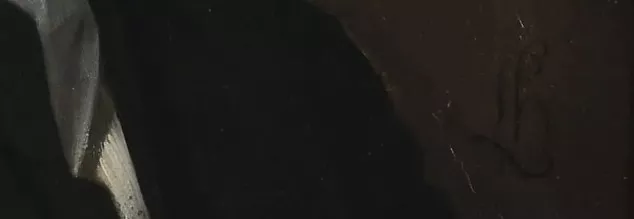
Louis Hersent's works are sometimes signed. However, with or without mention, it is important for you to have the work appraised to ensure its originality and to be able to date it. He often signs " LH ", see example attached.
Knowing the value of a work
If you happen to own a work by or after Louis Hersent, don't hesitate to request a free appraisal using our form on our website.
A member of our team of experts and chartered auctioneers will contact you promptly to provide you with an estimate of the market value of your work, as well as ad hoc information about it.
If you wish to sell your work, you will also be accompanied by our specialists in order to benefit from alternatives for selling it at the best possible price, taking into account market inclinations.
.Estimate in less than 24h
Works from the same period sold at auction

Estimated 2 000 € - 3 000 €
Delphin ENJOLRAS (1857-1945) "A Midsummer Night's Dream", Oil on canvas

Estimated 600 - 800 €
Alexandre Gabriel DECAMPS (1803-1860) Two children reading.

Estimated 9 000 - 12 000 €
Guillaume FOUACE (1837-1895) Pheasant and hare.

Estimated 600 € - 800 €
Henri ZUBER (1844-1909), Bridge at Artemare. Oil on canvas.

Estimated 100€ - 200€
French school, S. Bondu Portrait of Mademoiselle Trauleus,...
Discover in the same theme

Value and quotation of Carlo Bugatti's artworks, furniture a...
Carlo Bugatti, a 19th-century cabinetmaker, produced furniture in the Art Deco style. They are highly valued and quoted.
Learn more >

Rating and value of works, paintings, drawings by Paul Jober...
Paul Jobert is a 19th-century marine painter who is prized by French and American actors. The price of his works is rising.
Learn more >

Rating and value of works, paintings, drawings by Henri Fant...
Henri Fantin-Latour was a realist and symbolist painter of the 19th century, famous for his still lifes, which were highly prized at auction.
Learn more >

Secure site, anonymity preserved

Auctioneer approved by the State

Free and certified estimates
Frequently asked questions
-
Who was Louis Hersent, and what was his artistic style?Louis Hersent (1777–1860) was a 19th-century Neoclassical history painter and a student of Jacques-Louis David. His work is characterized by academic rigor, precise draftsmanship, balanced and hierarchically structured compositions, and a subdued color palette dominated by browns, ochres, and blues. Beginning in the 1820s, his style softened under the influence of Romanticism.
-
What are the selling prices of Louis Hersent's works?Prices for Hersent’s works vary considerably depending on the medium and quality: prints sell for between €160 and €220, drawings and watercolors for between €150 and €2,650, and paintings for between €1,070 and €98,000. In 2023, the *Portrait of Countess Wlash de Serrant* fetched €98,000 at auction, exceeding its initial estimate of €40,000 to €60,000.
-
How can you authenticate a work by Louis Hersent?To authenticate a work attributed to Hersent, we recommend that you request a free, no-obligation appraisal from Auctie's. Our team of experts and licensed auctioneers will examine the work and verify its authenticity and date of creation. You will receive an accurate estimate within 48 hours.
-
Is this the right time to sell a work by Louis Hersent?Yes, now is a good time to sell a work by Hersent. His paintings are gaining value on the art market and remain highly sought after, particularly by British and French buyers. A free appraisal will help determine the current value of your artwork.
-
How does the appraisal process work at Auctie's, and how do I sell my artwork?The appraisal is free and non-binding: fill out our online form, and an expert will contact you shortly to provide you with the market value of your artwork. If you’d like to sell it, we’ll guide you through the process from start to finish, offering you the best options to get the highest possible price at auction.
