



Asian Art: Appraisals and Auctions

Key takeaways
- Imperial Ming and Qing porcelain with authenticated reign marks fetches prices ranging from several hundred thousand to several million euros at international auctions.
- First-print ukiyo-e prints by renowned masters (Hokusai, Hiroshige) range from 3,000 to 80,000 euros depending on condition and rarity.
- Authenticity depends on a multifaceted analysis: reign mark, analysis of the clay and glazes, and documented provenance—never on a single criterion alone.
Imperial porcelain, gilded bronzes, and prints: the value of Asian art varies greatly depending on the dynasty, the material, and the provenance.
Below you’ll find all our valuation guides dedicated to Asian art—Chinese porcelain, bronzes, jade, Japanese prints, and Asian furniture. Each guide details the price ranges observed at auction and the factors that determine a work’s value before it is entrusted to our state-certified auctioneers.
Guides on this art movement
See all guides >
Rating and value of prints by Utagawa Toyokuni
Utagawa Toyokuni is a Japanese artist and the founder of the Utagawa school, a pioneer in Japanese woodblock printing. His works are highly valued.
Learn more >

Rating and value of drawings by Kawahara Keiga
Kawahara Keiga is a Japanese artist who has done a great deal of scientific illustration. His works are highly sought after and valuable.
Learn more >

Rating and value of print and drawings by Kitagawa Utamaro
Kitagawa Utamaro was a Japanese artist of the Edo period who is best known for his woodblock prints, which command high prices and are highly valued.
Learn more >

Rating and value of paintings and laquers by Nguyen Gia Tri
Nguyễn Gia Tri is a leading artist of Vietnamese modernism, who has produced numerous works that are highly prized and valuable.
Learn more >

Rating and value of paintings by Chaïbia Talal
Chaïbia Talal is a Moroccan artist who has produced a colorful and joyful body of work. Today, her work is very successful at auction.
Learn more >

Rating and value of paintings by Lin Fengmian
Lin Fengmian is an avant-garde Chinese painter who has produced numerous paintings that are highly valued on the art market.
Learn more >

Rating and value of paintings by Lee Ufan
Lee Ufan is a contemporary South Korean artist who has produced works of considerable value at auction.
Learn more >

Rating and value of Lalan's paintings and drawings
Lalan is a Chinese artist who has produced abstract paintings that are highly rated and valued at auction. Estimated in 24h.
Learn more >

Rating and value of paintings by Lin Fengmian
Lin Fengmian is an avant-garde Chinese artist who has produced works that are highly rated and valued at auction.
Learn more >

Rating and value of Chinese snuffboxes, from China
Chinese snuffboxes are highly prized collector's items at auction. Their value can be extremely high.
Learn more >

Rating and value of paintings, drawings and watercolors by Z...
Zao Wou Ki is a Franco-Chinese painter of the École de Paris and lyrical abstraction whose value has exploded at auction in recent years.
Learn more >

Rating and value of Sanyu's drawings, paintings and pictures
Sanyu is a Franco-Chinese artist who has produced many highly acclaimed paintings and drawings of nudes, which are highly prized at auction.
Learn more >
Understanding Asian Art Market Valuations
What Is Market Value in the Asian Art Market?
The market value of an Asian art object refers to the benchmark value assigned to it by the international market at a given moment, resulting from a combination of its cultural region of origin, period of production, intrinsic quality of craftsmanship, rarity, and the strength of its documentation.
This market, one of the most dynamic and internationalized in the art world, has undergone a profound transformation since the 2000s, driven by the emergence of a clientele of collectors from China, Korea, Japan, and Taiwan, eager to repatriate or preserve a cultural heritage of exceptional richness.
The unique nature of this market stems from the coexistence of very different valuation approaches depending on the category of objects: Chinese porcelain from the great imperial dynasties follows rules of attribution and dating based on the interpretation of reign marks and the analysis of clay bodies and glazes, whereas Japanese prints are evaluated based on criteria of print rarity and the condition of the paper, comparable to those of the Western print market.
This diversity requires a cross-disciplinary expertise that only an auctioneer already familiar with these different traditions can exercise with the necessary authority.
Why Chinese and Japanese Art Captivates the Market
The fascination that Chinese and Japanese art has held for Western collectors dates back to the 17th century and the trade conducted by the East India Companies, which introduced porcelain, lacquerware, and silks to Europe—works whose technical and aesthetic sophistication immediately sparked a lasting craze.
The Japonism movement of the second half of the 19th century then had a profound impact on Western art, from Impressionism to Art Nouveau, thereby cementing the place of Japanese art in European collections and the European aesthetic consciousness.
Today, demand is driven by two distinct clienteles: traditional Western collectors, drawn to the formal quality and rarity of certain pieces, and Asian collectors, whose considerable purchasing power has resulted in regular auction records since the 2000s, particularly for imperial Chinese porcelain and ancient bronzes.
This dual dynamic supports high valuation levels for the best-documented and rarest pieces.
Cultural Region | Period | Featured Pieces | Market demand level |
Imperial China (Ming and Qing dynasties) | 15th–19th centuries | Court porcelain, imperial-grade jade, ritual bronzes | Exceptional, record-breaking auction prices |
Japan (Edo, Meiji) | 17th–19th centuries | Ukiyo-e prints, lacquerware, folding screens, netsuke, cloisonné | Very strong, active international market |
Tibetan art (statues, thangkas) | 14th–19th centuries | Gilded bronze Buddhas, painted thangkas, ritual objects | Active, with sustained specialized demand |
Archaic China (bronzes, jades) | 2nd millennium BCE – 3rd century | Ritual bronzes, Neolithic ritual jades | Institutional, extremely rare pieces |
Korea (celadon ceramics, Buddhist art) | 11th–15th centuries | Inlaid celadon, Goryeo and Joseon ceramics | Active, growing specialized market |
Estimate in less than 24h
The Criteria That Determine the Value of an Asian Art Object
The value of an Asian art object is determined by a hierarchy of criteria that the auctioneer weighs according to the category in question.
For Chinese porcelain, the reign mark stamped on the bottom of the piece—which attests to its production for the imperial court or under official commission—is a major factor in determining its value, but must always be considered alongside an analysis of the body, glaze, and decoration to distinguish an authentic period piece from a later reproduction.
For Japanese prints, the condition of the margins, the vibrancy of the pigments, and the rarity of the print within the artist’s body of work are decisive factors.
The price ranges observed on the secondary market vary considerably. A common piece of porcelain, without an identifiable mark or exceptional decoration, can range from 200 to 3,000 euros. A high-quality Japanese print by a renowned master such as Hiroshige or Hokusai ranges from 3,000 to 50,000 euros, depending on the rarity of the condition.
Chinese imperial porcelain from the Ming and Qing dynasties with authenticated reign marks regularly fetches several hundred thousand euros, and some exceptional pieces have sold for over several million euros at international public auctions.
Porcelain, prints, and jade: the most sought-after pieces
Chinese Porcelain from the Ming and Qing Dynasties
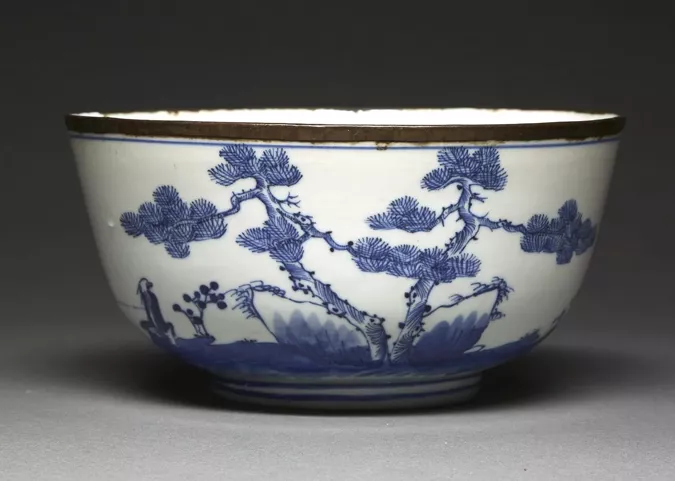
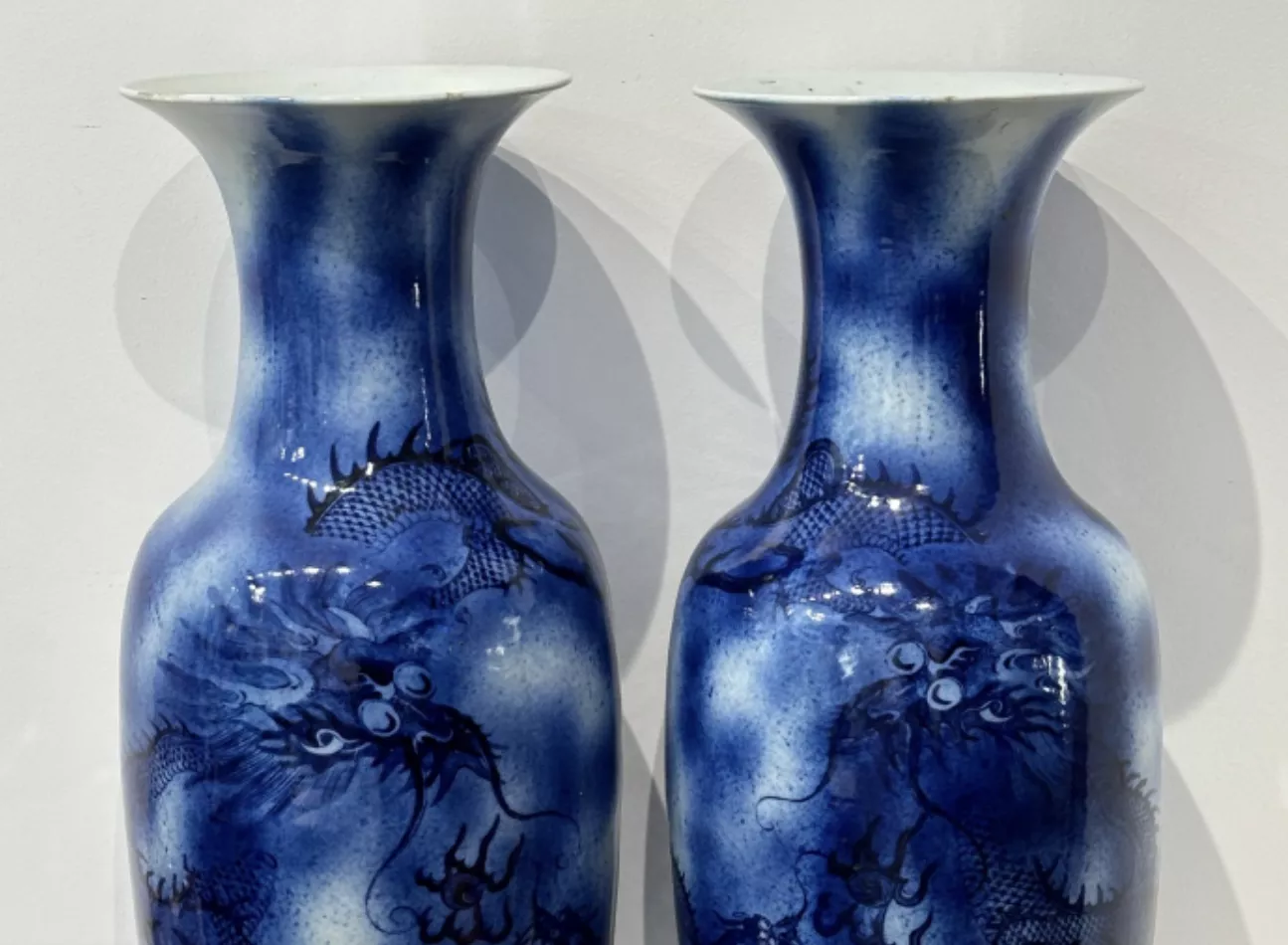
Chinese porcelain from the Ming (1368–1644) and Qing (1644–1912) dynasties constitutes the most active and internationally renowned segment of the entire Asian art market.
The famous blue-and-white porcelain of the Yongle and Xuande periods—whose pure cobalt and incomparable design quality set an aesthetic standard that has been emulated for centuries— the polychrome “Green Family” and “Pink Family” porcelains of the Qing period, and the monochrome pieces of imperial quality are among the most sought-after categories.
Reading the reign mark, usually inscribed in Chinese characters on the base of the piece, is the first step in appraisal, but it is not sufficient on its own for authentication: as early as the 18th century, the imperial workshops themselves began inscribing the reign marks of previous emperors as a sign of reverence, which considerably complicates the dating of undocumented pieces.
A comparative stylistic analysis and, for the most important pieces, a physicochemical analysis of the materials are essential complementary steps.
Japanese prints, folding screens, and lacquerware
The Japanese ukiyo-e print, which has fascinated Western artists since the 1860s and whose influence on Impressionism and Art Nouveau remains one of the most fruitful chapters in the history of cross-cultural artistic exchange, continues to hold a prominent place in the market.
Katsushika Hokusai’s major series—led by his views of Mount Fuji— and Utagawa Hiroshige’s One Hundred Views of Edo are the most sought-after works; their early prints from the first edition—recognizable by the vibrancy of their pigments and the quality of their period washi paper—command considerable prices.
Painted folding screens, monumental works of Japanese pictorial art, and lacquerware—whether in the form of writing boxes, caskets, or gold-lacquered furniture on a black background—constitute two other major categories in this market; their rarity and the sophistication of their craftsmanship justify high levels of expertise and valuations for high-quality pieces.
Category | Characteristics | Price Range | Market Demand |
Imperial Ming or Qing porcelain (authenticated reign mark) | Imperial-quality clay, glaze, and decoration | €50,000 — several million € | Exceptional, record auction prices |
Ukiyo-e print (first edition, Hokusai, Hiroshige) | Vivid pigments, period washi paper, margins | €3,000 — €80,000 | Very strong demand, international |
Carved jade (documented Imperial period) | Quality of the stone, finesse of the carving | €10,000 — €500,000 | Very active market, strong Asian demand |
Netsuke or inrô (identified sculptor) | Miniature, remarkable craftsmanship | €1,500 — €30,000 | Steady demand, specialized collectors |
Japanese lacquer (quality, age) | Maki-e technique, quality of the gilded decoration | €2,000 — €50,000 | Active, established specialized market |
Tibetan Buddha in gilded bronze | Accurate iconography, original gilding | €3,000 — €100,000 | Active, international demand |
Ancient jade, bronzes, and Tibetan Buddhas
Jade, a stone whose symbolic and spiritual value in China surpasses that of any other mineral, constitutes a very specific category within the Asian art market, where pricing depends as much on the quality of the stone itself—its translucency, color, and absence of inclusions—for imperial nephrite jade—as on the finesse of the carving and the period of production.
Imperial jades from the Qing period, carved for the courts of Emperors Qianlong and Yongzheng, regularly fetch very high auction prices, driven by Asian demand that has remained strong since the 2000s.
Archaic Chinese ritual bronzes—vases and ceremonial vessels produced for ancestral rites between the 2nd millennium and the 3rd century BCE—constitute the oldest and most institutionally recognized segment of the Chinese art market, their austere forms and ancient patinas having fascinated collectors since the time of the Song-era antiquarians.
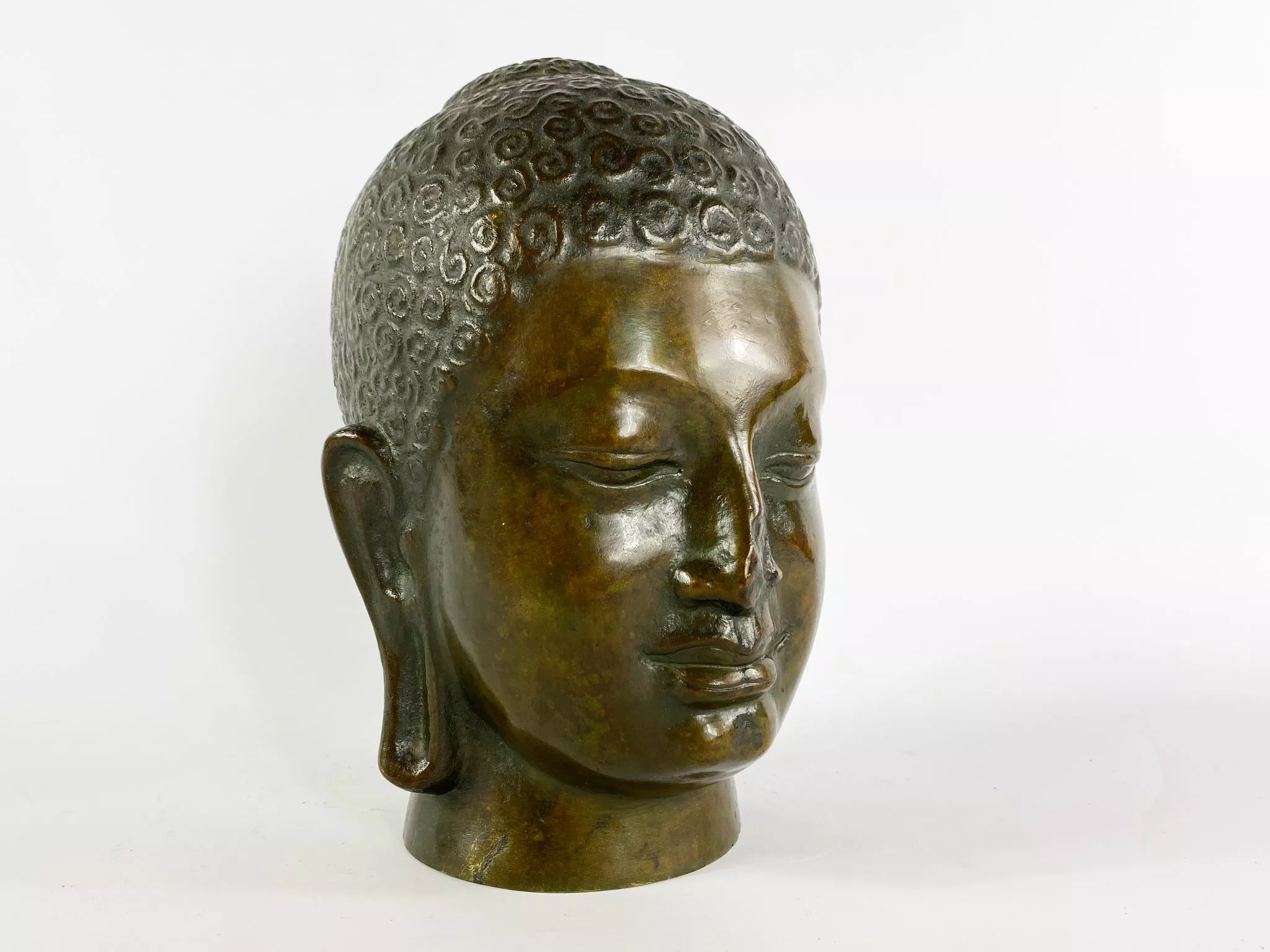
Finally, Tibetan gilded bronze Buddhas—whose value hierarchy depends on the precise iconographic identification of the deity depicted and the quality of the original gilding—round out this remarkably rich panorama.
Estimate in less than 24h
Get a Free Appraisal of Your Asian Art
A certified appraisal by a licensed auctioneer in less than 24 hours
Appraising an Asian art object requires multidisciplinary expertise that few art market professionals are able to apply with the same rigor across all relevant categories: interpreting Chinese reign marks, mastery of the criteria for dating porcelain and lacquerware, and precise knowledge of Japanese print series and their chronology of publication.
Auctie’s auctioneer possesses this multidisciplinary expertise, built on regular engagement with this market and an in-depth understanding of its unique dynamics.
Auctie's offers this expertise free of charge, with a certified response within 24 hours. Whether you have inherited a piece of Chinese porcelain, wish to have a Japanese woodblock print or an antique jade piece appraised, or are considering compiling an inventory of an Asian collection, the process is the same: submit your item to a trained expert who can accurately determine its value.
What You Need to Provide for an Online Appraisal
For a piece of porcelain, clear photographs of the entire piece, the base (including the reign mark, if present), and details of the decoration are essential, along with precise dimensions and any available provenance information.
For a print, photographs of the front and back—including the dimensions with margins—allow us to assess the condition of the paper and the quality of the print.
For jade or bronze, photographs of the entire piece and close-ups of the surface—showing the patina or the texture of the stone—are necessary. Any documentation of provenance, certificates, or references in specialized publications greatly enhance the appraisal.
Provenance, Dating, and Authenticity: The Pillars of Valuation
Certificate of Authenticity and Attribution: Their Impact on Value
The authentication of an Asian art object relies on a set of converging clues, none of which can be considered in isolation.
The reign mark on Chinese porcelain is an essential but insufficient starting point; analysis of the clay body and pigments under ultraviolet light and with a binocular loupe is systematically necessary to distinguish an authentic period piece from a high-quality reproduction.
For Japanese prints, comparison with reference prints held in major museum collections—and particularly with the complete catalogs of works by the relevant masters—allows us to identify the print’s edition status and assess its relative rarity.
Level of Documentation | Impact on Value |
Piece published in a major exhibition or collection catalog | Maximum assurance; very significant premium on value |
Reign mark authenticated through stylistic and material analysis | Significant increase in value; a prerequisite for imperial valuation |
Piece accompanied by a written appraisal from a recognized specialist in Asian art | Good guarantee; provides buyer confidence and facilitates the sale |
Documented provenance from a major historical Western collection | High value; reassuring traceability and guaranteed authenticity |
Coherent piece without additional documentation | Conservative estimate; based solely on stylistic and material analysis |
Piece suspected of being a later reproduction | Significant depreciation; thorough verification essential |
Reign marks, provenance, and condition
The provenance of an Asian art object is a key factor in building trust in this market, which is particularly sensitive to issues of origin and the legality of export for the oldest pieces. A piece whose history can be traced through a major Western collection formed prior to the international conventions governing the circulation of cultural property, or documented in a historical public auction, enjoys legal legitimacy and commercial credibility that buyers directly value. The condition of an item requires specific attention depending on the materials: porcelain must be examined for chips, cracks, or restoration; prints for the condition of the paper and margins; and lacquerware for the integrity of the decorative layer.
Selling Asian Art at Auction with Auctie's
From the reserve price to the final bid: how the price is determined
Auctions are the most effective way to sell high-quality Asian art objects in a market where the direct interaction between a well-documented piece and competing collectors can lead to spectacular results.
The reserve price, set in consultation with the seller and based on the preliminary estimate, must be carefully calibrated to maximize bidder participation without prematurely stifling the auction’s momentum.
For imperial porcelain and high-quality jade, the presence of Asian buyers at auctions—who can now easily participate remotely via digital platforms—is often decisive in securing the best price.
Hôtel Drouot and Online Auctions: Reaching the Right Bidders
Auctie’s holds its auctions at Hôtel Drouot, a landmark of the Parisian art market founded in 1852, which regularly hosts specialized sales of Asian art, attracting an audience of particularly knowledgeable collectors, dealers, and experts.
Real-time online streaming of each auction significantly expands the geographic reach of potential bidders, allowing a buyer based in Hong Kong, Singapore, or Tokyo to participate just as easily as a Parisian collector.
For Asian art, for which the most active demand is now geographically very dispersed, this international dimension is consistently decisive.
Estate Planning, Inheritance: Valuing Inherited Asian Art
Inventory and Distribution of an Estate
Asian art objects frequently appear in the estates of French families with ties to Asia, descendants of diplomats, military personnel, missionaries, or simply travelers and collectors who built their collections during trips or through purchases from specialized dealers throughout the 20th century.
These pieces, sometimes kept without their current owners knowing their precise value or the exact context of their creation, can represent a significant estate asset; a rigorous appraisal helps prevent any disputes over the division of the estate.
Auctie’s regularly works alongside notaries to compile comprehensive estate inventories, with each item appraised individually with the utmost rigor.
Confidentiality of the process and preservation of anonymity
The circumstances leading to the appraisal of inherited Asian art are often personal and sensitive. Auctie’s handles each case with absolute discretion: the owner’s identity is never disclosed to third parties without their explicit consent, and items may be offered for sale under complete anonymity if the consignor so desires.
This confidentiality is a fundamental commitment that applies at every stage of the relationship, from the initial contact through to the receipt of the proceeds from the sale.
Estimate in less than 24h
Glossary of Asian Art and Its Market Value
Term | Definition |
Celadon | A type of green-glazed ceramic typical of medieval China and Korea, produced through the oxidation of iron. |
Reign Mark | An inscription in Chinese characters affixed to the bottom of an imperial porcelain piece, identifying the reigning emperor. |
Ukiyo-e | A genre of Japanese woodblock prints (“pictures of the floating world”) depicting urban scenes, actors, and landscapes. |
Netsuke | A small Japanese sculpture used to attach an inrô to the belt; a highly sought-after collector’s item. |
Lacquer | An object coated with successive layers of lacquer sap, often decorated with gold motifs (maki-e). |
Provenance | The history of ownership of a work of art, which is decisive for its authenticity and market value. |
Auction | The awarding of a lot to the highest bidder at the conclusion of an auction, establishing the final sale price. |
Trust Auctie’s to appraise your Asian art
Asian art requires expertise commensurate with the millennia-old sophistication of the civilizations that produced it. Deciphering a reign mark on Chinese porcelain, assessing the condition of a Japanese print, distinguishing imperial jade from a later replica: these are all tasks that require specialized training, which few professionals in the art market are able to perform with equal rigor across all these categories.
Auctie’s offers you this expertise, free of charge and in complete confidence.
The appraisal is free, with no obligation, and you’ll receive a response within 24 hours, regardless of the item submitted for our appraisal. Entrust your piece to us: we’ll restore it to the value it deserves.
Discover in the same theme

Rating and value of drawings and paintings by Kazuo Shiraga
The value and history behind Kazuo Shiraga's powerful works. Our experts are on hand to provide you with an estimate in less than 24 hours.
Learn more >

Get a free estimate for your Chinese, Asian and imperial dre...
Chinese dresses are unique and fascinating pieces of art. Having them appraised by an impartial expert is essential.
Learn more >

Rating and value of works, drawings, paintings by Chu Teh Ch...
Grand master of Chinese art, millionaire auctioneer, major figure of Asian abstract art: Focus on Chu Teh-Chun.
Learn more >
Estimate in less than 24h
Frequently asked questions
-
What criteria determine the value of an Asian work of art?The value of an Asian art object depends on several factors: for Chinese porcelain, the reign mark and the analysis of the clay body and glazes are essential; for Japanese prints, the condition of the paper, the vibrancy of the pigments, and the rarity of the print are key factors. Added to these are the period of production, the rarity of the piece, the quality of the craftsmanship, and the reliability of the documentation or provenance. An expert auctioneer weighs these criteria according to the category of the object.
-
What is the price range for the different categories of Asian art?Prices vary considerably depending on the type of object: an ordinary piece of porcelain with no identifiable mark ranges from 200 to 3,000 euros; a Japanese print by a renowned master ranges from 3,000 to 80,000 euros, depending on its rarity; an imperial carved jade piece ranges from 10,000 to 500,000 euros; an imperial Ming or Qing porcelain piece with an authenticated mark ranges from 50,000 euros to several million. Exceptional and rare pieces regularly set auction records.
-
How can I get a free appraisal of my Asian art piece at Auctie's?Auctie's offers a free, no-obligation appraisal, with a response certified by a licensed auctioneer within 24 hours. Simply submit clear photographs of the item (overall view and details), its exact dimensions, and any available provenance information. For porcelain, include photos of the base showing the reign mark, if present; for a print, include photos of the front and back, including the margins; for jade or bronze, include photos showing the patina or texture.
-
Is now a good time to sell my Asian art?Yes, the Asian art market is one of the most dynamic and internationalized in the art world. Since the 2000s, sustained demand from Asian collectors, combined with steady interest from Western collectors, has kept prices high, particularly for well-documented and rare pieces. This dual dynamic ensures excellent liquidity for high-quality imperial porcelain, prints, and jade.
-
How does the auction of an Asian art object work at Auctie's?As a state-licensed auction house, Auctie's supports you from the initial appraisal through to the final sale. After a free appraisal, you are free to decide whether to consign your item for sale. Our multidisciplinary expertise ensures that your item is effectively showcased to an international clientele—whether Western or Asian collectors—to maximize the value of your collection.
