



Rating and value of paintings and laquers by Nguyen Gia Tri

Key takeaways
- Nguyen Gia Tri’s works sell for between €150 and €1,544,700, with large lacquer panels fetching between 800,000 and 1 million euros.
- A master of 20th-century lacquer painting, he transformed this traditional medium into modern art through the application of multiple layers, polishing, and inlays of eggshell or mother-of-pearl.
- His works from 1935–1955—a period of major technical innovation—are worth 1.5 to 3 times more than his later works.
Nguyen Gia Tri’s paintings and lacquerware fetch up to €1,544,700 at auction. An appraisal allows us to accurately determine the current market value of your Nguyen Gia Tri artwork and, if applicable, optimize the sale of the piece.
If you own a work by Nguyen Gia Tri and would like to know its value, our state-certified auctioneers will provide a free appraisal based on authenticity, market rating, and recent market results.
Market Value and Appraisal of Artist Nguyen Gia Tri
The artist Nguyen Gia Tri leaves behind a distinctive body of work, consisting primarily of lacquer and paintings. He is Vietnamese. Today, prices for his works are rising at auction.
The prices at which his works sell on the art market range from €150 to €1,544,700—a significant spread that speaks volumes about the value that can be attributed to Nguyen Gia Tri’s works. He is particularly sought after by buyers in Hong Kong, Vietnam, and France.
In 2025, an oil on canvas titled *The Three Women*, dating from 1934, sold for €1,544,700, despite an estimate of between €475,000 and €710,000.
Ranking of value from a simple work to the most prestigious
Technique used | Result |
|---|---|
Print - multiple | €1,500 to €2,000 |
Drawing - watercolor | From €150 to €23,000 |
Painting | From €3,000 to €1,544,700 |
Estimate in less than 24h
Placing the Artist in Context
Period
Nguyen Gia Tri (1908–1993) was a major figure in the modernization of Vietnamese visual arts. He was part of a generation trained at the Indochina School of Fine Arts in the 1920s and 1930s, a pivotal period marked by the convergence of Western academic art and local artistic traditions.
His work was particularly significant between the 1930s and 1970s, a period marked by the consolidation of a modern national artistic identity. This era was shaped by the end of the colonial period and the subsequent cultural transformations in Vietnam during the mid-20th century.
Artistic Movements
Nguyen Gia Tri’s body of work is rooted in Vietnamese modernism; he developed a structured synthesis between Western principles of composition and Vietnamese decorative traditions.
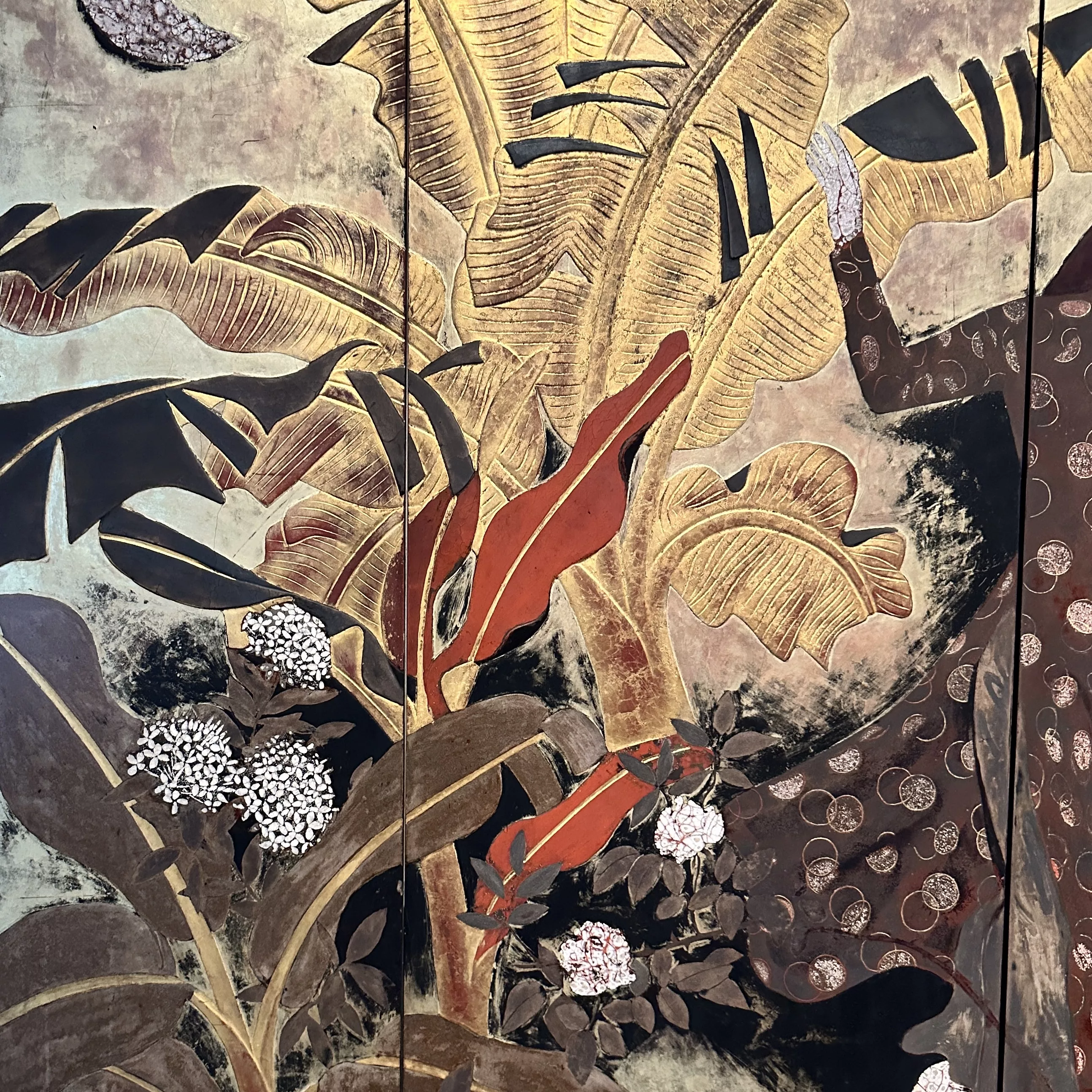
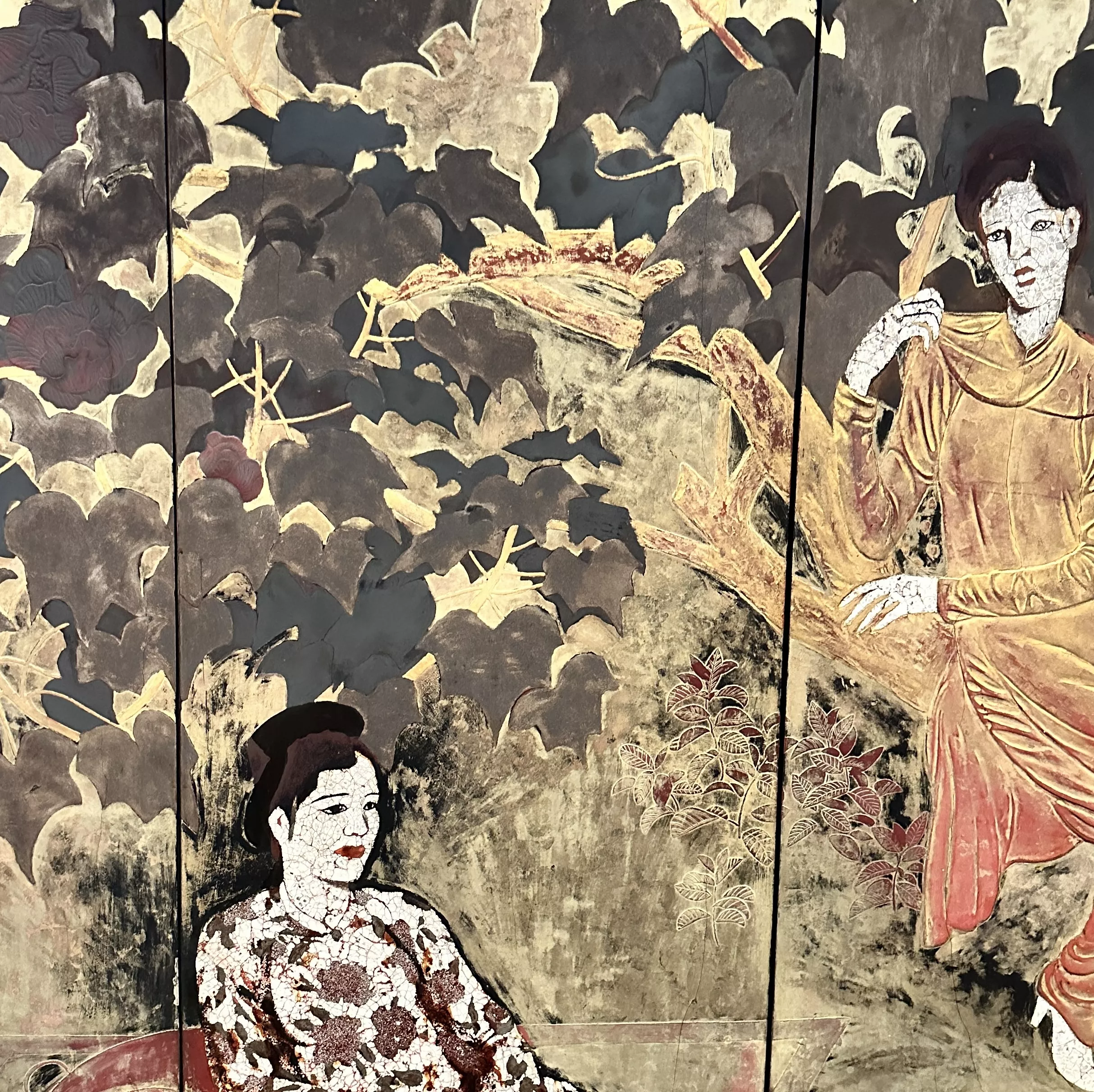
He played a decisive role in elevating lacquer to the status of a major medium in modern painting, transcending its traditional artisanal and decorative function. The decorative aesthetic is modernist, featuring a monumental organization of the surface, stylized figures, and an emphasis on ornamental rhythm.
He played a central role in the construction of a national artistic identity, alongside artists such as Tran Van Can and Le Pho, in defining an autonomous form of modern Vietnamese painting.
The Life of Nguyen Gia Tri
Cultural Context
Nguyen Gia Tri belongs to the founding generation of modern Vietnamese painting that emerged from the Indochina School of Fine Arts, a pivotal moment in the synthesis of local traditions and Western influences.
His work developed against the backdrop of the transformation of lacquer—a traditional artisanal medium—into a true vehicle for modern pictorial creation.
He played a major role in elevating lacquer painting to the status of an art form in its own right, by exploring the technical possibilities of sanding, layering, and inlaying precious materials.
He contributed significantly to the international recognition of Vietnamese lacquer as a major form of 20th-century Asian artistic modernity.
Artistic and Intellectual Circle
Like many Vietnamese artists of his time, his work was influenced by Victor Tardieu and Joseph Inguimberty, who encouraged experimentation with traditional media from a modern perspective.
He belonged to the same generation as Le Pho, Mai Thu, and Vu Cao Dam, key figures in the early development of Vietnamese modern art.
His influence had a lasting impact on subsequent generations of lacquer painters, and his works circulated within the networks of exhibitions and collections that ensured the international visibility of Vietnamese art.

Techniques by Nguyen Gia Tri
The Artist’s Style
Nguyen Gia Tri is a major figure in Vietnamese modern art, considered one of the leading innovators of lacquer painting in the 20th century.
He transformed the traditional medium of lacquer into a true easel painting form through extensive technical experimentation, particularly with layering, sanding, and polishing.
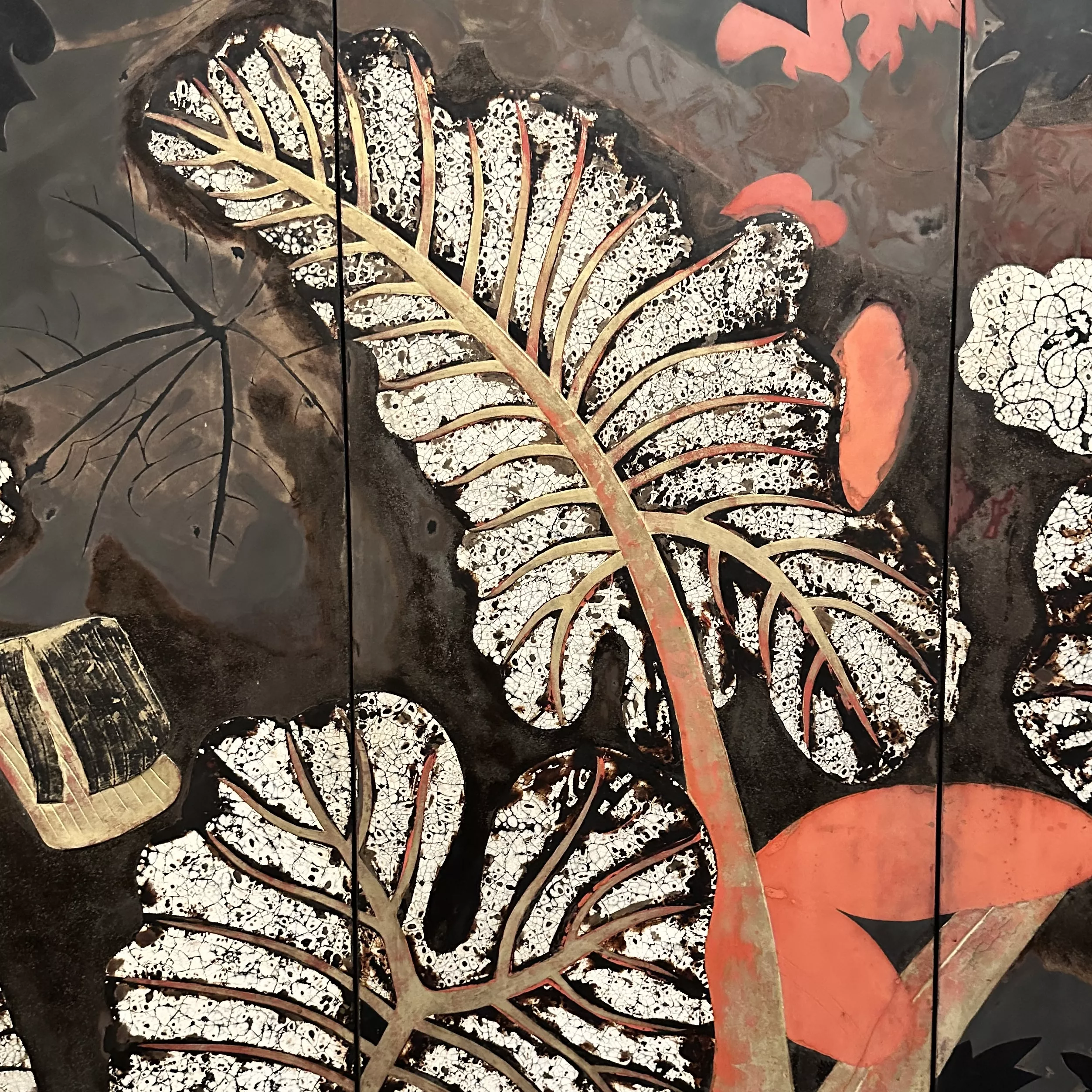
His compositions are monumental and decorative, often designed for panoramic formats or mural installations. His palette is distinctive, featuring deep blacks, reds, and golds, as well as inlays of eggshell or mother-of-pearl.
He seeks to create a layered pictorial space, where depth arises from the physical layers of material rather than from illusionistic perspective.
Focus on a Key Work
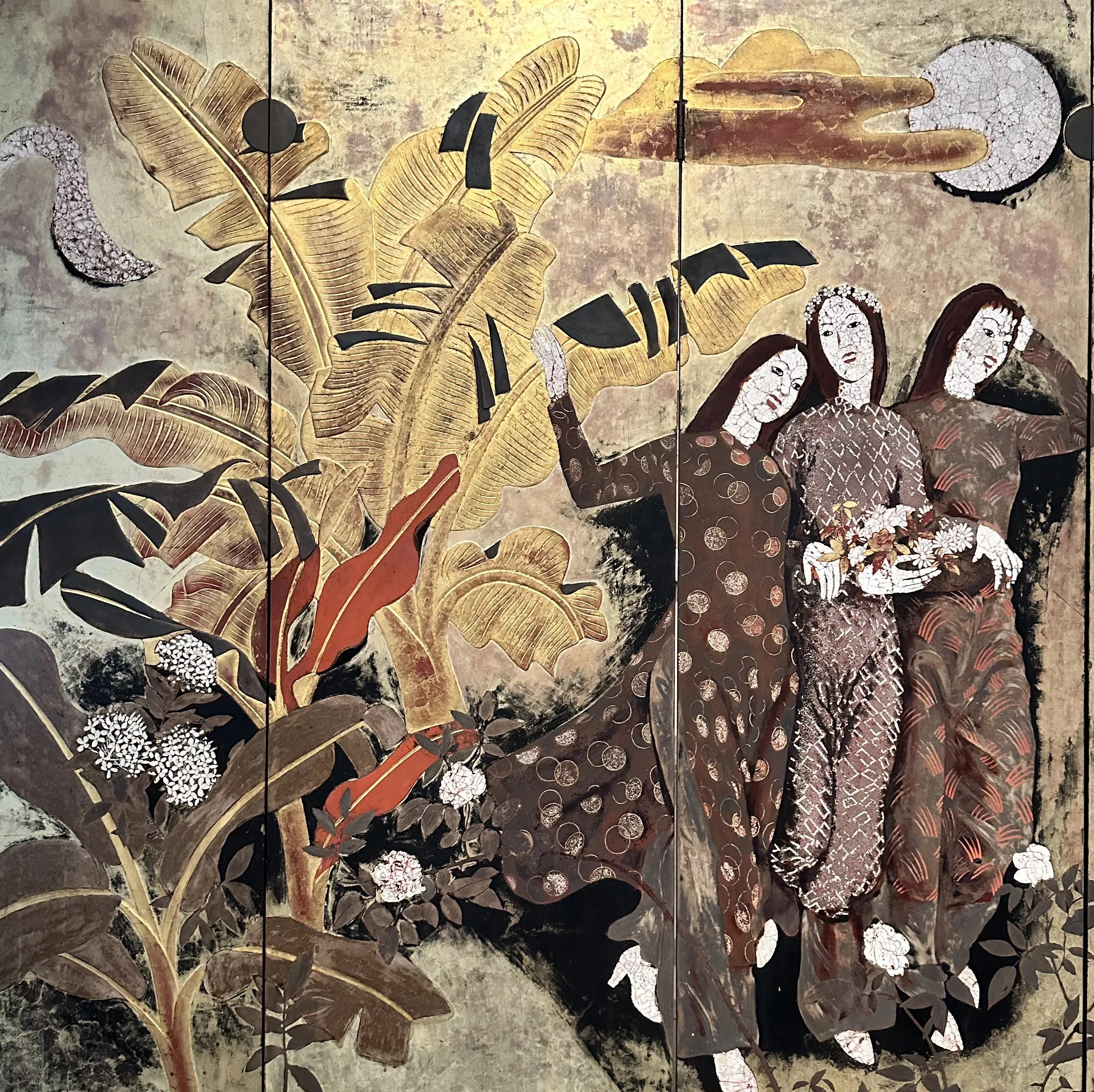
Young Women in a Garden, lacquer, ca. 1930–1940
This expansive decorative composition is organized according to a fluid rhythm of female figures integrated into the landscape. The silhouettes are refined in their stylization, characterized by supple lines and an elongated elegance.
He makes masterful use of lacquer, employing complex layering, depth effects created by polishing, and contrasts between matte and glossy surfaces. The incorporation of traditional materials (eggshell, gold leaf) enriches the visual texture.
This work is emblematic of the artist and illustrates Nguyen Gia Tri’s ability to elevate lacquer to the status of monumental modern painting.
FAQ – How do you appraise a work by Nguyen Gia Tri?
1) How important is the technical quality of the lacquer in the valuation?
For Nguyen Gia Tri, particular attention is paid to the depth of the blacks, the fineness of the polish, the integrity of the inlays, and the absence of structural damage. Technical mastery is an essential criterion for ranking the works.
2) What stylistic criteria specific to the artist are decisive?
For Nguyen Gia Tri, these include decorative sophistication, the elegant stylization of figures—often female—as well as the richness of textural effects achieved by layering lacquer, gold, or mother-of-pearl, which are major characteristics of his artistic language.
3) What role do provenance and scholarly documentation play?
A clearly established provenance, inclusion in exhibitions or specialized publications, and consistency with the body of work by artists from the Indochina School of Fine Arts are essential factors in authenticating and enhancing the value of the works.
Market Segmentation
Prices of Artworks
Nguyen Gia Tri is considered one of the undisputed masters of 20th-century lacquer art and occupies a “blue-chip” segment of the Indochinese market, with international museum recognition and a scarce supply of works.
His large lacquer panels represent the most prestigious segment, with auction prices generally ranging from 800,000 to 1 million euros. Medium-sized lacquer works typically sell for between 200,000 and 800,000 euros.
Drawings and studies are part of a more accessible market, ranging from approximately 10,000 to 80,000 euros.
Factors Affecting Value
Works from the years 1935–1955, which correspond to the artist’s period of technical and aesthetic innovation, can fetch prices 1.5 to 3 times higher than those of his later works or studio pieces.
There is a significant premium for compositions incorporating eggshells, metal leaf, and multi-layer polishing. The virtuosity of the lacquer technique is a key factor in determining value.
The market is very narrow due to the rarity of major works and their widespread presence in museum collections; every time a large panel appears at a public auction, it sparks intense international competition.
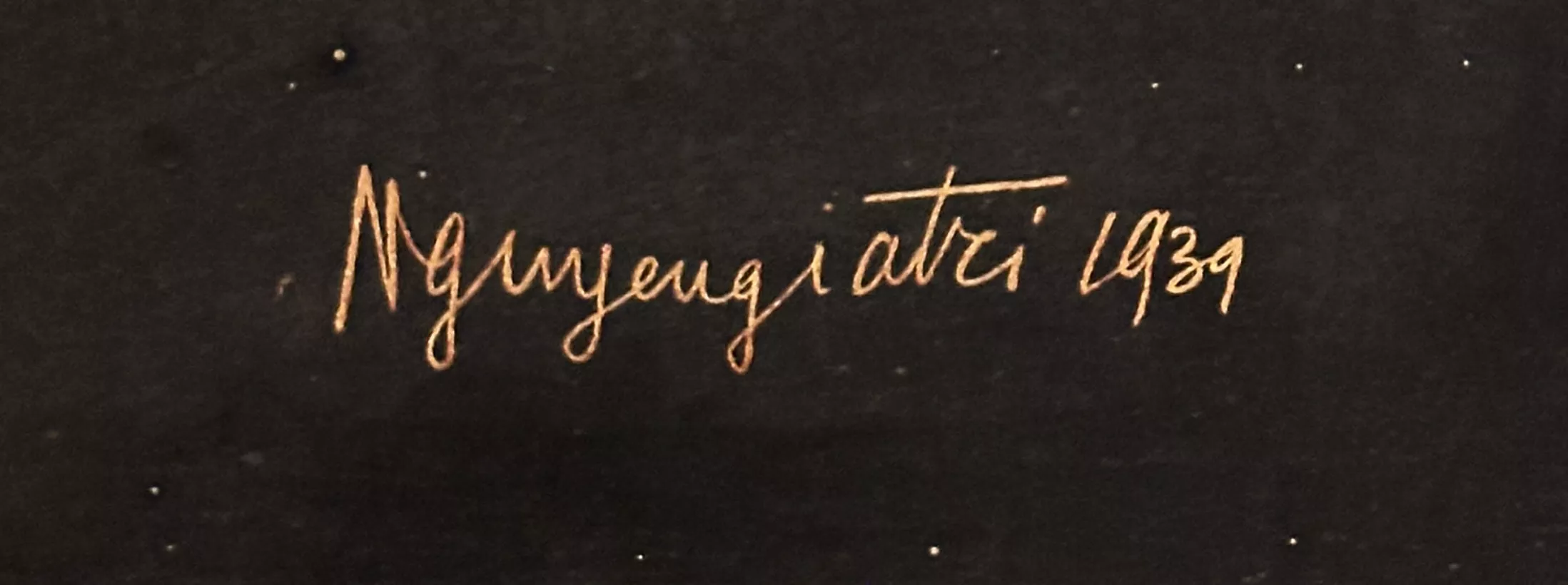
Recognizing the Artist’s Signature
Nguyen Gia Tri usually signs his works. However, it is essential to have your piece appraised to ensure its authenticity.
Get Your Nguyen Gia Tri Artwork Appraised
If you own a work by Nguyen Gia Tri, an appraisal will help you determine its current market value.
Using our online form, our experts and certified auctioneers will conduct a free appraisal and provide you with a reliable estimate of your artwork’s market value.
If you’re considering selling it, we’ll guide you through the process to ensure you get the best possible price.
Estimate in less than 24h
Discover in the same theme

Rating and value of Goudji's works, sculptures and jewelry
Goudji, the unusual goldsmith and sculptor of the 20th century, wields the arts of fire to create an enchanting universe that is highly prized at auct...
Learn more >

Rating and value of paintings by Bengt Lindstorm
Bengt Lindstorm is a twentieth-century Swedish contemporary artist who has produced highly-rated abstract works of art that are valued at auction.
Learn more >

Rating and value of paintings by Martiros Saryan
Martiros Saryan is an Armenian painter influenced by Fauvism and Symbolism, who has produced paintings that are highly regarded and valued.
Learn more >
Nos records d'enchères à l'hôtel Drouot

Estimated 10.000 - 15.000 €
Ebridge Ayer BURBANK(1858-1949), Young African-American boy, Oil on panel.

Estimated 20.000 - 30.000
EXCEPTIONAL LARGE OVAL DISH IN VINCENNES SOFT PASTE PORCELAIN FROM THE "BLEU CÉLESTE" SERVICE OF KING LOUIS XV AT THE CHÂTEAU DE VERSAILLES

Estimated 20.000 - 30.000
MANUFACTURE ROYALE DE SÈVRES, 18th century "L'Empereur de la Chine" - Portrait of the Emperor Qianlong, Hard porcelain bisque, 1775

Estimated 1.500 - 3.000
HERMÈS, "Kelly" 32 saddle bag in black box calf

Estimated Between €5,000 and €8,000
KRACHKOWSKY (1854-1914), Before the storm, oil on canvas

Estimated 40.000 - 80.000
Alexandre ROUBTZOFF (1884-1949), Portrait of Arbia, oil on canvas

Secure site, anonymity preserved

Auctioneer approved by the State

Free and certified estimates
Frequently asked questions
-
Who is Nguyen Gia Tri, and what is his role in the history of Vietnamese art?Nguyen Gia Tri (1908–1993) was a leading figure in the modernization of Vietnamese visual arts, having trained at the Indochina School of Fine Arts in the 1920s and 1930s. He is particularly recognized as one of the leading innovators of lacquer painting in the 20th century, transforming this traditional craft medium into a true vehicle for modern pictorial creation alongside artists such as Le Pho and Vu Cao Dam.
-
How much do Nguyen Gia Tri's paintings and lacquerware sell for?Nguyen Gia Tri’s works sell for between €150 and €1,544,700, depending on the technique and format. Large lacquer panels, the most prestigious category, generally sell for between 800,000 and 1 million euros, while medium-sized works range from 200,000 to 800,000 euros, and drawings between €10,000 and €80,000.
-
How do I have a work by Nguyen Gia Tri authenticated and appraised?To authenticate and appraise your artwork, submit a request for a free appraisal to Auctie's via our online form. Our state-certified auctioneers will conduct an appraisal based on authenticity, the technical quality of the lacquer, provenance, and recent market results, and will respond within 48 hours.
-
Is this a good time to sell a work by Nguyen Gia Tri?Yes, now is a good time to sell. The Nguyen Gia Tri market is enjoying growing international recognition as a museum-quality collection, with very limited availability and strong demand from Asian and Western collectors, ensuring that your artwork will fetch the best possible price.
-
What technical criteria influence the value of a lacquerwork by Nguyen Gia Tri?The depth of the blacks, the fineness of the polish, the integrity of the inlays (eggshell, metal leaf, mother-of-pearl), and the absence of structural damage are decisive factors. Works from the years 1935–1955, corresponding to the artist’s most innovative period, command prices 1.5 to 3 times higher than those of his later works.
