



Rating and value of works, ceramics by Pol Chambost

Key takeaways
- Ceramics by Pol Chambost (1906–1983), a French master of trompe-l'œil, sell for between €60 and €44,200, depending on the type and quality of the piece.
- His “Egg” sculptures and ceramic vases are particularly sought after by French and American collectors on the auction market.
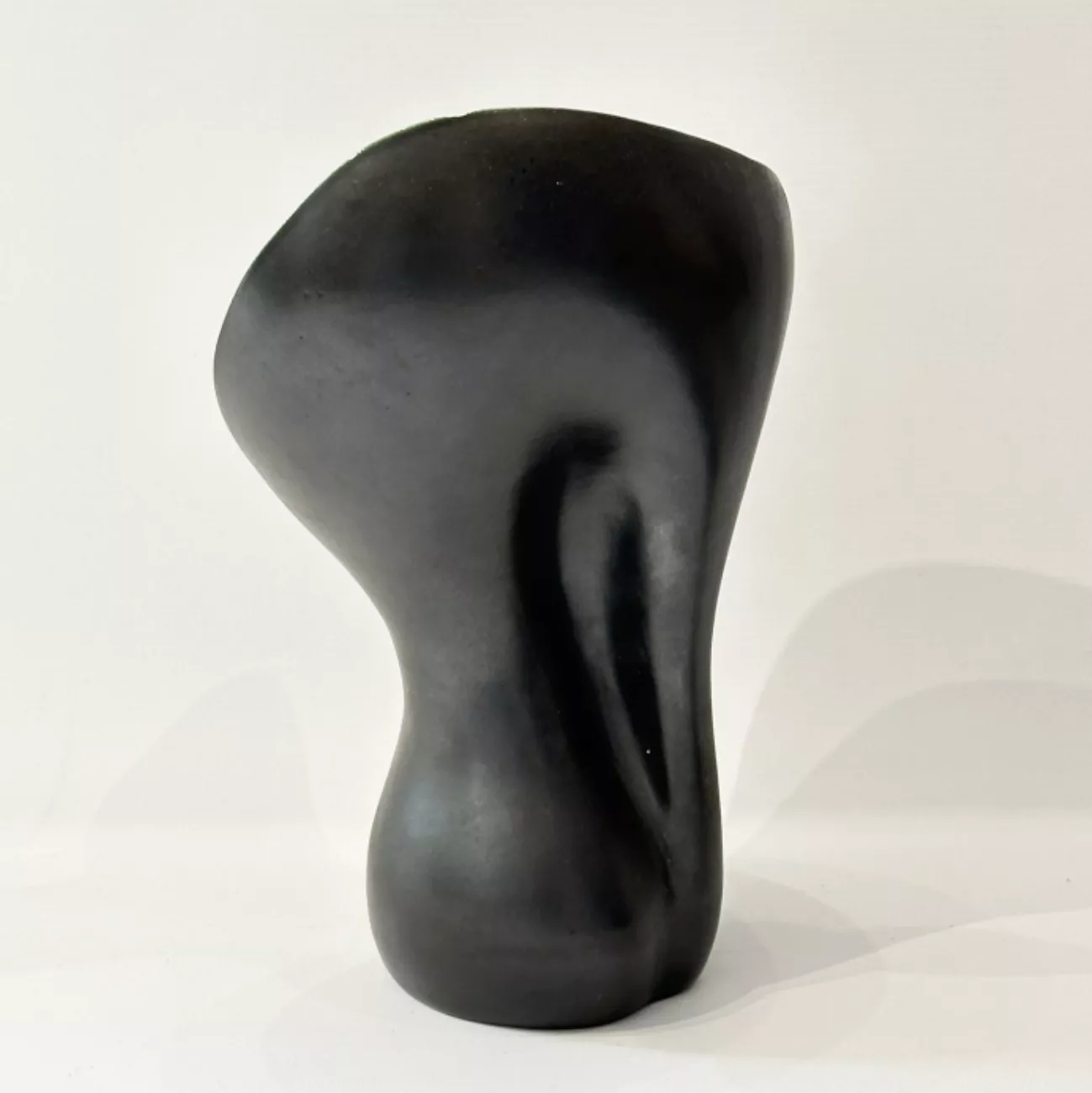
- In 2021, a black vase exceeded its high estimate, fetching €9,160, illustrating the strong demand for his avant-garde creations.
If you own an object created by Pol Chambost or after, and would like to know its value, our state-approved experts and auctioneers will offer you their appraisal services.
Our specialists will work to carry out a free appraisal of your work, and provide you with an accurate estimate of its value on the current market.
Then, should you wish to sell your work, we will direct you to the best possible arrangement to obtain the optimum price.
Rating and value of works by Pol Chambost
Pol Chambost is a French artist well known to ceramics enthusiasts. If you own one of his works, its value may be higher than you think. On the art market, the prices of Pol Chambost's works can be very high at the auctioneers' gavel.
His ceramic works are particularly prized by French and American buyers, and the price at which they sell on the art market ranges from €60 to €44,200, a fairly substantial range,but one that says a lot about the value that can be attributed to Chambost's works.
In 2021, a black ceramic vase sold for €9,160 while it was estimated at between €2,500 and €4,160, more than twice the high estimate.Order of value from a simple work to the most prestigious
Ceramics | Result |
|---|---|
Ceramic egg | From €320 to €4,200 |
Ceramic vase | From €60 to €18,080 |
Ceramic lamp | From €60 to €44,200 |
Estimate in less than 24h
Style and technique by Pol Chambost
Pol Chambost's style is characterized by a constant quest for innovation and refinement. His mastery of ceramics, combined with a keen sense of aesthetics, enables him to create works that are both elegant and surprising.
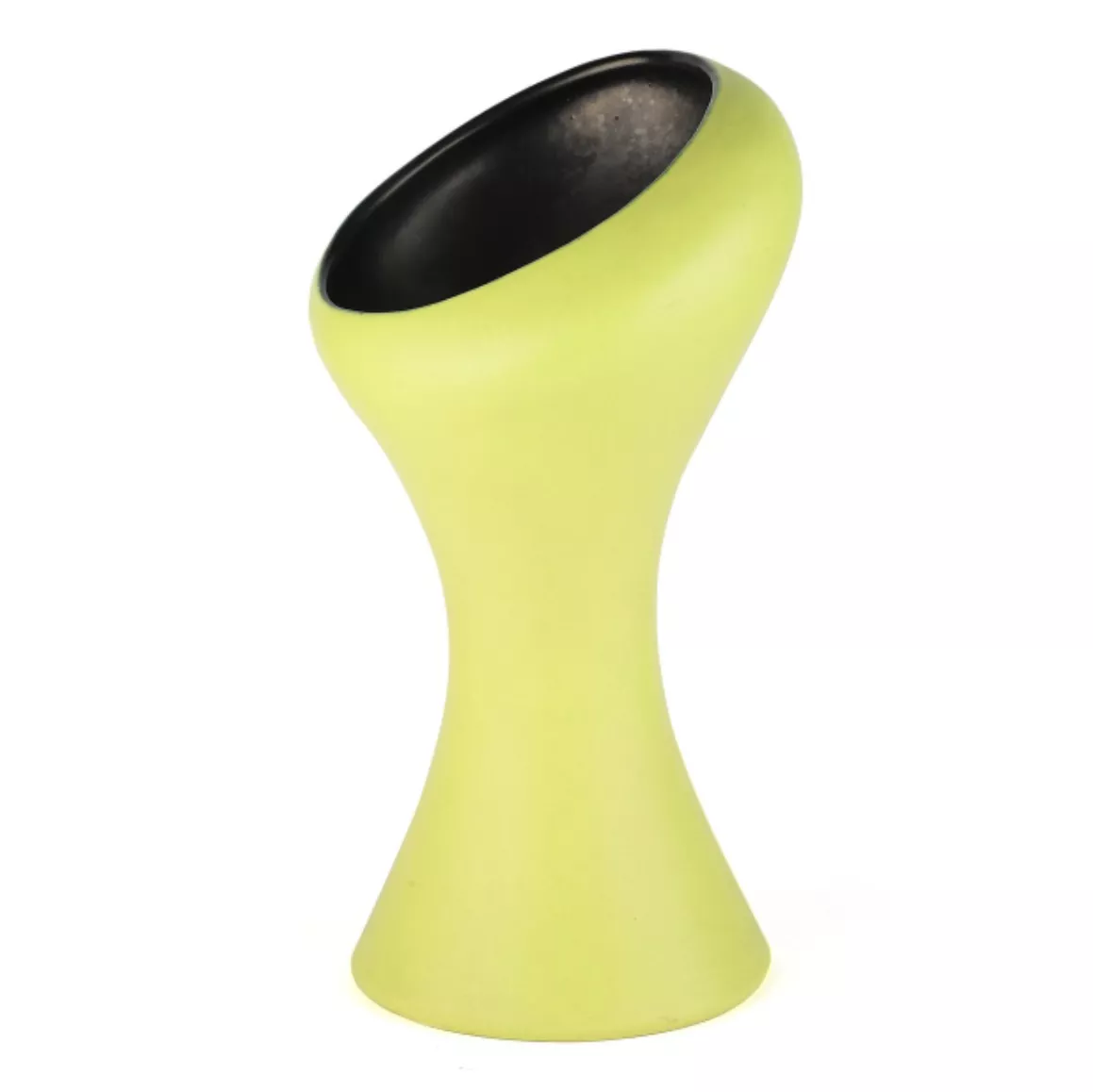
He develops a style on the border between sculpture and decorative ceramics, using refined forms and fluid lines that are uniquely his own.
His technique is marked by the use of earthenware for trompe l'oeil creations, a field in which he excels, notably with his famous egg and fruit sculptures, and trompe l'oeil renderings of leather and mother-of-pearl.
These works play on texture, illusion and materiality, giving his pieces a fascinating aspect of reality while being deeply rooted in the art of ceramics.
He works with both classic forms and more modern creations, often inspired by nature and everyday life, which he transforms into objects of timeless beauty.
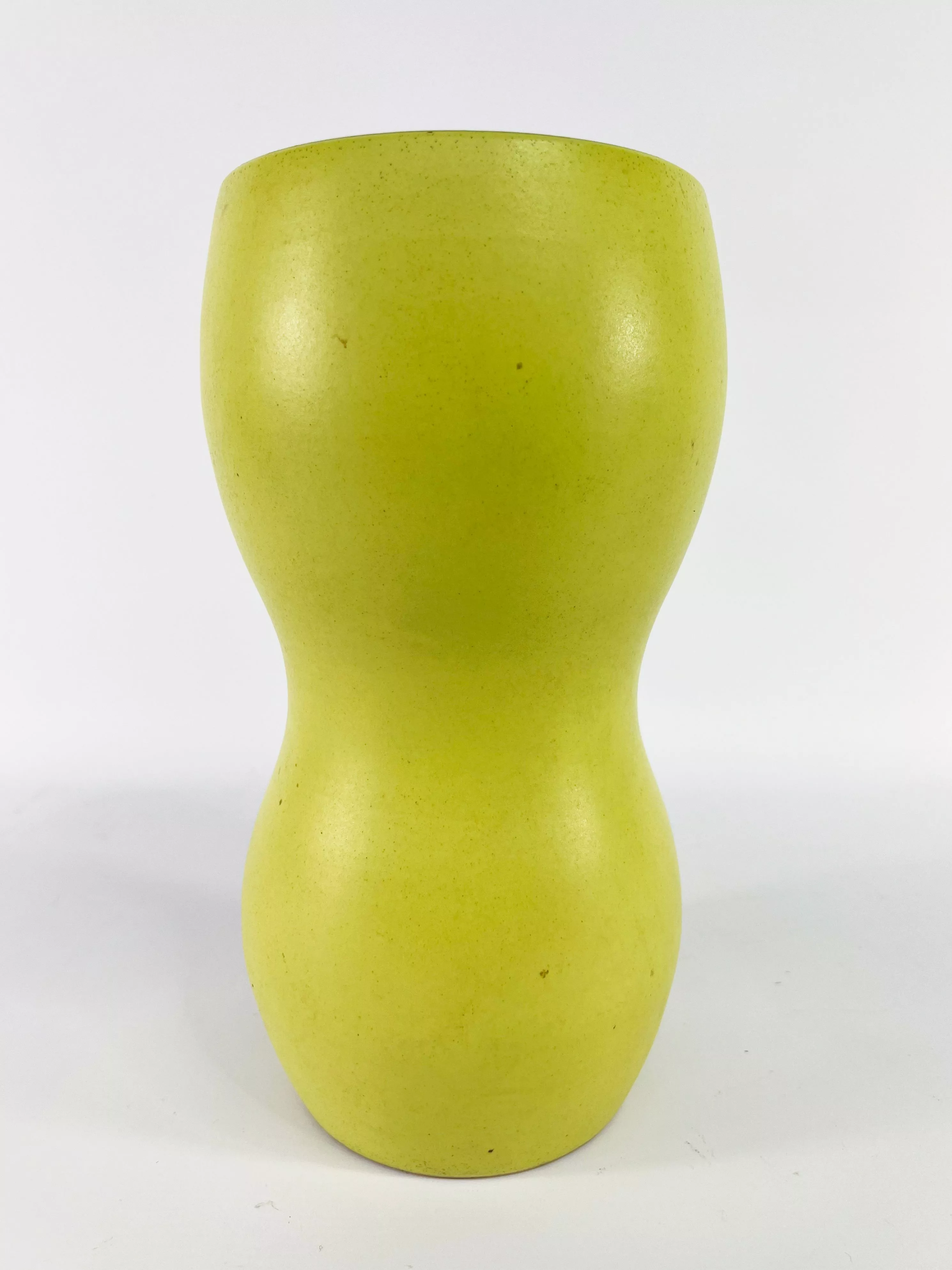
Pol Chambost uses glazes with rich and varied colors, exploiting the full potential of this earthenware for finishes that are as meticulous as they are surprising.
His work with terracotta, clay and enamel gives his pieces a unique texture, both soft and shiny, which makes them particularly sought-after.
The artist's signature lies in his ability to fuse simple and sophisticated forms, with great technical virtuosity.
The life of Pol Chambost
Pol Chambost (1906-1983), a French ceramist, is one of the major figures of 20th-century ceramic art. Born near Saint-Étienne into a family of artists (sculptors and painters), he initially seemed destined to carry on the family tradition.
However, driven by a passion for art, he turned away from marble-making to study sculpture and the applied arts. He took his first steps at the Ecole des Arts Appliqués à l'Industrie in Paris, before perfecting his skills at the Ecole des Arts Décoratifs.
His diploma in art engineering, with a specialization in stone sculpture, already testifies to his solid technical and artistic training.
His decisive encounter with earthenware, however, came thanks to his father, who encouraged him to embark on this type of ceramic creation, a material that was highly prized during the Trente Glorieuses, a period of economic prosperity and industrial innovation.
In a context where ceramics was undergoing a revival, Pol Chambost was a pioneer. He distinguished himself by using a high-capacity electric kiln, a first in France, which enabled him to explore new technical and artistic possibilities.
In 1939, he received his first awards, marking the start of an exceptional career. This initial success was only the prelude to a series of creations that combined elegance and originality.
He soon specialized in decorative ceramics, drawing inspiration from traditional materials such as marble or mother-of-pearl, which he reproduced with such precision that his trompe-l'oeil works became a signature of his art.
A significant development in his career corresponds to two encounters : that with Colette Guéden, artistic director of Primavera, the art studios of Printemps department stores, and his great friend Paul Pouchol, painter-decorator and ceramist, close collaborator of Jacques Adnet and Jacques Lenoble.
For Guéden, Pol created utilitarian and decorative objects for the Petites Foires Primavera. He particularly distinguishes himself by designing advertising ashtrays for major brands such as L'Oréal and Dubonnet.
These collaborations help establish his reputation and enable him to make a name for himself in the world of ceramic art, where his production is particularly appreciated for its creativity and quality.
The turn of the 50s - 60s
The 1950s and 1960s marked a turning point in the work of Pol Chambost, who continued to innovate while remaining true to his pioneering spirit.
He created trompe-l'œil works of great finesse, and his sculpture "œuf", became one of the most emblematic models of the 70s.
His ability to transform simple shapes into veritable material illusions made him a master of the genre, on a par with other great designers of the era.
His production experienced none of the difficulties that affected some workshops of the time. In fact, thanks to pragmatic management and a keen sense of the market, Pol Chambost managed to distribute his creations widely both in France and abroad.
He was part of the collective of Parisian ceramists who initiated the Salon de la Céramique, now the Salon Maison et Objets.
He remained a major player in the world of ceramics for several decades (fifty years of creation), and his work continues to influence the contemporary art scene, fashion in particular (Raf Simons and Kriss Van Assche).
Through his works, he was able to reconcile technical rigor and formal originality, making him one of the great names in 20th-century French ceramics.
Focus on Pol Chambost's trompe-l'œil egg
Pol Chambost's work is distinguished by a subtle mastery of ceramics, where innovation and tradition blend in perfect harmony.
Among his most remarkable creations, the trompe-l'œil sculpture "Œuf" perfectly embodies this quest for the transformation of materials and forms.
This piece takes the form of a majestic egg, sculpted with such precision that it appears to be a perfectly natural object, yet a product of ceramic art.
Pol Chambost thus succeeds in creating an optical illusion, giving his work the appearance of a material that it is not, but whose appearance is strikingly faithful.
This type of trompe-l'œil creation lies at the heart of Chambost's art, as she manages to push back the limits of the material by playing with its texture, color and shapes.
The choice of the egg as a subject is not insignificant: it symbolizes birth, purity, and fragility. But it is also a universal form, crossing eras and cultures.
Pol Chambost, in choosing to sculpt such an object, demonstrates his talent for reinterpreting traditional symbols while using an innovative technique.
This sculpture echoes the trend of the times, where ceramics is no longer just a utilitarian object but becomes an artistic medium, capable of evoking emotions and arousing wonder.
By placing his works in this perspective, Chambost establishes himself as a true innovator, faithful to his vision of art and ceramics.
It's interesting to note that this work doesn't just play with visual illusion. The texture of the ceramic, worked with remarkable finesse, plays a full part in the illusion.
The smooth, shiny appearance of the egg's surface seems almost organic, but it is indeed the ceramic material that, under the artist's expert hands, is transformed into what it is not, in a subtle play between reality and appearance.
With this piece, Pol Chambost not only masters the ceramic techniques of his time, he surpasses them, creating a work that is both poetic and technical, and which continues to fascinate today.
Thus, through his trompe-l'œil creations, Chambost elevates ceramics to a new level of excellence.
He succeeds in perfectly marrying technical research with visual poetry, offering the art world pieces of great originality and timeless beauty, just like other sculptors of his time such as Georges Jouve, Pouchol or Jacques Pouchain.
Pol Chambost on the auction market
The production of Chambost's works came to a halt after the artist's death in January 1983. As a result, the auction market is a favored avenue for acquiring one of his works.
They are highly prized at auction and whether it's an egg sculpture, a vase, a vide poche or another work, they are all in demand.
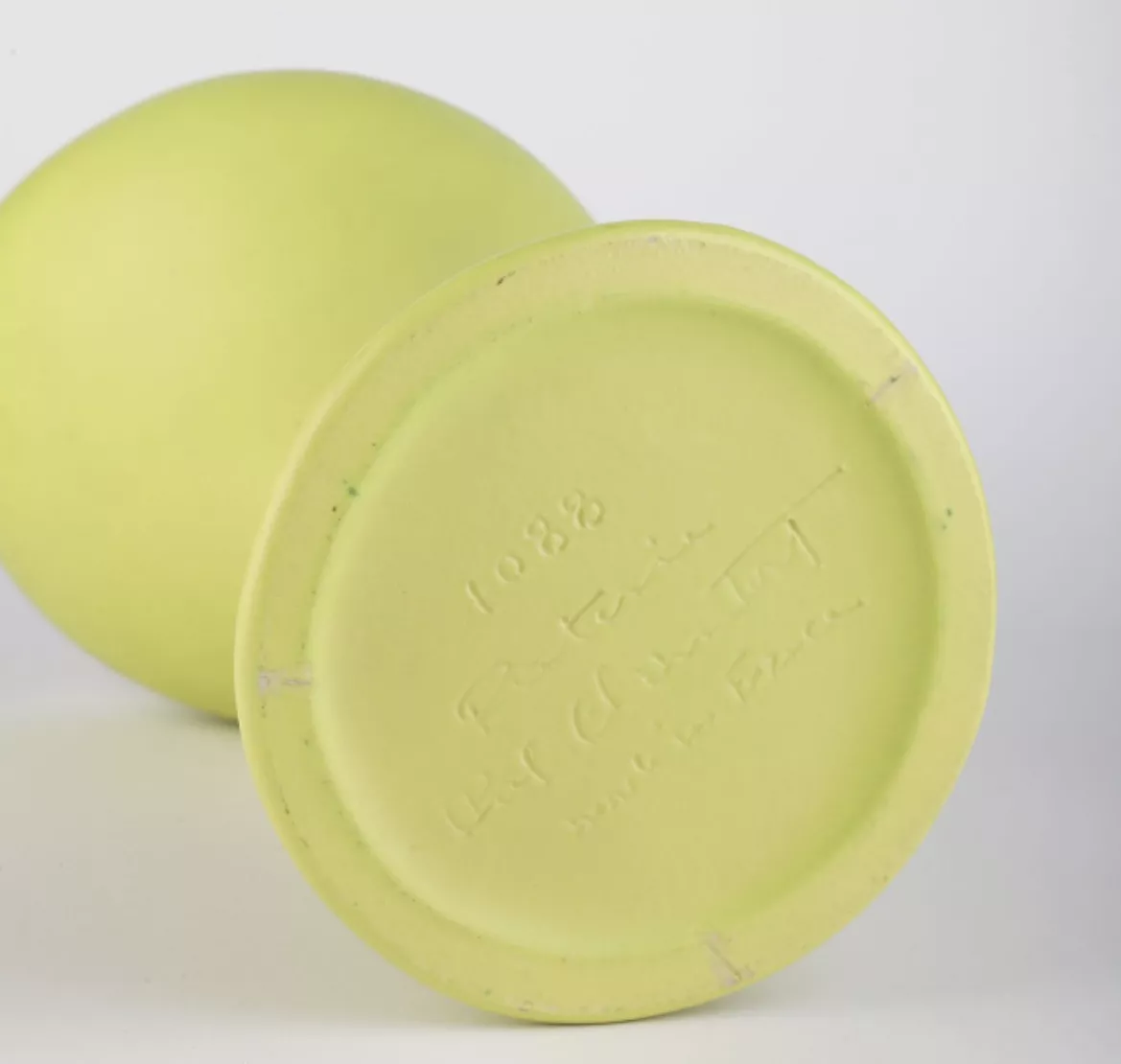
Recognizing Pol Chambost's signature
The works produced by Chambost are generally signed, which is why expertise remains important.
Knowing the value of a work
If you happen to own a work by Pol Chambost or after the artist, don't hesitate to request a free valuation using our form on our website.
A member of our team of experts and certified auctioneers will contact you promptly to provide you with an estimate of the market value of your work, not forgetting to send you ad hoc information about it.
If you are considering selling your work, you will also be accompanied by our specialists in order to benefit from alternatives for selling it at the best possible price, taking into account market inclinations.
Estimate in less than 24h
Similar works sold at auction

Estimated 2.000 - 4.000 €
PABLO PICASSO (1881-1973) ATELIER MADOURA " Profil de femme n° 67 " Round plate.

Estimated Between €3,000 and €5,000
Camille Fauré, enamelled vase with "Cascade" geometric design

Estimated 2.000 - 4.000
Pol CHAMBOST (1906-1983) Drop vase model 1068, circa 1955

Estimated 1.500 - 3.000
Pol CHAMBOST (1906-1983) Vase model 1056 dit Corolle, circa 1955

Estimated 1.000 - 1.500
Pol CHAMBOST (1906-1983), Vase model 1046 dit Corolle, circa 1955

Estimated 2.000 - 4.000
Pol CHAMBOST (1906-1983) Vase model 1088, known as Œil, circa 1955
Discover in the same theme

Rating and value of works, drawings and sculptures by Jules...
Jules Pascin was a Bulgarian artist, painter and sculptor of the 20th century, who produced drawings, paintings and sculptures listed at auction.
Learn more >

Rating and value of works, fashion drawings by Georges Lepap...
Georges Lepape was a 20th-century illustrator and fashion designer, who produced drawings and posters that were successful at auction.
Learn more >

Rating and value of paintings, drawings and engravings by Jo...
Joseph Hecht is a twentieth-century painter and printmaker who produced works that are highly rated and valued at auction. 24h estimate.
Learn more >

Secure site, anonymity preserved

Auctioneer approved by the State

Free and certified estimates
Frequently asked questions
-
Who is Pol Chambost, and what is his contribution to the art of ceramics?Pol Chambost (1906–1983) was a leading French ceramic artist of the 20th century and a pioneer of technical innovation, having been the first in France to use a large-capacity electric kiln. He distinguished himself through his mastery of trompe-l’œil ceramics, accurately reproducing materials such as marble and mother-of-pearl, and through his iconic creations such as the sculpture “Œuf.” His work influenced several decades of artistic creation and remains a benchmark in contemporary ceramic art.
-
What is the price range for Pol Chambost's ceramics on the market?The prices of Pol Chambost’s works vary considerably depending on the type and rarity: ceramic eggs range from €320 to €4,200, vases from €60 to €18,080, and lamps from €60 to €44,200. In 2021, a black ceramic vase estimated at between €2,500 and €4,160 sold for €9,160, demonstrating that some pieces can significantly exceed their estimates.
-
How can you authenticate and appraise a Pol Chambost ceramic piece?To authenticate a Pol Chambost ceramic piece and determine its exact value, we recommend requesting a free, no-obligation appraisal from Auctie's. Our experts and state-certified auctioneers will examine your piece and provide you with a reliable estimate within 48 hours, taking into account its condition, signature, and current market trends.
-
Is this a good time to sell a work by Pol Chambost?Yes, now is a good time to sell a Pol Chambost ceramic piece. Since his death in 1983, production has ceased, making his works increasingly sought after at auctions. They are in high demand, particularly among French and American buyers, and the market remains strong for all types of his creations.
-
How do I sell a Pol Chambost ceramic piece through Auctie's?Auctie's guides you through every step of the process when selling your Pol Chambost ceramics. After a free appraisal by our experts, we’ll offer you the best options for selling your piece at the best possible price, taking current market trends into account. Our auctioneers manage the entire process through to the auction sale.
