



Rating and value of sculptures and bronzes by Mahmoud Mokhtar

Key takeaways
- Prices for Mahmoud Mokhtar’s sculptures range from €8,000 to €759,000, with a record set in 2016 by the bronze sculpture “Au bord du Nil” (1920).
- Bronzes are the most sought-after category, fetching up to €759,000, ahead of marble (€503,800) and terracotta (€45,000).
- Mahmoud Mokhtar (1891–1934), an Egyptian pioneer, synthesized the Pharaonic heritage with European modernism, establishing an internationally recognized national sculptural identity.
If you own a work by or after Mahmoud Mokhtar, and would like to know its value, our state-approved experts and auctioneers will offer you their appraisal services.
Our specialists will work to carry out a free appraisal of your work, and provide you with an accurate estimate of its value on the current market.
Then, should you wish to sell your work, we will direct you to the best possible arrangement to obtain the optimum price.
Rating and value of Mahmoud Mokhtar's works
Mahmoud Mokhtar has produced unique sculptures and furniture. Now, prices for these creations can rise considerably under the auctioneer's hammer. His sculptures are particularly prized, by buyers from all over the world.
The price at which they sell on the art market ranges from €8,000 to €759,000, at the moment, a consequent gap but one that says a lot about the value that can be attributed to Mahmoud Mokhtar's works.
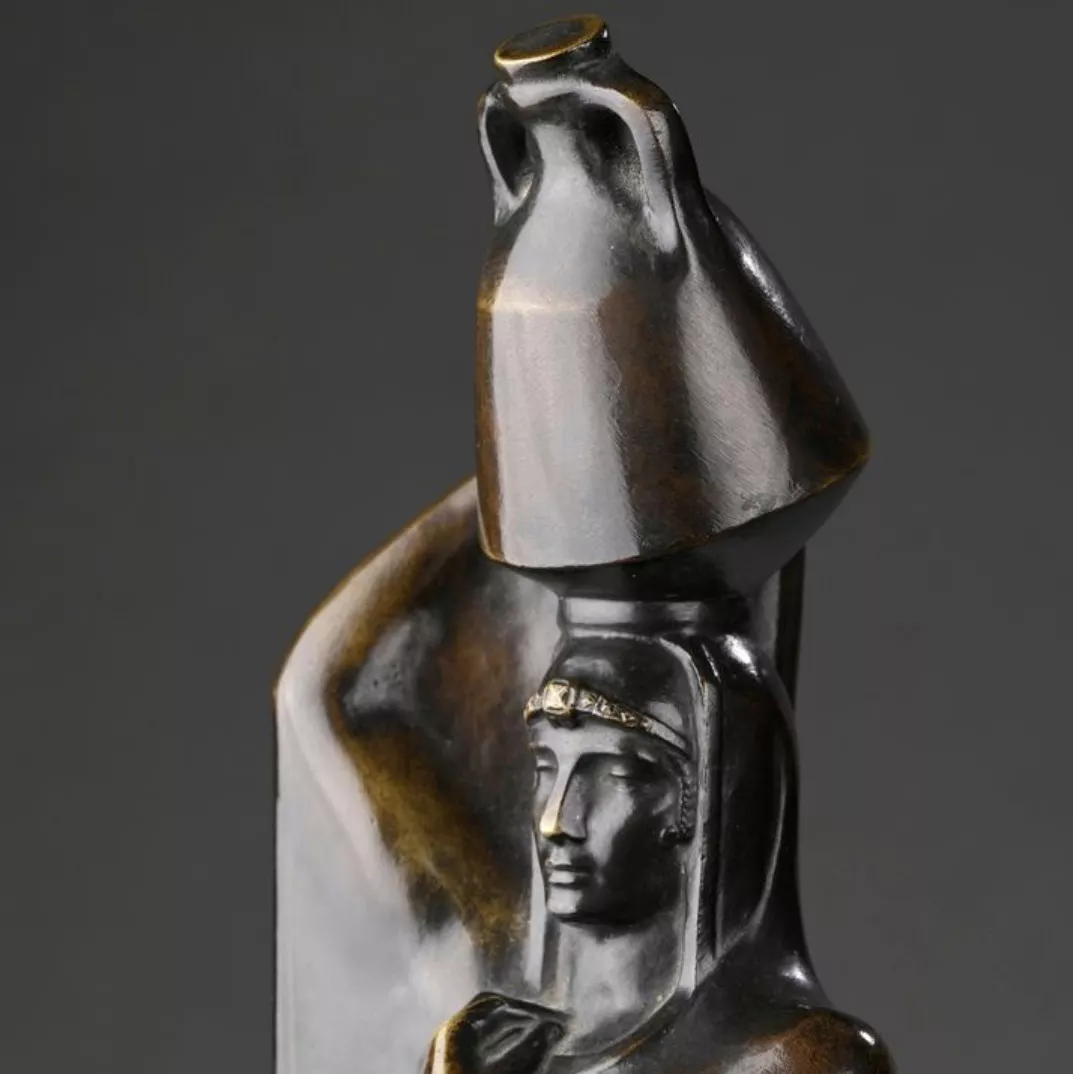
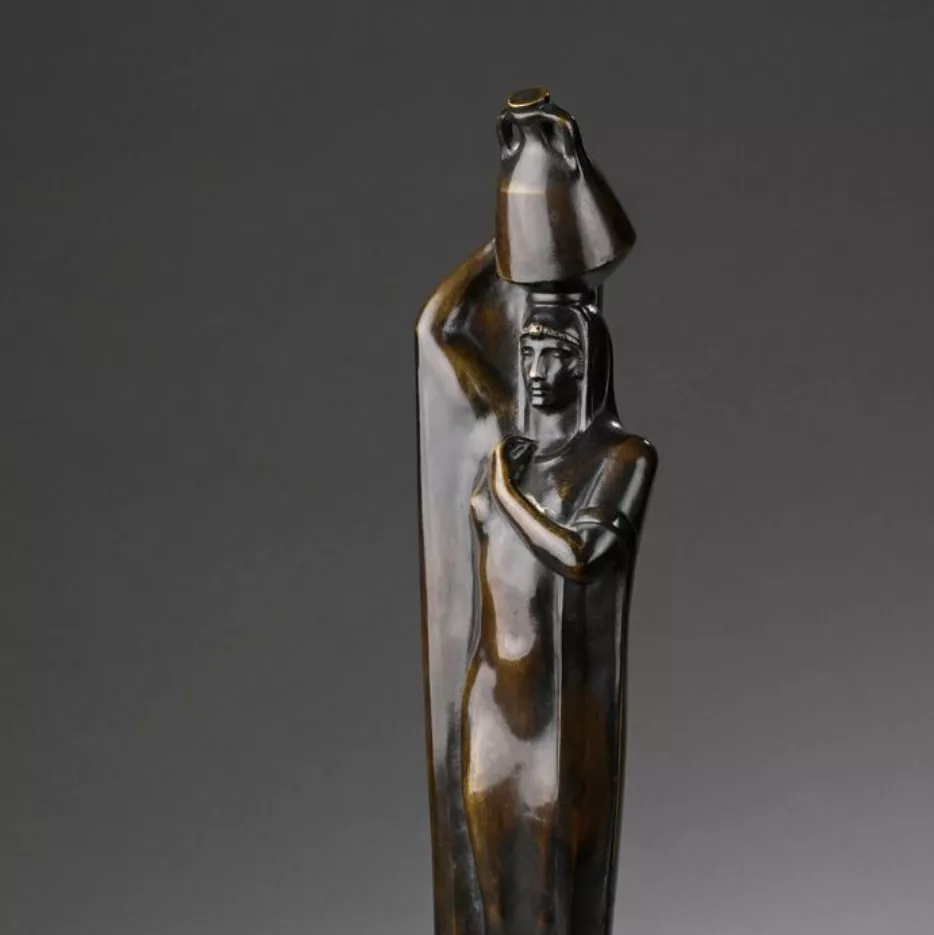
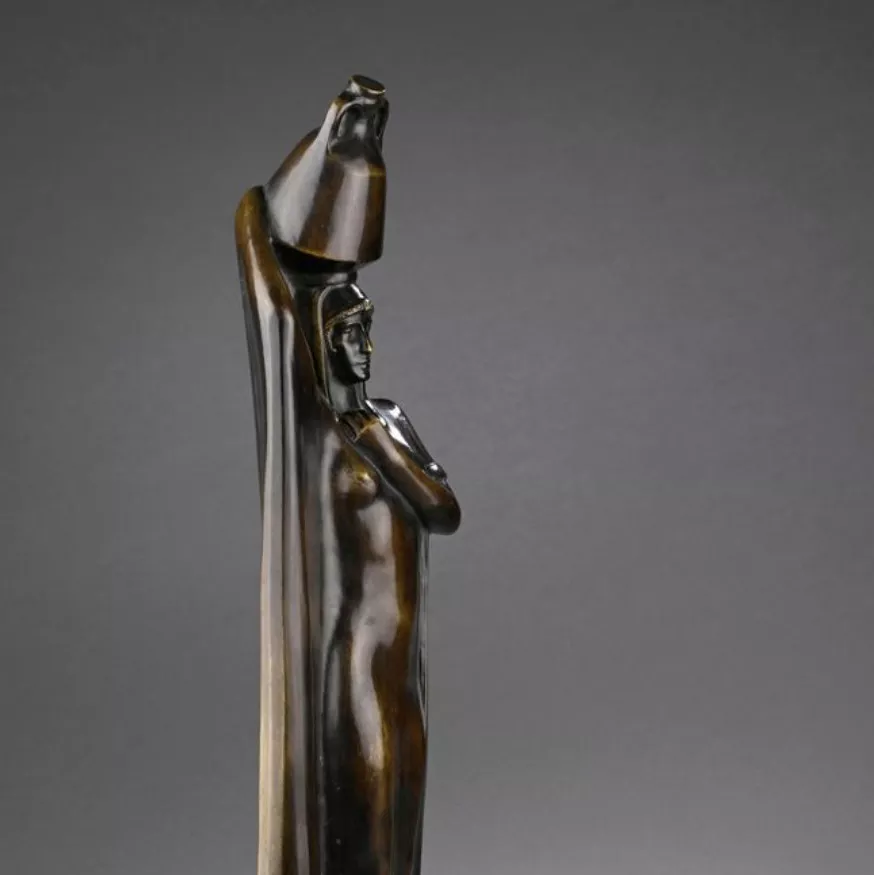
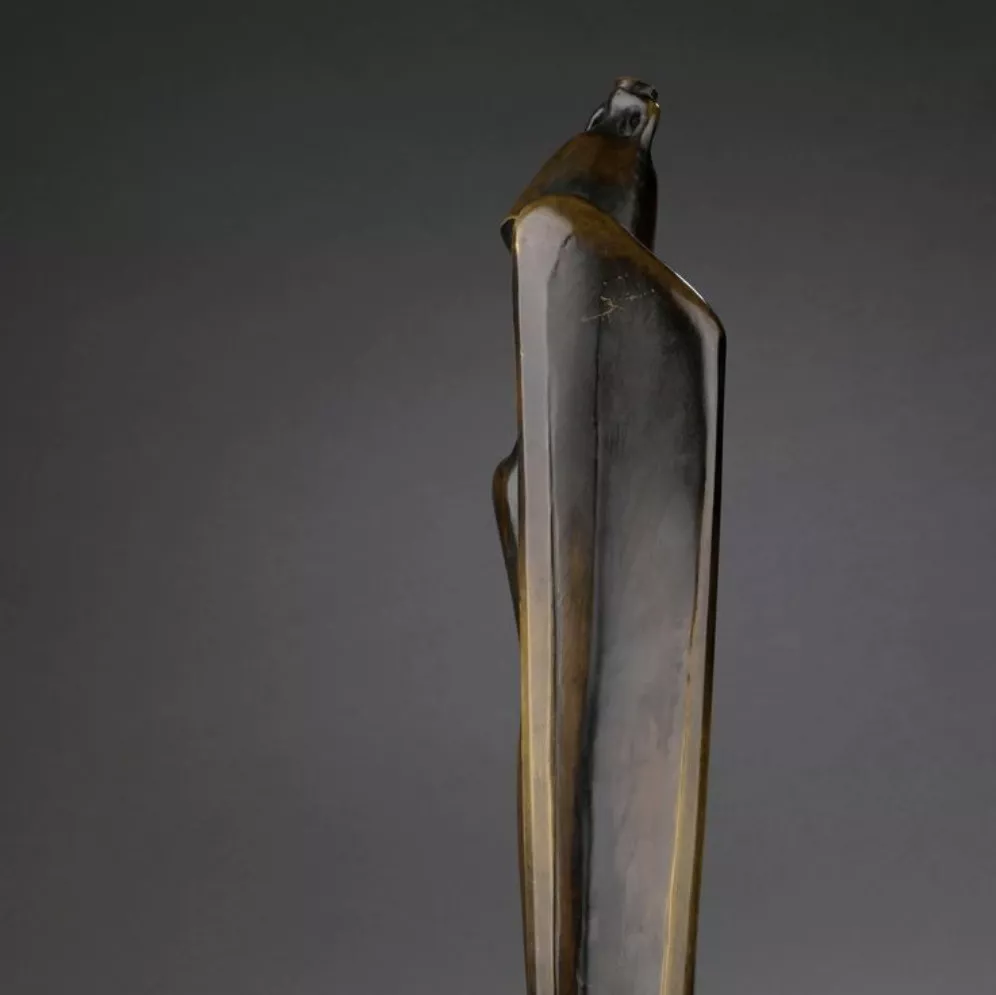
In 2016, his bronze entitled Au bord du Nil,dating from 1920 sold for €759,000, originally estimated at between €150,000 and €220,000.
Order of value from the most basic to the most prestigious
Technique used | Result |
|---|---|
Baked clay | From €8,000 to €45 000€ |
Marble | From 18,800 to 503,800€ |
Bronze | From €16,900 to €759,000 |
Estimate in less than 24h
Style and technique of artist Mahmoud Mokhtar
Mahmoud Mokhtar's style is characterized by a variety of influences. Through his work, he achieves a synthesis between tradition and modernity, fusing the heritage of ancient Egyptian sculpture with the influences of European modernism.
Born in Egypt, he draws his inspiration from Pharaonic iconography, reinterpreting fairly pure forms and hieratic poses in a sculptural language that can be described as contemporary. His work reflects a balance between monumentality and expressivity, giving his pieces a timeless strength.
With regard to working with materials and mastering volume, he favors noble materials such as granite, bronze or stone - reminiscent of ancient Egyptian sculpture.
The modeling is smooth and precise, with a concern for formal clarity that enables the artist to highlight the internal structure of the figures. The artist works on contrasts between solid masses and fluid lines, enabling him to establish a harmony between solidity and movement.
His inspiration lies between nationalism and symbolism, as he inscribes his art in the identity revival of post-colonial Egypt - highlighting emblematic figures of the peasantry and patriotism.
His work often features peasants, workers or allegories of independence, enabling him to inscribe his work in a discourse that is both political and social.
The simplicity of his subjects linked to the contemporaneity of his compositions reinforces the emotional impact of his iconographies, rooted in Egypt's collective memory.
Mahmoud Mokhtar exerts a certain influence on modern sculpture, establishing himself as a pioneer of modern sculpture in Egypt, and thus paving the way for a generation of artists who wish to reconcile tradition and modernity.
His work, which lies at the crossroads of classicism and artistic nationalism, currently remains an essential reference for contemporary Egyptian sculpture.
Thus, thanks to his synthetic style and his attachment to Egyptian identity, Mokhtar creates a sculptural aesthetic that is rooted in history and resolutely forward-looking. His production marks a decisive stage in the evolution of modern sculpture in Egypt and beyond.
The career of Mahmoud Mokhtar
Mahmoud Mokhtar (1891 - 1934) was an Egyptian sculptor who left his mark on his time.
Born in Tanis, Egypt, he began his career as a sculptor at a time when modern Egyptian art was beginning to emerge.
He spent his childhood in a village on the Nile delta, immersing himself in traditional Egyptian culture and iconography, two factors that would have a lasting influence on his work.
In 1908, he began his artistic training at the Beaux-Arts in Cairo, the country's premier art institution, where he quickly attracted attention for his talent in sculpture.
Prince Youssef Kamal took him under his wing, and helped him to study in Paris in 1911, where he joined the École nationale supérieure des Beaux-Arts, taking in the contributions of Maillol, Bourdelle and Rodin.
He enjoyed a fairly rapid artistic ascent, coming to prominence as early as 1913 with his sculptures influenced by ancient Egyptian statuary and the modernist trends with which he became familiar in Paris.
In 1920, he presented La Porteuse d'eau, one of his most emblematic works that operates a synthesis between his attachment to the Egyptian people and his search for a national art.
Later, he officially committed himself to the Egyptian nationalist movement with the sculpture Nahdat Misr (The Renaissance of Egypt), a monumental sculpture that was inaugurated in 1928, and instantly seen as a symbol of the country's modernization.
From this time onwards, Mahmoud Mokhtar multiplied his official commissions and became one of the first artists to embody a modern Egyptian artistic identity on the international stage.
In the final years of his career, Mokhtar continued to work between France and Egypt, perfecting his sculptural language which enabled him to gain increasing recognition.
The artist died in 1943, aged 43, leaving behind a substantial body of work that would have a lasting influence on modern Egyptian sculpture.
After his death, his studio became a museum in his honor, and his influence would extend through many generations of Egyptian artists.
As a result, Mahmoud Mokhtar's career embodies the transition between modernity and tradition in Egyptian art. His artistic and nationalist commitment helped shape a new sculptural identity for twentieth-century Egypt, making him a founding figure of modern sculpture, at least for this region of the world.
Focus on Nahdat Misr (The Renaissance of Egypt), 1928, Mahmoud Mokhtar
Mahmoud Mokhtar created this sculpture on commission from the Egyptian state. Its formal approach and composition differ from his other works.
In fact, this is a monumental sculpture in pink granite, measuring several meters, which is located in Cairo. The composition is balanced with a strong verticality. An Egyptian peasant is seen lifting the veil of a sphinx - a symbol of the country's ancient heritage.
There is an opposition between the stability of the sphinx and the movement of the fellah, who raises his head and stretches out his arm, expressing a dynamic of emancipation.
This statue was commissioned in a context of post-colonial Egyptian nationalism, following the 1919 Revolution against British occupation. The work conveys the idea of national renewal by drawing on Egypt's dual heritage, combining both Pharaonic grandeur and the strength of the contemporary people.
This sculpture is meant to symbolize Egypt's modernization and resurgence on the international stage.
Mahmoud Mokhtar chose pink granite for his sculpture, a material with a direct link to ancient Egyptian statuary, which helps give the work a certain aura of timelessness.
The finishes are precise, particularly in the treatment of clothing and volumes, reminiscent of classical statuary yet rooted in a modernist approach. The sculpture, smooth and uncluttered, emphasizes essential forms rather than superfluous details.
Nahdat Misr consequently becomes a founding work of modern Egyptian sculpture, and a strong visual landmark for future generations. The style of this work would influence Egyptian sculptors seeking a synthesis between the tradition of their roots and the modernity of sculpture.
Still today, the work remains a symbol of national pride and a milestone in the history of Egyptian public art.
Success of Egyptian sculpture at auction
Egyptian sculpture has seen increasing valuation at auction over the last two decades. Modern works by Mahmoud Mokhtar, as well as Adam Henein and Abdel Hadi El-Gazzar, have seen their value rise on the art market.
Mahmoud Mokhtar's works in particular top the sales charts, and his bronzes fetch high prices. The low output of modern Egyptian sculptures combined with their historical importance makes them particularly sought-after by collectors and institutions.
These works are meeting with international interest ; buyers from Europe and the Middle East are increasingly interested in these iconic pieces - establishing themselves as key segments of the art market.
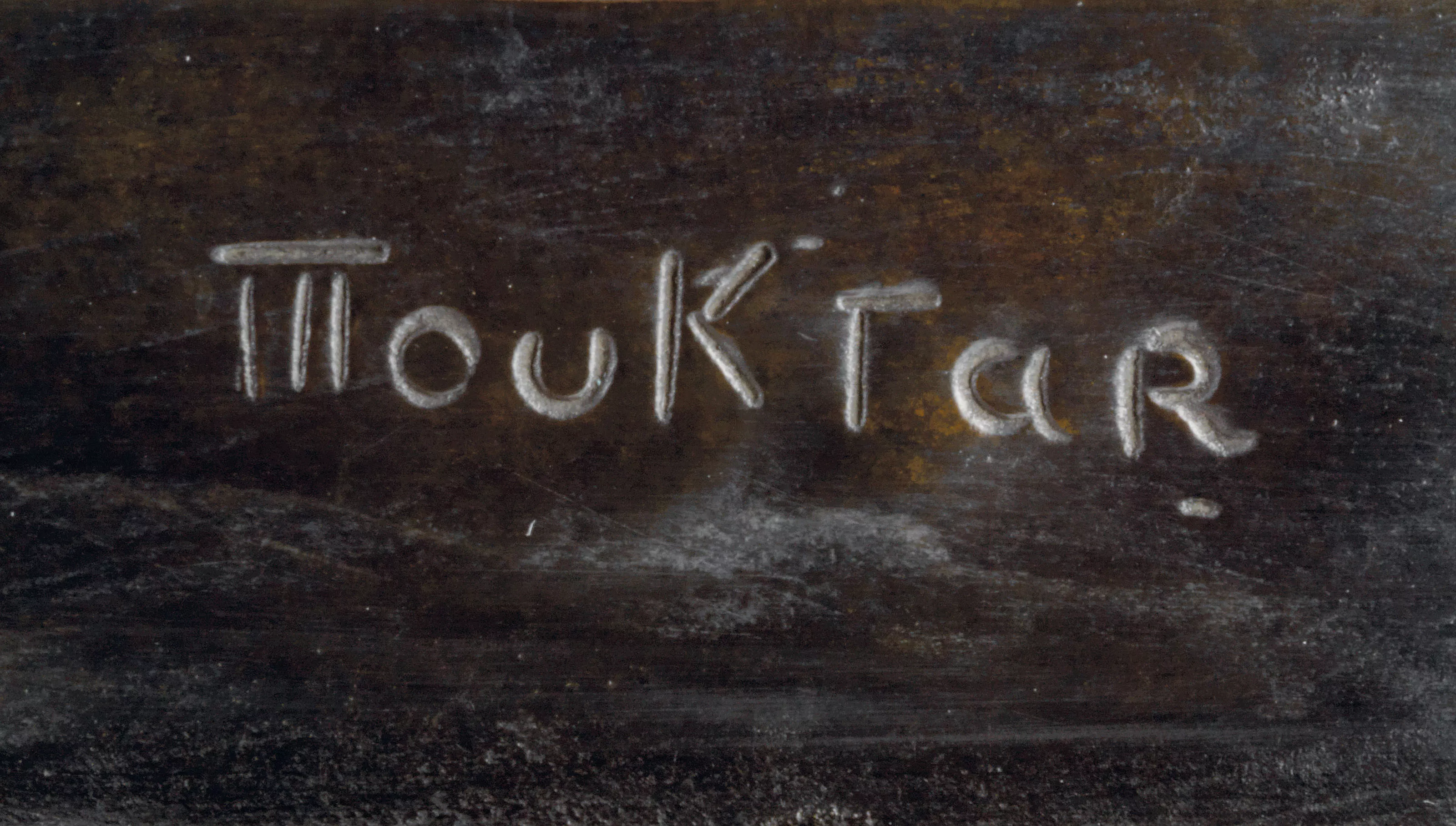
Recognizing Mahmoud Mokhtar's signature
Mahmoud Mokhtar doesn't always sign his works. If you think you own one, it's best to have it appraised.
Expertise your property
If you own a work by Mahmoud Mokhtar, don't hesitate to request a free appraisal by filling in our online form.
A member of our team of experts and certified auctioneers will contact you to provide an estimate of the market value of your work.
If you are considering selling your work, our specialists will also guide you through the various alternatives available to obtain the best possible price, taking into account market trends and the specific features of each work.
Estimate in less than 24h
Discover in the same theme

Ratings and values of paintings by Maqbool Fida Husain
Maqbool Fida Husain is a twentieth-century Indian painter who has produced highly successful works at auction.
Learn more >

Rating and value of Russian Orientalist paintings by Alexand...
Alexander Iacovleff was a Russian Orientalist painter who produced numerous paintings that are highly valued at auction.
Learn more >

Rating and value of paintings by Jean Fautrier
Jean Fautrier is an abstract painter of the 20th century, quoted at auction, who produced works whose value is quite high. 24h estimate.
Learn more >
D'autres bronzes modernes vendus aux enchères

Estimated Between €2,000 and €4,000
Edouard Marcel SANDOZ (1881-1971) curly stingray, bronze print

Estimated Between €1,500 and €3,000
Renato CARVILLANI (1896-1986), seated woman, gilded bronze print

Estimated Between €1,500 and €3,000
César BALDACCINI dit CESAR (1921-1998), Poule Cartier, bronze print

Estimated Between €10,000 and €20,000
Baltasar LOBO (1910-1993), female nude in bronze

Estimated 5.000 - 8.000
Igor MITORAJ (1944-2014), Bust of Asclepius, Green patina bronze sculpture

Secure site, anonymity preserved

Auctioneer approved by the State

Free and certified estimates
Frequently asked questions
-
Who is Mahmoud Mokhtar, and what is his contribution to modern sculpture?Mahmoud Mokhtar (1891–1934) was an Egyptian sculptor and the founder of modern Egyptian sculpture. Trained at the Cairo School of Fine Arts and later at the École nationale supérieure des Beaux-Arts in Paris, he synthesized the legacy of Pharaonic statuary with European modernist trends. His nationalist commitment, particularly through iconic works such as “Nahdat Misr” (1928), shaped a modern Egyptian artistic identity and had a lasting influence on subsequent generations of artists.
-
What is the price range for Mahmoud Mokhtar's sculptures at auction?Mahmoud Mokhtar's works sell for between €8,000 and €759,000, depending on the medium and the piece. Terracotta works range from €8,000 to €45,000, marble works from €18,800 to €503,800, and bronze works from €16,900 to €759,000. The record was set in 2016 with the bronze “Au bord du Nil” (1920), which sold for €759,000, far exceeding its initial estimate of €150,000 to €220,000.
-
How can you authenticate a sculpture by Mahmoud Mokhtar?Since Mahmoud Mokhtar did not consistently sign his works, we recommend having your sculpture appraised. Auctie's offers a free, no-obligation appraisal: fill out our online form, and a certified expert or auctioneer will contact you to authenticate the piece and provide you with an accurate valuation within 48 hours.
-
Is this the right time to sell a sculpture by Mahmoud Mokhtar?Yes, this is a favorable time. Modern Egyptian sculpture has been gaining in value over the past two decades, with Mokhtar’s works leading the way in sales. The limited production, combined with their historical significance and growing international demand from collectors in Europe and the Middle East, makes these pieces particularly sought after.
-
How does the sales process work at Auctie's?Auctie's guides you from the appraisal to the auction. After submitting a request for a free online appraisal, an expert will contact you to evaluate your artwork with no obligation. If you decide to sell, our specialists will guide you through the best available options, taking into account market trends and the specific characteristics of your piece, to help you achieve the best possible price.
