



Rating and value of paintings by Huguette Caland

Key takeaways
- Huguette Caland’s works have seen a sharp rise in value, with prices ranging from €170 for prints to €401,900 for paintings.
- Her oil-on-canvas paintings are the most sought-after, especially among American collectors, particularly since her international rediscovery in 2010.
- A Lebanese artist (1931–2019) who blurred the boundaries between textile art and painting, notably with her famous series *Bribes de Corps*, created around 1973.
If you own a work by artist Huguette Caland or based on her work and would like to know its value, our state-approved experts and auctioneers will guide you.
Our specialists will carry out a free appraisal of your work, and provide you with an accurate estimate of its value on the current market.
Then, should you wish to sell your work, we will direct you to the best possible arrangement to obtain the optimum price.
Rating and value of artist Huguette Caland
Huguette Caland is a well-known artist among modern and contemporary art enthusiasts. Now, prices for her works are rising at the auctioneers' gavel.
Her oils on canvas are particularly prized, especially by American buyers, and the price at which they sell on the art market ranges from €170 to €401,900, a large delta but one that speaks volumes about the value that can be attributed to the artist's works.
In 2023, his untitled oil on canvas from 1980 sold for €401,900, whereas it was estimated at between €230,000 and €340,000. Its value is rising sharply.
Order of value from the most basic to the most prestigious
Technique used | Result |
|---|---|
Estamp - multiple | From €170 to €11,540 |
Drawing - watercolor | From 800 to 50,670€ |
Painting | From 1,000 to 401,900€ |
Estimate in less than 24h
The works and style of Huguette Caland
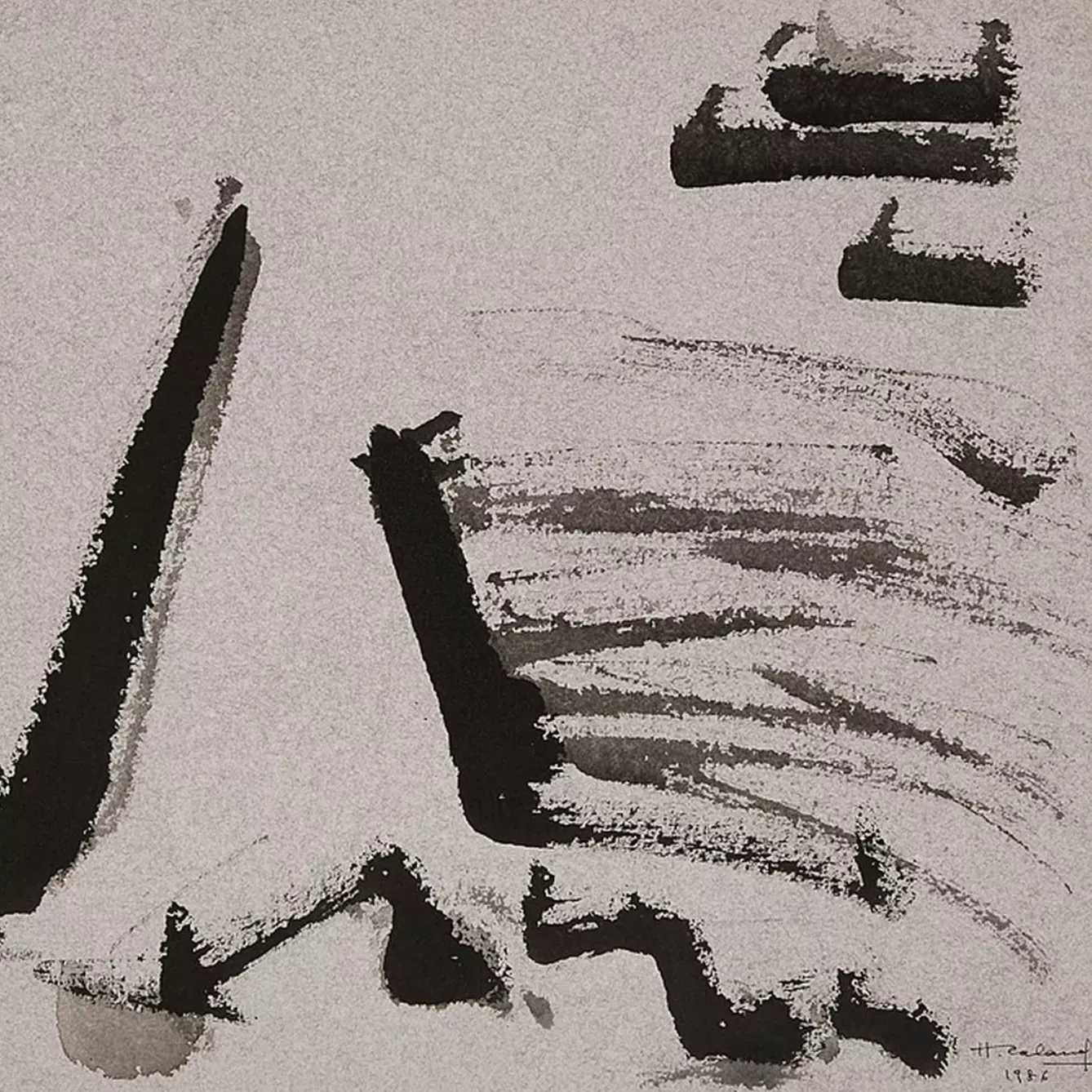
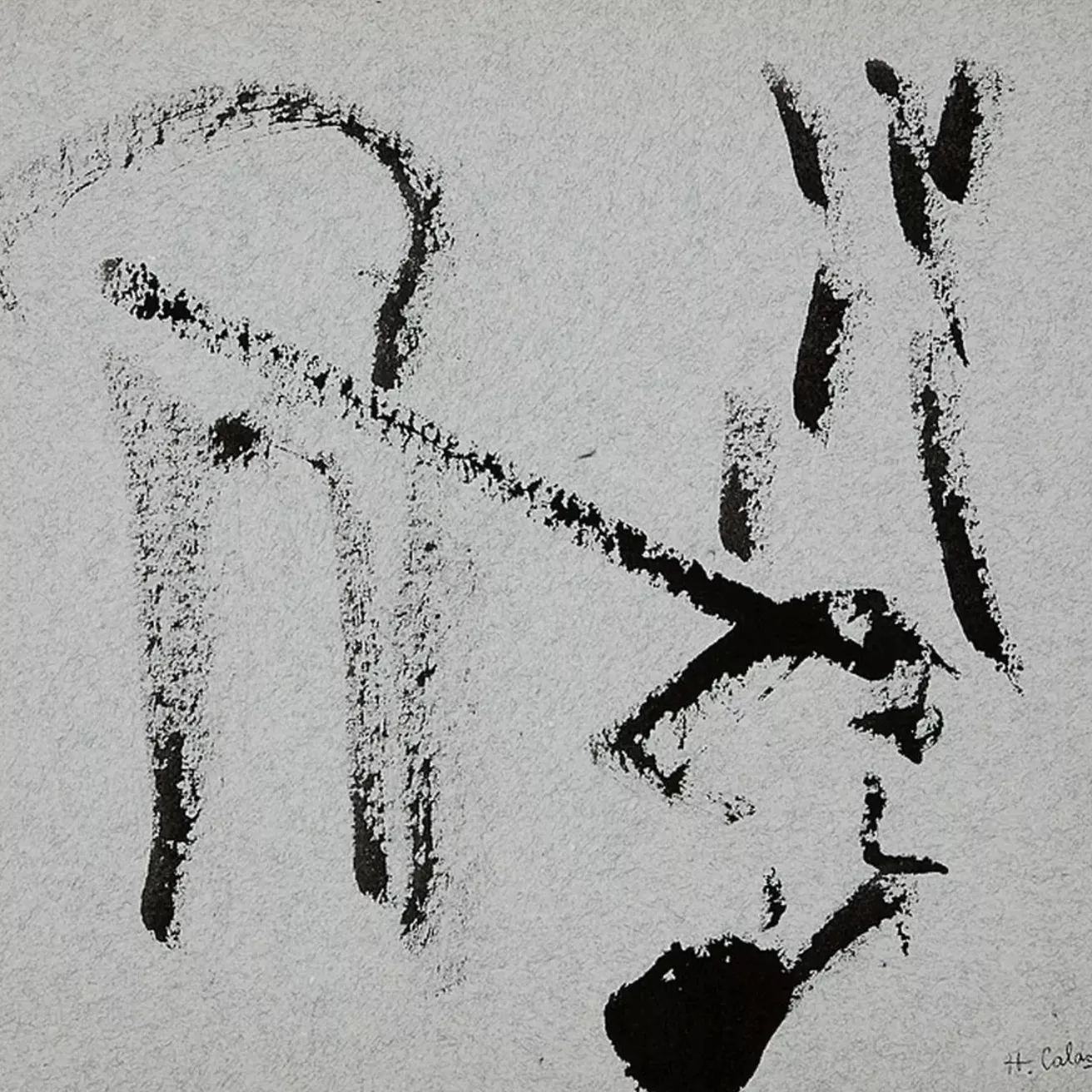
Huguette Caland (1931 - 2019) is an unclassifiable Lebanese artist who has worked in many mediums. Her work lies somewhere between abstraction, textile drawing and exploration of the body. From the 1970s onwards, she developed a singular graphic language, situated between biomorphic abstraction, decorative motif, drawing and free calligraphy.
She thus deconstructs traditional genres by fusing painting, drawing, textiles, performance and the female body. Her work never separates form and desire; she works with an aesthetic of suggestion, where each line can be an outline, a fold or a trace.
Caland uses a supple, fine, sinewy line, often in ink, pencil or acrylic, that crosses the surface without break this is the foundation of her language. The line doesn't surround but organizes space, and unfurls like a narrative or bodily thread, evoking both the folds of a fabric or the folds of a body.
In her drawn series like Bribes de corps, she practices a sensual calligraphy, where outline and pattern become almost organic. She favors a sober palette through restricted, subtle ranges (flesh tones, beiges, off-whites, muted pinks) sometimes punctuated by bright reds or deep blacks.
She uses the transparency of acrylic or ink to create effects of veil, skin and diffuse vibration. Color is rarely modeled: it fills, emphasizes and breathes, and is often laid flat to enhance the materiality of the support.
In her painted or embroidered caftans (created from the 1970s onwards), she transforms the garment into a pictorial space in its own right, fusing painting, sculpture and body art. The borderies also follow abstract, erotic or topographical motifs, playing on the link between ornament and skin.
Huguette Caland thus blurs the boundaries between " minor " art (textiles) and " major " art (painting). The female body is omnipresent in her work, but never represented head-on: it is evoked, fragmented, dilated and rendered abstract by excessive proximity.
The life of Huguette Caland
Huguette Caland was born in Beirut in 1931, into a family known to the general public, since her father was Béchara El Khoury, the first president of independent Lebanon. She grew up in a cultivated but conservative French-speaking bourgeois milieu, which fueled her early desire for freedom and emancipation.
She married young to a businessman, with whom she had three children, but chose at over 30 to become a full-time artist, against the social expectations of her milieu. She trained as a painter at the American University of Beirut.
In the 1960s, she began exhibiting in Lebanon, with works already marked by a free graphic style. In 1970, she left Lebanon on her own for Paris to devote herself entirely to her artistic career.
In Paris, she frequented artistic circles and made several influential encounters (Giacometti, Brancusi, Picasso and Pierre Restany) and developed her first major series. During this period, she created her famous painted and embroidered caftans, which fuse textile art and body language.
In 1987, she moved to Venice Beach (Los Angeles), where she lived for over 25 years in a house-workshop that had become a place of free and cosmopolitan experimentation. She refuses to be affiliated with any particular movement or school, developing an entirely independent body of work that is at once abstract, carnal and meditative.
She makes no claim to militant feminism, but embodies a profound freedom in the way she looks at the body, gender and desire. Huguette Caland works outside conventional commercial circuits, which delays recognition of her work, particularly in Lebanon and Arab countries.
In the 2010s, she experienced an international rediscovery, as her works were exhibited at the Venice Biennale in 2017, at the Tate St Ives, the Sharjah Foundation, the Drawing Center in New York and other venues.
Huguette Caland died in Beirut in 2019, a few months after returning to settle there again. She is now considered a major figure of women's transnational art, having blurred the boundaries between East and West, art and craft, body and abstraction.
Focus on Bribes de corps #296, Huguette Caland, circa 1973
Bribes de Corps is a series created by Huguette Caland circa 1973. Within this series, Bribes de Corps #296 is a large-format oil on canvas (approx. 150 x 150 cm). It is undoubtedly the most emblematic series of her work, begun after her move to Paris, where material and form become a terrain for erotic and formal exploration.
The painting adopts a bodily abstraction, insofar as the curves are generous and the volumes are rounded, evoking flesh without explicit representation. The structure is essentially flat, close to the color field, with a use of softened borders, without perspective, that asserts the pictorial element as an autonomous surface.
His palette is vivid, dominated by deep greens, luminous yellows or vivid pinks, depending on the version. Color operates not only as a filler but as a sensory zone, underlining the tactile, epidermal density of the flesh depicted.
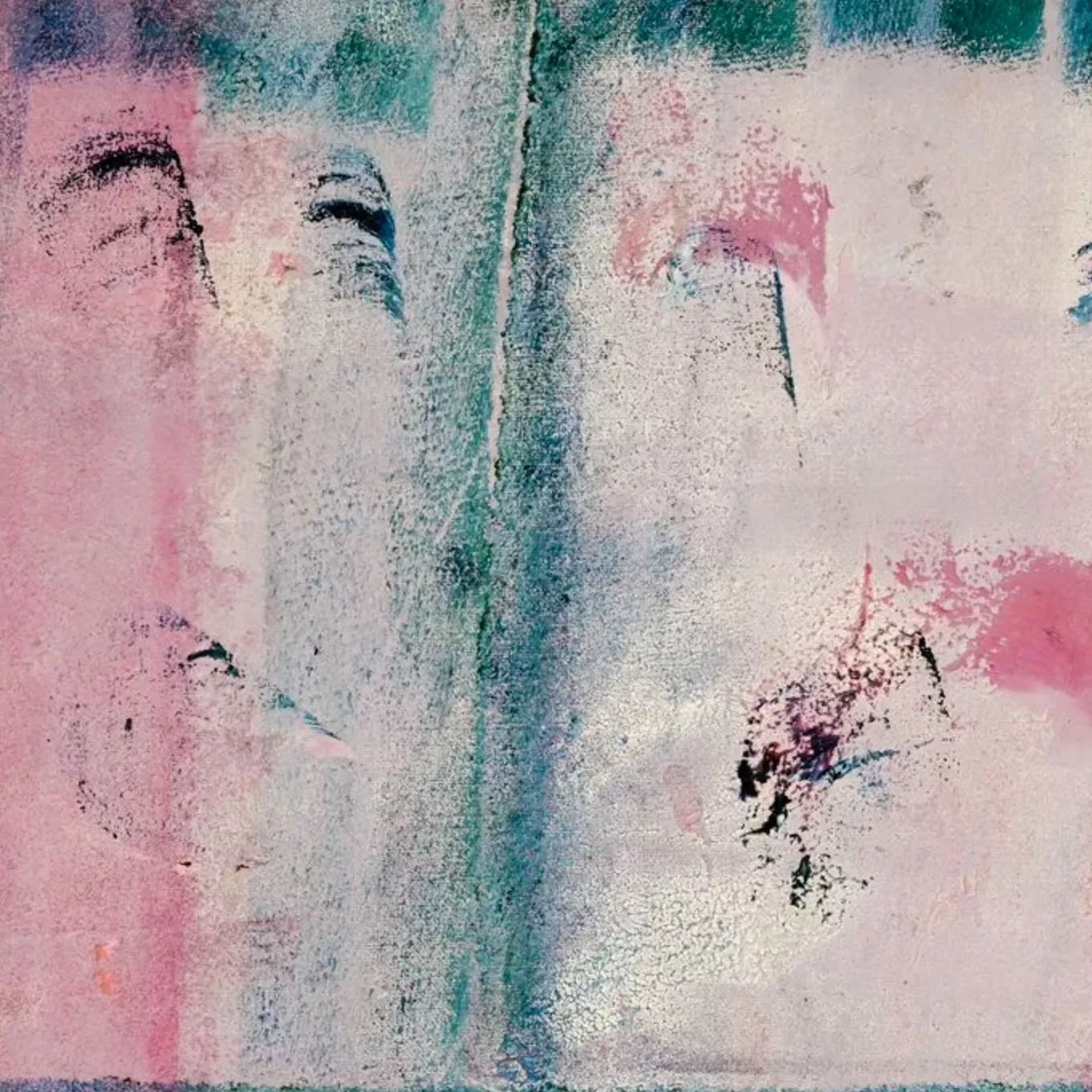
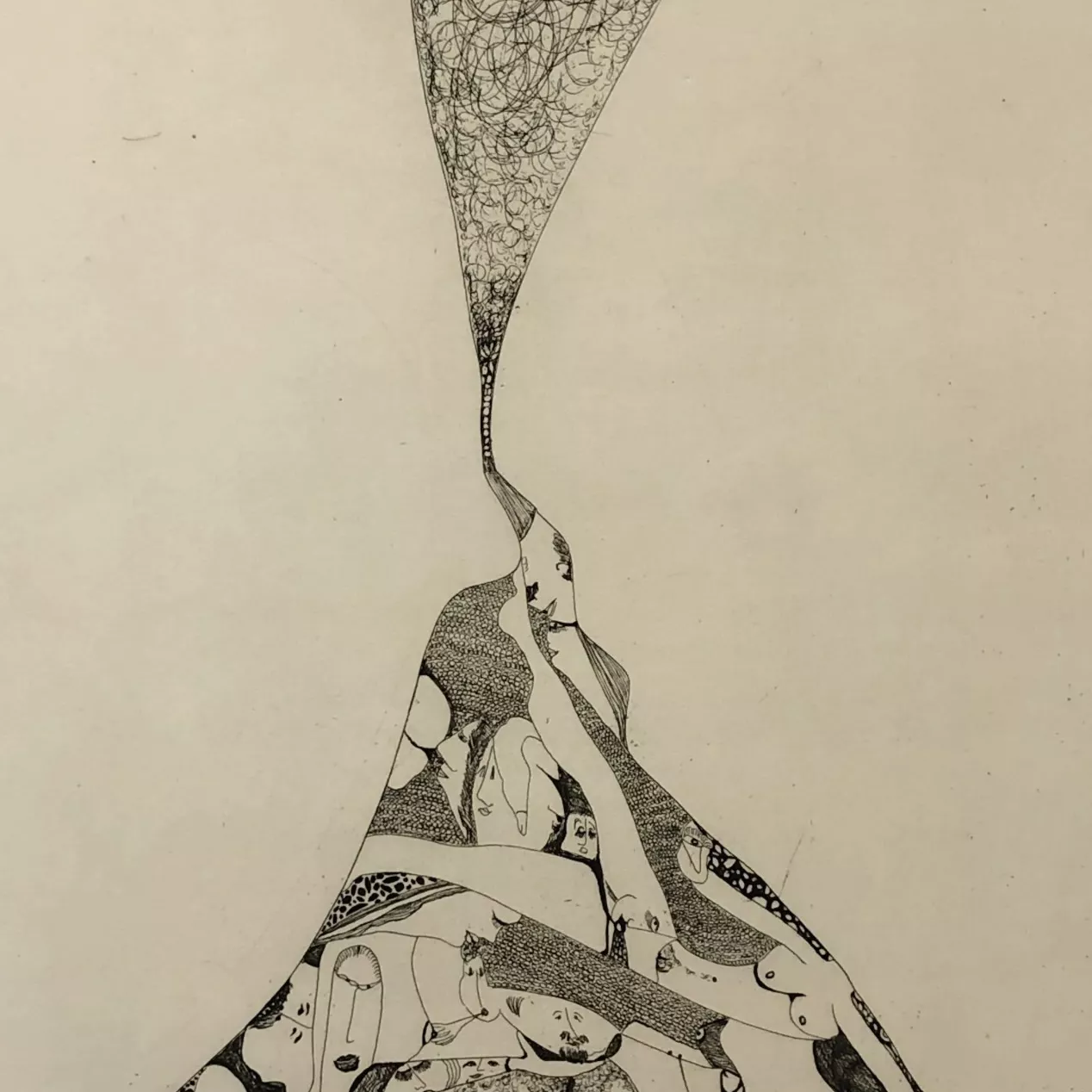
This geography of the body proposes a reading of the fragmented feminine, free and unmilitarized, celebrating the cycle of forms without judgment or modesty. Caland adopts an abstractionist and sensual formal gesture, claiming an intimate poetics where the body becomes a topography of assumed desire.
Bribes de Corps #296 consequently marks a turning point in Caland's work, as it is freed from European codes, and creates a corporalist and free art where sexuality does not hide behind abstraction. The canvas dialogues with the American history of the Color Field while inserting a feminine and diasporic reading, anticipating international plastic women's movements.
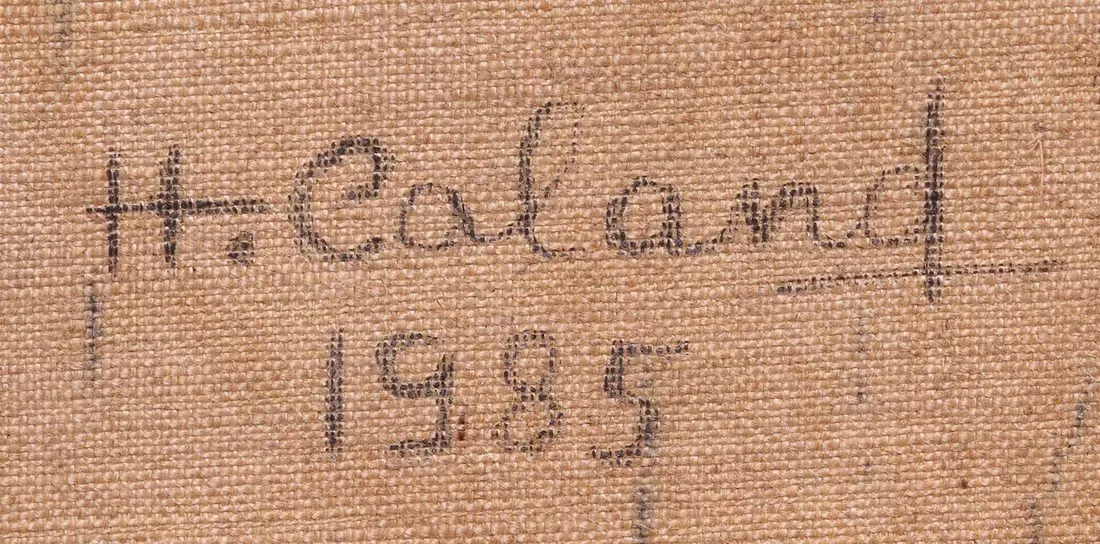
Her signature
Not all Huguette Caland's works are signed.
Although there are variations, here's a first example of her signature:
Expertise your property
If you own a work by Huguette Caland, don't hesitate to request a free appraisal by filling in our online form.
A member of our team of experts and certified auctioneers will contact you to provide an estimate of the market value of your work.
If you are considering selling your work, our specialists will also guide you through the various alternatives available to obtain the best possible price, taking into account market trends and the specific features of each work.
Estimate in less than 24h
Discover in the same theme

Rating and value of Karl Lagerfeld's fashion designs
Karl Lagerfeld is a German fashion designer and great couturier of the 20th century. He has produced many valuable fashion designs.
Learn more >

Ratings and values of Percival Lafer sofas and armchairs
Percival Lafer is a Brazilian designer who has produced furniture that is highly rated and valued at auction. 100% free estimate!
Learn more >

Rating and value of paintings by Vaclav Spala
Vaclav Spala is a Czech artist who has produced works that are highly rated and valued at auction. 100% free estimate.
Learn more >
D'autres tableaux abstraits vendus aux enchères

Estimated 2.000 - 4.000
Serge POLIAKOFF (1900-1969), Composition en rouge et bleu. 1965, Lithograph

Estimated Between €5,000 and €8,000
Jean MIOTTE (1926-2016), acrylic on canvas

Estimated 3.000 - 5.000
Roberto MATTA (1911-2002), Composition, Gouache on canvas

Secure site, anonymity preserved

Auctioneer approved by the State

Free and certified estimates
Frequently asked questions
-
Who was Huguette Caland, and what was her artistic background?Huguette Caland (1931–2019) was a leading Lebanese artist in the field of transnational women’s art, born in Beirut into an influential family. She developed a unique artistic language that fused abstraction, drawing, textiles, and an exploration of the body, refusing to align herself with any established movement. Gaining worldwide recognition beginning in the 2010s, she participated in the Venice Biennale in 2017, and her works are exhibited in leading international institutions.
-
What is the price range for Huguette Caland's works?The prices of Huguette Caland’s works vary considerably depending on the technique and the size of the piece: prints range from €170 to €11,540, drawings and watercolors from €800 to €50,670, and paintings from €1,000 to €401,900. Her market value is rising sharply, especially for her oil-on-canvas paintings, which command the highest prices and are particularly sought after by American buyers.
-
How do I have a work by Huguette Caland authenticated and appraised?Auctie's offers a free, no-obligation appraisal of your artwork by its state-certified experts and auctioneers. Simply fill out the online form, and a specialist will contact you within 48 hours to provide an accurate estimate of your item’s current market value.
-
Is this a good time to sell a work by Huguette Caland?Yes, now is a good time to sell a work by Huguette Caland, as her market value has been rising sharply since her international rediscovery in the 2010s. Demand for her works—particularly among American collectors—continues to grow, as reflected in the record results achieved at auction.
-
How does the sale of a work of art work at Auctie's?After a free appraisal by a certified expert, Auctie's guides you toward the best sales approach for your artwork, taking into account market trends and the specific characteristics of your piece. The auction house supports you from the appraisal through to the final bid to ensure you get the best possible price.
