



Get a free estimate for your Chinese, Asian and imperial dresses

Key takeaways
- Chinese ceremonial robes sell for between €300 and €60,000 depending on their complexity, with a record price of $1.5 million set in 2018.
- Each symbolic element (color, pattern, embroidery) reflects the imperial hierarchy and Chinese cosmology, particularly the five-clawed dragons reserved for the emperor.
- Auctie’s offers a free appraisal by its certified auctioneers to assess the current market value of your Chinese gowns.
If you own one or more Chinese dresses, and would like to know its value, our state-approved experts and auctioneers will offer you their appraisal services.
Our specialists will work to carry out a free appraisal of your work, and will provide you with an accurate estimate of its value on the current market.
Then, should you wish to sell your work, we will direct you to the best possible arrangement to obtain the optimum price.
Rating and value of Chinese dresses
Chinese ceremonial dresses are currently highly sought-after collectors' items. If you own one, it may be worth more than you think. On the art market, prices for these objects can be very high under the auctioneer's hammer.
They are particularly prized, and the price at which they sell on the art market ranges from €300 to €60,000, a fairly substantial range, but one that says a lot about the value that can be attributed to these objects.
In 2018, a red silk Chinese ceremonial dress adorned with dragon and phoenix embroidery and created by Guo Pei sold for $1.5 million.
Order of value ranging from the simplest to the most prestigious dress
Dress type | Result |
|---|---|
Dress embroidered with central dragon | From 300 to 10 000€ |
Robe embroidered with one or more dragons | From 500 to 20 000€ |
Robe embroidered with dragons and symbols | From 800 to 40 000€ |
Robes embroidered with dragons in gold thread | From 800 to 60 000€ |
Estimate in less than 24h
Symbolism of ancient Chinese dresses
Chinese ceremonial dresses, particularly those of the Ming and Qing dynasties, read like coded texts, where each element - color, pattern, cut - embodies a precise symbolism linked to social hierarchy, cosmology and the imperial vision of the world.
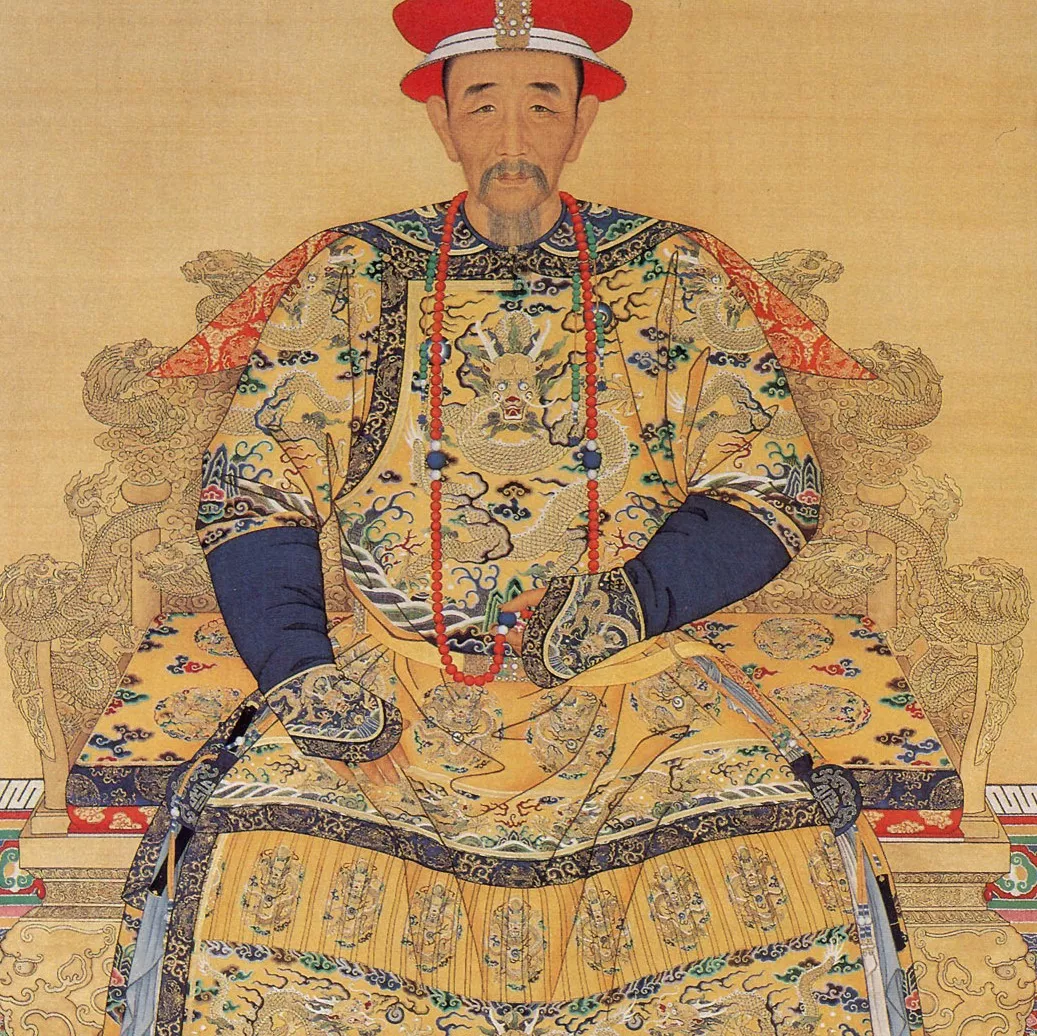
Imperial yellow, reserved exclusively for the emperor, reflects the element earth, the pivot of the universe according to the theory of the five elements, and reinforces the image of the sovereign as a vital link between heaven and man.
Dignitary blue, often declined in deep shades, evokes celestial immensity and the virtues of loyalty and wisdom.
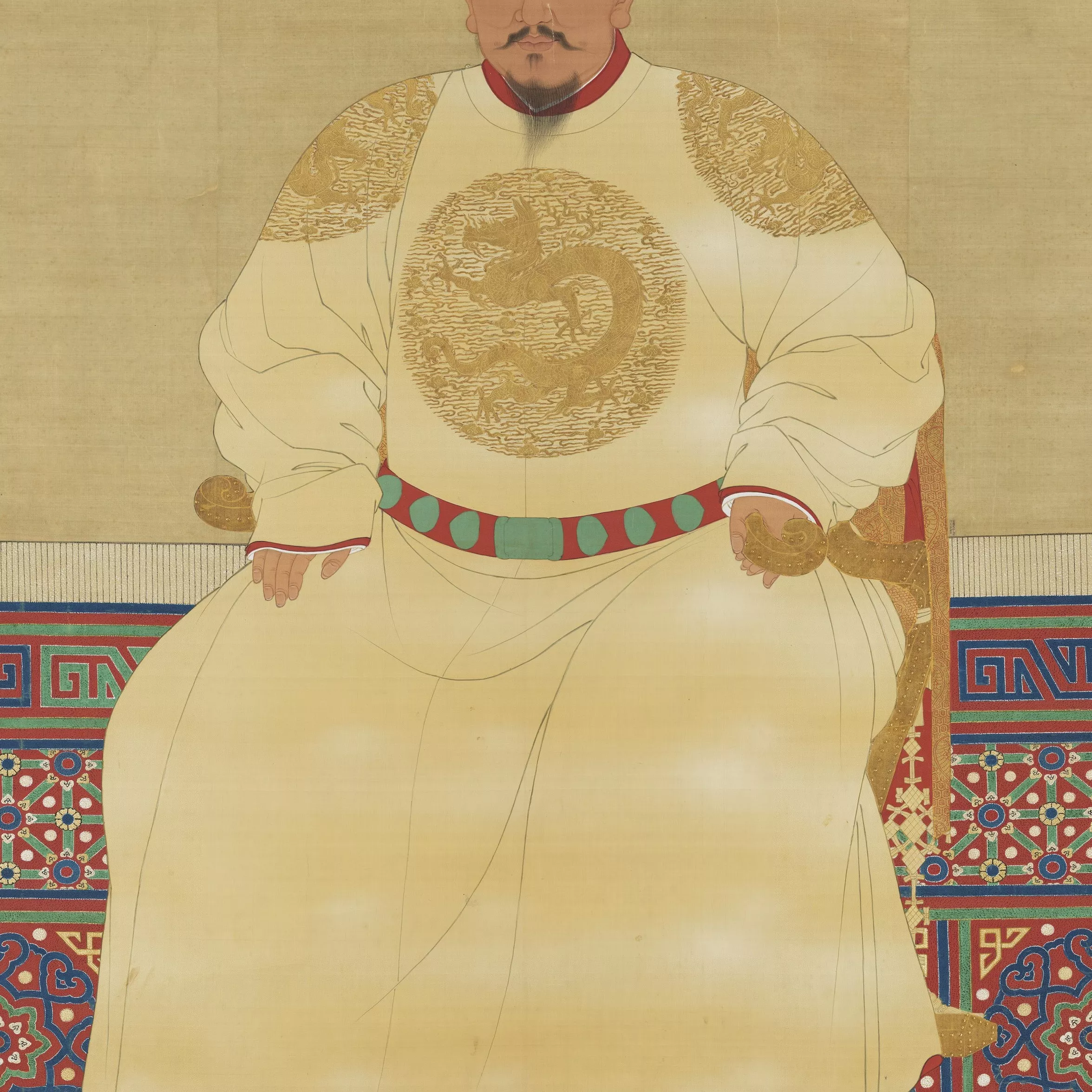
Embroidered in gold thread, the five-clawed dragons, central figures of imperial authority, intertwine with billowing clouds, swirling waves and stylized mountains, powerful metaphors for a cosmic harmony where every element finds its place in perfect balance.
Secondary motifs, such as cranes, messengers of longevity, peonies, emblems of wealth and honor, or bats, bearers of blessings and prosperity, fit into a visual discourse that goes beyond mere ornamentation to become a sacred message, articulating divine protection and dynastic continuity.
The cut of the dresses, rigorous and enveloping, bears witness to a Confucian aesthetic, where every line and fold conveys moral discipline and respect for natural and human hierarchies.
On Manchu dresses, the so-called "horse hoof" sleeves, finished with delicate ornamentation, evoke the military origins of the Qing dynasty, recalling the agility and strength of the horsemen who had conquered China.
During imperial ceremonies, these garments, with their meticulous detail and intricate language, functioned as silent yet powerful declarations, inscribing the emperor's legitimacy in both an earthly and celestial setting.
Through the richness of their craftsmanship and the depth of their symbolism, these robes presented themselves not as mere garments, but as veritable living artifacts, where craftsmanship attained a sacred dimension, translating the philosophical and political ideals of a thousand-year-old empire.
Just like the Chinese vases, the tabatières chinoises or jades impériales, these objects are as popular as ever on the auction market.
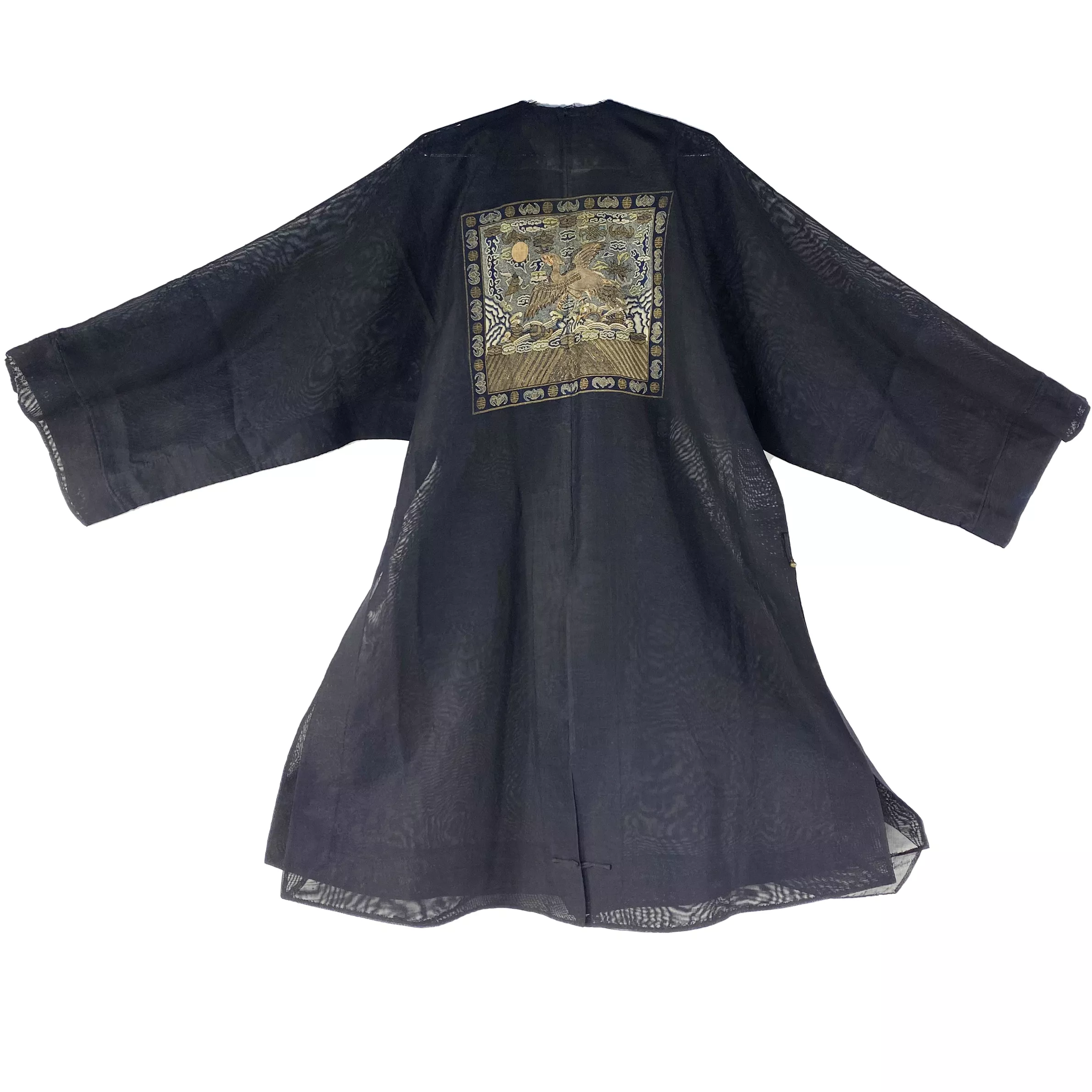
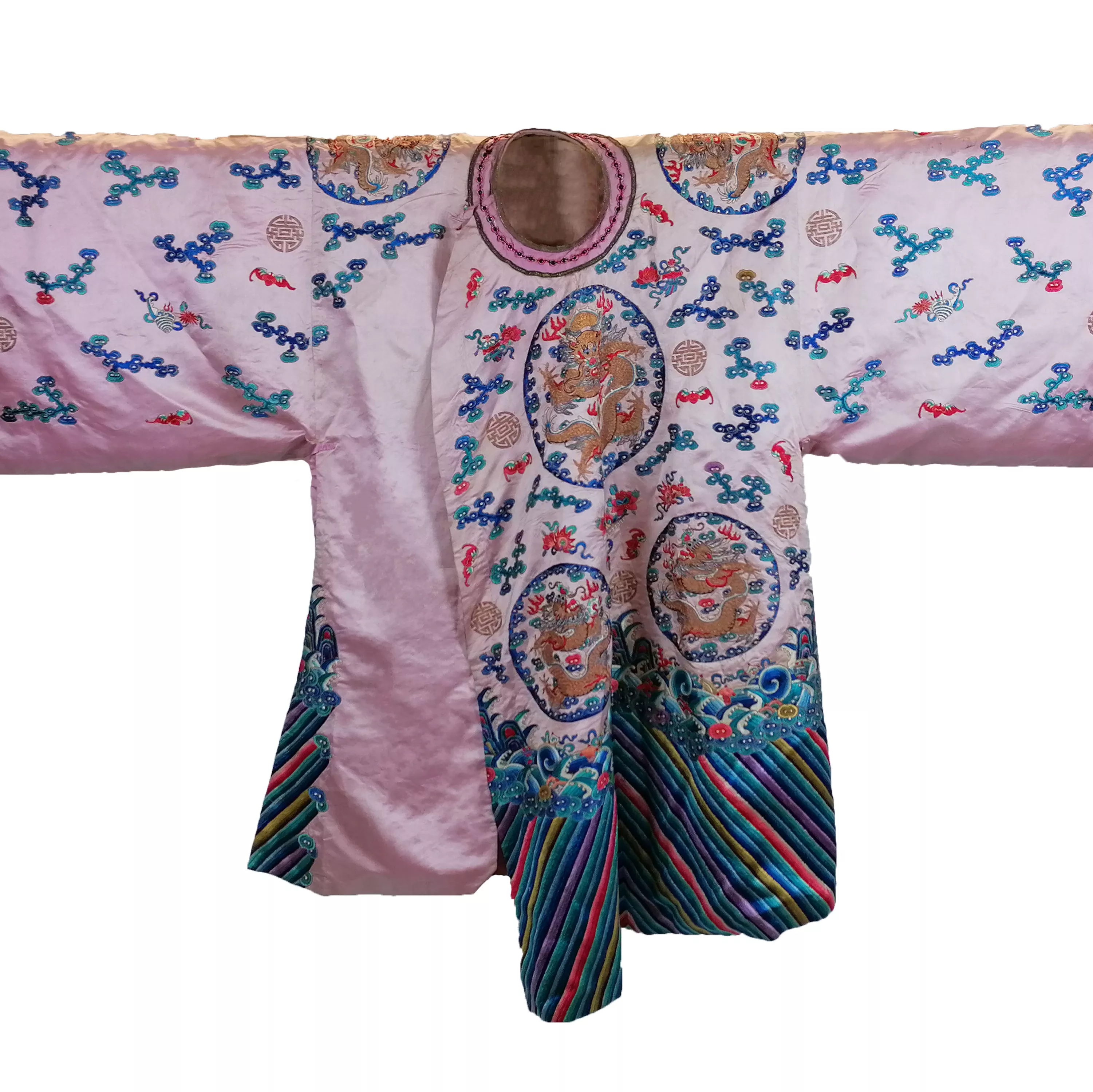
Name of dragon robe (imperial robe)
The dragon robe, or longpao in Chinese, takes its name from the imperial emblem par excellence: the five-clawed dragon, the supreme symbol of celestial authority and the divine mandate conferred on the emperor.
The very term long (龍), which designates the dragon, carries a profound semantics, associating the mythical creature with cosmic force and vital dynamism.
In Chinese thought, the dragon is not a figure of destruction but of harmony and benevolence, capable of controlling the waters, invoking the rains and ensuring the fertility of the land.
His association with imperial dress is therefore not fortuitous: it reinforces the image of the emperor as guarantor of universal order and mediator between heaven and earth.
The word pao (袍), meaning "robe", also suggests an enveloping, protective garment, both functional and charged with a symbolic dimension.
By combining these two terms, longpao becomes a linguistic and visual manifesto, linking celestial authority to the materiality of power.
Each dragon embroidery on silk carries a specific intention: the frontal dragon, erect facing the observer, embodies the emperor's central power, while the lateral dragons, often turned towards flamboyant pearl motifs, evoke the quest for balance and perfection.
In its name as in its design, the dragon robe becomes a living metaphor, enveloping the imperial body while extending, in weave and color, the subtle language of the celestial mandate.
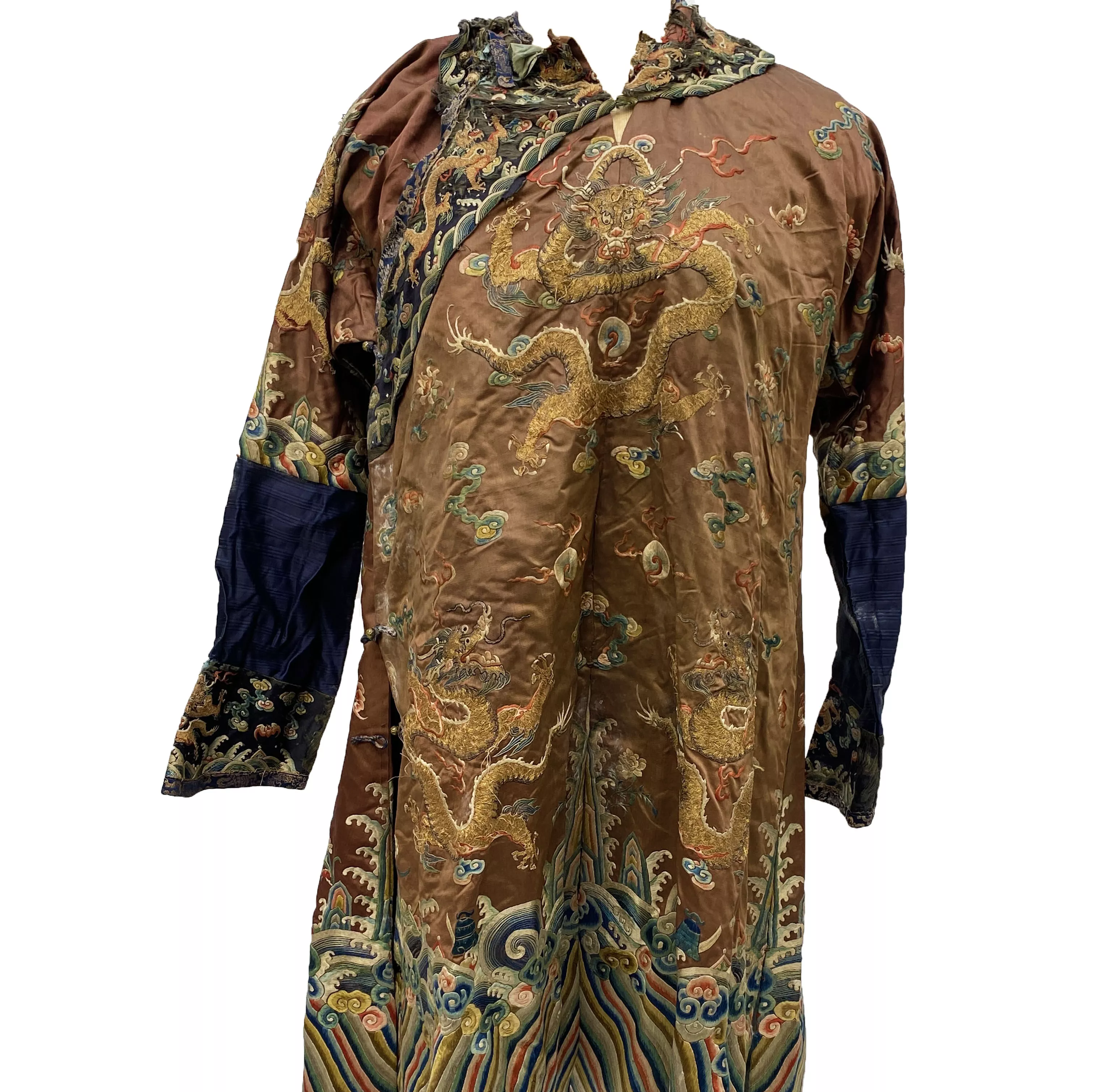
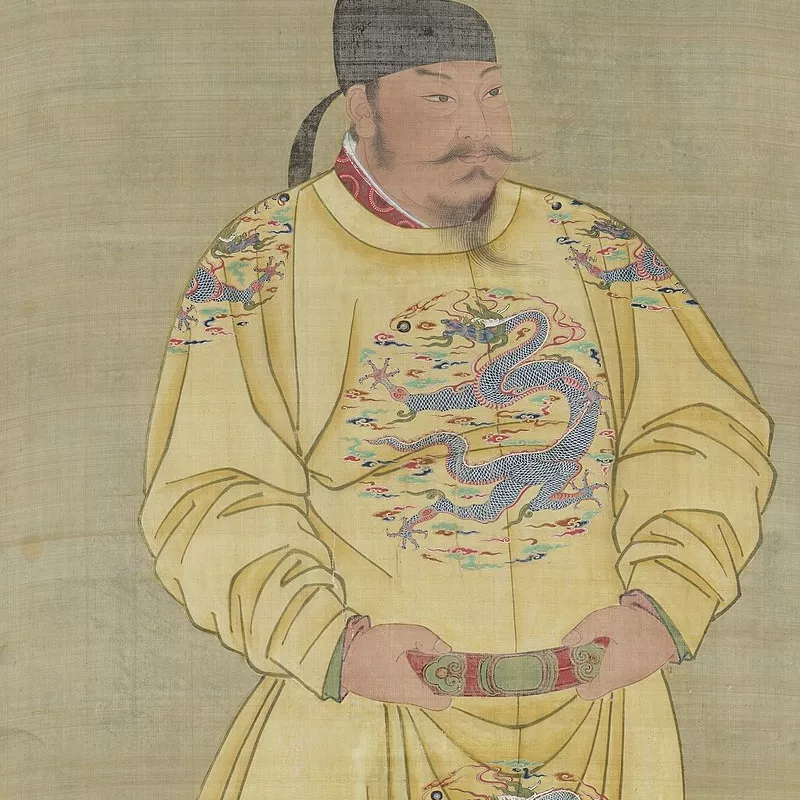
Focus on Guo Pei's imperial gown
The red silk ceremonial gown, adorned with dragons and phoenixes, created by Guo Pei and sold for $1.5 million in 2018, is part of a historical and symbolic continuity while asserting a contemporary vision.
The choice of red, an imperial and propitiatory color in Chinese culture, evokes both prosperity, joy and prestige, consolidating a direct link with the traditions of the Ming and Qing dynasties.
The embroideries, executed with a meticulousness that evokes the imperial workshops of yesteryear, marry dragons, guardians of celestial power, and phoenixes, emblems of peace and femininity, in a visual symphony that celebrates the balance between yin and yang.However, Guo Pei's work transcends the simple reinterpretation of traditional codes. The exaggerated volumes and density of the embroidery convey an almost theatrical monumentality, where craftsmanship achieves a sculptural dimension.
The dress thus becomes an allegory of Chinese heritage sublimated by a universal visual language.
The sale's record price underlines not only the craze for Asian-inspired haute couture creations, but also the recognition of a dialogue between tradition and modernity, where each gold thread and embroidered motif tells a story of continuity and innovation.
Today, this piece is not simply a garment, but a cultural manifesto, reaffirming the place of Chinese textile art on the international stage.
What are Chinese ceremonial dresses worth?
Because of their beauty, antiquity and great cultural value, Chinese ceremonial dresses are often sold at auction for high prices. Here are 10 examples of Chinese ceremonial gowns sold at auction and their selling prices:
- Chinese red silk ceremonial gown adorned with dragon and phoenix embroidery, created by designer Guo Pei, sold for $1.5 million in 2018.
- Chinese pink silk ceremonial gown from the Qing dynasty, embroidered with floral motifs and sold for $300,000 in 2021.
- Chinese blue silk ceremonial gown from the Qing dynasty, adorned with dragon embroidery, sold for $261,000 in 2019.
- Chinese pink silk ceremonial gown adorned with flower and bird embroidery, sold for $182,400 in 2021.
- Chinese yellow silk ceremonial gown with flower motifs, sold for $120,000 in 2018.
- Chinese pink silk ceremonial gown embroidered with floral motifs, sold for $103,700 in 2020.
- Chinese red silk ceremonial gown from the Qing dynasty, adorned with gold embroidery of phoenixes and dragons, sold for $81,250 in 2018.
- Chinese red silk ceremonial robe from the Qing dynasty, adorned with peony embroidery, sold for $75,000 in 2018.
- Chinese green silk ceremonial robe adorned with golden dragon and phoenix embroidery, sold for $56,250 in 2019.
- Chinese pink silk ceremonial robe with butterfly motifs, sold for $50,000 in 2020.
The occasions when these robes were worn
Chinese ceremonial robes, especially those adorned with dragons and phoenixes, were worn at the most solemn moments of imperial life, when every gesture and every garment was an expression of divine and celestial power.
Imperial weddings, sacred festivals or ambassadorial receptions were occasions when the emperor, clad in his richly embroidered robe, asserted himself not only as an earthly sovereign but also as the mediator between heaven and earth.
At such times, the robe was not simply an ornament but a tool of legitimation, a vehicle of power, where every detail, every symbol, affirmed divine and imperial authority.
The emperor, in this finery, embodied cosmic harmony, a balance found in the embroidery of the dragon and phoenix, mythological creatures embodying the duality of heaven and earth, masculine and feminine.
The ceremonial robe, through its symbolism and majesty, echoed the vision of an empire where divine order reigned over every aspect of life.
Each Chinese ceremonial dress was meticulously thought out, where the details, both in the cut and in the embroidery, were charged with profound meanings.
The silk, noble and bright, was often dyed red or yellow, colors associated with luck, prosperity and imperial legitimacy. The embroidered motifs, often made with gold and silver thread, included dragons, symbols of imperial power, and phoenixes, associated with peace and prosperity.
The cut of the dresses, wide and ample, allowed for fluidity of movement, accentuating the majesty of the wearer.
The long sleeves and perfectly regular pleats, veritable geometries of the body, were carefully designed to offer an imposing silhouette, worthy of the mythological figures they represented.
The red of the fabric and the gold of the embroidery, in perfect harmony, thus offered an aesthetic balance that translated the cosmic harmony between man, the emperor, and the universe.
Knowing the value of a Chinese dress
If you happen to own one or more Chinese dresses, don't hesitate to request a free appraisal using our form on our website.
A member of our team of experts and licensed auctioneers will contact you promptly to provide you with an estimate of the market value of your work, as well as any relevant information about it.
If you are thinking of selling your work, our specialists will also help you find alternatives to sell it at the best possible price, taking into account market trends.
Estimate in less than 24h
Discover in the same theme

Rating and value of Chinese bronzes
Chinese bronzes are highly sought-after works of art on the auction market, whatever the period, subject or size of the object.
Learn more >

Rating and value of print and drawings by Kitagawa Utamaro
Kitagawa Utamaro was a Japanese artist of the Edo period who is best known for his woodblock prints, which command high prices and are highly valued.
Learn more >

Rating and value of drawings and paintings by Iwasa Matabei
Iwasa Matabei was a Japanese artist from the early Edo period who produced numerous works that are highly prized and valuable.
Learn more >
D'autres porcelaines chinoises vendues aux enchères

Estimated 500 - 600 €
China, 20th, Two porcelain baluster vases with cobalt blue decoration.

Estimated 500 - 1.000 €
China, Kangxi reign (1662-1722). Two porcelain covered baluster pots with cobalt blue decoration.

Estimated 400 - 800
CHINA, 19th century, Glazed ceramic baluster vase decorated with Buddhist coral lion and Fô dog

Estimated 80 - 120
CHINA or JAPAN, 19th century. Two porcelain bottle vases that can form pendants

Estimated 3.000 - 5.000
CHINA, Transition period (1630-1640) or Kangxi (1662-1722), two tulip vases

Estimated 800 - 1.500
CHINA, late Ming dynasty or transitional period, 17th century. Pair of double gourd-shaped porcelain vases

Secure site, anonymity preserved

Auctioneer approved by the State

Free and certified estimates
Frequently asked questions
-
What is the price range for Chinese dresses at auction?Chinese formal dresses generally sell for between €300 and €60,000, depending on their age, the quality of their embroidery, and their origin. The most prestigious pieces, such as the one by Guo Pei that sold for $1.5 million in 2018, can fetch exceptional prices. The value depends in particular on the presence of dragons and phoenixes embroidered in gold thread, as well as the rarity and condition of the gown.
-
How can I get a free appraisal of my Chinese or Asian dress?Auctie's offers you a free, no-obligation appraisal. Simply fill out a form on our website and upload photos of your dress. A state-certified expert or auctioneer will contact you shortly to provide an accurate estimate of your item’s market value within 48 hours.
-
What factors determine the value of a Chinese imperial robe?The value of a ceremonial gown depends on several factors: the embroidered motifs (a central dragon, multiple dragons, or dragons with symbols and gold thread), the quality and age of the silk, the historical period (Ming and Qing dynasties, or contemporary designs), its condition, and its provenance. Dresses embroidered with dragons using gold thread are among the most sought-after and expensive.
-
Is this a good time to sell a Chinese dress?Yes, Chinese ceremonial robes are currently in high demand on the art market. These pieces, comparable to objects such as vases or imperial jade, are benefiting from a growing enthusiasm for Asian textile art and Chinese cultural heritage. This is a favorable environment for achieving the best possible price at auction.
-
How does the sale of my Chinese dress work on Auctie's?After a free appraisal, our specialists will guide you toward the best sales solution for your dress. Auctie's, a licensed auction house, will support you from the appraisal through the auction, taking market trends into account to maximize the selling price of your item.
