



Market Value and Pricing of Coral Jewelry and Chinese Corals

Key takeaways
- Chinese corals sell for between €100 and €211,400, with Asian carvings fetching exceptional prices at auction.
- Quality depends on weight, texture, and color: deep red and bright pink are particularly sought after by collectors.
- A free appraisal by certified auctioneers determines the precise market value and guides you toward the best sales strategy.
If you own one or more Chinese corals, and would like to know its value, our state-approved experts and auctioneers will offer you their appraisal services.
Our specialists will work to carry out a free appraisal of your work, and will provide you with an accurate estimate of its value on the current market.
Then, should you wish to sell your work, we will direct you to the best possible arrangement to obtain the optimum price.
Rating and value of Chinese corals
Chinese corals are currently highly sought-after collectibles. If you own one, it may be worth more than you think. On the art market, prices for these objects can be very high under the auctioneer's hammer.
They are particularly prized, and the price at which they sell on the art market ranges from €100 to €211,400, a fairly substantial range, but one that says a lot about the value that can be attributed to these objects.
In 2011, a coral group depicting the haloed goddess Guanyin, standing on a lotus sprouting from the waves, surrounded by lotus flowers and foliage sold for €211,400, while it was estimated at between €40,000 and €60,000.
Order of value from a simple item to the most prestigious
Object type | Result |
|---|---|
Fossil corals (prehistoric) | From €150 to €2200 |
Jewellery (necklaces, bracelets, earrings) | From €100 to €104,000 |
Carved coral in the Asian taste | From €150 to €211,400 |
Estimate in less than 24h
Scientific characteristics of corals
In their complex architecture, coral reefs bear witness to a meticulous interplay between biological processes and physico-chemical mechanisms.
Scleractinians, or builder corals, secrete a calcium carbonate skeleton in the form of aragonite, whose dense, stratified structures provide mechanical support while modulating biological flows within the ecosystem.
These formations, adapted to marine currents, reveal diversified morphologies: exposed areas favor branching, hydrodynamic architectures, while sheltered environments produce massive, compact structures, optimizing energy dissipation.
The coral skeleton, criss-crossed by natural porosities, plays a central role in chemical and biological exchanges.
These internal channels facilitate the passage of nutrients, tissue oxygenation and the elimination of metabolic waste, contributing to local homeostasis.
Symbiosis with zooxanthellae, photosynthetic microalgae integrated into coral tissue, proves essential.
By capturing sunlight, these algae generate energy products that are directly transferred to the coral, supporting calcification and maintenance of the mineral structure.
However, this balance relies on narrow environmental thresholds. A rise in water temperature triggers thermal stress leading to the expulsion of zooxanthellae, a bleaching phenomenon that seriously alters coral physiology.
In parallel, ocean acidification, by reducing the concentration of carbonate ions, compromises aragonite precipitation and slows the formation of calcareous matrices.
These disturbances directly affect the ability of reefs to grow and resist external mechanical forces.
Despite these vulnerabilities, reefs show a conditional capacity for resilience. Degraded substrates become anchorage points for coral larvae, enabling gradual recolonization subject to stabilization of environmental parameters.
This regeneration dynamic remains, however, dependent on a significant reduction in anthropogenic pressures, a sine qua non condition for preserving these biological edifices and the functions they provide.
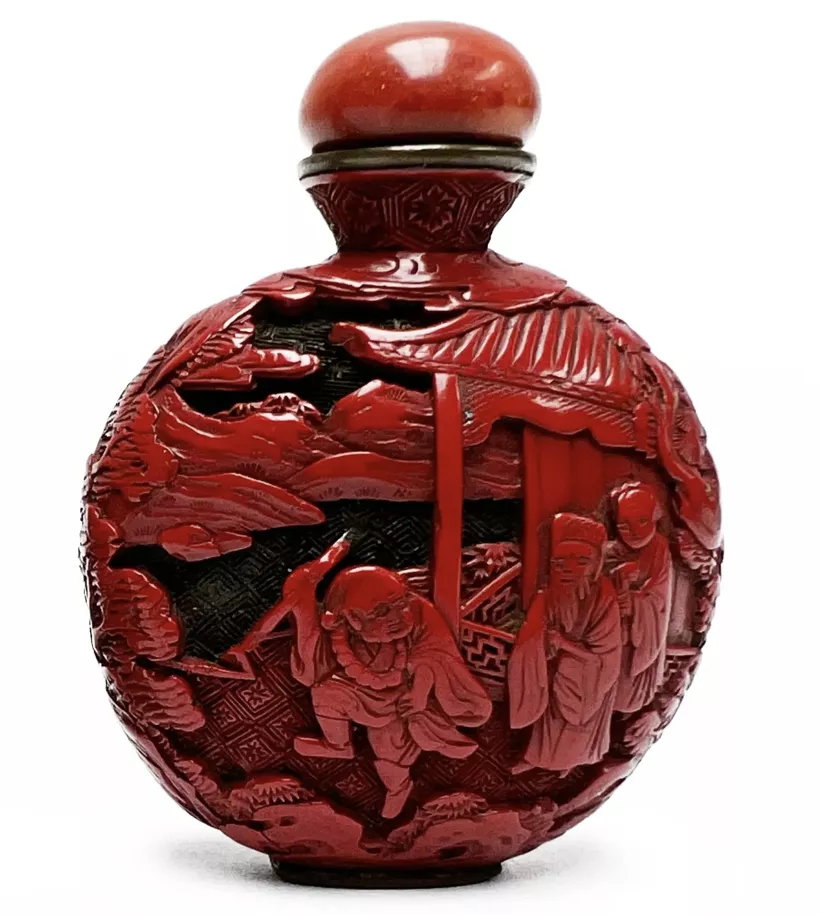
The legend of the dragon and the coral
In the legend of the dragon and the coral, the story revolves around a transformation process in which the dragon's blood, as it falls into marine waters, mineralizes to form red coral.
This mythological phenomenon relies on a meticulous structuring of narrative elements, staging an interaction between the biological and the mineral.
The coral, with its calcareous density and predominantly aragonitic composition, is thus presented as the product of a complete metamorphosis, translating a symbolic transition between a fluid organic substance and a durable crystalline structure.
The grooves visible on corals, often compared to dragon veins, illustrate a morphological correspondence - since the surface of some corals is very clearly veined.
Thus, the three-dimensional organization reflects an adaptation to currents and sea light - but also the impact of time on corals.
Water plays a crucial role in this narrative: it acts as a catalyst, promoting the chemical stabilization and progressive fixation of mineral particles.
Finally, the intense red color of the coral, directly linked to its legend, stands out as a visual signature, evoking not only the original pigment of the spilled blood, but also the chemical integrity of the pigments preserved in the limestone matrix.
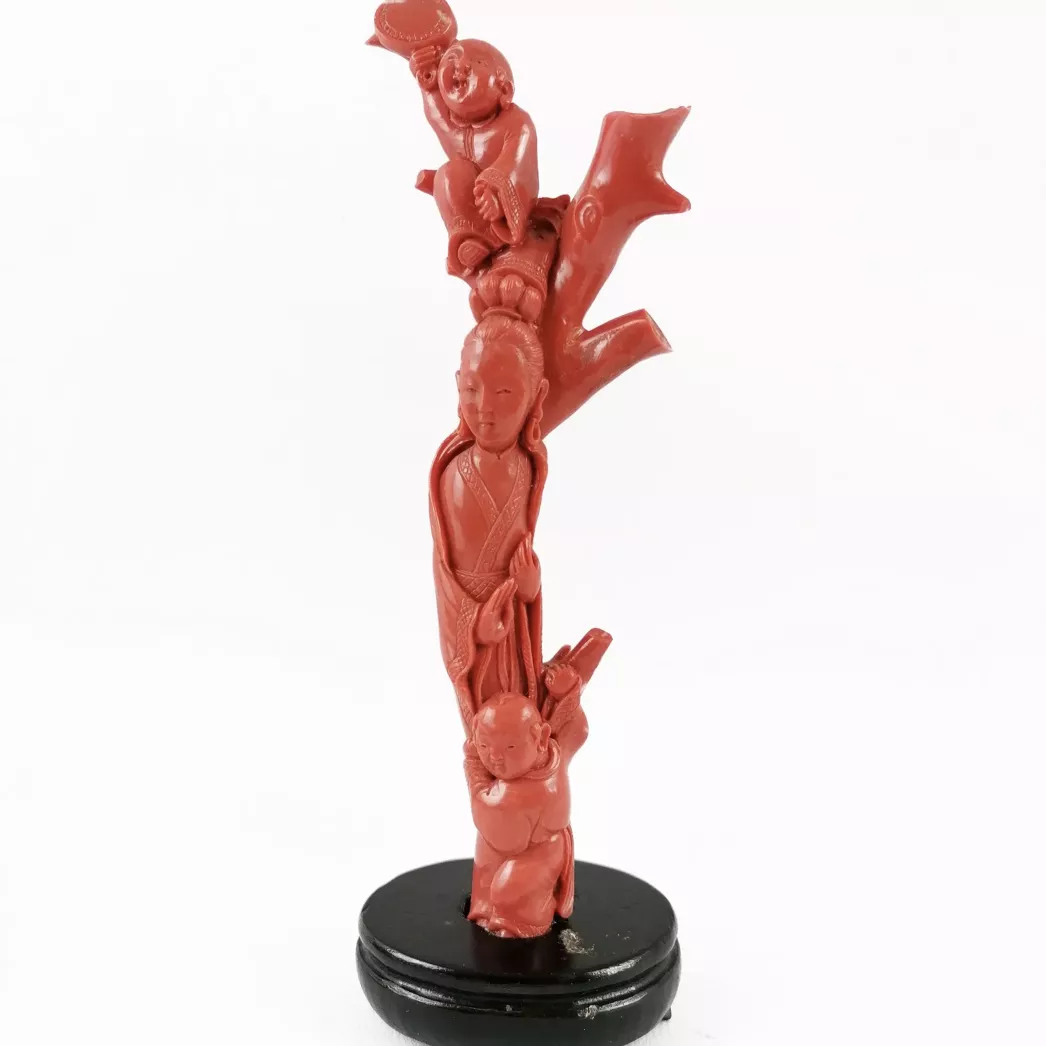
Focus on the sculpture Guanyin, goddess of mercy, 1740.
The coral sculpture Guanyin, goddess of mercy, made in 1740, testifies to a high technical mastery of coral, which, through its naturally complex structure, imposes a defined and particular process with the sculpted form.
Coral, in its most worked form, reveals a dense texture and rigidity inherent to its nature.
However, the sculptor has, through a precise and delicate intervention, been able to attenuate this rigidity, bringing fluidity and elegance to the work, although raw corals are not devoid of it.
The reliefs released from the material show meticulous work on volumes, where every detail of the face and drapery is drawn with an economy of means, without forgoing the richness of the textures.
The coral surface, marked by light and shadow, takes on an almost vibratory dimension here, playing with the material to emphasize the balance between the goddess's solid presence and the intangible, spiritual depth that emanates from the figure.
The goddess's precisely sculpted features exude a serenity enhanced by the porous texture of the coral. In this sculpture, the material is not simply the support for the form, but becomes part of the idealism that this representation embodies.
The subtly sculpted folds of the garment create shadow effects that punctuate the surface, while respecting the fluidity of the lines. The result is a form that is both solid and ethereal, in which the organic material, coral, contributes to the illusion of tangible spirituality.
The rather traditional work becomes an embodiment of the Chinese spirit through a technique that explores the possibilities of texture and relief, while respecting the particularities of a natural material with characteristics as fine as they are varied.
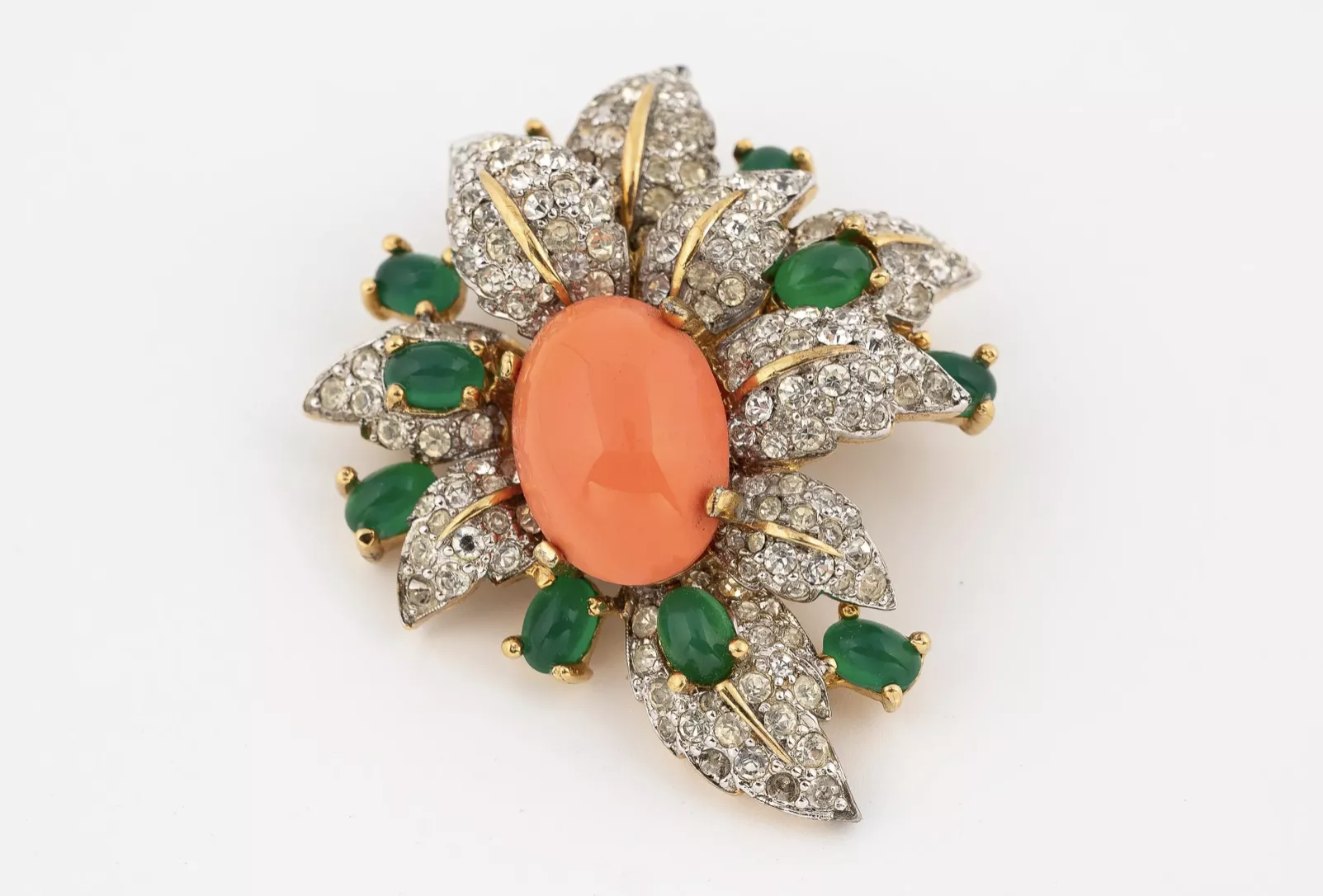
Chinese coral sculpture
Chinese coral sculpture is based on a relationship between material and technique that unfolds in a tension between the rigidity of the material and the precision of the gesture.
The coral, extracted from the sea, is transformed under the sculptor's tools into meticulously detailed forms, whether animal representations or plant motifs.
The surface of coral, with its often irregular grain and varied shades, becomes the medium for a work in which the artist seeks to make visible the internal structure of the material while integrating light and shadows.
The porous texture and vivid color of coral add an organic, living dimension to the sculpted work, where every line, every hollow, seems to forge a relationship with the ambient light.
In this discipline, the Chinese artist meets a dual requirement: that of respecting the natural properties of coral, and that of inscribing the work in an aesthetic tradition deeply rooted in imperial culture.
The sculptures are often characterized by forms of great refinement, where the fluidity of the contours contrasts with the solidity of the material.
The very structure of coral, beyond its decorative qualities, becomes an essential element in the balance between form and material.
While coral sculpture is distinguished by its ability to evoke natural forms, it remains, through its precise treatment, a tribute to technical rigor and attention to detail, major characteristics of traditional Chinese art.
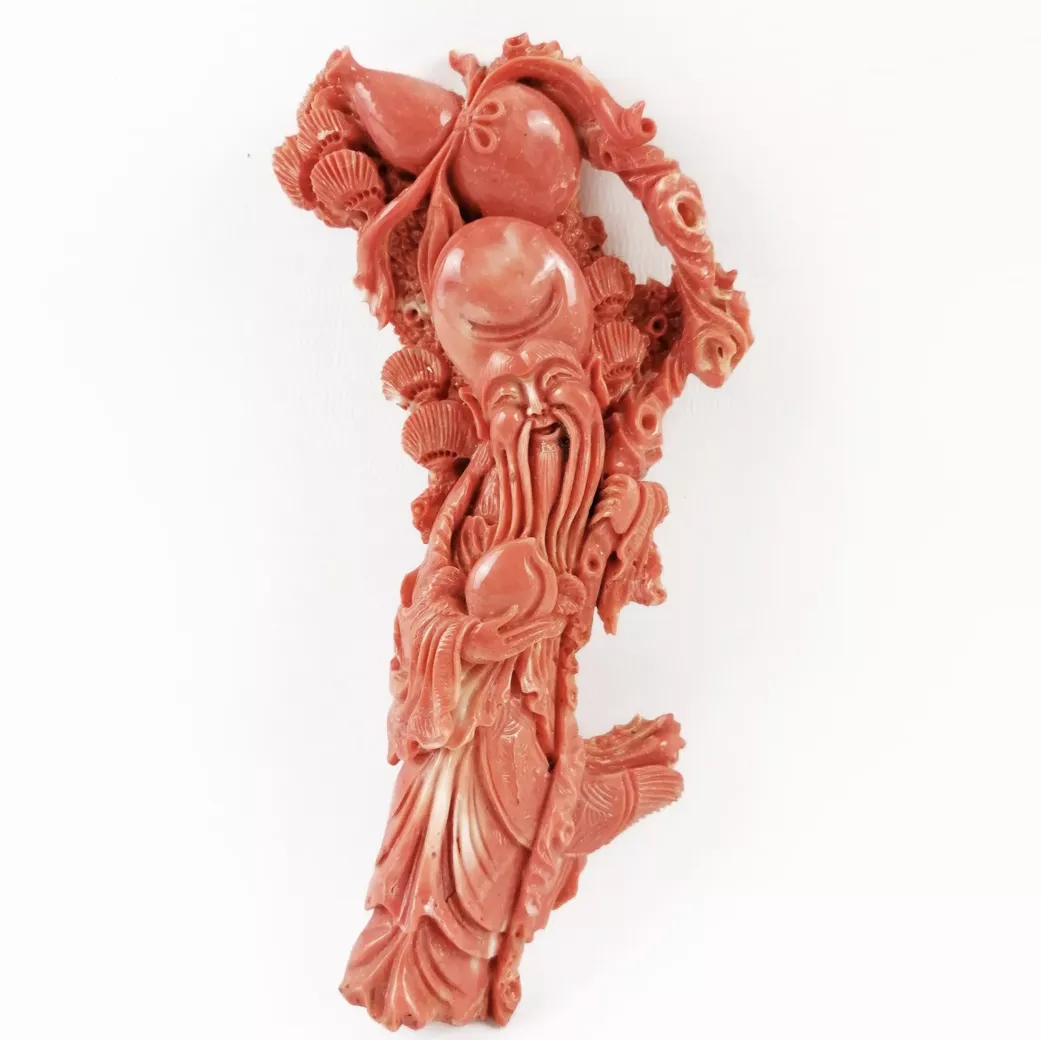
Determining the value of a coral
The valuation of a coral is based on rigorous criteria, where weight, texture and color are articulated in a dynamic of values that reflect a subtle interaction between biological conditions and the physico-chemical characteristics of the material.
Weight, in its relationship to size, becomes an essential index in the hierarchization of corals: the denser a piece, the more precious it is considered, in the same way as massive sculptures where the solidity and gravity of the material are taken into account.
Texture, whether smooth or marked by natural variations, also influences the perception of coral, as do reliefs sculpted in noble materials, where fine detail echoes a tradition of technical mastery.
Color, for its part, is of paramount importance: deep reds, bright pinks or pure white hues are sought-after, while less regular variations, linked to environmental factors, can dampen interest in a piece.
In a dynamic parallel to classical artistic practices, this assessment feeds on an aesthetic of perfection and rarity.
Superior-quality corals, like masterpieces sculpted from exceptional materials, display a unity of form and color that justifies their price on the auction market.
The demand for these pieces lies in the subtle balance between the raw beauty of the material and the technical mastery that characterizes its shaping.
Like Asian art objects at auction - Chinese vases, jades de Chine, or Japanese folding screen, they're a big hit.
These criteria are emphasized within the auction rooms, where expertise is based on a meticulous analysis of the corals' physical and aesthetic characteristics, reaffirming their value not only in their rarity but also in their connection with craft traditions and their status as objets d'art.
Knowing the value of a work
If you happen to own a coral or corals, don't hesitate to request a free appraisal using our form on our website.
A member of our team of experts and licensed auctioneers will contact you promptly to provide you with an estimate of the market value of your work, not forgetting to send you ad hoc information about it.
If you're thinking of selling your work, our specialists will also help you find alternatives to sell it at the best possible price, taking into account market trends.
Estimate in less than 24h
Discover in the same theme

Get a free estimate for your Chinese, Asian and imperial dre...
Chinese dresses are unique and fascinating pieces of art. Having them appraised by an impartial expert is essential.
Learn more >

Rating and value of Chinese bronzes
Chinese bronzes are highly sought-after works of art on the auction market, whatever the period, subject or size of the object.
Learn more >

Rating and value of Vietnamese lacquer panels
Vietnamese lacquer panels are highly prized by collectors, and their value is rising on the auction market.
Learn more >
More corals at auction

Estimated Between €4,000 and €6,000
Van Cleef and Arpels gold and coral pendant

Estimated 400 - 800
CHINA, 19th century, Glazed ceramic baluster vase decorated with Buddhist coral lion and Fô dog

Estimated 700 - 1.000
Statuette of Guanyin in red-orange coral, the lustral water vase in the left hand, the mala in the right. China, 20th century.

Estimated 2.000 - 4.000
CHINA, 20th century Statuette in orange-pink coral, the goddess Guanyin holding the vase of lustral water

Estimated 300 - 600
CHINA, 19th century. Large 8-leaf folding screen in red lacquered wood

Estimated 1.500 - 3.000
CHINA, 19th century Rare rhinoceros horn libation cup

Secure site, anonymity preserved

Auctioneer approved by the State

Free and certified estimates
Frequently asked questions
-
What determines the value of a piece of coral or a coral sculpture?The value of a piece of coral is based primarily on four criteria: weight and density (the denser a piece is, the more valuable it is), the texture and fineness of the carved details, color (deep red, bright pink, and pure white hues are the most sought-after), and the overall quality of the craftsmanship. The balance between the raw beauty of the material and the technical mastery of the craftsmanship accounts for the significant price variations in the market.
-
What is the price range for corals and coral jewelry?Coral from China sells for between €100 and €211,400, depending on the type and quality. Coral jewelry (necklaces, bracelets, earrings) ranges from €100 to €104,000, while coral carved in the Asian style can fetch up to €211,400. This wide range reflects differences in the pieces’ rarity, craftsmanship, and provenance.
-
How do I have a piece of coral or a coral sculpture appraised?You can request a free, no-obligation appraisal from Auctie's by filling out the form available on our website. A state-certified expert or auctioneer will contact you promptly to appraise your artwork and provide you with an estimate of its market value, along with detailed information about it.
-
Is this a good time to sell a Chinese coral or a coral sculpture?Yes, now is a good time to sell. Chinese corals are currently highly sought after by collectors, and prices on the art market are particularly high. Demand for these Asian art objects remains strong, as it does for other prestigious items on the Asian art market (jade, Chinese vases, Japanese screens).
-
How does the sales process work at Auctie's?Auctie's guides you from appraisal to auction. After a free appraisal by our experts and certified auctioneers, we offer you the best options for selling your coral at the highest possible price, taking current market trends into account. You’ll receive personalized support throughout the entire sales process.
