



Rating and value of Chinese porcelain vases

Key takeaways
- Chinese porcelain vases sell for between €30 and €2,015,000, with significant potential for appreciation depending on the period and the piece’s authenticity.
- Jiaqing vases from the Qing Dynasty command the highest prices; one example sold for over 2 million euros in 2022 despite an initial estimate of 150,000 to 200,000 euros.
- Authentication by a certified expert is essential to identify the period of manufacture, provenance, and quality of the porcelain in order to certify the object’s true value.
If you own one or more Chinese porcelain vases, and would like to know their value, our state-approved experts and auctioneers will offer you their appraisal services.
Our specialists will carry out a free appraisal of your work, and provide you with a precise estimate of its value on the current market.
Then, if you wish to sell your work, we will direct you to the best possible arrangement to obtain the optimum price.
Rating and value of china vases
China vases are currently sought-after collectibles. If you own one or more, they may be worth more than you think. On the art market, prices for these objects can be very high under the auctioneer's hammer.
They are particularly prized, and the price at which they sell on the art market ranges from €30 to €2,015,000, a fairly substantial range, but one that says a lot about the value that can be attributed to these objects.
In 2022, a pink porcelain vase from the Jiaquing and Qing dynasties sold for €2,015,000, whereas its estimate was between €150,000 and €200,000. There is therefore very strong upside potential for these objects.
Order of value from a simple work to the most prestigious
Technique used | Result |
|---|---|
Yuan vase | From 30 to €3,640 |
Ming vase | From €40 to €350 000€ |
Xing vase | From 200 to 12 920€ |
Jiaqing vase | From €200 to €2,015,000 |
Estimate in less than 24h
Characteristics and diversity of Chinese porcelain vases
Chinese porcelain vases, the first creations of which appeared in the Han dynasty, quickly became objects of great value.
Excavations in Jingdezhen, famous for its status as porcelain capital, reveal the use of kaolin, the mineral essential for the purity and strength of Chinese porcelain.
Craftsmen developed the technique of high-temperature firing, reaching temperatures in excess of 1,300°C, producing vases of unrivalled delicacy and whiteness.
Under the Ming dynasty, the art of decoration evolved with the introduction of cobalt blue from Persia.
This pigment, applied under a layer of transparent glaze, gave rise to refined decorations, with delicate motifs of flowers, dragons and landscapes inspired by nature and Chinese mythology.
In the 15th century, Europe, fascinated by these exotic pieces, discovered Chinese porcelain thanks to the maritime trade routes established by the Portuguese.
Demand grew dramatically, prompting Jingdezhen craftsmen to modify some of their designs to suit the tastes of European royal courts.
The vases, once destined for imperial palaces and temples, became sought-after export items, adorned with motifs such as hunting scenes, birds and plum blossoms.
This exceptional craftsmanship, jealously preserved by Chinese artisans, remained inimitable by Europeans until the 18th century.
Despite attempts at imitation, it was only with the creation of manufactures such as Meissen in Germany, and Vincennes, which would become Sèvres in 1756, that Europe manages to partially match the quality of Chinese vases.
Chinese porcelain vases are distinguished by their varied shapes, detailed patterns and incomparable brilliance.
Each piece, whether from the Ming or Qing period, reflects a craftsmanship that combines tradition and innovation, paying tribute to a long history of technical and artistic mastery.
Chinese porcelain, with its delicate finishes and intricate decorations, remains the absolute model in the field of ceramics.
The influence of these vases extends beyond China's borders as early as the 17th century, when they find their way into European collections.
Well before that, however, Jingdezhen craftsmen had already adapted their creations to satisfy foreign markets, with pieces commissioned specifically for the royal courts of the Middle East and Europe.
Today, Chinese porcelain vases continue to bewitch art lovers, whether they are attracted by modern pieces or antique treasures.
Identifying a genuine antique piece requires specific expertise, able to distinguish a replica from an authentic work.
Only a certified expert or auctioneer can certify the origin and value of these vases, revealing their history and cultural significance.
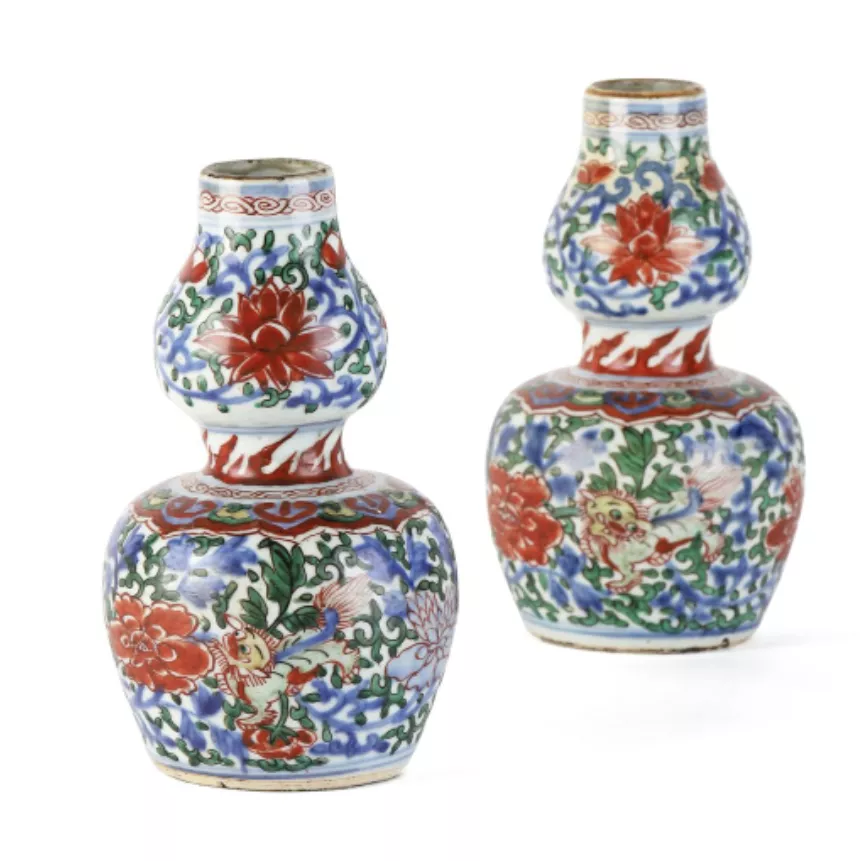
Focus on two tulip vases (on the cover)
These two tulip vases, dating from the Transition period (1630-1640) or the Kangxi reign (1662-1722), embody the finesse and complexity of Chinese porcelain. The harmony of the forms, slender and pure, responds to an aesthetic that is both sober and sophisticated.
The dazzling whiteness of the porcelain, enhanced by the cobalt blue, immediately catches the eye. The technique of underglaze decoration, emblematic of this period, allows for rich, deep nuances.
The carefully painted decoration features narrative scenes, typical of the Transition and Kangxi periods. Elegantly-dressed figures move through lush vegetation.
Their carefully stylized postures and slightly exaggerated facial expressions recall popular tales or historical episodes, well known to literati of the period.
Every detail is meticulously executed, from the folds of the clothes to the floral motifs framing the scene. One senses a desire to capture a moment, to freeze in porcelain the echo of a glorious past.
The floral motifs adorning the necks of the vases, with their curved, delicate lines, are characteristic of the production of this period.
The influence of nature, a central element in Chinese art, can be seen, as well as a certain geometric rigor, typical of late 17th-century decor.
The composition is perfectly balanced, playing on the contrast between the lightness of the flowers and the density of the figurative scenes, demonstrating the technical mastery of the Jingdezhen craftsmen.
Under the reign of Kangxi, porcelain enjoyed a new golden age. Imperial workshops vied with each other in virtuosity to meet the growing demand from the court and European elites, who were fond of this "Chinese blue".
These vases, with their deep shades of blue, bear witness to this quest for excellence, where each piece became a work of art in its own right. The intense, vibrant shade of cobalt blue is the result of a precise dosage, mastered over the centuries.
What is also striking is the fluidity of the design. Scenes seem to come alive before our eyes, characters interact, plants flourish.
The presence of landscapes in the settings evokes the tradition of lettered paintings, where nature and man are intimately linked.
Transition-period artists, freed from the strict constraints of the court, express creative freedom here, heralding the aesthetic innovations of the Kangxi reign.
European influence, perceptible from the 17th century onwards, is evident in the choice of certain more scenographic compositions, but these vases remain fundamentally rooted in Chinese tradition.
Artists draw inspiration from the classics while integrating new elements, witness to a growing cultural exchange. Each vase becomes an object of contemplation, a fragment of history frozen in enamel.
Today, these pieces are prized by collectors for their timeless beauty and rarity. Experts scrutinize every detail, from motifs to possible signatures, to identify the exact origin and period of manufacture.
The quality of the porcelain, the finesse of the decoration, the precision of the line: all clues that authenticate these exceptional objects.
This pair of tulip vases, with its elegant form and narrative decoration, embodies the spirit of 17th-century Chinese porcelain.
It recounts both an ancient tradition and a moment of transition, when the art of ceramics opened up to new influences while remaining faithful to its roots.
These vases bear witness to a unique savoir-faire, reflecting an era when art was both refined and daring.
.
Success of these objects on the auction market
Auctioning Chinese vases has many advantages for owners and collectors alike.
This market is an international showcase, attracting buyers from all over the world, which increases the chances of achieving high prices.
The competition between bidders is often fierce, and can push bids well beyond the estimated value, especially for rare, antique or exceptionally high-quality pieces.
Auctions also guarantee transparency in the process, offering clear information on the provenance of objects.
For sellers, it's an opportunity to maximize the value of their investment, while benefiting from exposure to an audience of enthusiasts and enlightened connoisseurs.
Knowing the value of a work
If you happen to own one or more Chinese vases, don't hesitate to request a free appraisal using our form on our website.
A member of our team of experts and licensed auctioneers will contact you promptly to provide you with an estimate of the market value of your work, as well as any relevant information about it.
If you are thinking of selling your work, our specialists will also help you find alternatives to sell it at the best possible price, taking into account market trends.
Estimate in less than 24h
Discover in the same theme

Value and rating of Japanese swords: katanas, wakizashi, tan...
Japanese swords are collector's items, highly prized by French buyers. If you don't know their value, have them appraised.
Learn more >

Rating and value of Japanese porcelain: Imari and Satsuma...
Japanese porcelain is known the world over and appreciated by bidders. It is stable and valuable. Estimated in 24h.
Learn more >

Rating and value of works, paintings by Thuong Lan Nguyen
Thuong Lan, a little-known Vietnamese artist, is nevertheless appreciated at auction. His works are very valuable. Estimated in less than 24h.
Learn more >
Similar items sold at auction

Estimated 500 - 1.000 €
China, Kangxi reign (1662-1722). Two porcelain covered baluster pots with cobalt blue decoration.

Estimated 300 - 400
Celadon jade-nephrite snuff bottle, China, 20th century

Estimated 400 - 800
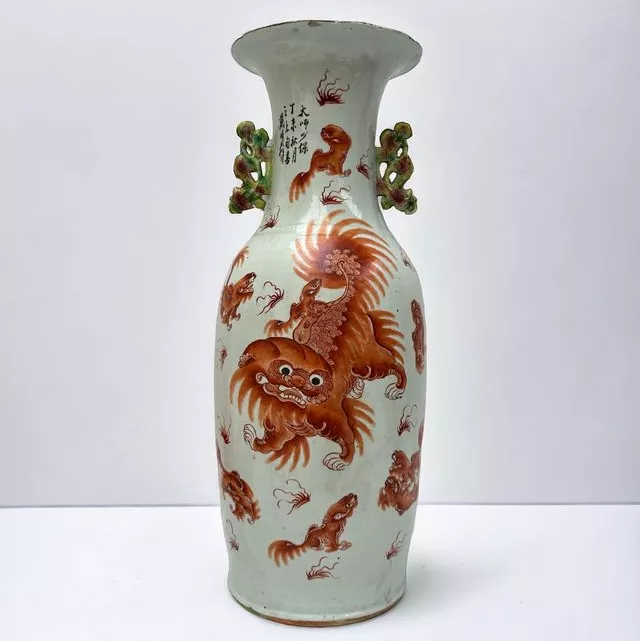
CHINA, 19th century, Glazed ceramic baluster vase decorated with Buddhist coral lion and Fô dog

Estimated 3.000 - 5.000
CHINA, Transition period (1630-1640) or Kangxi (1662-1722), two tulip vases

Estimated 1.500 - 2.000
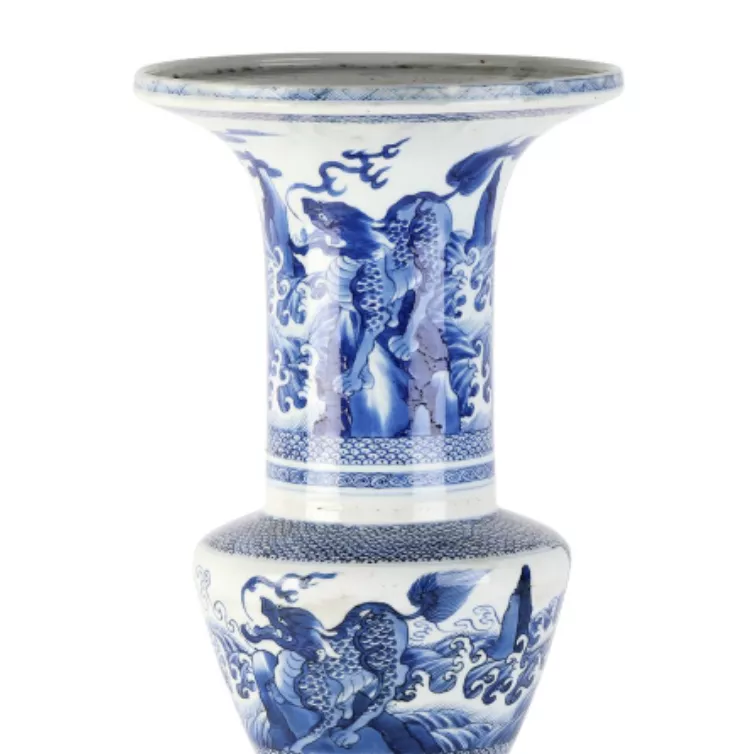
CHINA, reign of Kangxi (1662-1722). Porcelain yenyen vase with blue decoration.

Estimated 1.000 - 2.000
CHINA, reign of Kangxi (1662-1722). Porcelain bidong brush pot with blue underglaze decoration of an assembly of scholars

Secure site, anonymity preserved

Auctioneer approved by the State

Free and certified estimates
Frequently asked questions
-
What are the most sought-after historical periods for Chinese porcelain vases?Vases from the Ming and Qing dynasties, particularly those from the Transition Period (1630–1640) and the Kangxi reign (1662–1722), are the most sought-after by collectors. These periods represent the pinnacle of the craftsmanship of the artisans of Jingdezhen, characterized by the delicacy of the cobalt-blue decorations and the exceptional quality of the porcelain. Each period has its own stylistic characteristics that directly influence a piece’s market value.
-
What is the price range for Chinese porcelain vases on the market?The prices of Chinese porcelain vases range from €30 to €2,015,000, depending on their period, rarity, and condition. For example, Yuan vases range from €30 to €3,640, while Jiaqing vases can fetch up to €2,015,000. This considerable range underscores the importance of authentication and expertise in accurately appraising each piece.
-
How can you identify a Chinese porcelain vase and verify its authenticity?Authenticating a Chinese porcelain vase requires specialized expertise. We recommend that you request a free appraisal from Auctie’s through our certified auctioneers and experts, who will examine the quality of the porcelain, the finesse of the decoration, the precision of the lines, and any signatures to identify the exact origin and period of manufacture. This no-obligation appraisal will allow you to know with certainty the value and authenticity of your piece.
-
Is this a good time to sell a Chinese porcelain vase?Yes, now is an excellent time to sell. Chinese porcelain vases are highly sought-after collectibles that consistently perform well at auction. International demand remains strong, attracting buyers from around the world, which increases the chances of achieving high prices, especially if your piece is rare or of exceptional quality.
-
How does the appraisal process work at Auctie's, and what are the timeframes?Appraisals at Auctie's are free and non-binding. Simply fill out a form on our website, and a member of our team of experts and licensed auctioneers will contact you promptly to appraise your vase and provide you with an estimate of its market value within 48 hours. If you decide to sell, we’ll then work with you to get the best possible price, taking current market trends into account.
