



Rating and value of Meissen porcelain: cookies, vases, services...

Key takeaways
- Prices for Meissen porcelain range from €10 to €500,000 depending on the type of item, with vases fetching the highest bids.
- Pieces with painted enamels and gilding from the 18th century are particularly sought after; a dinner service dating from 1710 exceeded its estimate, selling for €68,750.
- The royal porcelain manufactory, founded in 1710, remains recognizable by its two crossed swords, the distinctive mark of Meissen porcelain.
If you own one or more objects by the Meissen manufacture, or after, and would like to know its value, our state-approved experts and auctioneers will offer you their appraisal services.
Our specialists will carry out a free appraisal of your piece, and provide you with a precise estimate of its value on the current market.
Then, if you wish to sell your work, we will direct you to the best possible arrangement to obtain the optimum price.
Rating and value of Meissen porcelain
Meissen porcelain is known and appreciated throughout Europe. It was one of the first royal porcelain factories in Germany, founded by Augustus the Strong. Today, the price of certain pieces continues to rise under auctioneers' gavels.
Sculpted porcelain groups and pieces with enamels are particularly prized, especially by French and German buyers, and the price at which they sell on the art market ranges from €10 to €500,000, a considerable delta but one that speaks volumes about the value that can be attributed to Meissen porcelains.
In 2018, a Meissen porcelain service, with painted enamels and gilding, dating from the 18th century sold for €68,750, while it was estimated at between €15,000 and €20,000.
Order of value ranging from a simple porcelain to the most prestigious
Type of Meissen porcelain object | Result |
|---|---|
Tea/coffee service and plates | From €10 to €350,000 |
Vase | From €10 to €500,000 |
Carved sculpture/group carved in biscuit | From €5 to €105,000 |
Other object (nightlight, carafe) | From €10 to €70,840 |
Estimate in less than 24h
Style and technique of Meissen porcelain
The style and technique of Meissen porcelain has been distinguished from the outset by exceptional mastery, based on the discovery of kaolin near the town.
Inspired by the porcelain imported from the Orient, mainly from China and Japan, the factory adopted precise methods that enabled it to produce hard porcelain, surpassing contemporary European production.
The technique used at Meissen is based on the use of this pure kaolin, mixed with specific clays, creating a resistant paste that can be shaped into a variety of forms.
The Meissen craftsmen, true masters in the art of ceramics, work with meticulous precision, giving rise to elegantly shaped pieces, often decorated with floral motifs or inspired by Asian art.
High-temperature firing, essential for obtaining the strength and translucency of hard porcelain, is carried out in specially designed kilns.
Once fired, the pieces are meticulously hand-painted by specialized artists, using the finest pigments.
This decorating process, unique to Meissen, is renowned for its vivid colors and attention to detail. As a result, every piece from the factory embodies the perfect balance between technique and aesthetics, making a lasting mark on the history of European porcelain.
History of Meissen porcelain
The Meissen factory, often referred to as the eldest daughter of European porcelain, marks a major turning point in the history of the decorative arts in Europe.
Founded in 1710 thanks to the ambition of Augustus the Strong, Prince-Elector of Saxony, it was the fruit of a burning desire to rival the porcelains of the Orient, then considered the pinnacle of luxury and refinement.
The quest to master this art began in 1709, when a chemist by the name of Friedrich Böttger developed a formula for producing hard porcelain.
This discovery was no accident, but the result of a concerted effort between Auguste le Fort and Böttger, both driven by the desire to make Europe, and Saxony in particular, the leading center of hard porcelain production.
The key to this feat lay in the deposits of kaolin, discovered near Meissen. This white clay, hitherto used as a whitening agent for wigs, proved to be the essential element for reproducing the coveted hard porcelain.
Böttger, testing various substances to imitate porcelains imported from the Far East, discovered that kaolin, when mixed with other materials and fired at high temperature, produced a fine, resistant paste comparable to precious Chinese porcelain.
This revolutionary discovery gave Saxony a considerable advantage over the rest of Europe, particularly France, where the Sèvres manufactory would take over 65 years to unlock the secret of hard porcelain.
From its foundation, the Meissen manufactory benefited from the royal privilege, granted by Augustus the Strong, which thus ensured this new industry valuable protection and monopoly. This privilege, combined with the richness of the kaolin deposits, guaranteed Saxony total control over hard porcelain production.
Augustus the Strong, a visionary, not only protected this strategic resource; he also imported porcelain from the Orient, mainly from China and Japan, in order to understand its production techniques.
These pieces, brought by the East India Company, deeply inspired Meissen's first craftsmen, who strove to reproduce the finesse and beauty of Asian porcelains.
The first creations of the Meissen manufactory reflect this oriental influence, both in motifs and forms. However, the manufactory soon developed its own style, characterized by hand-painted decorations, often inspired by European nature.
Delicate flowers, exotic birds, and later mythological scenes adorn the pieces coming out of the Meissen kilns. The technique of painting on porcelain, requiring great dexterity, became one of the factory's distinguishing features.
The production of hard porcelain in Meissen was not only a technical feat, it was also a symbol of power and prestige. The royal courts of Europe vied for Meissen pieces, which quickly became synonymous with luxury and elegance.
This dazzling success prompted many other manufactures to attempt to crack the hard-paste porcelain secret, but none were able to rival Meissen for several decades.
It wasn't until 1774 that the Royal Manufactory of Sèvres, after many years of research, finally succeeded in producing hard porcelain, marking the end of Saxon hegemony in this field.
Thus, the Royal Manufactory of Meissen, the eldest daughter of European porcelain, not only initiated a new era in the history of the decorative arts, but also set a standard of excellence that would profoundly influence porcelain production in Europe for centuries.
.
Focus on the Meissen porcelain leopard (20th century)
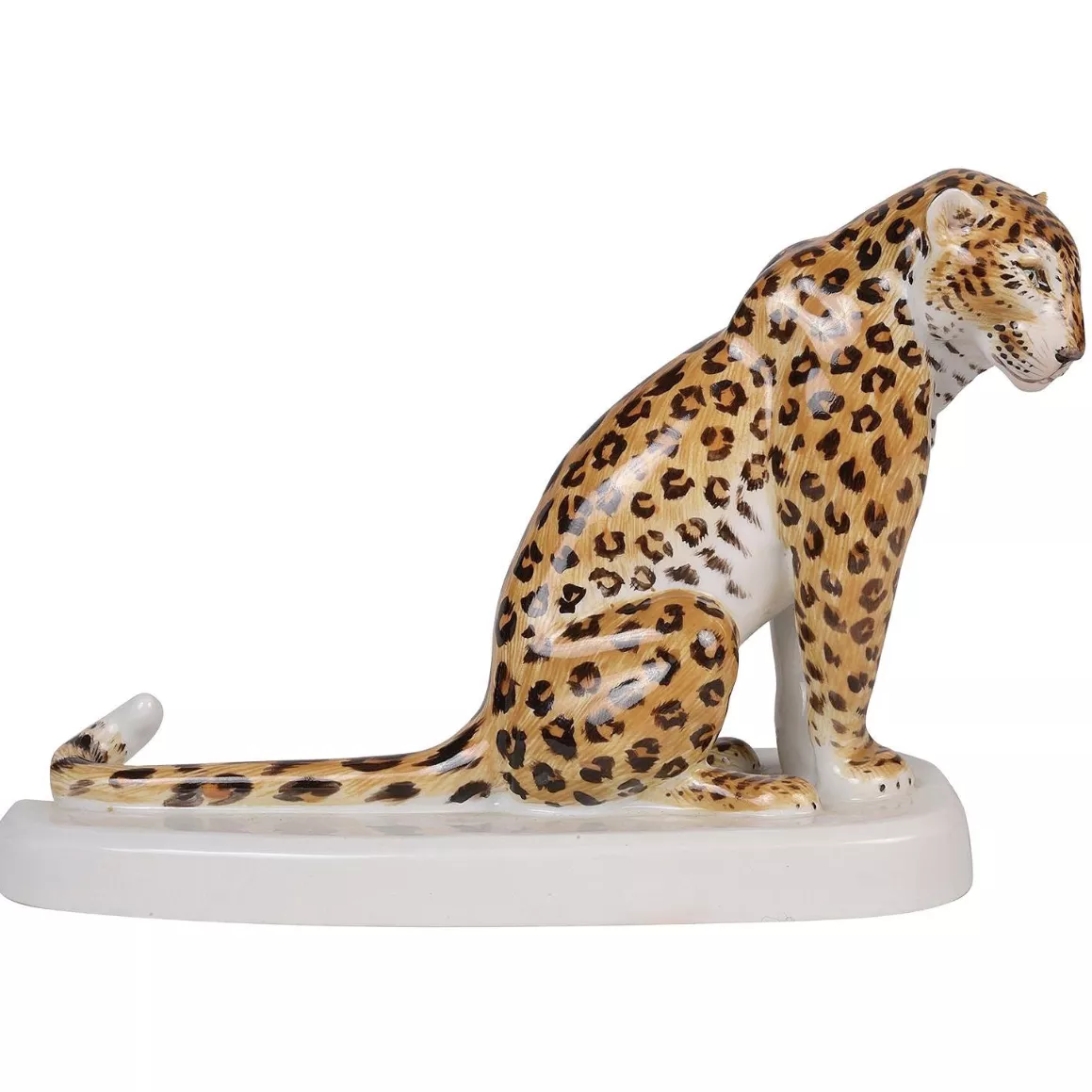
This elegant 20th-century Meissen porcelain sculpture depicts a seated leopard with remarkable finesse.
Faithful to the manufactory's tradition, the work is distinguished by meticulous precision in the reproduction of detail, both in the sinuous lines of the feline body and in the treatment of its spotted coat.
The leopard, captured in an attentive posture, seems ready to pounce, reflecting the technical mastery of the Meissen craftsmen, able to render the tension and elegance of the animal.
The coat motifs are meticulously hand-painted, with subtle nuances in shades of yellow, brown and black, giving the leopard an allure that is both majestic and realistic.
This type of sculpture testifies to the factory's adaptation to twentieth-century tastes, while retaining its centuries-old expertise in fine, artistic porcelain.
Michel Victor Acier, French sculptor in Meissen
The price of Meissen porcelain
Meissen porcelain, despite historical competition with the prestigious Sèvres porcelain, retains a prime position on the auction market.
The price varies mainly according to the state of conservation of the pieces, their age and, in some cases, the signature of an artist who contributed to their creation. Collectors particularly appreciate antique pieces, whose patterns and finesse testify to the unique expertise of the manufactory.
However, prices realized at auction are often lower than those for Sèvres porcelain (vases, biscuits...), despite continued interest from buyers.
Specialized collectors carefully seek out well-preserved works, knowing that the slightest imperfection can affect a piece's value.
Whether figurines, tea sets or vases, Meissen porcelain continues to seduce with its rich history and refined aesthetic, despite a slightly lower rating than other major European manufactures.
Recognizing a piece from the Meissen manufactory
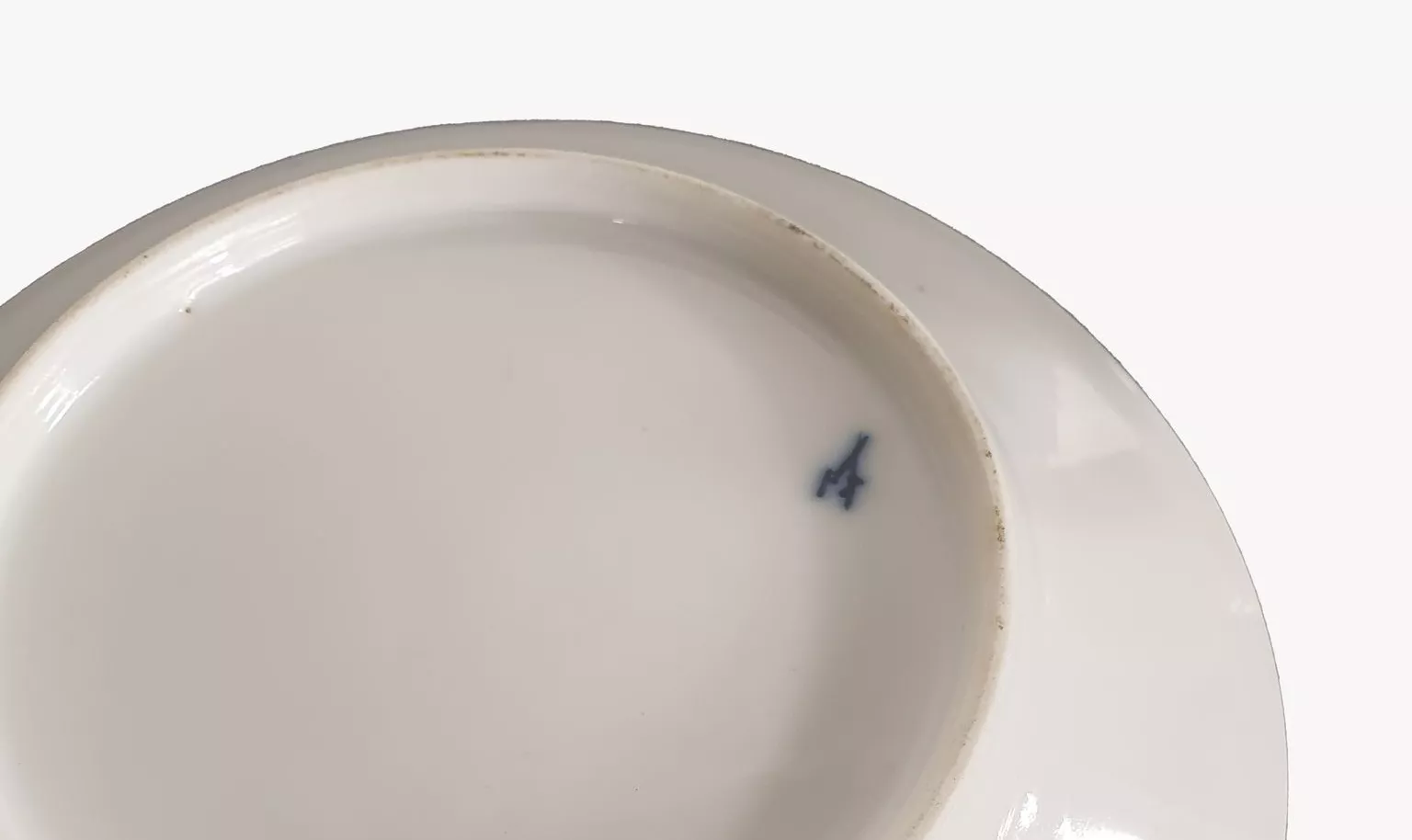
Pieces produced by the Meissen manufactory are generally signed and hallmarked. They can be identified by the two crossed swords on the back of the porcelain piece. Here's an example:
Knowing the value of a work
If you happen to own a Meissen porcelain work or one after it, don't hesitate to request a free appraisal using our form on our website.
A member of our team, made up of experts and licensed auctioneers, will contact you promptly to provide you with an estimate of the market value of your work, not forgetting to pass on ad hoc information about it.
If you are considering selling your work, you will also be accompanied by our specialists in order to benefit from alternatives for selling it at the best possible price, taking into account market inclinations.
Estimate in less than 24h
More porcelain at auction

Estimated 600 € - 800 €
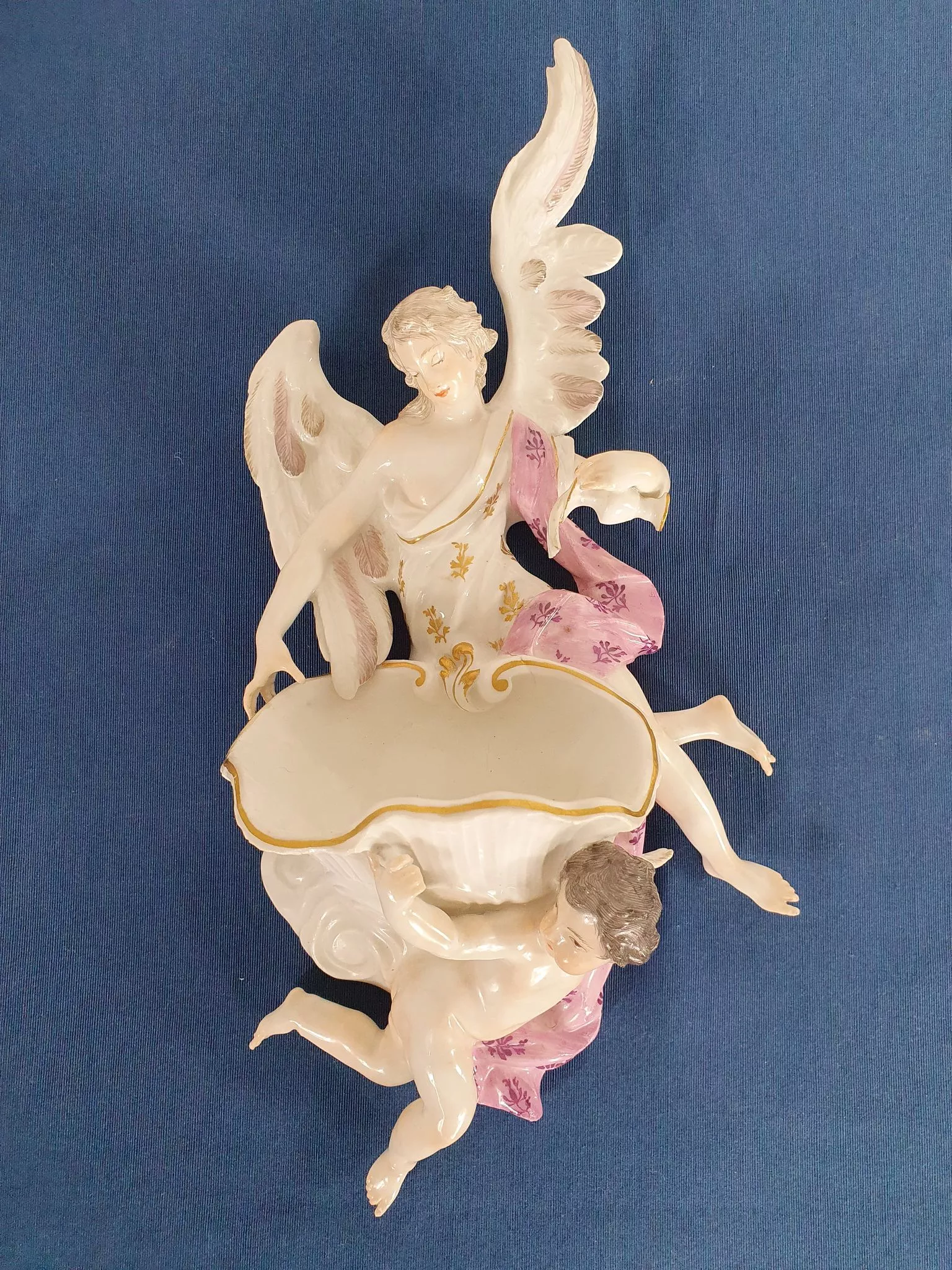
MEISSEN, 18th century, porcelain wall stoup.

Estimated 2.000 - 3.000 €
Sèvres porcelain plate from the "agronomique" service

Estimated 500 - 600 €
China, 20th, Two porcelain baluster vases with cobalt blue decoration.

Estimated 400 - 800
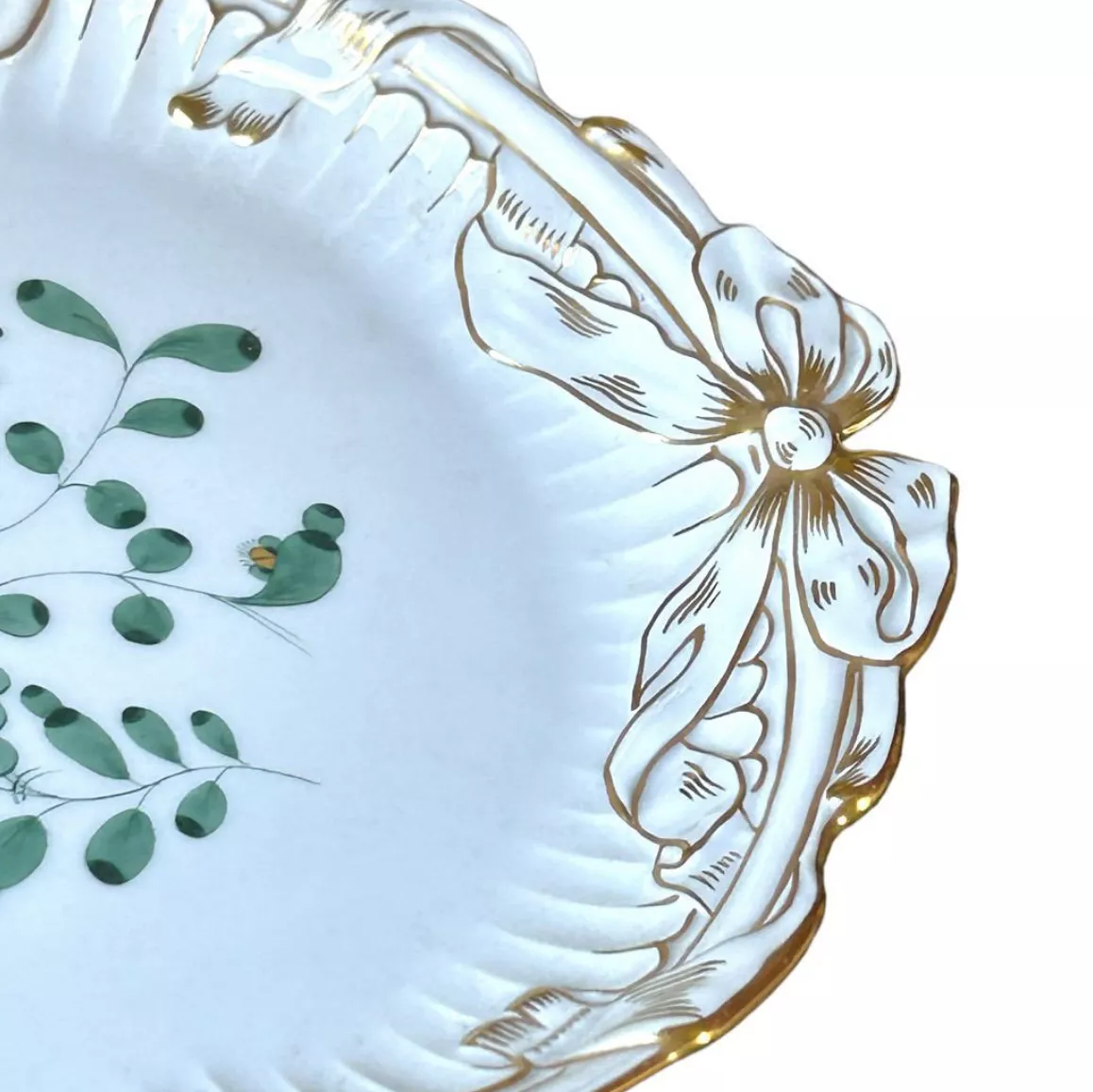
Manufacture de MEISSEN, part of an enamelled porcelain tea service

Estimated 2.000 - 3.000
SÈVRES, Pair of square compotiers in soft porcelain

Estimated 800 - 1.500
SÈVRES Hard-paste porcelain vase, baluster shape with two upturned handles and blue shaded background.
Discover in the same theme

Free estimate - Auctioneer in Wallis and Futana
Whether you're in Mata Utu, the capital, or around Vailala or Halalo, our auctioneers will meet your needs.
Learn more >

Free estimates by an auctioneer in Salon-de-Provence
Our approved auctioneers come to Salon-de-Provence to provide you with 100% free and confidential estimates.
Learn more >

Free estimates by an auctioneer in Fréjus
Our approved auctioneers will come to Fréjus to give you a 100% free and confidential estimate.
Learn more >

Secure site, anonymity preserved

Auctioneer approved by the State

Free and certified estimates
Frequently asked questions
-
What is the Meissen Porcelain Manufactory, and why is it important?The Meissen Porcelain Manufactory, founded in 1710 by Augustus the Strong in Saxony, was the first royal hard-paste porcelain manufactory in Europe. It revolutionized the decorative arts by mastering the production of fine porcelain thanks to the discovery of local kaolin, thereby rivaling the prestigious porcelain of the East. Its pieces, characterized by hand-painted designs and exceptional quality, have become synonymous with luxury and elegance in European royal courts.
-
How can you tell if a piece of Meissen porcelain is authentic?Meissen pieces are generally signed and stamped with the distinctive mark of two crossed swords, visible on the back of the object. To verify the authenticity of a piece and obtain a reliable estimate, we recommend that you submit a request for a free estimate with Auctie’s: our experts and licensed auctioneers will analyze your piece and provide you with an informed opinion within 48 hours, with no obligation.
-
What is the price range for Meissen porcelain?The value of Meissen porcelain varies considerably depending on the type of object and its quality. Tea sets and plates range from €10 to €350,000, vases from €10 to €500,000, and bisque sculptures from €5 to €105,000. The most prestigious pieces, particularly those with painted glazes and gilding dating from the 18th century, can far exceed initial estimates at auctions.
-
When is the best time to sell Meissen porcelain?Yes, now is a good time to sell Meissen porcelain. Despite its long-standing rivalry with Sèvres, these pieces continue to hold a prominent place in the auction market, with consistent interest from specialized collectors. Prices for well-preserved antique porcelain, particularly 18th-century pieces, continue to rise steadily.
-
How does the appraisal of Meissen porcelain work at Auctie's?Appraisals at Auctie's are free and non-binding. You submit a request via our online form, and then an expert or licensed auctioneer will contact you to appraise your item and provide you with an estimate of its market value within 48 hours. If you decide to sell, we’ll then help you find the best solution to get the highest possible price given current market conditions.
