



Dimensions and value of torches and candelabras

Key takeaways
- Torches and candelabras sell for between €10 and €950,000 depending on the materials; a pair made of silver fetched €243,200 in 2021.
- Gilded bronze candelabras are the most expensive items (up to €950,000), while brass torches are the most affordable (€10 to €26,000).
- Sterling silver, bronze, and gold are the preferred materials, with hallmarks guaranteeing the authenticity and purity of these sought-after collectibles at auction.
If you own torches or candelabras, and would like to know their value, our state-approved experts and auctioneers will offer you their appraisal services.
Our specialists will carry out a free appraisal of your work, and provide you with an accurate estimate of its value on the current market.
Then, should you wish to sell your work, we will direct you to the best possible arrangement to obtain the optimum price.
Rating and value of torches and candelabras
Torches and candelabras are currently sought-after collectors' items. If you own one, it may be worth more than you think. On the art market, prices for these objects can be very high under the auctioneer's hammer.
They are particularly prized, and the price at which they sell on the art market ranges from €10 to €950,000, a fairly substantial range, but one that says a lot about the value that can be attributed to these objects.
In 2021, a pair of silver torches known as " à la faïencière " sold for €243,200, while they were estimated at between €25,000 and €35,000.
Order of value from a simple work to the most prestigious
Technique used | Result |
|---|---|
Brass / copper / gilded metal torches | From €10 to €26,000 |
Silver candelabras | From €60 to €106,000 |
Gilt bronze torches | From €50 to €120,000 |
Silver torches | From 50 to 243,200€ |
Gilt bronze candelabras | From €10 to €950,000 |
Estimate in less than 24h
Characteristics of torches and candelabras
While torches and candelabras are part of the history of lighting, their differences mark two distinct approaches, between utilitarian simplicity and decorative exuberance.
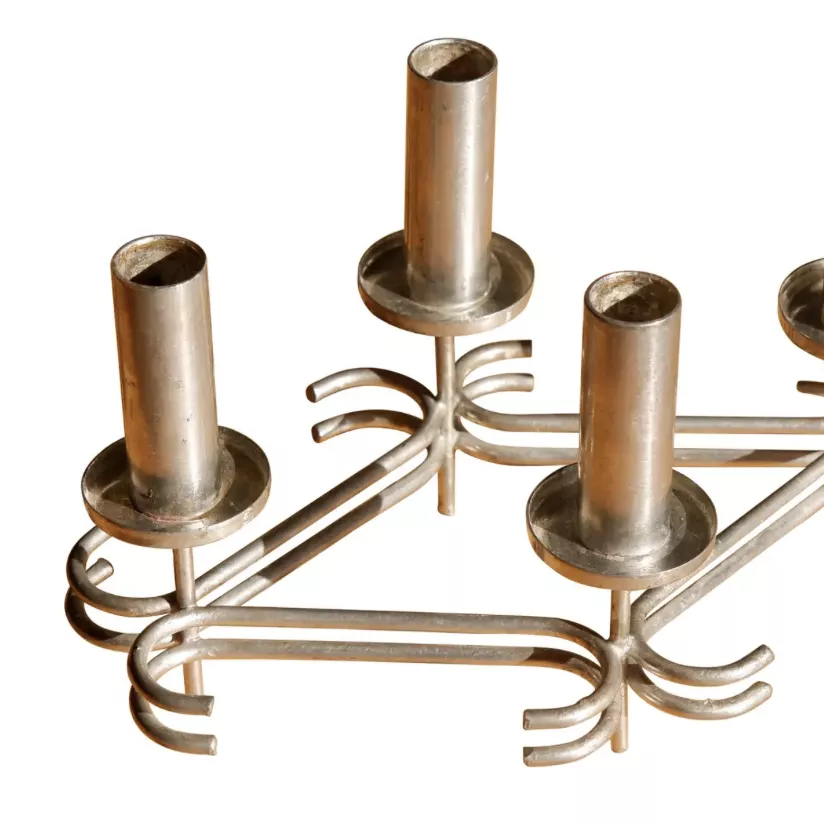
Torches, first of all, are characterized by their verticality and portability.
intended to accommodate a single candle or torch, they favor sober lines and sturdy materials such as wrought iron or wood.
Their design, often devoid of ornamentation, reflects practical use, although some 18th-century models, adorned with classical motifs, attempted a foray into elegance.
Candelabras, on the other hand, establish themselves as works of art in their own right. Rich in several arms or branches, they allow a profusion of light while affirming a taste for ornamentation.
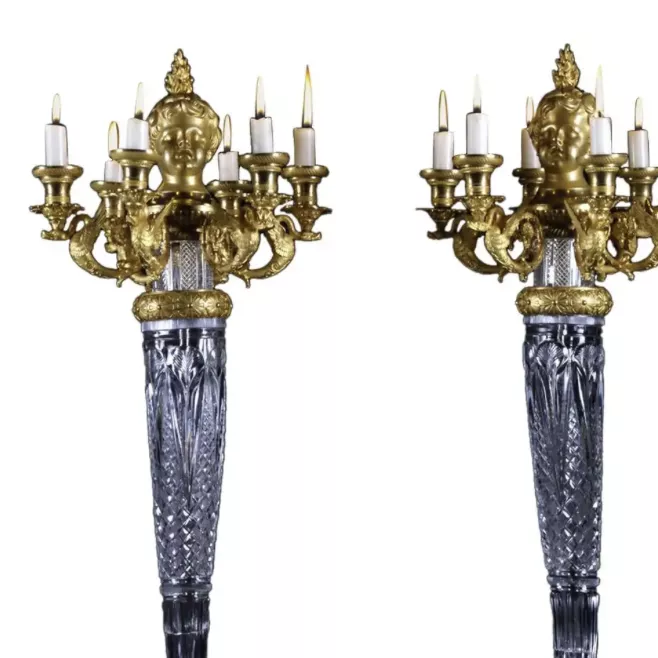
Candelabra from the Neoclassical period, for example, compete in sophistication: gilded bronze, cut crystal and mythological figures combine to make them symbols of prestige.
These objects are not limited to a practical function: they participate in a staging of power or wealth, lighting up opulent salons or the grand dining rooms of aristocratic residences.
The evolution of these devices over the centuries illustrates cultural and aesthetic transformations.
While torches evoke a more intimate and itinerant lighting, candelabras inscribe light in a theatrical dimension, an art where utility fades before pomp.
Their complexity and precious materials testify to a know-how inherited from artisan traditions, while adapting to the stylistic trends of their time, from Baroque to Art Deco.
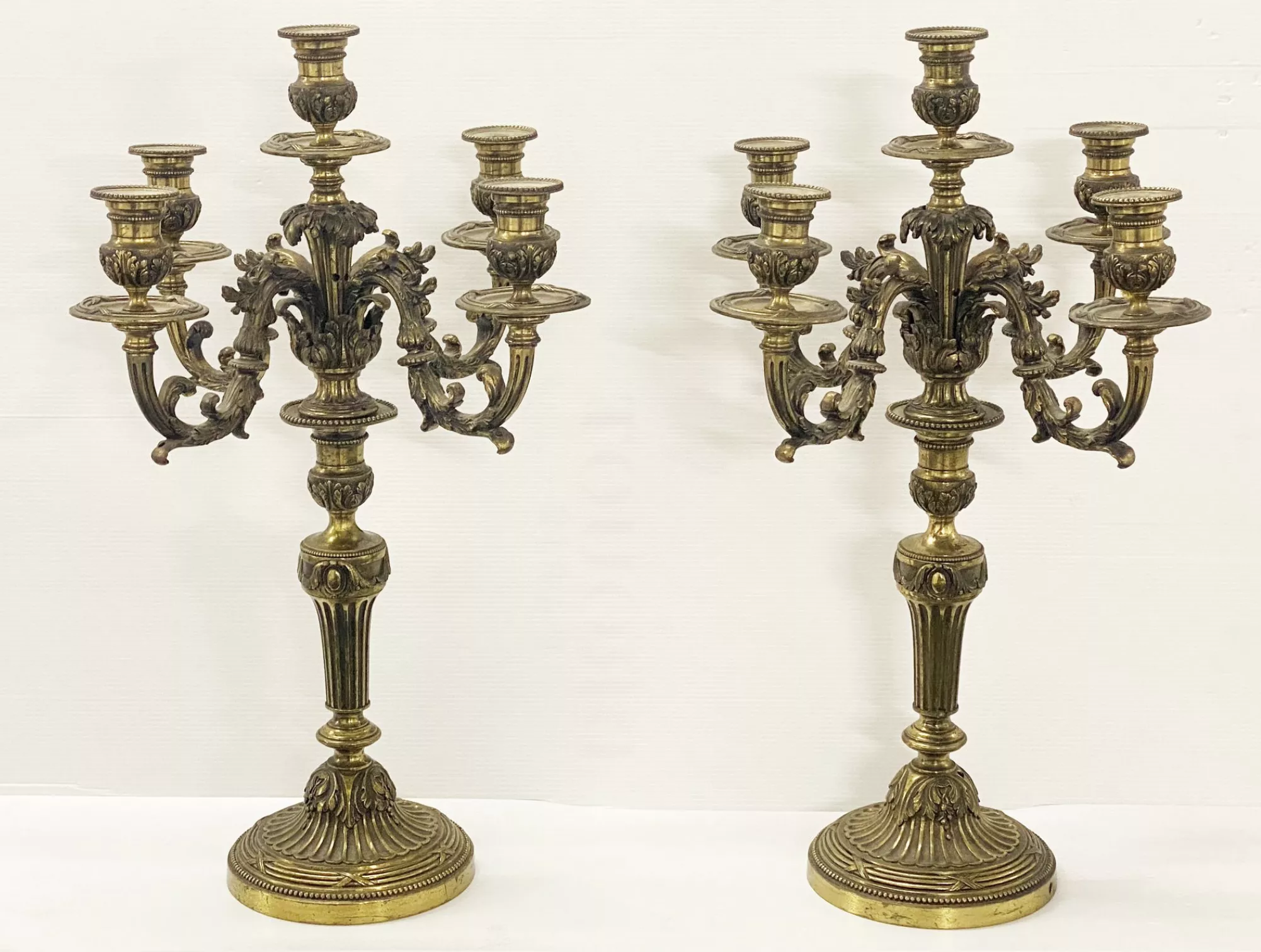
The candelabra scandal during the revolutionary period
A famous anecdote linked to candelabras can be found in the history of the French Revolution. In 1792, during the last months of the monarchy, an unexpected incident occurred at the Palace of Versailles.
In the throne room, grand receptions used to glow under the glow of solid silver candelabras, adorned with detailed carvings and multiple arms.
During a banquet, King Louis XVI, eager to maintain the appearance of royal grandeur, ordered that the candelabras be moved to make them a central element of the decoration.
However, one of the palace officers, blinded by rising political tensions, made a grave error: he left these candelabras not only in a visible location, but much closer to the people than usual.
The insult was not so much the object itself, but the symbol it represented. These candelabras, associated with absolute power, suddenly found themselves under the gaze of the representatives of a people fed up with the king's opulence.
A few weeks after this incident, revolts broke out, and the once revered silver candelabras were melted down and turned into coins, in an act of heritage reappropriation.
In the shadow of these fallen candles, the fate of the monarchy was being played out.
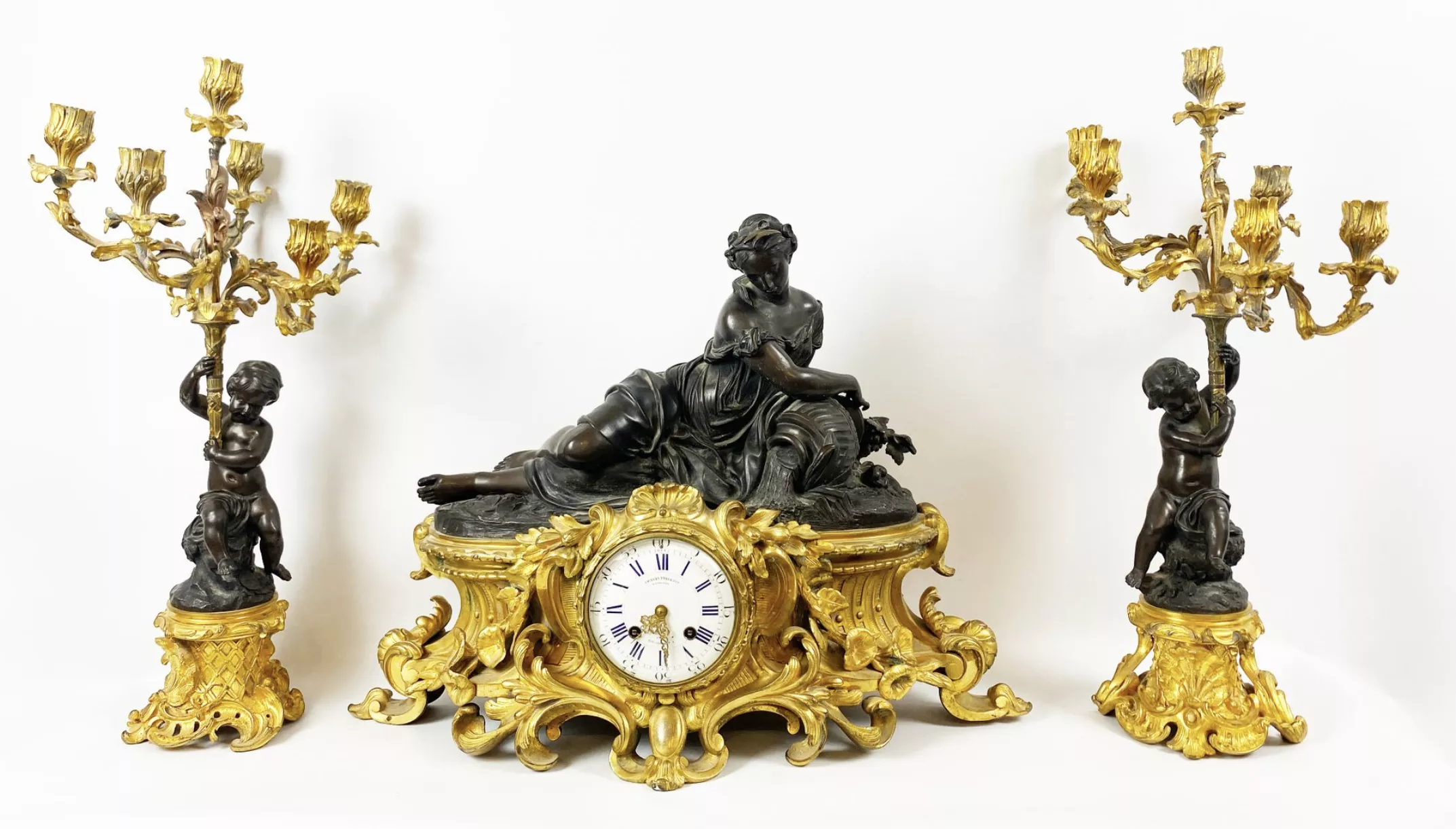
History and symbolism of torches and candelabras
Torches and candelabras, in their design and use, are part of a tradition that is both utilitarian and symbolic, closely linked to the history of lighting and the evolution of decorative forms.
Torches, vertical supports for candles or torches, while remaining functionally simple, have long embodied a fundamental element of mobile lighting.
From Roman antiquity to the Renaissance, these objects were worn during ceremonies, symbolizing the illumination of the spirit or divine purity, often associated with rituals or processions.
Far from being mere accessories, torches were symbolic instruments of light, conveying both religious significance and a connotation of prestige.
Their slender form and portability made them essential elements in the collective imagination, in a context where the flame itself represented life, knowledge and moral enlightenment.
As for candelabras, their ornamental dimension goes far beyond their lighting function.
From the outset, they evoke a symbolism of power, grandeur and durability, due to their often monumental architecture, with several arms supporting several candles, like veritable receptacles of light.
As they took their place in the royal palaces and grand salons of the 18th century, these pieces transcended their initial role to become objets d'art in their own right, both in terms of their design and the precious materials of which they are made.
Whether in gilded bronze, solid silver or cut crystal, candelabras were outward signs of wealth and refinement.
Their structure, sometimes complex, often made use of decorative elements such as floral motifs, allegorical figures or garlands, elevating them to the rank of architectural elements in their own right, intended to enrich the decor while testifying to the power and prestige of those who owned them.
Materials and hallmarks
It is from both the brilliance and solidity of precious metals that candelabras draw their symbolic power and timeless value. Among these, sterling silver is unquestionably the metal of choice.
Composed of 92.5% pure silver, often alloyed with copper to ensure durability, sterling silver is distinguished by its malleability, perfect for finely detailed chasing techniques.
The silver hallmark, often accompanied by the passing lion, marks the authenticity and provenance of the piece.
This metal, while retaining a brilliant shine, ages gracefully, sometimes developing a patina, but always retaining that aura of refinement and purity expected of an objet d'art.
Bronze, on the other hand, uses a more complex alloy: that of copper and tin, which can also incorporate other metals such as aluminum or zinc, to increase resistance to wear.
It's not uncommon to see bronze candelabras adorned with finely chiselled details, this metal having this unique ability to patinate and take on warm hues over time, enriching the appearance of the object while retaining its robustness.
The more discreet bronze hallmark is often marked by a workshop seal or craftsman's signature, attesting to the quality and history of the piece.
Gold, the royal metal par excellence, is a preferred choice for high-value pieces, often associated with luxury decorations.
Whether 18-carat gold or purer alloys, this precious metal is unrivalled for its resistance to oxidation and its impeccable brilliance.
The gold hallmark, such as the number "750" for 18-carat gold, guarantees the metal's purity. A gold candelabra, whatever its shape, embodies opulence and prestige, while enjoying exceptional longevity.
Finally, rarer and more expensive, platinum, due to its density and resistance, is generally reserved for exceptional creations.
Its hallmark, usually marked "PT", makes it a less common metal, but one that is particularly sought after in collector's items.
Each hallmark affixed to these precious metals, whether a number indicating the title of gold or a symbol for silver, is not simply a guarantee of quality, but a testimony to meticulous craftsmanship, guaranteeing the longevity of these objets d'art.
Success of these objects on the auction market
Torches and candelabras are prized on the auction market because of their historical and artistic value, their manufacture from precious materials such as bronze and silver, and their exceptional craftsmanship.
Their rarity, especially when in good condition and authentic, and their prestigious provenance add to their appeal.
As livres anciens, the tableaux anciens and sculptures en bronzes, torches and candelabras are common and sought-after items on the auction market.
Knowing the value of a work
If you happen to own a pair of torches or candelabras, don't hesitate to request a free appraisal using our form on our website.
A member of our team of experts and licensed auctioneers will contact you promptly to provide you with an estimate of the market value of your work, not forgetting to send you ad hoc information about it.
If you're thinking of selling your work, our specialists will also help you find alternatives to sell it at the best possible price, taking into account market trends.
Estimate in less than 24h
Discover in the same theme

Free estimate - Auctioneer in Guadeloupe
Whether you're in the capital, Point-à-Pitre, or in the surrounding areas of Sainte-Anne and Saint-François, our auctioneers can meet your every need.
Learn more >
Free appraisal - auctioneer in Saint Martin
Whether you're in Marigot, the capital, or around Grand Case or Colombier, our auctioneers will meet your needs.
Learn more >

Free estimates by an auctioneer in Fréjus
Our approved auctioneers will come to Fréjus to give you a 100% free and confidential estimate.
Learn more >
Similar works sold at auction


Secure site, anonymity preserved

Auctioneer approved by the State

Free and certified estimates
Frequently asked questions
-
What is the difference between a torch and a candelabra?Torches are simple vertical holders designed to hold a single candle, characterized by their understated lines and portability. Candelabras, on the other hand, are ornamental works of art featuring multiple arms or branches, designed to hold several candles and to symbolize prestige and wealth through their elaborate decoration.
-
What is the price range for torches and candelabras on the market?Prices vary considerably depending on the material and quality: brass, copper, and gilded metal candelabras range from €10 to €26,000, silver candelabra between €60 and €106,000, and the most prestigious gilded bronze candelabra can reach up to €950,000. This wide range reflects the importance of authenticity, provenance, and condition.
-
How can you authenticate a torch or candelabra and determine its value?Auctie's offers a free, no-obligation appraisal of your artwork. Our team of experts and state-certified auctioneers will examine the piece, verify the hallmarks and provenance, and then provide you with an accurate estimate of its market value within 48 hours via our online form.
-
Why are torches and candelabras in high demand on the auction market?These objects are prized for their historical and artistic value, the quality of their precious materials (silver, gilded bronze, gold, platinum), their exceptional craftsmanship, and their rarity—particularly when they are authentic and in good condition. Their prestigious provenance also adds to their appeal among collectors.
-
How can I sell my torch or candelabra for the best price?After obtaining a free appraisal from Auctie's, our specialists will guide you through the entire sales process, offering you the best options for selling your piece at the best possible price, based on current market trends for these collectibles.
