Rating and value of antiquarian books, illuminations and first editions
Rating and value of antiquarian books, illuminations and first editions
Key takeaways
Illuminated books of hours and first editions can fetch hundreds of thousands of euros; one book of hours sold for €1,727,200 in 2023, compared to an estimated €800,000–1,000,000.
Antique books are characterized by their hand-bound covers, pages made of handmade paper or parchment, and illustrations illuminated with gold or silver by specialized artisans.
Rarity, provenance, condition, and historical significance determine market value; Auctie’s experts offer a free appraisal to evaluate your items.
If you own an antique book and would like to know its value, our state-approved experts and auctioneers will guide you.
Our specialists will carry out a free appraisal of your instrument, and send you an accurate estimate of its value on the current market.
Then, if you wish to sell your property, we will direct you to the best possible arrangement to obtain the optimum price.
Rating and value of an antique book
Antique books of hours, illuminations, first editions or even certain scientific maps are highly prized at auction as they are witnesses to the past and sometimes archives of history that can be very valuable.
Like handwritten letters, these objects can have a high value on the art market.
Some prestigious documents can fetch hundreds of thousands of euros at auction.
In 2023, an antique book of hours (known as office hours) containing numerous illuminations depicting the Virgin Mary in particular, sold for €1,727,200 while it was estimated to fetch between €800,000 and €1,000,000.
Other antique editions can also fetch very high amounts, as was the case for the Confessions of Saint Augustine, from the presses of Johannes Mentelin, which went for €318,080 in 2015.
Order of value from the simplest to the most prestigious
Object type
Result
Old books de droit
From €25 to €6,500
Antique History books
From €20 to €47,620
Ancient Bibles
From 20 to 91 750€
Ancient books of hours
From 30 to 1 727 200€
Have your objects estimated for free by our experts
Estimate in less than 24h
Characteristics and definition of an antiquarian book
Antiquarian books are often characterized by their traditional, handmade binding, which may be adorned with decorative motifs or gilding.
The pages are usually made of handmade paper or parchment, sometimes fragile due to their age, and may feature handmade illustrations or illuminations.
The text is often printed in black ink, with antique typography, sometimes calligraphic, and works may be accompanied by engravings or maps. The conservation of antique books is often a challenge due to their fragility and sensitivity to environmental conditions.
Books of hours are particularly among the prized objects in this category. These are medieval illuminated manuscripts containing prayers and religious texts for specific times of the day, such as the canonical hours.
Richly illustrated by illuminators, these books were personalized and served as signs of piety and social status. Today, they are sought-after collector's items for their artistic beauty and testimony to religious devotion and medieval craftsmanship.
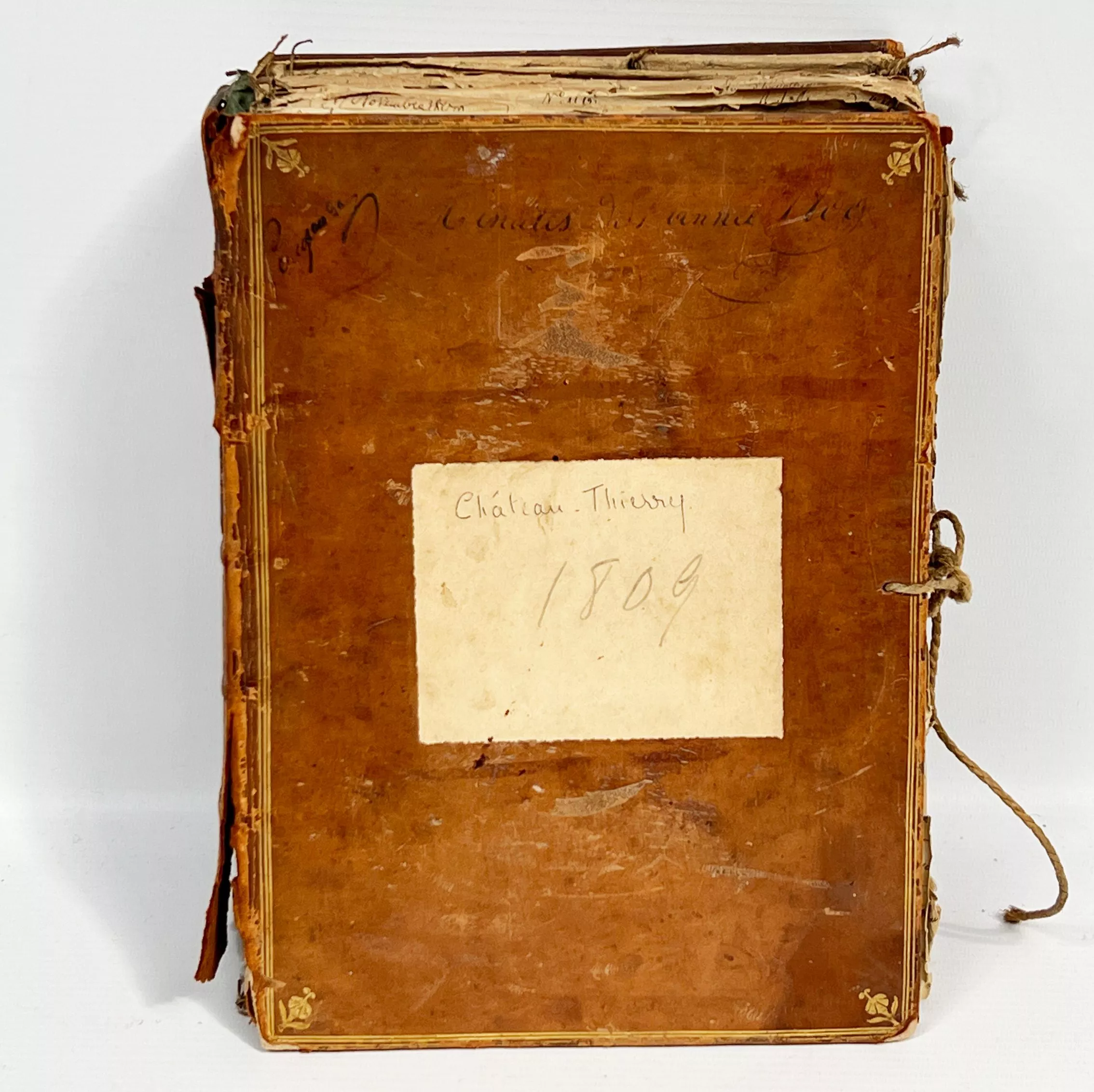
Couverture d'un livre ancien
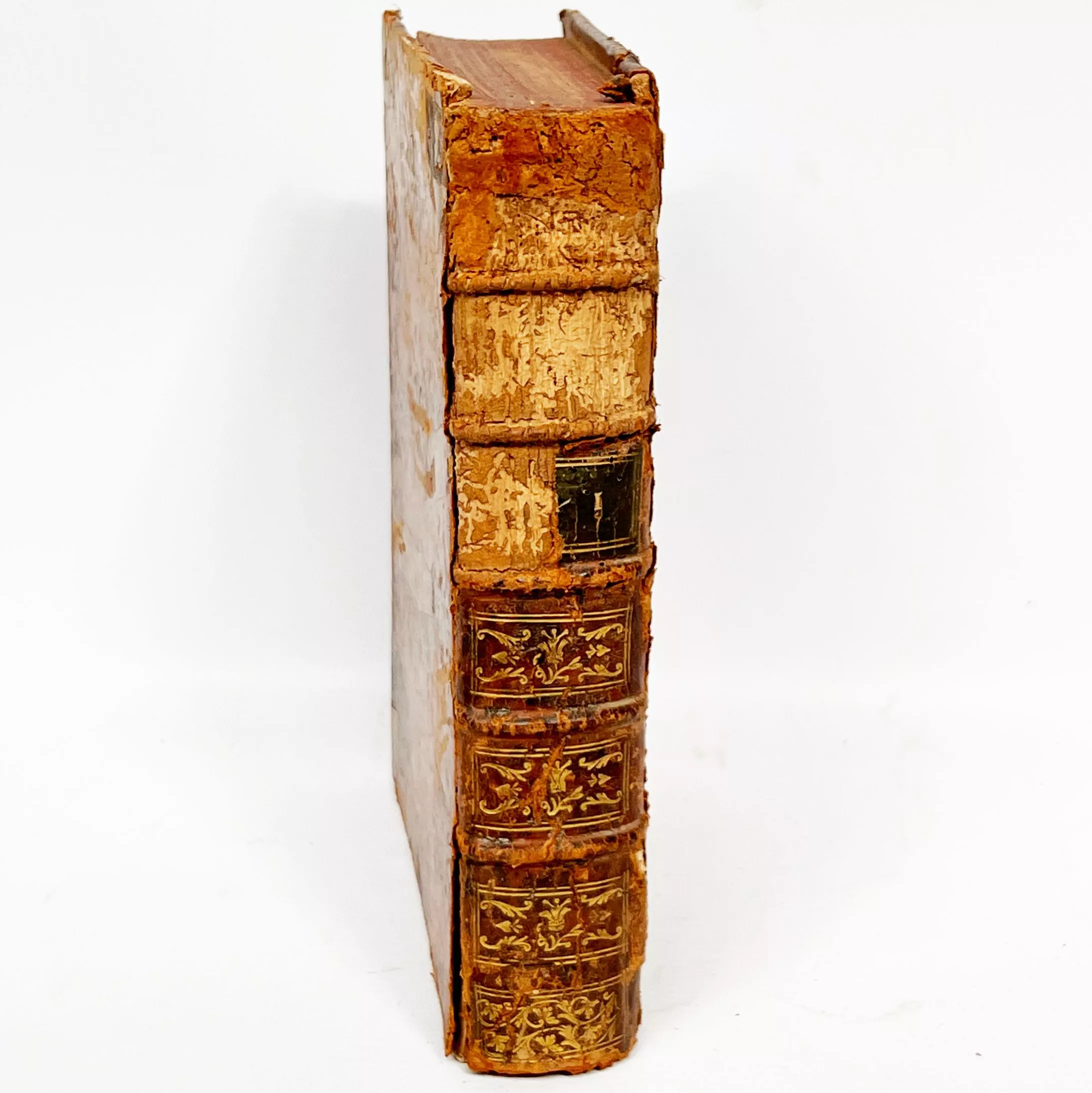
Tranche d'un livre ancien
Ancient illuminations: role and characteristics
Ancient illuminations are true joys of medieval art, precious illustrations that adorn ancient manuscripts. Handcrafted by artisans known as enluminators, these miniatures, often painted on parchment, are striking for their fine detail and vivid colors.
Each illumination tells a story, whether through religious scenes, portraits or floral and geometric motifs.
The work of the illuminators is distinguished by the frequent use of gold or silver, which lends the pages a special, almost sacred light and a spiritual dimension, while underlining the symbolic importance of the text they accompany.
These illustrations are not mere decorations. They deeply enrich the texts by adding a visual touch that amplifies the meaning of the words, whether for religious works, such as the Gospels, or for more secular writings.
Through the richness of the compositions, these illuminations immerse the reader in a contemplative atmosphere, offering an almost mystical reading experience, where art and spirituality meet.
In short, they embody a fusion between text and image, marking an era when each page was a work of art in its own right.
The appearance and evolution of ancient books in history
The history of ancient books actually begins long before the invention of printing, at a time when knowledge was engraved on clay tablets or inscribed on papyrus scrolls.
However, it was with the advent of the codex, followed by Gutenberg's printing press in the mid-15th century, that book production really took off. The invention of the letterpress was a revolution that forever transformed the dissemination of knowledge.
Prior to this, books were copied by hand, often in monasteries, and remained rare, almost sacred objects.
Gutenberg's press enabled multiplication of copies, facilitating access to reading and knowledge.
The first printings focused mainly on religious works, such as the Bible, but gradually classical and philosophical texts began to be reproduced, paving the way for a wider dissemination of humanist ideas.
As the centuries passed, the diversity of printed works grew richer, reflecting the intellectual, political and cultural changes of each era.
The printed book then became not only a tool for disseminating thought, but also a reflection of human history, carrying with it the trace of artistic movements and social upheavals.
Nicolas Asvisio
Over the years, Nicolas has established solid collaborations with numerous auctioneers. These partnerships have resulted in memorable auctions, where priceless literary pieces have found new owners. His reputation as a reliable expert gives him a place of choice in auction rooms, where his advice is often sought.
Send a message
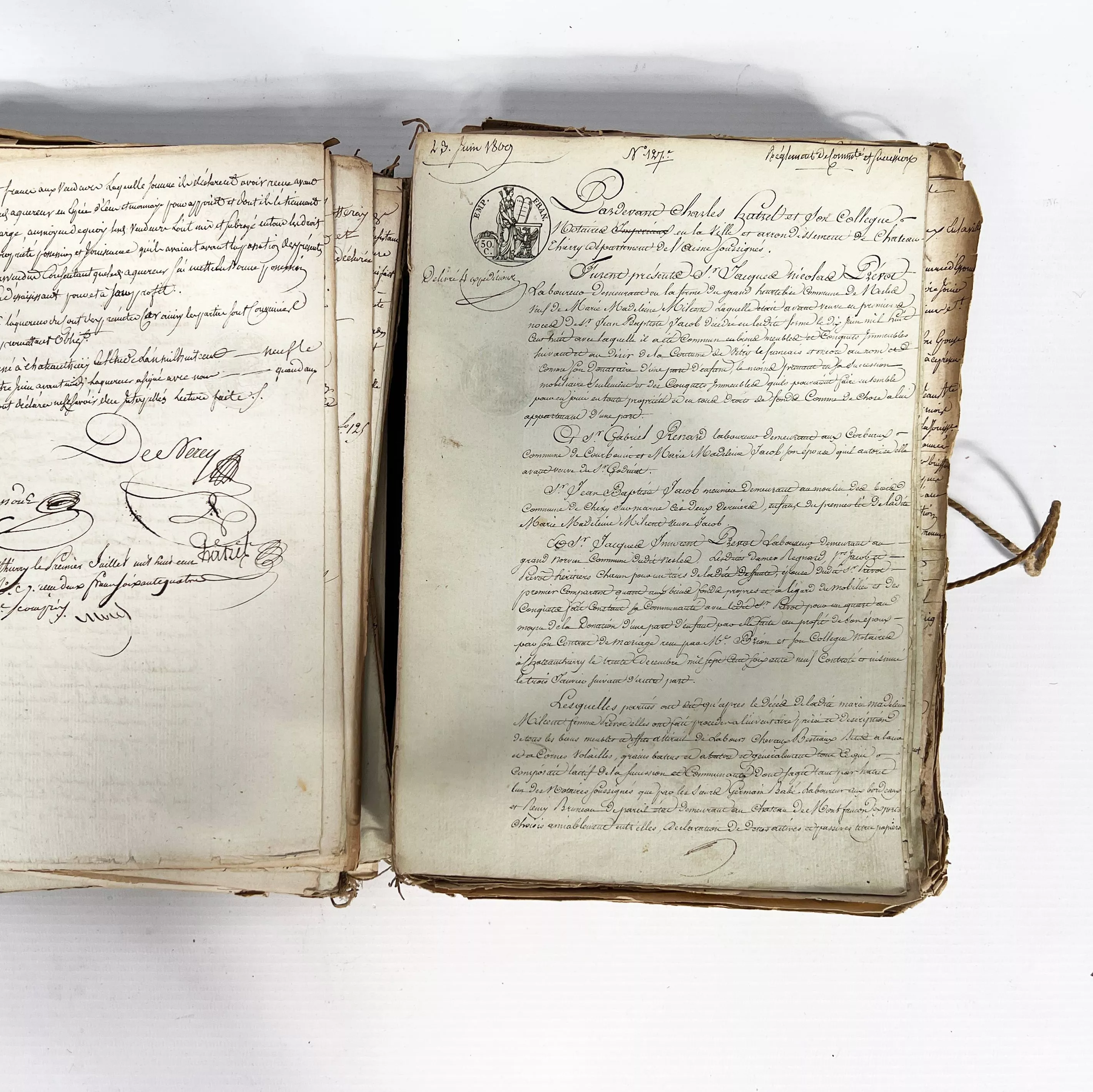
Intérieur d'un livre ancien
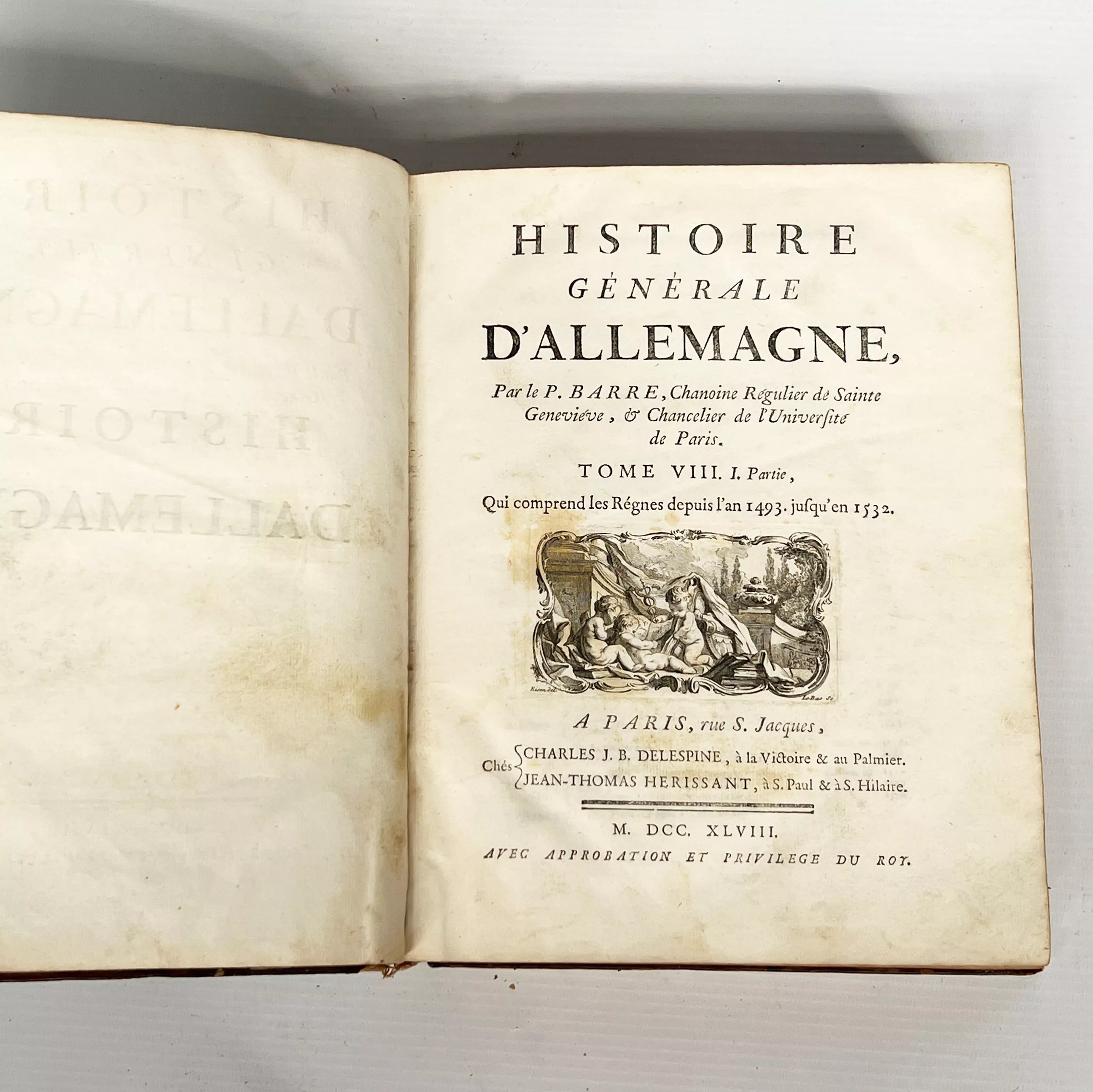
Page de titre d'un livre ancien
Focus on the First Edition of Montaigne's Essays
The sale of the first edition of Montaigne's Essais by Christie's in 2017, for nearly $500,000, represents much more than just a successful auction.
It is a vibrant testament to the intellectual and historical importance of this work, often considered one of the pillars of Western literature.
First printed in 1580, this edition embodies the beginning of a revolution in thought, in which the author indulges in unprecedented introspection, exploring with sincerity and depth the great questions of human existence.
The exceptional character of this copy lies not only in its rarity, but also in the special aura surrounding this seminal text. Montaigne, through his Essais, develops a unique method of thought, where doubt, personal reflection and critical observation of the world come together.
Each page and each sentence seems to be a mirror held up to humanity, reflecting its contradictions, its weaknesses, but also its greatness.
This copy, preserved for over four centuries, bears not only the trace of its era, but also the weight of the many generations of readers who were moved by Montaigne's prose. The patina of time, the marks left by the hands that have leafed through it, add an almost sacred dimension to the object. Beyond the text itself, it is the passage of time, the idea of the transmission and continuity of thought through the ages, that gives this edition priceless value.
For bibliophiles, acquiring a first edition of the Essais is like appropriating a piece of history, a fragment of the spirit of the Renaissance.
At a time when ideas were still circulating slowly, this book was a powerful vector of the new humanist thought, part of an intellectual movement that would shape modern Europe.
The sale of this work, then, becomes not just a commercial act, but a moment when culture and history embrace, reaffirming the eternal relevance of Montaigne's writings.
The place of antiquarian books on the auction market
Today, antiquarian books occupy a special place on the auction market, where they are perceived as both art objects and priceless testimonies to history. They are sought after by many collectors, often highly specialized in their field.
Each book tells a unique story, whether through the rarity of its edition, the richness of its illustrations or the quality of its state of preservation. These are all elements that contribute to its value in the eyes of collectors and institutions.
Sales of antiquarian books can reach impressive sums, as demonstrated by the sale of a first edition of Michel de Montaigne's Essais, sold for almost $500,000 at Christie's in 2017.
In addition to their rarity, these books are often sought after for their provenance or even for the historical aura that surrounds them. Some books, having belonged to famous personalities or having gone through crucial periods in history, become objects of fascination.
Beyond auctions, antiquarian books are also displayed in galleries and museums, such as the Bibliothèque nationale de France, where they are presented not only for their market value, but also for their fundamental role in the transmission of knowledge and the preservation of the world's intellectual heritage.
Thus, these literary treasures remain at the heart of a dynamic market, prized by bibliophiles, collectors and institutions alike, perpetuating their importance across the centuries.
Expertise your property
If you own an antiquarian book, scientific map or other historical document and would like to know its value, feel free to request a free appraisal by filling in our online form.
A member of our team of experts and licensed auctioneers will contact you to provide an estimate of the market value of your property.
If you are considering selling your work, our specialists will also guide you through the various alternatives available to obtain the best possible price, taking into account market trends and the specific features of each object.
Have your objects estimated for free by our experts
What is a book of hours, and why is it so highly prized at auctions?
A book of hours is a medieval illuminated manuscript containing prayers and religious texts intended for the canonical hours of the day. These works, richly illustrated by illuminators and personalized, were symbols of piety and social status. Today, they are highly sought after for their exceptional artistic beauty, their delicate and exquisite illuminations, and the insight they provide into medieval craftsmanship and religious devotion.
What is the price range for antique books at auction?
The value varies considerably depending on the type and rarity. Antique law books sell for between €25 and €6,500, while books of hours can fetch anywhere from €30 to over €1.7 million. Antique Bibles range in price from €20 to €91,750. Some prestigious items, such as first editions of Montaigne’s Essays, have fetched nearly $500,000 at auction.
How do you authenticate and estimate the value of an antique book?
To authenticate your antique book and determine its value, we recommend that you request a free appraisal from our certified auctioneers and experts. They will examine your book and provide you with an accurate estimate of its current market value, with no obligation on your part.
Is this a good time to sell an antique book?
Yes, now is an excellent time to sell an antique book. The market for antique books is dynamic and very active, with strong demand from bibliophiles, collectors, and institutions. The prices achieved at auction reflect this, and our experts will be happy to advise you on the best strategies to maximize the value of your item.
How does the process of selling an antique book at Auctie's work?
The process begins with a free, no-obligation appraisal conducted by our certified auctioneers, who assess the market value of your book. Following this appraisal, our specialists will guide you through the various options available to ensure you get the best possible price, taking into account market trends and the specific characteristics of your book, all the way through to its sale at auction.