Diamonds sell for between €400 and €71.2 million, with recent records such as the De Beers Cullinan Blue, which sold for €55.5 million in April 2022.
Valuation is based on the 4Cs: Carat (weight), Clarity (purity), Color (color), and Cut (cut), certified by laboratories such as the GIA.
Ethical sourcing, cut proportions, and the absence of fluorescence significantly increase a diamond’s market value.
If you own one or more diamonds, and would like to know their value, our state-approved experts and auctioneers will offer you their appraisal services.
Our specialists will work to carry out a free appraisal of your work, and will send you an accurate estimate of its value on the current market.
Drew Battaglia is a certified expert in jewelry from 1800 to the present day. Van Cleef & Arpels, Boucheron, Cartier, diamonds, precious stones, gold... she appraises, verifies authenticity and enhances the value of your jewelry at our sales at Hôtel Drouot.
Send a message
Diamonds are currently sought-after collectibles. If you own one or more, they may be worth more than you think. On the art market, prices for these objects can be very high at the auctioneers' gavel.
They are particularly prized, and the price at which they sell on the art market ranges from €400 to €71.2 million, a fairly substantial range, but one that says a lot about the value that can be attributed to these objects.
Their appraisal is also very complicated and subject to numerous rules. The value of your diamond can vary according to many factors, and it needs, for all the reasons listed below, to be entrusted to a specialist.
In 2016, the Oppenheimer Blue was acquired for €53.6 million. Other magisterial records recently included the Winston Legacy, a colorless 163.41-carat pure diamond sold for €44 mill.
In April 2022, the 15.1-carat De Beers Cullinan Blue was sold for €55.5 mill. Discovered in South Africa's Cullinan mine, it is one of the world's most famous diamonds.
The Pink Star, meanwhile, fetched a record $71.2 million, so it was auctioned for over a million per carat.
Order of value from a single diamond to the most prestigious
Type of diamond
Result
Polished natural yellow diamond
From 300 to 13,5 millons €
Colorless diamond
From 500 to 55,5 millons€
Blue diamonds
From 300 to 13,5 millons€
Have your objects estimated for free by our experts
Estimate in less than 24h
Main characteristics to consider when estimating a diamond
In order to correctly estimate a diamond, you must first consider the carats (unit of measurement of weight for a diamond). A carat corresponds to 0.2 grams of gemstones and pearls.
It is different from the twenty-fourth of fine gold contained in a quantity of gold, when the term carat is used to indicate the gold purity level.
Naturally, the value of a diamond will vary according to its weight. The higher the carat level, the more expensive the diamond. Carats are the first element taken into account when describing a diamond to establish its value.
However, other parameters will come into play, such as its color. The Gemological Institute of America has set up a scale to determine an order of value. The more colorless the diamond, the more expensive it will be.
On the contrary, the more yellow it is, the less valuable it will be. The GIA scale runs from D to Z, with D corresponding to a colorless diamond and Z corresponding to a yellow - light brown diamond.
Subsequently, it's also essential to look at the diamond's cut, also sometimes referred to as cut. In 1919, Marcel Tolkowsky, a physicist and mathematician, carried out a great deal of work and succeeded in discovering the ideal proportions of a diamond.
The cut of a diamond is very important since it will affect the reflection of light, and the stone will thus appear larger than it really is.
The ideal proportions of a diamond cut were slightly redefined by the International Diamond Council (IDC) in 1978, to achieve even more refraction than with the Tolkowsky cut.
In addition, symmetry and polishing are absolutely essential to ensure the diamond's harmony and perfect proportions necessary for light reflection.
Some diamonds are fluorescent. This means they contain particles that emit a visible glow when exposed to UV light. This is why blue diamonds can often be found.
These submicroscopic effects often lower a diamond's value, as non-fluorescent diamonds are often considered the most " pure ". This parameter remains debated, as some specialists believe that fluorescence enhances a diamond's color.
Finally, polishing can affect a diamond's degree of regularity. Carried out in two stages, blocking and polishing, polishing a diamond can sometimes be affected by a disymmetry that will have an impact on its value.
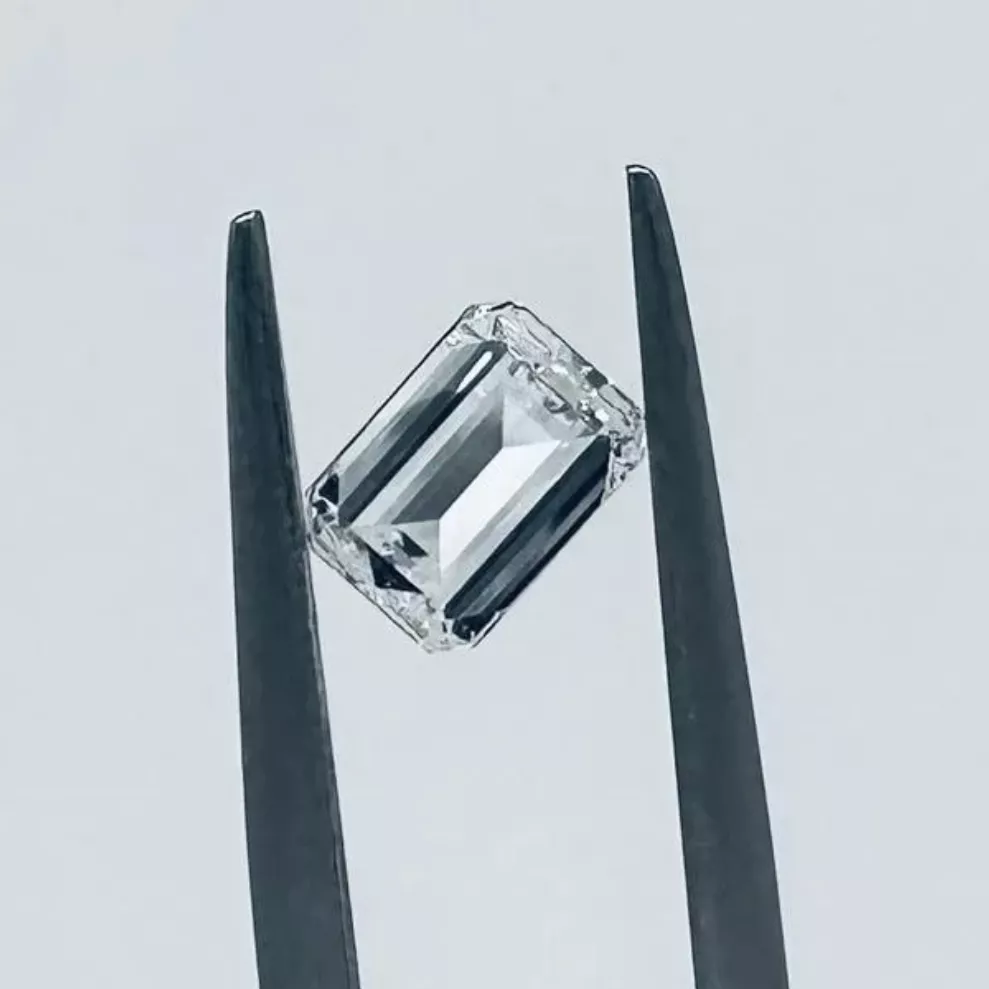
Diamant naturel poli de 1,06 carats
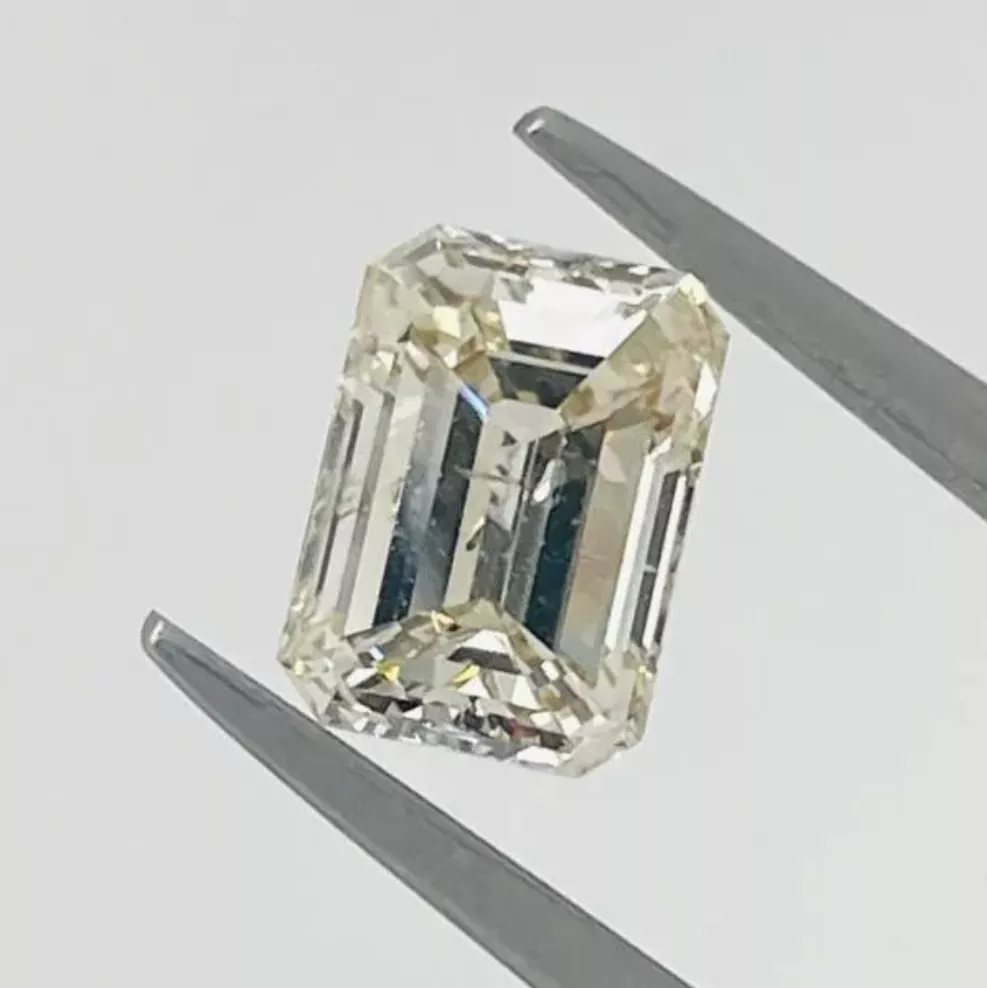
Diamant naturel poli de 2 carats
Focus on Bleu de France, a royal diamond
One of the world's most famous diamonds, Hope, is shrouded in mystery and legend. This deep blue diamond, weighing 45.52 carats, is reputed to have a history marked by misfortune. First mined in India in the 17th century, it was acquired by King Louis XIV in 1668 and cut into a 67.1-carat stone known as the "Bleu de France".
During the French Revolution in 1792, the Bleu de France was stolen, along with other French crown jewels. The diamond disappeared for several decades, and it was not until 1812, shortly after the statute of limitations had expired, that it reappeared in London. Although it has been re-cut and reduced to around 45 carats, experts believe it is indeed the same diamond, having been altered to escape recognition.
Over the years, the Hope Diamond has changed hands several times, and each owner seems to have been struck by an unfortunate fate. Stories tell of tragic deaths, bankruptcies and ruin, all of which have reinforced its reputation as a cursed diamond. However, despite these dark tales, the Hope Diamond is today one of the world's most valuable and iconic pieces, on display at the Smithsonian Institution in Washington D.C.
In 2016, this exceptional jewel was valued at over $250 million, well above many other famous gems. If you own a rare or historic diamond, it too may be worth more than you imagine.
Valued at over $250 million, the Hope Diamond remains an icon in the world of gemstones. Its deep blue color, due to traces of elements such as boron, and its story rich in intrigue make it an object of continuing fascination, proving that it's not just the beauty or rarity of a gemstone that determines its value, but also the stories it carries within.
Learn more about the diamond valuation process
The technical side of diamond appraisal
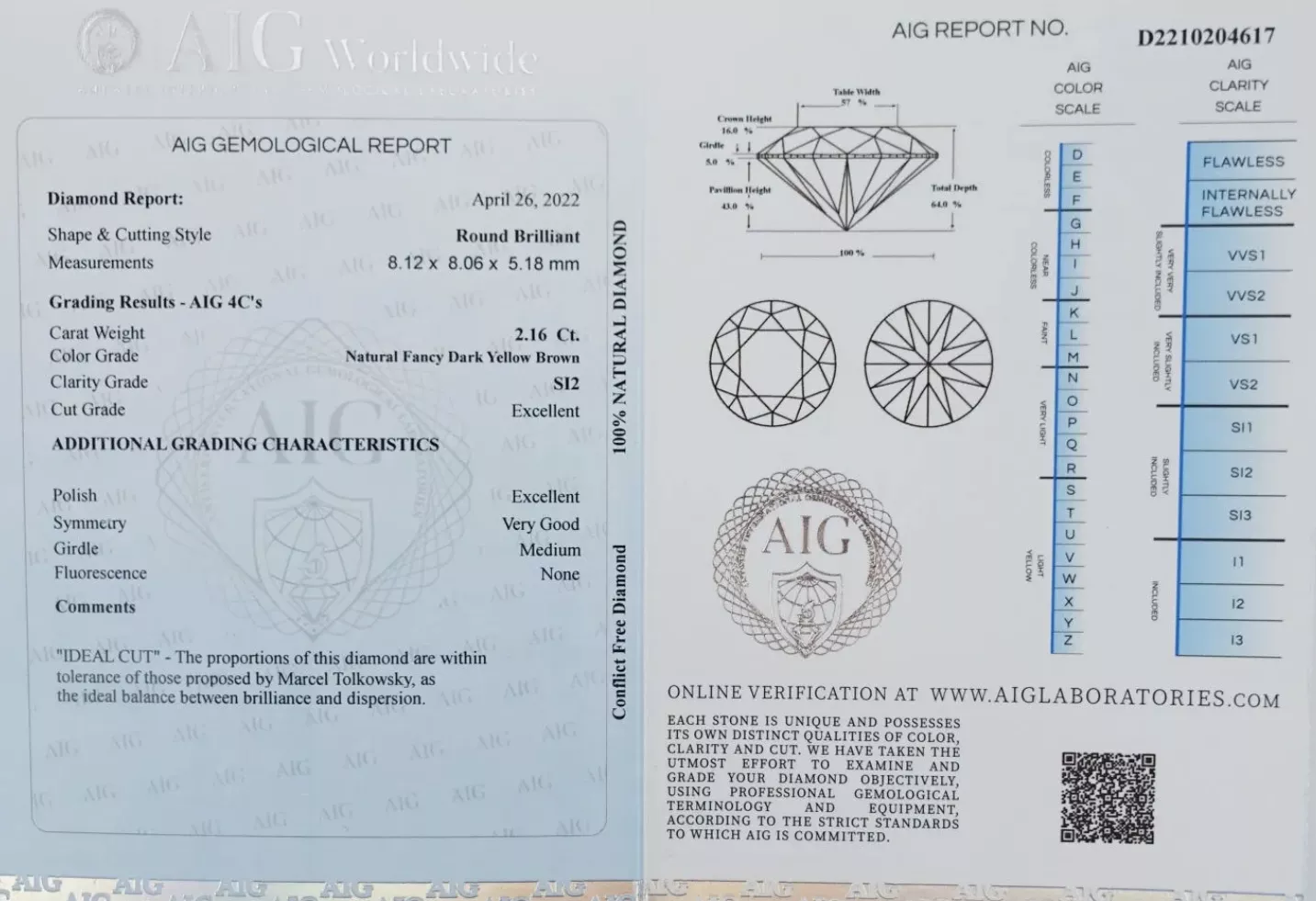
The appraisal of a diamond is based on well-defined criteria, including those of leading certification laboratories such as the Gemological Institute of America (GIA), the Hoge Raad voor Diamant (HRD) in Belgium, and the International Gemological Institute (IGI).
These institutions provide certificates that attest to your diamond's characteristics, namely the famous 4Cs: Carat (weight), Clarity (purity), Color (color), and Cut (size).
These certificates are essential as they validate a diamond's quality and value on the international market, and are often indispensable at auctions.
A diamond's provenance is also a crucial factor in its valuation. A diamond certified as ethically sourced, i.e. free from any involvement in conflicts or in the abusive exploitation of human and environmental resources, will have added value.
Modern technologies, such as blockchain traceability, make it possible to guarantee the provenance of diamonds, thereby boosting the confidence of potential buyers.
The technical evaluation of a diamond also includes analysis of its proportions, which have a significant impact on its beauty and brilliance.
The ideal proportions for a brilliant cut include several key elements: the table (the upper surface of the diamond), the depth (the distance between the table and the base), the crown (the upper part of the diamond above the girdle), and the breech (the lower part of the diamond).
A well-proportioned table allows for optimal light reflection, creating a sparkle that visually enhances the diamond's size. Depth must be balanced to avoid the diamond appearing too flat or too thick, which would affect its ability to reflect light.
Similarly, a correctly cut crown contributes to the dispersion of light into color spectra, while a well-fitted breech prevents light leakage, thus preserving the diamond's brilliance.
Exemple d'un certificat de gemmologie
Detecting synthetic or treated diamonds is another essential aspect of expertise. Advanced technologies, such as infrared spectroscopy or X-ray imaging, enable natural diamonds to be distinguished from imitations or modified stones.
These methods are crucial in guaranteeing the diamond's authenticity and, consequently, its real value.
Finally, fluorescence, which manifests itself as a visible glow under ultraviolet light, is a controversial factor in diamond valuation. While some consider that it can enhance a diamond's color, others see it as a flaw that diminishes value. Our experts carefully evaluate each parameter to determine the impact of fluorescence on the market value of your diamond.
By entrusting your diamond to our specialists, you will benefit from a complete and detailed appraisal, taking into account all technical and aesthetic criteria.
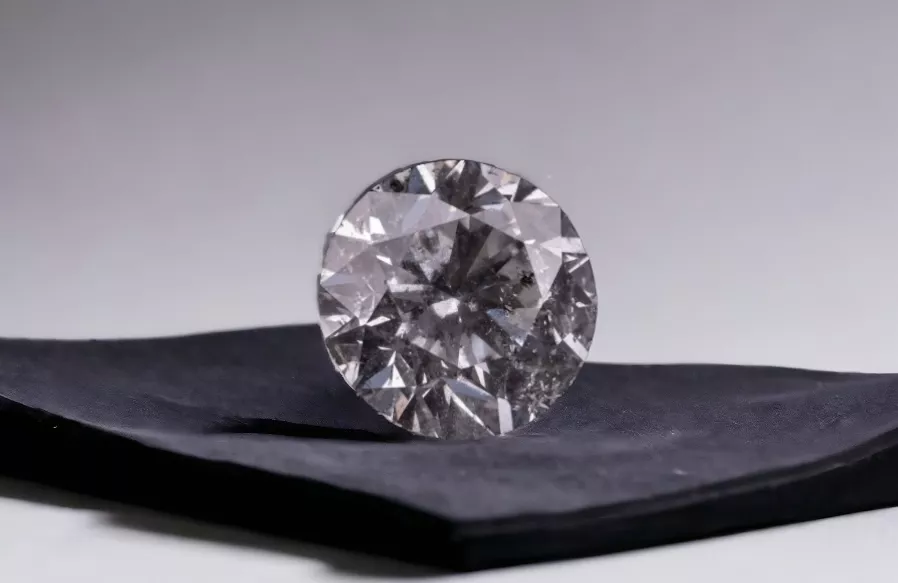
Diamant naturel poli de 1,47 carats
Knowing the value of a diamond
If you happen to own one or more diamonds, don't hesitate to request a free valuation using our form on our website.
A member of our team of experts and licensed auctioneers will contact you promptly to provide you with an estimate of the market value of your work, as well as any relevant information about it.
If you're thinking of selling your work, our specialists will also help you find alternatives to sell it at the best possible price, taking into account market trends.
Have your objects estimated for free by our experts
What are the main criteria for evaluating a diamond's value?
The value of a diamond is based on the “4Cs”: Carat (weight in carats), Clarity (purity), Color (color on the GIA scale from D to Z), and Cut (quality of the cut and proportions). Other factors also play a role: certified origin, fluorescence, symmetry, and polish. These criteria combined determine the market value of your diamond.
What is the price range for diamonds at auction?
Diamonds sell on the market for between €400 and €71.2 million, depending on their characteristics. A colorless diamond can fetch between €500 and €55.5 million, while a blue diamond ranges from €300 to €13.5 million. Record prices include the Pink Star at $71.2 million and the De Beers Cullinan Blue at €55.5 million in 2022.
How can you authenticate a diamond and verify its true value?
Authentication is based on a certificate issued by recognized laboratories such as the GIA (Gemological Institute of America), the HRD, or the IGI. At Auctie's, our auctioneers and certified experts provide a free, no-obligation appraisal of your diamond, analyzing all technical and aesthetic criteria, with a response within 48 hours.
How does the diamond appraisal process work at Auctie's?
The appraisal is free and non-binding: simply fill out a form on our website, and a member of our team of experts and licensed auctioneers will contact you shortly to provide you with an accurate appraisal of your diamond and all relevant information about it.
If I want to sell my diamond, how do I go about it?
After obtaining a free appraisal from Auctie's, our specialists will work with you to offer the best sales options and maximize the final bid price. As an auction house, we guide you from the initial assessment through to the sale to ensure you achieve the best possible price based on current market trends.