



Cote et valeur des icônes, tempera sur bois orthodoxes

If you own an Orthodox icon, and would like to know its value, our state-approved experts and auctioneers will offer you their appraisal services. Our specialists will carry out a free appraisal of your work, and provide you with a precise estimate of its value on today's market. Then, if you wish to sell your work, we will guide you towards the best possible arrangement to obtain the optimum price.
Rating and value of Orthodox icons
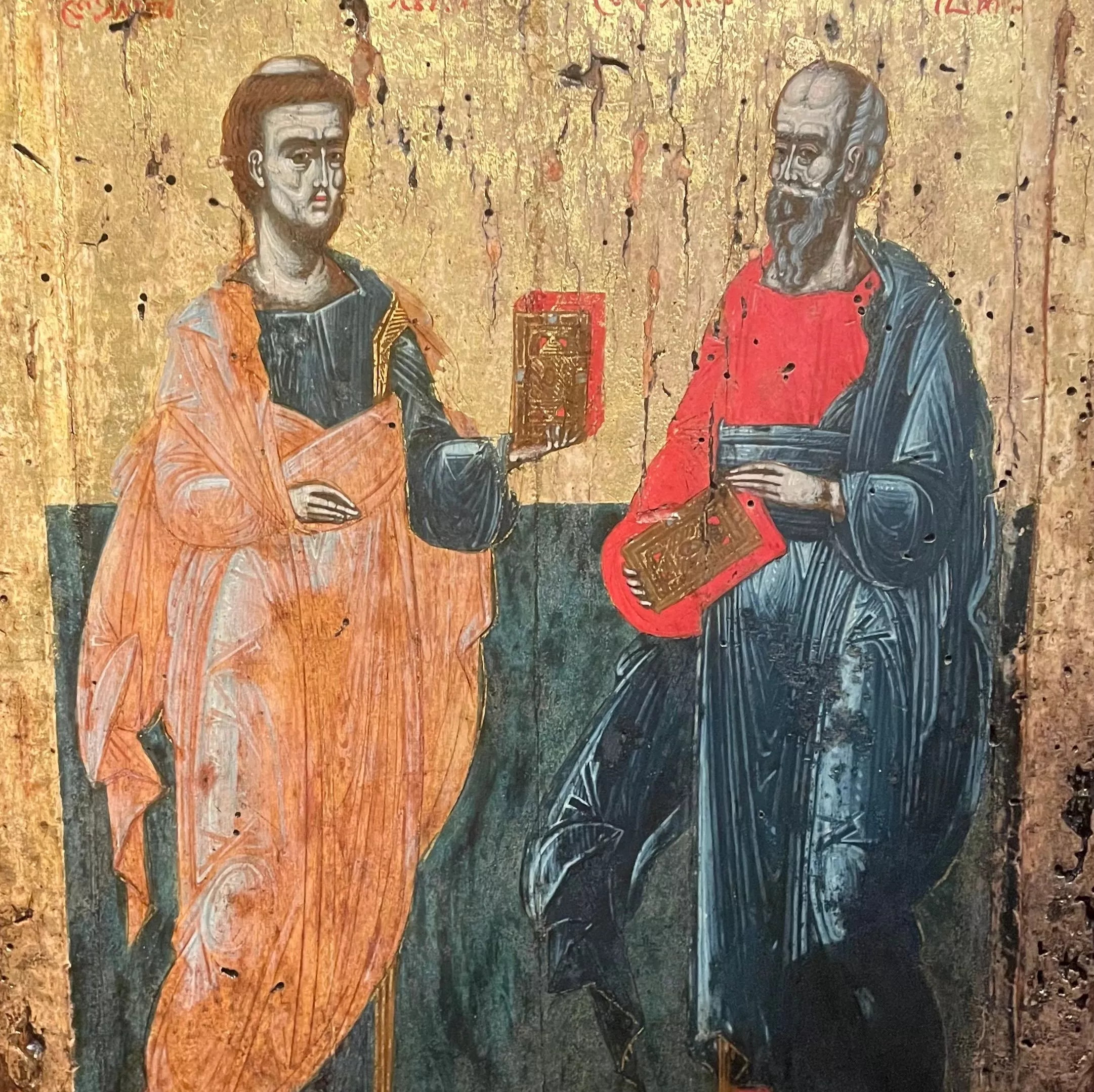
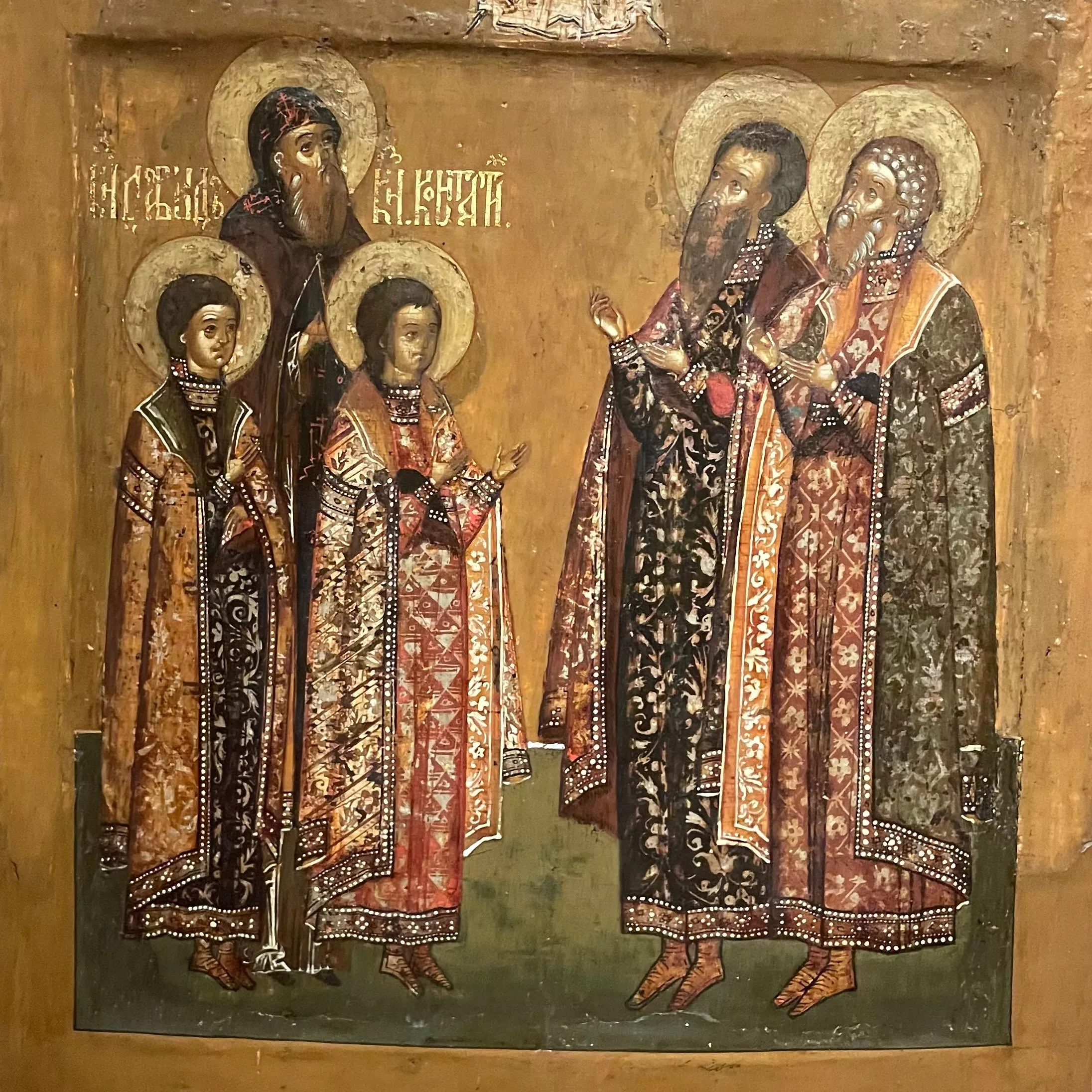
Orthodox icons are highly valued on the auction market, whatever the period. Today, prices for these works are reaching unprecedented heights under auctioneers' gavels. They are particularly prized by Orthodox buyers. The price at which they sell on the art market ranges from €20 to €5,760, a considerable delta but one that speaks volumes about the value that can be attributed to Orthodox icons. In 2023, a tempera on wood depicting the feasts of the Orthodox lithurgical year sold for €5,760 while it was estimated at between €300 and €400.
Order of value from a simple work to the most prestigious
Type of icon | Result |
|---|---|
Hanging icons | From 40 to 375€ |
Icon Virgin and Child | From 110 to 500€ |
Greek icon | From €80 to €1,400 |
Icon of Christ | From €100 to €2,360 |
Icon with Riza | From €20 to €2,800 |
Orthodox holiday icon | From 90 to €5,760 |
Estimate in less than 24h
Defining an Orthodox icon
An icon (eikon in ancient Greek, meaning image), aims to represent the saints in the Christian religion. Catholic and Orthodox Christians use these representations to visualize the various key moments in the Bible and its characters. Protestants have no images. Orthodox icons are particularly famous, as Catholics use stained-glass windows and paintings to decorate their buildings. These Orthodox icons are mostly produced using the tempera-on-wood technique, the term a tempera painting intended only to refer to the composition of the paint used.
Origins and History
From very early on, religious icons were subject to strong stylistic constraints. Both the subjects depicted and the colors used were regulated. Among the Orthodox, the veneration of icons is as important as the lectio divina, the interpretation of biblical texts.
Icons were heavily influenced by Byzantine art, even as the Orthodox confession spread to Russia. The term icon has evolved over the centuries, originally referring to any religious image regardless of the technique used. Thus, mosaics could be icons. Today, the term covers only the technique of painting a tempera on wood, whether for private or public use in a church. An altarpiece or the panels of a triptych can therefore be described as icons.
The primary historical origin of icons can be traced back to the catacombs of Rome, subterranean grounds where remains were preserved in Antiquity and the Middle Ages. From the time of the Roman Emperor Constantine, icons became increasingly widespread, depicting mostly saints. Constantinople became the center of production for these works of art in the Middle Ages.
The icons most present in the Orthodox tradition
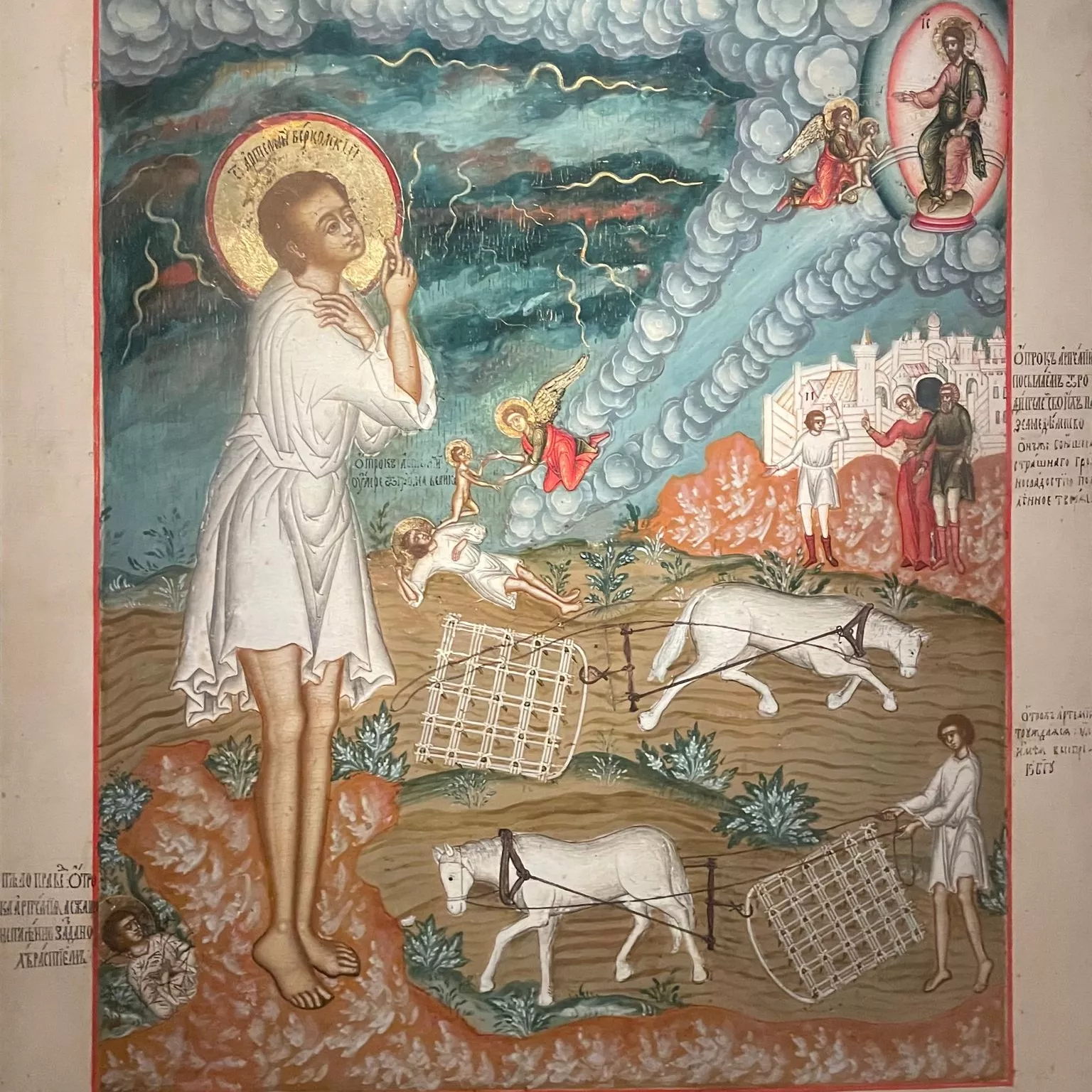
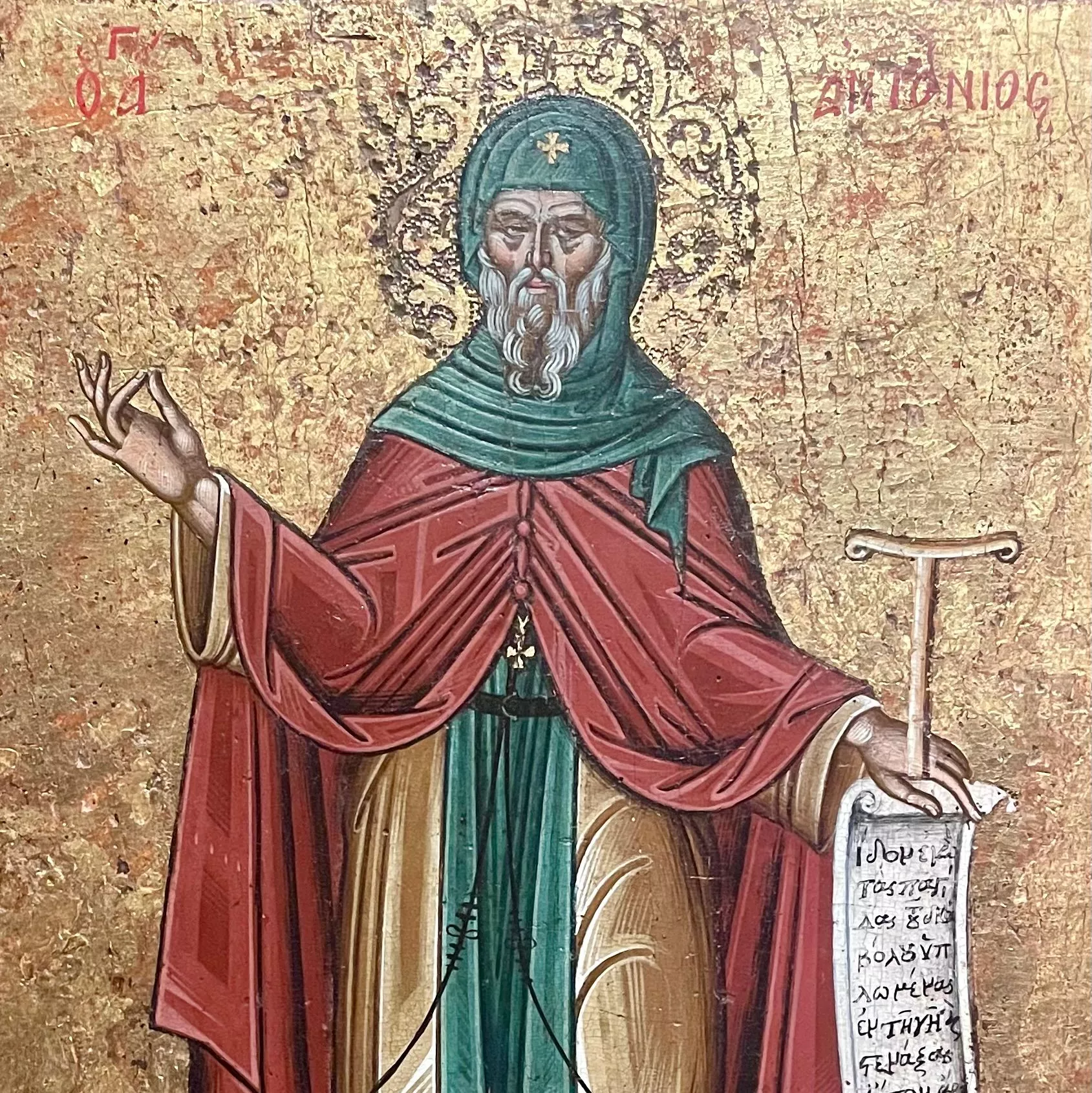
Today and as far back as the Middle Ages, certain icons are becoming very popular. These include those of the Mother of God. They differ from the iconography of the Virgin and Child, and some are attributed to Saint Luke directly, author of the former. He is said to have produced several during his lifetime, representing the Vierge Hodigitria, meaning Virgin showing the way. The Virgin of Vladimir, traditionally featured in Russian icons, is also attributed to Saint Luke.
Naturally, there are also many icons of Christ, intended for public or private devotion.
Some icons acquired over time the function of reliquary, they were then made with a bottom in order to contain the remains of a saint or an element that had belonged to a saint.
Later, icons from the calendar of Orthodox liturgical feasts appeared, and today are the most prized works at auction.
Riza, a particularity of Orthodox icons
Riza are frames, bronzes carved in relief intended to be placed on the tempera panel on wood, it covers according to the icons the character or characters represented. The presence of a Riza on an icon can considerably increase its value.
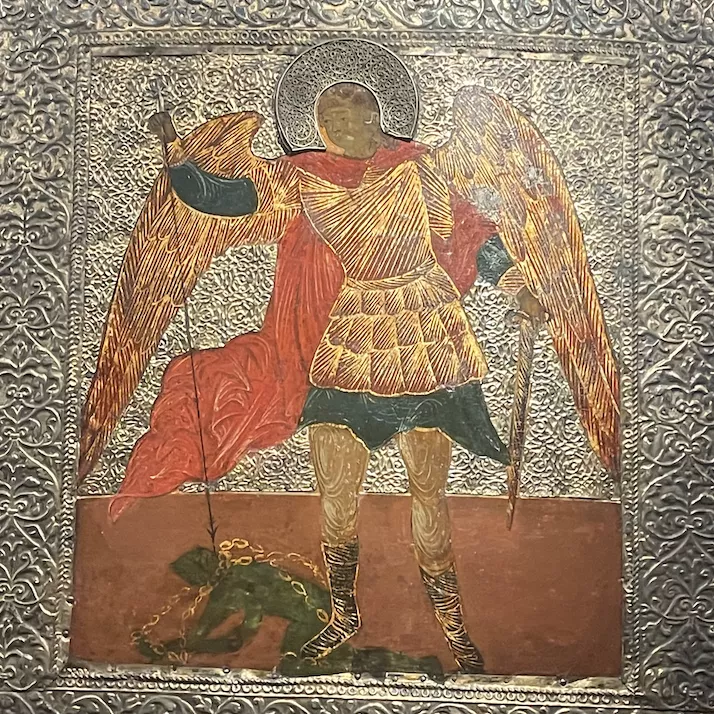
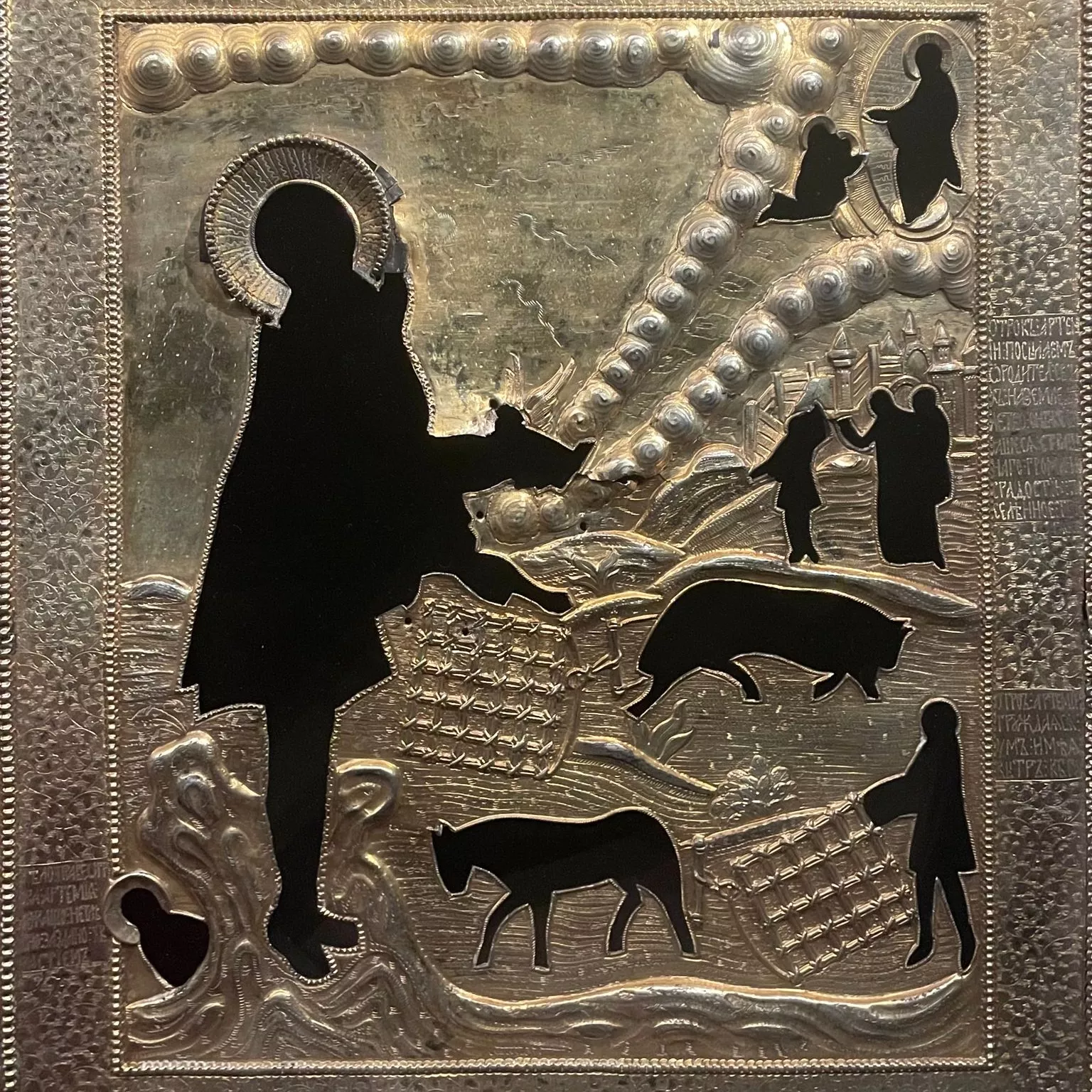
Their valuation today on the auction market
Icons have a high and stable valuation on the art market and are sought after by bidders. Their estimate can vary according to their state of conservation, their date and the subject represented.
Date your icon
It is possible to give an order of magnitude concerning the date of the icon, depending on its condition and the frame material, if Riza there is. Work will be done beforehand on the state of conservation of your object and the study of pictorial techniques to determine as precise a date as possible.
Knowing the value of a work
If you happen to own an Orthodox icon or think your object is one, don't hesitate to request a free appraisal using our form on our website. A member of our team of experts and certified auctioneers will contact you promptly to provide you with an estimate of the market value of your work, as well as any relevant information about it. If you wish to sell your work, you will also be accompanied by our specialists in order to benefit from alternatives to sell it at the best possible price, taking into account the inclinations of the market.
Estimate in less than 24h
Similar works sold at auction

Estimated 300 - 400 €
Glazed ceramic statue of Zeus

Estimated 600 € - 800 €
MEISSEN, 18th century, porcelain wall stoup.

Estimated 1.500 - 2.000 €
Gold Cross of the Order of Saint Stanislas, 2nd class.

Estimated 1500 - 3000 €
Louis de Caullery (1580-1621), Oil on copper.

Estimated 300 - 500 €
China, Carved stone stele, Buddha, attendants and apsaras.

Estimated 800 - 1.500€
Barye, seated lion
Discover in the same theme

Free appraisal of collector's jewelry and watches
Collector's jewelry and watches are highly prized by luxury connoisseurs. Have them appraised by a certified auctioneer.
Learn more >

Rating and value of works, paintings, drawings by the Barbiz...
The Barbizon School brings together landscape painters of varying degrees of renown who are quite popular at auction. The price of these paintings is...
Learn more >

Rating and value of Hermès porcelain services
Hermès porcelain services are highly prized objects that can be very valuable at auction, depending on the model and rarity.
Learn more >

Secure site, anonymity preserved

Auctioneer approved by the State

Free and certified estimates
