



Estimating the quality and value of your ceramics

Key takeaways
- A free appraisal of a ceramic piece assesses its authenticity, provenance, condition, and historical period to determine its current market value.
- Ceramics from Sèvres, Pol Chambost, Georges Jouve, and the Ming-Qing dynasties can fetch very high prices at auction depending on their rarity.
- Authenticity remains the key criterion: verify the signature, manufacturing techniques, and materials used to rule out reproductions and counterfeits.
If you own one or more ceramics, from any period, and would like to know their value, our state-approved experts and auctioneers will offer you their appraisal services.
Our specialists will work to carry out a free appraisal of your ceramics, and provide you with an accurate estimate of its value on the current market.
Then, should you wish to sell your work, we will direct you to the best possible arrangement to obtain the optimum price.
Rating and value of ceramics
Ceramics are currently sought-after collectibles for many different types and craftsmanship. If you own one or more, they may be worth more than you think. On the art market, prices for these objects can be very high under the auctioneer's hammer.
Their appraisal is also sometimes very complicated and subject to many rules. The value of your ceramics can vary according to many factors, and it needs, for all the reasons listed below, to be entrusted to a specialist if it has a minimum value or if it falls within a precise field of specialization.
Buying ceramics at auction, whether antique or contemporary, has many advantages for collectors and art lovers.
On the one hand, auctions offer the opportunity to acquire unique works, often steeped in history, which may come from different eras and artistic movements.
These works, sometimes otherwise inaccessible, are brought to light by experts who guarantee their authenticity and value. What's more, auctions enable buyers to discover rare pieces and build a diverse collection at prices potentially lower than those on the traditional market.
In addition, the competitive auction process adds an exciting dimension to the acquisition, making each purchase all the more rewarding.
Many ceramics are presented for sale every week at Drouot, throughout France, Europe and the world, allowing buyers to go to exhibitions to look at the potential of the works, and choose which one will be their next purchase.
Buyers may bid for a variety of reasons : love at first sight, collecting, decorative needs, investment ... So many factors that enable your ceramic to be sold quickly once its appraisal has been carried out.
First characteristics to consider when appraising a ceramic
Ceramics are objets d'art that call on a vast field of knowledge and skills in order to be appraised correctly.
According to the Manufacture de Sèvres, ceramics are defined as " all earthenware objects that have undergone an irreversible physico-chemical transformation during firing at a higher or lower temperature ".
The term ceramic, derived from the Greek keramos meaning " clay ", thus covers a wide range of works. The Larousse refers to " the art of making pottery, based on the property of clays to give, with water, a paste that is plastic and easy to shape ".
It is a material that is neither metallic nor organic, and can be crystalline or vitreous.
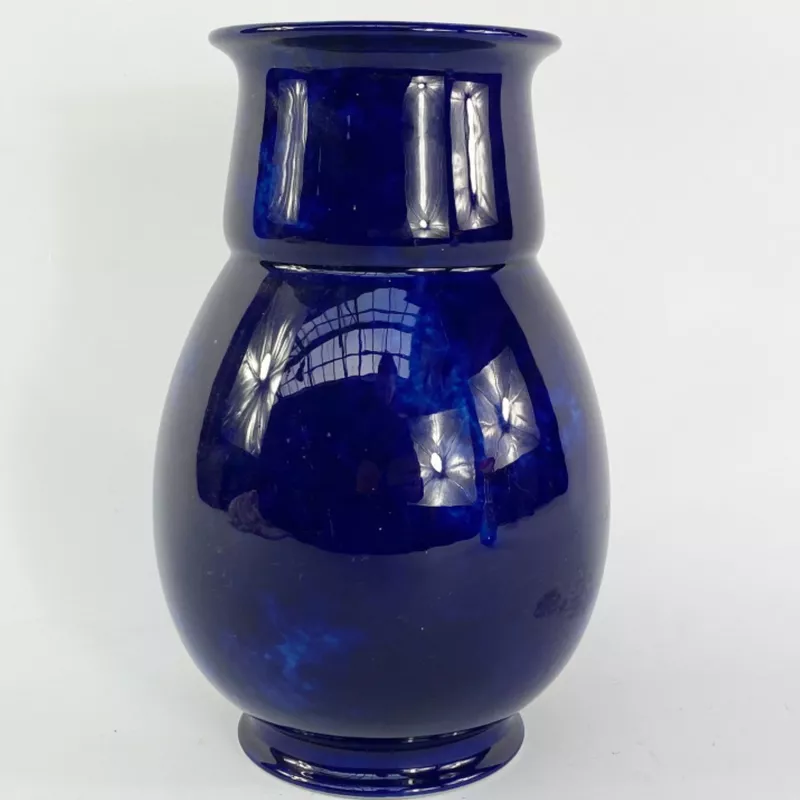
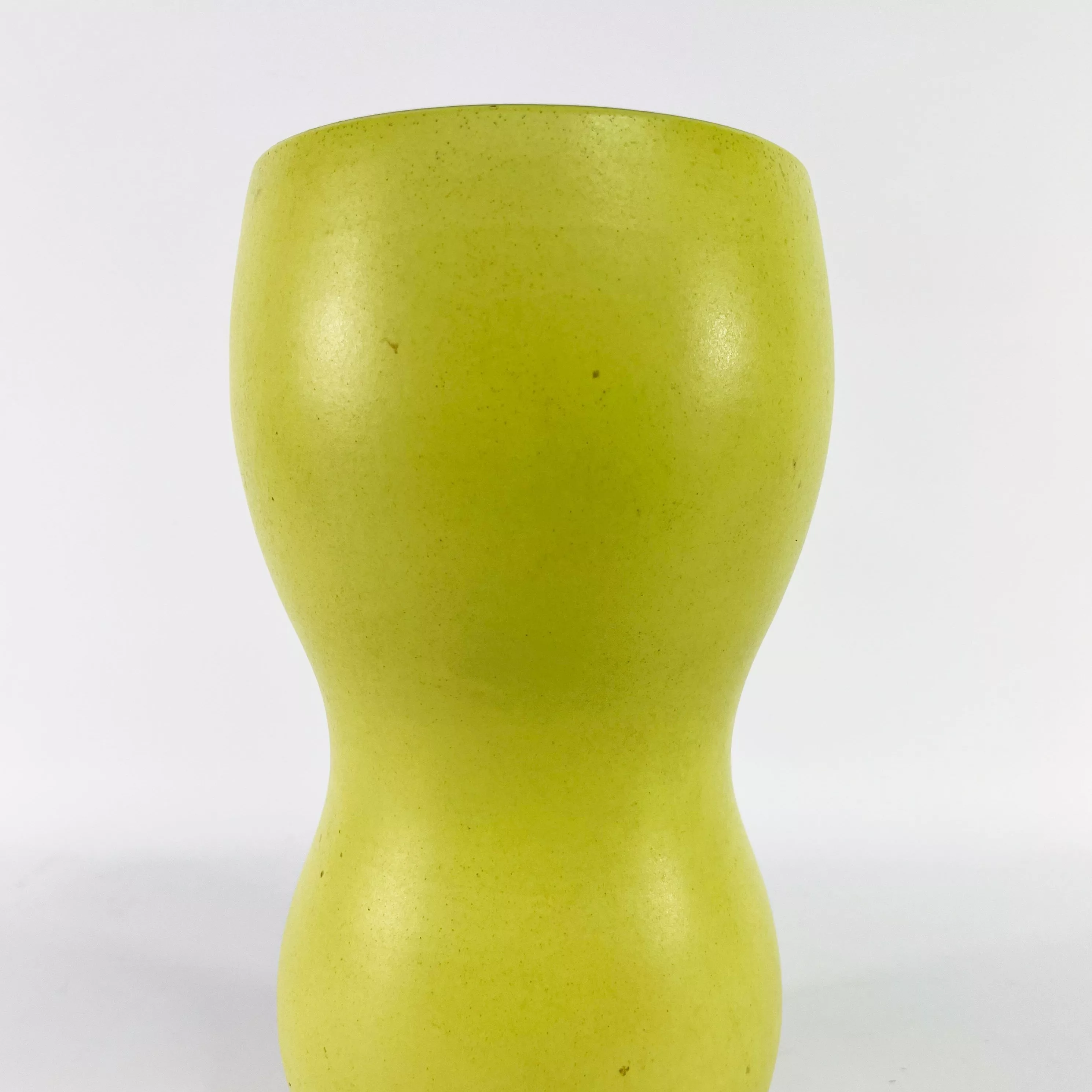
Having your ceramics appraised by an expert is important, as these objects actually cover many different manufacturing techniques, and attributions for this type of work are particularly perilous and complex.
History and origins of ceramics
Ceramics is one of mankind's oldest arts, dating back several millennia. Born of the discovery of clay, a malleable and abundant material, ceramics played an essential role in the development of early civilizations.
The earliest known ceramics, dating from the Neolithic period, were primarily utilitarian, used to make vessels for cooking, storing and transporting foodstuffs.
According to art history experts, the evolution of ceramics was marked by a gradual mastery of firing and decoration techniques.
The invention of the potter's wheel, attributed to Mesopotamia around 3500 BC, revolutionized the production of ceramics.C., revolutionized production, enabling greater precision and diversity of form.
Subsequently, Egyptian, Chinese, Greek and Roman civilizations each developed distinct styles, reflecting their own aesthetics and technological innovations.
Ceramics, by its very nature, has survived the ages, retaining the imprint of each era and culture. It bears witness to the ingenuity of craftsmen who, over time, have explored various glazing, enameling and painting techniques, thus enriching the world's cultural heritage.
Today, ceramics continues to be a field of artistic expression, rooted in a thousand-year-old tradition yet open to contemporary experimentation.
Focus on the work of Sèvres artisans
Valuing ceramics is a delicate process, requiring in-depth expertise that takes into account a variety of criteria, including authenticity, provenance, state of preservation, artist or school, as well as period and style.
These elements are essential in determining the value of a piece on the art market, whether it is of Western or Asian origin.
Authenticity is the first essential criterion in the valuation of a ceramic. It involves ensuring that the piece is neither a reproduction nor a forgery.
This requires careful analysis of the manufacturing techniques, materials used, and trademarks or signatures affixed to the work.
For example, ceramics from Pol Chambost, famous for his pure forms and colorful creations, often bear a distinctive signature that authenticates his creations.
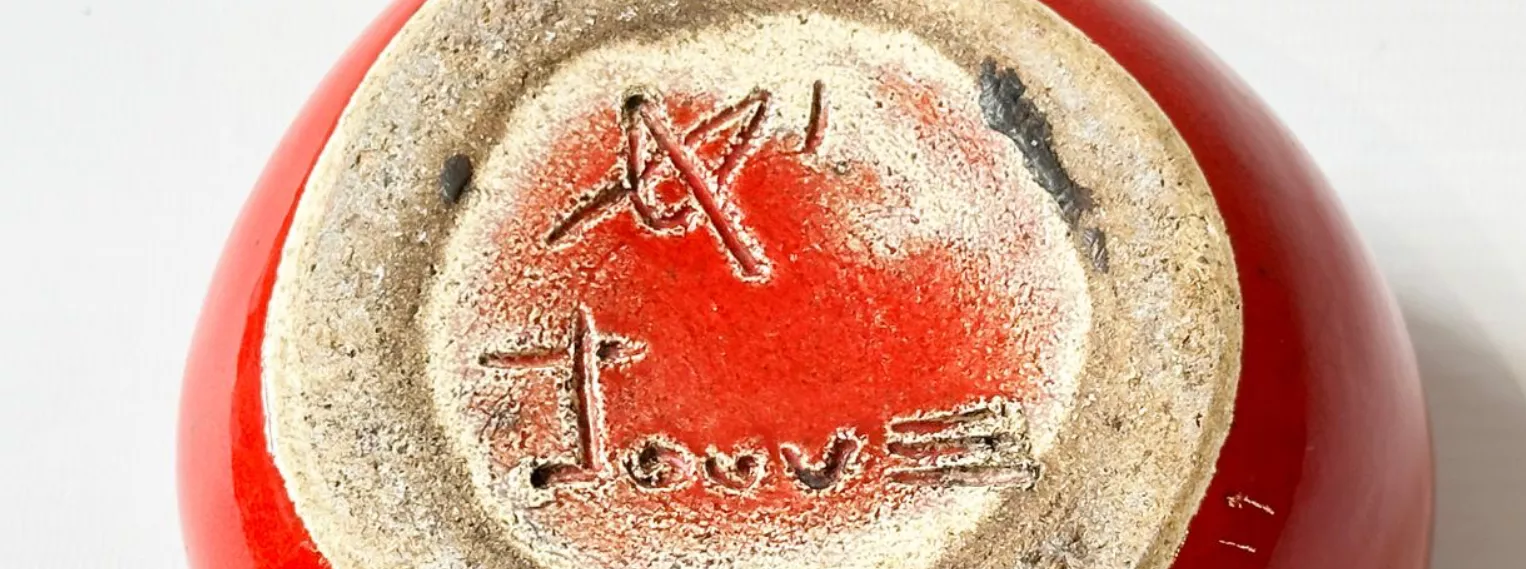
Similarly, pieces by Georges Jouve, renowned for their deep black glaze, should be examined carefully to verify the authenticity of their signature, often engraved or incised beneath the piece.
The provenance is another determining factor. A ceramic with a prestigious provenance, such as a piece from a renowned collection or having belonged to a historical figure, will see its value increase.
Ceramics produced by the Manufacture nationale de Sèvres, for example, often benefit from a well-established and documented provenance, which enhances their value.
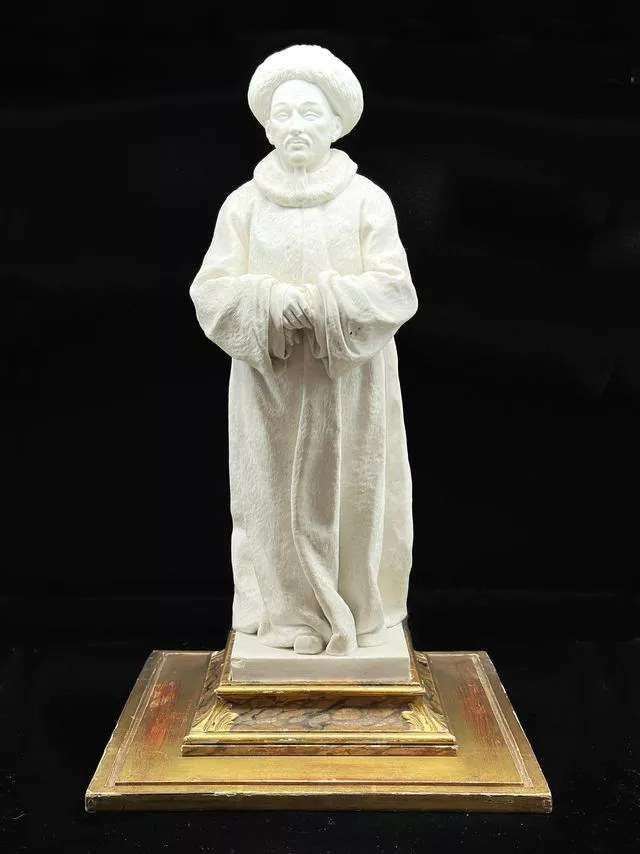
Sèvres, with its exceptional craftsmanship and royal history, produces pieces that, when accompanied by a clear provenance, are particularly sought-after by collectors, such as the Emperor Quianlong cookie, presented for sale in early 2024.
Condition is also crucial in valuation. A ceramic in perfect condition, with no cracks, visible restorations or chips, is naturally more valuable.
However, skillful restorations, well documented and respectful of the original work, may not significantly affect value.
For example, a Georges Jouve ceramic, even slightly restored, could still fetch a high price, especially if the restoration is of high quality. On the other hand, a piece whose structural integrity is compromised will see its value decrease.
The name of the artist or school is another key factor. Works by renowned ceramists such as Théodore Deck or Édouard Cazaux are particularly prized, and their signature is often enough to guarantee a high value.
The Manufacture de Sèvres, although producing works under a collective of craftsmen, also enjoys strong recognition. Sèvres pieces, whether from the 18th century or the Art Deco period, are always associated with a high degree of expertise and refinement.
Finally, the period and style of the ceramic play an important role in its evaluation. Asian ceramics, particularly those from China and Japan, are highly sought-after, especially porcelains from the Ming and Qing dynasties.
These pieces, often richly decorated and historically significant, can fetch extremely high prices. A ceramic's period of origin, whether it's an Art Nouveau, Art Deco, or contemporary piece, also influences its value.
Pol Chambost's ceramics, for example, are emblematic of the modern style of the 20th century, making them particularly attractive to collectors of that era.
In short, the valuation of a ceramic is based on a complex set of criteria. Authenticity, provenance, state of preservation, artist or school, and period and style are all factors that interact to determine a piece's value.
Works by famous ceramists such as Pol Chambost and Georges Jouve, the prestigious productions of the Manufacture de Sèvres, as well as ceramics from Asia, continue to fascinate collectors and experts, their value fluctuating according to these subtle but decisive criteria.
Remarkable ceramic styles
Many styles have emerged across centuries and continents. So, from one era to another, and from one country to another, chemical processes and manufacturing techniques are not the same. This is also what enables experts to identify the period.
Meissen porcelain, for example, is made with a certain kaolin content, while the works produced at the Sèvres factory at the same time do not have the same chemical composition, since French ceramists had not yet found the formula for making hard paste.
Knowing the value of a ceramic
If you happen to own one or more ceramics, don't hesitate to request a free valuation using our form on our website.
A member of our team of experts and certified auctioneers will contact you promptly to provide you with an estimate of the market value of your work, as well as any relevant information about it.
If you're thinking of selling your work, our specialists will also help you find alternatives to sell it at the best possible price, taking into account market trends.
Estimate in less than 24h
Discover in the same theme

Rating and value of old religious paintings
Antique religious paintings are objects whose value is stable, they are always sought after by collectors. Estimation in 24h.
Learn more >

Rating neoclassicism : free estimation - Auctie's
Get a free appraisal of your neoclassical artworks with Auctie's, a licensed auctioneer. Certified response in less than 24 hours.
Learn more >

Symbolism rating: free appraisal │ Auctie's
Symbolism is a 19th-century artistic movement whose works command high prices and are highly valued at auction.
Learn more >
Ceramics at auction

Estimated 600 € - 800 €
MEISSEN, 18th century, porcelain wall stoup.

Estimated 500 - 1.000 €
China, Kangxi reign (1662-1722). Two porcelain covered baluster pots with cobalt blue decoration.

Estimated 500 - 800€
Pierre Adrien Dalpayrat (1844-1910), ceramic mask

Estimated 40.000 - 60.000
Georges JOUVE (1910-1964), free-form sculpture in glazed ceramic

Estimated 20.000 - 30.000
MANUFACTURE ROYALE DE SÈVRES, 18th century "L'Empereur de la Chine" - Portrait of the Emperor Qianlong, Hard porcelain bisque, 1775

Estimated 400 - 800
CHINA, 19th century, Glazed ceramic baluster vase decorated with Buddhist coral lion and Fô dog

Secure site, anonymity preserved

Auctioneer approved by the State

Free and certified estimates
Frequently asked questions
-
What are the main criteria for assessing the value of a ceramic piece?The appraisal of a ceramic piece is based on several key criteria: authenticity (verification of techniques, materials, and signatures), provenance (history of ownership and prestigious collections), condition (absence of cracks or visible restorations), the artist or school (renowned ceramicists such as Pol Chambost, Georges Jouve, or the Manufacture de Sèvres), and finally, the period and style (Art Nouveau, Art Deco, Ming/Qing porcelain, etc.). These factors interact to determine the market price of your piece.
-
How can I have my ceramic piece authenticated and find out its value?We recommend that you request a free, no-obligation estimate from Auctie's by filling out the form on our website. A certified expert or auctioneer will contact you shortly to examine your ceramic piece and provide you with an estimate of its market value, along with all relevant information about your item.
-
Why is now the right time to sell my ceramics?Ceramics are currently in high demand on the art market, whether antique or contemporary. Many collectors and art lovers acquire unique pieces at auction every week, often at prices that may be lower than those on the traditional market. Professional expertise will ensure that your piece is showcased effectively and sold for the best possible price.
-
Which artists and manufacturers are the most sought-after in the ceramics field?Among the most sought-after ceramic artists and producers are Pol Chambost (known for his clean, colorful forms), Georges Jouve (renowned for his deep black glaze), Théodore Deck, Édouard Cazaux, and the Manufacture nationale de Sèvres, with its exceptional craftsmanship and royal heritage. Asian ceramics, particularly porcelain from China’s Ming and Qing dynasties, are also highly prized by collectors.
-
How does Auctie's assist with the sale of a ceramic piece?After a free appraisal of your piece, our experts and auctioneers will guide you toward the best sales strategy to achieve the highest possible price. We’ll guide you every step of the way—from the appraisal to the auction—taking into account market trends and the preferences of potential buyers to maximize the value of your ceramic piece.
