



Rating and value of Catholic icons, tempera on wood

Key takeaways
- Catholic icons painted in tempera on wood sell for between €10 and €42,350, with significant variations depending on the type and rarity of the work.
- Polyptych icons command the highest prices (up to €43,350), while "Virgin and Child" works are selling for up to €21,000 in 2023.
- The precise estimate depends on the condition, date, and subject depicted, particularly depictions of Christ and popular saints.
If you own a Catholic icon, and would like to know its value, our state-approved experts and auctioneers will offer you their appraisal services. Our specialists will carry out a free appraisal of your work, and provide you with a precise estimate of its value on today's market. Then, if you wish to sell your work, we will guide you towards the best possible arrangement to obtain the optimum price.
Rating and value of Catholic icons
Catholic icons are highly valued on the auction market, whatever the period. Today, prices for these works are reaching unprecedented heights under auctioneers' gavels. They are particularly prized by European buyers. The price at which they sell on the art market ranges from €10 to €42,350 - a considerable delta, but one that speaks volumes about the value that can be attributed to Catholic icons. In 2023, an Art Nouveau-inspired triptych travel icon in vermeil sold for €20,000.
Order of value from a simple work to the most prestigious
Type of icon | Result |
|---|---|
Saint icon | From €20 to €1,400 |
Icon representing Jesus | From €10 to €2,360 |
Prophet icons | From €40 to €18,000 |
Allegorical icons | From €20 to €18 590€ |
Icon Virgin and Child | From 10 to 21,000€ |
Polyptych icon | From 80 to 43 350€ |
Estimate in less than 24h
Defining an icon
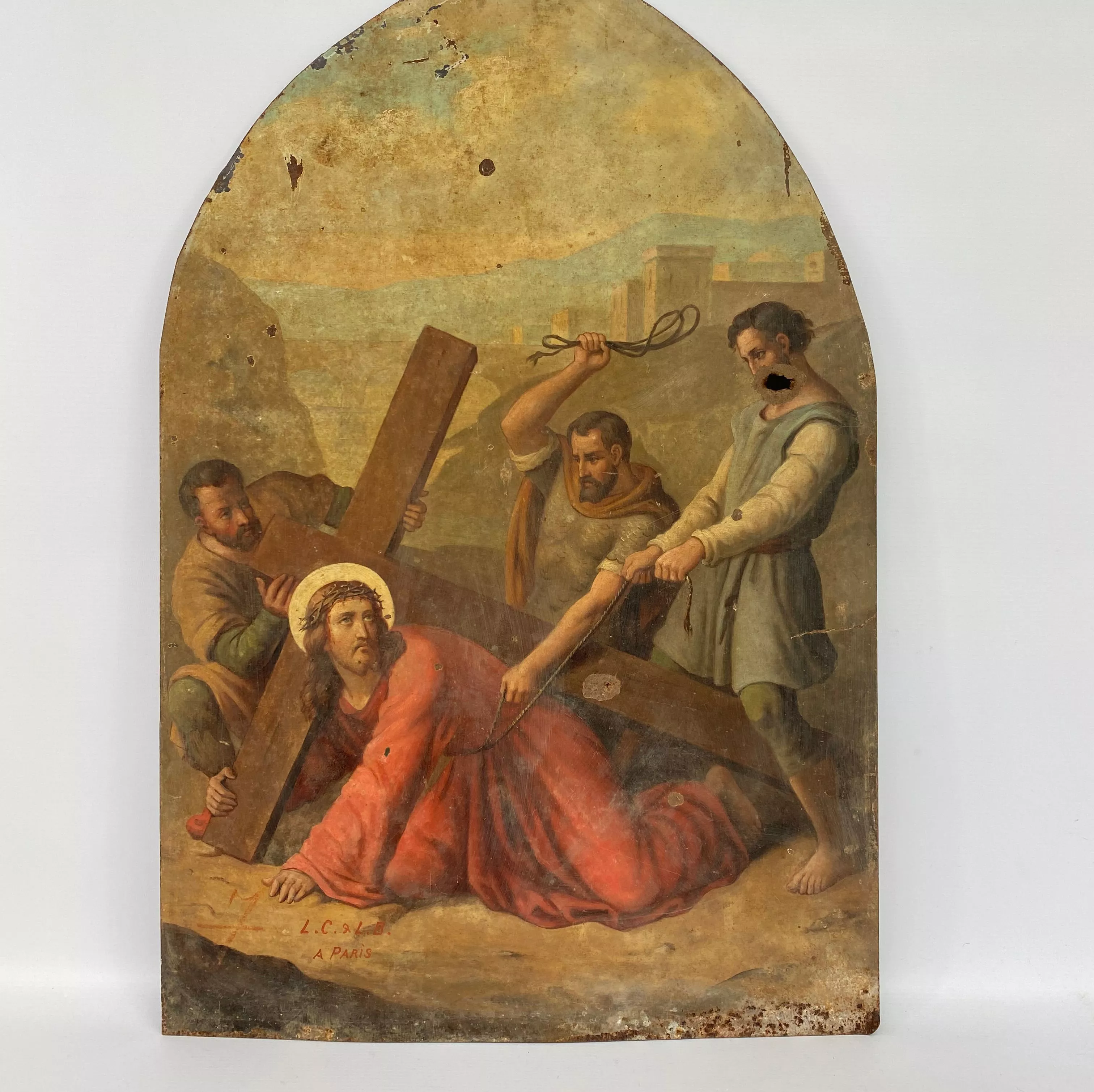
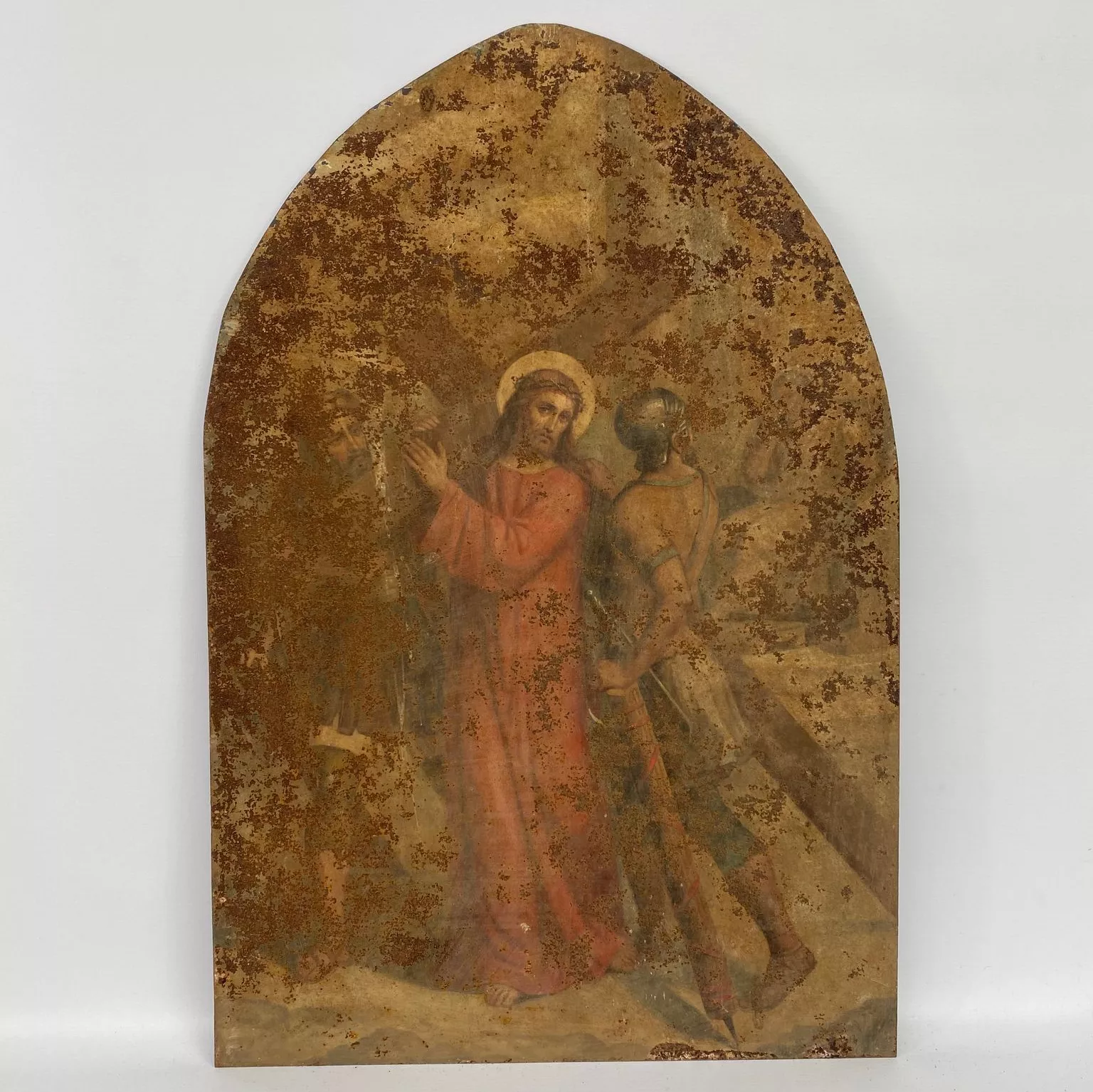
An icon (eikon in ancient Greek, meaning image), aims to represent the saints in the Christian religion. Catholic and Orthodox Christians use these representations to visualize the various key moments of the Bible and its characters. Protestants have no such images. Catholic icons are particularly famous, with the themes of the Virgin and Child and the stages of the Stations of the Cross particularly well represented. These icons are mostly produced using the tempera on wood technique, the denomination a tempera painting intended only to refer to the composition of the paint used.
History of Catholic icons
Very early on, religious icons were subject to strong stylistic constraints. The subjects depicted and the colors used were regulated. Among Catholics, the veneration of icons was as important as the lectio divina, the interpretation of biblical texts.
By the early Middle Ages, the technique of painting on wood was known and fairly well mastered. Faced with the need to represent scenes from the Bible and the various important figures in the Catholic religion, medieval artists very early on produced icons intended for private devotion, hung in domestic interiors.
In places of worship, churches or chapels, some of these works also often appeared on walls to provide a complementary representation to stained glass windows and paintings for the faithful, most of whom were often illiterate at the time.
In the Renaissance, the style of these representations changed but the technique remained the same. Some will be inspired by the First Renaissance and the canons of Antique bodies and faces, while others are characterized by Mannerist inspiration (elongation of bodies and use of pastel colors).
Gilding is also used extensively in the production of this type of work.
Icon production was also much used for the Stations of the Cross, 12 icons traditionally hung on the walls of a church and used to recall the stages of the Crucifixion.
The icons most present in the Catholic tradition
Today and as far back as the Middle Ages, certain icons are becoming very popular. These include those of the Mirgin and Child, but also representations of various saints highly venerated in the Catholic Church : the four evangelists : Matthew, Luke, John and Mark. The twelve apostles are also well represented, including Saint Peter and Saint Paul. Naturally, the majority of Catholic icons depict Christ at various stages of his life, including some of the most frequently used iconographies: the Descent from the Cross, the Nativity, the Last Supper and the Coronation of Thorns.
Their value today on the auction market
Icons have a high and stable value on the art market and are sought after by bidders. Their estimate can vary according to their state of conservation, their date and the subject represented.
Date your icon
It is possible to give an order of magnitude concerning the date of the icon, depending on its condition. Work will be done beforehand on the state of conservation of your object and the study of pictorial techniques to determine the most precise date possible.
Knowing the value of a work
If you happen to own a Catholic icon or you think your object is one, don't hesitate to request a free appraisal using our form on our website. A member of our team of experts and chartered auctioneers will contact you promptly to provide you with an estimate of the market value of your work, as well as any relevant information about it. If you wish to sell your work, you will also be accompanied by our specialists in order to benefit from alternatives to sell it at the best possible price, taking into account the inclinations of the market.
Estimate in less than 24h
Discover in the same theme

Free appraisal of old and modern paintings and drawings
From ancient paintings to modern creations, the pictures and drawings offer a unique and emotional vision of life in every era.
Learn more >

Rating and value of marine paintings
Marine paintings are relatively unknown to the general public, yet are highly prized at auction. Many collectors seek them out.
Learn more >

Baroque valuation: how to determine the value of your artwor...
Paintings, sculptures, altarpieces… Auctie's, a licensed auctioneer, will appraise your Baroque artworks for free in less than 24 hours, with complete...
Learn more >
More antiques at auction

Estimated 2 000 € - 4 000 €
DANISH SCHOOL circa 1790, entourage of Jens JUEL Presumed portrait of Sophie of Hesse-Cassel, Queen Consort of Denmark.

Estimated 600 - 800 €
SERBIA, Grand Cross of the Order of the White Eagle, silver and polychrome enamel.

Estimated 1500 - 3000 €
Louis de Caullery (1580-1621), Oil on copper.

Secure site, anonymity preserved

Auctioneer approved by the State

Free and certified estimates
Frequently asked questions
-
What is a Catholic icon, and how is it created?An icon is a religious depiction of saints and biblical scenes, intended for veneration in the Catholic tradition. Catholic icons are primarily created using the tempera-on-wood technique, a type of paint specifically formulated for this purpose. This technique has been mastered since the Middle Ages and remains the traditional method for creating these works.
-
What is the price range for Catholic icons on the auction market?Catholic icons vary widely in price depending on the type and quality of the work, ranging from €10 to €42,350. For example, icons depicting saints range from €20 to €1,400, while polyptychs can fetch up to €43,350 at auction. Price variations depend heavily on the condition of the piece, the historical period, and the subject depicted.
-
How can I have my Catholic icon authenticated and appraised?Auctie's offers a free, no-obligation appraisal by its state-certified auctioneers and experts. Simply fill out our online form with information and photos of your item, and a member of our team will contact you to provide a precise estimate of its market value within 48 hours.
-
Is this the right time to sell a Catholic icon?Yes, now is a good time to sell a Catholic icon. Icons command high and stable prices on the art market, with growing demand—particularly among European buyers—and prices are now reaching unprecedented levels at auction.
-
How do I sell my Catholic icon through Auctie's?Auctie's supports you every step of the way through the sales process: after a free appraisal by our experts, we guide you toward the best options for selling your artwork at the best possible price based on market trends. Our auctioneers will advise you on the sales strategy best suited to your iconic piece.
