



Rating and value of manuscripts and handwritten letters

Key takeaways
- The prices of handwritten letters by historical figures are rising at auction, notably that of Napoleon I, which sold for €320,320 in 2017 against an initial estimate of €60,000 to €80,000.
- Value depends on the author: letters by Céline fetch up to €45,500, those by Romain Gary up to €5,200, while Cocteau’s letters range from €40 to €2,400.
- Authentication by certified experts is essential to guarantee provenance and authenticity, which are key factors in determining the value of a manuscript or historical letter.
If you own one or more handwritten letters, or think you do, and would like to know its value, our state-approved experts and auctioneers will offer you their appraisal services.
Our specialists will carry out a free appraisal of your piece, and provide you with a precise estimate of its value on the current market.
Then, if you wish to sell your item, we will guide you towards the best possible arrangement to obtain the optimum price.
Rating and value of handwritten letters
Manuscripts or handwritten letters are historical objects that collectors seek out. Today, the price of certain pieces continues to rise at auctioneers' gavels.
Letters from certain writers or historical figures are particularly prized, especially by European buyers. In 2017, a handwritten letter from Napoleon I (Emperor) sold for €320,320, while it was estimated at between €60,000 and €80,000.
Some examples of the value of manuscripts of historical figures
Author | Result |
|---|---|
Letter from Jean Cocteau | From €40 to €2,400 |
Letter from Romain Gary | From €900 to €5,200 |
Letter from L.F. Céline | From 200 to 45,500€ |
Letter from Napoleon I | From 500 to 320,300€ |
Estimate in less than 24h
Defining a handwritten letter
A handwritten letter, or manuscript, is defined as handwritten expression, constituting a unique object of great historical and artistic value.
The manuscript, whether a private correspondence or a more complex text, is a piece where each letter, each word, bears witness to the author's painstaking work.
In contrast to mechanical printing, the particularity of the manuscript lies in the impossibility of reproducing the gesture of writing, which varies not only from writer to writer but also from moment to moment.
The technical analysis of a manuscript is based on several elements: the writing itself, the tool used (nib, pen, brush), the ink (often tannin- or carbon-based), and the support (paper, parchment, vellum).
Supports such as parchment, made from animal skin, are generally more durable and suitable for long storage, while thinner vellum is often chosen for its ability to accommodate more delicate calligraphy.
The writing, generally calligraphic, follows strict conventions that vary according to era and region, with the use of cursive characters or more formal styles such as Gothic or uncial.
Manuscripts were sometimes decorated with colored miniatures and ornaments, enhancing their aesthetic and symbolic value.
The techniques used to produce a manuscript are linked to ancient skills, both artistic and artisanal.
These require perfect mastery of the writing tool and control of the ink, in order to guarantee optimal legibility and quality of expression, while preserving the authenticity of the gesture.
In history, the manuscript also becomes an instrument for the transmission of knowledge, both spiritual and scientific, and represents a veritable living archive of the past.
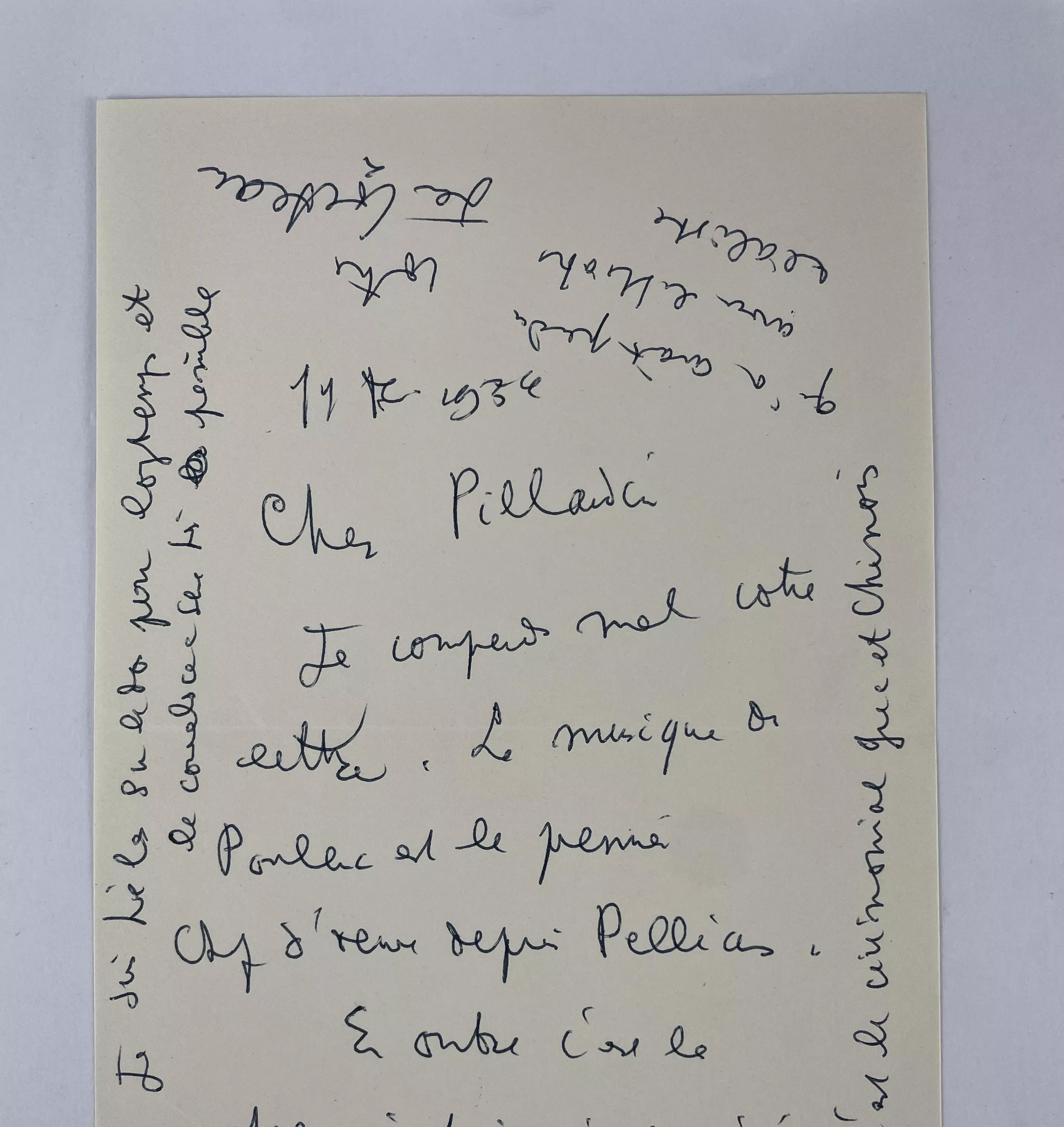
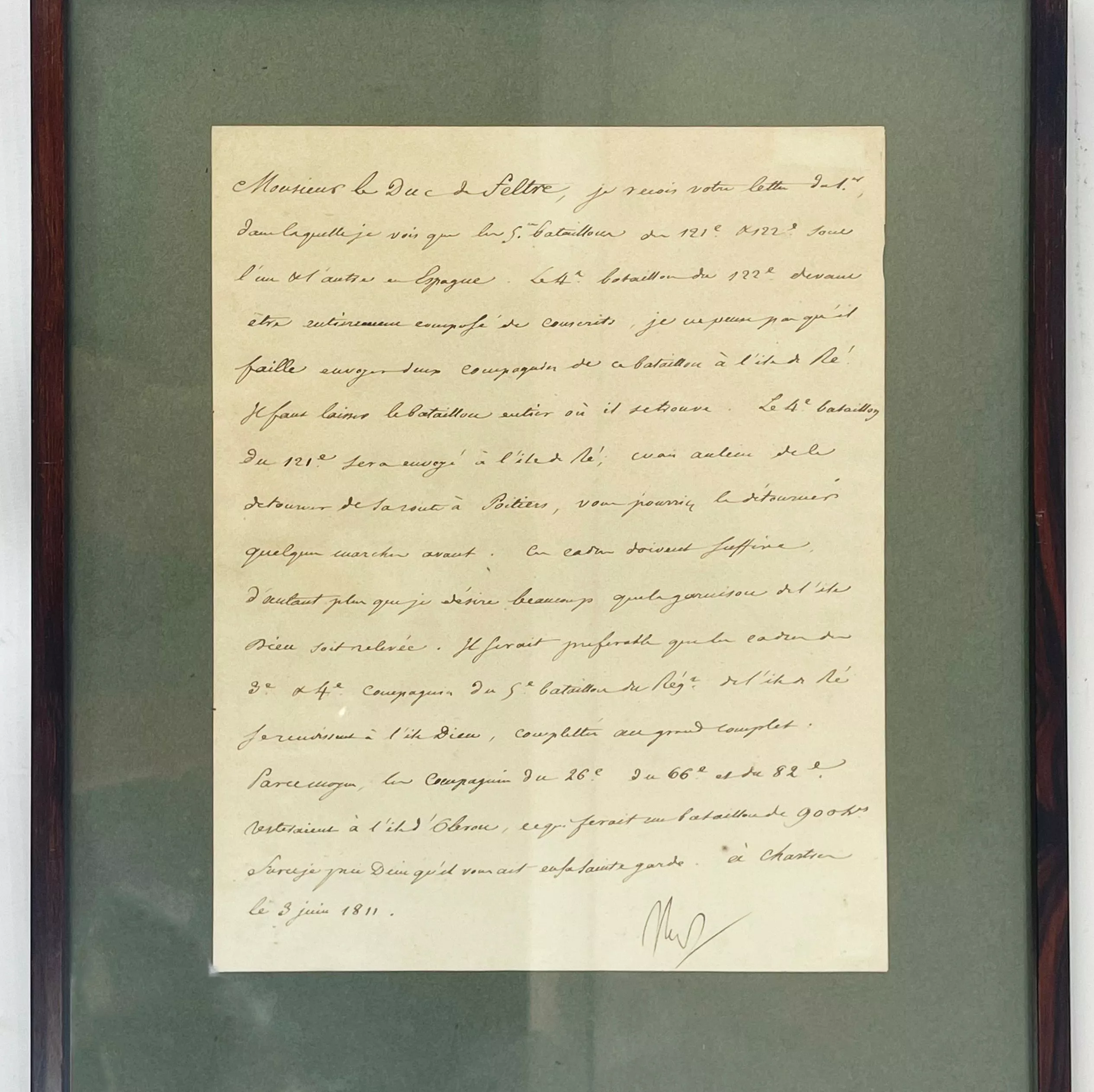
Focus on a manuscript by Henri Fantin-Latour
It is precisely at this point that the art of the manuscript reveals itself in its most precious form, steeped in history: a handwritten letter is not simply a written message, it is a materialization of its era, an intimate link between author and recipient.
The example of the letter written by Henri Fantin-Latour in 1864 is a fascinating testimony to this dimension: in it, the artist, known for his finely crafted still lifes, reveals his analytical mind on the French art scene of the time.
Through this letter, Fantin-Latour not only recounts events, he also traces reflections on the evolution of painting, its relationship with academic art, and his vision of the artist's role in society.
This manuscript, sent to a loved one, reflects an era when every word, every turn of phrase, carried a much stronger charge of meaning than in modern communication.
It is not insignificant that this type of letter was, and remains, a mirror of the times: they are witnesses to an era when handwriting embodied a form of reflection, a shaping of the author's identity, a means of connecting deeply with a chosen recipient.
In this sense, Fantin-Latour's letter becomes much more than a simple message: it represents a tipping point between an artist's personal evolution and art history at a crucial moment.
The slow spread of these writings, their passage through the hands of collectors and historians, shows the power of handwriting in its ability to convey the values of an era, ideas, feelings, far beyond what a simple letter might appear at first glance.
In short, each handwritten letter becomes a fragment of time, a kind of portrait of the soul which, once deciphered, reveals not only the contours of an artist's thinking, but also the creative effervescence of his era.
Attractiveness and rating of handwritten letters at auction
It is in this particular context that handwritten letters from great historical figures, be they writers, generals or political thinkers, are particularly popular at auction.
The interest in these rare documents is based on their ability to offer a direct and profound insight into the thoughts, ideals and emotions of their authors.
Beyond their sentimental value, these letters reveal intimate fragments of history, previously inaccessible details of crucial moments or personal relationships, often shedding new light on major events in history.
In addition, their rarity in a world where exchanges are now dominated by digital and dematerialized communication lends these writings a special aura.
They embody a form of authentic testimony, an act of transmission from a bygone era, now on the verge of extinction.
The importance of authenticity and provenance is also essential: experts scrupulously verify the origin of these documents, guaranteeing their legitimacy and thus reinforcing their value.
These letters then become objects of desire and collectibility, whose prices frequently soar at auction, consolidating their status as exceptional historical artifacts.
Just like the antique-books, the French military medals or fusils de l'Empire, letters and manuscripts are important historical keepsakes for collectors and enthusiasts.
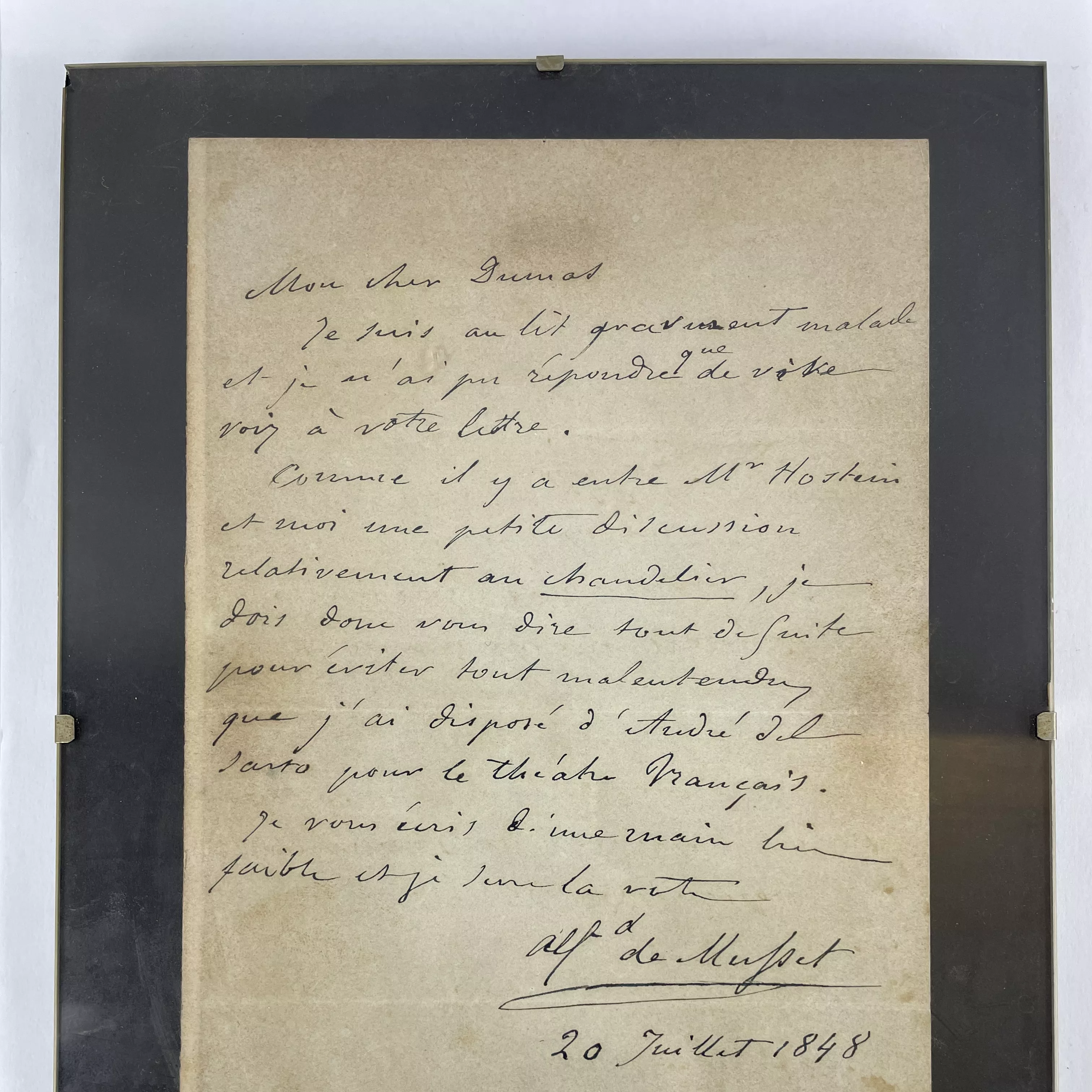
Focus on Napoleon's letter to Josephine, 1796
One of the most famous and fascinating handwritten letters remains that written by Napoleon Bonaparte to Josephine de Beauharnais, dated November 13, 1796, the day after the Italian campaign.
This document embodies both the personal passion and political ambition of a man who was to leave his mark on history. The letter, written in a feverish, exalted style, reveals a striking contrast between the hardness of the conquering general and the vulnerability of the distraught lover.
The words chosen, both simple and burning - "Je ne vis plus, je ne respire plus, je ne pense qu'à toi" - betray a rare, almost obsessive intensity, testifying to a fusional love that Napoleon struggled to suppress, even in the midst of a military campaign.
In addition to its deeply personal content, this letter also illustrates an era when handwriting was the primary means of communicating and expressing feelings.
Every curve of the letter, every shade of ink bears witness to the emotional state of the moment, making the document all the more vivid.
On the material level, the study of the ink and paper has corroborated the authenticity of this letter, valuable not only for its content but also as a historical artifact.
An often overlooked but fascinating detail surrounds the receipt of this letter. Josephine, known for her carefree nature and extramarital affairs, wasn't always receptive to these passionate declarations.
The anecdote goes that, on the day this letter arrived, Josephine was in the company of one of her admirers in her Paris mansion.
Napoleon's emissary had to wait several hours before he could deliver the letter, reinforcing Napoleon's suspicions of his wife's infidelity.
This tension surrounding their relationship became a recurring motif in their correspondence, marking a constant struggle between all-consuming love and corrosive jealousy.
Today, this letter is much more than a testimony of love: it crystallizes the contradictions of a man torn between military glory and a chaotic personal life.
Preciously preserved, it is one of the most sought-after manuscripts at auction, with some copies fetching several hundred thousand euros, confirming its place in the pantheon of historical and emotional artifacts.
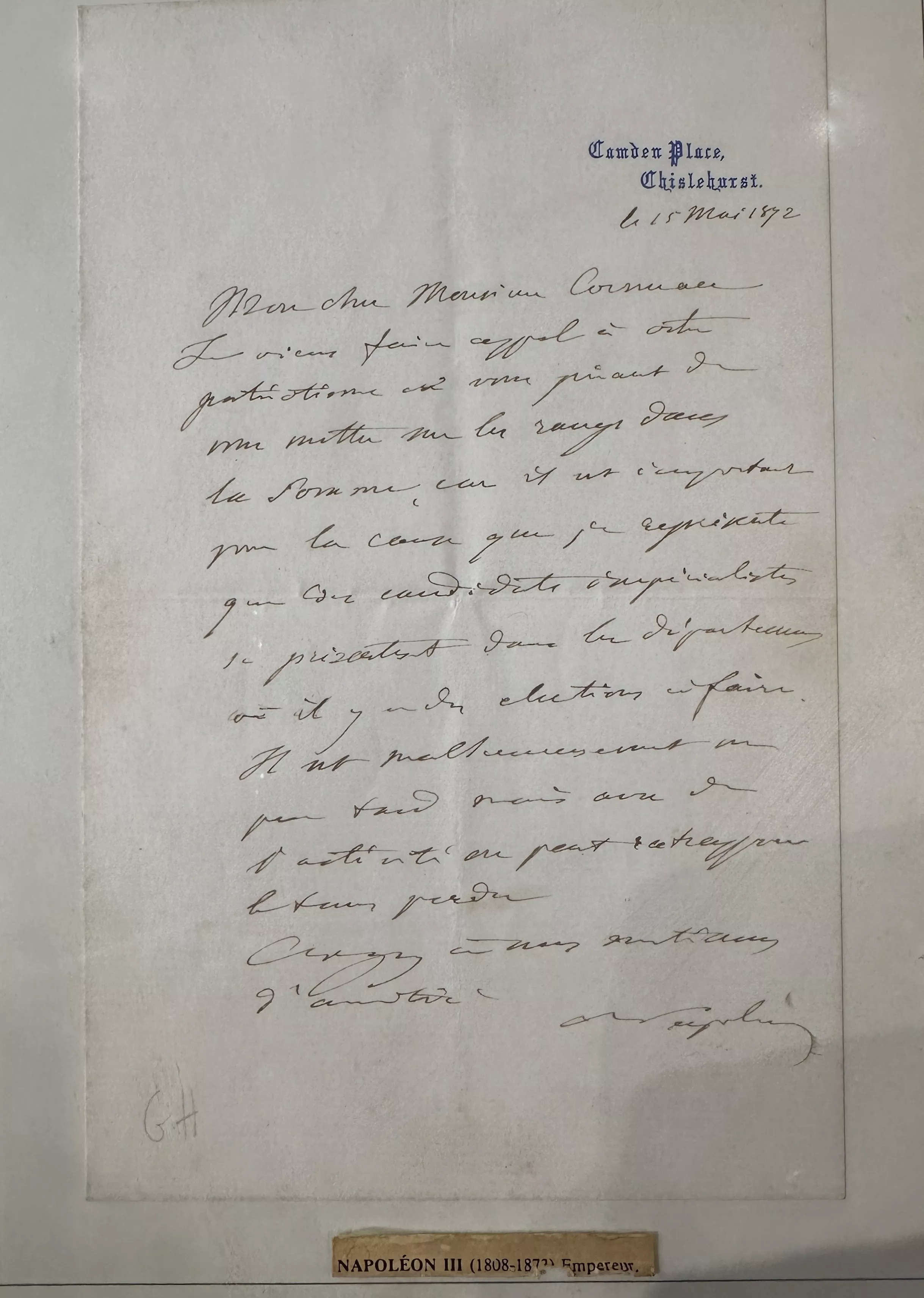
Knowing the value of a handwritten letter
If you happen to own a handwritten letter, or think you might, don't hesitate to request a free valuation using our form on our website.
A member of our team of experts and chartered auctioneers will contact you promptly to give you an estimate of the market value of your work, not forgetting to send you ad hoc information about it.
If you are considering selling your work, you will also be accompanied by our specialists in order to benefit from alternatives to sell it at the best possible price, taking into account market inclinations.
Estimate in less than 24h
Discover in the same theme

Get a free appraisal of your Tribal and Primitive Art object...
Often used in ceremonies or rites to represent spirits or divinities, Art Premier masks should be viewed by an expert.
Learn more >

Free appraisal of silver and gold objects
Goldsmithing and silverware are art forms with a long history, and have always been appreciated for their beauty and value.
Learn more >

Symbolism rating: free appraisal │ Auctie's
Symbolism is a 19th-century artistic movement whose works command high prices and are highly valued at auction.
Learn more >
Letters and manuscripts auctioned off

Estimated 30 € - 50 €
In the spirit of Keith HARING (1958-1990), Pregnant woman and "radiant baby".

Estimated 1.000 - 2.000 €
Napoléon Bonaparte (1769-1821), Manuscript in pen and ink on paper.

Estimated 800 - 1.200
SPAIN, Commander's plaque of the Order of Isabella the Catholic in gold

Estimated 1.000 - 2.000
Jean COCTEAU (1889-1963), Salut à Orphée, Mylord, 1960, Ink on paper

Estimated 600 - 800
RUSSIA Gold (583 thousandths) and enamel military cross of the Order of Saint Vladimir, 4th class

Secure site, anonymity preserved

Auctioneer approved by the State

Free and certified estimates
Frequently asked questions
-
What determines the value of a handwritten letter at auction?The value of a handwritten letter depends primarily on the identity and historical significance of its author, its verified authenticity, its documented provenance, and its condition. Letters written by prominent figures (writers, generals, political thinkers) and those revealing intimate or historically significant details attract particular interest among collectors, especially in Europe, which directly influences their market value.
-
How do you authenticate a handwritten letter?Authenticating a handwritten letter requires in-depth professional expertise: verification of provenance, analysis of the ink, paper, and calligraphic techniques, as well as examination of the signature and handwriting style. We recommend submitting your letter for a free estimate at Auctie’s: our experts and state-certified auctioneers will conduct a comprehensive analysis and provide you with a reliable estimate within 48 hours.
-
What are the price ranges for handwritten letters from historical figures?Prices vary considerably depending on the author and the historical significance of the document. For example, letters by Jean Cocteau range from €40 to €2,400, those by Romain Gary from €900 to €5,200, while letters by Napoleon I can fetch several hundred thousand euros, with some fetching over €320,000 at auction.
-
Is this the right time to sell a handwritten letter?Yes, now is a good time to sell a handwritten letter: the rarity of these documents in an era of widespread digital communication gives handwriting a special appeal and boosts demand among collectors. Auction prices for authenticated items with well-documented provenance are rising steadily.
-
How does the sales process work at Auctie's?The process is simple and non-binding: you request a free estimate via our online form, an expert will contact you promptly to review your letter, and you’ll receive an accurate appraisal within 48 hours. If you decide to sell, our specialists will guide you by offering the best options for selling your artwork at the best price, taking current market trends into account.
