



Rating and value of Sèvres cookies

Key takeaways
- Sèvres porcelain pieces range in price from €10 to €489,000, with sets of porcelain pieces reaching up to €170,000 in 2024.
- A royal manufactory founded in Vincennes in 1740 and relocated to Sèvres in 1756, it adopted hard-paste porcelain in 1773 following the discovery of French kaolin.
- Biscuits—unglazed pieces fired at 1,380°C—have a silky matte finish and were produced as prestigious diplomatic gifts under Louis XV and XVI.
If you own a porcelain cookie from the Sèvres manufacture, or after, and would like to know its value, our state-approved experts and auctioneers will offer you their appraisal services.
Our specialists will work to carry out a free appraisal of your piece, and will provide you with an accurate estimate of its value on the current market.
Then, if you wish to sell your work, we will direct you to the best possible arrangement to obtain the optimum price.
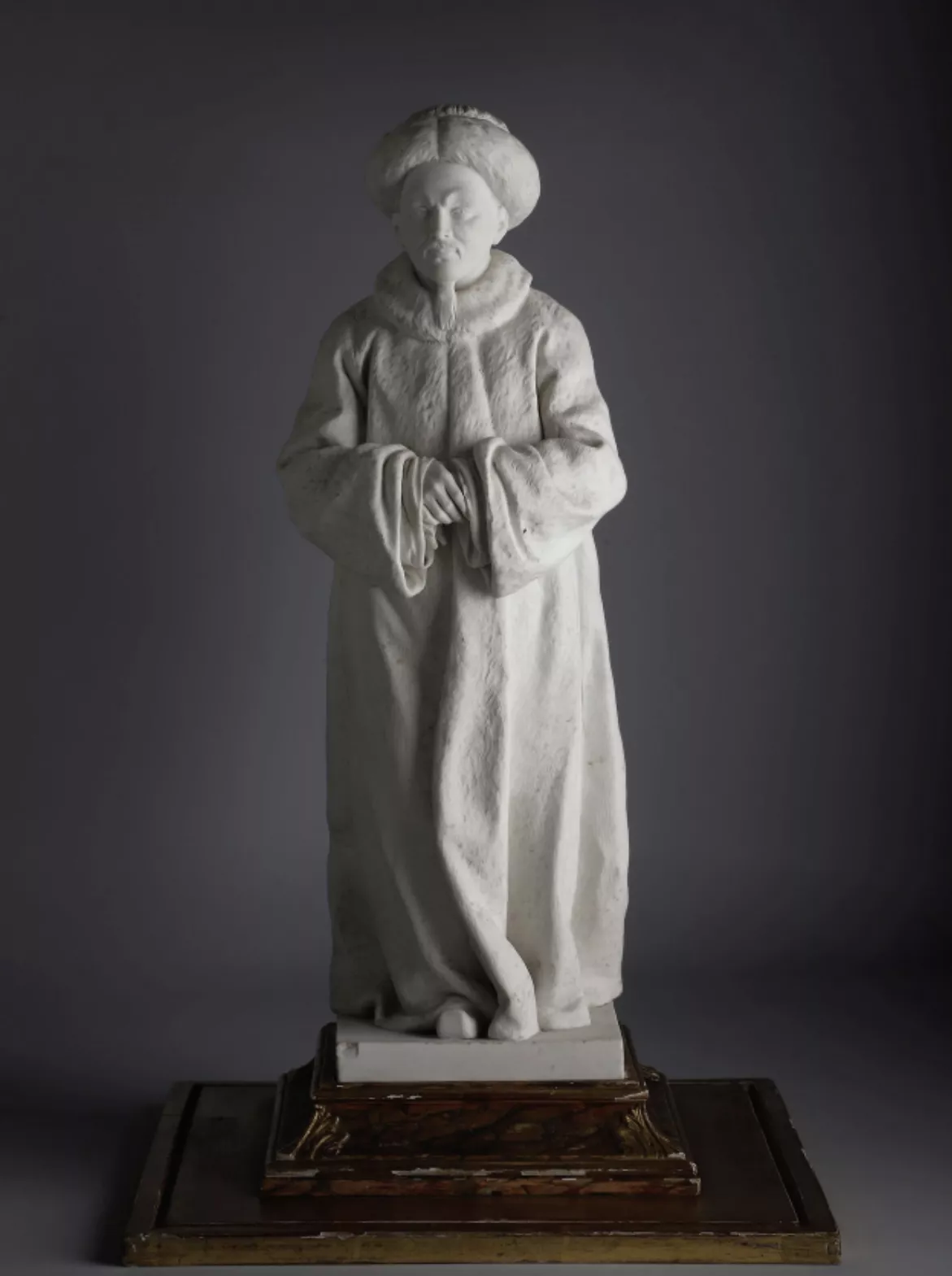
In 2024, Auctie's doubled the world record on a Sèvres porcelain cookie (hard porcelain), depicting the Emperor Quianlong sold for €170,000 while it was estimated at between €20,000 and €30,000.
Rating and value of Sèvres porcelain cookies
Sèvres porcelain is known and appreciated throughout Europe. It was one of the first royal manufactures, founded by Louis XV in Vincennes.
Today, the price of certain pieces continues to rise under the auctioneers' hammer.
Sèvres porcelain cookie works are highly prized, particularly by French buyers, and the price at which they sell on the art market ranges from €10 to €489,000, a considerable delta but one that speaks volumes about the value that can be attributed to Sèvres cookies.
In 2024, a Sèvres cookie group, L'Empereur de la Chine, dating from the XVIII and made by the Sèvres manufactory under Boizot's supervision sold for €170,000 at the hammer, while it was estimated at between €20,000 and €30,000.
Ranging in value from a simple porcelain to the most prestigious
Biscuit type | Result |
|---|---|
Biscuit medallion | From 10 to 1 800€ |
Bisque statuette | From 20 to 42 000€ |
Biscuit group | From €20 to €170,000 |
Estimate in less than 24h
Style and technique of Sèvres porcelain cookies
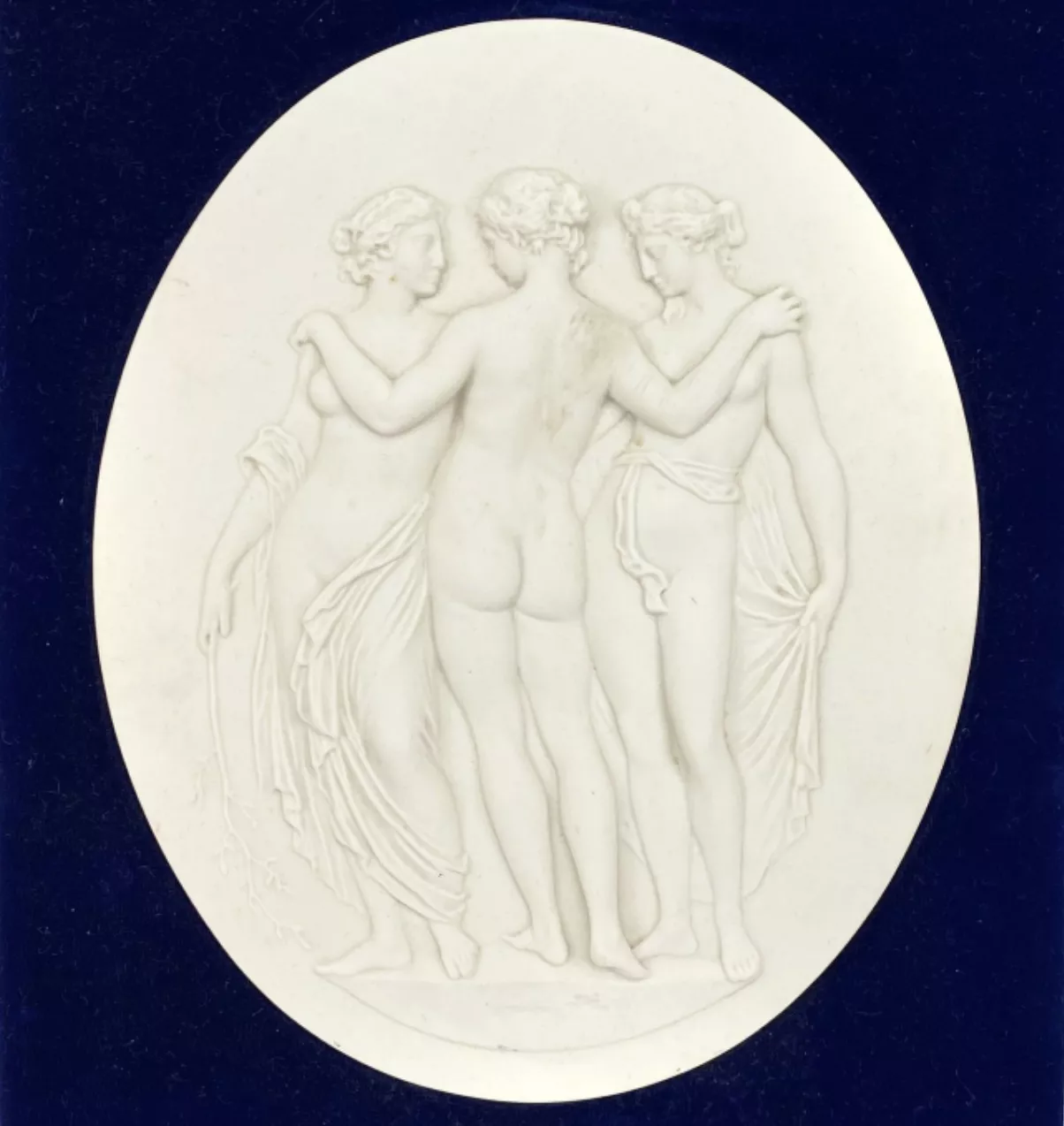
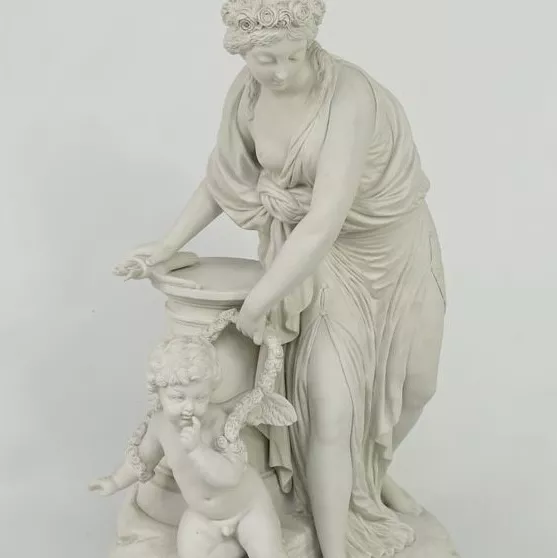
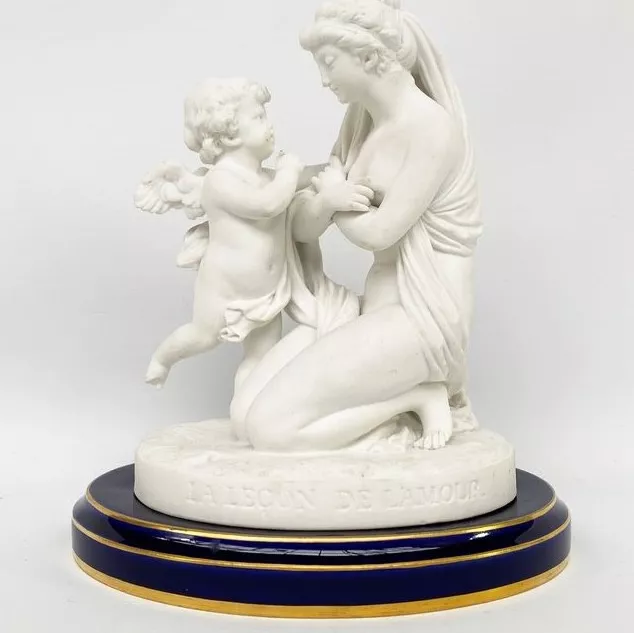
Sèvres porcelain is renowned for the finesse of its cookies, unglazed pieces that found a unique place in the decorative arts of the 18th century.
Originally, the factory worked a soft porcelain developed by Louis-François Ier Gravant, before switching to hard porcelain in 1773, thanks to the discovery of French kaolin.
The cookies, intended largely for diplomatic gifts under Louis XV and Louis XVI, were designed to showcase the talent of French craftsmen.
Made using the demanding pastillage technique, these objects were carefully modeled, then fired once at a very high temperature, reaching 1380°C.
This precise process gave them a silky matte finish, close to the texture of marble, while emphasizing every detail of the motifs. The mythological and pastoral scenes, popular at the time, were thus brought to life with striking relief and grace.
Sèvres cookies, at once sober and of refined elegance, perfectly embodied the century's taste for exceptional decorative objects.
They remain today a precious testimony to French savoir-faire, celebrated for its technical mastery and subtle aesthetics.
History of the Sèvres factory
The history of the royal Meissen factory began in 1740 thanks to the Marquise de Pompadour, mistress of Louis XV, with the aim of having a royal production able to compete with the Meissen factory, which already possessed the hard porcelain formula as well as various kaolin deposits.
It was initially based in Vincennes, but moved to Sèvres in 1756, hence its name for several centuries. That same year, Louis XV became the owner of all the shares, and thus had total control over the manufactory.
It was bought out four years later by the Domaine de la Couronne (which today corresponds to the public domain of the State).
Bertin, Louis XV's minister, became commissionaire for the Sèvres manufactory and set out to find the formula for creating hard porcelain.
Based on models acquired from the German factory in Frankenthal, the Sèvres chemists tried to find the formula, which was finally given to them by Pierre-Antoine Hannong with the help of a notary.
However, even with the formula, France lacked the kaolin deposits to use it. The first kaolin deposit was discovered in 1765.
The Manufacture de Sèvres set itself apart with the creation of a pigment: Sèvres blue, obtained by incorporating cobalt oxide into the paste.
In the 19th century, ceramist Ambroise Millet modernized the porcelain firing process and had new kilns installed.
Prior to 2009, the Manufacture Nationale de Sèvres was a department with national competence. On this date, it became a public establishment by decree.
The price of Sèvres porcelain cookies on the auction market
The price of Sèvres porcelain cookies on the auction market testifies to their artistic and historical value, rooted in the excellence of the manufactory.
These pieces, emblematic of French craftsmanship, vary in price according to their state of preservation, age, and the fame of the artist who sometimes signed them.
Porcelain cookies, originally created for the monarchy under Louis XV and Louis XVI, remain prized works for collectors.
Early examples, often marked by rococo or classical inspirations, fetch high prices when they feature rare characteristics or prestigious signatures.
Among them, neoclassical creations are positioned on a more moderate scale, although some artists, like Agathon Léonard, continue to attract keen interest for their sculptural virtuosity.
Contemporary works produced by the manufacture in the twentieth century also enrich the market.
Names such as François Pompon or François-Xavier Lalanne illustrate this artistic continuity, their porcelain creations often reaching significant sums thanks to their singularity and their inscription in the history of modern art.
Sèvres cookies, whether historic or modern, thus embody a tradition of excellence, celebrated as much for its heritage as for its ability to dialogue with contemporary sensibilities.
Focus on the Sèvres porcelain cookie depicting the Emperor Quianlong
This hard porcelain cookie, depicting the Emperor Qianlong, is an exceptional testimony to the excellence of the Manufacture Royale de Sèvres in the 18th century.
Made between 1775 and 1779, it illustrates the French court's growing interest in cultural and diplomatic exchanges with China.
Attributed to the talent of sculptor Josse-François-Joseph Le Riche, under the direction of Louis-Simon Boizot, this rare object blends technical precision and artistic refinement.
The work embodies an idealized and respectful vision of the Qianlong emperor. Dressed in a richly textured cloak, evoking the refinement of oriental fabrics, the emperor adopts a posture of calm authority.
The strikingly realistic facial details reflect a desire to capture the individuality and majesty of this iconic figure.
The unglazed cookie material highlights the finesse of the sculpture, reinforcing the impression of serenity and elegance that emanates from this piece.
The historical context lends additional value to this cookie. Produced in a limited series of thirteen, it is part of a tradition of prestigious commissions.
Delivered to influential figures such as Marie-Antoinette or the Countess of Artois, it symbolizes France's cultural and diplomatic influence through its decorative arts.
The example presented here, marked with the mold number "9" and the initials "B" for Boizot, is one of only three examples recorded to date, reinforcing its rarity and patrimonial importance.
The history of the piece adds a captivating dimension to its story. Originating from a French private collection, it was cited as early as 1883 in an appraisal certificate, before being acquired by Countess Claude de Choiseul-Praslin in 1929.
This background illustrates the continuing interest in this object, both for its artistic quality and its historical value.
In short, this Sèvres cookie, a harmonious blend of art and diplomacy, transcends its era. It embodies a vision of the Orient shaped by the Europe of the Enlightenment, while testifying to the unrivalled expertise of the Sèvres workshops.
All these characteristics, combined with the piece's exceptional provenance, have enabled Auctie's to achieve a world record on a Sèvres porcelain cookie.
One example of this cookie is kept at the Musée des Arts Décoratifs in Paris, while another is kept in Boston. It is a truly unique piece that bears witness to the prestige and renown of the Sèvres factory over the centuries.
Recognizing a piece from the Manufacture de Sèvres
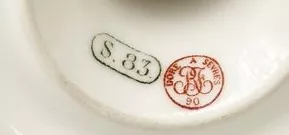
Pieces produced by the Manufacture de Sèvres are generally signed and hallmarked. The signature may have varied over the centuries. Here's an example:
Knowing the value of a work
If you happen to own a Sèvres porcelain work or one after it, don't hesitate to request a free appraisal using our form on our website.
A member of our team of experts and licensed auctioneers will contact you promptly to provide you with an estimate of the market value of your work, not forgetting to send you ad hoc information about it.
If you're thinking of selling your work, our specialists will also be on hand to provide you with alternatives for selling it at the best possible price, taking into account market inclinations.
Estimate in less than 24h
Discover in the same theme

Rating and value of sculptures and busts from the First Empi...
Busts from the First Empire are highly sought-after works at auction, and their value is on the rise.
Learn more >

Have your books and manuscripts appraised free of charge
Antiquarian books and collectible manuscripts are treasures for collectors. Having them appraised by experts is essential.
Learn more >

Impressionism rating: value of the works
Impressionist works are among the most highly valued on the market. Several key factors influence their value.
Learn more >
Similar works sold at auction

Estimated 800 € - 1 200 €
MANUFACTURE NATIONALE DE SEVRES Rare porcelain cookie obelisk.

Estimated 2.000 - 3.000 €
Sèvres porcelain plate from the "agronomique" service

Estimated 800 - 1.200 €
SÈVRES, Teapot in the service of King Louis-Philippe at Château D'Eu.

Estimated 2.000 - 3.000
SÈVRES, Pair of square compotiers in soft porcelain

Estimated 20.000 - 30.000
MANUFACTURE ROYALE DE SÈVRES, 18th century "L'Empereur de la Chine" - Portrait of the Emperor Qianlong, Hard porcelain bisque, 1775

Estimated 2.000 - 4.000
Rare Vauban statute in Sèvres cookie, after Charles Antoine BRIDAN (1730-1805)

Secure site, anonymity preserved

Auctioneer approved by the State

Free and certified estimates
Frequently asked questions
-
What is a Sèvres biscuit, and what makes it special?A Sèvres biscuit is an unglazed piece of porcelain produced by the Royal Porcelain Manufactory of Sèvres, founded by Louis XV. These pieces are characterized by their matte, silky finish, reminiscent of marble, achieved through a single firing at a very high temperature (1380°C) using the pastillage technique. Created primarily as diplomatic gifts during the reigns of Louis XV and Louis XVI, they embody 18th-century French craftsmanship and remain highly prized by collectors.
-
What are the prices and price range for Sèvres cookies?The value of Sèvres biscuits varies considerably depending on the type and quality: biscuit medallions range from €10 to €1,800, statuettes from €20 to €42,000, and biscuit groups from €20 to €170,000. Exceptional pieces, particularly those dating from the 18th century with prestigious provenance and signatures by renowned artists, can fetch much higher prices at auction.
-
How do you authenticate and appraise a piece of Sèvres porcelain?To authenticate and appraise your item, we recommend requesting a free appraisal from Auctie's via our online form. A state-certified expert or auctioneer will contact you promptly to examine your piece, verify its hallmarks and distinctive signatures, and provide you with an accurate estimate of its market value within 48 hours, with no obligation.
-
Is this the right time to sell a Sèvres biscuit?Yes, the market for Sèvres cookies remains dynamic and favorable. Historic pieces and those signed by renowned artists continue to attract sustained interest from collectors, particularly in France. In 2024, record prices were set, demonstrating that these works retain and increase in value, especially if they have a notable provenance and are in excellent condition.
-
How does the sales process work at Auctie's?The process begins with a free, no-obligation appraisal conducted by our experts and licensed auctioneers. Once the appraisal is provided, if you decide to sell, we’ll guide you through the entire process from start to finish: preparing the sale documentation, compiling the catalog, promoting the artwork, and conducting the auction. Our specialists will advise you on the best strategies to achieve the optimal price based on current market trends.
