



Rating and value of Russian and Greek Orthodox icons and devotional paintings

Key takeaways
- Russian and Greek Orthodox icons sell for between €20 and €5,760, with prices varying considerably depending on the period and the technique used.
- Icons with a riza (precious metal frame) and those depicting liturgical feasts command the highest estimates, with the former reaching up to €7,100.
- A free appraisal will allow you to accurately date your icon and obtain an estimate of its current market value before selling it at the best possible price.
If you own an Orthodox icon, and would like to know its value, our state-approved experts and auctioneers will offer you their appraisal services. Our specialists will carry out a free appraisal of your work, and provide you with a precise estimate of its value on today's market. Then, if you wish to sell your work, we will guide you towards the best possible arrangement to obtain the optimum price.
Rating and value of Orthodox icons
Orthodox icons are highly valued on the auction market, whatever the period. Today, prices for these works are reaching unprecedented heights under auctioneers' gavels. They are particularly prized by Russian and Greek buyers. The price at which they sell on the art market ranges from €20 to €5,760, a considerable delta but one that speaks volumes about the value that can be attributed to Orthodox icons. In 2023, a Russian icon depicting the Virgin, with a riza made by goldsmith Erik Frisk sold for €5,760, while it was estimated at between €1,500 and €2,000.
Order of value from a simple work to the most prestigious
Technique used | Result |
|---|---|
Imperial Russian devotional icons | From €40 to €520 |
Greek icon | From €80 to €2,160 |
Balkan icon | From €55 to €2,350 |
Icon with riza | From €20 to €7,100 |
Icon for the feasts of the liturgical year | From €90 to €5,760 |
Estimate in less than 24h
Style and characteristics of the Orthodox icon
The icon is in Christianity - as far as Catholics and Orthodox are concerned, Protestants refusing any images in the practice of their worship - an important object serving devotion that has crossed eras and generations. Often created by painters using tempera on wood or simply oil on panel, icons, whether Russian or Greek in production, also demand the work of goldsmiths.
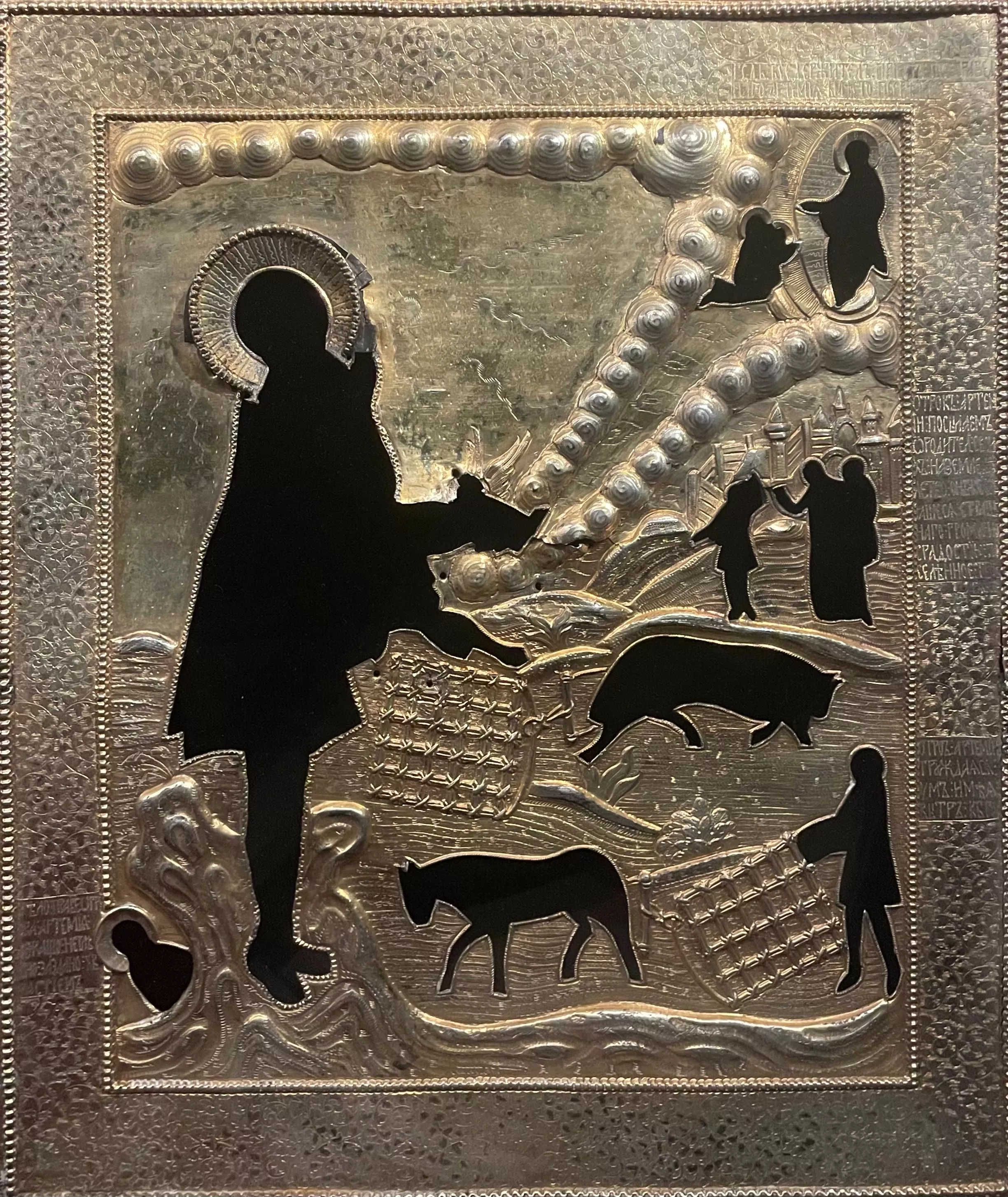
Origins and History
Icons come from the Greek word eikon, (image) and first represented saints in the Christian religion. In the Middle Ages, there were many representations of Saint George and the Evangelists. The Orthodox religion was founded after the schism of 1054, dividing Eastern Christians, known at the time as Orthodox, and Western Christians, known as Catholics. Today, this bipartite division has to be qualified: a large part of Russia is Orthodox, as is Greece, and many Yugoslav and Slavic countries. The Christian question is much more complicated in the Middle East, some still practice this religion ; but the major productions of icons are in Russia and Greece.
Their veneration is a dogma of faith in the Orthodox religion, so they are of particular importance.
Emblematic icons
The most widely distributed and emblematic icons of Greek and Orthodox production are those of Christ, naturally, traces of which can be found from Emperor Constantine onwards. According to legend, Saint Luke painted the Virgin Mary three times in his time. In particular, he is credited with the icons of the Virgin of Vladimir and the Virgin of Jerusalem. A representation that spans the history of mankind after Christ, it is known as early as the Roman Emperor Theodosius II, who died in 450, and is therefore not only the oldest but also the most prized and produced on the art market.
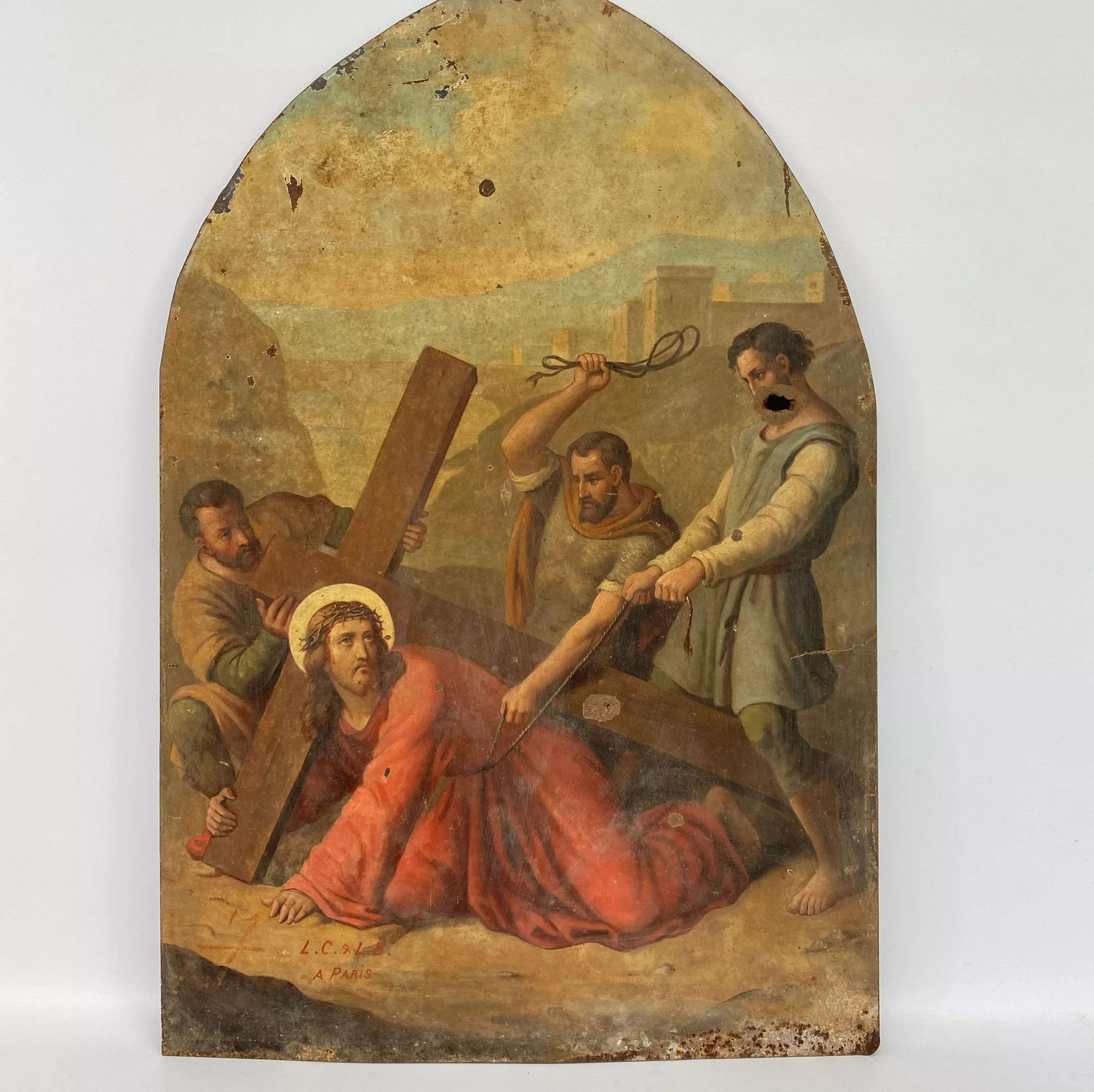
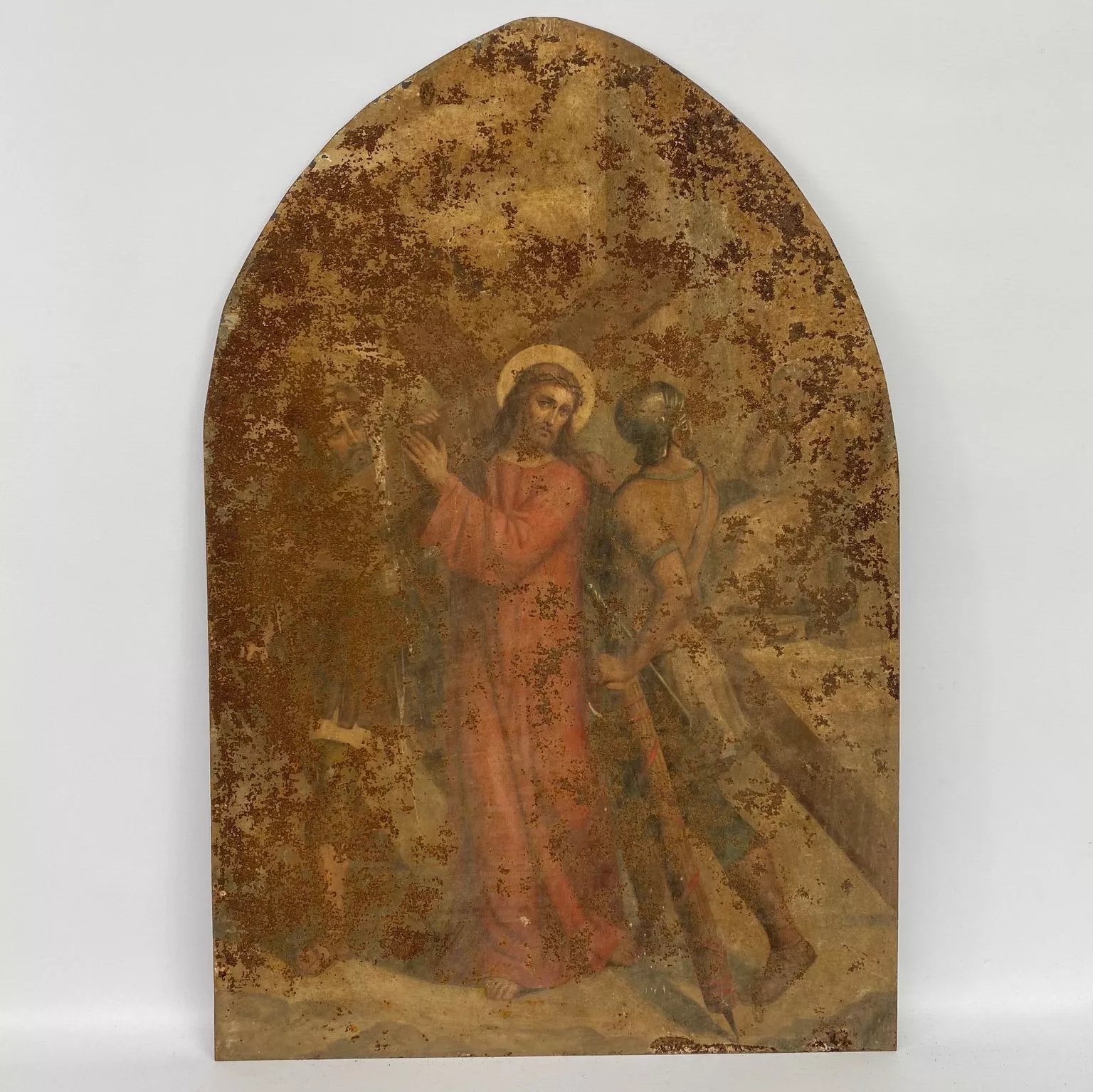
Their value today on the auction market
Orthodox icons, whether Greek or Russian, are enjoying great success on the auction market. Icons depicting the liturgical calendar are particularly popular and famous in the Orthodox tradition. They generally sell for quite high prices.
Dating your Orthodox icon
It can sometimes be difficult to date an icon, since production can be thousands of years old. However, it is always possible to give a rough idea. Work will be done beforehand on the state of conservation of your object and the study of pictorial techniques to determine as precise a date as possible.
Knowing the value of a work
If you happen to own an Orthodox icon or think your object is one, don't hesitate to request a free appraisal using our form on our website. A member of our team of experts and certified auctioneers will contact you promptly to provide you with an estimate of the market value of your work, as well as any relevant information about it. If you wish to sell your work, you will also be accompanied by our specialists in order to benefit from alternatives to sell it at the best possible price, taking into account the inclinations of the market.
Estimate in less than 24h
Discover in the same theme

Have your Asian art appraised free of charge: paintings, bro...
Asian art is a fascinating field, with a wide variety of objects bearing witness to the history and culture of Asian civilizations.
Learn more >

Free appraisal of silver and gold objects
Goldsmithing and silverware are art forms with a long history, and have always been appreciated for their beauty and value.
Learn more >

Grade and Value of Orthodox Icons, Tempera on Wood
Orthodox icons are artistic devotional objects, widespread since Antiquity. They can be highly prized at auction.
Learn more >
Similar works sold at auction

Estimated 2 000 € - 4 000 €
DANISH SCHOOL circa 1790, entourage of Jens JUEL Presumed portrait of Sophie of Hesse-Cassel, Queen Consort of Denmark.

Estimated 3 000 - 5 000
Gaston SUISSE (1896-1988), Engraved polychrome lacquer panel on tortoiseshell lacquer background.

Estimated 10.000 - 15.000 €
Ebridge Ayer BURBANK(1858-1949), Young African-American boy, Oil on panel.

Estimated 1500 - 3000 €
Louis de Caullery (1580-1621), Oil on copper.

Secure site, anonymity preserved

Auctioneer approved by the State

Free and certified estimates
Frequently asked questions
-
What is an Orthodox icon, and what are its origins?An Orthodox icon is a religious image depicting Christ, the Virgin Mary, or the saints, which is venerated in the Orthodox Christian tradition. The term comes from the Greek word “eikon,” meaning “image.” Icons, produced primarily in Russia and Greece since the Middle Ages, are generally painted in tempera on wood or in oil on panel, often complemented by goldsmithing. Their veneration is a fundamental tenet of the Orthodox faith.
-
What is the price range for Orthodox icons at auction?Orthodox icons sell on the market for between €20 and €5,760, depending on their period, technique, provenance, and condition. Icons with a riza (precious metal frame) and those depicting the Orthodox liturgical calendar generally command the highest prices. For example, a Russian icon of the Virgin Mary with a goldsmith-crafted riza sold for €5,760 in 2023, well above its initial estimate of €1,500 to €2,000.
-
How do I have an Orthodox icon authenticated and appraised?Auctie's offers a free, no-obligation appraisal of your icon by certified auctioneers and experts. Simply fill out the appraisal form on our website, and our specialists will contact you and provide an accurate estimate of your artwork’s market value within 48 hours. This appraisal includes an assessment of the piece’s condition, painting technique, and date of creation.
-
Is this the right time to sell an Orthodox icon?Yes, this is an excellent time to sell an Orthodox icon. The auction market is booming for these works, with hammer prices reaching unprecedented levels. Russian and Greek buyers, in particular, are actively seeking out these pieces, and estimates regularly exceed projections, offering excellent opportunities for sellers.
-
How does the sale of an Orthodox icon work at Auctie's?The process begins with a free, no-obligation appraisal conducted by our experts. If you decide to sell, our specialists will guide you every step of the way—from preparing your listing to the auction—helping you explore the best options for selling your artwork at the highest possible price, while taking current market trends into account.
