



Free estimate of your antique Chinese vase

Key takeaways
- Chinese porcelain vases sell for between €30 and €2,015,000, with a record price of €7,700,000 set in 2022 for a Qing dynasty vase.
- Certified experts offer free appraisals and accurate estimates of the current market value of your porcelain.
- Marks (imperial, kiln, and artist’s marks) identified on the pieces allow for authentication, but deceptive reproductions do exist.
If you own one or more Chinese porcelain vases, and would like to know their value, our state-approved experts and auctioneers will offer you their appraisal services.
Our specialists will carry out a free appraisal of your vase or vases, and provide you with a precise estimate of its value on today's market.
Then, if you wish to sell your porcelain, we will direct you to the best possible device to obtain the optimum price.
Rating and value of Chinese porcelain vases
Chinese porcelain vases are collectibles currently sought after by French, European, Chinese and foreign collectors. If you own one or more, their value may be higher than you think.
On the art market, prices for these objects can be very high under the auctioneer's hammer, and often publicized during record results.
They are particularly prized, and the price at which they sell on the art market ranges from €30 to €2,015,000, a fairly substantial range, but one that says a lot about the value that can be attributed to these objects without having some grounding in them.
In 2022, a 20th century vase in the Tianqiuping form was sold for €7,700,000. We therefore detect a very strong upside potential for these objects.
Ranging in value from a simple vase to the most prestigious
Vase type | Result |
|---|---|
Vase from the Yuan period (1260-1368) | From €300 to €266,000 |
Ming period vase (1368 - 1644) | From €300 to €6,350,000 |
Qing period vase (1644 - 1912) | From €300 to €7,700,000 |
Republic period vase (1912-1949) | From €200 to €2,015,000 |
RPC period vase | From €10 to €1,000 |
Estimate in less than 24h
Chinese porcelain, a coveted treasure through the ages
Chinese porcelain production can be traced back to the Tang dynasty (618-907), when the first tricolored ceramics (sancai) appeared, in shades of green, brown and white.
At the time, the technique was still rudimentary, but the quality of these pieces was already attracting attention. Under the Five Dynasties and Ten Kingdoms dynasty (907-960), new glazing methods emerge, laying the foundations for the evolution that would follow.
The Song dynasty (960-1279) marks a turning point, with the appearance of celadons and monochrome glazes, a symbol of subtle refinement.
The Jin dynasty (1115-1234), although less well known, also plays a role in the development of porcelain, with significant advances in production and glaze techniques.
It was during the Yuan dynasty (1271-1368) that underglaze painting in blue cobalt made its appearance, giving rise to the blue and white style that would become emblematic of Chinese porcelain.
The Ming dynasty (1368-1644) represents the apogee of this art, with a diversity of patterns and colors, such as the famous underglaze cobalt blue.
Under the Qing dynasty (1644-1911), porcelain art diversified even further, with the emergence of styles such as the famille rose (fencai) and the famille verte (doucai). These new creations testify to a fertile imagination and a desire to please the refined tastes of the elite.
Even during the Republic of China (1912-1949), porcelain production was maintained, albeit marked by Western influences and political upheavals.
Each dynasty thus contributed to shaping Chinese porcelain, creating an artistic heritage that continues to fascinate the entire world. This ancestral know-how, deeply rooted in the history of the people, makes Chinese porcelain a timeless symbol of art and culture.
The evolution of Chinese porcelain under the various dynasties :
Tang Dynasty (618-907): It was during this era that porcelain production began, with the creation of tricolored ceramics (sancai) in shades of green, brown and white. Production methods were still fairly rudimentary at this time.
Five Dynasties and Ten Kingdoms Dynasty (907-960): This pivotal period saw the emergence of new ceramic and glaze techniques, laying the foundations for later advances.
Song dynasty (960-1279): The considerable boom in porcelain production during the Song dynasty led to the emergence of new styles and techniques, including celadons and monochrome glazes.
Jin dynasty (1115-1234): Coexisting with the Song dynasty, the Jin dynasty also participated in the development of Chinese porcelain, making similar advances in glazes and production techniques.
Yuan dynasty (1271-1368): Under the aegis of the Yuan dynasty, underglaze painting in blue cobalt was introduced, giving rise to a new style of porcelain emblematic of China.
Ming dynasty (1368-1644): Chinese porcelain reached its zenith during the Ming dynasty, with a diversity of styles and designs, including blue cobalt underglaze and polychrome porcelains.
Qing dynasty (1644-1911): The Qing dynasty saw the emergence of new porcelain styles, such as famille rose (fencai), famille verte (doucai) and famille jaune (huangcai), as well as the continued improvement of production techniques.
Republic of China (1912-1949): Porcelain production continued during the Republic of China, although styles and techniques were influenced by Western trends and political upheavals. Porcelain from this period often reflected nationalist or revolutionary themes.
Style and technique of Chinese porcelain vase manufacture
Chinese porcelain, whose earliest traces date back to the Tang dynasty, quickly rose to the rank of imperial treasure.
Excavations in Jingdezhen, the undisputed porcelain capital, reveal the exploitation of kaolin, a mineral indispensable for obtaining that immaculate whiteness.
Craftsmen perfected high-temperature firing in kilns reaching over 1,300°C, resulting in porcelain of unrivalled finesse.
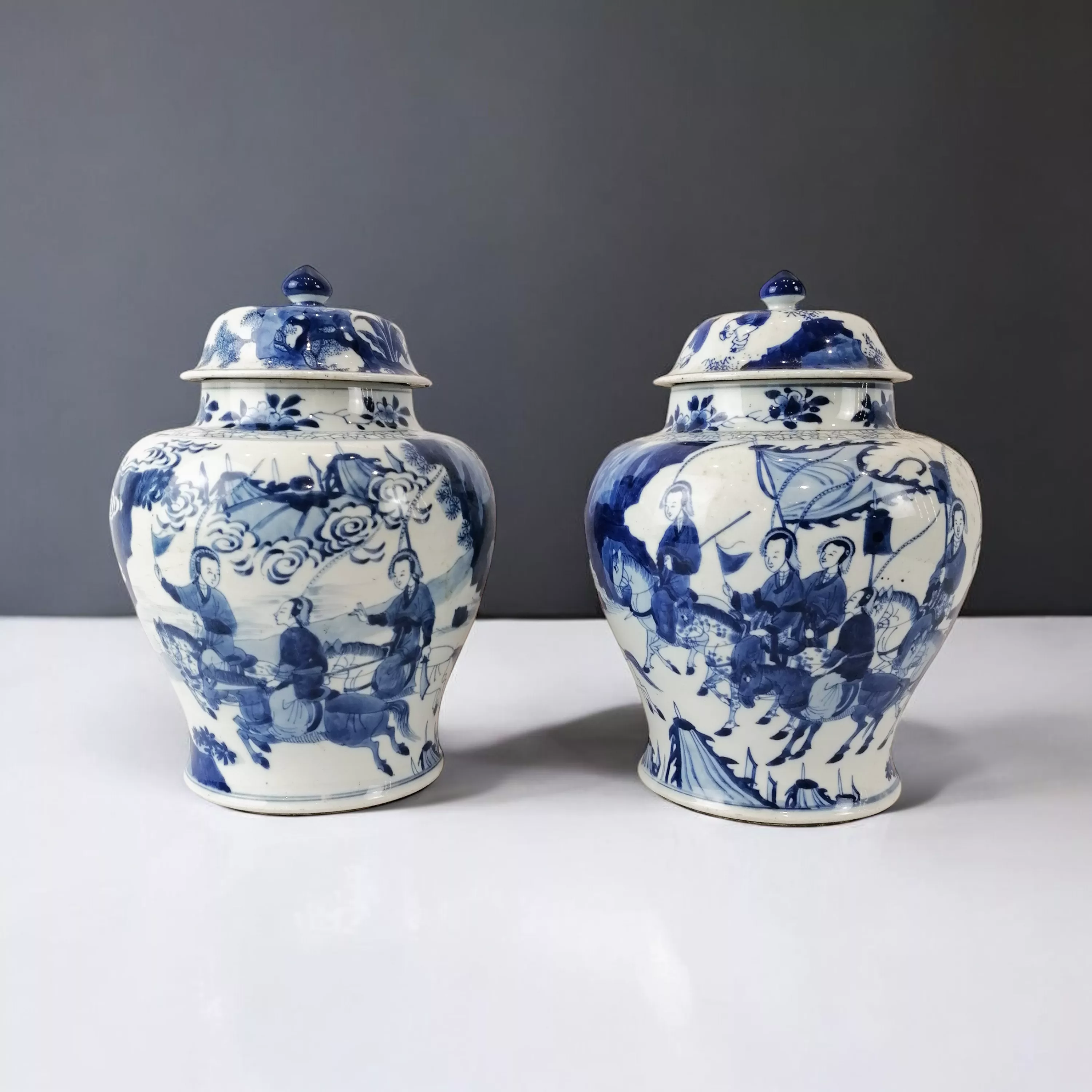
Under the Ming dynasty, the technique of underglaze painting, notably with the famous cobalt blue imported from Persia, became a refined art, adorning vases, bowls and objects of worship. The motifs, often inspired by nature and Chinese mythology, combine symbolism and aestheticism.
By the 15th century, Europe had fallen in love with this exotic porcelain via the sea routes established by the Portuguese. Demand exploded, prompting Chinese workshops to adapt certain motifs to satisfy the tastes of Western royal courts.
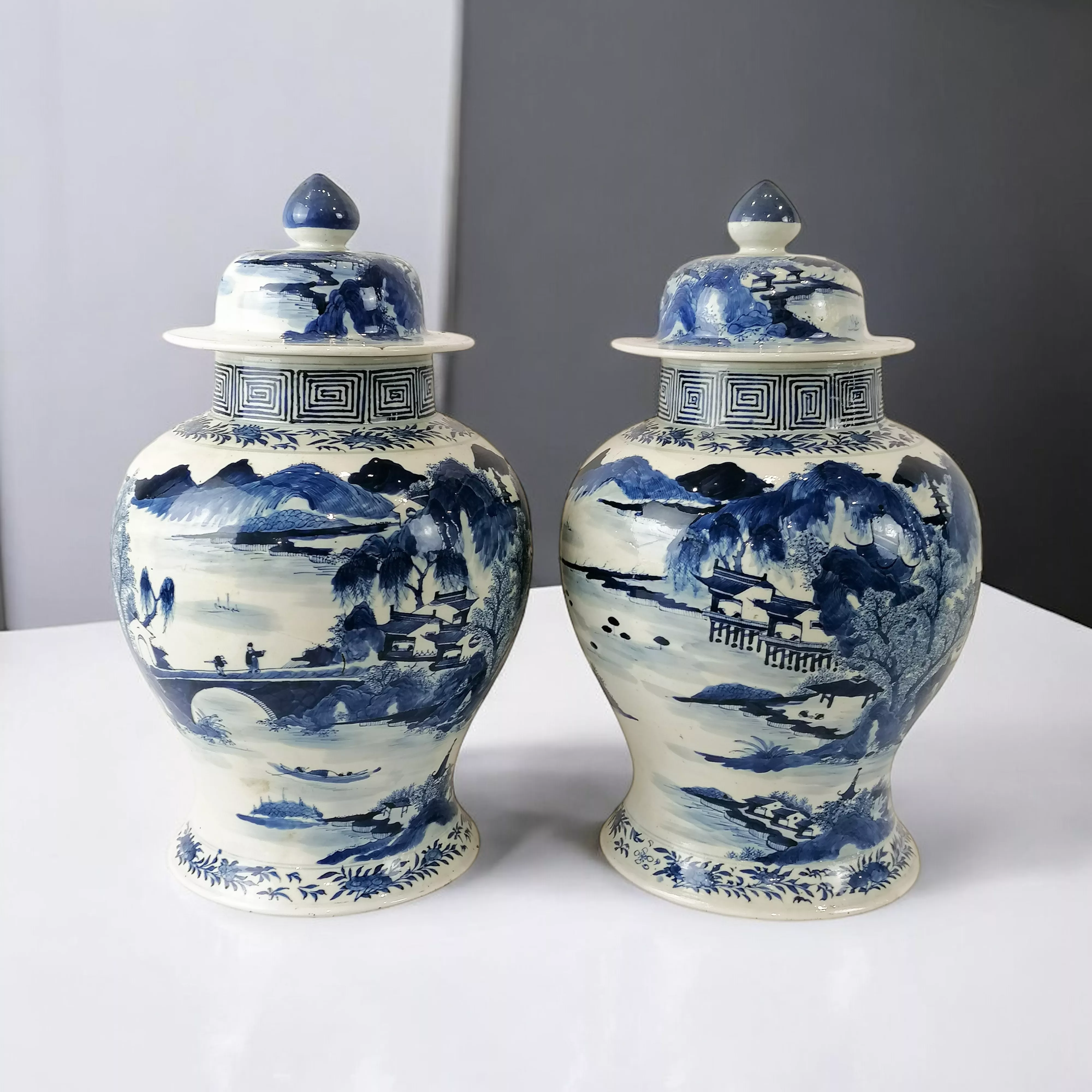
Pieces of great delicacy, previously reserved for the emperor and temples, became prized export items, adorned with dragons, plum blossoms or Chinese landscapes.
This jealously guarded know-how remained inaccessible to Europeans, who, despite their attempts at imitation, only managed to compete in the 18th century with the creation of manufactures such as Meissen in Germany and Vincennes - moved to Sèvres in France in 1756 (whether vases or biscuits, or other productions).
Chinese porcelain, with its brilliance, finesse and elaborate patterns, remains the absolute benchmark in the art of ceramics.
The worldwide influence of Chinese porcelain
Chinese ceramics, the central pillar of the arts of ancient China, has conquered the world with its refinement and exceptional quality. As early as the 17th century, Europeans discovered this delicate porcelain and imported large quantities to adorn their interiors.
However, long before this, Chinese ceramics production was already largely export-oriented.
As early as the Tang dynasty, Jingdezhen craftsmen adapted their skills to satisfy foreign tastes, making Chinese porcelain one of the earliest examples of sophisticated craftsmanship designed for international markets.
Royal courts and elites in the Middle East and Europe became fascinated with these luxurious objects, symbols of prestige and wealth. The motifs, often inspired by nature, reflect Chinese culture while adapting to local preferences, making each piece unique.
Today, Chinese porcelain continues to bewitch, whether through recent souvenirs or priceless antique pieces.
However, distinguishing a reproduction from a genuine antique work remains a matter of expertise. Only a certified expert or auctioneer can authenticate these treasures, revealing their full history and heritage value.
The different signatures on Chinese porcelain
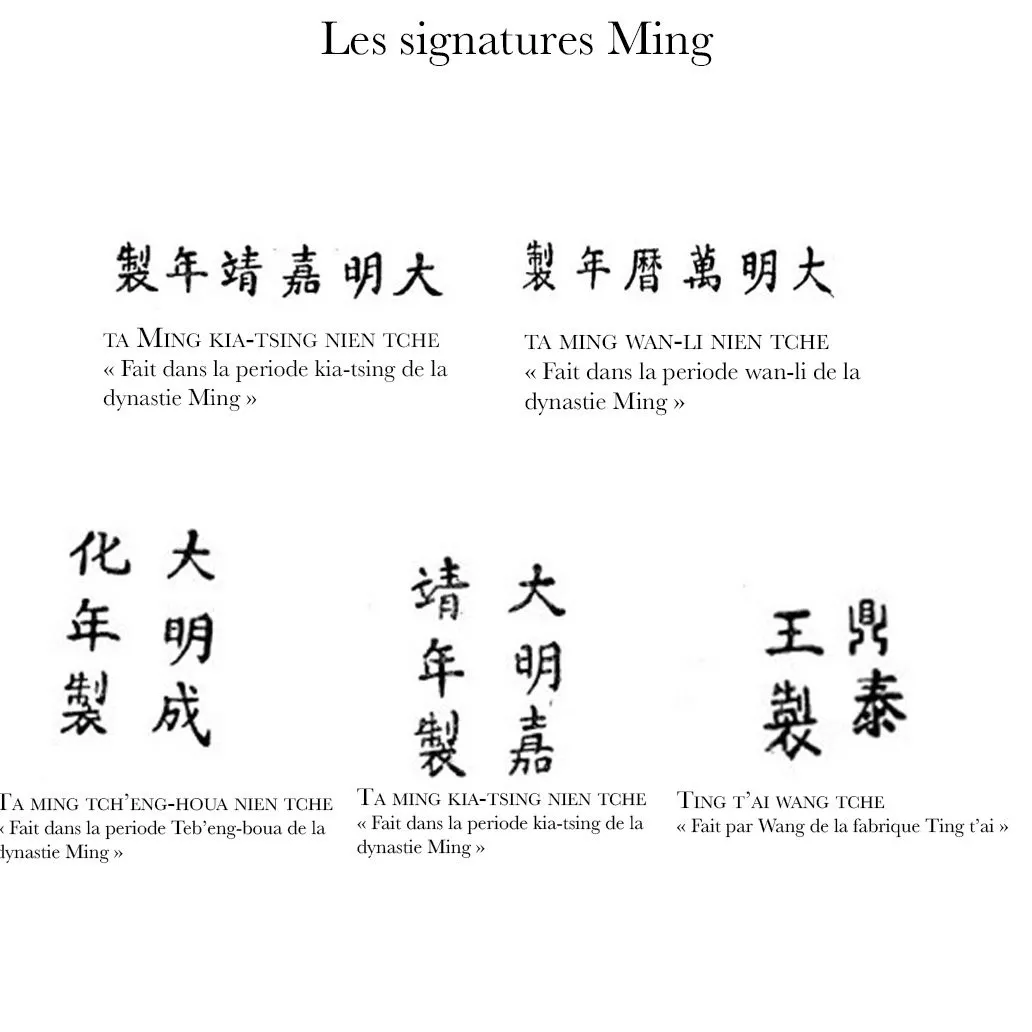
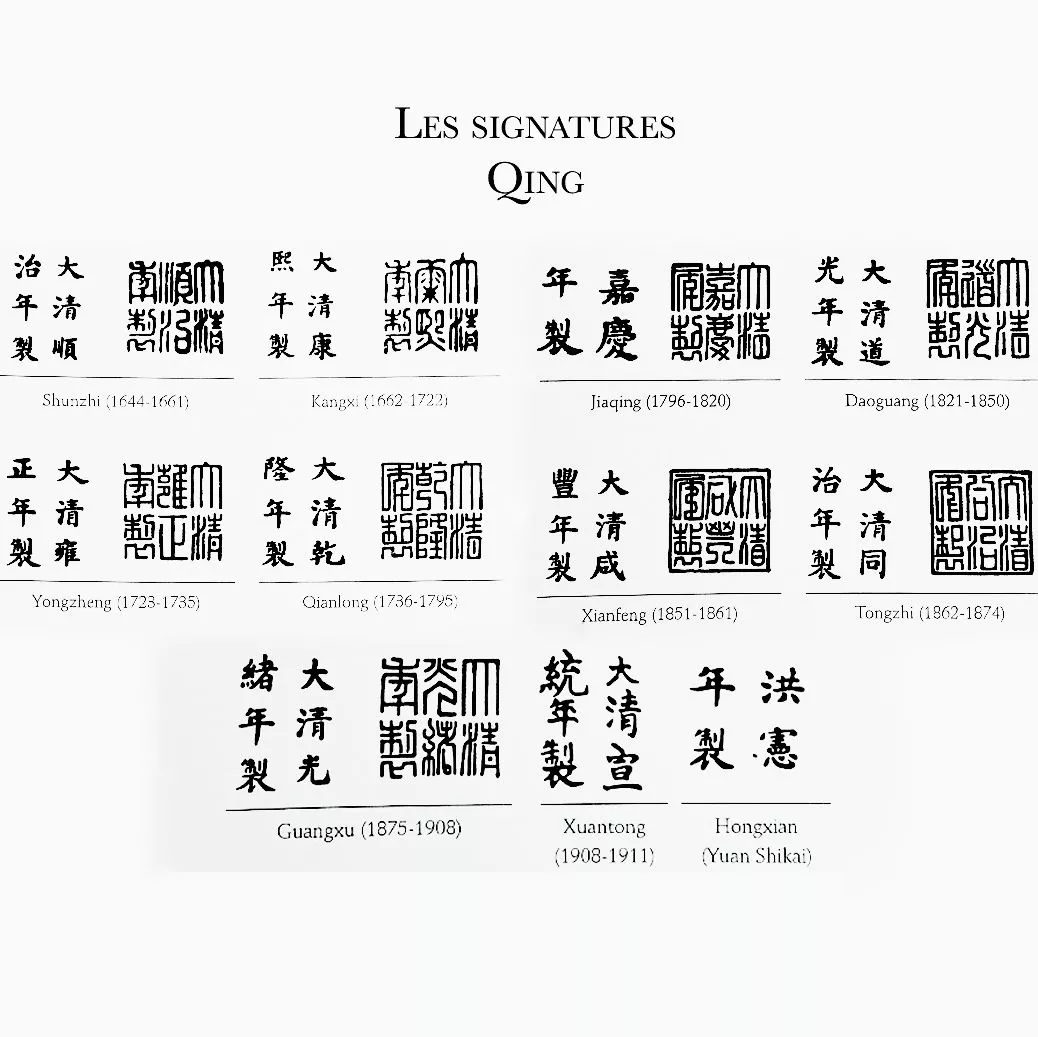
On Chinese porcelain, signatures are often placed underneath the object and can be painted or incised. These marks may include information such as the artist's name, place of production, dynasty or auspicious wishes. Signatures are usually written in traditional Chinese characters.
On Chinese porcelain, signatures are often found discreetly placed beneath objects, whether painted or incised. These marks carry valuable information, such as the artist's name, place of production, dynasty or auspicious wishes.
Generally written in traditional Chinese characters, signatures reveal the history and craftsmanship of each piece.
Among the types of marks that can be seen on Chinese porcelain, the imperial marks stand out. They testify to production destined for the emperor and often bear his name.
As for furnace marks, they indicate the place of production, such as the famous Jingdezhen, Dehua or Yue kilns, renowned for their excellence.
The workshop or artist marks reveal the identity of the craftsman or workshop responsible for creating the piece. There are also quality marks, which certify the superiority of the piece, using terms such as "pure" (清, qīng) or "perfect" (完美, wánměi).
Finally, wishing marks carry expressions of happiness, longevity and prosperity.
It's important to note that marks on Chinese porcelain can be misleading. Copies have been made in order to increase the perceived value of the works.
As such, it is essential to have a porcelain examined by an auctioneer or expert in order to date and value it accurately. However, it is crucial to bear in mind that the estimate of a piece does not always reflect its true value on the market.
Auctions can be unpredictable, and it is not uncommon for buyers to win porcelains at prices well above their initial estimates.
Auctioneers, experts in their field, possess in-depth knowledge of the different eras, styles and manufacturing techniques of Chinese porcelain.
By having your porcelain appraised by a professional, you can be sure of obtaining an accurate estimate of its value, useful in the event of sale or insurance.
In addition, these experts can also provide advice on the conservation and care of Chinese porcelain, helping to preserve the object's beauty and value over the long term.
Common types of marks on Chinese porcelain include:
Imperial marks: These show that the piece was produced for the emperor and often bear the name of the reigning emperor.
Furnace marks: These indicate the place of production, for example, the famous furnaces of Jingdezhen, Dehua or Yue.
Workshop or artist marks: These bear the name of the artist or workshop responsible for creating the piece.
Quality marks: These denote the superior quality of the piece, with terms such as "pure" (清, qīng) or "perfect" (完美, wánměi).
Wishing marks: These contain auspicious expressions for happiness, longevity, prosperity, etc.
It's important to be aware that marks on Chinese porcelain can be misleading, as they have sometimes been copied to increase the perceived value of the works. This is why it's essential to present a Chinese porcelain to an auctioneer and expert so they can date and estimate it.
However, it's important to bear in mind that the estimate of a Chinese porcelain does not necessarily represent its true value. Auctions are often unpredictable, and buyers can win Chinese porcelains for very large sums, far beyond their initial estimate.
Auctioneers are experts in their field and have in-depth knowledge of the different periods, styles and techniques of Chinese porcelain manufacture. By having your porcelain professionally appraised, you can get an accurate estimate of your item's value, which can be useful if you plan to sell or insure it. In addition, auctioneers can also give advice on the conservation and care of Chinese porcelain, which can help preserve the object's beauty and value in the long term.
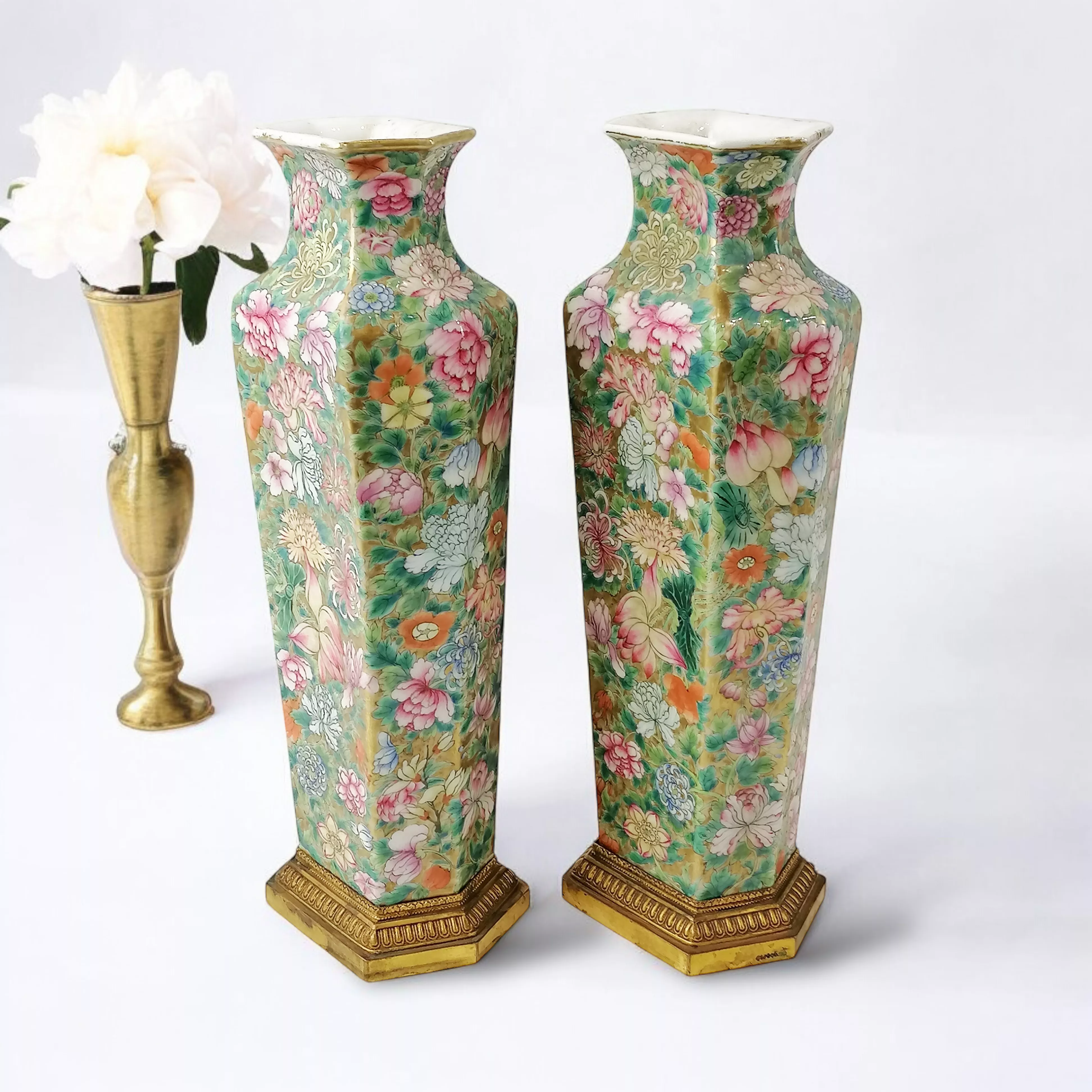
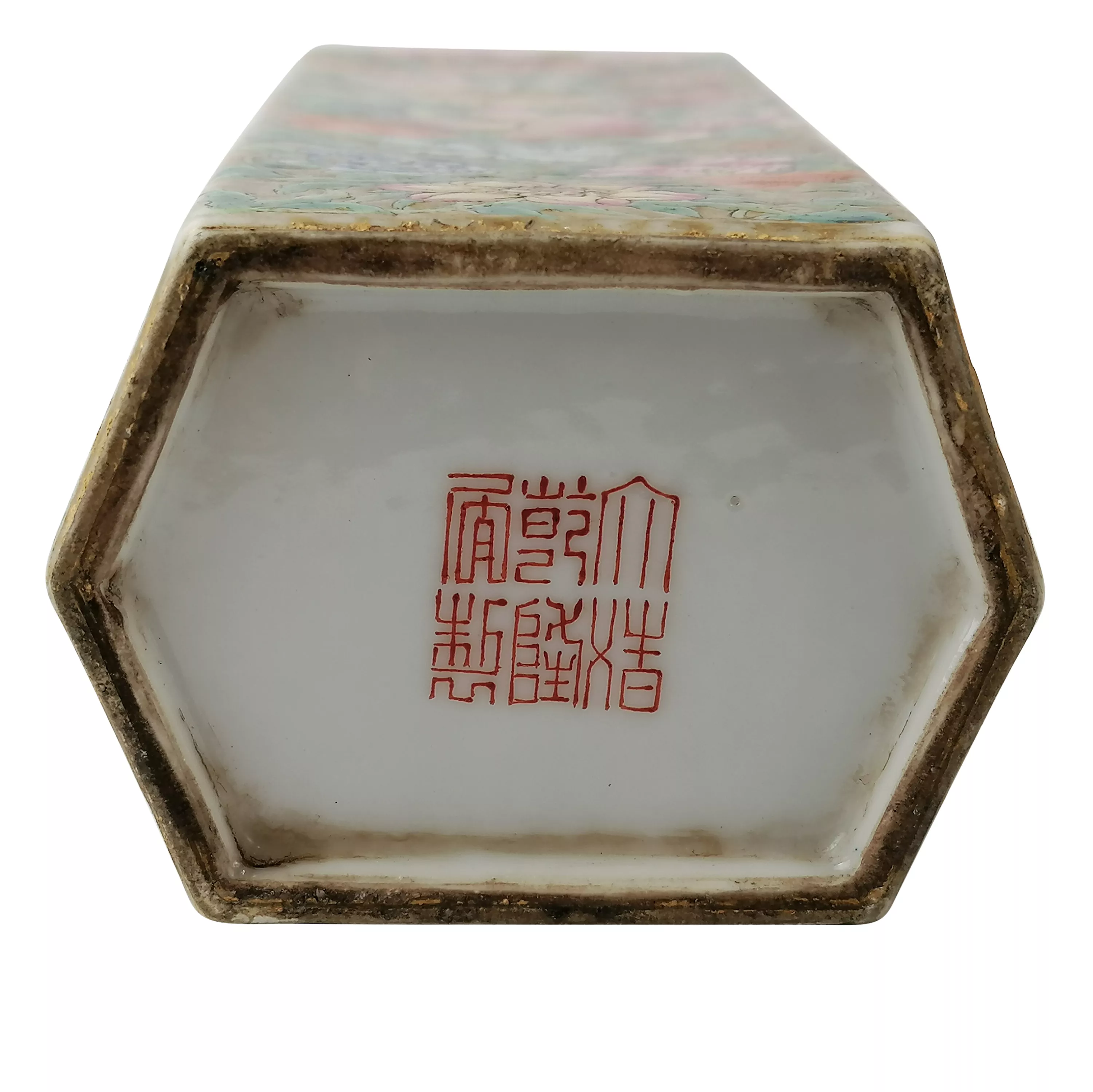
Important: Apocryphal marks on Chinese vases
Apocryphal marks on Chinese vases appeared at the end of the 19th century and into the 20th, at a time when the craze for porcelain vases was very strong all over the world.
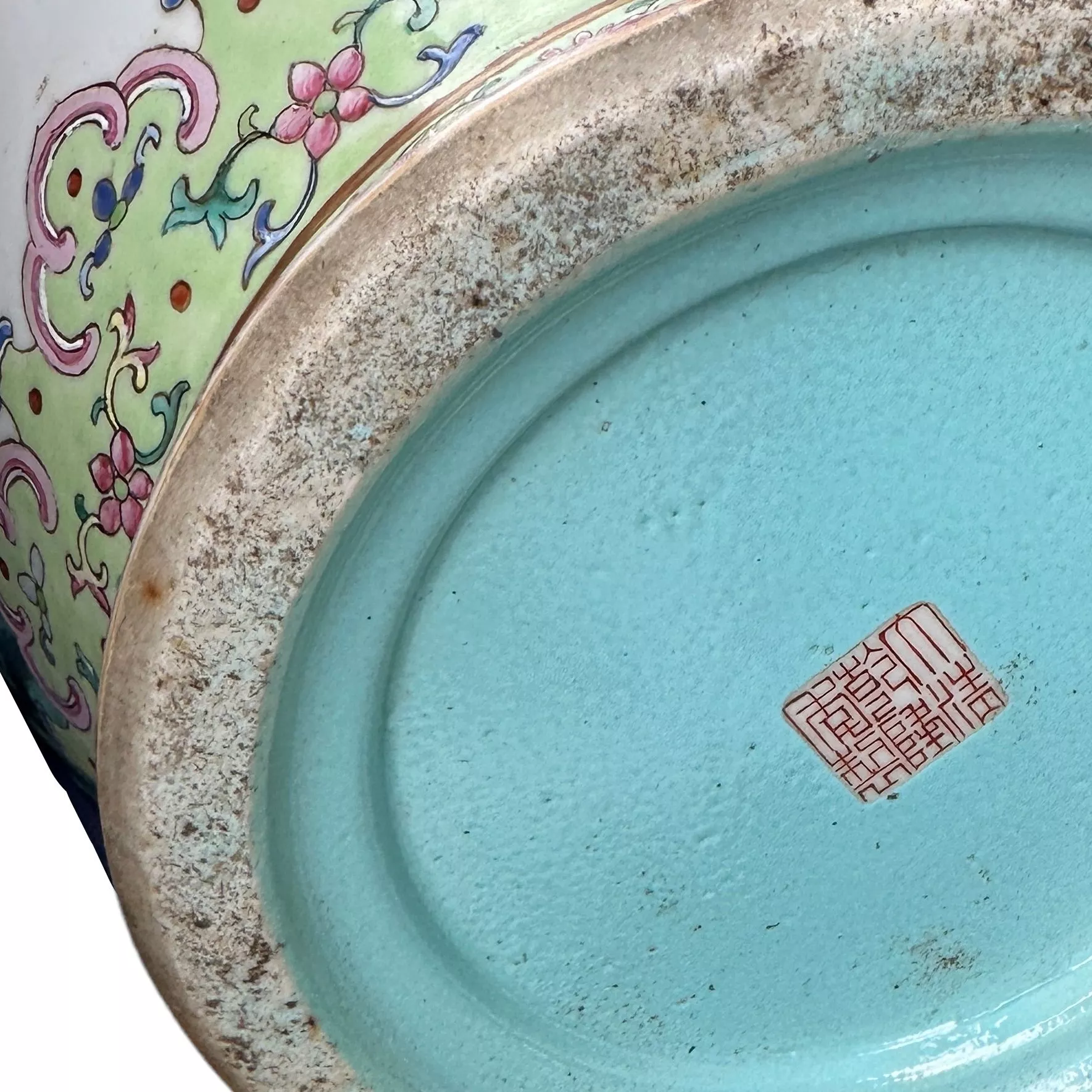
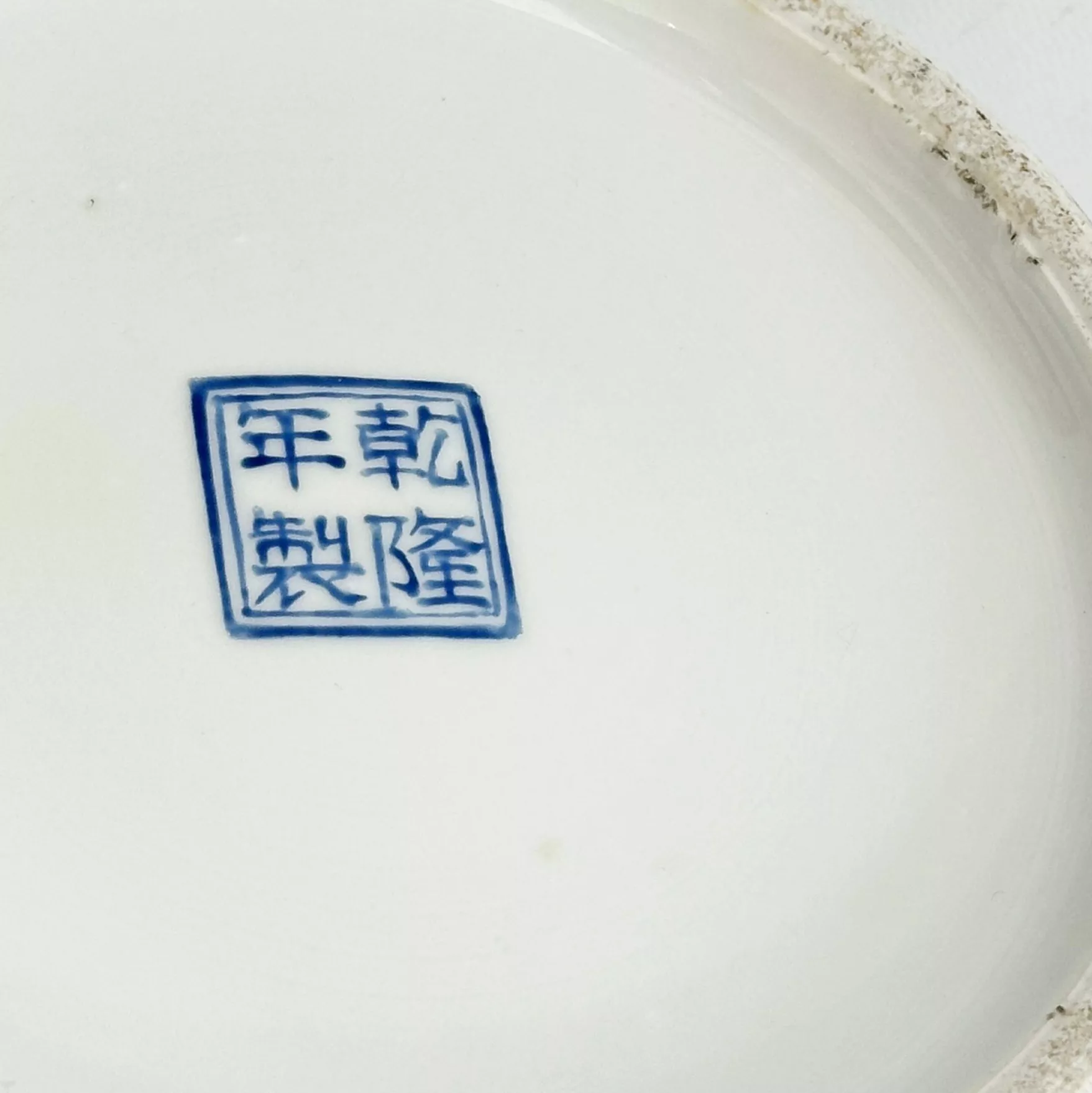
These marks, often engraved (Nanking productions, for example) or painted on the backs of the pieces, sought to imitate the signatures of the Ming and Qing dynasties, somewhat upsetting the market and misleading some buyers.
Craftsmen, eager to capitalize on this craze, apply quality labels, such as those from Jingdezhen, to give an air of authenticity.
The Minguo production, spanning from 1912 to 1949, is a perfect example. It blends traditional techniques with modern influences. Vases created during this period often display motifs inspired by past dynasties, but bear markings designed to appeal to today's collectors.
It is therefore crucial, for art lovers, to call on experts to authenticate all these pieces. The search for authenticity helps navigate this complex market, where apocryphal vases, while attractive, cannot match the value and charm of genuine treasures from the past.
Knowing the value of Chinese porcelain
If you happen to own one or more Chinese vases, don't hesitate to request a free appraisal using our form on our website.
A member of our team of experts and licensed auctioneers will contact you promptly to provide you with an estimate of the market value of your work, as well as ad hoc information about it.
If you are considering selling your vase, you will also be accompanied by our specialists in order to benefit from alternatives to sell it at the best possible price, taking into account market inclinations.
Estimate in less than 24h
The latest pieces of Chinese porcelain, appraised by our experts

Estimated 800 - 1200 €
Kangxi porcelain dish decorated with a dragon

Estimated 500 - 600 €
China, 20th, Two porcelain baluster vases with cobalt blue decoration.

Estimated 500 - 1.000 €
China, Kangxi reign (1662-1722). Two porcelain covered baluster pots with cobalt blue decoration.

Estimated 400 - 800
CHINA, 19th century, Glazed ceramic baluster vase decorated with Buddhist coral lion and Fô dog

Estimated 2.000 - 4.000
CHINA, 20th century Statuette in orange-pink coral, the goddess Guanyin holding the vase of lustral water

Estimated 80 - 120
CHINA or JAPAN, 19th century. Two porcelain bottle vases that can form pendants
Discover in the same theme

Value and rating of Japanese swords: katanas, wakizashi, tan...
Japanese swords are collector's items, highly prized by French buyers. If you don't know their value, have them appraised.
Learn more >

Rating and value of works, paintings by Thuong Lan Nguyen
Thuong Lan, a little-known Vietnamese artist, is nevertheless appreciated at auction. His works are very valuable. Estimated in less than 24h.
Learn more >

Rating and value of Chinese porcelain vases
Chinese porcelain vases are highly sought-after items at auction. They are prized by collectors.
Learn more >

Secure site, anonymity preserved

Auctioneer approved by the State

Free and certified estimates
Frequently asked questions
-
What are the most sought-after historical periods for Chinese porcelain vases?Vases from the Ming (1368–1644) and Qing (1644–1911) dynasties are particularly sought after by collectors. The Ming Dynasty represents the pinnacle of this art form with its iconic blue-and-white styles, while the Qing Dynasty introduced innovative styles such as the "Family Pink" and "Family Green." Yuan Dynasty (1271–1368) vases are also highly prized for their underglaze cobalt-blue painting, which marked a decisive turning point in the history of Chinese porcelain.
-
What is the price range for Chinese porcelain vases on the current market?The prices of Chinese porcelain vases vary considerably depending on their period and quality. They range from €30 to over €2,000,000 at auction. Ming vases can fetch up to 6,350,000 €, while those from the Qing dynasty can exceed 7,700,000 €. This wide range reflects the importance of authentication and expertise in determining a piece’s true value.
-
How can you authenticate Chinese porcelain and avoid counterfeits?Authenticating Chinese porcelain requires professional expertise, as many copies exist to artificially inflate the perceived value of the pieces. Auctie's offers a free appraisal conducted by state-certified auctioneers and experts, who examine the markings, manufacturing techniques, style, and period. These professionals possess in-depth knowledge of the various dynasties and techniques to accurately date and authenticate your piece.
-
How does the free appraisal of Chinese porcelain work at Auctie's?Auctie's free appraisal is non-binding and conducted by certified auctioneers. You can submit your porcelain for a detailed analysis, and you'll receive a response within 48 hours. The expert examines the item, assesses its authenticity, condition, period, and provenance to provide you with an accurate estimate of its current market value.
-
Is this a good time to sell Chinese porcelain?Yes, now is a good time to sell Chinese porcelain. These items are highly sought after by French, European, Chinese, and international collectors, and the art market shows strong potential for growth. Auction results, which have received significant media coverage, attest to sustained demand and record prices. Auctie's guides you from the appraisal to the final bid to help you achieve the best possible price.
