



The value of jades, China's imperial symbol

Key takeaways
- Chinese jade pieces sell for between €100 and €50,000 depending on the type, with sculptures and vases fetching up to €100,000.
- In 2013, a jade statuette sold for over €1.56 million at auction, far exceeding its initial estimate.
- Jade symbolizes cosmic harmony, purity, and spiritual protection in the millennia-old Chinese tradition.
If you own one or more Chinese jade objects, and would like to know its value, our state-approved experts and auctioneers will offer you their appraisal services.
Our specialists will work to carry out a free appraisal of your work, and will provide you with an accurate estimate of its value on the current market.
Then, should you wish to sell your work, we will direct you to the best possible arrangement to obtain the optimum price.
Rating and value of Chinese jades
Chinese jades are currently highly sought-after collectors' items. If you own one, it may be worth more than you think. On the art market, prices for these objects can be very high under the auctioneer's hammer.
They are particularly prized, and the price at which they sell on the art market ranges from €100 to €50,000, a fairly substantial range, but one that says a lot about the value that can be attributed to these objects.
In 2013, a jade statuette from China sold for €1.56 million, while it was estimated at over 100 times less.
Object type | Result |
|---|---|
Pendants and amulets | 100 - 10,000 € |
Bracelets | 200 - 20,000 € |
Earrings | 150 - 8,000 € |
Chokers | 300 - 30,000 € |
Rings | 200 - 15,000 |
Sculptures and figurines | 500 - 50,000 |
Vases and decorative objects | 1,000 - 100,000 |
Estimate in less than 24h
Chinese jades
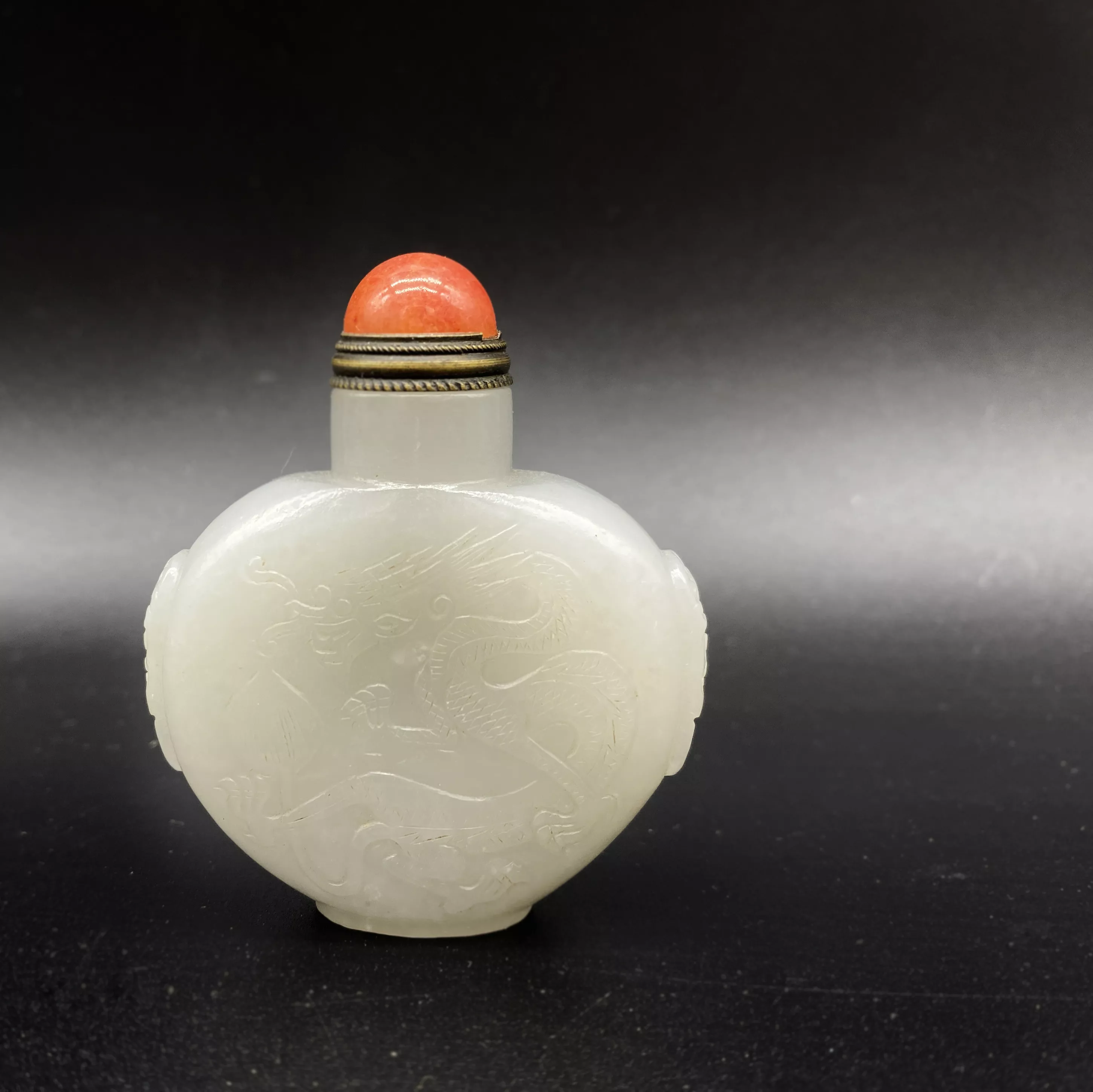
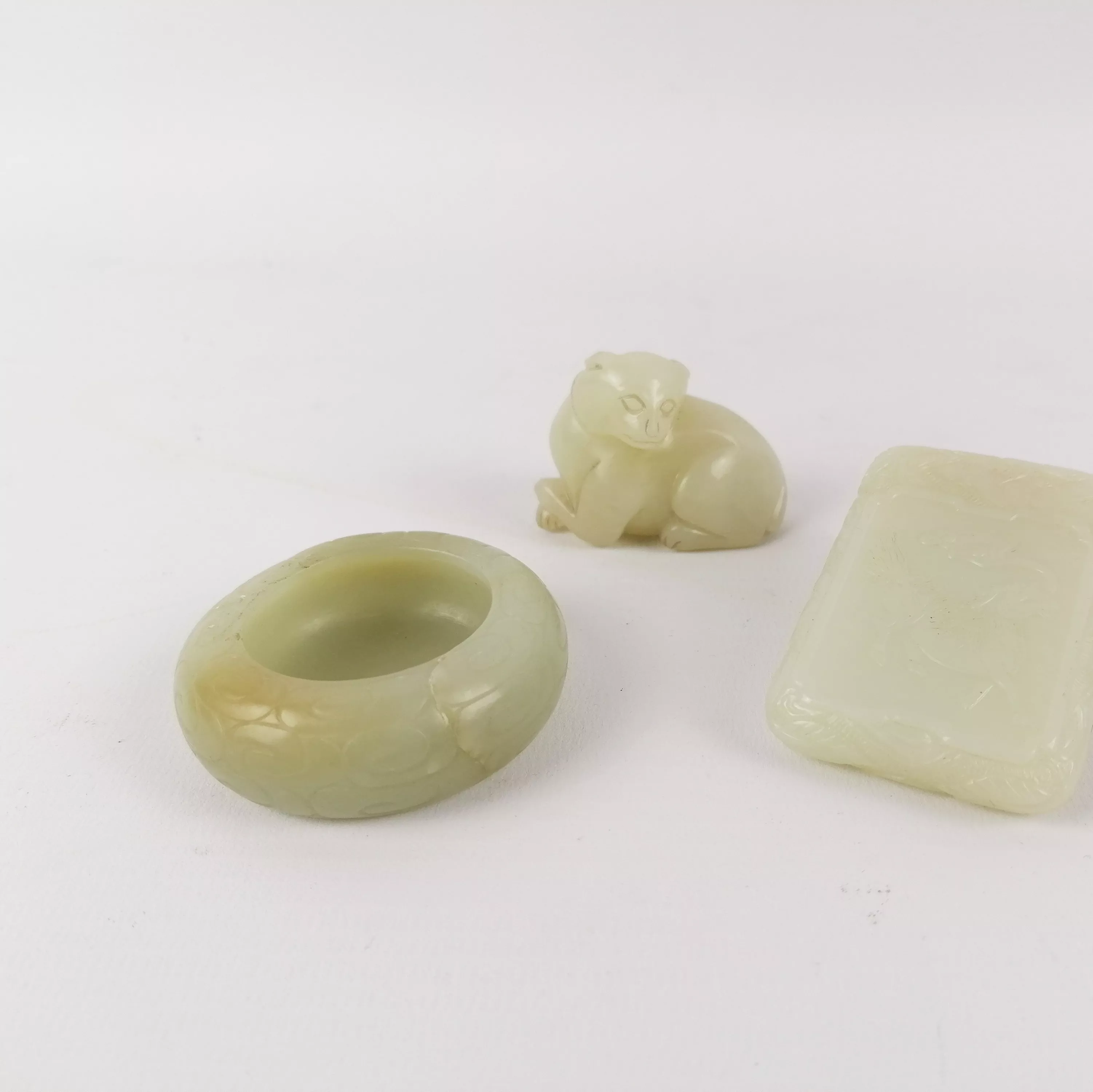
Chinese jades, at the heart of craftsmanship for millennia, are distinguished by a precision of cut and a symbolic richness that make them exceptional works of art.
Their surface, polished to an incomparable tactile softness, reflects a palette of nuances ranging from deep green to the translucent brilliance of milky whites, testifying to the quality of the stones and the craftsmanship of the artisans.
But it's not just their beauty that fascinates: the motifs, often engraved or carved in bas-relief, use a precise vocabulary borrowed from the natural world - dragons, clouds, lotus flowers - and from a cosmological imaginary rooted in Chinese thought. Each jade is part of a tradition where ornamentation becomes a talisman, where the material is charged with a palpable spirituality.
Whether bi discs or pendants, these objects display a subtle balance between robustness and delicacy, a paradox inherent to the stone itself, hard yet malleable in expert hands.
History and symbolism of jades from China
The symbolism of jades from China is rooted in a multi-millennial history in which the stone, both precious and spiritual, becomes a bridge between the earthly and the celestial.
From the earliest dynasties, jade has been perceived as a mirror of cosmic harmony: its hardness embodies permanence, while its translucence evokes the purity of the soul.
Offers to the gods, protective amulets, funerary ornaments, the uses of this stone are intertwined with rites and beliefs.
Under the Han, it was carved into bi and cong disks, symbolizing respectively heaven and earth, thus uniting opposites in a quest for universal balance.
Later, the Song and Ming dynasties refined this heritage, elevating jade to the status of supreme art, while its motifs - dragons, phoenixes, clouds - reinforced its role as a protective talisman.
In every age, this stone embodies the Chinese ideal of virtue and harmony, a philosophy sculpted into the material.
Focus on the bi disc from the Shanghai museum
The bi disc from the Han dynasty, preserved at the Shanghai museum, eloquently illustrates the perfection achieved by Chinese craftsmen in working jade, a material charged with strong symbolic and spiritual value.
This circle, translucent green enhanced by delicate white veins, seems almost alive as its polished surface captures and reflects light with a particular softness.
On its face, meticulous engraving reveals cloud patterns and stylized dragons, central figures in the Chinese imagination.
The dragons, symbols of power and transformation, intertwine harmoniously with the celestial clouds, evoking the eternal cycles of nature and the interconnection of universal forces.
The disc, with its perfect form, represents the celestial universe, while its central opening, stripped of all ornamentation, is often interpreted as a passage to the higher planes or immortality.
Through the subtle nuances of the stone and the harmony of the tracery, we perceive a quest for balance between spirituality and materiality, where each incision reflects both technical mastery and profound philosophical reflection.
If the bi was originally designed for ritual use - notably to accompany the deceased into the afterlife - it transcends its utilitarian function to become an artistic manifesto, embodying the ideals of harmony, perfection and wisdom peculiar to Chinese civilization.
Through this jade, the entire cosmological vision of the era is expressed, blending formal finesse and symbolic density.
Focus on the Chinese jade boat from the Peking Palace
This jade boat, a work from the Qing dynasty, asks precisely about the paradox of traditional craftsmanship confronted with timeless symbolism.
At first glance, one might be surprised at the fusion between such a classical form, an object carved from a material of natural hardness and beauty, and the profound meanings it conveys.
Why this choice of the purity of jade, associated with ancient dynasties, to represent the spiritual journey and the quest for balance?
This is where the work's interest lies: far from being merely an aesthetic transposition, this jade boat brings together millennia-old craftsmanship and a metaphor that rises far beyond the merely decorative.
Jade, with its rarity and almost mystical character, becomes here the medium par excellence to illustrate a passage between the tangible and spiritual worlds.
As with the classical arts, which sought a perfect balance between form and function, this work is not content with a representation of a boat as a simple navigational object.
It becomes the vehicle for an inner journey, a journey between the earthly and the ethereal.
The object carved in jade seems frozen in a continuous, unbroken line, a line that doesn't just describe a boat, but tells of a path, a passage, a perfect balance between man and the divine.
The refinement of the material and the quality of the sculpture give this work a simplicity that brings us back to the question of the relationship between the craftsman and tradition: how, through ancestral gestures, does the artist manage to transcend the centuries and deliver a universal, timeless vision?
This jade boat is a perfect illustration of this tension between past and future, the material and spiritual worlds.
Success of these objects on the auction market
The success of Chinese jade objects at auction is striking in its consistency and spectacular rise.
These pieces, witnesses to a centuries-old tradition, succeed in capturing the attention of both Asian and international audiences, fascinated by both their rarity and their symbolic value, in the image of vases, bronzes chinois ou des objets en porcelaine.
Far from being merely a passing fad, the jade market is becoming a stage where history mingles with contemporary demand, where the precious material crosses the centuries without losing its lustre.
One might ask what justifies such interest, and it seems that jade art, while drawing on deep roots, manages to embody a form of timelessness that few other art objects can claim.
The perfection of the sculptures, their technical refinement, as well as the mystical symbols they convey, make them coveted objects not only by collectors, but also by investors, who see in these pieces a value that goes beyond the merely aesthetic.
The symbolism of jade, its role in Chinese culture and its link with the spiritual, make it an art form both charged with meaning and history, transcending market trends.
In this context, each sale is a reminder of the central place these objects occupy in the world's heritage, offering collectors a unique opportunity to appropriate a piece of this continuity between past and present.
Recognizing an original Chinese jade
As these pieces have a certain success, they may not come from Chinese craftsmanship. For this reason, expertise including verification of any markings and a study of the materials is paramount.
Estimate in less than 24h
Knowing the value of a work
If you happen to own a Chinese jade object, don't hesitate to request a free appraisal using our form on our website.
A member of our team of experts and licensed auctioneers will contact you promptly to provide you with an estimate of the market value of your piece, as well as any relevant information about it.
If you're thinking of selling your work, our specialists will also help you find alternatives to sell it at the best possible price, taking into account market trends.
Discover in the same theme

Rating and value of works, paintings by Thuong Lan Nguyen
Thuong Lan, a little-known Vietnamese artist, is nevertheless appreciated at auction. His works are very valuable. Estimated in less than 24h.
Learn more >

Rating and value of Hue porcelain from Vietnam
Vietnamese porcelain is a highly valued collectible at auction. Estimates within 24 hours.
Learn more >

Rating and value of drawings and paintings by Iwasa Matabei
Iwasa Matabei was a Japanese artist from the early Edo period who produced numerous works that are highly prized and valuable.
Learn more >
Other Asian objects sold at auction

Estimated 3.000 - 5.000 €
Japanese armor. Japan, Meiji era.

Estimated 1000 - 2000 €
NGUYEN TUONG LAN (1906-1947) - Ink and gouache painting on silk depicting a temple.

Estimated 500 - 1000 €
CHINA, Ming Dynasty, 17th century - Cast-iron statuette depicting a Taoist figure

Estimated 500 - 600 €
China, 20th, Two porcelain baluster vases with cobalt blue decoration.

Estimated 500 - 1.000 €
China, Kangxi reign (1662-1722). Two porcelain covered baluster pots with cobalt blue decoration.

Secure site, anonymity preserved

Auctioneer approved by the State

Free and certified estimates
Frequently asked questions
-
What accounts for the wide range of prices for Chinese jade (from €100 to over one million euros)?The value of jade depends on several factors: the historical period (Han, Song, Ming, Qing), the type of object (sculpture, vase, pendant), the quality and color of the stone, the finesse of the carving, and the rarity of the piece. A small piece of jade in good condition can be worth a few hundred euros, while an exceptional antique sculpture or a museum-quality piece can fetch hundreds of thousands of euros.
-
How can you authenticate Chinese jade and verify that it is genuine?Authenticating jade requires specialized expertise, as there are many imitations on the market. Auctie's offers a free, no-obligation appraisal: our experts and certified auctioneers examine the piece, verify the materials, markings, and historical characteristics, and then provide you with an accurate appraisal within 48 hours.
-
When is the best time to sell Chinese jade?Now is an excellent time to sell Chinese jade: these items are consistently achieving spectacular results at auction, with growing demand both in Asia and internationally. Collectors and investors recognize the rarity and timeless value of these pieces, which is supporting market prices.
-
How does the jade appraisal process work at Auctie's?The appraisal is free and non-binding. Simply fill out a form on our website or contact us directly with photos and information about your jade. A certified expert or auctioneer will get back to you promptly to provide an accurate assessment of the current market value, along with expert advice.
-
What should I do after getting an appraisal of my Chinese jade?If you're looking to sell, Auctie's is with you every step of the way: we present you with the best sales options to help you achieve the best possible price, taking market trends into account. Our team of experts guides you through the process until the auction closes to ensure your sale goes as smoothly as possible.
