



Rating and value of Japanese porcelain: Imari and Satsuma...

Key takeaways
- Japanese porcelain, particularly Imari and Satsuma vases, sells for between €5 and €500,000 depending on the type and age.
- Japanese vases, which are particularly sought after by collectors, have seen growing demand and a steady increase in market value since the 20th century.
- The Kyushu region—particularly Arita in the 16th century—is the historic center of Japanese porcelain production, characterized by glossy glazes and cobalt blue and Bengara red patterns.
If you own one or more porcelain objects, or think you do, and would like to know its value, our state-approved experts and auctioneers will offer you their appraisal services.
Our specialists will carry out a free appraisal of your piece, and provide you with a precise estimate of its value on the current market.
Then, should you wish to sell your piece, we'll direct you to the best possible arrangement to obtain the optimum price.
Rating and value of Japanese porcelain
Japanese porcelain is known and appreciated the world over. Japan was one of the first countries to produce it. Today, the price of certain pieces continues to rise under auctioneers' gavels.
Sculpted porcelain groups and vases with painted enamels are particularly prized, especially by Japanese buyers, and the price at which they sell on the art market ranges from €5 to €500,000, a considerable delta but one that speaks volumes about the value that can be attributed to porcelains from Japan.
In 2012, a Japanese silver vase with a low body and chased decoration sold for €40,000 while it was estimated at between €4,500 and €5,000.
Ranging in value from simple porcelain to the most prestigious
Type of Japanese porcelain object | Result |
|---|---|
Tea/coffee service and plates | From €5 to €127,000 |
Vase | From €5 to €500,000 |
Sculpture/sculpted group | From 5 to 90 000€ |
Other object (lamp/carafe) | From 10 to 150 000€ |
Estimate in less than 24h
Style and technique of Japanese porcelain
Japanese porcelain takes shape during the Jomon period, before 300 BC, and archaeologists consider this period to be one of the oldest in Japan.
From the earliest traces of ceramic production, porcelain, as a specific type of ceramic, gradually stands out.
Japanese craftsmen, influenced by their Chinese counterparts, begin to master the art of porcelain manufacture, refining techniques over the centuries.
However, it's really from the Tang period onwards that porcelain achieves ever greater refinement, considerably influencing Japanese production.
From this point onwards, porcelain became one of the materials most prized by the Japanese aristocracy, not least for its qualities of finesse and transparency.
By combining the skills inherited from Chinese ceramists with local specificities, Japanese craftsmen introduced innovations that would make porcelain an art in its own right, so appreciated for its elegant forms and subtle decorations.
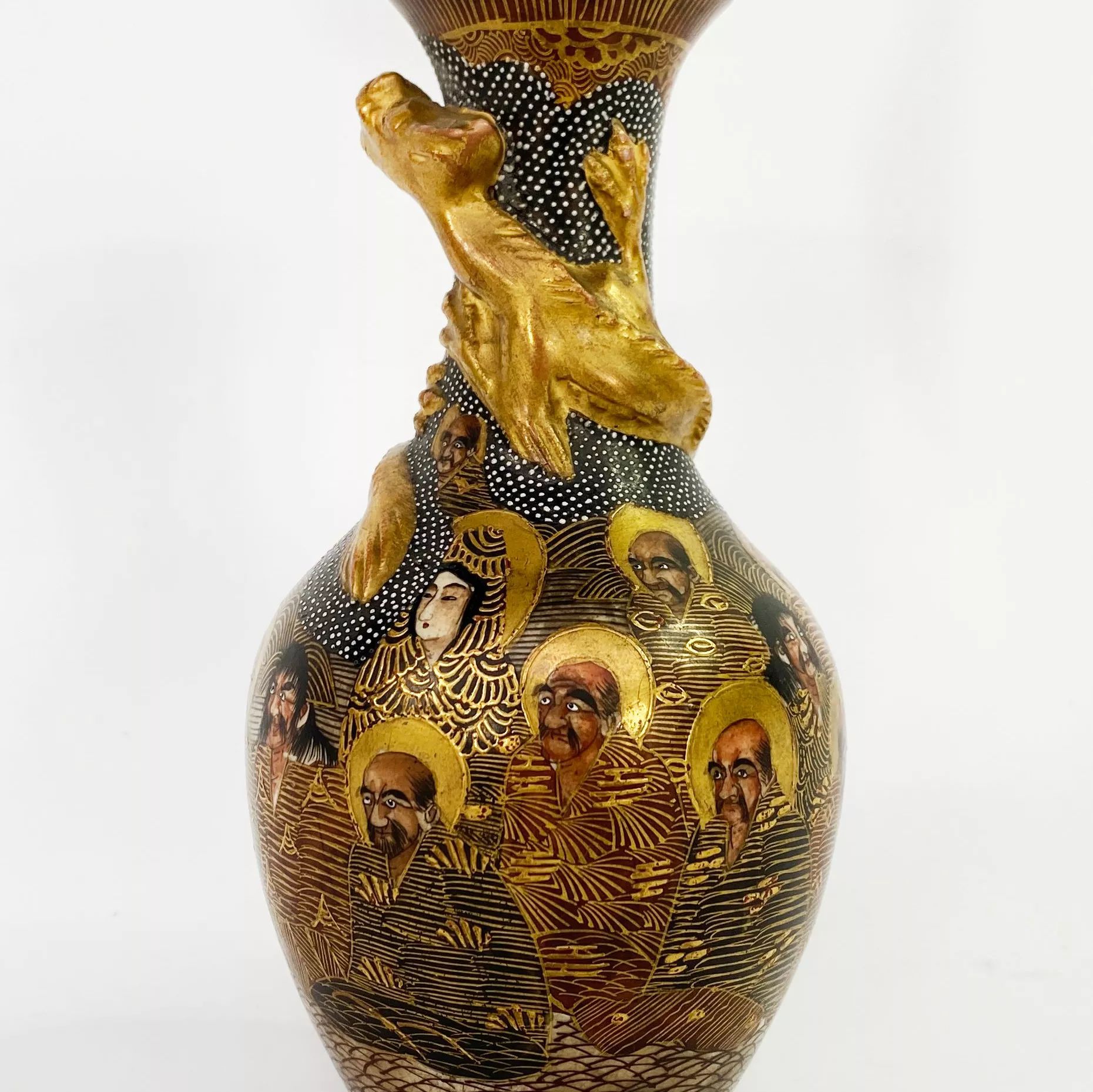
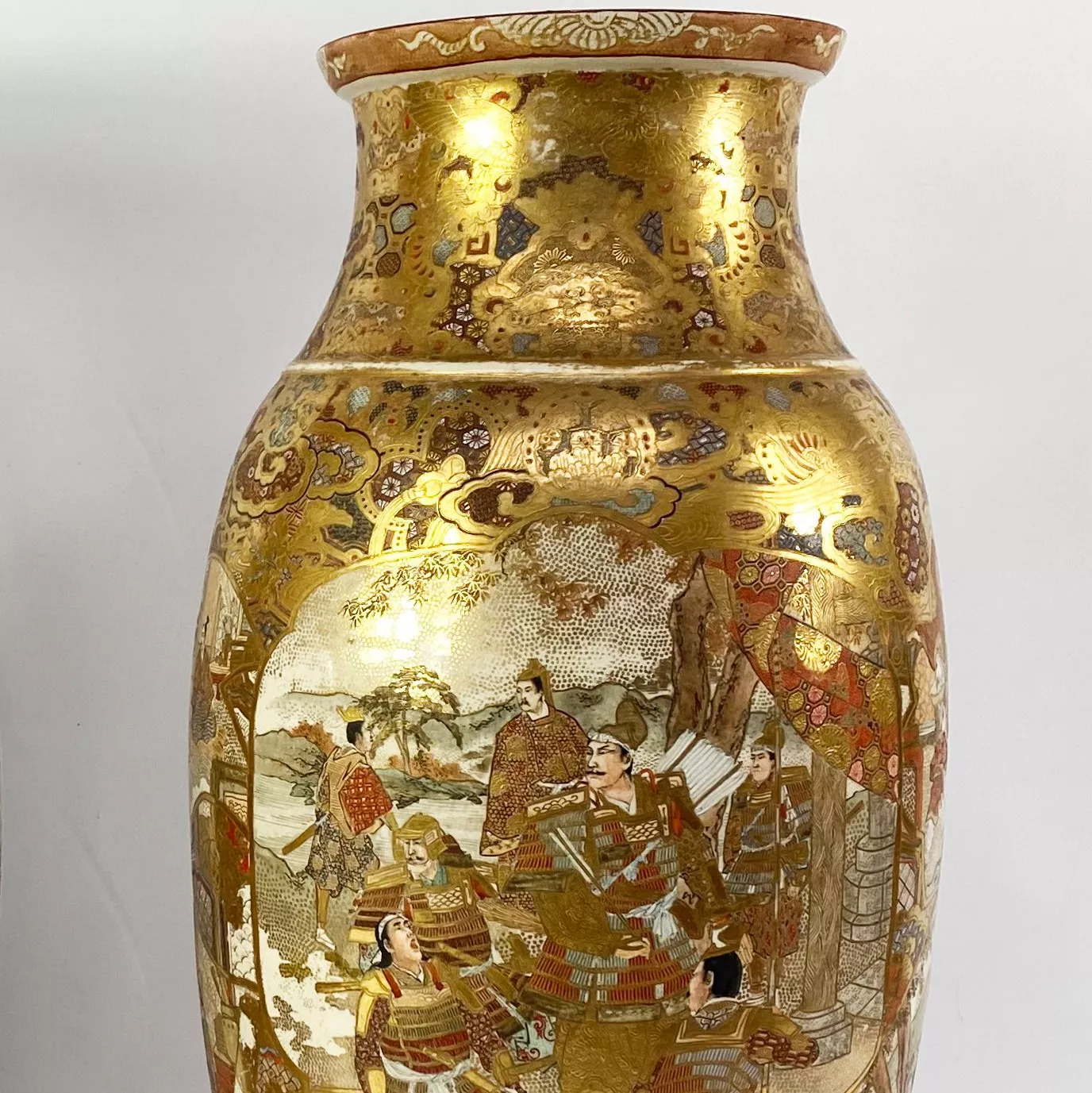
Kyushu, neuralgic center of Japanese porcelain
Kyushu, neuralgic center of Japanese porcelain, is a place where history and craftsmanship come together to give birth to one of the world's most admired ceramics.
Archeological excavations reveal that ceramic production in Japan dates back to the Jomon period, before 300 BC.C.,
This rivalry even led to the so-called "Ceramic War", a war between 1592 and 1598 for the conquest of China, during which many Korean craftsmen settled in Japan.
It was on the island of Kyushu, in the north, that they discovered mineral deposits enabling the manufacture of porcelain. Production then began in Arita, where porcelain, already dazzlingly white thanks to kaolin, began to see the light of day.
The export of this ceramic gradually made its way to Europe, thanks in particular to the Bengara glaze, a brilliant red that seduced the European market.
The Meissen factory in Germany and the Sèvres in France, created in the 18th century, were inspired by these porcelains, and the motifs were then adapted to the tastes of the European aristocracy, attracted more by the beauty of the forms than by their symbolism.
This gave rise to the Imari style, which became emblematic of Japanese porcelain. At the same time, other styles, such as Kakiemon and brocade d'or, less well known but equally refined, enriched the panorama of Japanese ceramics.
In the 16th century, on the same island, the Satsuma family established its own production, and although objects from this manufacture do not always retain the original ivory, they are now easily recognizable and mark another facet of the art of Japanese porcelain.
Focus on the Imari vase
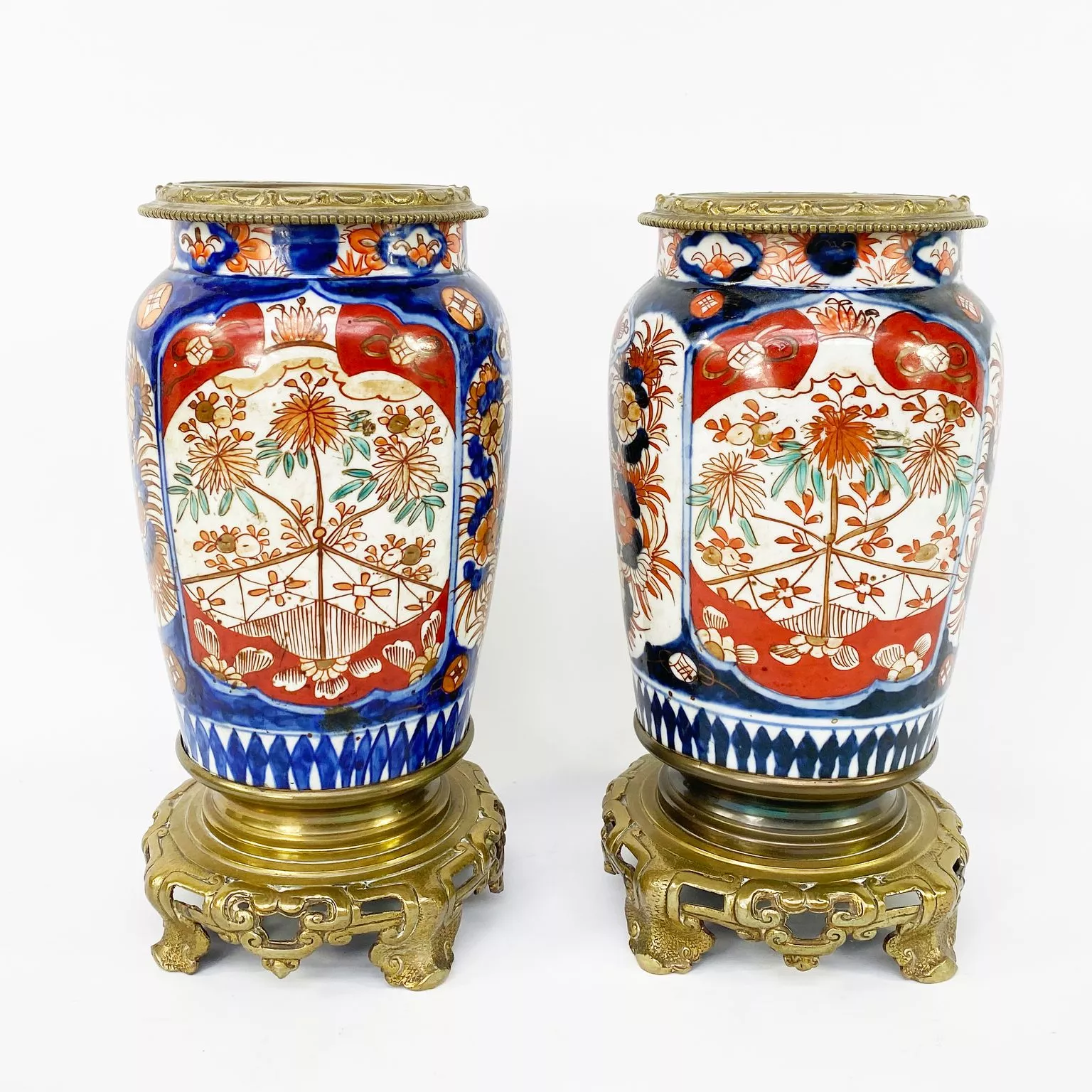
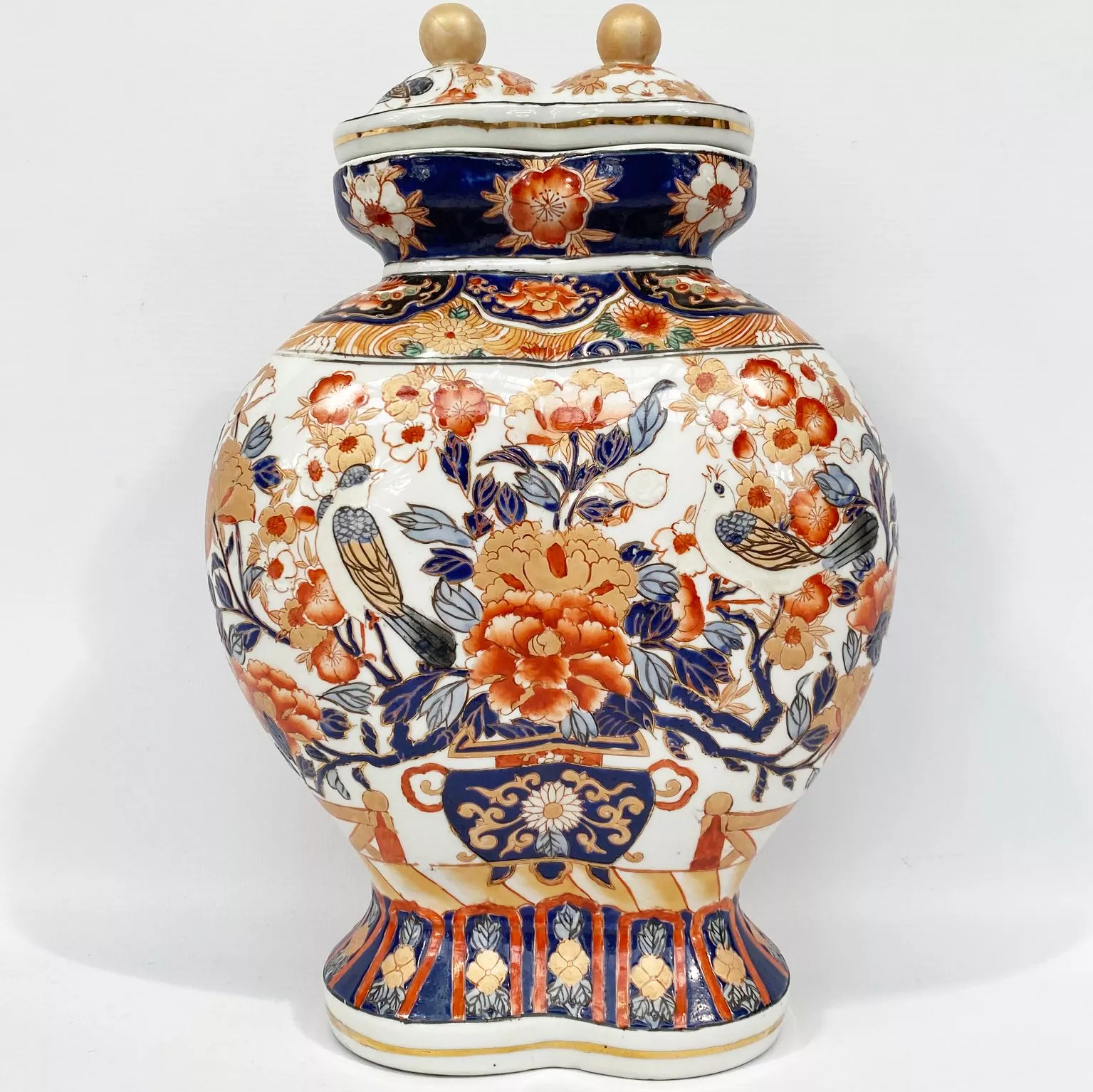
The Japanese Imari vase, from the Arita region, perfectly illustrates the evolution of Japanese ceramics over the centuries.
This vase, characterized by its brilliant glaze and sumptuous motifs, echoes the influences of Japanese porcelain exports to Europe in the 18th century.
Bright, vivid colors, mainly cobalt blue and Bengara red, dominate the decoration. The background is decorated with stylized landscapes, featuring flowers, birds and geometric elements, typical of the Imari style.
This motif, designed to appeal to the European aristocracy, sometimes departs from traditional Japanese symbolism, favoring aesthetic research above all else.
The vase features fluid, elegant forms, with a delicately flared neck and rounded base, recalling the harmony of Japanese objets d'art.
The rich decoration, often wrapped around the vase, harks back to a time when porcelain was not just a utilitarian object but also a work of art that reflected the refined tastes of the elite.
If the Imari style is now a symbol of Japanese ceramic art, this vase also embodies the adaptation of Japanese culture to the expectations of an international market, without ever losing its touch of elegance typical of Japanese craftsmanship.
Focus on the Satsuma vase
The Satsuma vase, which originated in the Kyushu workshops in the 16th century, surprises by its ability to combine age-old tradition with a unique aesthetic requirement.
How, in a context where porcelain is evolving rapidly, can we explain the persistent use of ivory enamel and gilded decoration, techniques derived from ancient Chinese and Korean know-how?
Just as etching was reborn in the 1860s with artists such as Manet and Whistler, the Satsuma craftsmen sought to revive a technique they had mastered perfectly, while sublimating it with a distinctly Japanese style.
These vases, with their mythological motifs and representations of nature, stand in contrast to a more pragmatic modernity, rooted in the quest for simplicity.
In this production, the meticulous detail and use of gold recall the engravings of the masters of Antiquity, but in a way reinterpreted by medieval Japan.
The objects of this period, far from being merely decorative, were thought to symbolize the refinement and nobility of the Japanese ruling classes, while at the same time being part of a globalized cultural exchange, following the example of ceramics exported to Europe.
In the final analysis, these vases are much more than utilitarian objects: they bear witness to an era when craftsmanship and nobility met in a refined aesthetic, blending tradition and innovation.
The price of Japanese porcelain
The price of Japanese vases on the art market, like many traditional objets d'art, has been modulated by a series of striking factors, to be differentiated from Chinese porcelain vases.
Early in the 19th century, pieces produced in renowned workshops such as Satsuma or Imari enjoyed a certain pre-eminence, due in particular to their fine workmanship and rich, symbolic decorations.
However, this value has continued to grow in the 20th century, driven by several dynamics. While the state of preservation remains an essential criterion, it is often the age of the piece and the quality of its provenance that will determine its place in the market.
Vases in particular, linked to tea rituals or imperial families, are sought after by demanding collectors, particularly at auctions.
The importation of Japanese ceramics to Europe in the 19th century also helped forge their reputation, giving rise to a market where Japanese bidders remain the main players today, although international buyers have taken an increasing share.
These pieces, whose brilliance and rarity are signs of distinction, sometimes reach staggering sums.
Thus, today, the market for Japanese vases is distinguished not only by its stability, but by a steady increase in demand, fueled by growing interest in Japanese culture and its exceptional productions.
Recognizing a Japanese porcelain piece
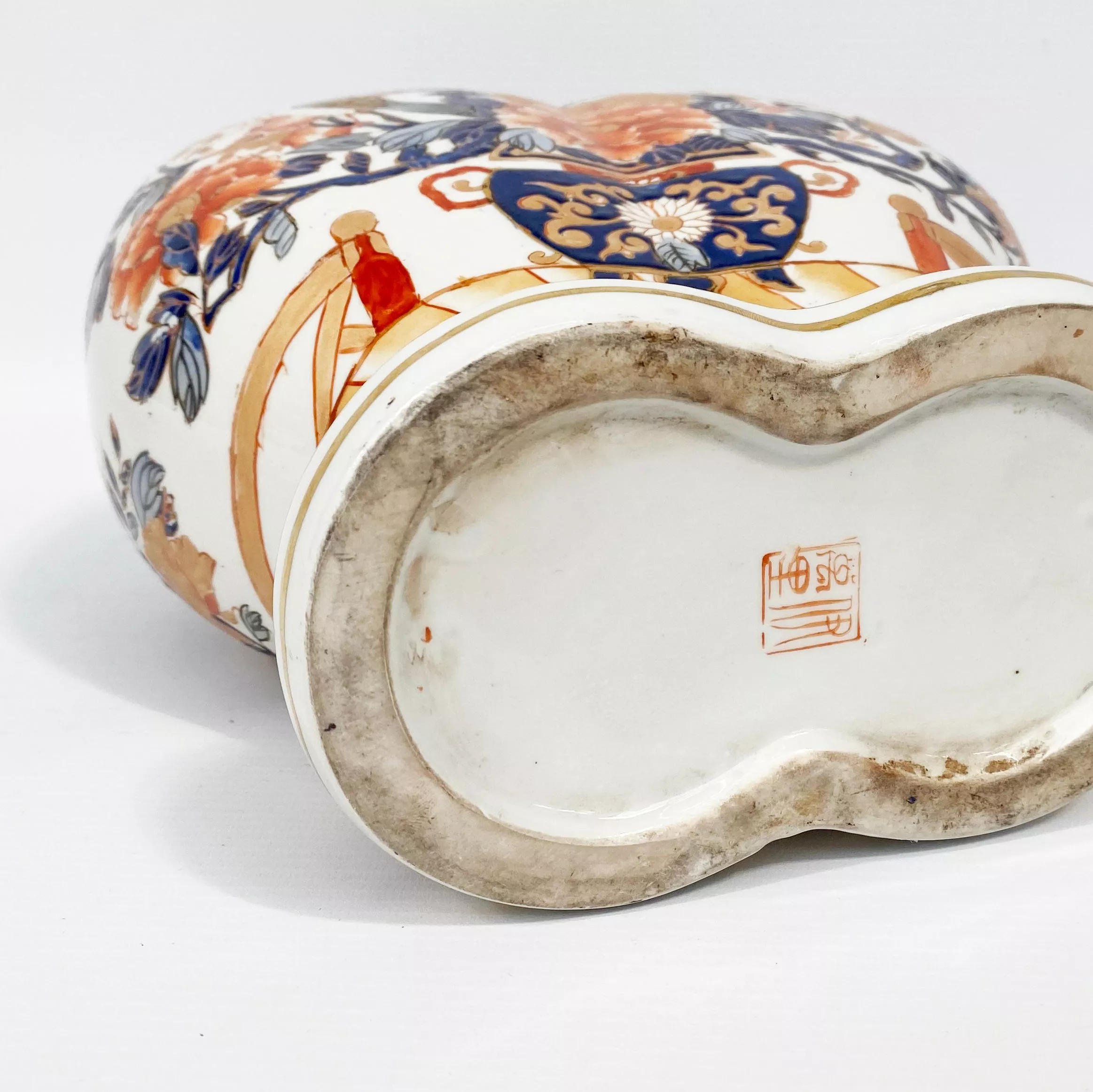
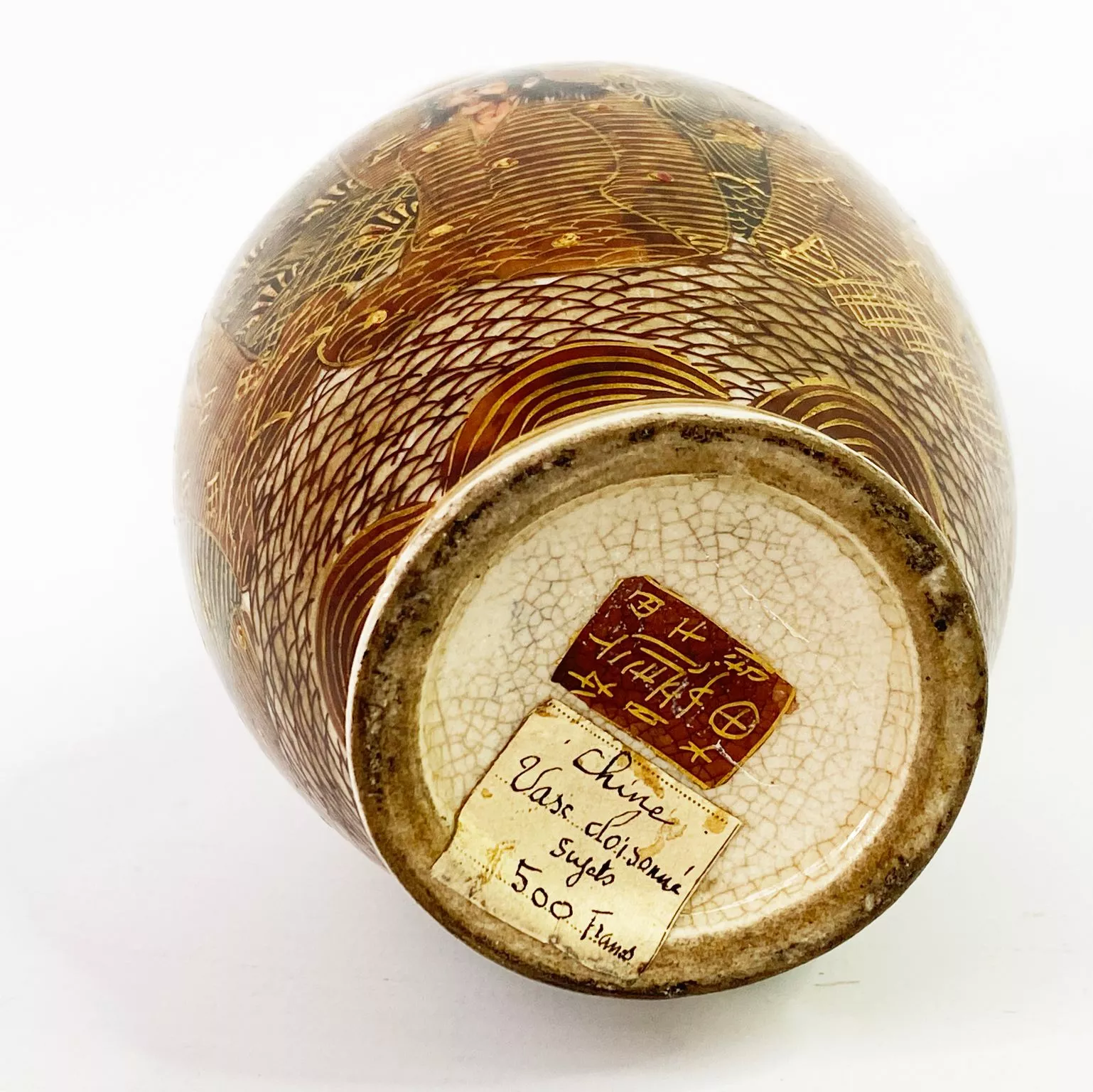
Porcelain pieces from Japan can have very different signatures and hallmarks. That's why it's important to have your piece appraised. Here are two examples:
Knowing the value of a work
If you happen to own a piece of Japanese porcelain, or think you might, don't hesitate to request a free appraisal using our form on our website.
A member of our team of experts and licensed auctioneers will contact you promptly to provide you with an estimate of the market value of your work, not forgetting to send you ad hoc information about it.
If you are considering selling your work, you will also be accompanied by our specialists in order to benefit from alternatives for selling it at the best possible price, taking into account market inclinations.
Estimate in less than 24h
Other porcelain items sold at auction

Estimated 80 - 120
CHINA or JAPAN, 19th century. Two porcelain bottle vases that can form pendants

Estimated 500 - 1.000
JAPAN, probably Arita, 19th / 20th century (?) Pair of porcelain baluster vases decorated in cobalt blue

Estimated 2.000 - 4.000
JAPAN Japanese armor: a twelve-strip iron kabuto

Estimated 3.000 - 5.000
JAPAN Japanese armor: eight-lamellar iron kabuto

Estimated 500 - 1.000
JAPAN, Edo period, 17th/18th century. Kawari-kabuto, featuring fukigaeshi, mabizashi, shikoro

Estimated 30 - 50
JAPAN, 19th century, Bronze vase with long neck resting on a flared foot
Discover in the same theme

Get a free estimate for your Chinese, Asian and imperial dre...
Chinese dresses are unique and fascinating pieces of art. Having them appraised by an impartial expert is essential.
Learn more >

Rating and value of Hue porcelain from Vietnam
Vietnamese porcelain is a highly valued collectible at auction. Estimates within 24 hours.
Learn more >

Market Value and Pricing of Coral Jewelry and Chinese Corals
Corals are precious collectors' items that can be highly valued at auction. 100% free and certified estimate!
Learn more >

Secure site, anonymity preserved

Auctioneer approved by the State

Free and certified estimates
Frequently asked questions
-
What is the Imari style, and where does it come from?The Imari style is an iconic style of Japanese porcelain that originated in the Arita region on the island of Kyushu. It is characterized by vivid, vibrant colors—primarily cobalt blue and Bengara red—combined with floral motifs, birds, and geometric elements. This style developed in the 18th century in response to demand from European markets, combining the excellence of Japanese craftsmanship with an aesthetic tailored to the tastes of the Western aristocracy.
-
What is the price range for Japanese Imari and Satsuma porcelain?Japanese porcelain varies widely in price depending on its type and quality. Vases can range from €5 to €500,000, while tea or coffee sets range from €5 to €127,000. Sculptures and sculptural groups range from €5 to €90,000. This wide range reflects the significant differences in age, rarity, condition, and provenance of each piece.
-
How can you authenticate Japanese porcelain and determine its value?To authenticate a piece of Japanese porcelain and determine its exact value, we recommend requesting a free appraisal from Auctie's via our online form. A certified expert or auctioneer will examine your piece, verify its signatures and distinctive marks, and provide you with a detailed estimate of its market value within 48 hours, with no obligation on your part.
-
Is this a good time to sell Japanese Imari or Satsuma porcelain?Yes, this is currently a good time to sell Japanese porcelain. The market is characterized by stability and a steady increase in demand, fueled by growing interest in Japanese culture and its exceptional artistic creations. Japanese bidders remain the primary players, while international buyers are showing a growing interest in these works of art.
-
How does the process of selling Japanese porcelain work at Auctie's?At Auctie's, the sales process begins with a free, no-obligation appraisal of your item by an expert or certified auctioneer. After receiving the appraisal, our specialists will guide you through the process, offering the best options for selling your piece based on current market trends, so you can achieve the best possible price at auction.
