



Rating and value of works in Sèvres porcelain: vases, services, cookies...

Key takeaways
- Sèvres porcelain, founded by Louis XV in 1740, has become a global benchmark thanks to its royal privilege for gilding and exclusive colors such as Sèvres blue.
- Prices for individual pieces vary considerably, ranging from €10 to €1,016,000 depending on the type, with a record set in 2022 for a sculpted nightlight that exceeded its initial estimate of €80,000–120,000.
- Values by category: tea sets up to €350,000, vases up to €400,000, biscuit porcelain sculptures up to €489,000, and miscellaneous objects up to €1,016,000.
If you own one or more items from the Manufacture Royale de Sèvres, or after, and would like to know its value, our state-approved experts and auctioneers will offer you their appraisal services. Our specialists will carry out a free appraisal of your piece, and provide you with a precise estimate of its value on today's market. Thereafter, if you wish to sell your work, we will guide you towards the best possible arrangement to obtain the optimum price.
Rating and value of Sèvres porcelain
Sèvres porcelain is known and appreciated throughout the world. Founded by Louis XV, it became the benchmark for French porcelain. Today, the price of certain pieces continues to rise under the auctioneer's hammer. Sculpted porcelain groups and pieces with Sèvres blue enamels are particularly prized, especially by French buyers, and the price at which they sell on the art market ranges from €10 to €1,016,000, a considerable delta but one that speaks volumes about the value that can be attributed to Sèvres porcelain. In 2022, a Sèvres porcelain night-light (or incense burner) sculpted in cookie on the top and with painted enamels on the rest of the object sold for €1,016,000, while it was estimated at between €80,000 and €120,000, an all-time record for the Sèvres manufactory.
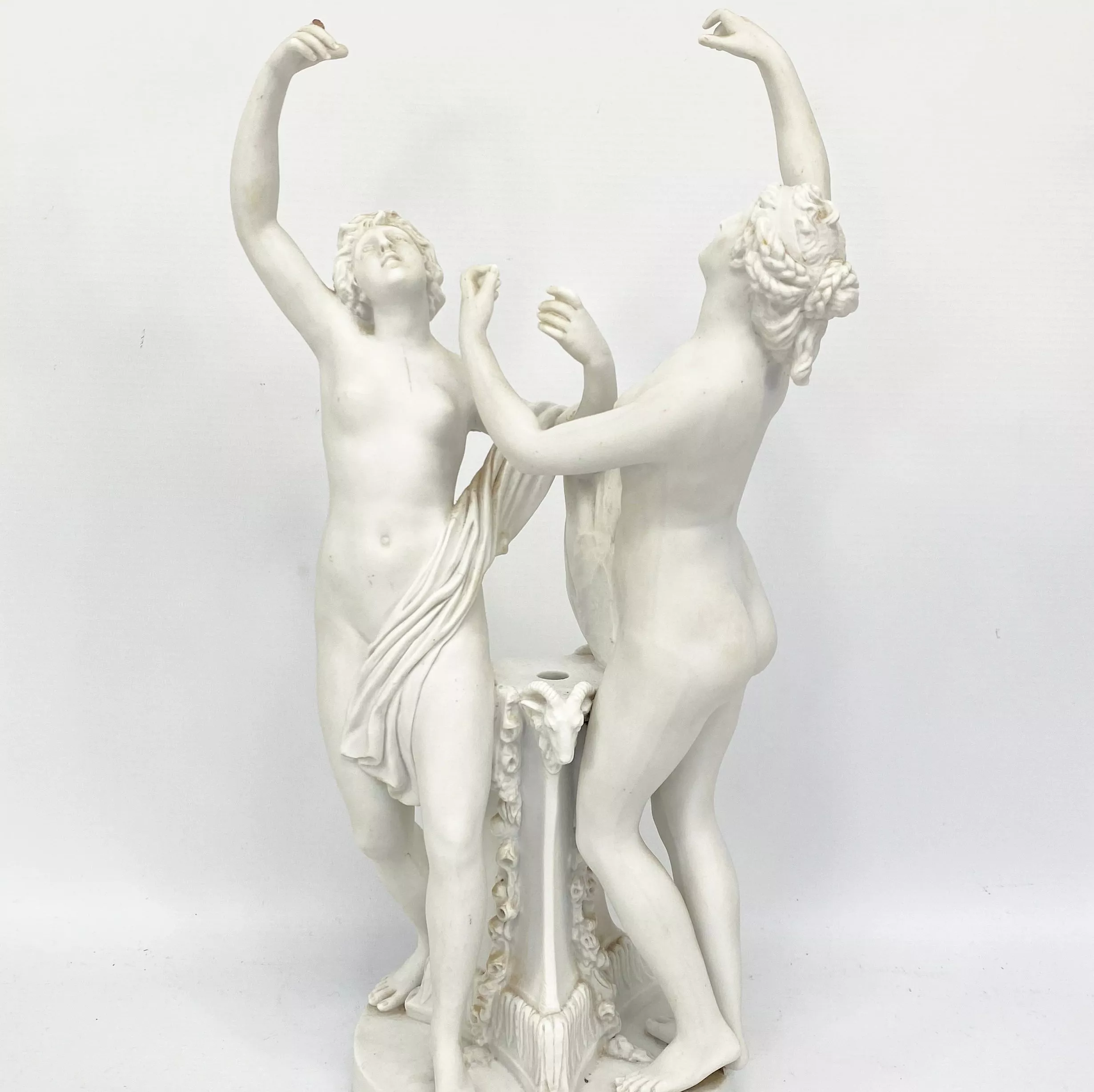
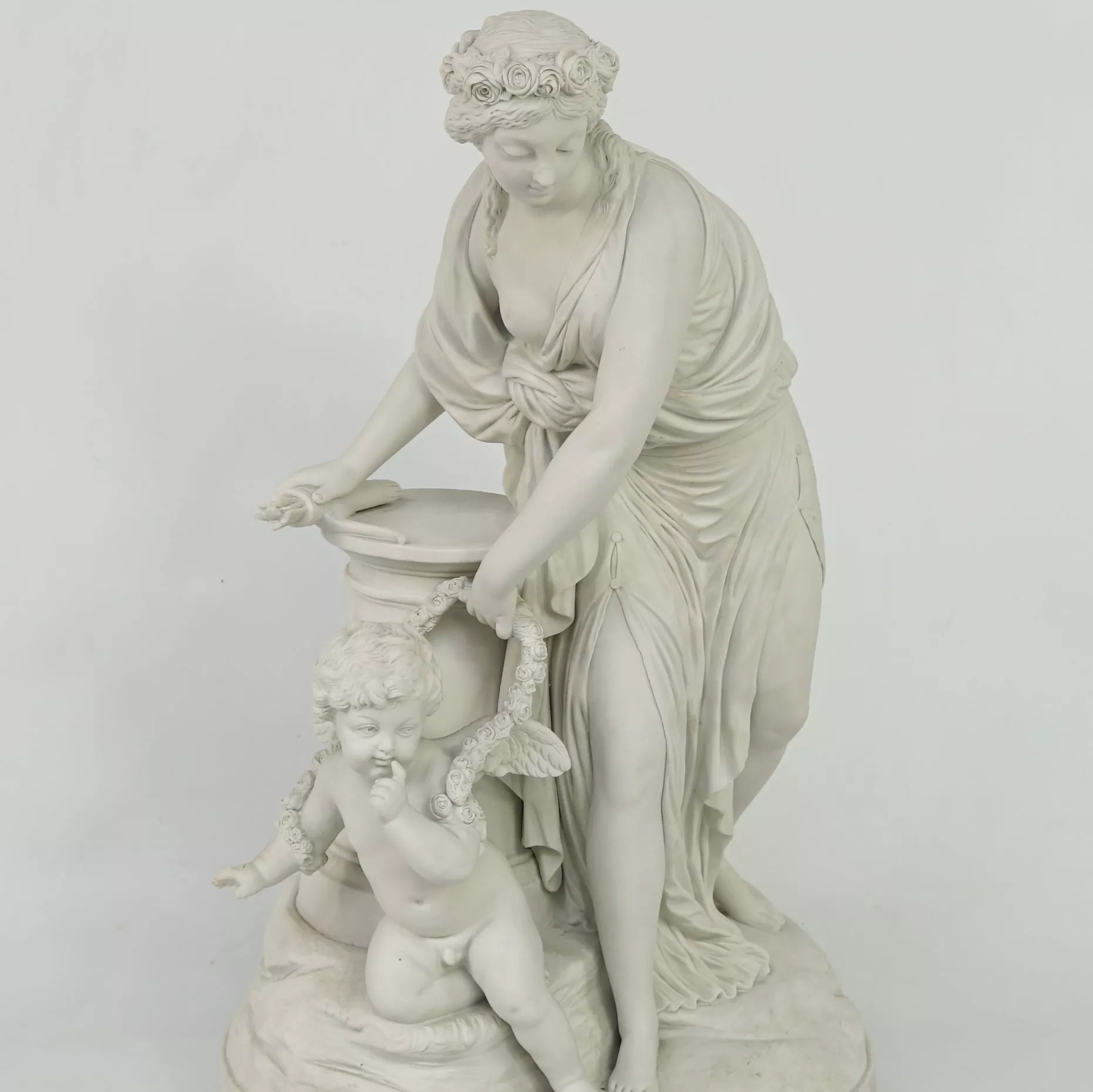
Order of value from a simple porcelain to the most prestigious
Type of Sèvres porcelain object | Result |
|---|---|
Tea/coffee service and plates | From €10 to €350,000 |
Vase | From €10 to €400,000 |
Bisque carved sculpture/group | From €20 to €489,000 |
Other object (nightlight/carafe) | From €10 to €1,016,000 |
Estimate in less than 24h
Style and technique of Sèvres porcelain
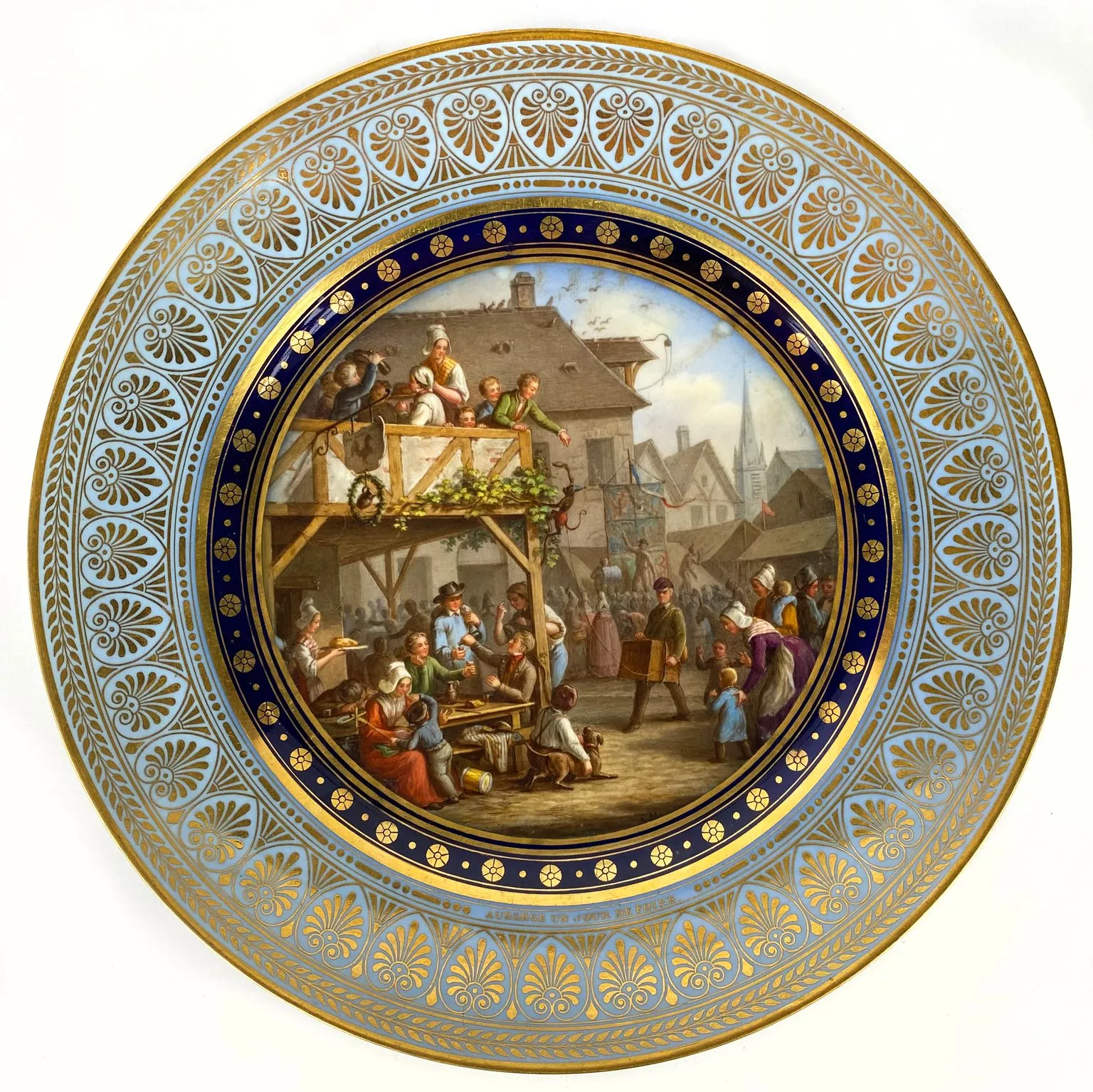
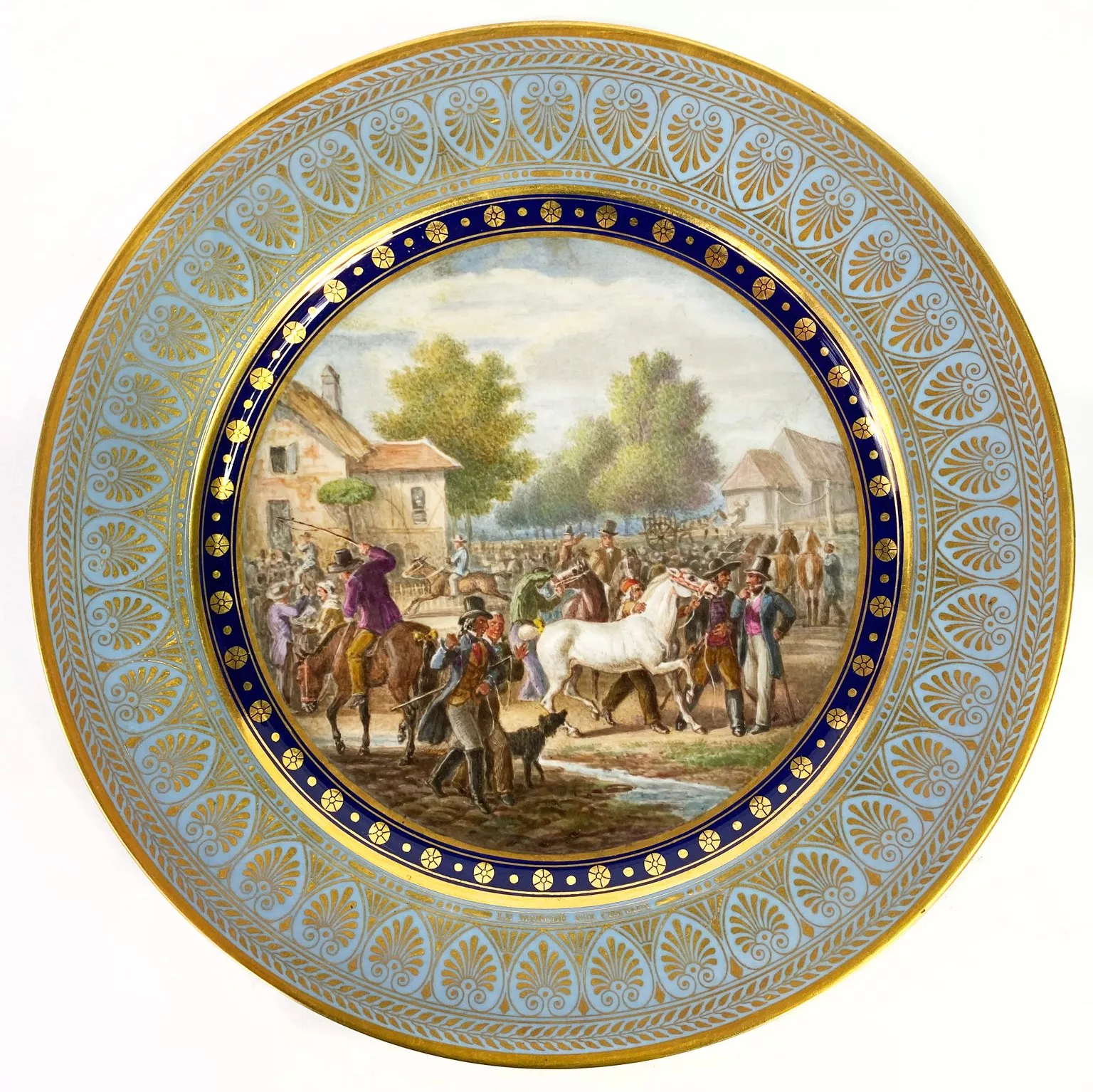
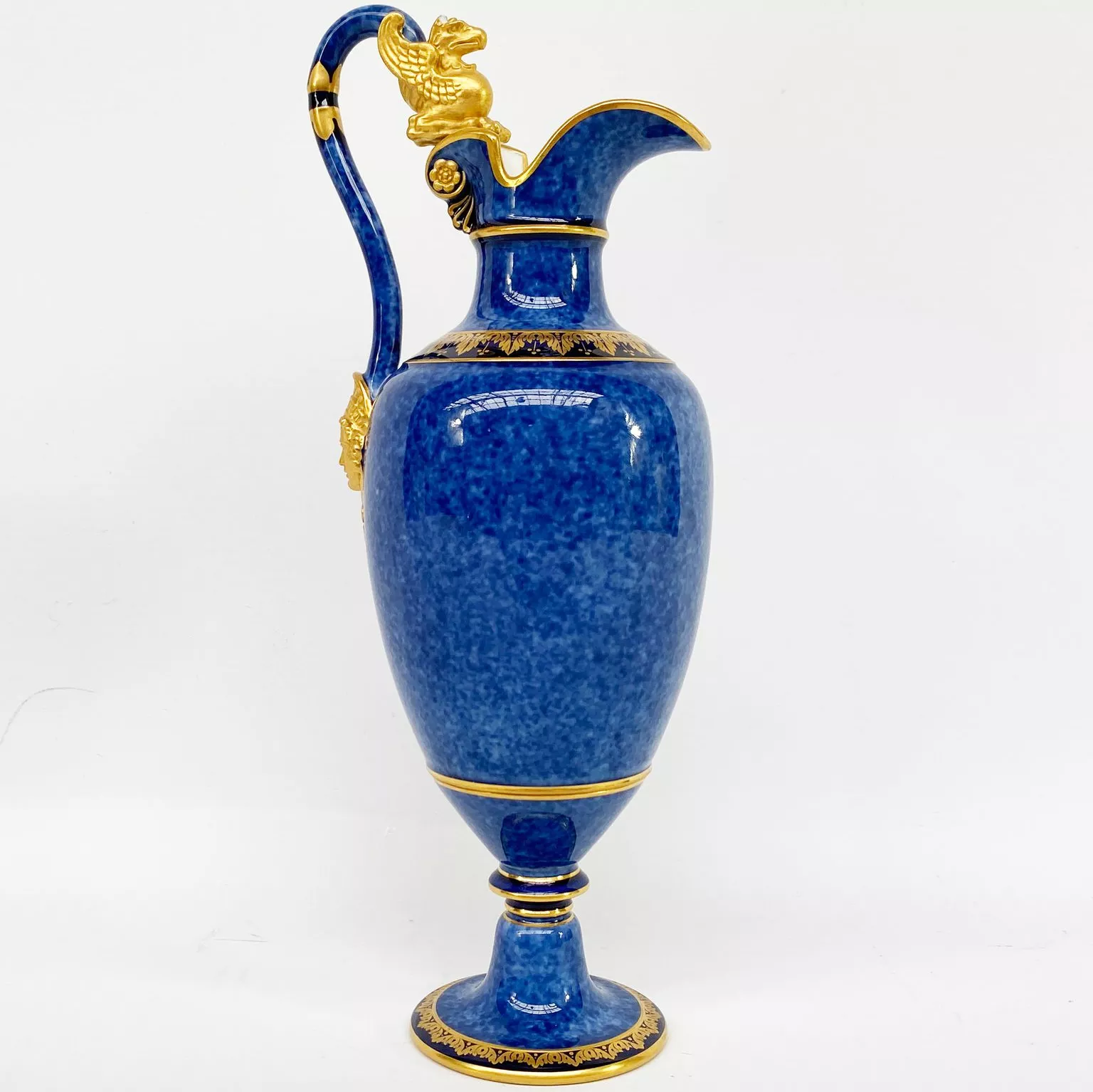
Sèvres porcelain was protected by the state at an early stage and had royal privileges, notably that of gilding, which was granted only to this manufacture. It also created its own colors for the enamels it produced, notably Sèvres blue, which is similar to Majorelle blue today, and Pompadour pink, created especially for the Marquise. A look back at the history of an extraordinary manufactory.
The Manufacture de Sèvres, by the King and thanks to the Marquise
The history of the Royal Manufactory of Sèvres began in 1740 thanks to Louis XV, at the instigation of the Marquise de Pompadour, then his mistress. The aim was to compete with the Meissen and Chantilly manufactures, founded by the Duc de Bourbon some time earlier, who were developing new chemical formulas to gain exclusivity over French porcelain. It is called the Manufacture de Sèvres because it was transferred 16 years after its creation to the town of Sèvres, where it still stands.
Louis XV bought all the shares in the manufactory when it was transferred to Sèvres. It became part of the Crown domain three years later.
The buildings at Sèvres are totally independent and enable the production of raw materials, extracted upstream where the kaolin deposits are found, right through to the gilding of the pieces.
In France, the Count of Branca-Laugarais himself takes credit for the discovery of French kaolin. Following the discovery of kaolin deposits in Saxony, French nobles, aware of the profit to be made, also sought out this precious material. Even today, doubts remain as to how the manufactory managed to obtain the kaolin that enabled it to make the transition from vitreous to hard porcelain.
.
The development of hard porcelain at Sèvres
The Chantilly manufactory works with soft porcelain. Originally, this was also the case for Sèvres porcelain, which managed to poach ceramist Louis-François Ier Gravant from the Chantilly manufactory and pass on the manufacturing secret. However, Germany already knew how to produce hard porcelain, and the King's ministers were worried. Sèvres bought pieces from the Frankenthal factory to understand the manufacturing process. Jacques-René Boileau, the director at the time, succeeded in obtaining the secret of the chemical formula for hard porcelain from the Hanong family, ceramists in Strasbourg, by means of a private deed. However, the secret was useless, as the factory had not yet discovered the kaolin deposits near Limoges. The contract was terminated and the Strasbourg factory sold.
The Kelsterbach factory was nevertheless willing to provide Sèvres with a new formula. Trials were carried out there, but kaolin was still in short supply, and it wasn't until 1765 that deposits were discovered near Limoges.
The manufacture of Sèvres porcelain was perfected around 1800, and it was thanks to the Emperor that marketing outside France began. Sèvres blue is already characteristic of the manufacture, obtained by incorporating cobalt oxide into the paste.
Estimate in less than 24h
The value of Sèvres porcelain
Sèvres porcelain is highly prized at auction. It sells for more or less depending on the state of preservation, the age of the piece and the artist who may sometimes have signed it. For example, pieces made by François-Xavier Lalanne, an artist who worked for the Sèvres manufactory, are highly rated at auction.
Recognizing a piece from the Sèvres manufactory
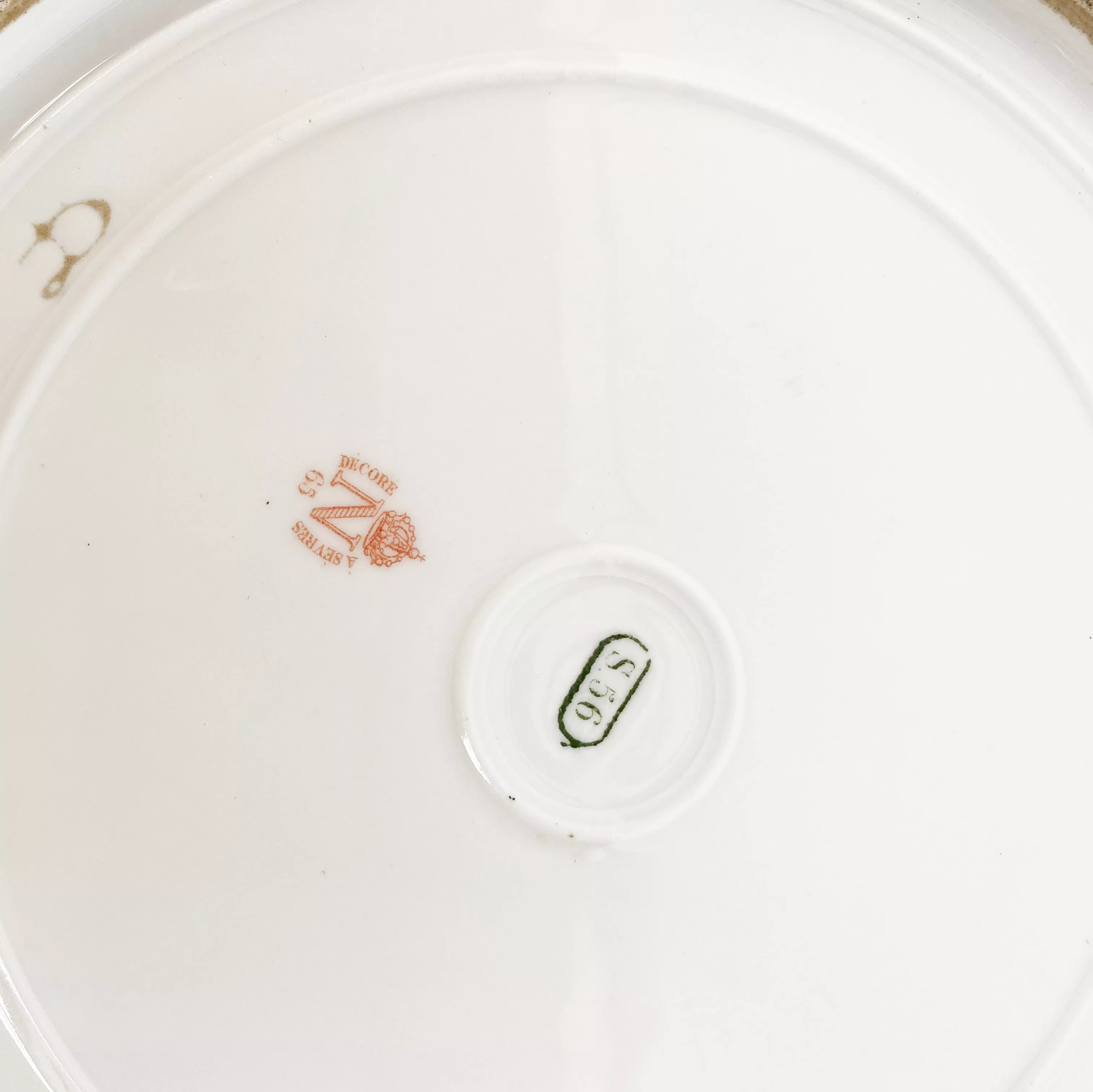
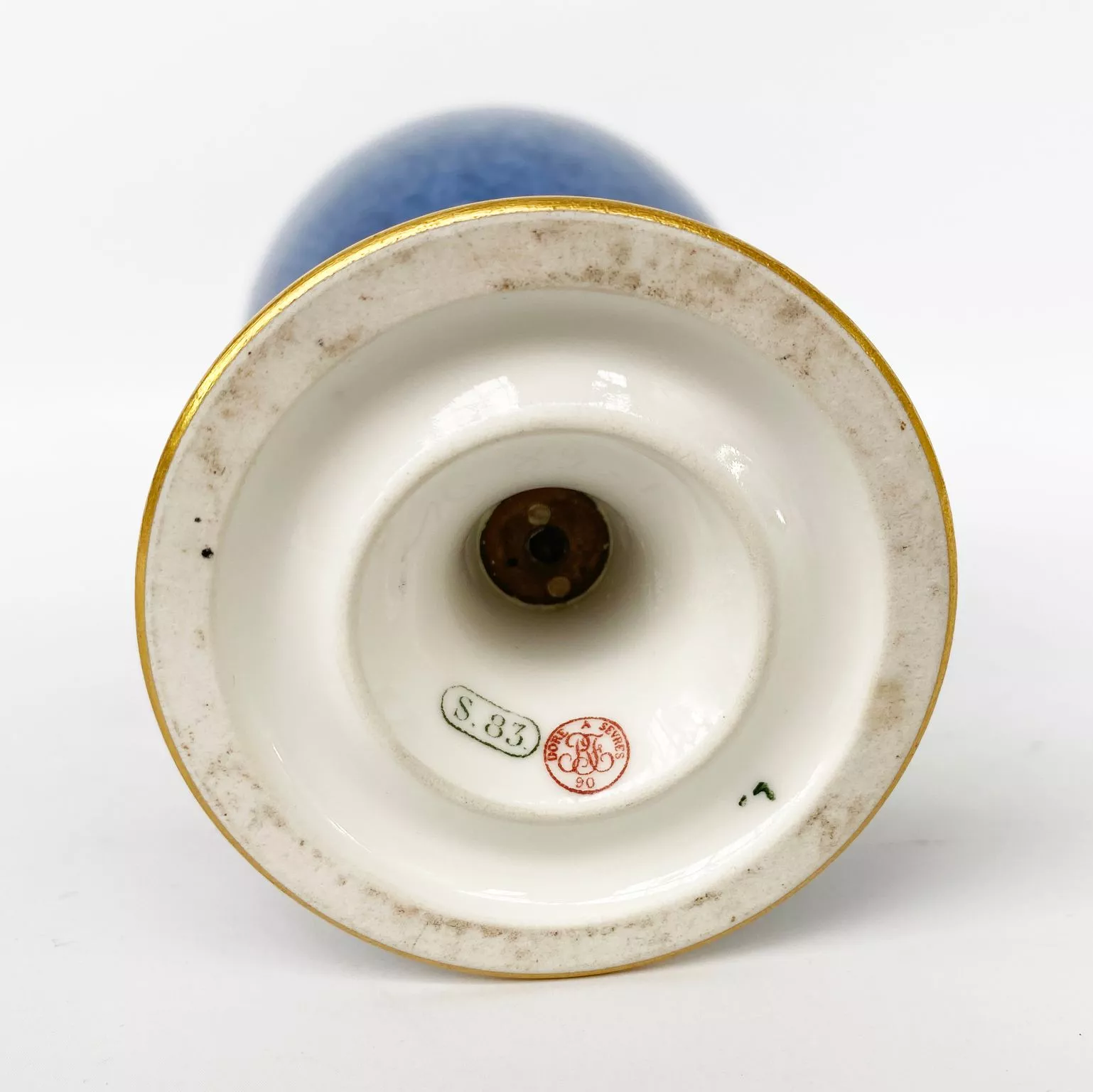
Pieces produced by the Sèvres manufactory are generally signed and hallmarked. These markings have obviously changed over the centuries and with the political regimes that France has known. What's more, many copies exist. That's why, if you think you own an object from Sèvres porcelain, it's best to have it appraised.
.
Knowing the value of a work
If you happen to own a piece of Sèvres or Sèvres porcelain, don't hesitate to request a free appraisal using the form on our website. A member of our team of experts and certified auctioneers will contact you promptly to provide you with an estimate of the market value of your work, as well as any relevant information about it. If you are considering selling your work, you will also be accompanied by our specialists in order to benefit from alternatives for selling it at the best possible price, taking into account the inclinations of the market.
Estimate in less than 24h
Sèvres porcelain at auction

Estimated 500 € - 600 €
SEVRES, 18th century, circa 1970, porcelain teacup and saucer.

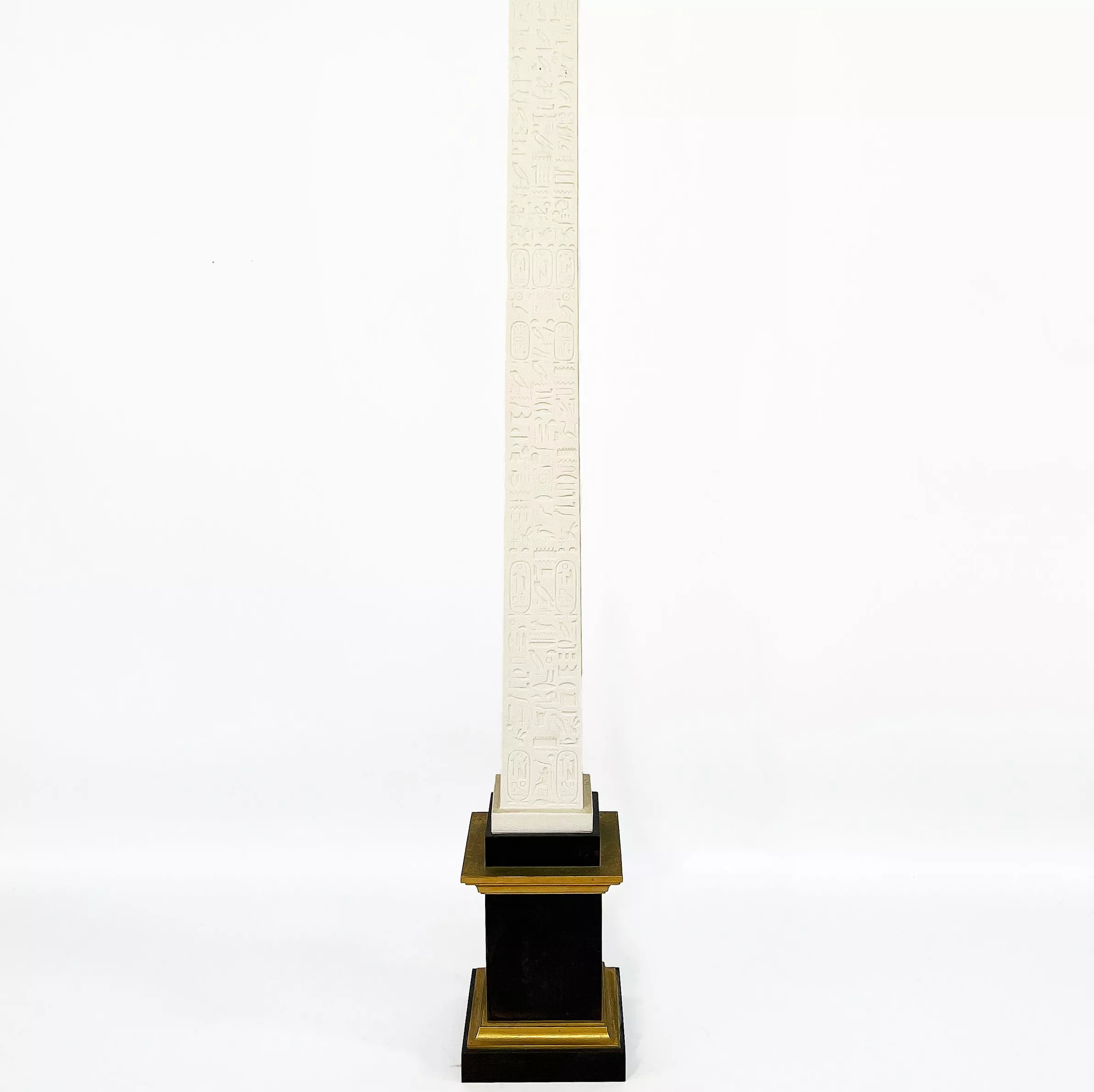
Estimated 800 € - 1 200 €
MANUFACTURE NATIONALE DE SEVRES Rare porcelain cookie obelisk.

Estimated 2.000 - 3.000 €
Sèvres porcelain plate from the "agronomique" service

Estimated 800 - 1.200 €
SÈVRES, Teapot in the service of King Louis-Philippe at Château D'Eu.
Discover in the same theme

The value of Christophe Gabriel Allegrain's works
The value of Christophe Gabriel Allegrain's works
Learn more >

Knowing the value of Antoine-Louis Barye's bronzes
Antoine-Louis Barye, an 18th-century bronzemaker, is renowned for his animal bronzes, which are highly prized at auction. Estimated in 24 hours.
Learn more >

Rating and value of works, paintings, drawings by Hyacinthe...
Hyacinthe Rigaud is a painter of the 17th and 18th centuries whose works have been remarkably well preserved, with a high rating and value.
Learn more >

Secure site, anonymity preserved

Auctioneer approved by the State

Free and certified estimates
Frequently asked questions
-
What is the Sèvres Porcelain Manufactory, and why is its porcelain so valuable?The Royal Porcelain Manufactory of Sèvres was founded in 1740 by Louis XV to compete with German manufacturers and quickly became the benchmark for French porcelain. It enjoyed exclusive royal privileges, notably the right to gild its pieces, and developed signature colors such as Sèvres blue and Pompadour pink. Its mastery of hard-paste porcelain—achieved thanks to the discovery of French kaolin deposits—along with the exceptional quality of its pieces, makes them highly sought-after by collectors around the world.
-
What are the price ranges for Sèvres porcelain depending on the type of item?Prices vary considerably depending on the type of item: tea and coffee sets and plates sell for between €10 and €350,000, vases between €10 and €400,000, biscuit porcelain sculptures between €20 and €489,000, and other items such as nightlights between €10 and €1,016,000. The all-time record was set in 2022 with a Sèvres porcelain nightlight that sold for 1,016,000 €, far exceeding its estimate.
-
How can you authenticate Sèvres porcelain and verify its authenticity?Authentic pieces from the Sèvres porcelain manufactory are generally signed and stamped, with markings that have varied over the centuries depending on the political regime. However, since many copies exist, it is best to have your piece appraised by a professional. Auctie's offers a free, no-obligation appraisal conducted by certified experts and auctioneers, which will allow you to verify the authenticity of your item and obtain an accurate valuation.
-
How does the appraisal of Sèvres porcelain work at Auctie's?The appraisal is free and non-binding. Simply submit a request using the form on the Auctie's website, and a member of our team of experts and licensed auctioneers will contact you to provide an estimate of your artwork’s market value within 48 hours. You’ll also receive all relevant information about your piece and recommendations on the best way to sell it.
-
How can I sell Sèvres porcelain for the best price?Auctie's supports you every step of the way, from the initial appraisal to the auction. After having your piece appraised for free, our specialists will guide you toward the best sales strategy, taking into account current trends in the Sèvres porcelain market. We offer you the most advantageous options for selling your piece at the best possible price.
