



Rating and value of drawings by Kawahara Keiga

Key takeaways
- Kawahara Keiga’s drawings sell for between €3,850 and €66,000, with a record price of €60,000 set in 2018 in Paris for “A View of Deshima Harbor.”
- A specialist in ukiyo-e active in Nagasaki (1786–1860), the artist fused traditional Japanese techniques with Western methods to create scientific naturalist illustrations.
- His unsigned works, created in collaboration with the scholar Philipp Franz von Siebold, require expert authentication based on documented provenance and consistency with the known body of his work.
Kawahara Keiga’s drawings fetch up to €66,000 at auction. An appraisal allows us to accurately determine the current market value of your Kawahara Keiga artwork and, if applicable, optimize the sale of the piece.
If you own a work by Kawahara Keiga and would like to know its value, our state-certified auctioneers will provide a free appraisal based on authenticity, market rating, and recent market results.
Market Value and Appraisal of Kawahara Keiga
Kawahara Keiga has left behind a body of work in its own right as a specialist in ukiyo-e. Today, prices for his works are reaching unprecedented levels at auction.
His works are particularly sought after, especially by Japanese buyers. The prices at which they sell on the art market range from €3,850 to €66,000—a considerable spread that speaks volumes about the value that can be attributed to Kawahara Keiga’s works.
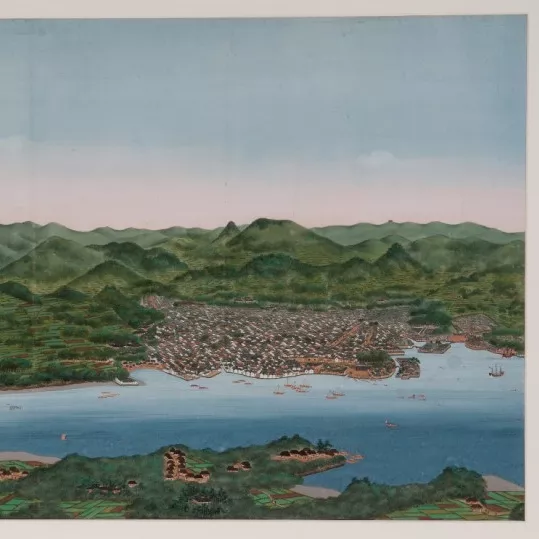
In 2018, a drawing titled *A View of Deshima Harbor* sold for €60,000 in Paris, despite an estimate of between €12,000 and €18,000.
Range of value from a simple work to the most prestigious
Technique used | Result |
|---|---|
Drawing - watercolor | From €3,850 to €66,000 |
Estimate in less than 24h
Placing the Artist in Context
Period
Kawahara Keiga (1786–1860) was a painter active in the late 18th century and the first half of the 19th century, during the Edo period. He worked primarily in Nagasaki, a port that was then open to trade with Westerners, particularly the Dutch.
His career unfolded against the backdrop of rangaku (Dutch studies), a period marked by the introduction of European scientific and artistic knowledge to Japan. He collaborated closely with Western scholars, particularly Philipp Franz von Siebold.
Artistic Movements
The artist is associated with the Nagasaki-e school of painting, with a body of work tied to cultural exchanges with the West, featuring foreign dignitaries, ships, and scenes of intercultural interaction.
He combined traditional Japanese painting techniques with Western methods (perspective, modeling, shading).
Kawahara Keiga also worked in scientific illustration, producing naturalistic drawings (fauna, flora, ethnography) for scholarly publications, characterized by descriptive precision.
He was influenced by the West (rangaku), partially adopting the conventions of European painting without abandoning Japanese graphic traditions.
He played a role in the transition to modernity, occupying a middle ground between the pictorial tradition of the Edo period and a gradual openness to modernized artistic forms, alongside artists such as Shiba Kohan.
The Life of Kawahara Keiga
Cultural Context
Kawahara Keiga was active during the late Edo period, a time of limited but significant contact between Japan and the West, particularly through the Dejima trading post in Nagasaki.
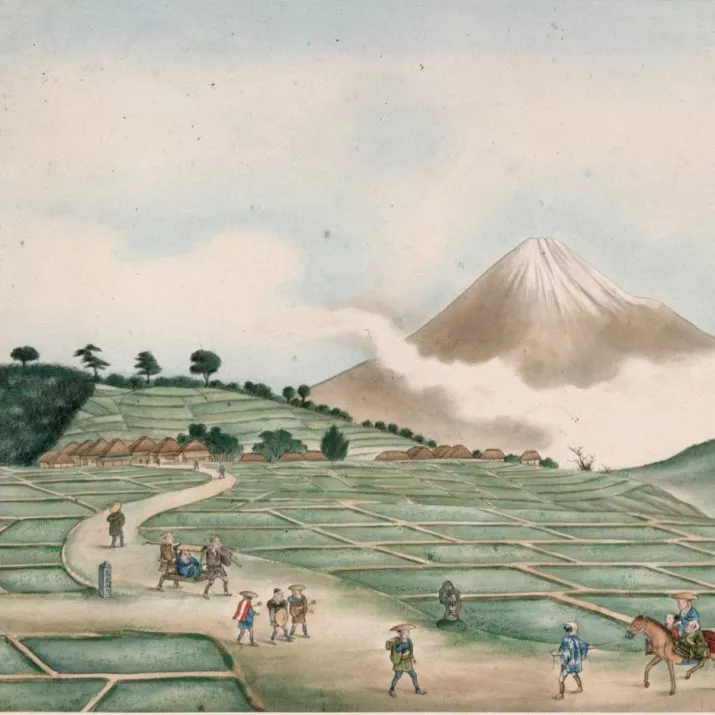
He specialized in documentary-style paintings, some of which were commissioned by Europeans, depicting landscapes, flora, fauna, and scenes of Japanese life with remarkable descriptive precision.
His work lies at the intersection of the Japanese painting tradition and Western influence, particularly in his emphasis on naturalistic observation and perspective. He contributed to the creation of an iconographic corpus that was essential to Europeans’ understanding of Japan in the early 19th century.
His practice reflects a stylistic fusion of local techniques and the scientific demands of representation.
Artistic and Intellectual Circle
He collaborated closely with Philipp Franz von Siebold, a German physician and naturalist based in Dejima, for whom he produced numerous scientific illustrations.
His work was part of the intellectual and scientific exchanges between Japan and Europe, in which artists and scholars collaborated to produce visual knowledge.
He worked in an environment shaped by the practices of the Nagasaki-e school, which was characterized by the integration of Western elements into Japanese painting.
His works are today just as sought after as those of modern artists such as Yayoi Kusama, Takaseda Matsutani, and Kazuo Shiraga.
The Artist's Techniques
Artist’s Style
Kawahara Keiga’s work lies at the intersection of ukiyo-e and Western painting, incorporating naturalistic techniques that were unprecedented in the Japanese context. His descriptive precision is remarkable, particularly in his depictions of flora, fauna, and human figures.
He uses fine, controlled lines combined with delicate and nuanced coloring. He introduces Western concepts of volume and shadow without completely abandoning the flatness of the Japanese tradition.
His focus on documentation is pronounced, as his works were often conceived as vehicles for scientific or ethnographic knowledge. His compositions are clear and frequently isolate subjects against neutral backgrounds, enhancing their analytical clarity.
Focus on a Key Work
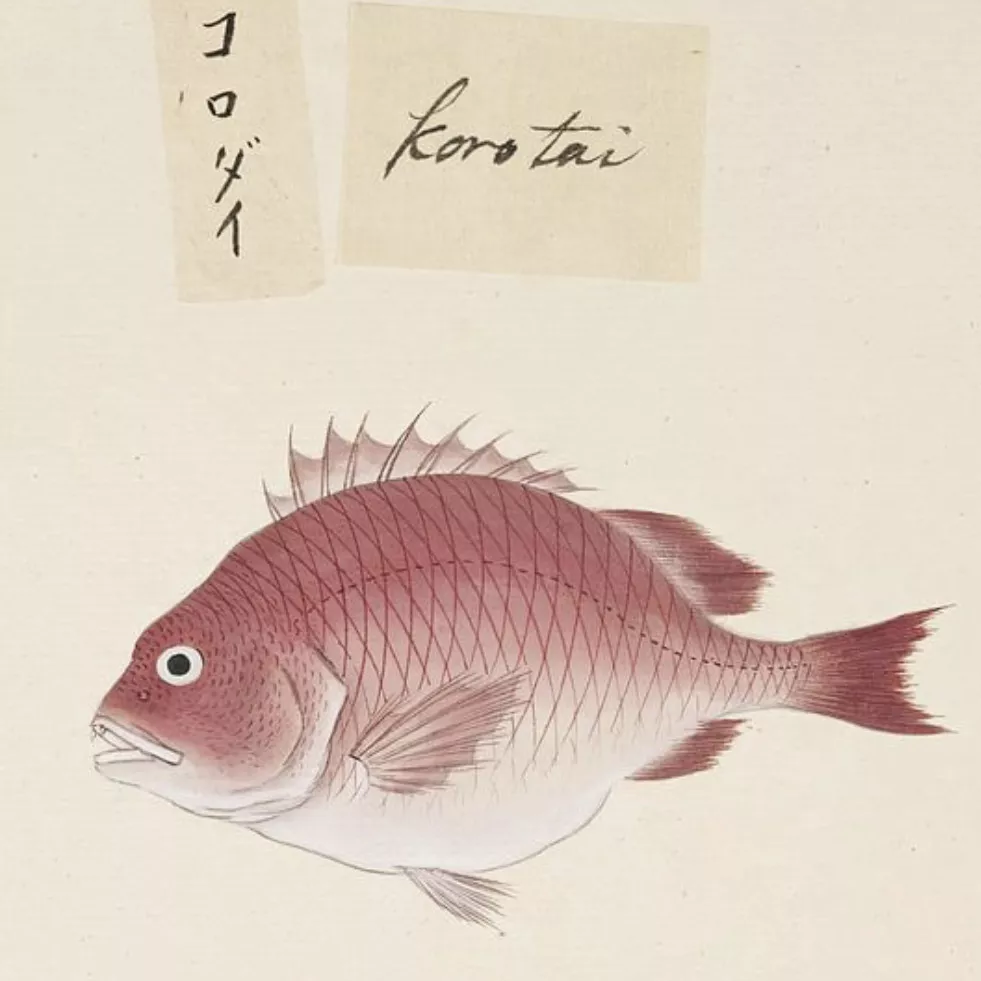
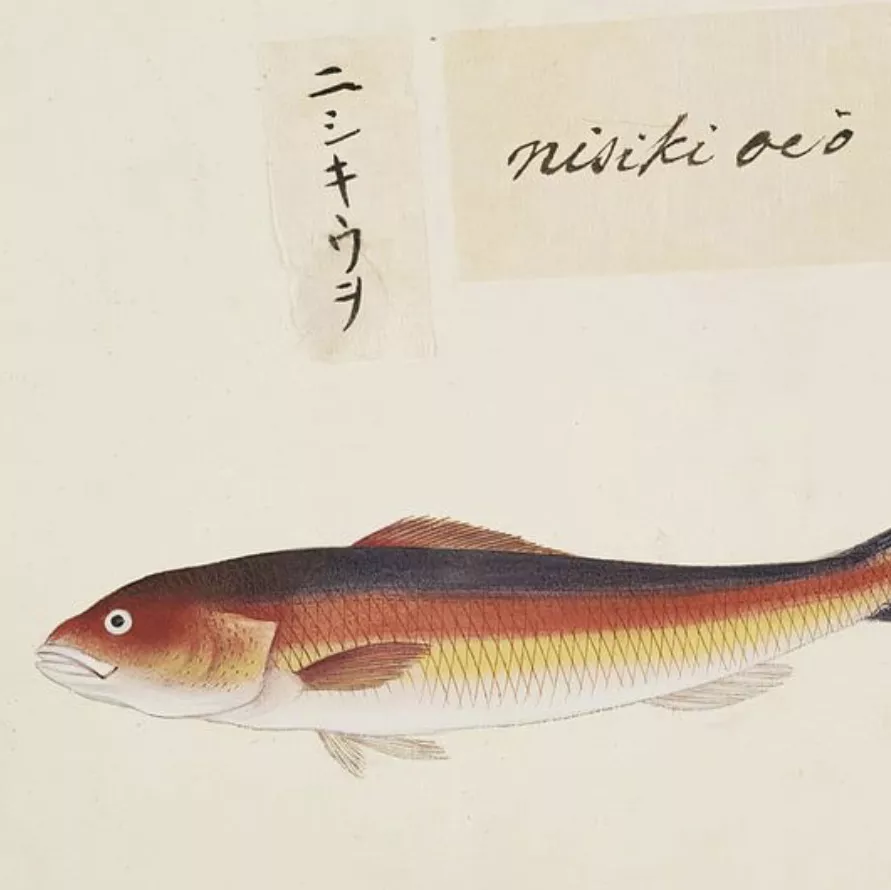
Studies of Fish and Crustaceans (circa 1820)
This series of drawings is a detailed depiction of marine species, isolated against a neutral background to maximize scientific clarity. The drawing is precise and meticulous, highlighting the subjects’ anatomical features.
The applied colors are transparent and nuanced, faithfully rendering textures and chromatic variations. The influence of European naturalist illustrations is evident in the attention paid to descriptive accuracy.
There is no narrative staging; the image is conceived as a tool for observation and classification. This series is emblematic of the convergence of Western scientific knowledge and the Japanese pictorial tradition in the early 19th century.
FAQ – How do you appraise a work of Kawahara Keiga?
1) What stylistic criteria specific to Kawahara Keiga are key?
The analysis focuses on descriptive precision, the finesse of the line, and attention to ethnographic details—characteristics of an artist known for his depictions of daily life, flora and fauna, and interactions with Westerners in Nagasaki.
2) How important is the context of production related to Dejima?
Particular attention is given to works created in the context of exchanges with the Dutch on Dejima, notably those associated with Philipp Franz von Siebold, as these pieces are of major historical and scientific interest.
3) What role do provenance and scientific documentation play?
Documented provenance, presence in historical collections, institutions, or specialized publications, as well as consistency with the artist’s known body of work, are essential factors in confirming attribution and establishing the work’s value.
Recognizing the Artist’s Signature
Kawahara Keiga’s works are unsigned. For this reason, if you believe you own a work by the artist or based on his style, it is essential to have it appraised by an expert who can authenticate it.
Have Your Kawahara Keiga Work Appraised
If you own a work by Kawahara Keiga, an appraisal will help you assess its value on the current market.
Using our online form, our experts and certified auctioneers will conduct a free appraisal and provide you with a reliable estimate of your artwork’s market value.
If you’re considering selling it, we’ll guide you through the process to ensure you get the best possible price.
Estimate in less than 24h
Discover in the same theme

Rating and value of works, drawings, paintings by Jean-Bapti...
Corot was a landscape painter and founder of the Barbizon School, who produced drawings and oil paintings that were highly prized at auction.
Learn more >

Rating and value of paintings by Victoria Fantin-Latour
Victoria Fantin-Latour was a 19th-century artist who mainly produced still lifes of flowers, which are highly prized at auction.
Learn more >

Rating and value of paintings by Nicola Forcella
Nicola Forcella was an Italian Orientalist painter who produced most of his paintings in Cairo. Today, his works are highly valued.
Learn more >
Nos records d'enchères à l'hôtel Drouot

Estimated 10.000 - 15.000 €
Ebridge Ayer BURBANK(1858-1949), Young African-American boy, Oil on panel.

Estimated 20.000 - 30.000
EXCEPTIONAL LARGE OVAL DISH IN VINCENNES SOFT PASTE PORCELAIN FROM THE "BLEU CÉLESTE" SERVICE OF KING LOUIS XV AT THE CHÂTEAU DE VERSAILLES

Estimated 20.000 - 30.000
MANUFACTURE ROYALE DE SÈVRES, 18th century "L'Empereur de la Chine" - Portrait of the Emperor Qianlong, Hard porcelain bisque, 1775

Estimated 1.500 - 3.000
HERMÈS, "Kelly" 32 saddle bag in black box calf

Estimated Between €5,000 and €8,000
KRACHKOWSKY (1854-1914), Before the storm, oil on canvas

Estimated 40.000 - 80.000
Alexandre ROUBTZOFF (1884-1949), Portrait of Arbia, oil on canvas

Secure site, anonymity preserved

Auctioneer approved by the State

Free and certified estimates
Frequently asked questions
-
Who is Kawahara Keiga, and what is his artistic background?Kawahara Keiga (1786–1860) was a Japanese painter of the Edo period and a specialist in ukiyo-e who was active primarily in Nagasaki. He developed his art at the intersection of Japanese painting traditions and Western influence, collaborating closely with European scholars such as Philipp Franz von Siebold in the context of rangaku (Dutch studies) and exchanges at Dejima.
-
What is the price range for Kawahara Keiga's drawings?Kawahara Keiga’s drawings sell for between €3,850 and €66,000 at auction, with prices varying considerably depending on the work’s authenticity, provenance, and historical significance. In 2018, a drawing titled “A View of Deshima Harbor” exceeded its initial estimate, selling for €60,000 in Paris.
-
How can you authenticate a work by Kawahara Keiga?Since Kawahara Keiga’s works are unsigned, authentication requires specialized expertise. Auctie's offers a free, no-obligation appraisal conducted by certified auctioneers and experts, who examine the documented provenance, consistency with the artist’s known body of work, and stylistic characteristics to confirm the attribution.
-
Why is now the right time to sell a work by Kawahara Keiga?Kawahara Keiga’s works are currently highly sought after on the market, particularly by Japanese and international buyers interested in Nagasaki painting and Japan-Western cultural exchanges. Prices are reaching unprecedented levels, reflecting growing demand for this key artist in Japan’s transition to modernity.
-
How does the appraisal and sale of a work of art take place at Auctie's?Auctie's offers a free, no-obligation appraisal, available via an online form, with a response from an expert within 48 hours. If you’re considering selling, Auctie’s, as an auction house, will guide you from the initial appraisal through to the final sale to ensure you get the best possible price for your artwork.
