



Belle Époque Artwork Valuation: Appraisal and Auction

Key takeaways
- The value of Belle Époque works (1870–1914) varies greatly depending on the artist: from 500 to 5,000 euros for an anonymous work, up to tens of millions for Monet or Renoir.
- The three major segments are Impressionism (Monet, Renoir, Degas), Art Nouveau (Gallé, Lalique, Mucha), and Parisian painting (Boldini, Toulouse-Lautrec), with demand varying significantly across them.
- Precise attribution, iconic subject matter (Parisian scenes, society portraits), and documentation (catalog raisonné) are decisive factors: a cataloged work commands an exceptional premium.
1900s elegance, decorative arts, and fin-de-siècle carefree spirit: the value of Belle Époque works varies greatly depending on the artist, the quality of craftsmanship, and provenance.
Below you’ll find all our valuation guides dedicated to the Belle Époque—furniture, glassware, jewelry, and objets d’art from the Belle Époque. Each guide details the price ranges observed at auction and the factors that determine a piece’s value before it is entrusted to our state-certified auctioneers.
Guides from this period
See all guides >
Rating and value of paintings by Adolphe Louis Gaussen
Adolphe Louis Gaussen is a marine painter who produced numerous paintings that command high prices at auction. 24-Hour Estimate
Learn more >

Rating and value of drawings and paintings by Charles Victor...
Charles Victor Guilloux is a Symbolist and Post-Impressionist painter who produced numerous works that are highly valued and command high prices.
Learn more >

Rating and value of drawings and paintings by Ham Nghi
Ham Nghi was a former Vietnamese ruler who is best known for his landscape paintings, which are becoming increasingly sought-after and valuable at auc...
Learn more >

Rating and value of sculptures and bronzes by Henri Louis Le...
Henri Louis Levasseur was a French sculptor who worked on mythological subjects in a variety of materials. Their value can be considerable.
Learn more >

Rating and value of paintings by Jean-Louis Paguenaud
Jean-Louis Pagunaud is a French marine painter who has produced a number of paintings that are highly valued at auction.
Learn more >

Rating and value of boxes, inkwells and vases by Eugène Feui...
Eugène Feuillâtre is an Art Nouveau silversmith who produced few objects that have a significant value at auction. 24h estimate.
Learn more >

Rating and value of sculptures, bronzes and marbles by Henri...
Henri Honoré Plé was a sculptor who made the transition from 19th to 20th century sculpture. His works are highly regarded.
Learn more >

Ratings and values of sculptures, bronzes and marbles by Égi...
Égide Rombaux is a Belgian sculptor whose work falls somewhere between Symbolism and Art Nouveau. Today, his works are highly valued.
Learn more >

Rating and value of paintings by Maxime Maufra
Maxime Maufra was a French post-Impressionist marine painter who produced many works of great value.
Learn more >

Here's why Boucheron jewelry prices are skyrocketing at auct...
The Auctie's team explains the mechanisms behind the increase in Boucheron prices on the auction market.
Learn more >

Why Chaumet jewelry prices soar at auction
Chaumet is a high-end jewelry house that is very popular with bidders. Its value is increasing.
Learn more >

Here's why Cartier jewelry prices are skyrocketing at auctio...
Prices for Cartier jewelry at auction are skyrocketing, from iconic collections to more commonplace pieces.
Learn more >
Understanding the Value of a Belle Époque Artwork
What Is Market Value in the Belle Époque Art Market?
The market value of a Belle Époque artwork refers to the benchmark value assigned to it by the art market at a given moment, based on its attribution to a specific artist, the subject matter depicted, its condition, and the strength of the supporting documentation.
The Belle Époque, which spanned from the late 19th century until the outbreak of World War I in 1914, is one of the most prolific and sought-after periods in the history of French art, during which Impressionism and Post-Impressionism, Art Nouveau, Symbolism, and the Nabi movement flourished simultaneously in an exceptional creative effervescence.
This market enjoys considerable recognition and popularity among the general public, thanks to the image of this enchanted era—from the Parisian cafés and cabarets immortalized by Toulouse-Lautrec—from the elegant villas of the French Riviera frequented by an international high-society clientele—continues to fuel a collective fascination that translates directly into very strong demand and regular auction records for the most iconic artists of this period.
Impressionism, Art Nouveau, and paintings of Parisian life: what are the differences in the market?
Impressionism and Post-Impressionism, led by figures such as Monet, Renoir, and Degas—whose work revolutionized the depiction of light and movement—occupy the most prestigious and internationally recognized segment of this market, with their paintings ranking among the most sought-after and expensive works in the entire history of art.
Art Nouveau, championed by Mucha in poster art and by Gallé and Lalique in the decorative arts and glassware, developed a sinuous, organic aesthetic that stands in sharp contrast to the more pictorial concerns of Impressionism, while sharing with it a common fascination for nature and movement.
Paintings of Parisian life, exemplified by Boldini, Helleu, and Béraud—whose society portraits and street scenes document the Parisian society of that era with remarkable elegance and vitality— constitutes a third pillar of this market, distinct from the Impressionist avant-garde but equally sought after by collectors attuned to the charm and art of living of that period.
Movement | Dates | Characteristics | Market Demand Level |
Impressionism and Post-Impressionism | 1870–1900 | Monet, Renoir, Degas; Light and Movement | Exceptional, record auction prices |
Symbolism and the Nabi Movement | 1888–1900 | Bonnard, Vuillard; Intimism and Decorative Flat Colors | Very strong, international |
Art Nouveau (posters and decorative arts) | 1890–1910 | Mucha, Gallé, Lalique; organic sinuosity | Very active, niche market |
Paintings of Parisian life | 1870–1914 | Boldini, Helleu, Béraud; portraits of high society | Steady, sophisticated demand |
Posters and lithographs by Toulouse-Lautrec | 1891–1901 | Parisian cabarets, graphic Japonism | Exceptional, highly sought-after |
The criteria that determine the market value of a Belle Époque work
The market value of a Belle Époque work depends first and foremost on its attribution to a specific artist; the price difference between an anonymous work of the French school, a documented studio piece, and a work by the hand of Monet, Renoir, or Toulouse-Lautrec is considerable, sometimes differing by several orders of magnitude.
The subject matter also plays a decisive role: an iconic Parisian scene, an identified society portrait, or a landscape along the banks of the Seine or the French Riviera consistently commands a premium due to their representativeness of this period.
The price ranges observed on the secondary market illustrate this considerable variation. An anonymous work of average quality, attributed to the French school without a specific artist, can range from 500 to 5,000 euros.
A documented work from a school or studio ranges from 5,000 to 50,000 euros, depending on the quality and rarity of the subject.
A work attributed to a recognized second-tier artist sells for between 50,000 euros and several hundred thousand euros, while a major work by Monet, Renoir, or Degas can exceed several tens of millions of euros, with some records having reached considerable heights at international public auctions.
Estimate in less than 24h
Paintings, posters, art objects: all Belle Époque works appraised
The Hierarchy of Belle Époque Artworks and Its Impact on Market Value
Within Belle Époque art, oil paintings on canvas by the great Impressionist and Post-Impressionist masters occupy the very pinnacle of the hierarchy of value; their landscapes, scenes of modern life, and portraits rank among the most sought-after works in the entire international art market.
Lithographic posters—particularly those by Toulouse-Lautrec and Mucha, whose graphic quality and the rarity of their original prints make them premier collector’s items—occupy a unique place, as their status as multiple-print works does not prevent the rarest and best-preserved examples from commanding very high prices.
Art Nouveau objects—particularly glassware by Gallé and Lalique, whose techniques of acid-etched multilayered glass or highly sophisticated decorative jewelry demonstrate exceptional craftsmanship—complete this overview of a particularly rich and diverse body of work, with their value depending largely on the quality of craftsmanship and the signature of the producing studio.
Category | Characteristics | Price Range | Market Demand |
Large Impressionist paintings (Monet, Renoir, Degas) | Extensive documentation, iconic subject | Several million to several tens of millions of euros | Institutional, exceptional |
Work attributed to a second-tier master | Solid attribution, first-rate quality | €50,000–500,000 | Very strong, international |
Vintage lithographic poster (Toulouse-Lautrec, Mucha) | Period print, good condition | €5,000 — €200,000 | Very active, highly sought-after |
Documented school or studio work | High-quality execution, characteristic subject matter | €5,000 — €50,000 | Active, sought-after segment |
Signed Art Nouveau glassware (Gallé, Lalique) | Multilayered glass, sophisticated technique | €1,000 — €50,000 | Stable, niche market |
Anonymous work of average quality | French school, attribution uncertain | €500 — €5,000 | Active, accessible |
Parisian scenes, society portraits, and posters: the most sought-after subjects
Parisian scenes—whether depicting cafés, cabarets, or the capital’s bustling boulevards—are among the most iconic and sought-after subjects in this market, their ability to vividly document the social and cultural effervescence of this period makes these works particularly prized by international collectors fascinated by this mythologized image of Paris.
High-society portraits—particularly those by Boldini, whose technical virtuosity captured the aristocracy and international high society frequenting Parisian salons with unparalleled elegance—rank among the most highly prized subjects of this period.
Advertising and cultural posters—whose development coincided with the rise of color lithography and the transformation of Paris’s urban landscape into a veritable open-air museum—constitute a category in their own right, whose value depends heavily on the rarity of the print run and the artist’s renown, with Toulouse-Lautrec and Mucha occupying the very pinnacle of this particular hierarchy.
Get a Free Appraisal of a Belle Époque Artwork
A certified appraisal by a licensed auctioneer in less than 24 hours
Appraising a Belle Époque artwork requires a thorough understanding of the various movements that flourished during this prolific period, as well as particular vigilance in a highly active market that has seen numerous copies and erroneous attributions circulate for the most famous artists, particularly the Impressionists, whose global fame led to a significant number of forgeries throughout the 20th century.
A licensed auctioneer has the necessary training to conduct this appraisal with the rigor it requires.
Auctie’s offers this appraisal free of charge, with a certified response within 24 hours.
Whether you’ve inherited a painting from the Belle Époque, wish to have a poster or an Art Nouveau object appraised, or are considering compiling an estate inventory, the process is the same: submit your item to a trained expert capable of accurately assessing its value.
What you need to provide for an online appraisal
For a painting, clear photographs of the front and back of the work are essential, along with a close-up of the signature and any inscriptions on the back of the support, the precise dimensions of the composition, and any known provenance information: an old gallery label, a purchase invoice, a previous certificate of authenticity, or a reference in a catalog raisonné or a specialized publication.
For a poster, the condition of the paper and the integrity of the margins must be documented, as these factors significantly influence the value of such works on paper.
For Art Nouveau artworks, photographs of the entire piece and of any engraved or stamped signatures are required.
In cases of uncertainty regarding attribution—which is particularly common in this segment, where many copies are in circulation—a thorough physical examination will be offered before any steps are taken to list the item for sale.
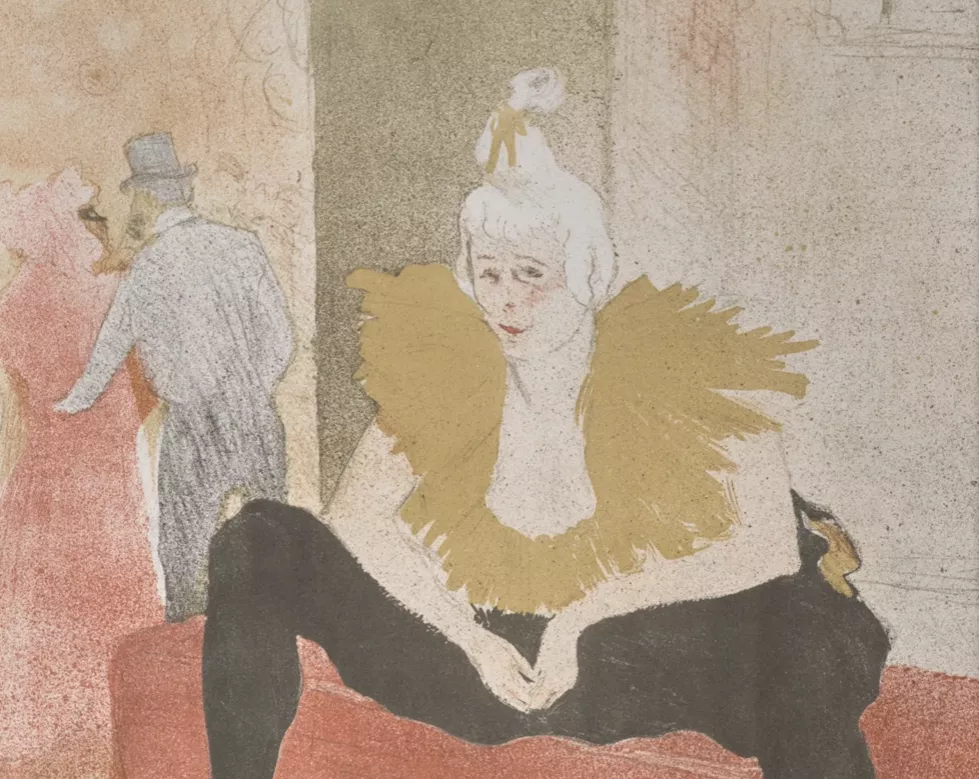
Signature, Attribution, and Authenticity: The Pillars of Appraisal
Signatures, attributions, and “atelier of” inscriptions: their impact on value
The authentication of a Belle Époque work relies on a system of attribution marks, the precision of which directly determines its value.
The attribution “by” indicates a high but not certain probability that the work is by the artist’s own hand, while “atelier de” indicates that it was executed collectively under the artist’s direct supervision.
The designation “follower of” or “circle of” refers to a work executed by an artist influenced by the master but with no direct training connection to him, which significantly reduces the value compared to the previous designations.
For major artists of this period, catalogs raisonné compiled by recognized specialists are the authoritative sources in the market; those dedicated to Monet, Renoir, and Toulouse-Lautrec, in particular, are systematically consulted by experts before any serious valuation is made.
A work listed in one of these catalogs enjoys the highest level of scholarly credibility, which is directly reflected in its market value and greatly facilitates its sale.
Level of Attribution | Impact on Value |
Work by the master’s own hand, listed in the catalogue raisonné | Maximum assurance; exceptional value, potentially a record price |
Attributed to (high probability but not absolute certainty) | High valuation; considerable premium compared to the school |
Workshop of (collective execution under direct supervision) | Good valuation; generally recognized high quality |
Follower of / associated with (influence without a direct link) | Moderate recognition; significant discrepancy from direct attribution |
French school (anonymous work from the period) | Conservative estimate; based solely on the quality of execution |
After (recognized copy, either earlier or later) | Primarily decorative value; significant depreciation |
Provenance and condition: their impact on value
The provenance of a Belle Époque work is a key factor in building trust in this market.
A work whose history can be traced through a historic gallery that represented the artist during his or her lifetime— Durand-Ruel for the Impressionists in particular, or one documented in a well-known historic private collection, enjoys considerable legitimacy that buyers directly factor into their bids, as this traceability reduces the risk of misattribution in a market particularly vulnerable to the circulation of forgeries.
The condition of the work requires special attention for this painting on canvas; the relining—a restoration process involving the application of a new support canvas behind a fragile work—must be carefully documented.
For posters and works on paper, prolonged exposure to light may have caused significant discoloration of the lithographic colors, a factor that must be taken into account when appraising these particularly sensitive pieces.
Sell a Belle Époque Artwork at Auction with Auctie's
From the reserve price to the final bid: how the price is determined
Auctions are the most advantageous method of sale for high-quality Belle Époque works, in a market where the combination of a well-documented piece and a collector passionate about this period can generate fierce competition, particularly for Impressionist works whose rarity and international renown drive constant global demand.
The reserve price, set in consultation with the seller, must be carefully calibrated according to the work’s specific attribution and the relevant artistic movement.
For major, well-documented works, the dynamics of the auction can lead to final prices far exceeding initial estimates, as several collectors and institutions are likely to engage in intense competition to acquire an iconic piece from this formative period of modern art.
The auctioneer plays a vital role in facilitating this process.
Hôtel Drouot and online auctions: reaching the right bidders
Auctie’s holds its auctions at Hôtel Drouot, the leading auction house in continental Europe, founded in 1852 and frequented by a dense network of dealers, collectors, and specialists in Belle Époque art.
For a work from this period, Drouot offers optimal visibility among French and European art lovers, complemented by an online presence that significantly expands the reach of each auction on an international scale.
An American collector passionate about French Impressionism, an Asian museum seeking a Toulouse-Lautrec poster, or a European art lover drawn to the elegance of Boldini’s high-society paintings can bid in real time from their home countries.
For the Belle Époque, whose fame is universal, this international dimension is almost always decisive in securing the highest hammer price.
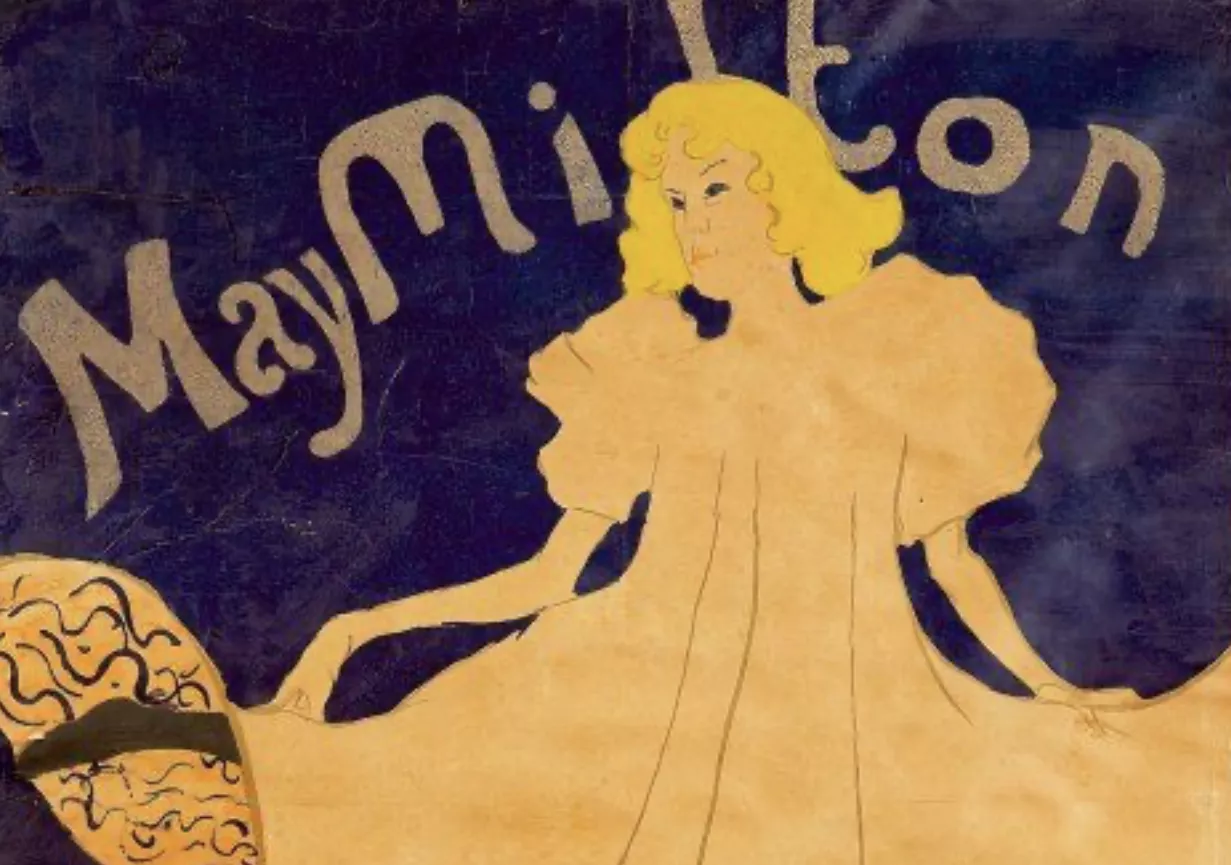
Estate Planning, Inheritance: Valuing an Inherited Belle Époque Artwork
Inventory and Distribution of an Estate
Belle Époque artworks frequently appear in the estates of families whose collections have been built up over several generations, with some pieces having been acquired directly from the artists or their galleries as early as the late 19th century. A work that has been in the same family for a long time may now be worth considerably more than the heirs realize, especially if its attribution has never been verified by a qualified expert.
Auctie’s regularly works alongside notaries to compile comprehensive estate inventories that include works from the Belle Époque. Each piece is appraised individually, with particular attention paid to attribution, a factor that is absolutely critical to determining value in this segment.
The resulting report is an official document that is legally binding and can be included in the estate file without reservation.
Confidentiality of the process and preservation of anonymity
The circumstances leading to the appraisal of an inherited Belle Époque artwork are often personal and sensitive: discovery as part of an inheritance, reorganization of a family collection, or a decision to sell after a long period of ownership.
Auctie’s handles each case with absolute discretion. The owner’s identity is never disclosed to third parties without their explicit consent, and the works may be offered for sale under complete anonymity if the consignor so desires.
This confidentiality is a fundamental commitment of Auctie’s, applicable at every stage of the relationship, from the initial contact through to the receipt of the proceeds from the sale.
Glossary of Art Market Terms from the Belle Époque
Term | Definition |
Valuation | The estimated market value of a work of art, determined based on auction results and demand. |
Belle Époque | A period from the late 19th century to 1914, marked by exceptional artistic vitality. |
Impressionism | A painting movement focused on capturing light and fleeting movement. |
Art Nouveau | A sinuous, organic decorative style, exemplified by Mucha, Gallé, and Lalique. |
Poster | A lithographic print, elevated to the status of art by Toulouse-Lautrec and Mucha. |
Lithography | A flat-printing technique that allows for multiple prints of artistic quality. |
Pastel | A dry painting technique using colored pigment sticks. |
Attribution | The degree of certainty regarding the author of a work, which is a key factor in determining its value. |
Provenance | The history of ownership of a work, which is a key factor in determining its authenticity and market value. |
Auction | Awarding of the lot to the highest bidder, who sets the final sale price. |
Reserve Price | The starting price set for the opening of bidding on a lot. |
Relining | A restoration process involving the application of a new support canvas behind a fragile, antique painting. |
Estimate in less than 24h
Let Auctie's appraise your Belle Époque artwork
A Belle Époque artwork deserves an appraisal that reflects the richness and diversity of this exceptional period in the history of French art.
The precision required to distinguish between different movements and attributions, the crucial importance of provenance in a market rife with forgeries, and the strength of consistently high international demand: these are all factors that only a state-certified auctioneer, well-versed in the specificities of this period, can assess with the rigor they require.
Auctie’s guides you from the initial appraisal through to the final auction, offering the expertise of a state-certified appraiser and the discretion your financial decisions deserve. The appraisal is free, confidential, and non-binding, and you’ll receive a response within 24 hours.
Discover in the same theme

Rating and value of paintings by Auguste Émile Pinchart
Auguste Emile Pinchart was a late 19th-century painter of Orientalist genre scenes, whose works are highly prized.
Learn more >

Rating and value of paintings by Gaston La Touche
Gaston La Touche is a 19th-century painter who produced works that are highly valued at auction. 24h estimate.
Learn more >

Rating and value of drawings, mirrors, lamps by Archibald Kn...
Archibald Knox is a twentieth-century Art Nouveau artist who produced works that are highly rated and valued at auction.
Learn more >

Secure site, anonymity preserved

Auctioneer approved by the State

Free and certified estimates
Frequently asked questions
-
What are the main factors that determine the value of a work of art from the Belle Époque?The value of a Belle Époque artwork depends above all on its attribution to a specific artist, the subject matter (Parisian scenes, society portraits), its condition, and the strength of the supporting documentation. The difference in value between an anonymous work and a major work by Monet or Renoir can be considerable—sometimes by several orders of magnitude. The presence of a signature, documented provenance, or a reference in a catalog raisonné significantly increases the value.
-
How can I get a free appraisal of a Belle Époque artwork?Auctie's offers a free, no-obligation appraisal, conducted by a certified auctioneer within 24 hours. Simply submit clear photographs of the artwork (front, back, and signature), its exact dimensions, and any available provenance information. For paintings, a close-up photo of the signature and any inscriptions on the back of the canvas is essential; for posters, the condition of the paper and the margins must be documented.
-
What are the major artistic movements of the Belle Époque, and what are their market values?The Belle Époque (late 19th century to 1914) saw the simultaneous flourishing of Impressionism and Post-Impressionism (Monet, Renoir, Degas), Art Nouveau (Mucha, Gallé, Lalique), Symbolism and the Nabi movement (Bonnard, Vuillard), and paintings of Parisian life (Boldini, Helleu, Béraud). Impressionism reigns supreme with record auction prices, while Art Nouveau and lithographic posters (Toulouse-Lautrec) also enjoy exceptional and highly specialized demand.
-
What are the differences in value between a signed work and one attributed to a “workshop of” or “follower of”?A work by the master listed in the catalogue raisonné commands the highest level of assurance and exceptional value. An “attributed to” designation indicates a high degree of probability and results in a significantly higher valuation. A work labeled “workshop of” (collective production under direct supervision) commands a good valuation, whereas one labeled “follower of” or “circle of” experiences a significant difference in valuation. These distinctions directly influence the selling price.
-
Is this the right time to sell a work from the Belle Époque?Yes, the Belle Époque art market is currently enjoying considerable recognition and popularity among the general public, with very strong demand and regular auction records for iconic artists. This collective fascination with the period, fueled by the romantic image of Paris and the French Riviera, is reflected in active international demand, particularly for Parisian scenes, society portraits, and lithographic posters.
