



Rating and value of boxes, inkwells and vases by Eugène Feuillâtre

Key takeaways
- A French Art Nouveau silversmith (1870–1916), Eugène Feuillâtre created refined decorative objects: inkwells, boxes, and vials featuring naturalistic motifs and organic, curved lines.
- His works are rare but highly sought after, with prices ranging from €500 to €134,200 depending on the type; a bottle from 1900–1902 exceeded its estimate in 2017.
- Metal inkwells and silver boxes are the most active segments of the market, with excellent liquidity for well-preserved pieces featuring clearly visible decoration.
If you own a work by the artist Eugène Feuillâtre or based on his work and would like to know its value, our state-approved experts and auctioneers will guide you.
Our specialists will carry out a free appraisal of your work, and provide you with an accurate estimate of its value on the current market.
Then, should you wish to sell your work, we will direct you to the best possible arrangement to obtain the optimum price.
Artist's rating and value
An innovative 20th-century painter and glass artisan, Eugène Feuillâtre enjoyed great success during his lifetime. Today, his works enjoy a stable, high market value.
Globally quite rare in auction rooms but highly prized by collectors, Feuillâtre's objects soar at auction and can fetch several hundred thousand euros.
As evidenced by his perfume bottle dating from 1900 - 1902, which sold for over €134,200 in 2017, while it was estimated at between €56,000 and €78,000.
Order of value from the most basic to the most prestigious
Object type | Result |
|---|---|
Other | From 2,200 to 20,000 € |
Vases | From €500 to €25,000 |
Flacons | From €9,000 to €134,200 |
Estimate in less than 24h
Style and technique of Eugène Feuillâtre
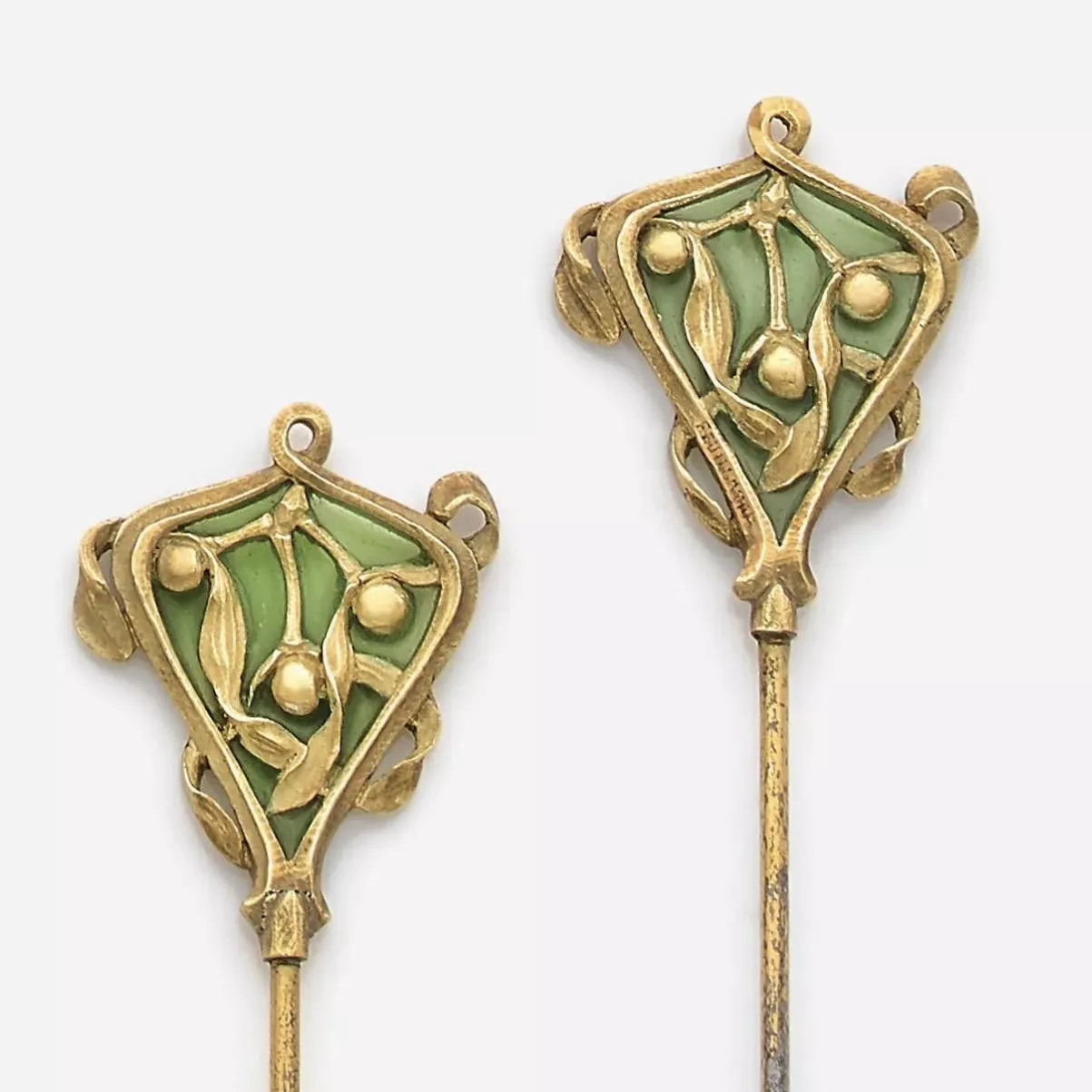
Eugène Feuillâtre (1870 - 1916) was a French silversmith associated with the Art Nouveau movement. He specialized in decorative art objects such as inkwells, boxes, flasks, cubbyholes and small office objects. His work follows in the footsteps of the naturalist and symbolist goldsmiths of the Belle Époque.
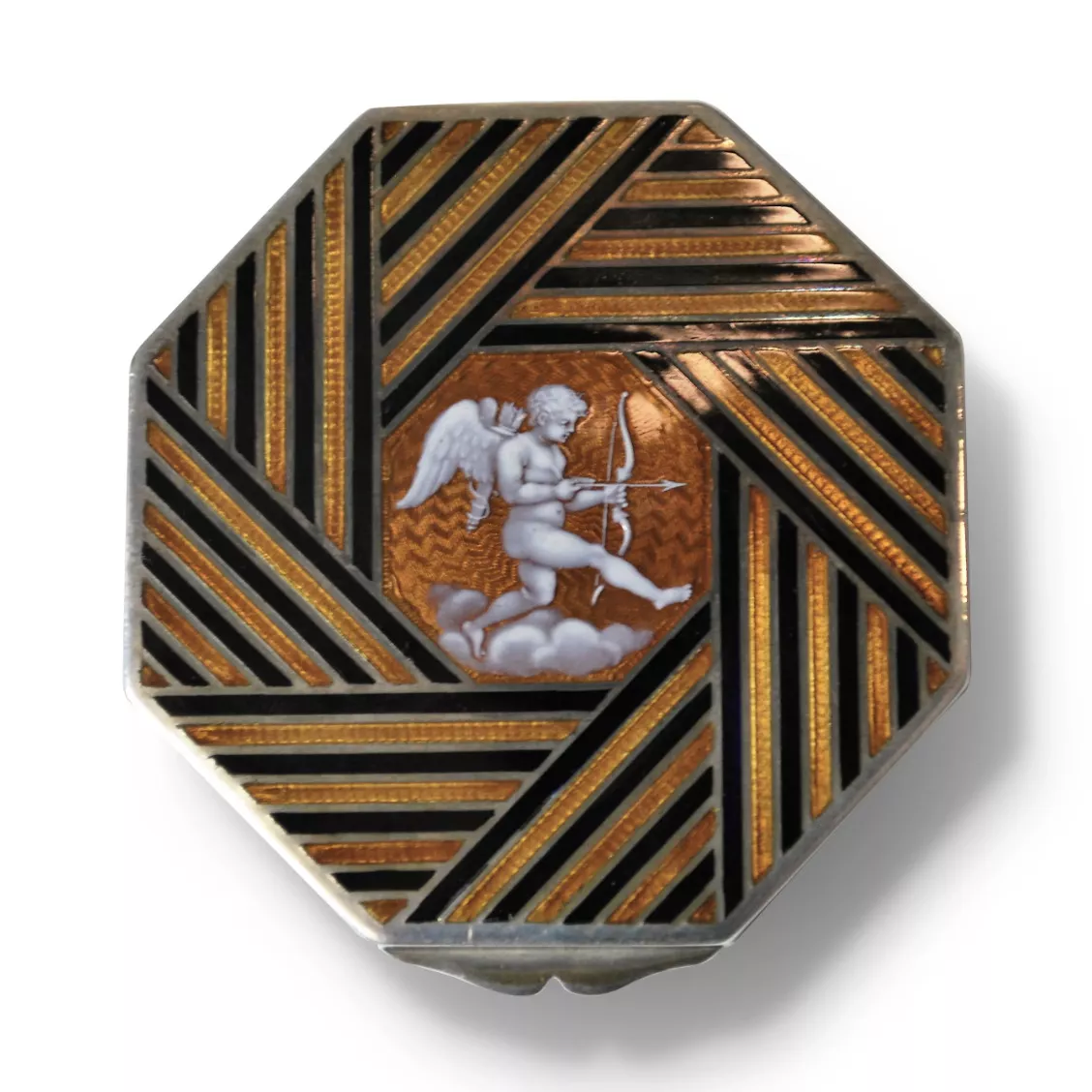
The typology of his work includes inkwells (often in pendants or pairs), circular or ovoid boxes, decorative flasks, and utilitarian objects transformed into artistic pieces. His production is essentially concentrated on small and medium formats, intended for refined bourgeois use.
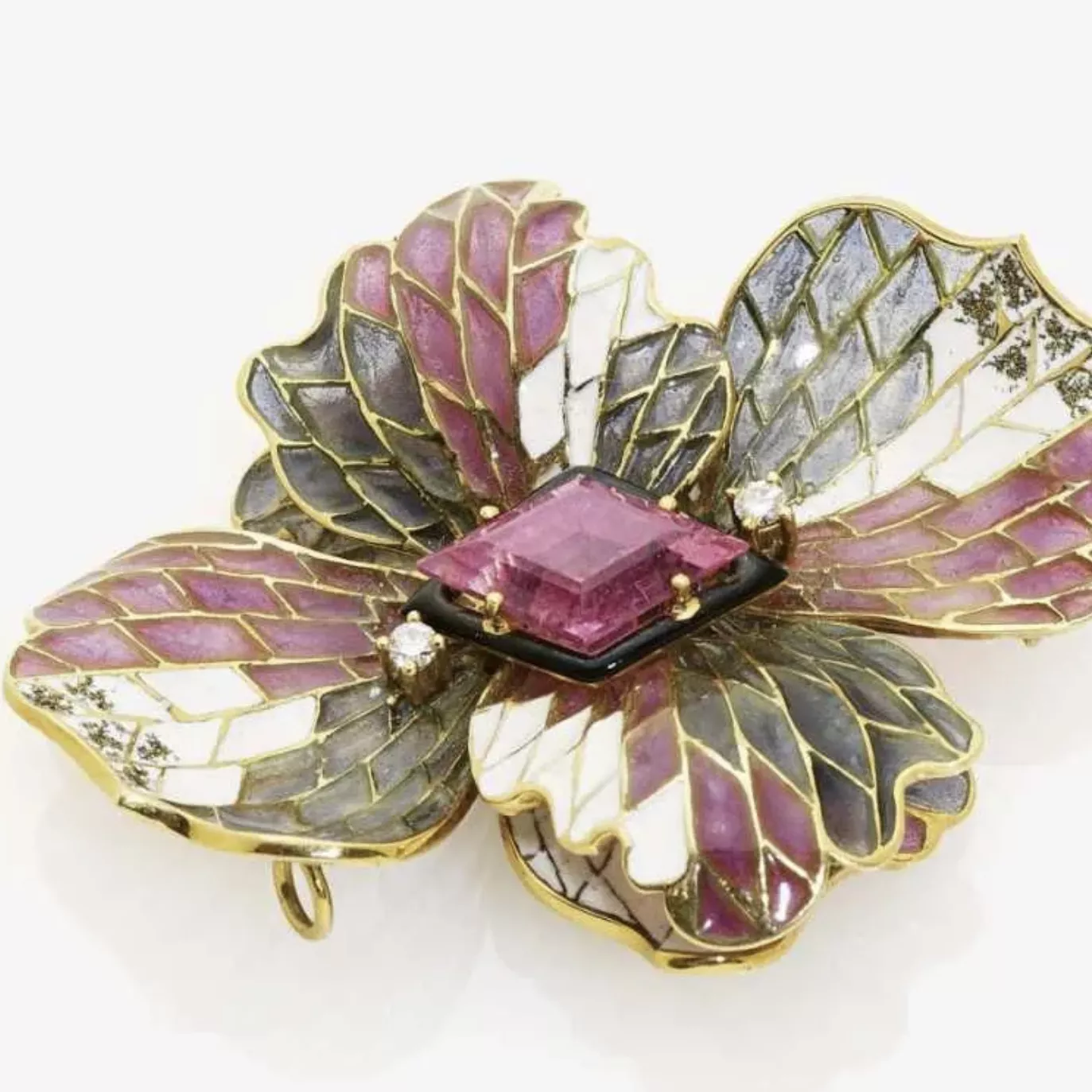
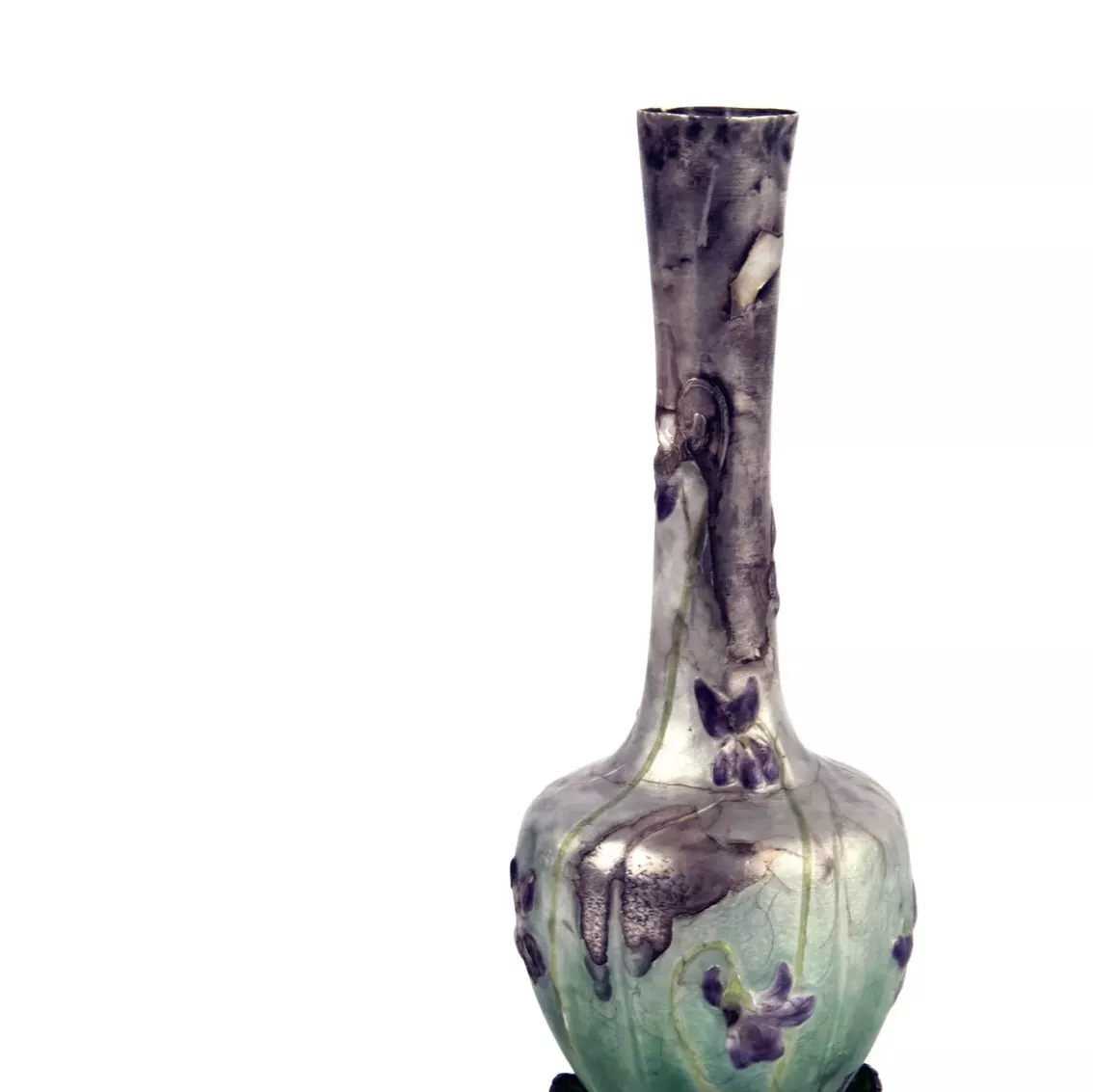
His decorative vocabulary is naturalistic and organic in inspiration, with foliage, flowers, fruit, feathers, insects and aquatic references. Decorations are stylized, rhythmic and integrated into the shape of the object. There is no rigid symmetry, but a predominance of curved lines.
The shape of the object is thought of as an organic support for the decoration, and not as a simple container. The decor is often in slight relief, embracing curved volumes. There is a constant dialogue between surface and motif, typical of Art Nouveau.
The materials used include metal for decorative alloys, inkwells and desk objects, and silver for boxes and precious objects, with frequent use of mixed materials (metal, silver and sometimes inserts). There is no monumentality; preciousness and finesse take precedence.
He works goldsmiths in the traditional way, with hammering, fine chasing and decorative engraving. Decorations are sometimes obtained by repoussé or resist engraving. The finish is meticulous but not excessive, seeking a lively effect rather than an academic polish.
Surfaces are enlivened by light textures (ribs, striations, repeated motifs), with a contrast between smoothed and decorated areas. Patinas are natural or the silver is left clear, without decorative overload.
His aesthetic is close to the École de Nancy, Parisian Art Nouveau and late 19th-century naturalistic goldsmithing. There are stylistic similarities in his work with Gallé (decorative spirit), without the glasswork.
Feuillâtre transforms everyday objects into poetic, symbolic objects. He values the natural world through a refined decorative interpretation.
He combines function and ornament, a major characteristic of Art Nouveau. He is a representative craftsman-creator of this movement, and his work is today mainly identified by the decorative arts market. His output is relatively rare, which sustains collector interest.
He is today one of the most prized Art Nouveau artists alongside Archibald Knox, Edgar Brandt or the productions Vever.
The life of Eugène Feuillâtre
Eugène Feuillâtre (1870 - 1916) was an artist mainly active between 1895 and 1910, a period corresponding to the apogee of Art Nouveau. His work is set against the backdrop of the Belle Époque, marked by the revival of the decorative arts and the promotion of arts and crafts.
He evolved in an environment where goldsmithing was in strong demand from the bourgeoisie for refined, utilitarian and decorative objects. He was probably trained in the traditional goldsmith's trade, following the model of the Parisian or regional workshops of the late 19th century.
He belongs to the category of goldsmith-creator, combining artistic conception and technical know-how. His name appears as a commercial and artistic signature, attesting to a production identified and distributed under his patronym.
His activity is centered on the creation of decorative art objects : inkwells, boxes, flasks, desk objects. His production was aimed at a cultivated, affluent clientele, sensitive to the stylistic innovations of Art Nouveau. His works circulated both privately and on the luxury goods market at the end of the 19th century.
He participated fully in the Art Nouveau aesthetic through his naturalistic inspiration, use of curved, organic lines and integration of decoration with form. He is part of a generation of silversmiths who broke with historicism to propose a modern decorative language. His works are probably presented in specialized circuits.
There is no documented institutional career (major Salons or official positions), which is quite common for independent silversmiths of this period. His recognition is essentially posthumous. Today, he is identified as a typical and sought-after representative of French Art Nouveau silversmithing.
Market segmentation and artist rating
The works in circulation are mainly Art Nouveau inkwells (often in patinated metal), which constitute the emblematic and most sought-after segment. There is a strong demand for circular or ovoid boxes, mainly in silver, with naturalistic decoration.
Rarer, decorative flasks can also be found, as well as office and display objects, which form part of a complementary market, with high decorative interest. The materials found on the market are mostly metal for decorative alloys, and silver, which enjoys a premium for rarity and material.
Small formats (palm objects, boxes smaller than 8 cm) have very good liquidity. Medium formats (inkwells, large boxes) are the most active and valued segment. There are no large formats, which is in line with Art Nouveau silverware production.
The most sought-after decorations are peacock feathers, foliage and fruit, and insects ; but generally speaking rich, legible and well-preserved decorations take precedence over worn or simplified ones.
Valuation criteria include marked Art Nouveau typicity (curved line, organic decoration), the quality of the chasing and legibility of the motif, the state of preservation (extent of patinas, absence of bumps or restorations), the provenance and rarity of the model.
The main market is in France, but works can also be found in Switzerland and the UK. Liquidity is very good for typical inkwells and boxes, and excellent for well-decorated silver objects. The collectors' market is not very speculative but steady, with a growing interest in decorative and collectible Belle Époque office objects. Supply is limited, supporting prices despite moderate transaction volumes.
Recent results show a moderate upward trend, particularly for silver coins. Eugène Feuillâtre occupies a solid segment of French Art Nouveau silverware. Metal inkwells form the core of the quotation, and silver boxes represent the most qualitative and valued segment.
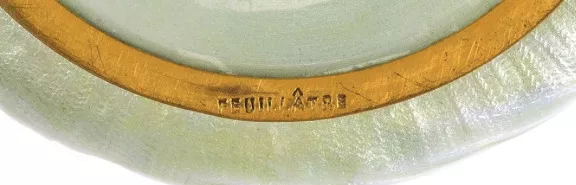
Recognizing the artist's signature
The artist's works are not necessarily signed. Hallmarks can also be found on jewelry. To be sure of the authenticity of your object, it's best to consult a specialist.
Expertise your property
If you own a work by Eugène Feuillâtre, don't hesitate to request a free appraisal by filling in our online form.
A member of our team of experts and licensed auctioneers will contact you to provide an estimate of the market value of your object.
If you are considering selling your work, our specialists will also guide you through the various alternatives available to obtain the best possible price, taking into account market trends and the specific features of each object.
Estimate in less than 24h
Discover in the same theme

Rating and value of works, drawings, paintings by Pierre-Eug...
Pierre Eugène Montézin was a twentieth-century post-impressionist painter who produced mainly oil-on-canvas works, which are listed at auction.
Learn more >

Rating and value of paintings by Paul Signac
Paul Signac is a pointillist artist who produced works that are highly valued at auction. Estimate in 24h.
Learn more >

Rating and value of paintings by Vilhelms Purvitis
Vilhelms Purvitis is a major Latvian painter who has produced many works that are highly valued at auction.
Learn more >

Estimated 800 - 1.200
DAUM - NANCY Vase with slightly swollen baluster body on circular pedestal

Estimated 600 - 1.200
ÉTABLISSEMENT GALLÉ (1904 - 1936) Vase with flattened ovoid body and conical neck

Estimated 1.500 - 3.000
DAUM - NANCY, Vase with shouldered ovoid body and small tubular neck

Estimated 10.000 - 15.000
DAUM - NANCY, "Water iris and dragonflies". Ovoid vase with conical neck on hemmed base

Estimated 80 - 120
Art Nouveau watch in white gold (750) Case decorated with small brilliants and chased on the sides, bracelet decorated with palmettes

Estimated 700€ - 1000€
ÉTABLISSEMENTS GALLÉ (1904 - 1936) Vase with...

Secure site, anonymity preserved

Auctioneer approved by the State

Free and certified estimates
Frequently asked questions
-
Who was Eugène Feuillâtre, and what was his artistic context?Eugène Feuillâtre (1870–1916) was a French goldsmith and a leading figure of the Art Nouveau movement. Specializing in decorative art objects such as inkwells, boxes, and vials, he embraced the naturalist and symbolist aesthetics of the Belle Époque. His work combines function and ornamentation with organic, curved lines inspired by nature, and he is recognized today as one of the most sought-after Art Nouveau goldsmiths, alongside artists such as Archibald Knox and Edgar Brandt.
-
What is the market value and price range of Eugène Feuillâtre's works?Feuillâtre's works command stable, high prices. Inkwells range from €500 to €25,000, vases from €2,200 to €20,000, and perfume bottles from €9,000 to €134,200. Notably, a perfume bottle dating from 1900–1902 exceeded estimates, fetching over €134,200 at auction in 2017. The most highly valued items are silver boxes and high-quality inkwells with rich, well-preserved decorations.
-
How can you authenticate a work by Eugène Feuillâtre?Feuillâtre’s works are not always signed; hallmarks may sometimes be found. To reliably verify authenticity, it is recommended to seek an appraisal from a specialist. Auctie's offers a free, no-obligation appraisal: fill out our online form, and a certified expert or auctioneer will contact you within 48 hours to authenticate your item and provide an accurate estimate.
-
Is this a good time to sell a work by Eugène Feuillâtre?Yes, now is a good time to sell a piece by Feuillâtre. The market for his works is stable and showing moderate growth, particularly for silver pieces. Supply is limited, which supports prices, while collector demand for high-quality Belle Époque desk accessories is growing steadily. Typical inkwells and boxes are highly liquid.
-
How does the sale of a work of art work at Auctie's?Auctie's supports you every step of the way: a free, no-obligation appraisal determines the value of your item (response within 48 hours from an expert), and then our specialists guide you toward the best sales strategy based on market trends and the characteristics of your piece. We ensure optimal visibility and the best possible price when your item is auctioned at an auction house.
