



Rating and value of drawings and paintings by Ham Nghi

Key takeaways
- Ham Nghi’s paintings and lacquer works sell for between €700 and €300,000, with large-format oil-on-canvas works selling for between €3,000 and €12,000.
- A former emperor of Vietnam who had been in exile in Algeria since 1888, Ham Nghi developed a style of landscape painting influenced by Impressionism and Post-Impressionism, characterized by a free and vibrant brushstroke.
- In 2021, the 1891 painting “Landscape (El Biar, Algeria)” fetched €30,000 at auction, far exceeding its initial estimate of €1,500 to €2,000.
Ham Nghi’s paintings and lacquerware fetch up to €30,000 at auction. An appraisal allows us to accurately determine the current market value of your Ham Nghi artwork and, if applicable, optimize the sale of the piece.
If you own a work by Ham Nghi and would like to know its value, our state-certified auctioneers will provide a free appraisal based on authenticity, market rating, and recent market results.
Market Value and Appraisal of Artist Ham Nghi
The artist Ham Nghi leaves behind a distinctive body of work, consisting primarily of lacquer and paintings. He is Vietnamese. Today, prices for his works are rising at auction.
The prices at which they sell on the art market range from €700 to €300,000—a significant spread that speaks volumes about the value that can be attributed to Ham Nghi’s works. He is particularly sought after by buyers in Hong Kong, Vietnam, and France.
In 2021, an oil on canvas titled Landscape (El Biar, Algeria), November 9, dating from 1891, sold for €30,000, despite an estimate of between €1,500 and €2,000.
Ranking of works from the simplest to the most prestigious
Technique used | Result |
|---|---|
Painting | From €700 to €30,000 |
Estimate in less than 24h
Placing the Artist in Context
Period
Ham Nghi (1871–1944) was an emperor of Vietnam who was deposed by the French colonial authorities and subsequently exiled to Algeria beginning in 1888.
His artistic career developed primarily in exile, through a combination of self-taught and later academic training, while immersed in French artistic circles. Chronologically, he is situated at the transition between fin-de-siècle Symbolism and early modernist experiments.
Artistic Movements
Ham Nghi’s body of work is influenced by Post-Impressionism, particularly in its free style, attention to light, and the use of color in landscape composition. In this respect, he differs from Vietnamese modernists who worked in Vietnam, such as Hoang Tich Chu, Nguyen Sy Ngoc, and Le Tri Dung.
His modernist landscapes reveal a predilection for stylized natural views, characterized by a simplification of forms and a synthetic structuring of space.
He also produced modernist bronze sculptures, marked by stylized forms and an expressive sensibility far removed from strict academicism. He occupies a unique position as a transnational artist, blending a Vietnamese sensibility with a Western artistic education.
Ham Nghi remains an atypical figure of colonial modernity, representing a rare case of a monarch who became a professional artist, whose work falls within the realm of the moderate avant-garde movements of his time.
The Life of Ham Nghi
Cultural Context
Ham Nghi was initially known as the Emperor of Annam, having ascended to the throne in 1884 amid French colonial rule and intense political tensions.
After becoming involved in the Can Vuong resistance movement, he was captured by French authorities and exiled to Algeria in 1888—a defining moment in his life.
He gradually devoted himself to the arts while in exile, developing a career as a painter and sculptor within the cultural context of fin-de-siècle Europe.
His paintings, primarily landscapes, reflect an assimilation of the principles of Naturalism and Impressionism, while retaining an introspective dimension linked to his status as an exile.
Ham Nghi occupies a highly unique position in the history of Vietnamese art, at the intersection of colonial political history and the transnational circulation of artistic forms.
Artistic and Intellectual Circle
In Algeria and later in France, he was trained by the painter Marius Reynaud, who introduced him to Western academic techniques and landscape painting.
He moved in European artistic and social circles, gradually integrating into cultural networks that fostered recognition of his visual art.
His career illustrates a unique case of cultural transfer, in which a Western artistic education intertwines with a deeply Vietnamese political and historical identity.

Ham Nghi's Techniques
The Artist’s Style
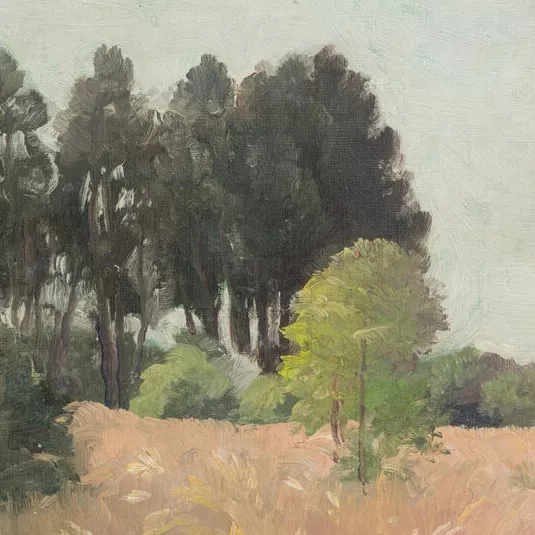
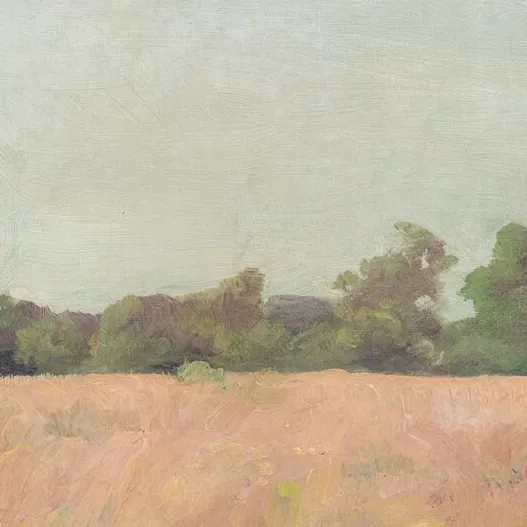
Ham Nghi stands out as a unique figure in Vietnamese art—a former emperor who became an artist in Algeria and trained in France under academic painters. He focuses on landscape painting marked by the influence of Impressionism and Post-Impressionism.
His brushwork is free and fragmented, emphasizing the play of light and atmospheric impression rather than detailed depiction. His palette is often nuanced, dominated by natural tones that reflect his careful observation of light and the changing seasons.
He shows an interest in French landscapes—particularly rural and forested ones—which he depicts from a contemplative perspective.
There is no explicit narrative or political dimension in his pictorial work, despite his exceptional historical trajectory.
Focus on a Key Work
Landscape of Algeria (late 19th century)
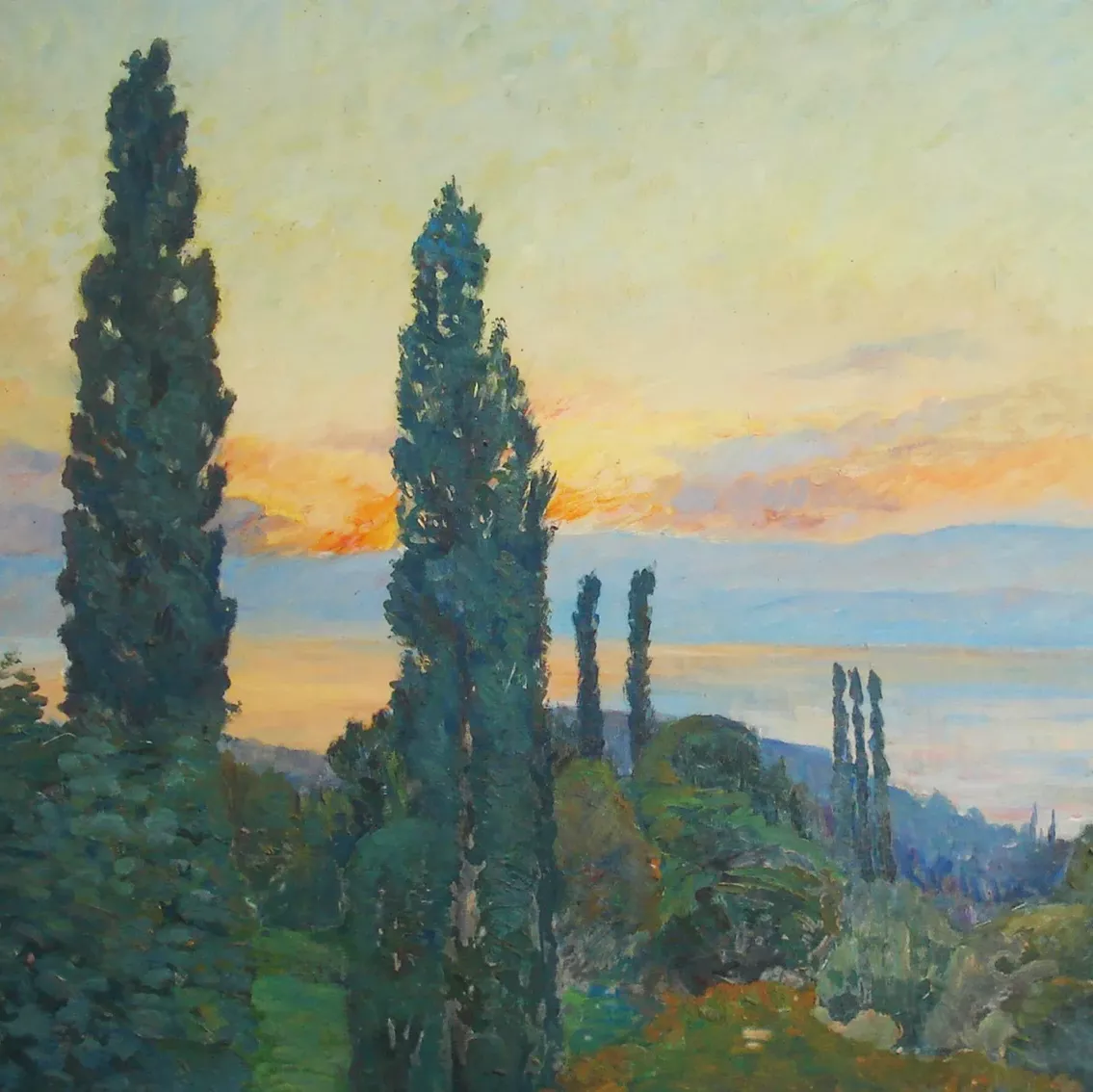
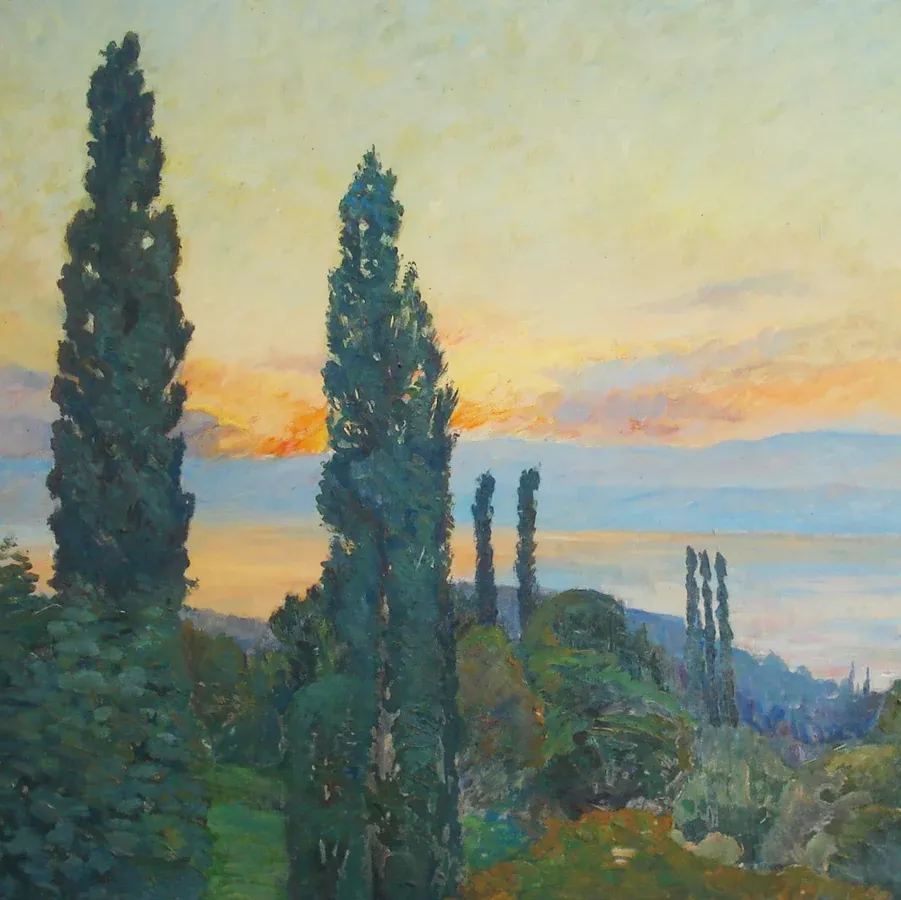
This composition is structured by a clear horizon line, which organizes the spatial reading of the landscape. The brushwork is visible and vibrant, reflecting a keen attention to variations in light.
The palette is a harmonious blend of greens, ochres, and blues, contributing to a calm and naturalistic atmosphere. Architectural and plant forms are simplified, emphasizing the overall impression.
The perspective is moderate, based more on chromatic modulation than on strict geometric construction. This work is representative of a painterly practice marked by the assimilation of Western artistic movements and by an internalized personal sensibility.
FAQ – How do you appraise a work by Ham Nghi?
1) How important is the period of creation in determining a work’s value?
Dating the work helps distinguish between different stylistic phases, as certain periods may be more sought after based on the artist’s artistic maturity and the work’s visibility on the market.
2) What stylistic criteria specific to Ham Nghi are key?
For Ham Nghi, the analysis focuses on the composition, the quality of the drawing, and the use of color, examining the synthesis between Vietnamese pictorial tradition and modernist influences, as well as the themes favored by the artist.
3) How does the market influence the valuation?
The valuation is based on a comparative analysis of auction results for modern Vietnamese art, taking into account the rarity of available works, the quality of their execution, and collectors’ interest in this generation of artists.
Market Segmentation
Prices of Artworks
Ham Nghi is positioned in the mid-range segment of modern Vietnamese painting. He is associated with a niche market, primarily active in Europe and Vietnam, with international visibility that remains limited.
His body of work is dominated by oil-on-canvas paintings and works on paper, primarily figurative or landscape in style. Large-format oil-on-canvas paintings generally sell for between €3,000 and €12,000, depending on pictorial quality and provenance.
Medium-sized works constitute the core segment, generally priced between €2,000 and €6,000. Drawings, watercolors, and small-format works are most often estimated at between €300 and €1,500.
Factors Affecting Value
Rural landscapes, scenes of daily life, and decorative compositions form the core of demand. Works with more complex visual composition can fetch prices 30 to 50% higher than simpler pieces.
The market is relatively narrow, with moderate sales frequency. Pricing depends heavily on the individual quality of the works, their condition, and the continuity of provenance.
Growing interest in lesser-known Vietnamese artists is also contributing to a gradual rise in prices, although Ham Nghi remains positioned in a niche segment with low international volatility.
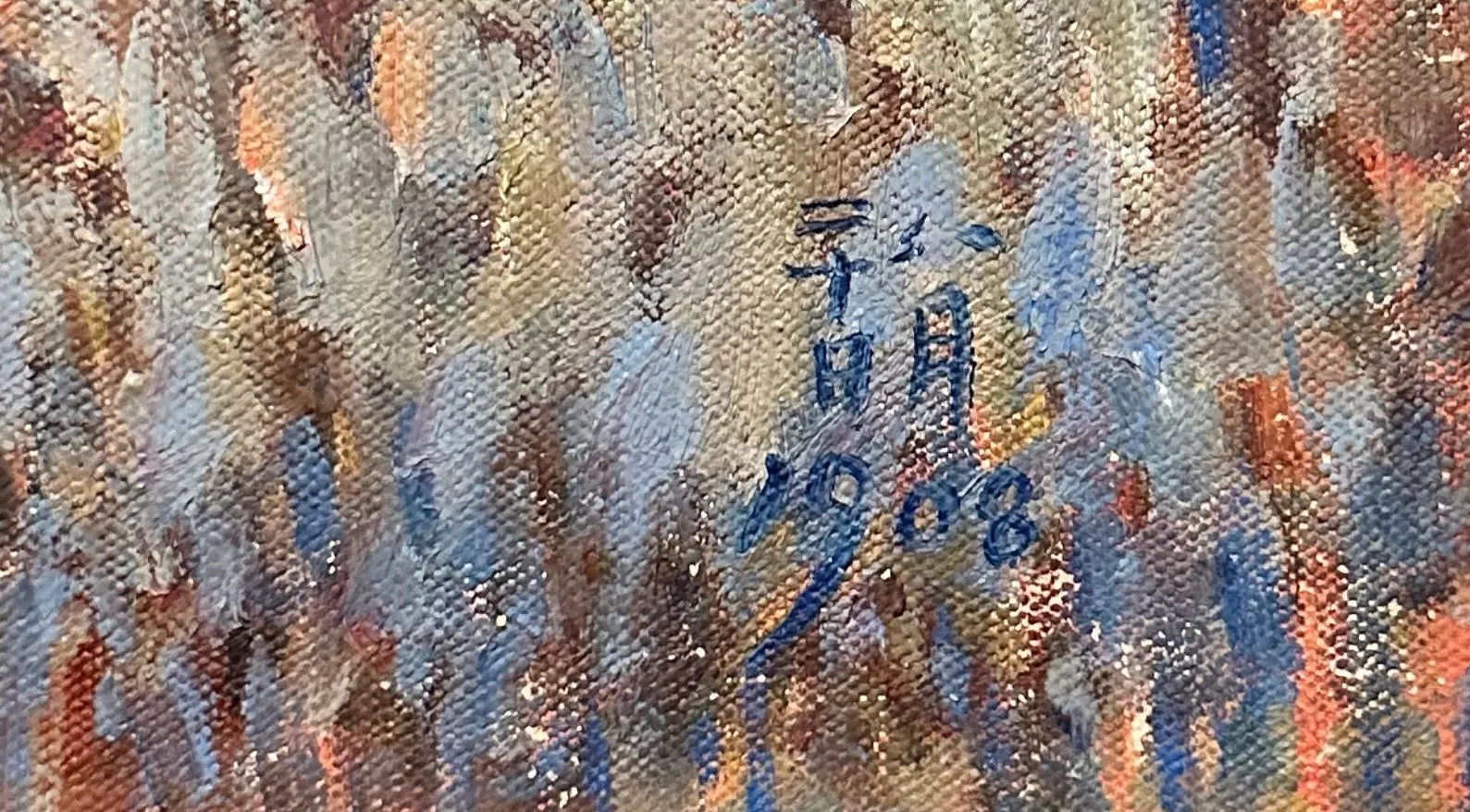
Recognizing the Artist’s Signature
Ham Nghi usually signs his works. However, it is essential to have your piece appraised to ensure its authenticity.
Get Your Ham Nghi Artwork Appraised
If you own a work by Ham Nghi, an appraisal will help you determine its current market value.
Using our online form, our experts and certified auctioneers will conduct a free appraisal and provide you with a reliable estimate of your artwork’s market value.
If you’re considering selling it, we’ll guide you through the process to ensure you get the best possible price.
Estimate in less than 24h
Discover in the same theme

Value and quotation of works, paintings by Louis Buisseret
Louis Buisseret, a member of the Nervia group, is a relatively unknown but sought-after artist. The price of his works is stable. Estimate in less tha...
Learn more >

Rating and value of Jean Dunand's vases
Jean Dunand is a twentieth-century artist and coppersmith who is very successful at auction. His value is constantly rising. Estimate in 24h.
Learn more >

Rating and value of paintings by Helene Funke
Helene Funke is an artist who produced works in the course of the 20th century that are highly rated and valued at auction.
Learn more >
Nos records d'enchères à l'hôtel Drouot

Estimated 10.000 - 15.000 €
Ebridge Ayer BURBANK(1858-1949), Young African-American boy, Oil on panel.

Estimated 20.000 - 30.000
EXCEPTIONAL LARGE OVAL DISH IN VINCENNES SOFT PASTE PORCELAIN FROM THE "BLEU CÉLESTE" SERVICE OF KING LOUIS XV AT THE CHÂTEAU DE VERSAILLES

Estimated 20.000 - 30.000
MANUFACTURE ROYALE DE SÈVRES, 18th century "L'Empereur de la Chine" - Portrait of the Emperor Qianlong, Hard porcelain bisque, 1775

Estimated 1.500 - 3.000
HERMÈS, "Kelly" 32 saddle bag in black box calf

Estimated Between €5,000 and €8,000
KRACHKOWSKY (1854-1914), Before the storm, oil on canvas

Estimated 40.000 - 80.000
Alexandre ROUBTZOFF (1884-1949), Portrait of Arbia, oil on canvas

Secure site, anonymity preserved

Auctioneer approved by the State

Free and certified estimates
Frequently asked questions
-
Who was Ham Nghi, and what was his historical context?Ham Nghi (1871–1944) was an emperor of Vietnam who was deposed by the French colonial authorities and subsequently exiled to Algeria beginning in 1888. It was during his exile that he devoted himself to the arts, becoming a painter and sculptor within the cultural context of fin-de-siècle Europe. He occupies a unique position: a former sovereign turned professional artist, blending a Vietnamese sensibility with a Western artistic education.
-
What are the current market prices for Ham Nghi's works?Ham Nghi's works sell for between €700 and €300,000, depending on the type and quality. Large-format oil-on-canvas paintings generally sell for between €3,000 and €12,000; medium-sized works sell for around €2,000 to €6,000; while drawings, watercolors, and small-format works range from €300 to €1,500. A landscape painting can fetch up to €30,000 depending on its artistic quality and provenance.
-
How can you authenticate a work by Ham Nghi and determine its exact value?It is essential to have your artwork appraised by specialists. Auctie's offers a free, no-obligation appraisal: fill out our online form, and our state-certified auctioneers and experts will analyze the authenticity, quality of craftsmanship, condition, and provenance of your artwork to provide you with a reliable market value within 48 hours.
-
What is the current market for Ham Nghi's works, and is now a good time to sell?The Ham Nghi market, though niche, is experiencing gradual growth thanks to the growing interest in modern Vietnamese artists. Active primarily in Europe and Vietnam, this segment offers good visibility for sellers. Now is a good time to sell, as collectors are paying renewed attention to this unique figure of colonial modernity.
-
How does a sale work at Auctie's, and what kind of support do we provide?Auctie's supports you every step of the way: a free, no-obligation appraisal by our experts, followed by advice on how to maximize the value of your artwork. If you decide to sell, our licensed auctioneers will manage the entire process through to the auction, taking into account the artwork’s authenticity, current market value, and recent results in the Vietnamese art market.
