



Rating and value of paintings by Le Tri Dung

Key takeaways
- Le Tri Dung’s paintings sell for between €700 and €4,000 at auction, with large-format works fetching up to €12,000.
- A Vietnamese artist born in 1949, known for his dynamic depictions of horses and military scenes characterized by expressive lines and stark contrasts.
- His equestrian compositions with calligraphic lines command prices 30 to 60 percent higher than his decorative works, benefiting from growing interest among international collectors.
Paintings and lacquers by Le Tri Dung trade up to €4,000 on the auction market. An appraisal enables us to accurately determine the price of your work by Le Tri Dung on the current market and to optimize, if necessary, the sale of a work.
If you own a work by Le Tri Dung and would like to know its value, our state-approved auctioneers will carry out a free appraisal based on authenticity, quotation and recent market results.
Rating and value of the artist Le Tri Dung
The artist Le Tri Dung leaves behind a distinctive body of work, composed mainly of lacquer and paint. He is Vietnamese. Now, the prices of his works are rising under the auctioneers' gavel.
The price at which they sell on the art market ranges from €700 to €4,000, a significant gap but one that speaks volumes about the value that can be attributed to Le Tri Dung's works. He is especially prized by buyers from Hong Kong, Vietnam and France.
In 2024, a gouache on paper entitled Still life null, sold for €1,000 while it was estimated at between €800 and €1,000.
Order of value from a simple work to the most prestigious
Techniques used | Result |
|---|---|
Painting | From €700 to €4,000 |
Estimate in less than 24h
Situate the artist
Period
Le Tri Dung is an artist born in 1949, in the context of the evolution of contemporary Vietnamese art after periods of war and cultural isolation.
He belongs to the post-Indochina School of Fine Arts generation, active during the decades marked by the gradual opening up of Vietnam and the diversification of artistic practices.
The vast majority of his corpus is situated in the second half of the 20th century, a moment of redefinition of the relationship between national tradition and international modernity.
Currents
Tri Dung is part of late Vietnamese modernism, and operates a synthesis between Western academic artistic heritage and local pictorial traditions, perceptible in the construction of the drawing and the treatment of color.
His figuration is expressive, with a stylized representation of animal subjects, particularly the horse, and characterized by a dynamic simplification of forms and an accentuation of the graphic gesture.
He also places great importance on the energy of the line and the rhythmic intensity of the composition. He follows in the footsteps of modern Vietnamese artists such as Bui Xuan Phai, Tran Van Can or Tran Dinh Tho.
Le Tri Dung's life
Cultural context
Le Tri Dung is part of the Vietnamese art scene of the second half of the 20th century, a period marked by political, social and cultural transformations linked to Vietnam's contemporary history.
He was trained in an artistic context structured by the heritage of fine art and national academic teaching, and developed a figurative body of work attentive to historical memory and social realities.
Artistic and intellectual entourage
His artistic career follows in the footsteps of previous generations influenced by To Ngoc Van and Nguyen Sang, structuring figures of Vietnamese pictorial modernity.
He evolves within a network of contemporary artists committed to the renewal of Vietnamese figurative painting, taking part in national and international exhibitions that promote the dissemination of his work.

Techniques of Le Tri Dung
Artist's style
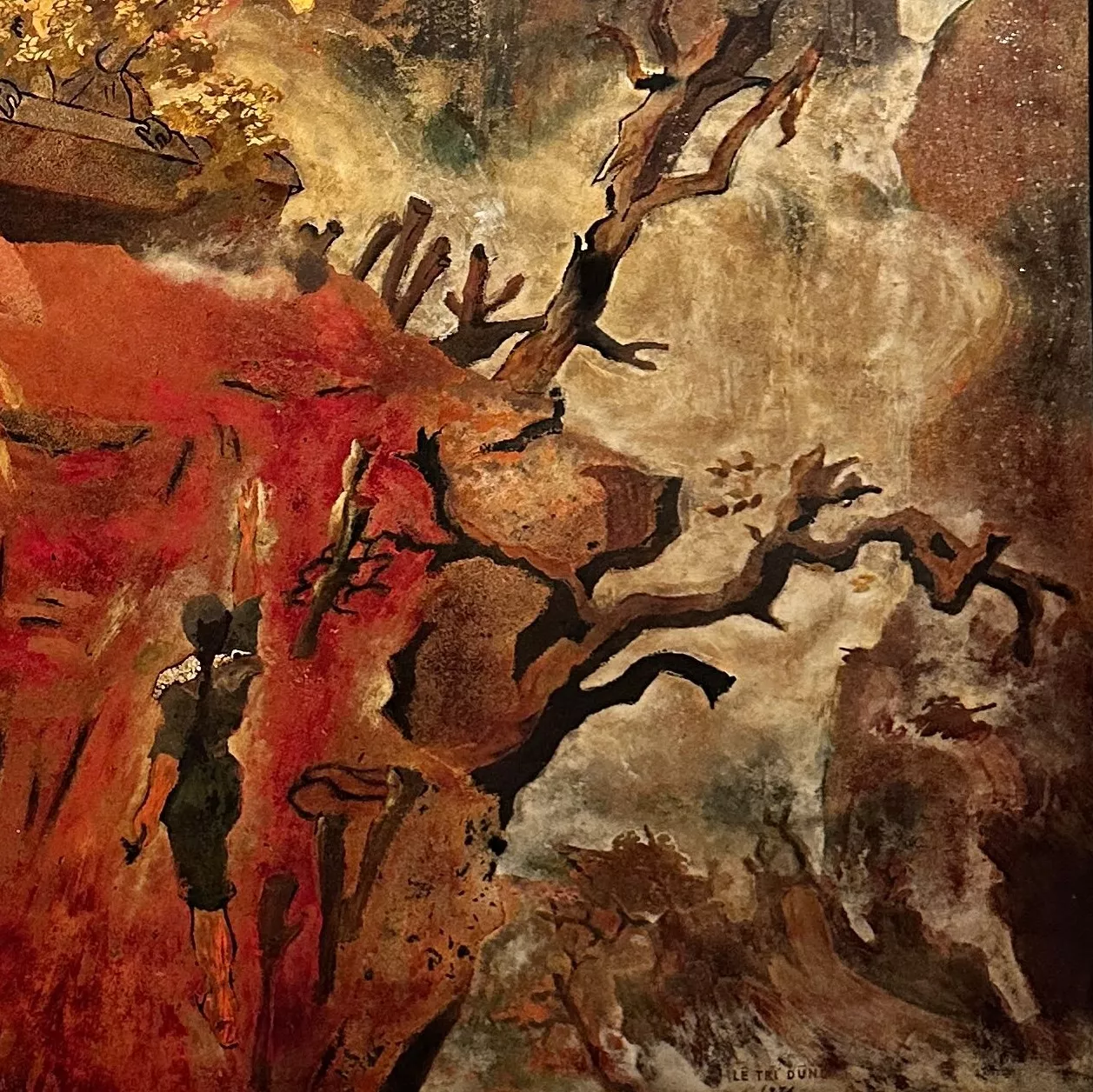
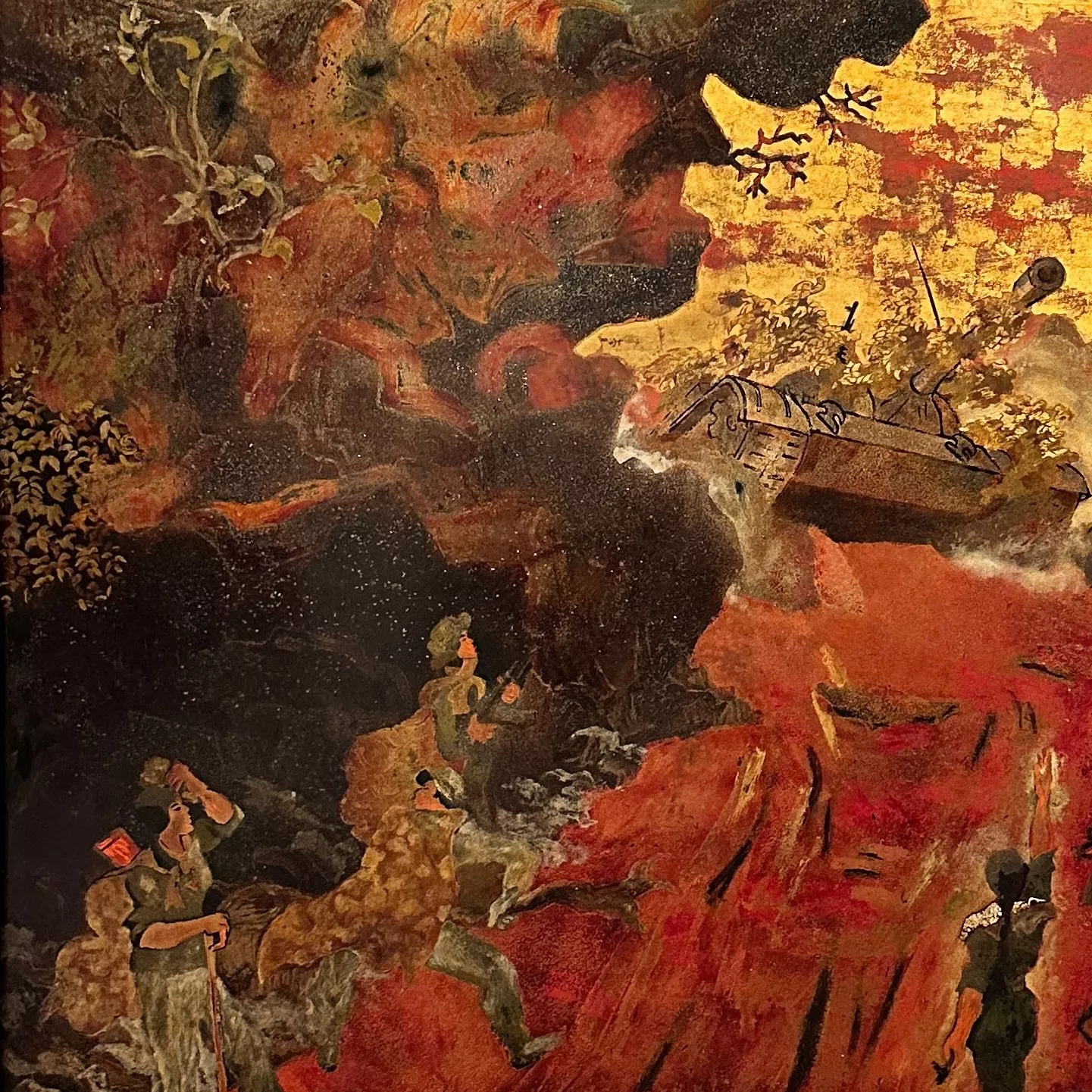
Le Tri Dung is best known for his equestrian and military representations, in a narrative yet stylized vein. His academic training is solid, perceptible in his mastery of drawing and the rigorous construction of equine anatomies.
He shows a taste for dynamic compositions, with marked diagonals, tense movements and an accentuation of gestures and postures.
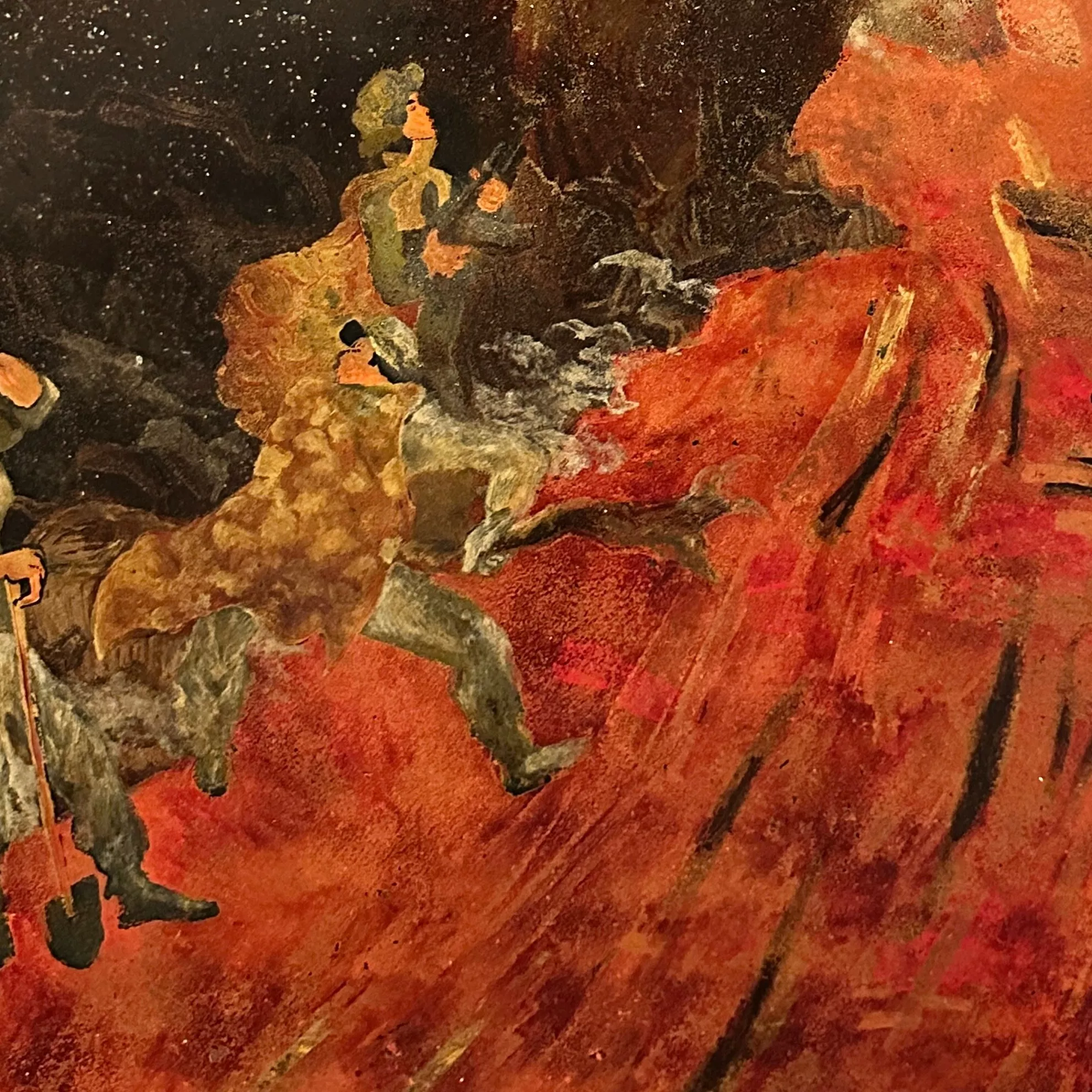
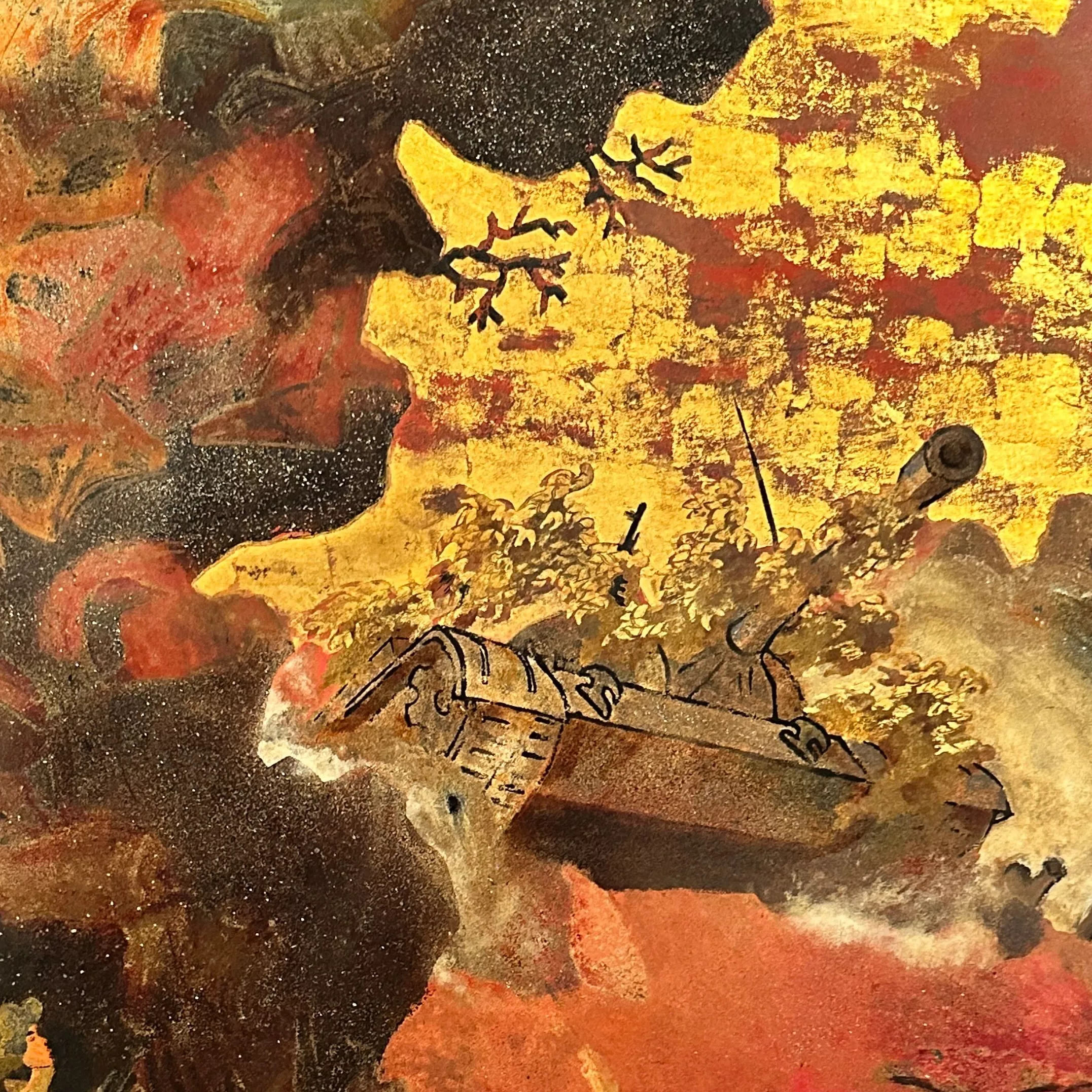
His palette is contrasted, often dominated by deep blacks, intense reds and earthy tones, helping to give his works a strong dramatic intensity.
Focus on a key work
Cavaliers au galop, late 20th century
This composition is structured by ascending diagonals, conveying the speed and momentum of galloping horses. He gives expressive treatment to the manes and limbs, accentuating the sensation of continuous movement.
The contrast is marked between the dark figures and the lighter background, reinforcing legibility and visual tension. He partially stylizes the equine forms, avoiding hyperrealism in favor of a synthetic energy, and reduces the scenery to minimal indications, in order to focus attention on the relationship between rider and mount.
FAQ - How to estimate a work by Le Tri Dung ?
1) What stylistic criteria specific to Le Tri Dung are decisive ?
For Le Tri Dung, the analysis focuses above all on the vigor of the line, the dynamic construction of the compositions and the recurrent representation of equestrian figures or historical scenes, characterized by an expressive and energetic pictorial writing.
2) What roles do provenance and documentary references play?
A clearly established provenance, associated with exhibitions, recognized galleries or specialized publications constitutes an essential factor of credibility and participates in the valuation of the painting.
3) How does the art market influence the estimate ?
The estimate is based on a comparative analysis of the results of public sales of modern Vietnamese art, taking into account the rarity of historical abstract works, their quality of execution and the growing interest of international collectors.
Market segmentation
Price of works
Tri Dung is associated with the generation following Indochinese modernity, and is present mainly in specialized sales in Europe but also in Asia. For the time being, his price remains affordable, but is benefiting from the growing interest in Vietnamese figurative painters.
His production is dominated by oil on canvas works depicting horses, stylized figures and dynamic compositions. Large-format works on canvas can be estimated at between €3,000 and €12,000, depending on pictorial quality.
Intermediate formats make up the central segment of the market, often ranging from €1,500 to €4,000.
Valuation factors
Representations of horses are the most sought-after iconographic core, and dynamic compositions with calligraphic lines can reach levels 30-60% higher than secondary decorative subjects.
The expansion of the international market for contemporary Vietnamese artists supports a slow but steady rise in the quotation, even if its positioning remains that of an accessible segment, distinct from the historical figures of the Indochinese School.
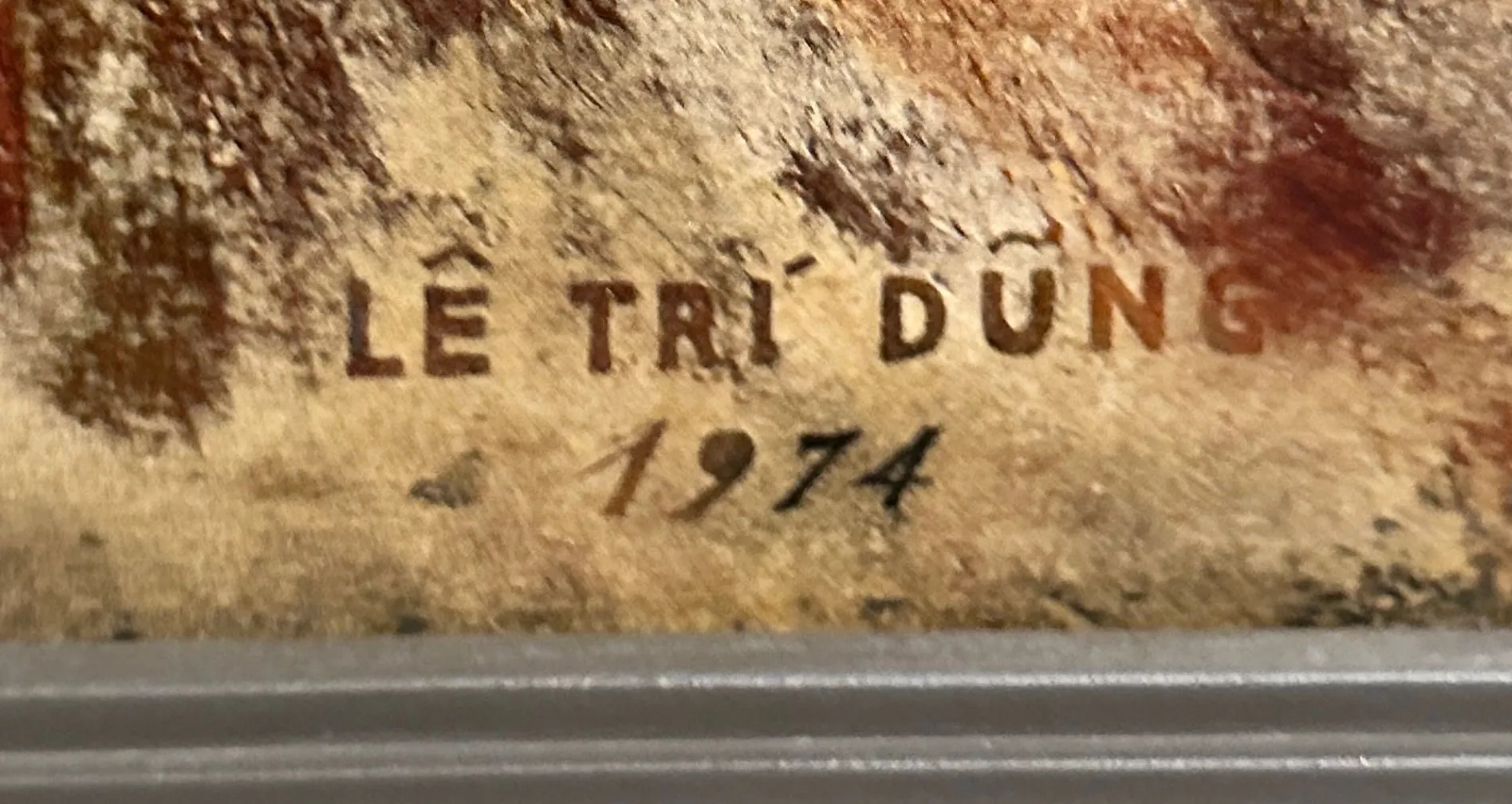
Recognizing the artist's signature
The Tri Dung signs his works most of the time. However, it is essential to have your work appraised to be sure of its originality.
Get an appraisal for your Le Tri Dung
If you own a work by Le Tri Dung, an appraisal enables you to appreciate its value on the current market.
Using our online form, our experts and certified auctioneers will carry out a free appraisal and provide you with a reliable estimate of your work's market value.
If you're considering selling it, we'll work with you to ensure the best value.
Estimate in less than 24h
Discover in the same theme

Rating and value of works, drawings, paintings by Pierre Eug...
Pierre Eugène Montezin is a twentieth-century Impressionist artist who produced drawings and oil paintings with a high auction value.
Learn more >

Rating and value of statues, bronzes and marbles by Pierre T...
Pierre Travers is a 20th-century sculptor who has produced works in marble and bronze that are sought-after and quoted on the auction market.
Learn more >

Market Value and Pricing of Georges Jouve's Sculptures
Georges Jouve is a twentieth-century contemporary sculptor who has produced works that are highly prized at auction.
Learn more >
Nos records d'enchères à l'hôtel Drouot

Estimated 10.000 - 15.000 €
Ebridge Ayer BURBANK(1858-1949), Young African-American boy, Oil on panel.

Estimated 20.000 - 30.000
EXCEPTIONAL LARGE OVAL DISH IN VINCENNES SOFT PASTE PORCELAIN FROM THE "BLEU CÉLESTE" SERVICE OF KING LOUIS XV AT THE CHÂTEAU DE VERSAILLES

Estimated 20.000 - 30.000
MANUFACTURE ROYALE DE SÈVRES, 18th century "L'Empereur de la Chine" - Portrait of the Emperor Qianlong, Hard porcelain bisque, 1775

Estimated 1.500 - 3.000
HERMÈS, "Kelly" 32 saddle bag in black box calf

Estimated Between €5,000 and €8,000
KRACHKOWSKY (1854-1914), Before the storm, oil on canvas

Estimated 40.000 - 80.000
Alexandre ROUBTZOFF (1884-1949), Portrait of Arbia, oil on canvas

Secure site, anonymity preserved

Auctioneer approved by the State

Free and certified estimates
Frequently asked questions
-
Who is Le Tri Dung, and what is his artistic background?Le Tri Dung is a Vietnamese artist born in 1949, belonging to the late 20th-century generation of Vietnamese modernism. He synthesizes Western academic heritage with local pictorial traditions, following in the footsteps of modern Vietnamese artists such as Bui Xuan Phai. His work is characterized by expressive figurative depictions, particularly equestrian and military scenes marked by energetic lines and dynamic composition.
-
What is the price range for Le Tri Dung's paintings?Le Tri Dung’s paintings sell for between €700 and €4,000 at auction. Medium-sized works constitute the core segment of the market, generally estimated at between €1,500 and €4,000, while large-format works on canvas can fetch between €3,000 and €12,000 depending on their pictorial quality. Depictions of horses—a major iconographic theme in his body of work—can exceed these price ranges by 30 to 60 percent.
-
How can I have a work by Le Tri Dung authenticated and appraised?To authenticate and appraise a work by Le Tri Dung, we recommend requesting a free appraisal from Auctie's. Our state-certified auctioneers will conduct a no-obligation appraisal based on the work’s authenticity, market value, and recent market results. The appraisal will be sent to you within 48 hours, allowing you to accurately assess the value of your artwork.
-
What role do provenance and documentation play in the appraisal?A clearly established provenance, combined with exhibitions, recognized galleries, or specialized publications, is an essential factor in credibility and contributes to the work’s value. Reliable documentation strengthens the reliability of the estimate and may justify a higher valuation, particularly for pieces with an established collection history.
-
Is this a good time to sell a work by Le Tri Dung?Yes, now is a good time to sell a work by Le Tri Dung. The Vietnamese art market is seeing growing interest from international collectors, particularly in Europe and Asia. His market value is rising slowly but steadily, while the segment remains accessible and distinct from that of historical figures, offering attractive opportunities for appreciation. Auctie's guides you from appraisal to auction to ensure the best possible return on your investment.
