



Why Chaumet jewelry prices soar at auction

Key takeaways
- Chaumet jewelry saw a 38% increase between 2020 and 2025, with 68% of lots exceeding their high estimate in 2024, indicating that demand outstripped supply.
- Pieces from the Empire and Restoration periods (1800–1830) achieved a 100% sell-through rate, while Belle Époque and Art Deco jewelry fetched an average premium of 65% above estimate.
- Museum exhibitions and LVMH’s support generated a direct premium of 20% to 30% on the lots on display, establishing Chaumet as a symbolic benchmark of globalized French taste.
The return to favor of an imperial house
Between 2020 and 2025, Chaumet jewelry saw its auction value increase by +38%, placing the house among the three best-performing French signatures on the secondary market.
After a century spent alternating between imperial prestige and relative media discretion, Chaumet is experiencing a rapid revaluation of its heritage, supported by LVMH and museum exhibitions.
The aim is to understand how historical legitimacy, institutional renewal and stylistic rarity explain the explosion of Chaumet prices on the secondary market.
High jewelry market structure and position of Chaumet
The global collectible jewelry segment grew by +15% between 202 and 2025, reaching an estimated volume of 7.2 billion USD (UBS Art Market Report, 2025). This growth confirms the structural resilience of the jewelry market in the face of global economic cycles.
The Chaumet house accounts for around 12% of global sales volume of French signed jewelry, behind Cartier (33%) and Van Cleef & Arpels (28%) but shows the fastest growth in the sector (+18% per year since 2020).
Sales are mainly concentrated in Geneva and Paris, with 35% of auctions, due to the proximity of heritage and institutional collectors. Asia accounts for 25%, with auctions driven by the rediscovery of French imperial aesthetics.
The Middle East, with Doha and Dubai, is also emerging as a new jewelry investment pole.
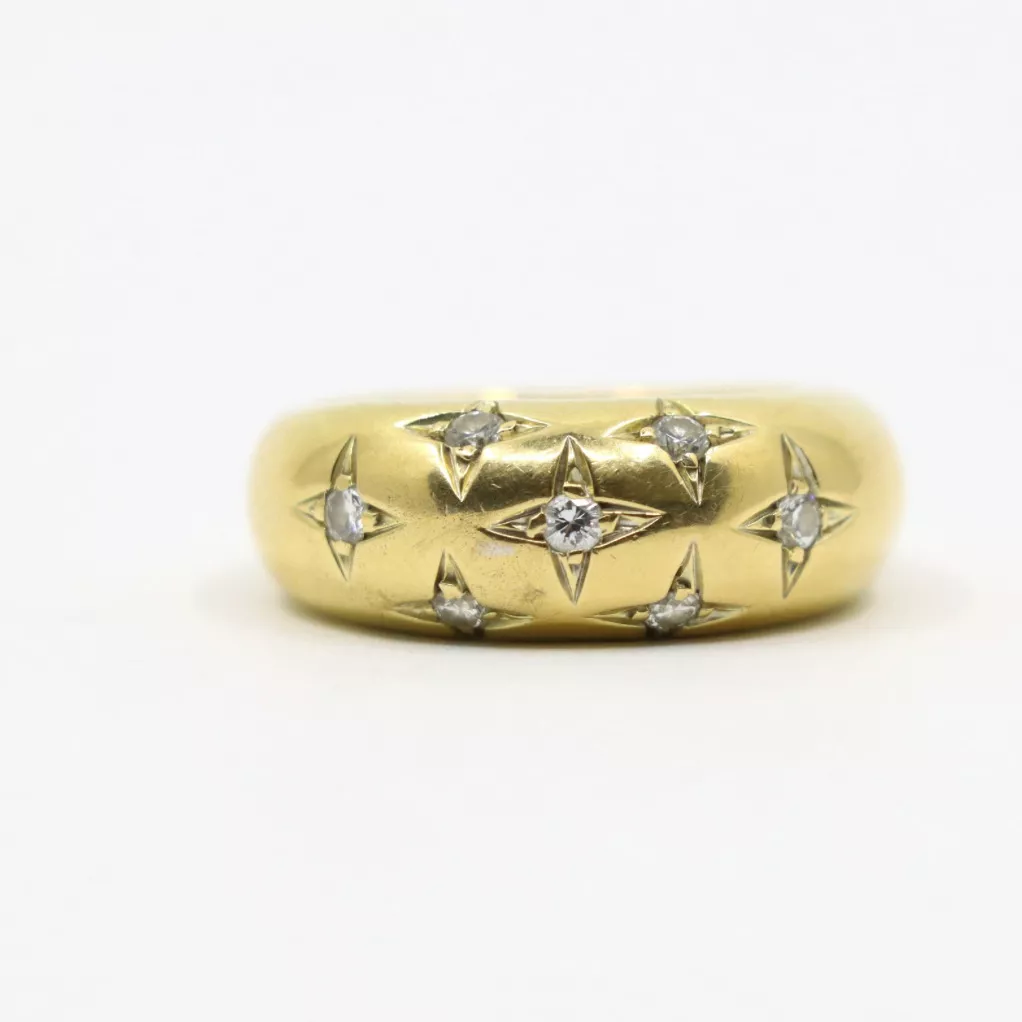
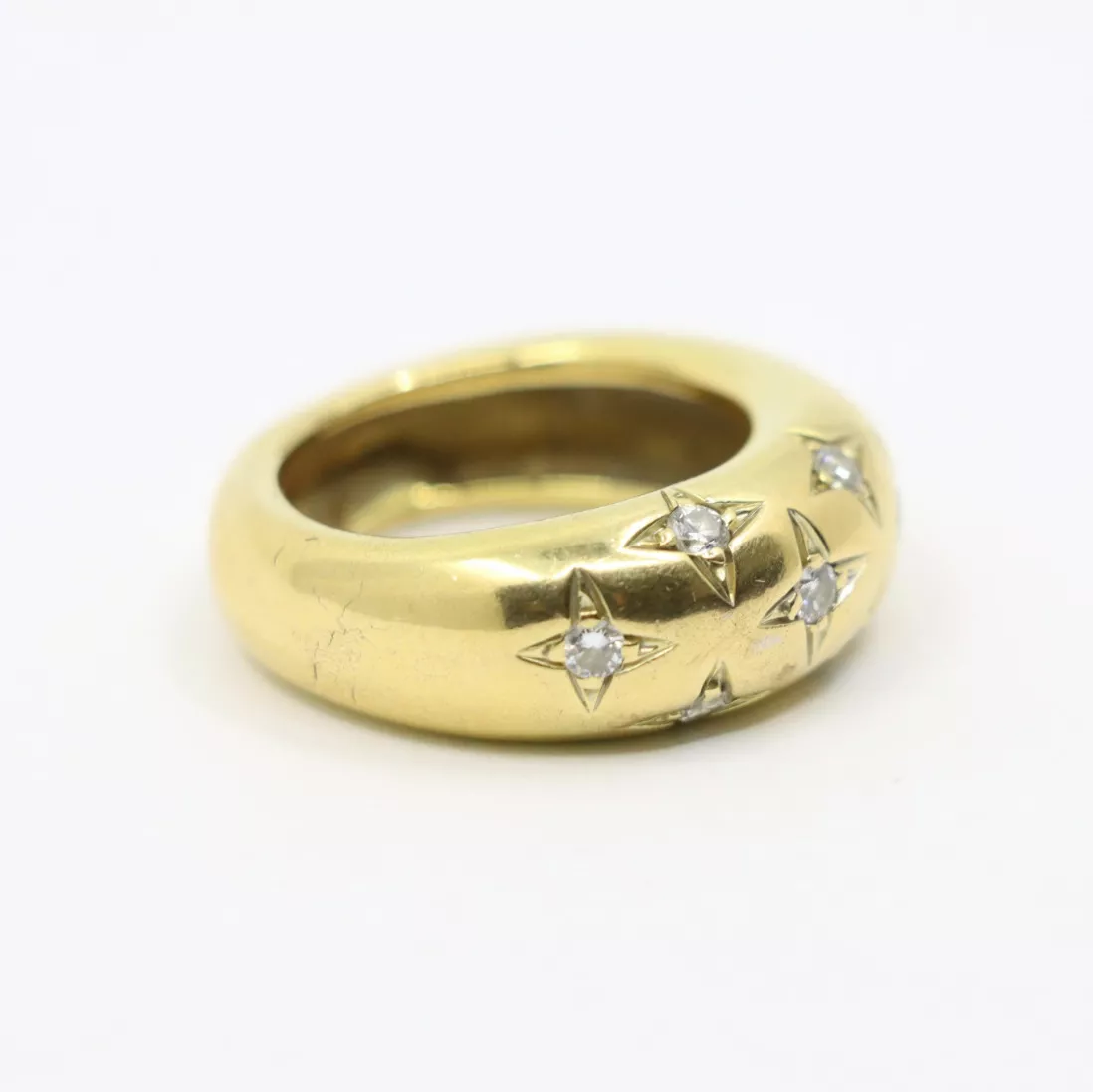
Empire and Restoration jewels (1800 - 1830) are exceptionally popular and extremely rare, so much so that the auction rate is 100% on the lots presented.
Belle Époque and Art Deco jewels (1890 - 1930) are the most represented period in the salesroom, with an average premium of +65% on high estimate.
Contemporary creations (post-2000) represent an emerging but buoyant market, stimulated by the recent museumization of the house.
Neoclassical tiaras, brooches and necklaces account for 45% of amounts sold. Naturalist and floral jewelry (bees, ears of corn, leaves) recorded the strongest growth: +70% in five years. Transformable pieces (modular necklaces, head jewels) reflect an increased appreciation of mechanical expertise.
At Chaumet, too, bidders give importance to platinum and diamond cut (cushion, rose, oval). GIA- or SSEF-certified stones bring an average mark-up of 20 to 25% on the final price.
Sociologically, buyers are predominantly European (45%) and Asian (30%), and are often profiles with high cultural and economic capital. There has also been an increase in the number of institutional acquisitions (museums, private foundations), with +35% since 2022.
Chaumet's overall sale rate in 2024 is 96%, an indicator of a tight market. 68% of lots exceeded their high estimate, indicating that demand outstripped supply.
The Chaumet quotation follows a logic of low price elasticity higher prices do not lead to lower volume, reflecting the segment's mature heritage. These figures demonstrate that Chaumet is now positioned as a strategic player in the heritage market, whose growth is based on the reactivation of its imperial heritage and the institutional confidence of the art market.

Heritage, style and symbolic capital of the Chaumet house
The cultural value of Chaumet can be explained by the combination of symbolic capital, stylistic continuity and historical legitimization. Founded in 1870 by Marie-Étienne Nitot, Chaumet became the official jeweler to Napoleon I and Empress Josephine, inscribing its production in an aesthetic of power, and creating a legend.
Chaumet introduced a neoclassical range based on purity of line, symmetry and verticality. The tiara becomes its formal emblem, a symbol of social hierarchy, light and authority, and translates the sacralization of jewelry into an instrument of elevation.
The use of naturalistic elements constitutes an iconographic vocabulary that is both political and poetic.
Under Joseph Chaumet (late 19th - early 20th century), the company moved from neoclassicism to Art Nouveau eclecticism, favoring fluidity, light materials and colored stones.
At the turn of the 1920s - 1930s, Chaumet adopted the geometric lexicon of Art Deco, integrating platinum, calibrated diamonds and onyx into an architectonic structure. This capacity for aesthetic adaptation underpins the durability of Chaumet taste.
Each period thus develops an identifiable formal typology, which is a condition for recognition on the auction market (role of the visual signature as a guarantee of stylistic authenticity).
The company's archives (nearly 80,000 drawings conserved at Place Vendôme) constitute an exceptional documentary collection, mobilized as a scientific instrument of valorization.
Exhibitions such as Chaumet : Le Grand Frisson (Monnaie de Paris, 2019) and Joséphine et Napoléon (Musée des Arts Décoratifs, 2021) have transformed Chaumet's heritage into an object of institutional study. This recognition leads to a direct premium on the secondary market (+20 to +30% on the lots on display).
The Chaumet heritage and style thus function as vectors of aesthetic and social authority, transforming the brand into a symbolic referent of French taste within the globalization of luxury.
Josephine's imperial tiara, sold at Sotheby's in 2024, originally estimated at €400,000, was sold for €1.1M, so the object took +175% of its estimated value. A belle époque brooch sold at Christie's fetched €320,000 (2.6 times its estimate). A naturalistic gold and enamel necklace sold for CHF 450,000 in Geneva, a record in 2025.
The median price per lot for Chaumet reached €85,000, compared with €120,000 for Cartier. We are witnessing a crossover between cultural and financial circuits (foundations, investment funds), and the LVMH effect (valuation through backing by a brand-group whose solidity reinforces the confidence of bidders).
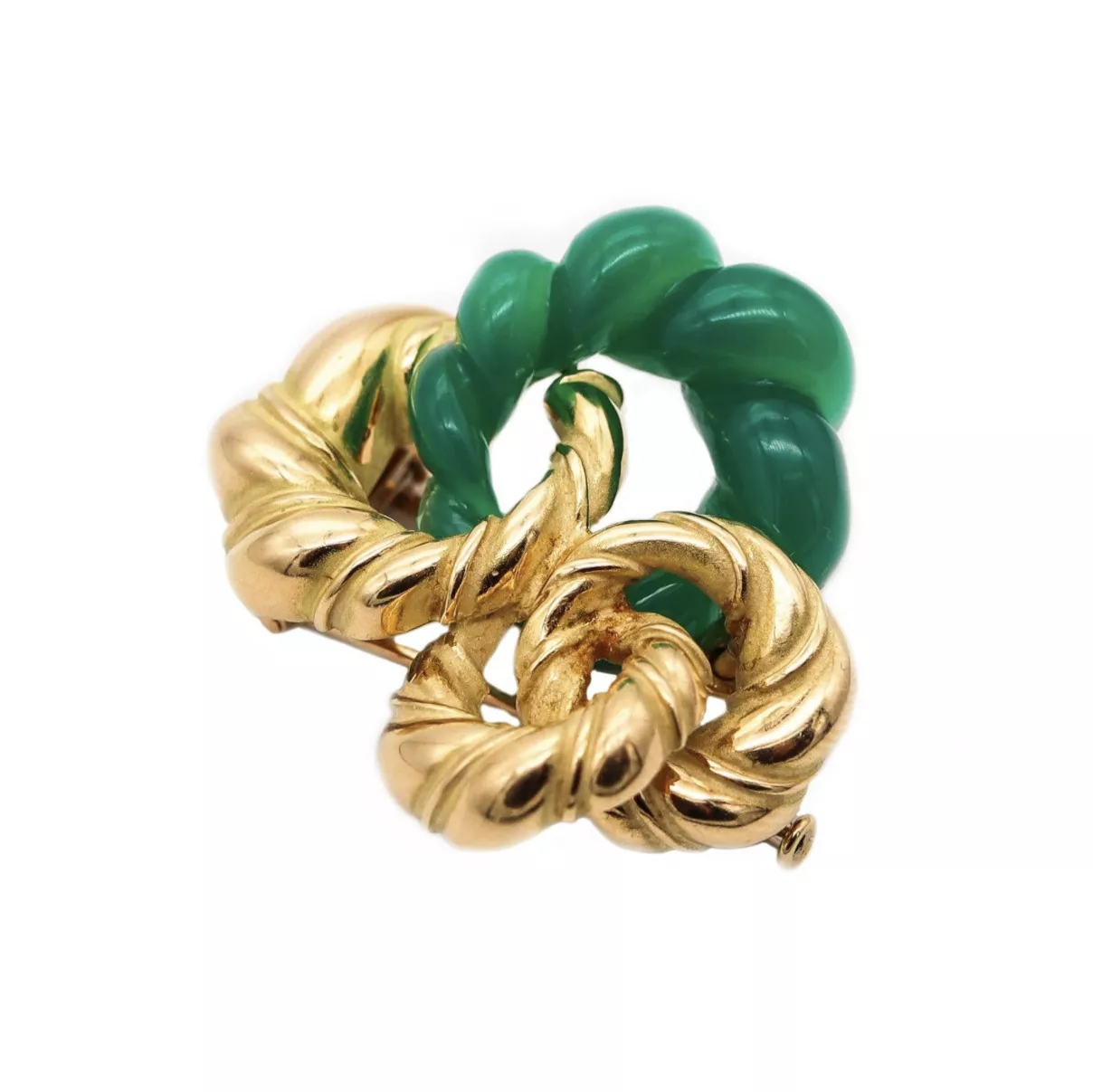
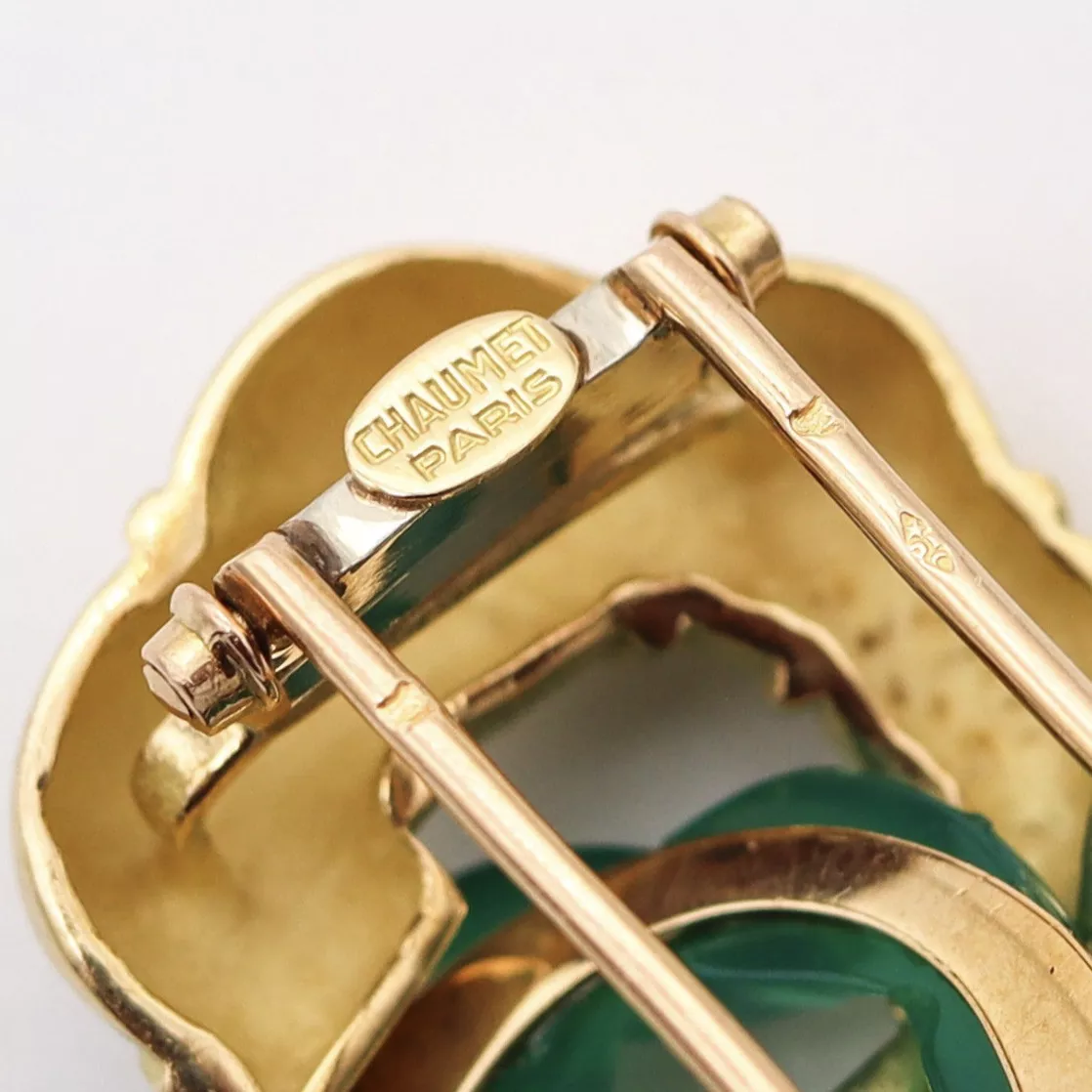
Perspectives 2025 - 2030
The annual growth forecast is +8% to +10%, supported by the rediscovery of the imperial style. Chaumet collections are now part of the museum and foundation circuit, and the Asian market for historical jewelry is growing.
Chaumet is thus becoming a textbook case of aesthetic patrimonialization, and a house that is being rediscovered by science and capital.
The surge in Chaumet prices is the result of a phenomenon of cumulative legitimization, where history, art and rarity converge. The house illustrates the reconversion of luxury into a stable cultural value, backed by imperial heritage and institutional confidence.
By becoming an object of study and investment, Chaumet embodies the transformation of jewelry into a document of civilization.
Estimate in less than 24h
Discover in the same theme

Here's why French cubists are back on the market in style
French Cubists were long forgotten by the art market. Today, they are back on the market in great numbers. 24h estimate.
Learn more >

Why is fine jewelry exploding at auction?
Haute joaillerie is a sector that has exploded at auction over the last five years. Cartier, Van Cleef & Arpels, Boucheron, Chaumet; analysis.
Learn more >

Here's why Van Cleef & Arpels jewelry prices are skyrocketin...
Haute joaillerie, whose VCA creations are exploding at auction. The value of these creations is very high.
Learn more >
D'autres pièces de haute joaillerie vendues aux enchères

Estimated 10.000 - 15.000 €
BOUCHERON - "Ava" - White gold necklace set with a brilliant-cut diamond (1.56 cts)

Estimated 2.000 - 4.000
CARTIER, 18K (750 e) gold opening bangle bracelet

Estimated 1.500 - 3.000
CARTIER PARIS, Trinity, 2-tone 18k (750e) gold clip brooch

Estimated 3.000 - 5.000
CARTIER, Love, Wedding band in 18k white gold (750e)

Estimated 2.000 - 4.000
CARTIER Love model Pendant necklace in 18K (750e) white gold

Estimated 1.500 - 2.000
CHAUMET, Ring in platinum (850th), set with an oval faceted ruby

Secure site, anonymity preserved

Auctioneer approved by the State

Free and certified estimates
Frequently asked questions
-
Who was Chaumet, and why is the brand so prestigious?Chaumet was founded in 1870 by Marie-Étienne Nitot and became the official jeweler to Napoleon I and Empress Joséphine. This imperial legacy, combined with its stylistic evolution from Neoclassicism to Art Nouveau and then to Art Deco, has established Chaumet as a benchmark of French taste. Its archives of 80,000 drawings and recent museum exhibitions (Monnaie de Paris in 2019, Musée des Arts Décoratifs in 2021) reinforce its status as a cultural heritage institution.
-
What are the typical prices for Chaumet jewelry at auction?The median price per Chaumet lot stands at €85,000. The most prestigious pieces fetch much higher record prices: an imperial tiara belonging to Joséphine sold for €1.1 million in 2024, a Belle Époque brooch fetched €320,000 at Christie’s, and a naturalist-style necklace exceeded 450,000 CHF in Geneva. Lots exceed their high estimate in 68% of cases, reflecting demand that outstrips supply.
-
How can I authenticate a piece of Chaumet jewelry and get it appraised?To authenticate and appraise a piece of Chaumet jewelry, we recommend that you submit a request for a free, no-obligation appraisal with Auctie's. Our team of expert auctioneers will examine your piece and respond within 48 hours. Authentication is based on an analysis of the style, materials, and signature, and, if necessary, consultation of the brand’s archives.
-
Is this the right time to sell a piece of Chaumet jewelry?Yes, this is an excellent time to sell. Since 2020, prices for Chaumet jewelry have risen by 38%, with annual growth of 18%. The sell-through rate reached 96% in 2024, and institutional demand is on the rise (+35% since 2022). Bidders’ confidence is bolstered by the museum revival and the LVMH effect, while the Asian and Middle Eastern markets are offering new opportunities.
-
How does the sale of a Chaumet jewelry piece work at Auctie's?At Auctie's, the process is simple and free: contact our team for a no-obligation appraisal, conducted by an expert within 48 hours. Once the jewelry is accepted, we add it to our catalog with a detailed description and professional photos, then present it to international bidders. We guide you every step of the way, from the appraisal to the final sale, with full transparency regarding the terms of sale and fees.
