



Here's why Cartier jewelry prices are skyrocketing at auction

Key takeaways
- Cartier jewelry is projected to rise by +42% between 2020 and 2025, reaching a median auction price of €140,000 in 2024.
- Market leader with 30% of sales of signed fine jewelry, benefiting from a unique legitimacy premium (coefficient of 2.8) thanks to its historic prestige and museum-level status.
- Animal-themed pieces (Panther, Snake) are recording the strongest growth (+55%), while royal jewelry accounts for 25% of total value despite representing less than 5% of volume.
Between 2020 and 2025, Cartier-signed jewelry will record an average +42% increase in auction value on the international market, according to consolidated reports from Sotheby's, Christie's and ArtTactic.
Cartier accounts for around 30% of total signed fine jewelry sales in 2024, confirming its structural leadership position on the global secondary market. This growth is part of the broader dynamic of the financialization of luxury objects.
Jewelry is becoming a non-speculative heritage asset, combining use, memory and investment value. The rise in Cartier prices today is due to a triple convergence of historical prestige, material rarity and cultural legitimization, thus founding the brand as a paradigm of total value.
As with the entire fine jewelry segment, recent years have seen the emergence of a buyer profile corresponding to a collector-investor, a rational actor seeking a balance between symbolic return and financial stability.
The trend is also towards a growing Asian clientele (+25% of active buyers between 2022 and 2025), an indicator of a globalized taste for heritage jewelry.
The median price of a Cartier jewel sold at auction reaches €140,000 in 2024, compared with €95,000 for Van Cleef & Arpels and €60,000 for Boucheron. The Cartier signature coefficient, if we take the ratio between the realized price and the median estimate is estimated at 2.8, translating a legitimacy premium that is unique on the market.
The universality of the Cartier style, which articulates its identity between geometric rigor and sober luxury, creates a stable visual grammar that is easily identifiable by collectors and is institutionalized in reference catalogs.
The presence of retrospective exhibitions such as Cartier : Le style et l'histoire, Grand Palais, in 2013 contributes to the museum objectification of the house, helping to transform jewelry into a legitimized cultural asset.
The aim, then, is to understand the explosion in Cartier prices as a symptom of a mutation of luxury into cultural capital, thanks to the economic and symbolic mechanisms that ensure the conversion of jewelry into universal, measurable value.
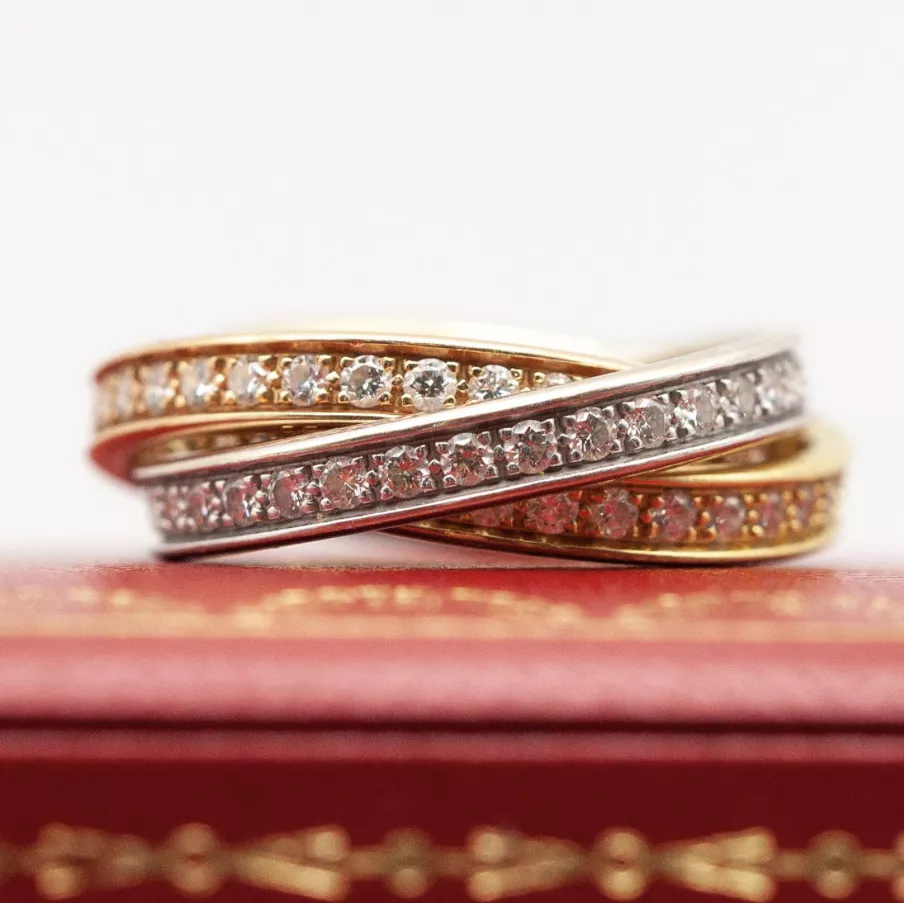
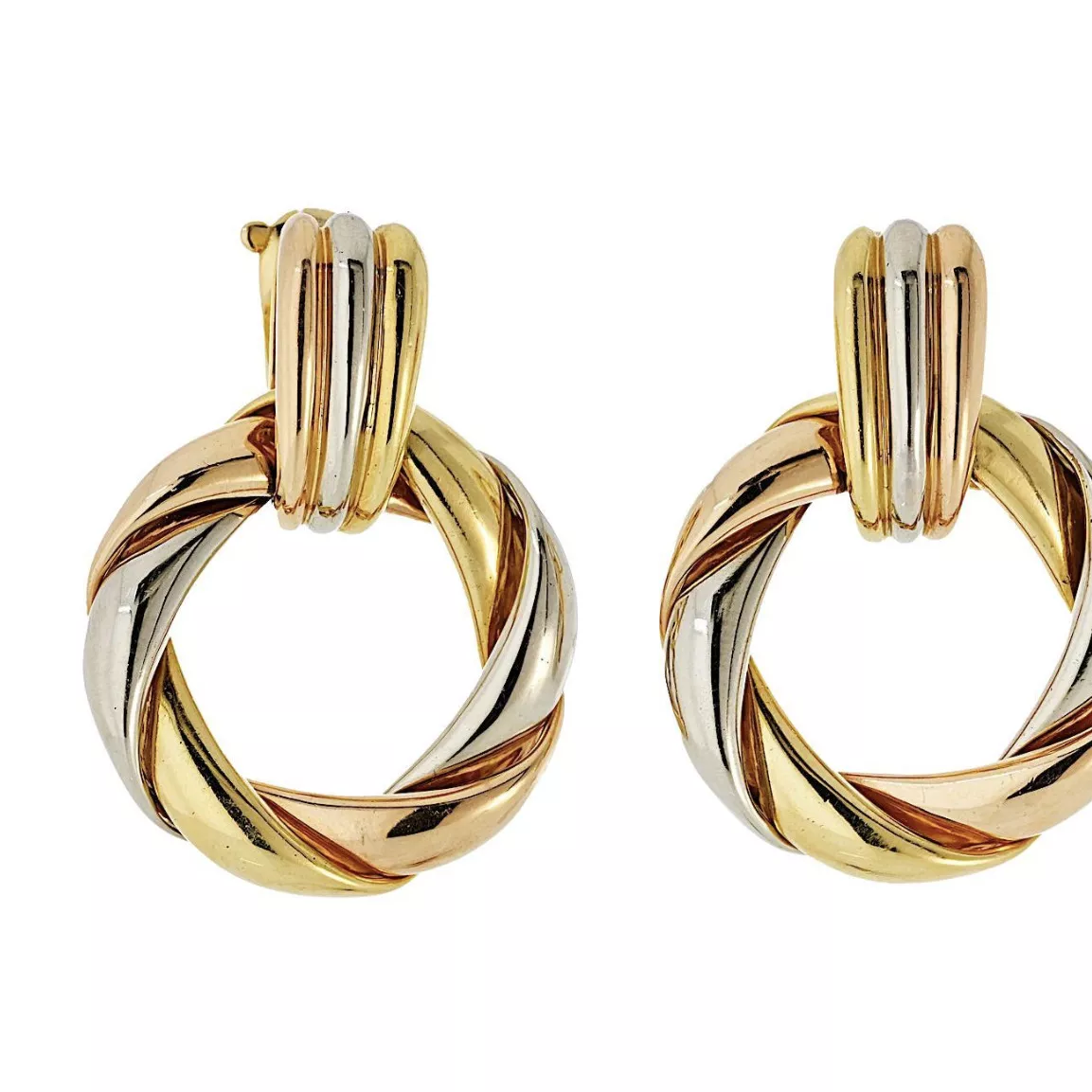
Market structuring and segmentation of Cartier
In 2024, the global market for Cartier jewelry at auction exceeded 250 million euros, an increase of +37% in three years. Geneva accounted for 38% of amounts auctioned, New York 32% and Hong Kong 22%.
Paris reached 8% but posted the strongest relative growth, with +18% over one year.
If we segment chronologically :
- Belle Époque and Art Deco (1900 - 1939) : these are the highest-priced jewels, with an average premium of +80% on high estimates.
- Period 1950 - 1970 : these are the jewels with high liquidity, especially for the Panther collections and articulated diamond necklaces.
- Contemporary (1980 - present) : the market is stable but selective and dominated by high jewelry limited series (Cartier Libre, Magnitude).
If we segment typologically :
- So-called animal jewelry (Panther, Chimera, Snake) : these record the strongest growth with +55% average value between 2020 and 2025.
- Art deco pieces : these are now experiencing a more linear rise, but also greater price stability.
- Royal or made-to-order pieces : these make up less than 5% of volume but generate more than 25% of total value.

For gemmological criteria, D-F diamonds, Colombian emeralds and Burmese rubies ensure value multipliers in excess of 2.5 over equivalent unsigned stones. As with the other houses, the presence of GIA, SSEF or Gübelin certificates brings an average premium of 20 to 30%.
In buyer profiles, we find around 60% private collectors, 25% heritage investors and 15% cultural institutions and foundations.
The Cartier quotation benefits from low price elasticity. Even during a slowdown in luxury retail (-6% in 2024), Cartier auctions continue to grow (+12%).
As a result, the stability of the average return on Cartier jewelry (resale index x1.9 over five years) confirms its status as an aesthetic safe haven in the luxury economy.
This segmentation reveals that Cartier's performance is not based on cyclical speculation, but on a rational, patrimonial value structure, founded on historical rarity and institutional recognition.
Valuation mechanisms and the construction of Cartier value
The valuation of Cartier jewelry is part of a symbolic economy where material value, artistic value and cultural value interact.
Material value is based on gemological quality (purity, color, origin, cut) and on the goldsmith's mastery of the historic workshops on Rue de la Paix. The early use of platinum and calibrated diamonds from 1900 gives Cartier creations a technical density unique in European jewelry.
As for artistic value, Cartier aesthetics are based on a stable stylistic system articulating geometry, symmetry and controlled luminosity. Art Deco, codified by Charles Jacqueau and Jeanne Toussaint, produced an identifiable visual grammar that has become a museum standard.
The emblematic series (Panthère, Tutti Frutti, Trinity, Love) materialize the house's ability to transform the ornamental motif into a universal sign of identity.
The cultural value, meanwhile, is reinforced by the museumization of the house, with major exhibitions. The jewelry on display thus attracts institutional legitimacy, which has a direct impact on subsequent selling prices (average premium +25%).
Pieces linked to royal or social figures such as Wallis Simpson, Grace Kelly or Elizabeth Taylor generate bids 70% higher than comparable anonymous lots : provenance acts as narrative capital convertible into monetary value.
The Cartier name thus functions as a coefficient of artistic credibility on the market. This signature reduces the perception of risk and promotes high asset liquidity.
Articulated frames, invisible settings and miniaturized opening systems are patented technical innovations generating an engineering premium.
Cartier value therefore depends not only on the market or the material, but also on an aesthetic institutionalization : the brand converts craftsmanship into culture, and culture into sustainable capital.
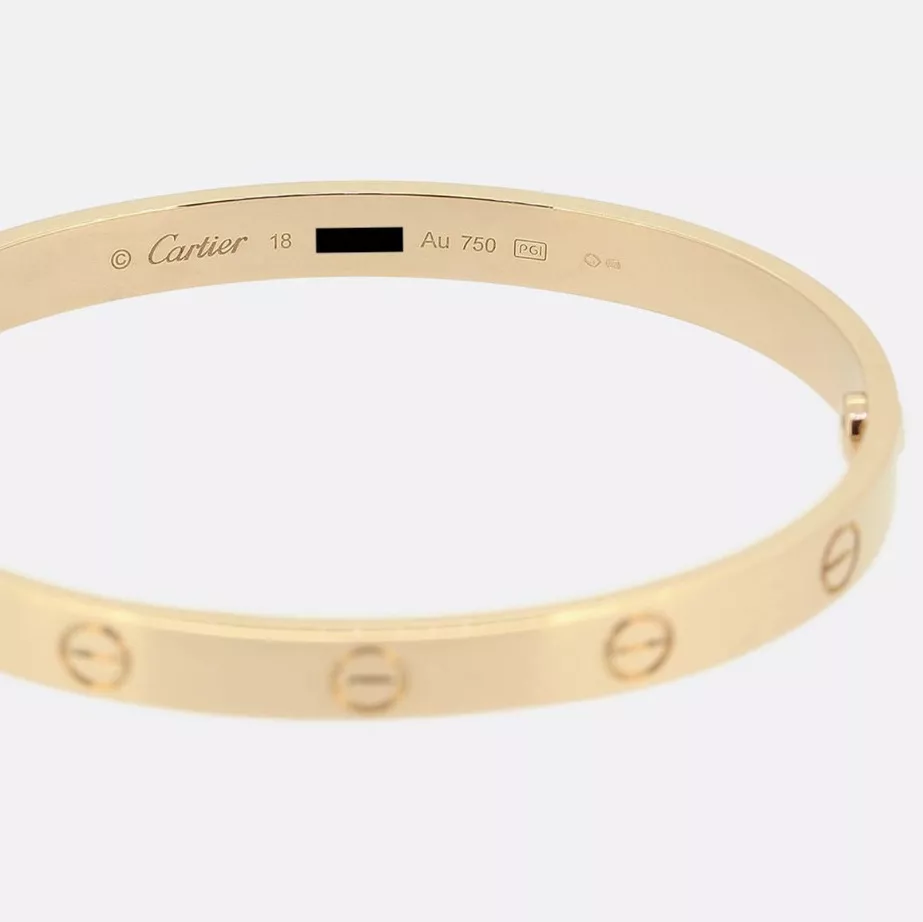
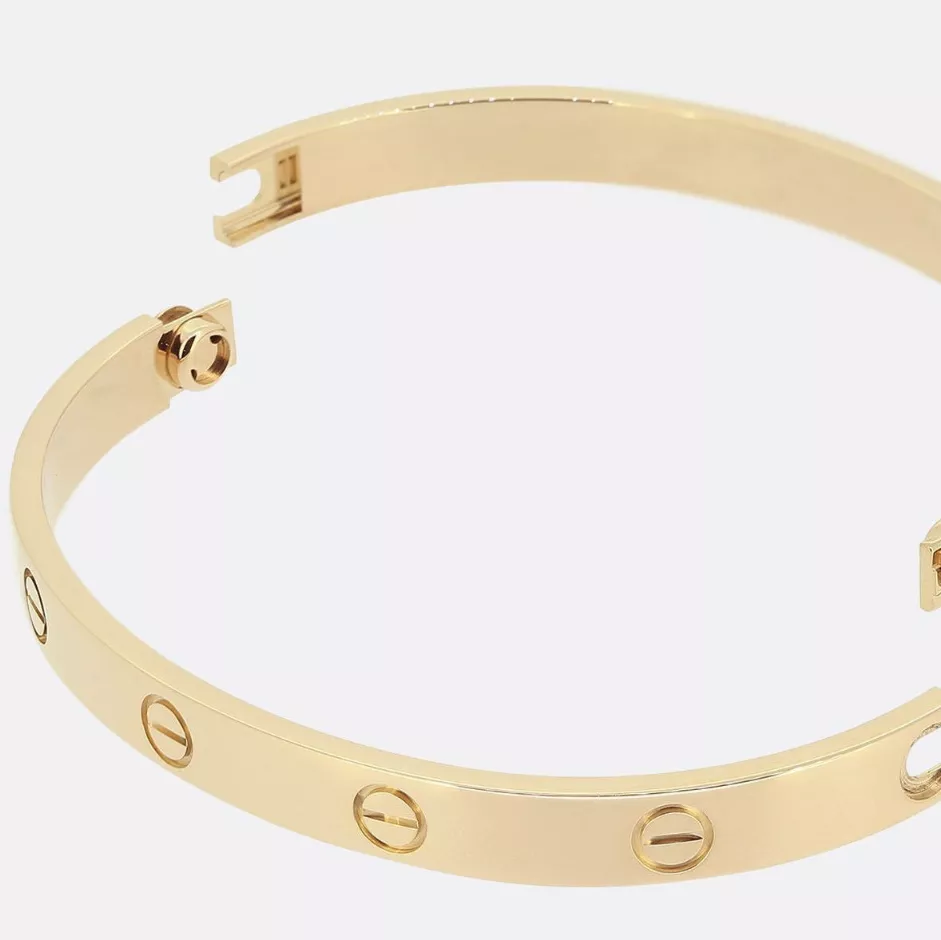
Perspectives, challenges and sustainability of the Cartier quotation
According to the Deloitte Luxury Goods 2025 and UBS Art Market Reports, the global fine jewelry market will continue to grow at an average rate of +10% per year until 2027, which will be supported by Asian demand and the increasing scarcity of historical pieces.
Cartier today remains the Richemont Group's best-performing house, accounting for nearly 60% of the jewelry division and a +22% increase in sales over the 2024-2025 fiscal year.
On the secondary market, Cartier holds a 33% share of auctions for prestige signed jewelry, ahead of Van Cleef & Arpels (28%) and Bulgari (17%). There has also been an increase in institutional acquisitions.
Nearly 35% of Cartier sales now take place via digital platforms, increasing market liquidity and access to new buyer profiles.
Cartier combines many stability factors, with a universal signature and patrimonial reassurance, thus low price volatility. Average resale value is stable (index x1.9 over 5 years). Correlation with financial cycles is low, confirming Cartier's status as an anti-correlated asset.
Cartier thus embodies a memory of French luxury, where aesthetics become an instrument of cultural power. The Cartier jewel functions as an object of aesthetic permanence, fusing historical temporality and contemporary desire.
The Cartier quotation illustrates a trend towards the museumization of the market, and the explosion in prices reflects not ephemeral speculation but an institutionalization of prestige. The house thus embodies the transition of luxury to the category of cultural asset, where beauty is objectified, measured and transmitted.
Cartier has therefore become a model of balance between art, economy and heritage, defining the new hierarchy of taste in the globalization of luxury.
Indicative bibliography :
I. Reference works on Cartier and haute joaillerie
Cartier, Pascale Lepeu (dir.). Cartier: Le style et l'histoire. Paris: Réunion des musées nationaux - Grand Palais / Flammarion, 2013.
Ettinger-Althaus, Hans Nadelhoffer. Cartier: Jewelers Extraordinary. London: Thames & Hudson, 1984 (reissued 2007).
Scarisbrick, Diana. Cartier: The Tank Watch. London: Flammarion, 2018.
Papi, Stefano, and Alexandra Rhodes. 20th Century Jewellery and the Icons of Style. London: Thames & Hudson, 2013.
Snowman, A. Kenneth. The Master Jewellers. London: Thames & Hudson, 1990.
II. Theoretical and sociological studies of luxury
Bourdieu, Pierre. La Distinction: critique sociale du jugement. Paris: Les Éditions de Minuit, 1979.
Kapferer, Jean-Noël, and Vincent Bastien. The Luxury Strategy: Break the Rules of Marketing to Build Luxury Brands. London: Kogan Page, 2020 (updated ed.).
Appadurai, Arjun. The Social Life of Things: Commodities in Cultural Perspective. Cambridge: Cambridge University Press, 1986.
Baudrillard, Jean. Le Système des objets. Paris: Gallimard, 1968.
III. Economic sources and market relationships
Deloitte. Global Powers of Luxury Goods 2025. London: Deloitte Insights, 2025.
UBS & Art Basel. The Art Market Report 2025. Basel: UBS Group AG, 2025.
ArtTactic. Jewellery Market Outlook 2024-2025. London: ArtTactic Research, 2025.
Conseil des Ventes Volontaires. French Art Market Report 2024. Paris: CVV, 2025.
Christie's. Magnificent Jewels Sales Reports 2023-2025. Geneva / New York / Hong Kong: Christie's Archives.
Sotheby's. Jewels and Watches Market Review 2025. Geneva : Sotheby's Research Department.
Estimate in less than 24h
Discover in the same theme

Here's why French cubists are back on the market in style
French Cubists were long forgotten by the art market. Today, they are back on the market in great numbers. 24h estimate.
Learn more >

Here's why the women artists of the École de Paris are start...
Women artists of the École de Paris are coming into their own on the auction market with promising results. Estimated 24h.
Learn more >

Abstract art: estimate and auction value
Appraisal and Valuation of Abstract Art: Understanding the Value of an Abstract Work and Selling It at Auction.
Learn more >
D'autres pièces de haute joaillerie vendues aux enchères

Estimated 10.000 - 15.000 €
BOUCHERON - "Ava" - White gold necklace set with a brilliant-cut diamond (1.56 cts)

Estimated 2.000 - 4.000
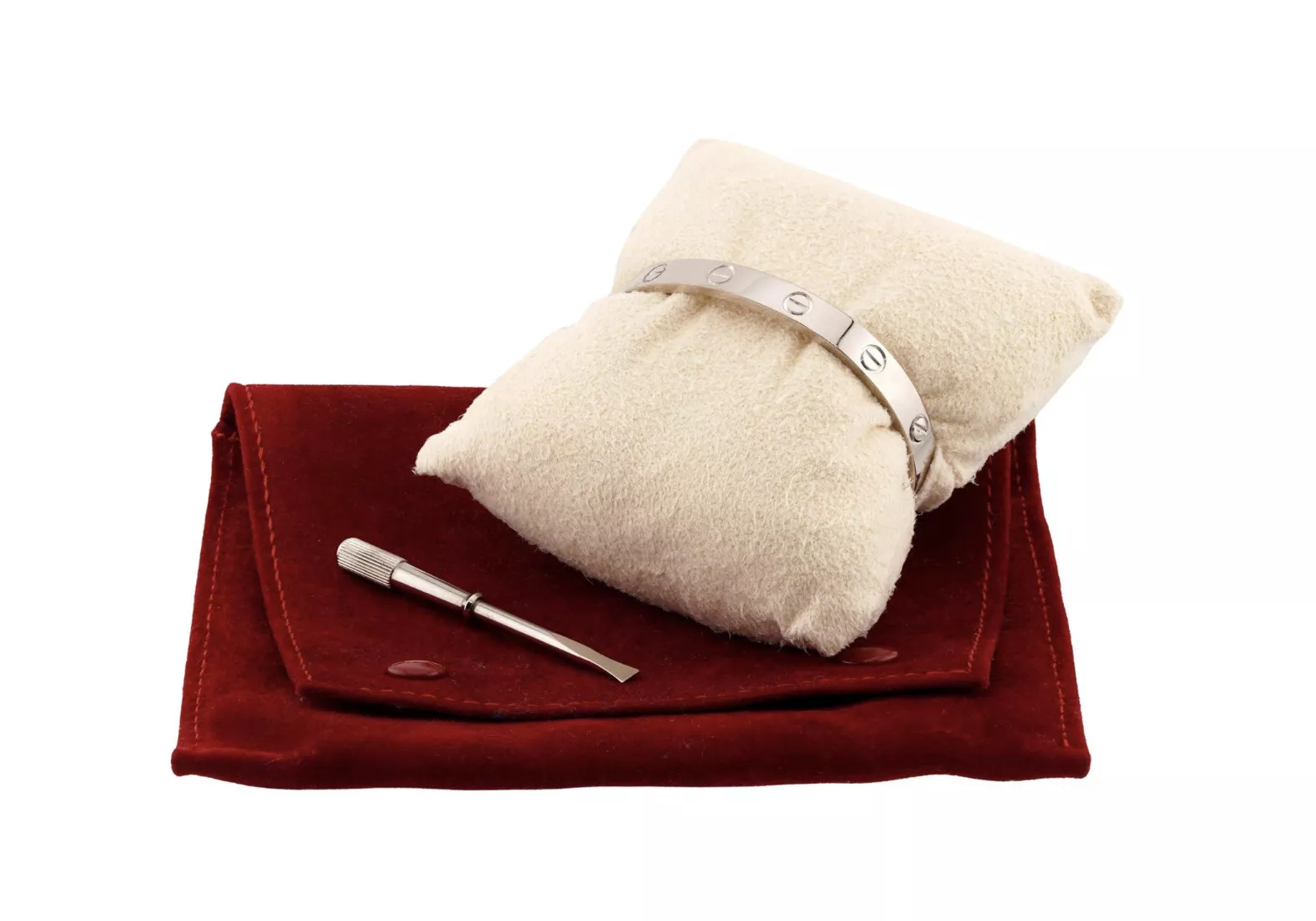
CARTIER, 18K (750 e) gold opening bangle bracelet

Estimated 1.500 - 3.000
CARTIER PARIS, Trinity, 2-tone 18k (750e) gold clip brooch

Estimated 3.000 - 5.000
CARTIER, Love, Wedding band in 18k white gold (750e)

Estimated 2.000 - 4.000
CARTIER Love model Pendant necklace in 18K (750e) white gold

Estimated 1.500 - 2.000
CHAUMET, Ring in platinum (850th), set with an oval faceted ruby

Secure site, anonymity preserved

Auctioneer approved by the State

Free and certified estimates
Frequently asked questions
-
Why are Cartier jewelry prices rising so quickly at auction?The prices of Cartier jewelry rose by an average of 42% between 2020 and 2025, driven by a threefold convergence: the brand’s historic prestige, the material rarity of the pieces (particularly Art Deco and animal-themed pieces), and their cultural legitimization by museums. This increase also reflects the transformation of jewelry into a stable asset, rather than a fleeting speculative investment.
-
What is the average price of a Cartier jewelry piece sold at auction, and how does it compare to its competitors?The median price of a Cartier jewelry piece reached €140,000 in 2024, significantly higher than that of Van Cleef & Arpels (€95,000) and Boucheron (€60,000). Cartier has a signature coefficient of 2.8, meaning that pieces from this house sell, on average, for 2.8 times their median estimate, reflecting a unique premium for prestige in the market.
-
How can you authenticate a piece of Cartier jewelry and determine its true value?To authenticate a piece of Cartier jewelry and obtain a reliable estimate, we recommend that you request a free appraisal from Auctie's. Our team of expert auctioneers will examine the piece with no obligation, verify its provenance, authenticity, and gemological characteristics, and provide you with an estimate within 48 hours.
-
Is this the right time to sell a piece of Cartier jewelry?Yes, this is an excellent time to sell. The Cartier jewelry market remains very dynamic, with growth of +12% in 2024, even amid a slowdown in the luxury retail sector. Demand from Asia is rising (a 25% increase in active buyers since 2022), liquidity is increasing through digital platforms, and historic pieces are becoming increasingly rare, providing sustained support for prices.
-
How does the appraisal and sale of a Cartier jewelry piece work at Auctie's?At Auctie's, appraisals are free and non-binding: an expert examines your jewelry, provides an accurate estimate within 48 hours, and then, if you agree, we guide you through the process from preparing the lot to the auction. Our auction house draws on an international network of buyers to maximize the value of your Cartier piece.
