



Rating and value of paintings by Auguste Émile Pinchart

Key takeaways
- Pinchart’s paintings sell for between €50 and €102,700 at auction, with most works falling in the €10,000 to €30,000 range.
- A French Orientalist painter (1842–1920) trained by Gérôme, who settled in Tunis in 1901 and specialized in portraits and genre scenes featuring Tunisian women.
- Oil-on-canvas works dominate the market (accounting for nearly all of the 244 listed results), with collectors favoring medium to large formats.
If you own a work by or based on the work of artist Auguste Émile Pinchart and would like to know its value, our state-approved experts and auctioneers will guide you.
Our specialists will carry out a free appraisal of your work, and provide you with an accurate estimate of its value on the current market.
Then, if you wish to sell your work, we will direct you to the best possible arrangement to obtain the optimum price.
Artist's rating and value
Auguste Émile Pinchart is a French figurative artist who worked in France and Tunisia, who is enjoying great success on the art market today.
Presented in a few museums but mainly in private homes, his Orientalist paintings are prized by collectors and sell for between €50 and €102,700 at auction, a substantial range but one that says a lot about the value that can be attributed to the artist's works.
As witness his painting Bédouine à Tunis, sold for €102,700 in 2008 while it was estimated at between €19,000 and €25,500.
Order of value from the most basic to the most prestigious
Technique used | Result |
|---|---|
Estamp - multiple | From 50 to 270€ |
Drawing - watercolor | From €60 to €1,400 |
Oil on canvas | From €170 to €102,700 |
Estimate in less than 24h
Artist's style and technique
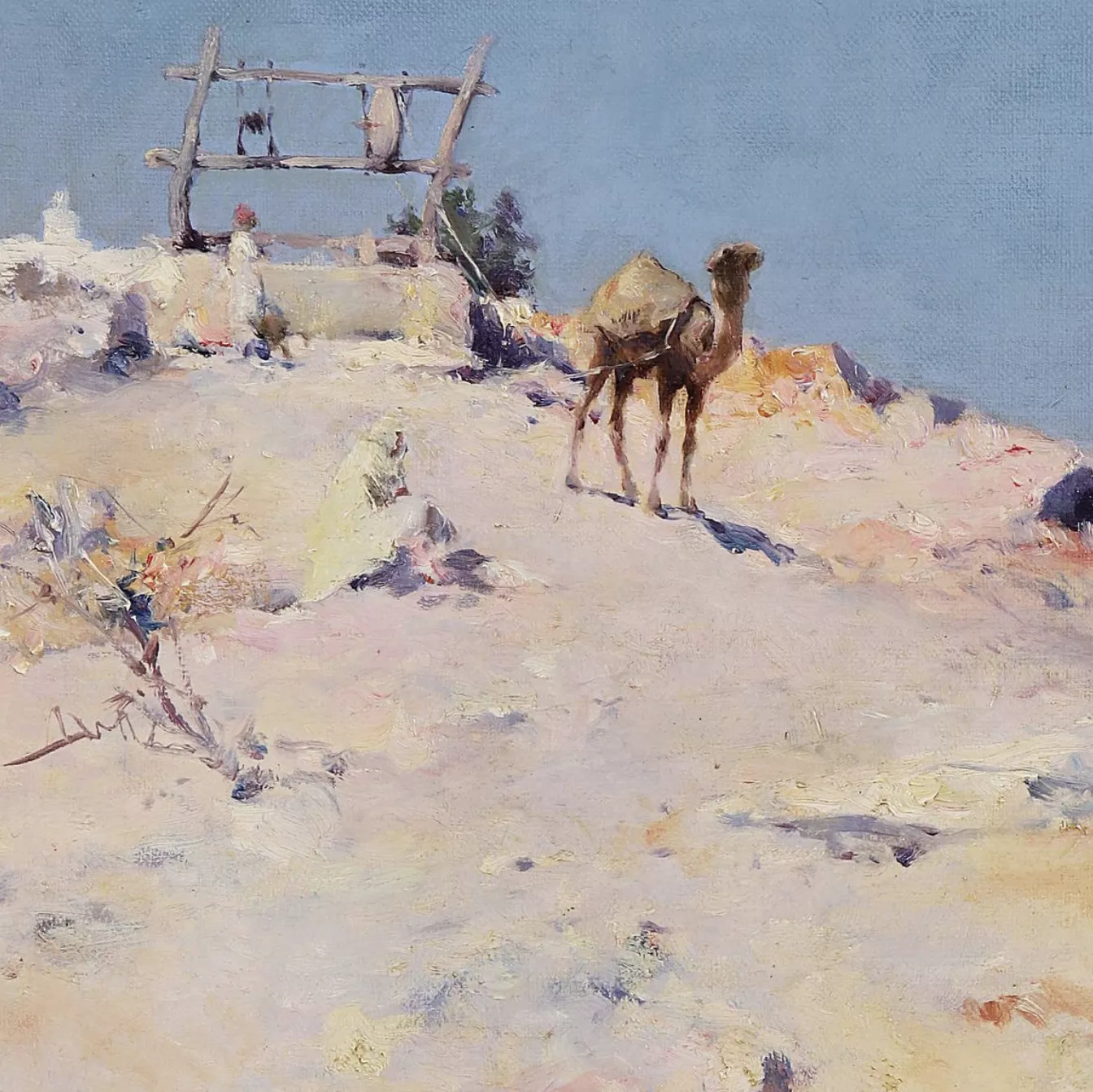
Auguste Émile Pinchart (1842 - 1920) was an Orientalist artist active in the late 19th and early 20th centuries. He particularly distinguished himself in this genre from 1901, after moving to Tunis, where he produced numerous portraits of locals (street scenes, Tunisian women, landscapes).
His orientalism is more sensitive than exotic, testifying to a certain dignity and simplicity that is far removed from flamboyant orientalist clichés. His pictorial technique is harmonious, maintaining a precise academic drawing, inherited from the school of Gérôme and combined with a soft palette dominated by beiges, pinks and pastel tones, suited to Mediterranean moods.
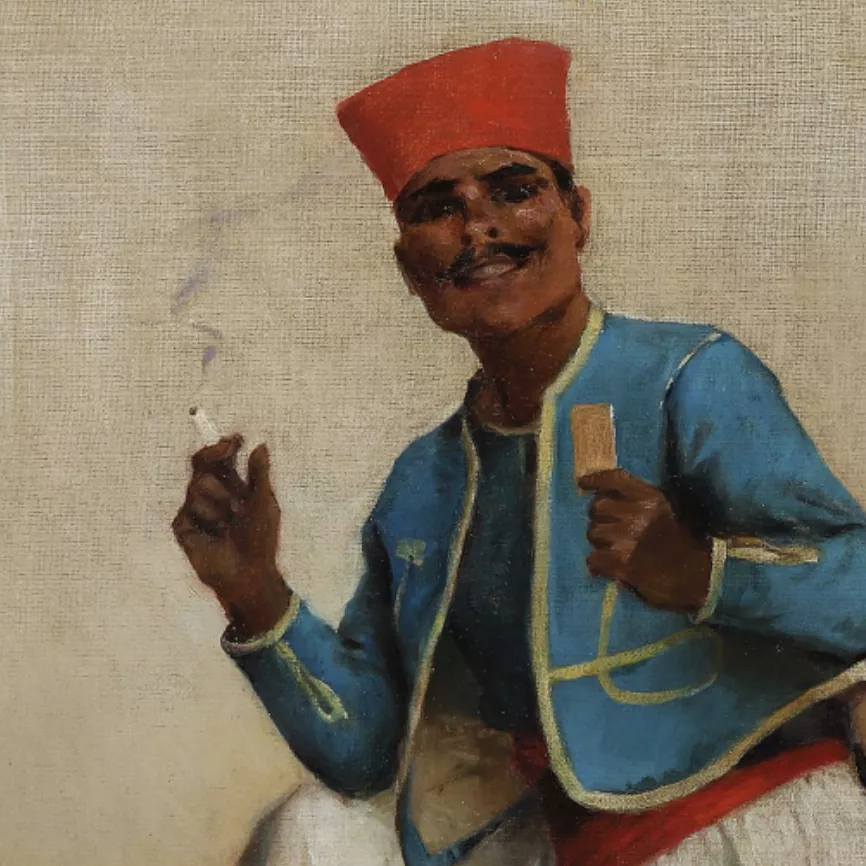
Orientalist works are painted with care (fluid strokes, smooth surfaces, hushed, elegant effect). Pinchart favors individual portraits or everyday genre scenes (women, family scenes, orange sellers, mothers and children).
His compositions are quite sober and focused on the human figure, in intimate settings, without decorative overload, an aspect probably inherited from his training in the academic tradition of Gérôme, enabling him to adopt rigorous precision and a clear sense of composition from his early days.
His art is in line with the genre and worldly portrait painters, close to Fantin-Latour or Jules-Cyrille Cavé, with a classical idealization and a certain sense of refinement.
His work testifies to a remarkable and precise mastery of drawing, which translates each gesture with careful gestural finesse. Colors are natural and elegant, with soft dominants (pinks, whites, pastel tones) without violent contrasts, creating a sophisticated, luminous atmosphere.
The artist's Orientalist corpus is influenced by the first part of her career as a specialist in genre scenes often centered on female figures. The settings are spare, often domestic or symbolic.
His compositions are balanced, and the figures are often highlighted by a light gesture, as in Une Fille de la Nymphe, where a young woman plays with an antique bust.
He exhibited regularly at the Salon des Artistes Français, winning mentions and a medal, and became a member of the Société des Artistes Français in 1905. His works are appreciated for their visual elegance, emotional gentleness and rare pictorial refinement, and are highly prized in Belle Époque social circles.
Artist's rating and value
The majority of the artist's works currently sell for between €10,000 and €30,000, with some rare peaks above €100,000, for major Orientalist subjects.
In notable sales results, after Bedouine in Tunis, we find Flowers for Grandmother, an oil on canvas (65 x 53.5 cm), sold for €30,550 at Christie's in 2000, originally estimated at €21,000 to €23,000.
The Fortune Teller (81 x 99 cm), sold for €23,400 at Christie's in 1999. The more modest La jeune fille au parapluie sold for €23,250, whereas it was estimated at €7,000-9,000 in Stockholm in 2004.
The artist's market is dominated by paintings. Of 244 auction results recorded, almost all concern oils on canvas, reflecting the artist's specialization.
With regard to her sales, the most dynamic period is between 2016 and 2018, with a peak after €22,000 in 2018. There's a noticeable dip between 2020 and 2023, but a partial rebound in 2024. The market remains active in 2025.
Lower-rated than Étienne Dinet or Eugène Giradet, his most ambitious canvases nevertheless reach levels comparable to some Charles Théodore Frère lots. His academic realism and preoccupation with narrative resonate with collectors of carefully crafted oriental scenes.
The typology of sought-after works corresponds above all to orientalist themes, picturesque genre scenes, female subjects in costume or interiors. Medium to large formats are preferred on the auction market.
While demand remains fairly stable, it also depends on the quality of the work, its provenance and its subject. Works with an explicit link to the Orient or highly worked anecdotal compositions enjoy a clear resale premium.
The life of Auguste Émile Pinchart
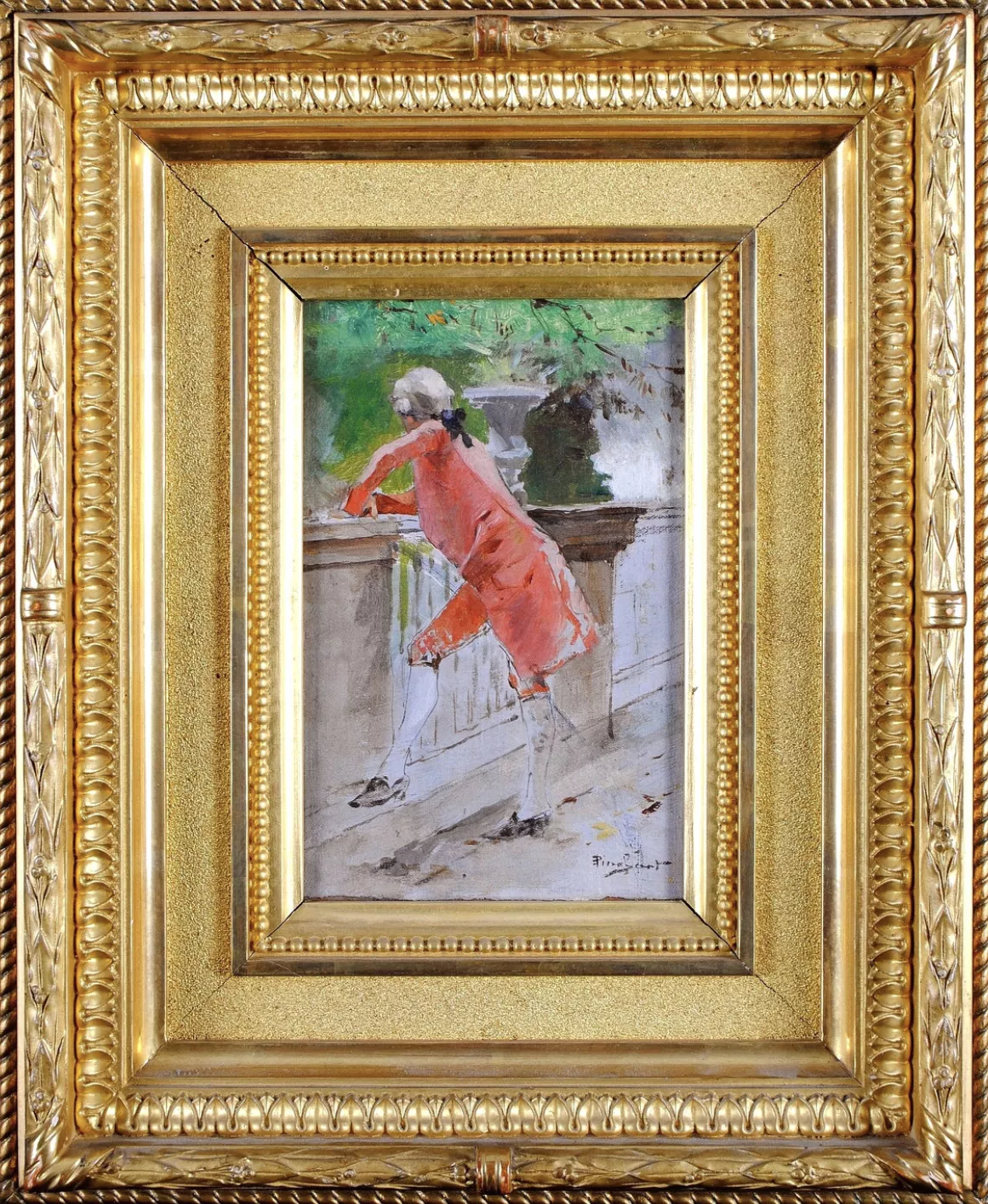
Auguste Émile Pinchart (1842 - 1920) was an artist born in Paris in 1842, from a bourgeois background interested in the arts. He was a pupil in the studio of Jean-Léon Gérôme, cited as one of the tutelary figures of French academism.
He exhibited regularly at the Salon des Artistes Français, gaining official recognition.
In 1905, he became a member of the Société des Artistes Français, which guaranteed him institutional legitimacy in the French artistic landscape. She set up her studio in Tunis in 1901, where he produced a series of Orientalist paintings respectful of everyday life, far removed from clichés, and focused on the dignity of the subjects.
He produced mainly portraits of Tunisian women, Tunisian genre scenes imbued with simplicity and delicacy. He is renowned for his academic refinement and elegant genre scenes. He frequented the social salons of the Belle Époque, admired for his ability to combine impeccable technique with a hushed atmosphere.
He died in Paris in 1920, at the end of a sustained and discreet career. Today, he is being rediscovered for his sensitive Orientalist scenes and refined portraits, appreciated in private collections and specialized sales.
His signature
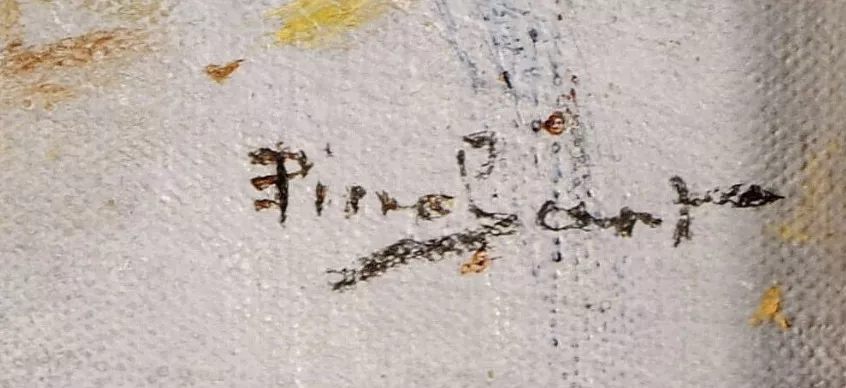
Not all of Auguste Émile Pinchart's works are signed.
Although there are variations, here is a first example of his signature:
Expertise your property
If you happen to own a work by or after Auguste Émile Pinchart, don't hesitate to request a free appraisal by filling in our form on our website.
A member of our team of experts and chartered auctioneers will contact you promptly to provide you with an estimate of the value of your work, and will ensure that you receive ad hoc information about it.
If you are considering selling your work, you will also be accompanied by our specialists in order to benefit from alternatives for selling it at the best possible price, taking into account the inclinations of the market and its specificities.
.Estimate in less than 24h
Discover in the same theme

Rating and value of works, paintings, drawings by Paul Huet
Paul Huet was a 19th-century Romantic painter. His paintings and drawings are highly valued at auction.
Learn more >

Rating and value of works, paintings by Jules Breton
Jules Breton was a 19th-century naturalist and realist painter who produced many valuable and successful works at auction.
Learn more >

Rating and value of drawings and paintings by Paul Guigou
Paul Guigou is a landscape painter associated with the Barbizon School whose paintings command high prices and are highly valued.
Learn more >
D'autres tableaux orientalistes vendus aux enchères

Estimated 15.000 - 20.000 €
Jacques MAJORELLE (1886-1962) - Fishermen embarking, Abidjan, Ivory Coast - Oil on canvas.

Estimated 40.000 - 80.000
Alexandre ROUBTZOFF (1884-1949), Portrait of Arbia, oil on canvas

Estimated 5.000 - 8.000
Alexandre ROUBTZOFF (1884-1949), The Sidi Makhlouf Mosque, oil on canvas

Estimated 2.000 - 4.000
Henri PONTOY (1888-1968), The Telouet kasbah in the Ounila valley, Oil on canvas

Estimated 1.500 - 2.500
Henri PONTOY (1888-1968) Animated view of a kasbah in the Atlas Mountains

Estimated 3.000 - 4.000
Henri PONTOY (1888-1968), Fantasia at the foot of the Atlas, Oil on canvas

Secure site, anonymity preserved

Auctioneer approved by the State

Free and certified estimates
Frequently asked questions
-
Who was Auguste Émile Pinchart, and what is his artistic style?Auguste Émile Pinchart (1842–1920) was a French Orientalist painter and a student of Jean-Léon Gérôme. Settling in Tunis in 1901, he specialized in genre scenes and portraits of Tunisian women, characterized by great academic finesse, a soft color palette (beiges, pinks, pastel tones), and a sober dignity, far removed from flamboyant Orientalist clichés.
-
What is the price range for Pinchart's paintings at auction?Pinchart's works generally sell for between €10,000 and €30,000, with a few rare pieces fetching over €100,000. Oil-on-canvas paintings make up the majority of the market, while watercolor drawings range from €60 to €1,400 and prints from €50 to €270.
-
How can I authenticate a work by Pinchart and get an estimate of its value?You can request a free, no-obligation appraisal from Auctie's by filling out our online form. A certified expert or auctioneer will contact you to examine your artwork and provide you with an accurate estimate within 48 hours.
-
Is this the right time to sell a work by Pinchart?Yes, the market for Pinchart remains active in 2025. After a decline between 2020 and 2023, there was a partial rebound in 2024. High-quality Orientalist works—with good provenance and featuring well-executed depictions of women or genre scenes—enjoy stable demand among collectors.
-
How does a piece sell at Auctie's?Auctie's supports you every step of the way: a free appraisal by an expert, followed by guidance on the best sales option (auction), taking into account the specific characteristics of the market and your artwork to secure the best possible price.
