



Rating and value of works, drawings, paintings by Édouard Detaille

Key takeaways
- Détaille’s works sell for between €20 and €147,300, with oil-on-canvas paintings fetching the highest prices, regularly exceeding their initial estimates.
- A military history painter (1848–1912) trained by Meissonier, Détaille is distinguished by his academic rigor and documentary precision in the depiction of uniforms and battle scenes.
- His paintings, particularly prized by French buyers, have had a lasting influence on military iconography and remain major references in 19th-century history painting.
If you own a work by or after Édouard Detaille, and would like to know its value, our state-approved experts and auctioneers will offer you their appraisal services.
Our specialists will carry out a free appraisal of your work, and provide you with a precise estimate of its value on the current market.
Then, if you wish to sell your work, we will direct you to the best possible arrangement to obtain the optimum price.
Rating and value of the artist Édouard Detaille
The artist Édouard Detaille leaves behind a body of work characteristic of academic painting, he is famous for his canvases and drawings. Now, prices for his works are rising under auctioneers' gavels.
His paintings are particularly prized, especially by French buyers. The price at which they sell on the art market ranges from €20 to €147,300, a substantial range but one that says a lot about the value that can be attributed to Detaille's works.
In 2022, Le Portrait de John Chard, an oil on canvas depicting a soldier was sold for €31,000, against an estimate of €1,100 to €2,100.
Order of value from a simple work to the most prestigious
Technique used | Result |
|---|---|
Estamp | From €5 to €6,100 |
Drawing - watercolor | From €20 to €48,000 |
Oil on canvas | From €60 to €147,300 |
Estimate in less than 24h
Style and technique of artist Édouard Detaille
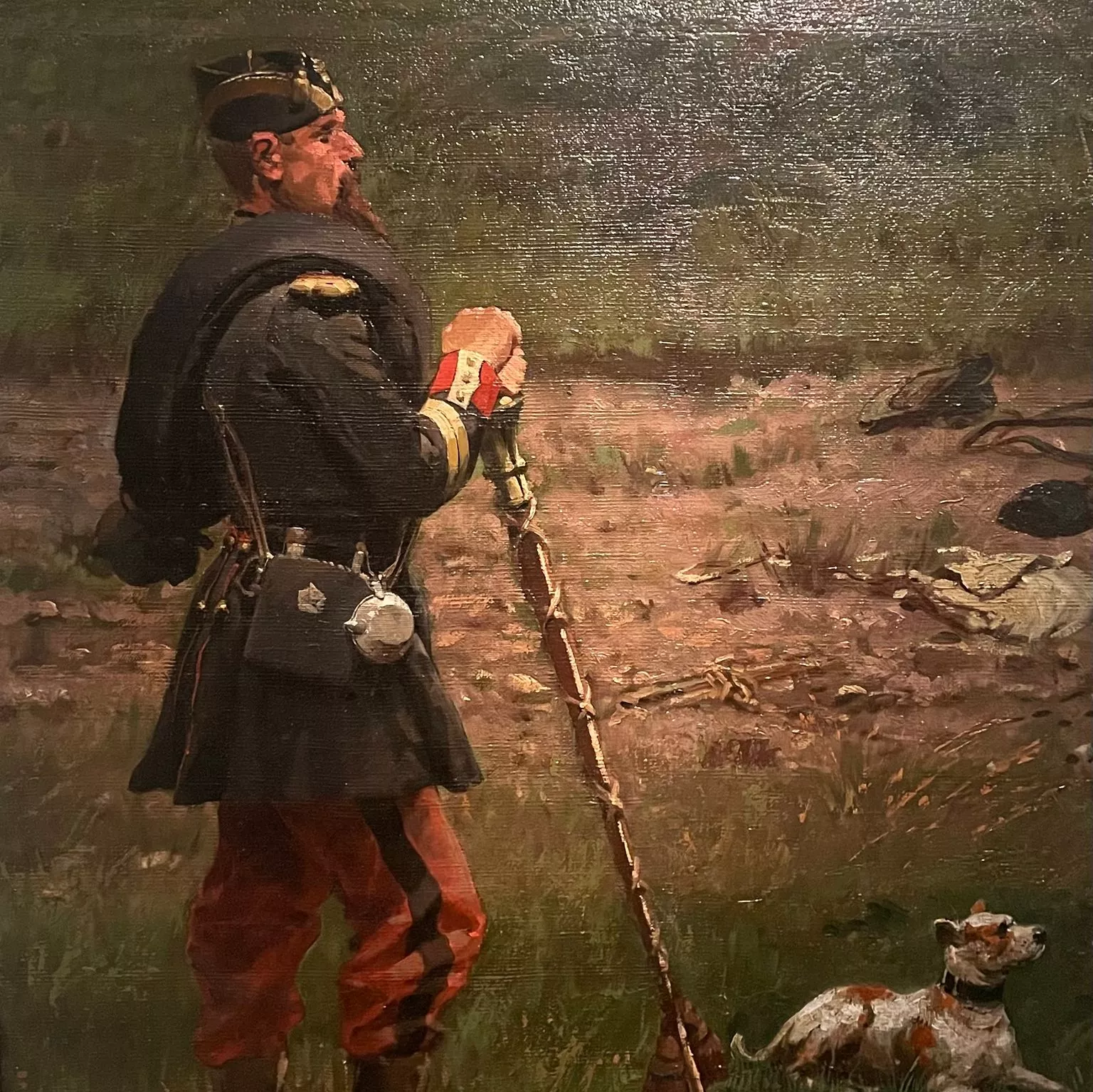
Edouard Detaille's style and technique are distinguished by an academic rigor combined with an almost documentary precision.
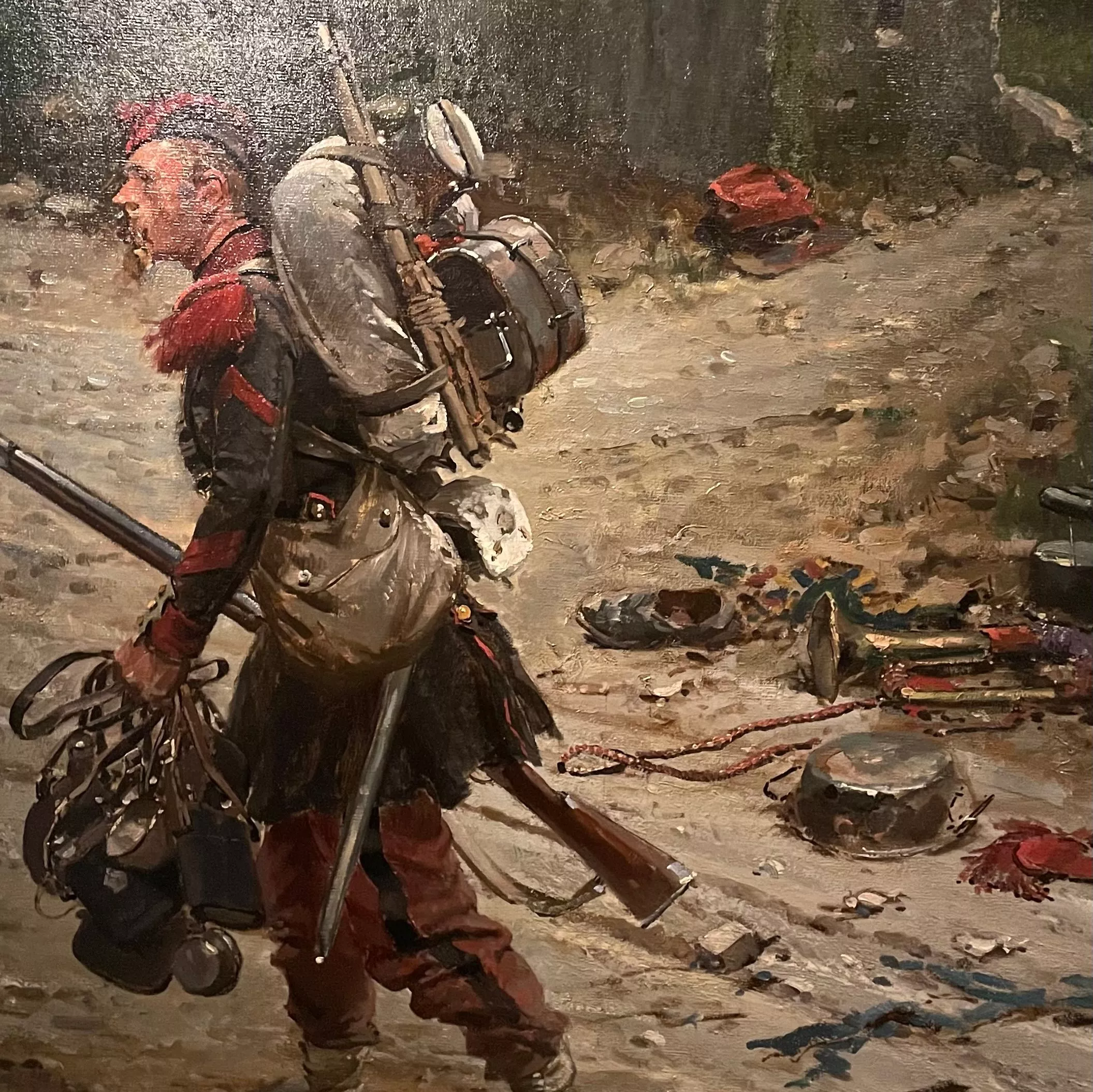
A painter of military history, he developed an approach in which every detail, from the fold of a uniform to the reflection of a sword, is meticulously rendered with impressive accuracy.
Trained in the studio of Jean-Louis-Ernest Meissonier, he inherits a taste for precision and carefully balanced composition, lending his works a striking realism.
His paintings, often in large format, demonstrate a perfect mastery of light and color, enabling him to faithfully render the textures and movements of battle scenes.
His clean, incisive brushstrokes structure dynamic compositions in which the action unfolds with remarkable clarity, without overload or superfluous dramatic effect. Detaille's technical approach is based on rigorous preparatory work.
He multiplies sketches, studies uniforms in minute detail and documents himself with almost scientific precision, sometimes surrounding himself with military models and relics to guarantee the accuracy of his depictions.
He thus succeeds in capturing the energy of battle while maintaining perfect legibility of the scene, avoiding the chaotic effect often associated with battle paintings.
His precise, measured touch skilfully balances density and lightness, lending his compositions a depth that plunges the viewer right into the heart of the action.
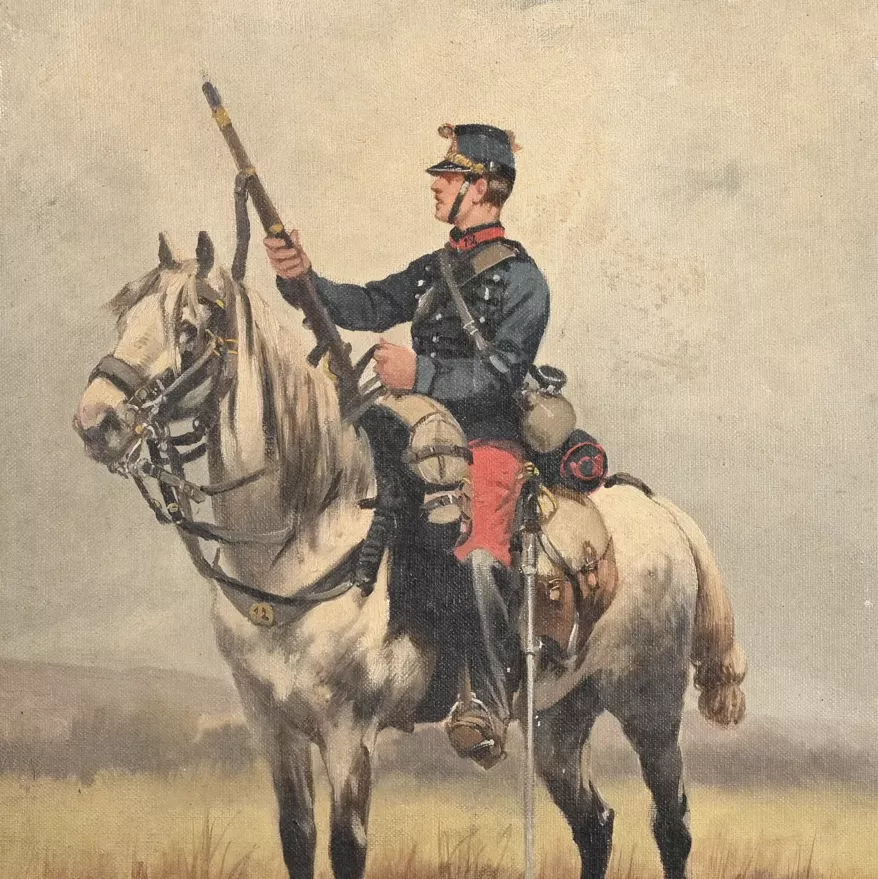
He never hesitates to play on contrasts, accentuating the silhouettes of horsemen or the metallic reflections of weapons with subtle lighting, giving his works a particular intensity.
In his depictions of the French army, Detaille is not content with a simple technical exercise. His style, while remaining faithful to reality, exalts a heroic vision of the soldier, between discipline and bravery.
Through this alliance between historical accuracy and epic breath, he imposed a military aesthetic that would have a lasting influence on the iconography of war, becoming an unavoidable reference in the history painting of his time.
.
The life of Édouard Detaille
Édouard Detaille (1848-1912) was born in Paris into a milieu of artists and high-ranking officers. His father, an art lover, maintained close ties with Horace Vernet, who encouraged him to embrace a career as a painter.
From an early age, Detaille showed remarkable aptitude for drawing, a talent that was confirmed at the Lycée Bonaparte, where he distinguished himself by the precision of his line and his sense of composition.
Initially keen to join Alexandre Cabanel's studio, or also study Dagnan Bouveret and Le Sidaner, he eventually trained under Jean-Louis-Ernest Meissonier, a master of detail and history painting, whose influence would have a lasting impact on his work.
It was in the south of France that he produced his first military paintings, which met with immediate success. His talent was quickly recognized by Mathilde Bonaparte, who acquired one of his works at a considerable price, thus sealing his reputation as a military painter.
Detaille then specialized in historical painting, and more particularly in the depiction of battle scenes, where he combined meticulous realism with a staging imbued with solemnity.
Alongside Alphonse de Neuville, he set about immortalizing the Franco-Prussian War, painting several monumental compositions with him, including the striking panoramas of the Battle of Champigny and the Battle of Rezonville.
His pictorial approach earned him the title of "revenge painter", in the tradition of Neuville, celebrating the bravery of French soldiers even in defeat.
Detaille, however, defends himself against any reductive vision, asserting that he "loves his country better than anyone" without wanting to make his art a mere tool of patriotic propaganda.
His work, scrutinized carefully by the government, is sometimes judged too bold on the diplomatic front. Some of his paintings, deemed potentially offensive to Germany, were censored to avoid international tensions.
Detaille did not limit himself to depicting the French army: as a second lieutenant accompanying the troops, he also observed and immortalized the Prince of Wales's British soldiers and military figures close to Tsar Nicholas II, with whom he formed a friendly relationship.
His eye, both precise and imbued with a deep respect for military discipline, made him a privileged witness of his era, whose work remains an essential reference in the history of military painting.
Focus on Le Rêve, Édouard Detaille, 1888
Le Rêve (1888) by Édouard Detaille is a scene where realism and evocation meet. In a battlefield, at nightfall, soldiers sleep on the ground, their uniforms undone, their faces marked by exhaustion.
Around them, the plain seems frozen in silence, disturbed only by the ghostly presence that looms above them.
In the mists of the night sky, a spectral army appears: horsemen and infantrymen of the Empire, soldiers of legend in slender silhouettes, flags floating in an unreal light.
Detaille plays on the contrast between the two levels of reading. In the foreground, the harshness of the ground, the weight of slumped bodies, the light dimmed by dust, all recall the reality of a military campaign.
Above, the atmosphere lightens, the figures rise in a vaporous halo, as if sprung from the past.
The meticulous work on uniforms, drapery and equipment lends the scene a documentary rigor, while the effect of transparency and the elevation of the imperial soldiers to the sky instills a dreamlike dimension.
Through this composition, Detaille captures the state of mind of a generation haunted by the defeat of 1870 and fascinated by the grandeur of the First Empire.
In this vision, the sleeping combatants seem to dream of a glorious past, that of an invincible army, of a time when France shone through its victories. The painting thus becomes an echo of national sentiment, oscillating between regret and exaltation.
Detaille's imprint on his era
Édouard Detaille established himself as an essential reference for military painting at the end of the XIXᵉ century. His work left a lasting mark on the collective imagination, offering a vision of the French army that was both rigorous and exalted.
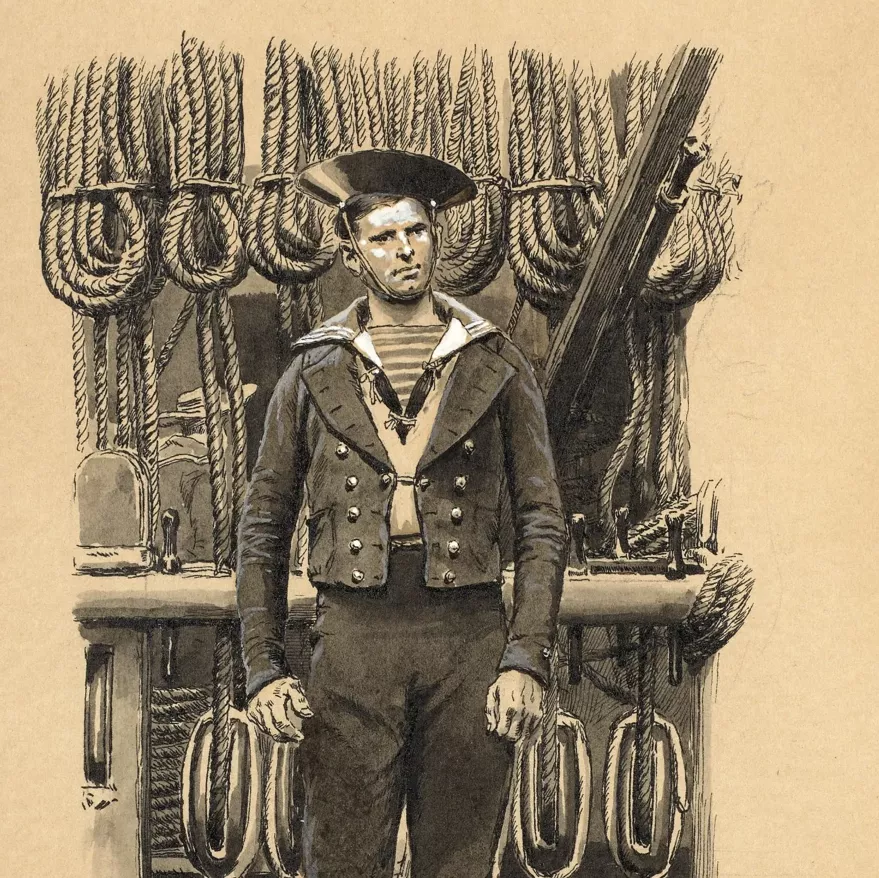
With his eye for detail and in-depth knowledge of uniforms, he influenced not only history painters, but also the military illustrators and decorators of his time.
His paintings became visual documents, nourishing the memory of battles and shaping a heroic image of the soldier.
His proximity to the army reinforced his authority in the field, and his role within the Musée de l'Armée in Paris helped institutionalize military art.
At a time when France was trying to rebuild itself after the defeat of 1870, his works were part of the development of a powerful patriotic imaginary, oscillating between the memory of imperial grandeur and the affirmation of a spirit of revenge.
Today, he remains one of the best-known military painters of his time, and his works are still highly prized on the auction market.
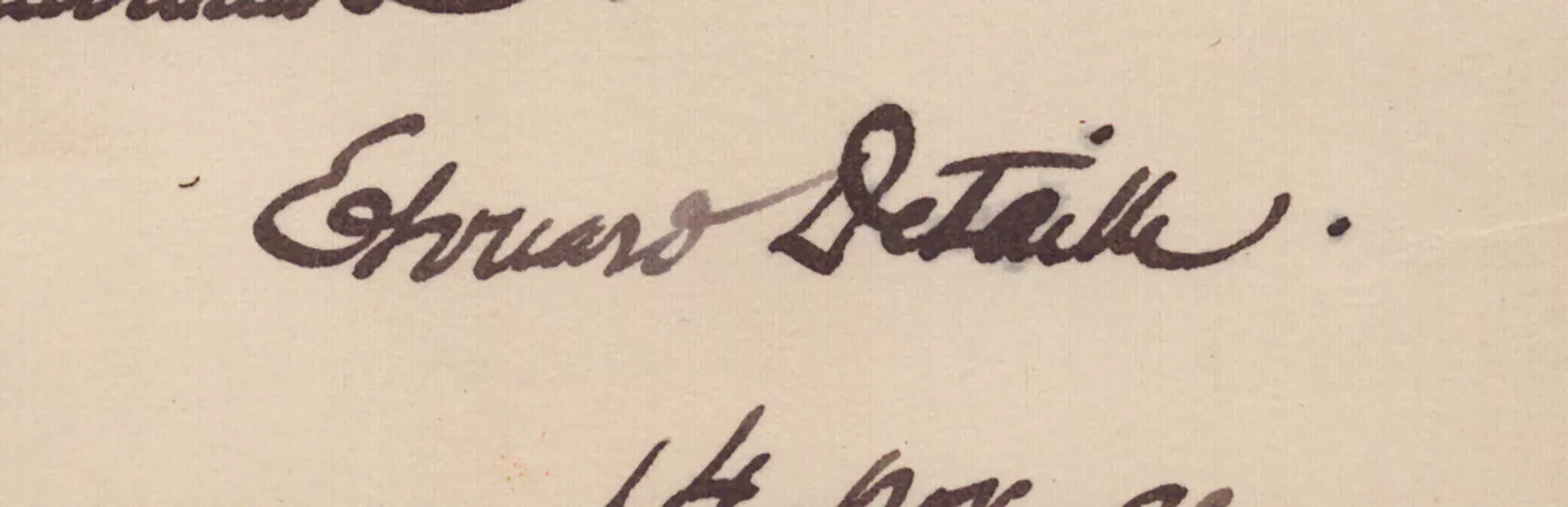
Recognizing the artist's signature
Not all the painter's works are signed. However, with or without a mention, it's important for you to have the work appraised to ensure its originality and to be able to date it. And of course, copies do exist.
Knowing the value of a work
If you happen to own a work by or after Édouard Detaille, don't hesitate to request a free appraisal using our form on our website.
A member of our team of experts and chartered auctioneers will contact you promptly to provide you with an estimate of the market value of your work, as well as ad hoc information about it.
If you wish to sell your work, you will also be accompanied by our specialists in order to benefit from alternatives for selling it at the best possible price, taking into account the inclinations of the market.
.Estimate in less than 24h
Works from the same period sold at auction

Estimated 2 000 € - 3 000 €
Delphin ENJOLRAS (1857-1945) "A Midsummer Night's Dream", Oil on canvas

Estimated 600 - 800 €
Alexandre Gabriel DECAMPS (1803-1860) Two children reading.

Estimated 9 000 - 12 000 €
Guillaume FOUACE (1837-1895) Pheasant and hare.

Estimated 600 € - 800 €
Henri ZUBER (1844-1909), Bridge at Artemare. Oil on canvas.

Estimated 10.000 - 15.000 €
Ebridge Ayer BURBANK(1858-1949), Young African-American boy, Oil on panel.
Discover in the same theme

Rating and value of works, paintings by Baron François Gérar...
Baron François Gérard is a great historical painter of the 18th and 19th centuries. He is highly sought-after at auction.
Learn more >

Rating and value of Ferdinand Barbedienne's works, sculpture...
Ferdinand Barbedienne was a 19th-century art foundryman who produced works of great value at auction.
Learn more >

Rating and value of paintings by Anna Bilinska Bohdanowicz
Anna Bilinska Bohdanowicz is a Polish realist artist who has produced numerous works of high value.
Learn more >

Secure site, anonymity preserved

Auctioneer approved by the State

Free and certified estimates
Frequently asked questions
-
Who was Édouard Detaille, and what is his artistic style?Édouard Detaille (1848–1912) was a French painter who specialized in military history painting and was trained by the master Jean-Louis-Ernest Meissonier. His style is characterized by academic rigor combined with near-documentary precision: every uniform, weapon, and detail is rendered with accuracy, while his dynamic compositions capture the energy of battle with remarkable clarity. He became a leading figure in military painting in the late 19th century, particularly for his depictions of the Franco-Prussian Wars.
-
What is the price range for Détaille's works, depending on the technique used?The prices of Détaille’s works vary significantly depending on the medium: prints sell for between €5 and €6,100, drawings and watercolors between €20,000 and €48,000, and oil paintings on canvas—the most prestigious works—between €60,000 and €147,300. For example, *Portrait of John Chard*, an oil on canvas, exceeded estimates when it sold for €31,000 in 2022. This variation reflects the importance the market places on the originality and format of the works.
-
How can a work attributed to Édouard Detaille be authenticated?To authenticate a work by Détaille, it is essential to have your painting or drawing appraised by specialists. Auctie's offers a free, no-obligation appraisal conducted by state-certified auctioneers and experts. Our team will analyze the work’s authenticity, verify its date, and provide you with an accurate estimate of its market value within 48 hours.
-
Is this the right time to sell a work by Détaille?Yes, now is a good time to sell a work by Détaille. His paintings are in growing demand on the art market, particularly among French collectors. The prices of his works are rising steadily at auction, and buyers remain very interested in military scenes and historical works—areas in which Détaille excels.
-
How does the process of selling a work of art at Auctie's work?The process begins with a free, no-obligation appraisal conducted by our experts and licensed auctioneers. If you decide to sell, we’ll guide you every step of the way until the item is sold at auction. Our team will advise you on the best options for selling your artwork at the highest possible price, taking into account current trends in the art market.
