



Rating and value of paintings by Élise Puyroche Wagner

Key takeaways
- Élise Puyroche Wagner (1828–1895) was a leading 19th-century still-life artist who specialized in floral and fruit still lifes, executed with a refined oil painting technique.
- Prices for her works range from €10 to €10,030, with oil-on-canvas paintings being particularly sought after, fetching prices from €650 to €10,030 depending on quality.
- Her market value is on the rise, as evidenced by the 2020 sale of an oil painting for €5,970 against an initial estimate of €850 to €1,700, with significant upside potential.
If you own a work by or after the artist Charlotte Élise Puyroche Wagner, and would like to know its value, our state-approved experts and auctioneers will offer you their appraisal services.
Our specialists will work to carry out a free appraisal of your work, and provide you with an accurate estimate of its value on the current market.
Then, if you wish to sell your work, we will direct you to the best possible arrangement to obtain the optimum price.
Rating and value of artist Élise Puyroche Wagner
Charlotte Élise Puyroche Wagner is a major 19th-century still life artist. Now, prices for her works are rising under the auctioneers' gavel.
Her oils on canvas are particularly prized, especially by French buyers, and the price at which they sell on the art market ranges from €10 to €10,030, a considerable delta but one that speaks volumes about the value that can be attributed to the artist's works.
In 2020, an oil on canvas entitled Still life was sold for €5,970, while it was estimated at between €850 and €1,700. Its value is on the rise.
Order of value from a simple work to the most prestigious
Technique used | Result |
|---|---|
Drawing - watercolor | From €10 to €9,800 |
Oil on canvas | From €650 to €10,030 |
Estimate in less than 24h
Style and technique by artist Élise Puyroche Wagner
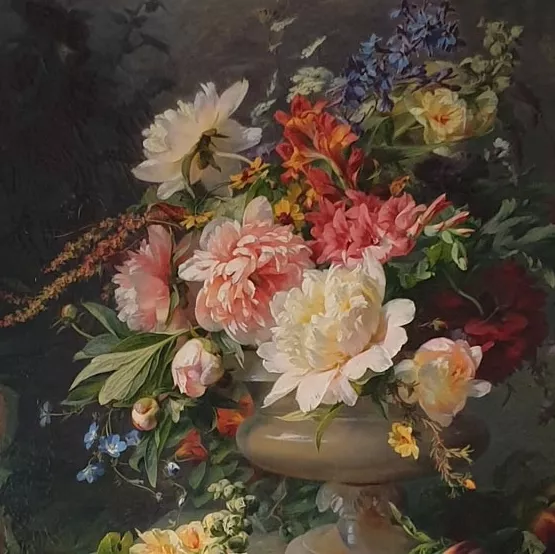
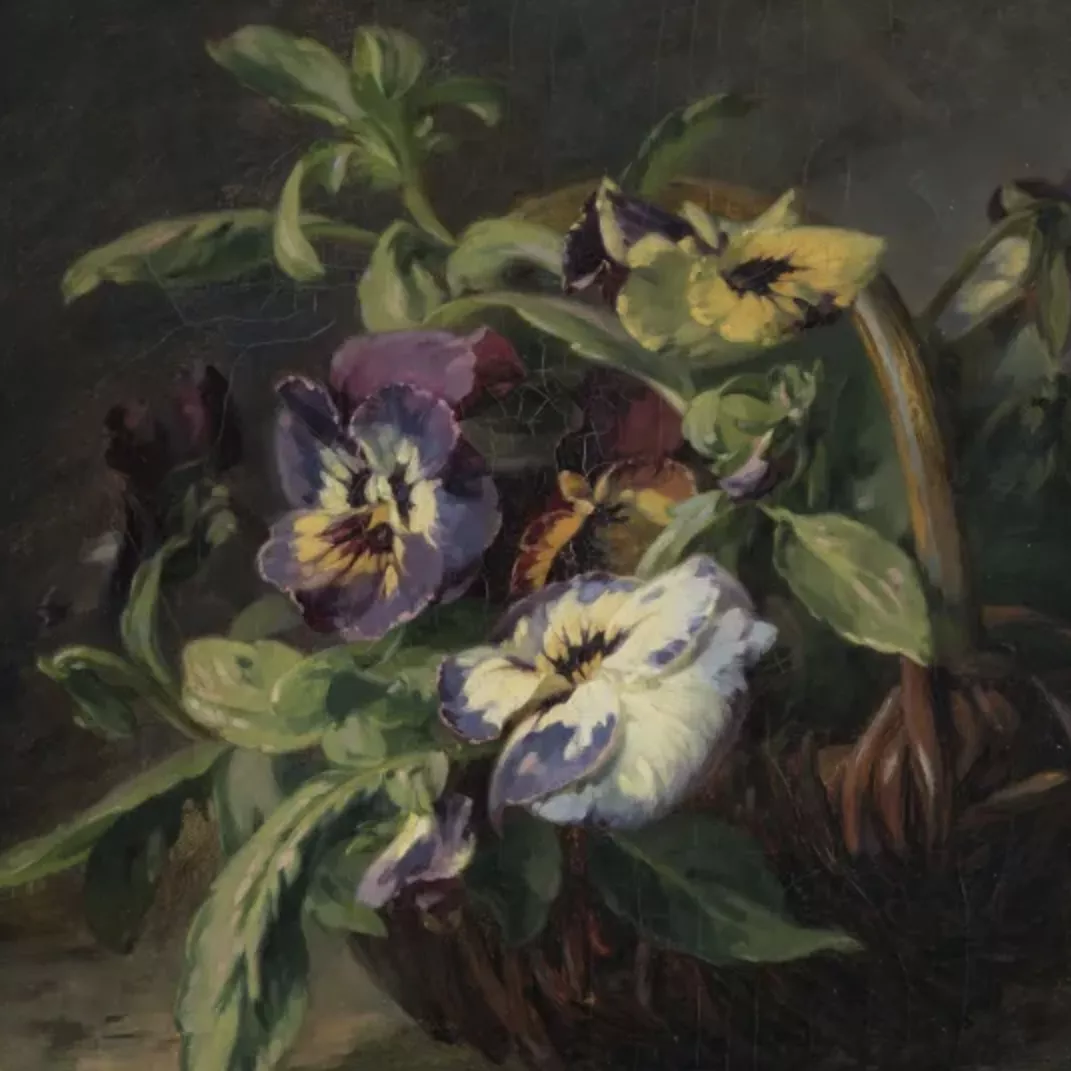
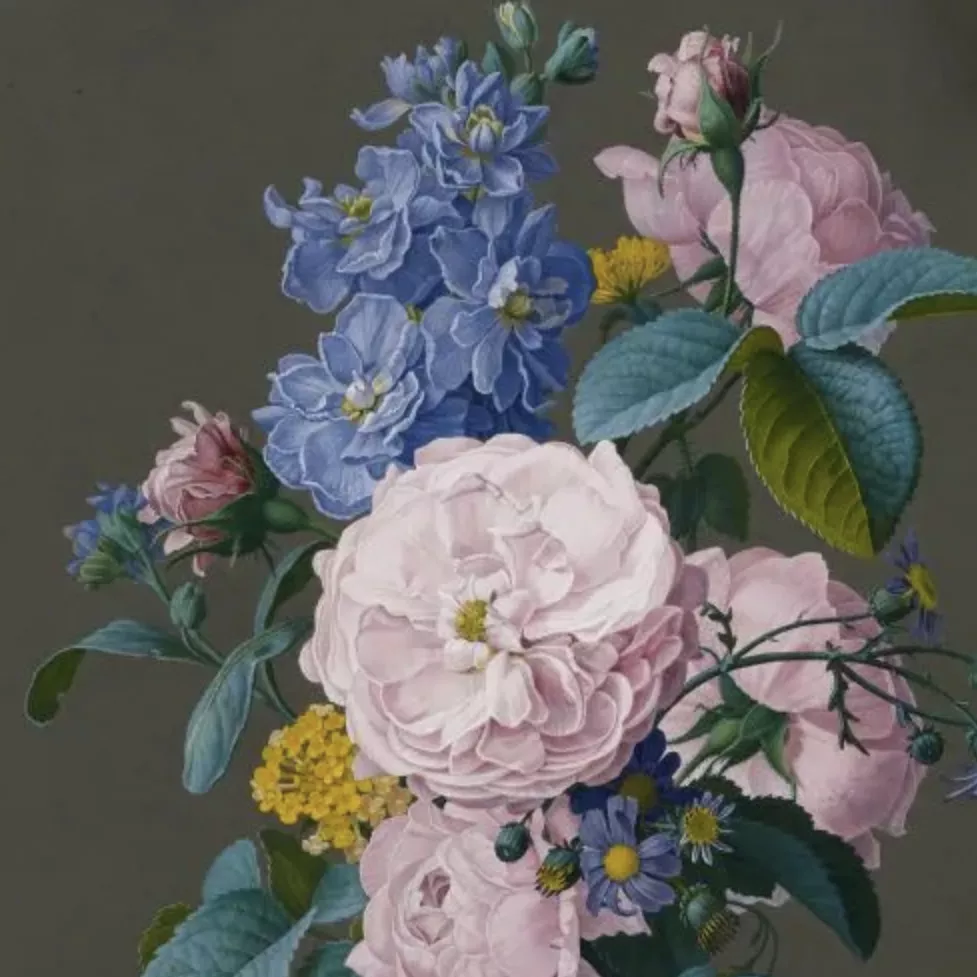
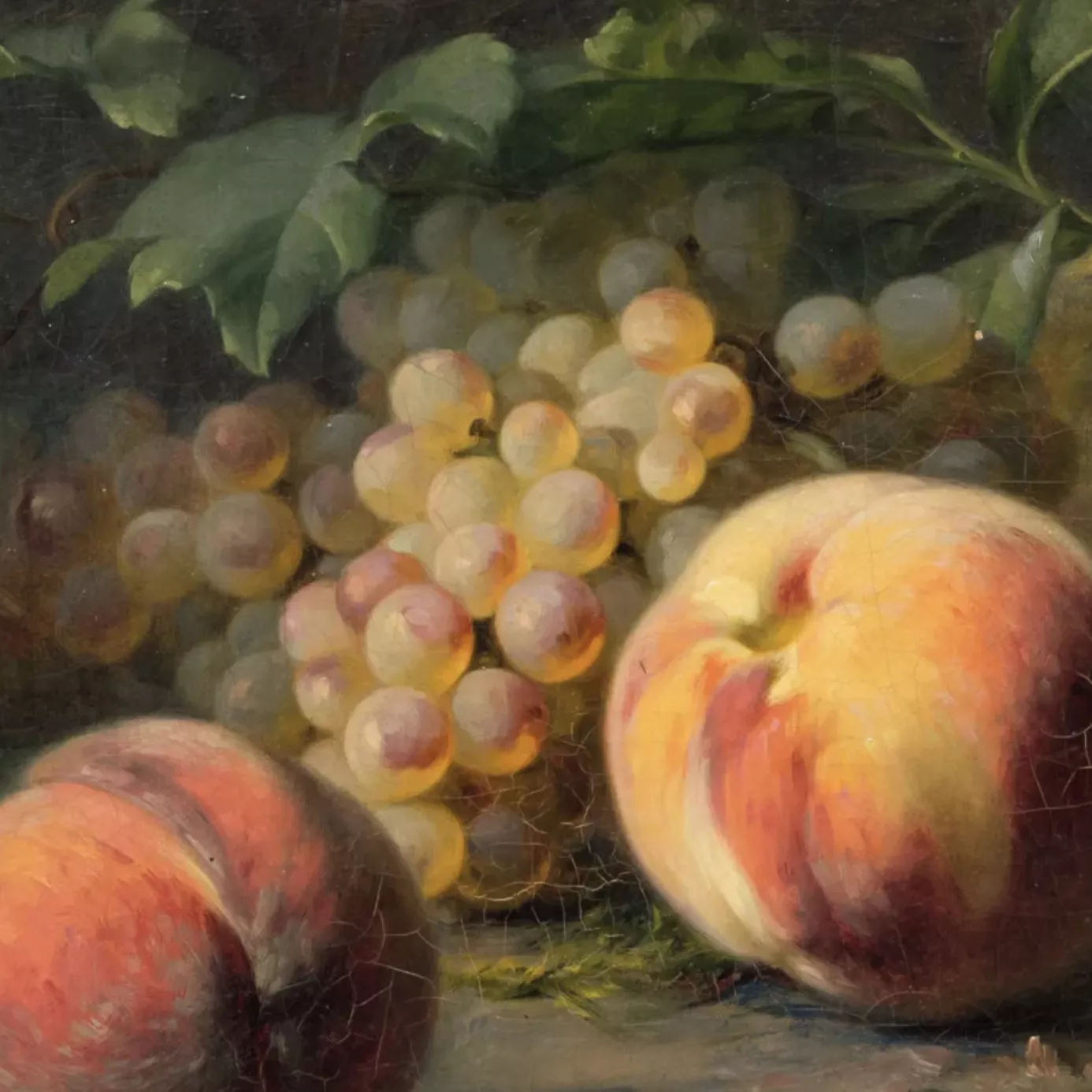
Élise Puyroche Wagner (1828 - 1895)is an artist who specialized in floral still lifes and fruit still lifes, enabling a certain decorative finesse to be combined with rigorous structure.
She combines chromatic richness and botanical precision, with a remarkable sense of rendering textures, especially petals, leaves and utensils. The pictorial technique is refined, using oil on wood, canvas or panel, with a smooth, velvety touch reminiscent of Northern European-inspired still lifes (Van Huysum, Ruysch).
The brushes apply a meticulous pictorial layer, with no apparent impasto, enabling a rendering that is both soft and luminous. The artist shows a strong mastery of the play of light and reflections, particularly on glass or metal surfaces (fountains, vases, bells).
The compositions present a rigorous formal balance, with centered bouquets, well-organized volumes and a stable layout. The main pieces often feature neutral backgrounds, standing out clearly with the aim of allowing a direct and elegant reading.
As Puyroche Wagner trained in Dresden and then Lyon, she was inspired by the German academic tradition and French floral classicism. She became an honorary member of the Dresden Academy as early as 1851, and gained early notoriety in the salons of Lyon and Paris.
Élise Puyroche Wagner, a singular trajectory
Élise Puyroche Wagner was born in Dresden in 1828 to French parents who had settled in Saxony. She came from an intellectual family: her sister, Adélaïde Salles-Wagner, was also a painter. She trained first in Dresden, then in Lyon with Simon Saint-Jean and Grosclaude from 1849.
The artist exhibited from the age of 17 in Dresden, her first works being bought by the Court of the King of Saxony and the Dresden Museum. She moved to Lyon in 1849, exhibiting regularly at the local Salon and from 1848 in Paris.
Specializing in floral and fruit still lifes, her work was widely recognized in Lyon artistic circles. She took part in the Paris Universal Exhibition in 1855 and exhibited in Munich in 1879.
Her marriage to Alexandre Parrot de Puyroche, a pastor in Lyon, gave her the name Élise Puyroche Wagner, by which she is known today. Her sister, Adélaïde, accompanied her in her artistic milieu. They thus created an active intellectual home.
Little known, his quotation nevertheless has significant upside potential, following in the footsteps of artists such as Anne Vallayer-Coster or Clara Peeters.
She died in 1895 in Lyon's 6th arrondissement, aged 66. Her work can be found in the collections of German museums (Dresden, Leipzig) and several French institutions. Today, she remains one of the notable figures of the 19th century, a pioneer among women still-life painters and appreciated for her sense of detail and the virtuosity of her compositions.
Focus on Nature morte aux fleurs, vase de porcelaine et aquarium de poissons rouges
Still life with Flowers, a Porcelain Vase and a Goldfish Bowl (1849), is an oil on canvas signed Élise Puyroche Wagner and produced in 1849. It measures 81 x 65 cm and is held in a private collection in Oregon, previously acquired in Berlin in 1905.
The composition is carefully structured around a central floral arrangement, set against a drapery rich in reflections. The porcelain vase is finely decorated and the fish vase is visible through transparency, allowing the object's light reflections to be revealed.
The bouquet depicted is generous (roses, anemones and foliage) balanced by the fish vase, which introduces a subtle narrative tension. The paint is applied in thin, polished layers, without impasto, to restore the metallic sheen of the vase, the freshness of the flowers and the transparency of the water.
The work on the play of light is precise : soft shadows on the fabric, vibrant reflections on the porcelain, vibrant reflections on the porcelain, aquatic reflections and sparkles from the fish vase. The palettes are richly orchestrated (pearly banks, fresh greens, warm reds and deep blues) that compose a subtle chromatic harmony that is both natural and decorative.
This visual language is in keeping with the Northern European tradition (Van Huysum or Rachel Ruysch) while respecting a French academic balance that lends it both elegance and refinement.
This painting is the result of a successful poetic and domestic instance, without pathos or ostentation, which offers a delicate testimony to still life in the 19th century. The emphasis is on matter and texture ; transforming modest subjects into art objects, while avoiding narrative anecdote.
This is an emblematic painting from his oeuvre, reproduced in catalogs and then offered for sale in the early 2000s. His other works are also regularly called in at international sales, showing a continuing interest in his technical virtuosity and painterly elegance.
Recognizing the artist's signature
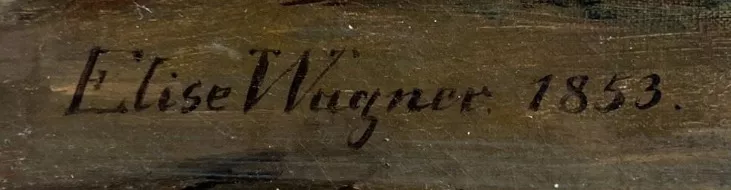
Élise Puyroche Wagner often signs her name at the bottom of her drawings, or oils on canvas. Copies may exist, so expertise remains important.
Knowing the value of a work
If you happen to own a work by Élise Puyroche Wagner or after the artist, don't hesitate to request a free appraisal using our form on our website.
A member of our team of experts and chartered auctioneers will contact you promptly to provide you with an estimate of the market value of your work, as well as ad hoc information about it.
If you are considering selling your work, you will also be accompanied by our specialists in order to benefit from alternatives for selling it at the best possible price, taking into account market inclinations.
Estimate in less than 24h
Discover in the same theme

Rating and value of works, drawings, paintings by Louis Hers...
Louis Hersent was a 19th-century neoclassical history painter. He produced drawings and canvases quoted on the auction market.
Learn more >

Rating and value of furniture, desks, chests of drawers by P...
Paul Sormani was a 19th-century cabinetmaker who produced a number of pieces of furniture that are highly valued at auction. Estimate in 24h
Learn more >

Rating and value of paintings and drawings by Ferdinand Geor...
Ferdinand Georg Waldmüller was an Austrian realist painter who produced many works that are highly valued at auction.
Learn more >
D'autres natures mortes vendues aux enchères

Estimated 15.000 - 20.000
Anthony II CLAESZ (1616-1642), Still life of flowers, oil on canvas

Estimated 8.000 - 12.000
Guillaume FOUACE (1837 - 1895), Still life with lobster, oil on canvas

Estimated 8.000 - 15.000
Maurice de VLAMINCK (1876-1958), Still life with jugs and leeks, oil on canvas

Estimated 4.000 - 6.000
Guillaume FOUACE (1837-1895), Still life with Roquefort cheese, Oil on canvas

Estimated 12.000 - 15.000
Paul AIZPIRI (1919-2016), Still life of flowers, Oil on canvas

Estimated 800 - 1.500
Pascal DAGNAN-BOUVERET (Paris 1852-1929 Quincey) Still life with apple and books, Oil on cardboard

Secure site, anonymity preserved

Auctioneer approved by the State

Free and certified estimates
Frequently asked questions
-
Who was Élise Puyroche Wagner, and what was her artistic style?Élise Puyroche Wagner (1828–1895) was a leading artist of the 19th century who specialized in floral and fruit still lifes. Trained in Dresden and later in Lyon, she combined rich colors and botanical precision with a remarkable mastery of light and texture, drawing on the Northern European tradition while adhering to French academicism. Her works, executed in thin, polished layers without impasto, demonstrate a technical virtuosity and pictorial elegance that rank her among the pioneers of 19th-century still-life painting.
-
What is the price range for works by Élise Puyroche Wagner?The prices of Élise Puyroche Wagner’s works vary considerably depending on the medium and quality: drawings and watercolors range from €10 to €9,800, while oil-on-canvas paintings range from €650 to €10,030. In 2020, an oil on canvas titled *Still Life* sold for €5,970 at auction, exceeding its initial estimate. Her market value is currently on the rise, reflecting a growing interest in her masterful compositions.
-
How can I have a work by Élise Puyroche Wagner authenticated and appraised?To authenticate a work by Puyroche Wagner and determine its value, we offer a free, no-obligation appraisal through our online form. A state-certified expert or auctioneer will contact you to appraise your painting and provide you with a precise estimate of its current market value, usually within 48 hours. This process also allows us to gather the necessary information about the artwork (provenance, condition, etc.) to plan for the best possible sale.
-
Is this the right time to sell a work by Élise Puyroche Wagner?Yes, now is a good time to sell a work by Puyroche Wagner. Her market value is currently on the rise, driven by growing interest in 19th-century female painters and still lifes of academic quality. Her works regularly sell at international auctions, and the market recognizes her technical virtuosity and pictorial elegance, which leads to favorable results for sellers.
-
How does the sale of a work of art work at Auctie's?At Auctie's, the process begins with a free, no-obligation appraisal conducted by our experts and licensed auctioneers. Once the appraisal is complete, we guide you toward the best possible approach based on the artwork and the current market, and then we support you from the appraisal through to the auction to ensure you get the best possible price. Our specialists handle all administrative and commercial procedures.
