



Rating and value of paintings by Marie Louise Breslau

Key takeaways
- Oil-on-canvas paintings by Marie-Louise Breslau (1856–1927) sell for between €100 and €30,000, with prices rising sharply since 2025.
- A leading Franco-Swiss portrait painter of the Belle Époque, she excelled at intimate and psychological scenes, particularly portraits of women rendered in muted tones and diffused light.
- Her painting *After Work* (1881) is a masterpiece of intimate female realism, marking the beginning of her public recognition at the Paris Salon.
If you own a work by or after the artist Marie Louise Breslau, and would like to know its value, our state-approved experts and auctioneers will offer you their appraisal services.
Our specialists will work to carry out a free appraisal of your work, and provide you with an accurate estimate of its value on the current market.
Then, if you wish to sell your work, we will direct you to the best possible arrangement to obtain the optimum price.
Rating and value of the artist Maire-Louise Breslau
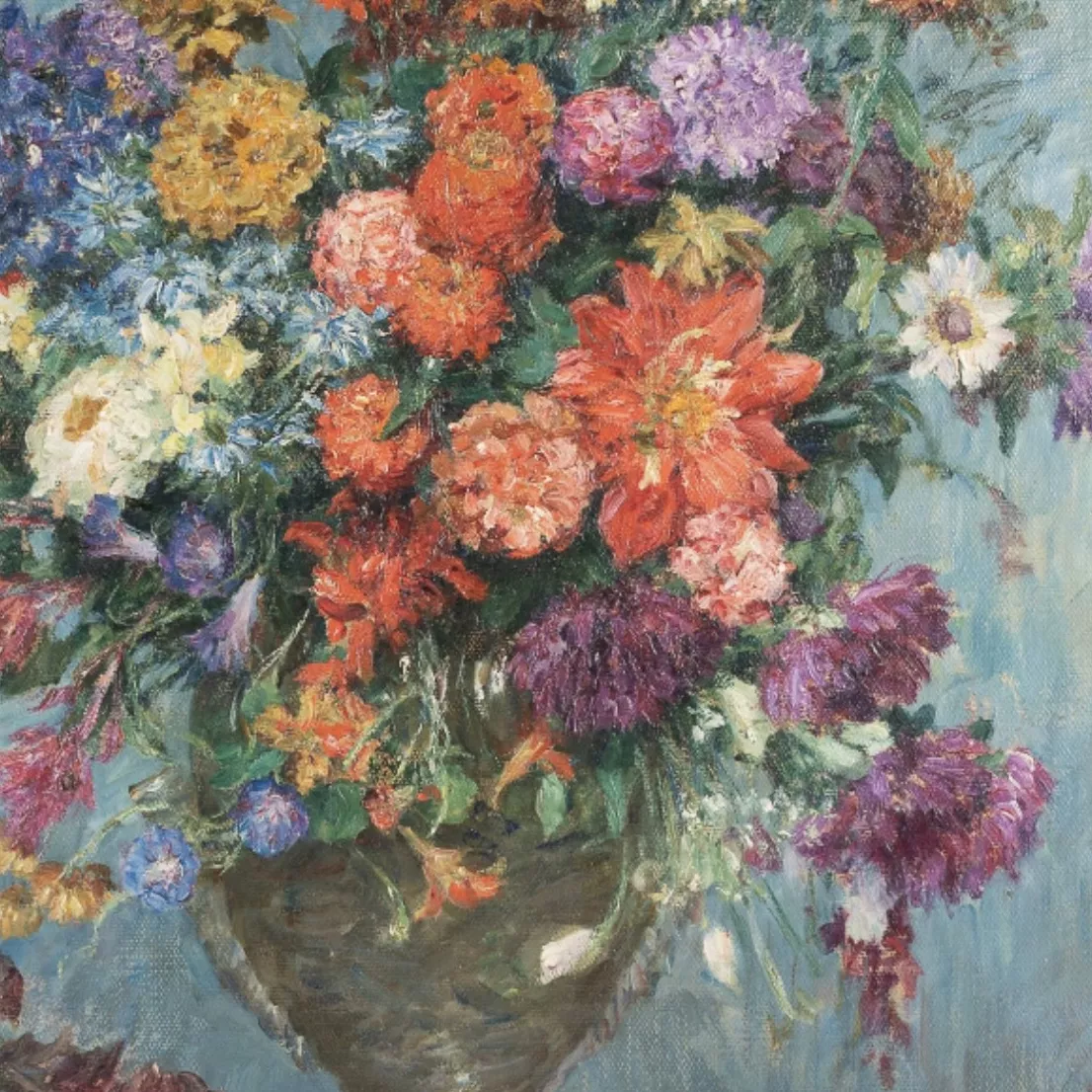
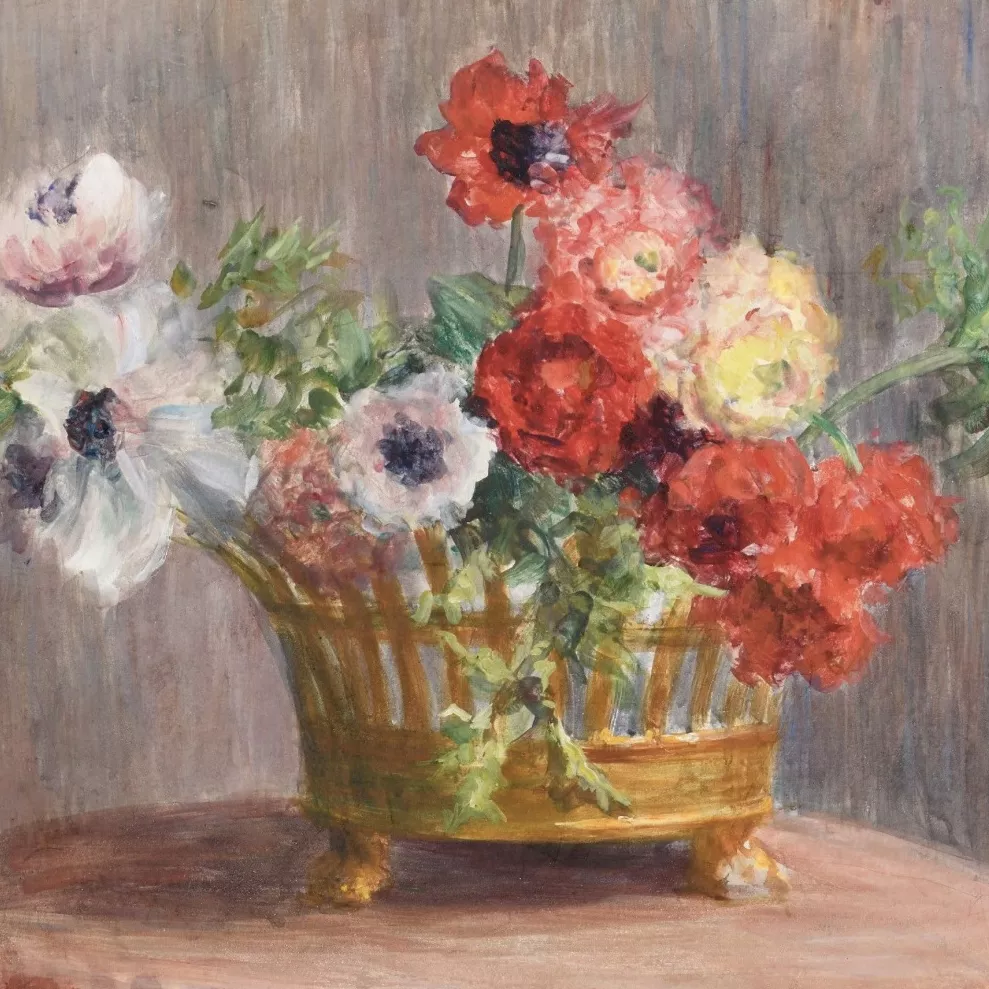
Marie-Louise Breslau is an artist known to lovers of impressionist canvases and still lifes of flowers. Now, prices for her works are rising at the auctioneers' gavel.
Her oils on canvas are particularly prized, especially by French buyers, and the price at which they sell on the art market ranges from €60 to €38,100, a significant delta but one that speaks volumes about the value that can be attributed to the artist's works.
In 2025, his oil on canvas Jeune femme et jeune fille devant une fenêtre was sold for €30,000, whereas it was estimated at between €1,500 and €2,000. Its value has risen sharply.
Order of value from a simple work to the most prestigious
Technique used | Result |
|---|---|
Estamp - multiple | From €70 to €500 |
Oil on canvas | From €100 to €30,000 |
Drawing - watercolor | From €60 to €38,100 |
Estimate in less than 24h
Style and technique by artist Marie-Louise Breslau
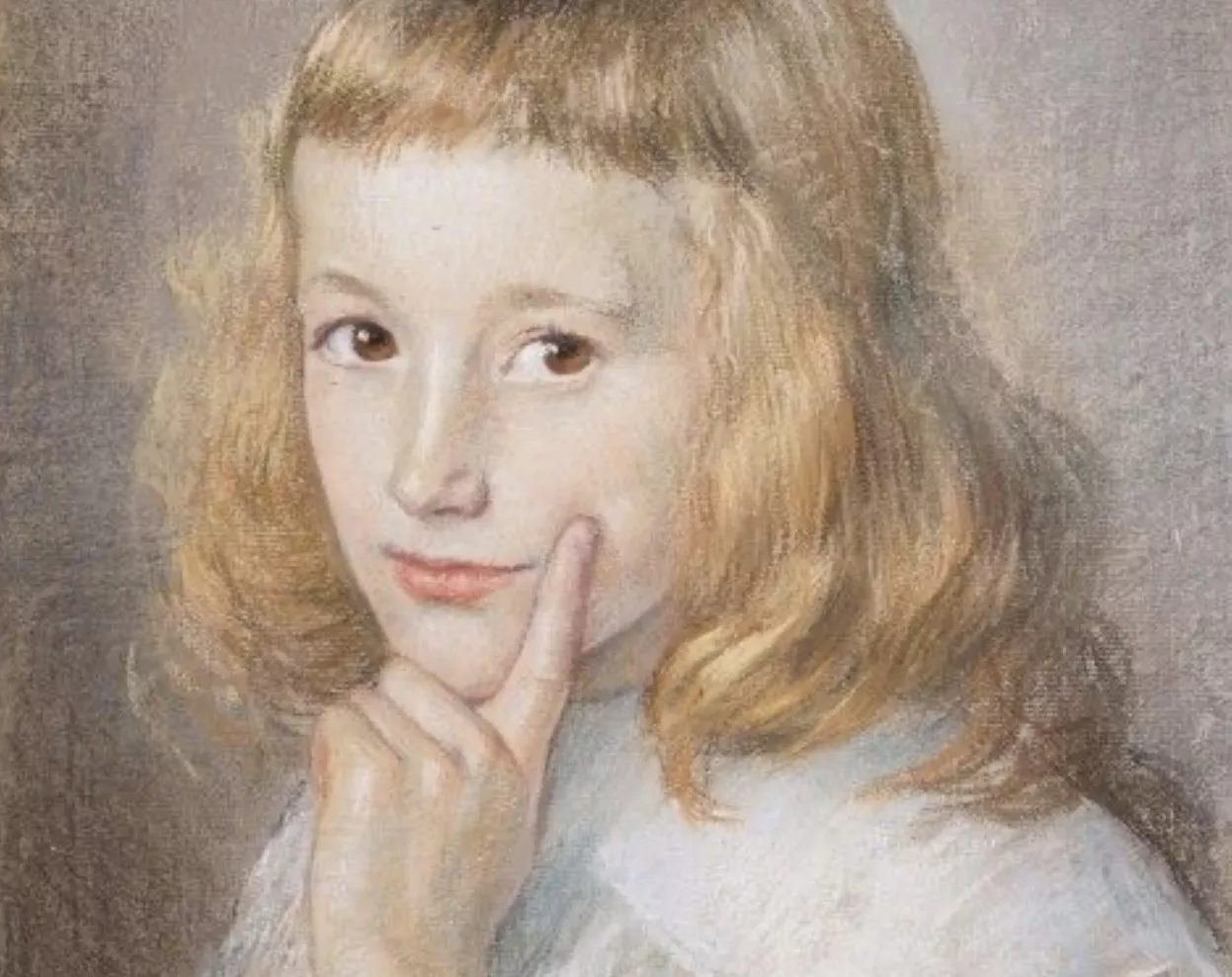
Marie-Louise Breslau (1856 - 1927) was a Franco-Swiss portrait painter active in Paris at the end of the 19th century. She specialized in female portraits and genre scenes, often in interiors, which convey a certain sensitivity and restrained psychology.
She depicts everyday attitudes, namely boredom, reverie or work, where the unspoken occupies a fairly central place.
Her style is close to that of her contemporaries Berthe Morisot or Mary Casatt, but with a more restrained palette and a greater concern for formal construction. Trained at the Académie Julian, she maintained a rigorous academic approach to drawing, while incorporating a freer touch derived from Impressionism.
The artist uses charcoal, sanguine or pastel with great ease in her preparatory studies. Her brushstrokes are nervous yet precise, and always seek to convey an inner attitude rather than a simple morphological rendering.
She is fond of muted, muffled tones (bluish gray, golden brown, old pink and moss green). Light is dappled, diffused and often sideways, as if filtered through a curtain or window, accentuating the melancholy mood.
The artist excels in rendering textiles, soft fabrics or papers, working in small, soft, melting strokes. In her portraits, she seeks to capture a state of mind rather than a social status, favoring absent glances, suspended gestures and natural poses.
She avoids ostentatious accessories in favor of sober staging that leaves all room for the body and the gaze. The characters, who are often female, seem absorbed in their thoughts, giving her canvases a meditative dimension.
The background is often a modest bourgeois interior (living room, study, bed or studio, which reinforces the effect of intimacy). She regularly introduces elements of intellectual or artistic life (books, scores, easels), reflecting a cultivated but discreet milieu. This approach contributes to a form of poetic realism, rooted in everyday life.
The career of Marie-Louise Breslau
Marie-Louise Catherine Breslau (1856 - 1927) was a trained and active Swiss artist, and a great portrait painter of the Belle Époque. Born in Zurich into an intellectual environment, she showed an early aptitude for drawing.
After the premature death of her father, she decided to become an artist, despite social reticence towards women painters. In 1874, she moved to Paris and joined the Académie Julian, one of the few institutions to train women in the Beaux-Arts.
There she met Carolus-Duran and other artists active in Paris at the time. She began exhibiting at the Salon de la Société des Artistes Français in 1879, where her portraits were very well received.
In 1881, her painting Après le travail won an award and was noted for its psychological sensitivity and sure technique. She quickly became a fixture at the Parisian Salons, being regularly selected and often awarded.
Thanks to her intimate, naturalistic style, she received numerous portrait commissions, especially from upper-middle-class women and intellectuals. Established in Montparnasse, she led a life of rigorous work, fairly withdrawn from worldly tumult.
She thus frequented artists, writers and musicians, including Edgar Degas, Jules Breton or Gabriel Fauré. She maintained an intense friendship with Madeleine Zillhardt, model and muse, with whom she shared her life and studio.
Although a foreigner, she was deeply integrated into French cultural life and became a member of the Société nationale des Beaux-Arts. In 1901, she was awarded the Légion d'Honneur, still a rare distinction for a woman artist and foreigner.
She remained faithful throughout her career to intimate easel painting, going against the grain of the radical avant-gardes emerging at the time.
Marie-Louise Breslau died in Neuilly-sur-Seine in 1927, after a career spanning almost fifty years. She left behind a rich body of work, consisting mainly of portraits, self-portraits, domestic scenes and psychological studies.
Her work, long overshadowed, has been rediscovered in the context of studies of 19th-century women artists. She is now recognized as a major figure in Belle Époque intimist painting, at the crossroads of tradition and the modern gaze.
Focus on After Work, Marie-Louise Breslau, 1881
After Work is a painting by Marie-Louise Breslau exhibited at the Salon of 1881, measuring 125 x 160 cm, the work receives a very favorable reception and marks the beginning of the artist's public recognition. The subject is intimate, depicting three young women in a studio, resting after a session of artistic work.
The work represents the artist's actual environment, probably her own studio in Paris. Three female figures, either friends or colleagues, are seated or reclining with an attitude of peaceful relaxation.
This painting evokes the shared creation and everyday life of a generation of female artists emancipating themselves from academic shackles.
The subject is in the tradition of the 19th-century tableau de mœurs, with a fresh approach focusing on interiority and authenticity. The absence of dramatic action gives the scene a contemplative value, reinforced by the stable, horizontal composition.
The background is almost is almost neutral insofar as there is no theatrical setting, but simply a few studio objects (table, canvases, curtains).
The composition is highly constructed, diagonal, with a skilful interplay of lines between bodies and furniture. The light comes from the left and grazes the faces and hands, delicately shaping the volumes.
The palette is sober and muted (browns, grays, ivory, verdigris, creating an almost silent atmosphere. The central figure, in profile, with a pensive gaze, is often interpreted as a self-portrait of Breslau.
This painting is now considered one of the masterpieces of feminine intimist realism, alongside works by Morisot, Zandomeneghi or Casatt.
Recognizing the artist's signature
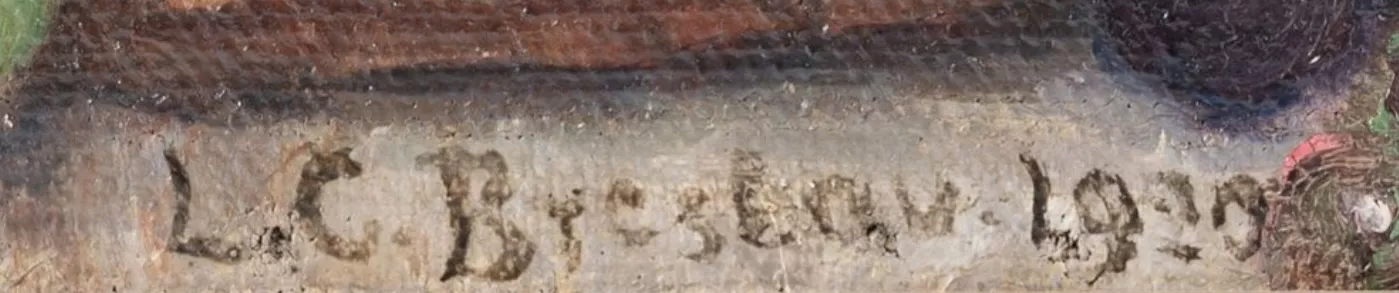
Marie Louise Breslau does not necessarily sign her works. Copies may exist, which is why expertise remains important.
Knowing the value of a work
If you happen to own a work by Marie Louise Breslau or after the artist, don't hesitate to request a free valuation using our form on our website.
A member of our team of experts and certified auctioneers will contact you promptly to provide you with an estimate of the market value of your work, as well as ad hoc information about it.
If you are considering selling your work, you will also be accompanied by our specialists in order to benefit from alternatives for selling it at the best possible price, taking into account the inclinations of the market.
.Estimate in less than 24h
Discover in the same theme

Rating and value of Thomire clocks, sculptures and candelabr...
Auctie's appraises and auctions Thomire creations with mythological subjects. Get a free appraisal and estimate.
Learn more >

Rating and value of works, drawings and paintings by Henri E...
Henri Edmond Cross was a 19th-century pointillist painter who produced valuable drawings and oils on canvas.
Learn more >

Rating and value of paintings by Alphonse Osbert
Alphonse Osbert was a 19th-century Symbolist painter who produced paintings that are highly valued at auction.
Learn more >
D'autres tableaux impressionnistes vendus aux enchères

Estimated 6.000 - 8.000
Mikhail Markianovich GUERMACHEFF (1867 - 1930) House under the snow, oil on canvas

Estimated 2.000 - 4.000
Jean DUFY (1888-1964) Vase of anemones, Watercolor

Estimated 600 € - 800 €
Henri ZUBER (1844-1909), Bridge at Artemare. Oil on canvas.

Secure site, anonymity preserved

Auctioneer approved by the State

Free and certified estimates
Frequently asked questions
-
Who was Marie-Louise Breslau, and what is her artistic style?Marie-Louise Breslau (1856–1927) was a Franco-Swiss portrait painter trained at the Académie Julian who became a major figure in the intimist painting movement of the Belle Époque. Her style combines academic rigor with a free, Impressionist touch, characterized by portraits of women and interior scenes that capture states of mind rather than social status, using a subdued palette dominated by muted tones and a diffuse, melancholic light.
-
What is the market value and price range for Marie-Louise Breslau's works?Prices for Marie-Louise Breslau’s works on the current market range from €60 to €38,100, with significant variations depending on the medium and quality. Her oil-on-canvas paintings, which are the most sought-after, sell for between €100 and €30,000, while her drawings and watercolors range from €60 to €38,100, and her prints from €70 to €500. His market value has been rising sharply in recent years.
-
How can I authenticate a work by Marie-Louise Breslau and get an estimate of its value?To authenticate a work of art and determine its exact value, we recommend that you request a free appraisal using our online form. A state-certified expert or auctioneer will contact you within 48 hours to evaluate the artwork with no obligation and provide you with a reliable estimate based on current market conditions, taking into account the piece’s specific characteristics (technique, dimensions, condition).
-
Is this the right time to sell a work by Marie-Louise Breslau?Yes, now is a good time to sell a work by Marie-Louise Breslau. Her market value is rising sharply, driven by the rediscovery of her work in the context of studies on 19th-century women artists and by a growing recognition of her major role in intimist painting. Buyers, particularly those from France, are showing increased interest in her portraits and interior scenes.
-
How does the process of selling a work of art at Auctie's work?Auctie's supports you every step of the way: after a free, no-obligation appraisal by our experts, we offer you the best sales options tailored to your artwork. We then guide you through the auction process, keeping you informed of market conditions and implementing an optimal strategy to secure the best possible price for your artwork.
