



Rating and value of paintings by Élise Bruyère

Key takeaways
- Élise Bruyère (1776–1842) specialized in portraiture and floral still lifes, demonstrating a remarkable mastery of detail and materials, inherited from the Flemish tradition.
- The first woman to receive a second-class medal at the Paris Salon in 1827 for a flower painting, her still lifes now make up the majority of her works available on the market.
- Her style is characterized by a soft color palette, diffused light, and rigorous botanical observation, contrasting with the theatrical brilliance of her contemporaries such as Vallayer-Coster.
Style and technique of artist Élise Bruyère
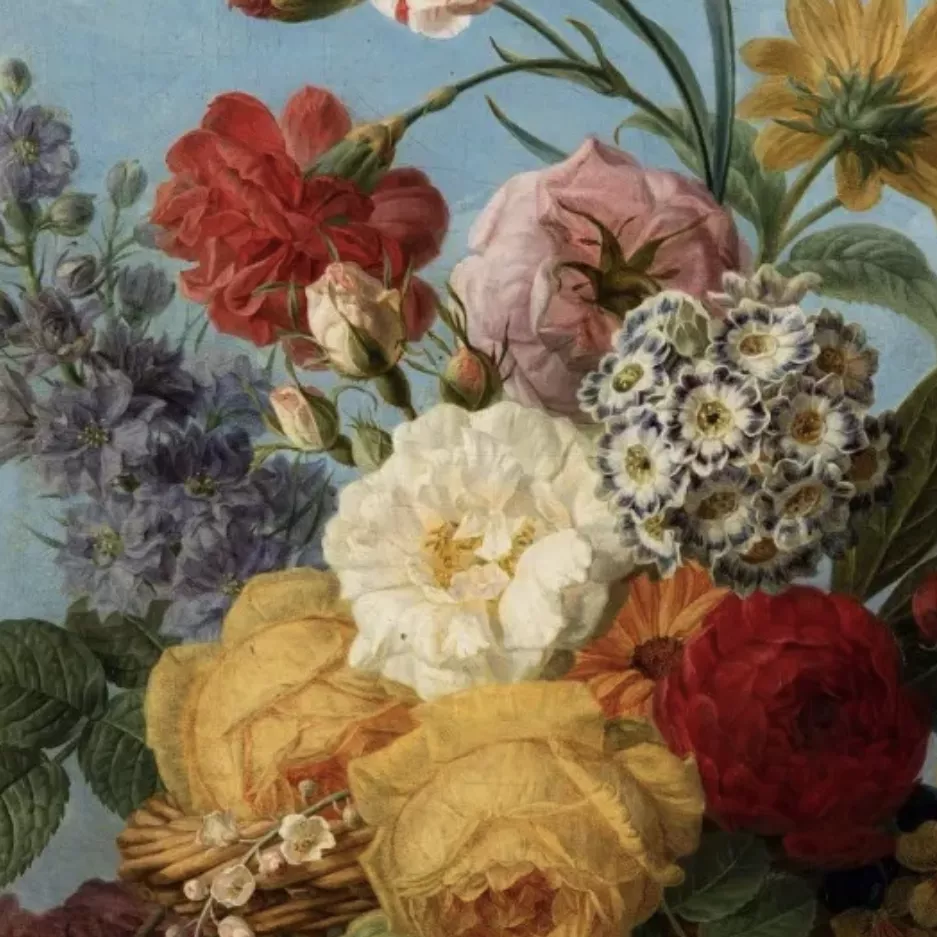
Élise Bruyère specialized in 19th-century portraiture and, above all, flower still lifes, and is best known for her sense of detail in her delicate portraits and still lifes, where she demonstrates great mastery of rendering materials.
Pupil of Jean-Baptiste Jacques Augustin and her father, Jean-Baptiste Bruyère. She benefited from careful training in the neoclassical tradition but also in miniaturist portraiture.
Her work stands out in its time and today, for precision in detail and extreme finesse in the treatment of fabrics, flowers, objects, and with a meticulousness inherited from Flemish and Dutch painting.
Her color palette is soft and balanced, using light tones and subtle cameos, which are often bathed in a diffused light that accentuates the tenderness of her subjects.
She created intimate, sensitive portraits, few of which are now for sale, with often female figures, depicted with elegance and restraint, in a calm posture, with a direct gaze and no excess of expression, which helps reinforce their presence.
Élise Bruyère, a singular trajectory
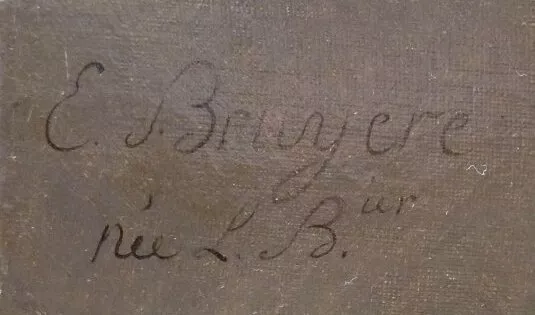
Élise Bruyère, née Elisabteh Henriette Nicole Le Barbier (this name is sometimes found on the signature of her paintings) was a French painter born in Paris in 1776 and died in the same city in 1842.
She was the daughter of Jean-Jacques-François Le Barbier (1738 - 1836), a renowned writer, illustrator and painter of French historical scenes, who contributed to her artistic training.
Her sister, Henriette Le Barbier, was also a painter.
She also studied miniature painting with Jean-Baptiste Jacques Augustin, and received advice from Jan Frans van Dael for her floral still lifes, which would become a large part of her success and fame. Today, it is the artist's works that are most present on the art market.
Early in her career, she consequently specialized in portraits and still lifes of flowers, and regularly exhibited her work at the Paris Salon between 1798 and 1844. She was awarded a second-class medal in 1827 for a painting of flowers, thus becoming the first woman to receive this distinction in this genre.
Among her notable works are, for example Vase of flowers (1836 - Musée du Louvre), Flowers in a vase and plum branch on a marble shelf (1817 - Musée des Beaux-Arts de Lyon), Flowers in a basket (1833 - Musée des Beaux-Arts de Rouen) and Portrait of Louis Bruyère (circa 1809 - 1815 - École nationale des ponts et chaussées).
She married Louis Bruyère (1758 - 1831), who was Inspecteur Général des Ponts et Chaussées and Directeur Général des Travaux Publics de Paris from 1809 to 1820. Her descendants also include Cécile Bruyère, who was the first abbess of the Sainte-Cécile de Solesmes abbey.
She died on August 21, 1842, aged 66. Her work was dispersed at an auction the year of her death. Today, her works are preserved in several museums in France, but many are still held by private players.
Crossover focus : flower vases by Élise Bruyère and Anne-Vallayer Coster
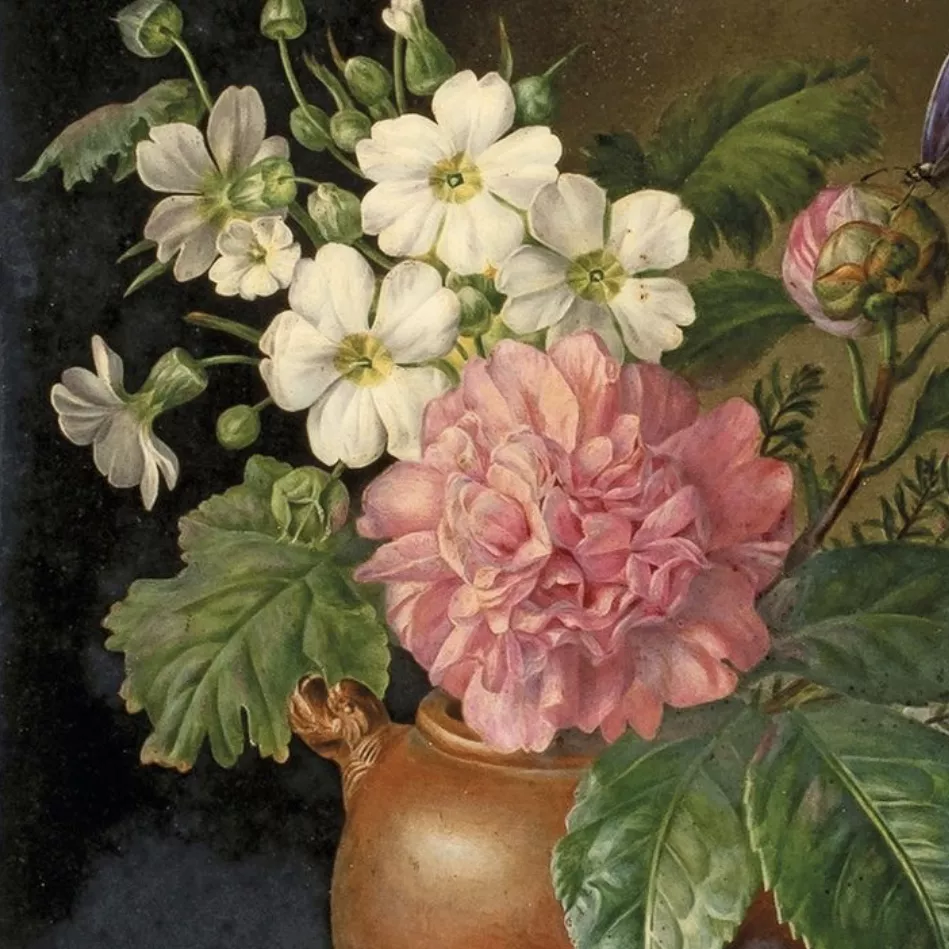
In Vase de fleurs (1836 - Musée du Louvre), Élise Bruyère presents a compact, floral composition, in which the bouquet is centered, well contained in the vase and placed on a neutral surface, creating an effect of stability and restraint.
The soft palette used by the artist (pastel tones, pinks, whites, greens) contributes to rendering a great softness, without violent contrasts.
The light is diffused, the illumination spreads over the entire composition, and brings out the material of the petals and the plant textures.
The artist demonstrates great scientific rigor here, insofar as each flower is identifiable, the style combines botanical observation and pictorial aesthetics.
The background is intended to be quite sober, in distraction, in order to accentuate the delicacy of the subject.
The Flemish influence is filtered through nineteenth-century sensibility, the realism is soothed, more tender, and less demonstrative than in his predecessors.
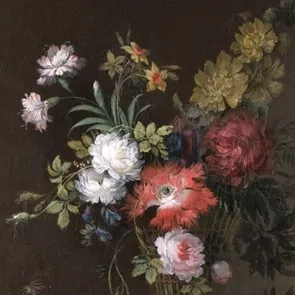
In another Vase de fleurs (1775 - private collection), Anne-Vallayer Coster thinks of a theatrical composition, with overflowing effects, stems protruding from the frame, leaning flowers and a sensation of overflowing.
The artist's palette is vivid and contrasting, the colors saturated, Vallayer-Coster plays on oppositions of red, yellow and blue that are intended to capture the eye.
With this work, she demonstrates a great mastery of dramatic light.
The lighting she uses is more contrasting, with sharp shadows that shape forms and give relief. This work reflects breathtaking technical virtuosity, with the entire composition designed to seek out brilliance with highly advanced textural effects (satin-finished petals, metal vases).
There is a certain rococo influence in the decorative refinement and concern to please an aristocratic elite. Vallayer-Coster thus asserted a feminine identity in a genre deemed minor, and imposed still life in the Salons, despite prejudice.
Through these two vases of flowers, two women artists from different eras, demonstrated their mastery of a genre traditionally reserved for men or considered " minor " (Henri-Fantin Latour dominated it during the 19th century, and other men like Paul Aïzpiri exploited it extensively in the twentieth century).
They treated still life differently : Vallayer-Coster favored brilliance and richness while Bruyère preferred peaceful observation and sobriety. With Vallayer-Coster, nature is abundant and spectacular, with Bruyère, nature is calm, classified and almost scientific.
Their relationship to reality also differs : with Vallayer-Coster, it's the effect that's sought, the luxury of meaning, while Bruyère approaches a quieter contemplation.
These two works also reflect cultural contexts while Anne Vallayer-Coster works for a glittering court (Queen Marie-Antoinette), Bruyère paints in a more bourgeois society, attentive to a taste for detail.
Recognizing the artist's signature
Élise Bruyère often signs her name at the bottom of her drawings, or oils on canvas. Copies may exist, which is why expertise remains important.
Knowing the value of a work
If you happen to own a work by Élise Bruyère or after the artist, don't hesitate to request a free appraisal using our form on our website.
A member of our team of experts and certified auctioneers will contact you promptly to provide you with an estimate of the market value of your work, as well as ad hoc information about it.
If you are considering selling your work, you will also be accompanied by our specialists in order to benefit from alternatives for selling it at the best possible price, taking into account market inclinations.
Estimate in less than 24h
Discover in the same theme

Rating and value of paintings by César Pattein
César Pattein was a realist painter of the 19th century, whose paintings are highly valued at auction.
Learn more >

Rating and value of Russian paintings and drawings by Franz...
Franz Roubaud is a Russian artist who produced military and Orientalist paintings and drawings that are appreciated and sought-after at auction.
Learn more >

Rating and value of paintings by Louise Adéone Drölling
Louise Adéone Drölling is a 19th-century neoclassical artist who produced rare works of great value.
Learn more >
Other still lifes sold at auction

Estimated 15.000 - 20.000
Anthony II CLAESZ (1616-1642), Still life of flowers, oil on canvas

Estimated 3.000 - 5.000
Guillaume FOUACE (1837-1895), Still life with oysters, Oil on canvas

Estimated 4.000 - 6.000
Guillaume FOUACE (1837-1895), Still life with Roquefort cheese, Oil on canvas

Estimated 3.000 - 5.000
Work in the taste of the Dutch 17th century Large still life with crab, ewers, fruit and römer

Estimated 12.000 - 15.000
Paul AIZPIRI (1919-2016), Still life of flowers, Oil on canvas

Estimated 2.000 - 4.000
Macario VITALIS (1898-1989) Still life with a bouquet of flowers. Oil on canvas.

Secure site, anonymity preserved

Auctioneer approved by the State

Free and certified estimates
Frequently asked questions
-
Who was Élise Bruyère, and what was her artistic style?Élise Bruyère (1776–1842) was a French painter who specialized in portraits and floral still lifes. A student of Jean-Baptiste Jacques Augustin and trained in the Neoclassical tradition, she distinguished herself through her extreme precision in rendering details, her soft and balanced palette, and her scientific approach to botany. She was awarded a second-class medal in 1827 for a painting of flowers, becoming the first woman to receive this distinction in this genre.
-
How can you authenticate a painting by Élise Bruyère?To authenticate a work by Élise Bruyère, we recommend that you request a free estimate from Auctie's using our online form. An expert or certified auctioneer from our team will examine your painting and provide you with an authentication report and an estimate of its market value, with no obligation on your part.
-
What types of works by Élise Bruyère are most commonly found on the art market?Élise Bruyère’s floral still lifes are the most commonly found works on the current art market. Her intimate and sensitive portraits—generally of female figures—are rarer, and few have ever come up for sale. Several of her major works are housed in French museums, notably the Louvre and the Museums of Fine Arts in Lyon and Rouen.
-
Why is now the right time to sell a work by Élise Bruyère?Works by 19th-century female painters, particularly those by renowned artists such as Élise Bruyère, are seeing growing demand in the art market. Her status as an award-winning painter and her exceptional technical mastery, combined with the current interest in historically marginalized women’s art, create favorable conditions for a sale.
-
How does the free appraisal of a work of art work at Auctie's?The appraisal is simple and non-binding: just fill out a form on our website with photos and information about your artwork. A certified expert or auctioneer will contact you within 48 hours to provide you with an estimate of the market value. If you decide to sell, our team will guide you through the process from the appraisal to the auction to help you achieve the best possible sale price.
