



Rating and value of paintings by Mary Cassatt

Key takeaways
- Mary Cassatt’s works sell for between €10 and €4,087,050; her oil-on-canvas paintings are particularly sought after by French buyers, and her market value remains stable.
- An American Impressionist artist (1844–1926), she specialized in depicting women and children with a structured style that emphasized clarity of line and a balance between observation and emotion.
- As the only American woman to join the Impressionist group as early as 1879, she played a major role as a cultural mediator by introducing French Impressionism to wealthy American collectors.
If you own a work by or after the artist Mary Cassatt, and would like to know its value, our state-approved experts and auctioneers will offer you their appraisal services.
Our specialists will work to carry out a free appraisal of your work, and provide you with an accurate estimate of its value on the current market.
Then, if you wish to sell your work, we will direct you to the best possible arrangement to obtain the optimum price.
Rating and value of the artist Mary Cassatt
Mary Cassatt is an artist known to lovers of impressionist canvases and still lifes of flowers. Now, prices for her works are rising under auctioneers' gavels.
Her oils on canvas are particularly prized, especially by French buyers, and the price at which they sell on the art market ranges from €10 to €4,087,050, a significant delta but one that speaks volumes about the value that can be attributed to the artist's works.
In 2007, his oil on canvas Child playing with a dog was sold for €4,087,050, while it was estimated at between €2,229,300 and €3,715,500. Its value is stable.
Order of value from a single work to the most prestigious
Technique used | Result |
|---|---|
Estamp - multiple | From €10 to €327,680 |
Drawing - watercolor | From 130 to 6,324,310€ |
Oil on canvas | From 14,850 to 4,087,050€ |
Estimate in less than 24h
Style and technique of artist Mary Cassatt
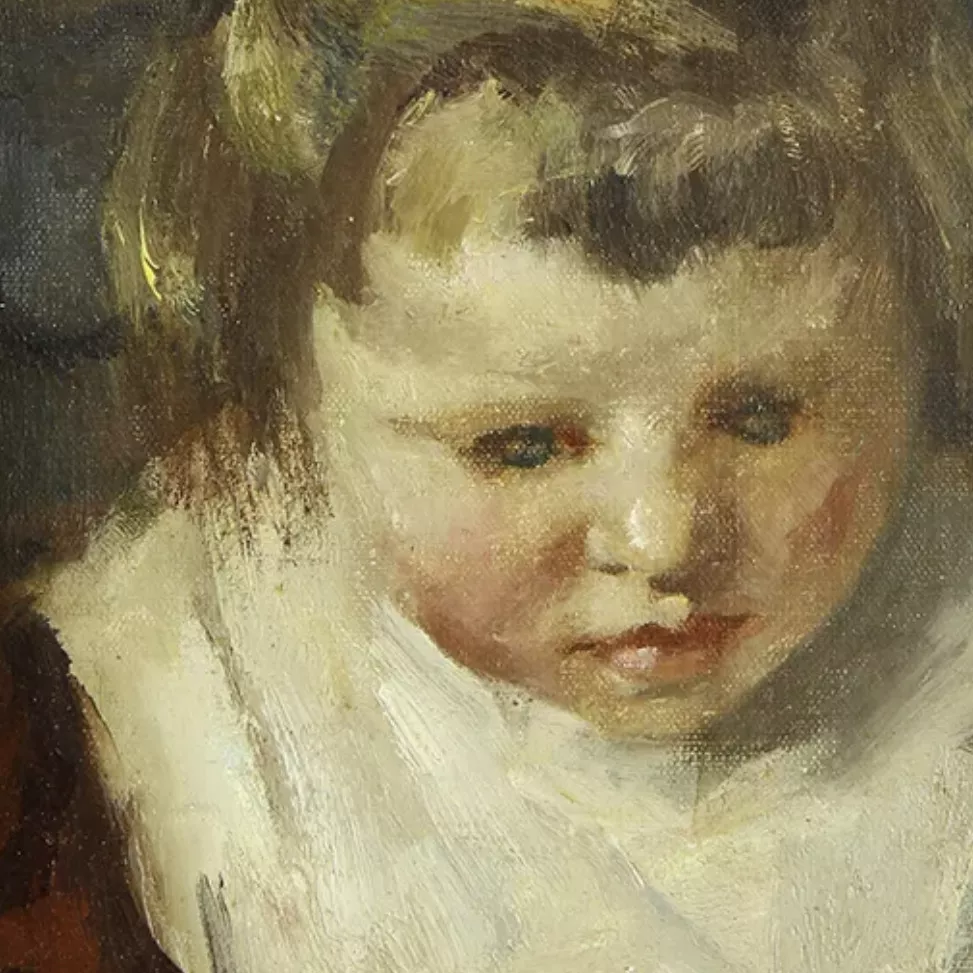
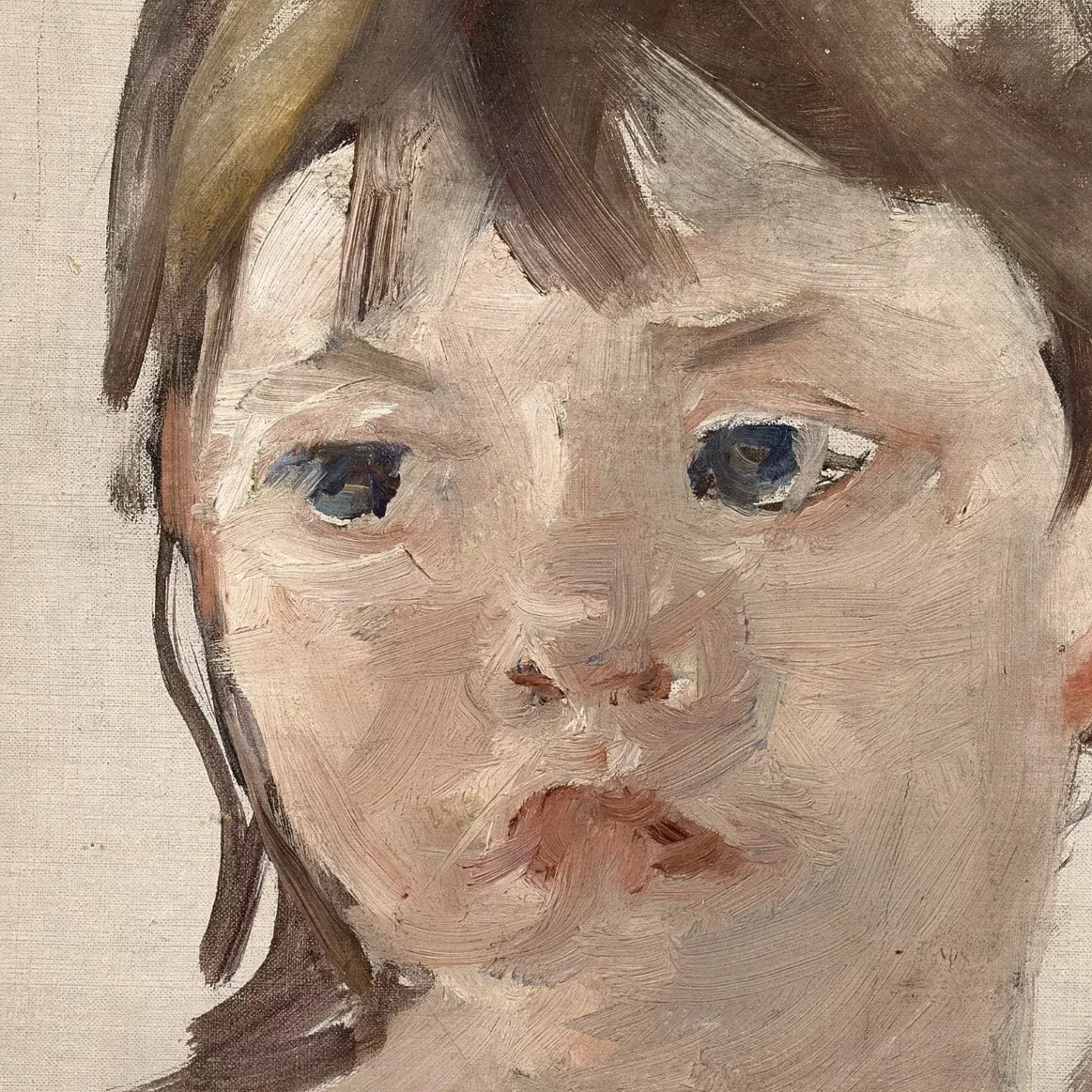
Mary Cassatt produced mainly drawings and watercolors, fitting in with the Impressionist movement by producing mainly depictions of women and children. She flourished particularly well in her art as a portraitist.
Although associated with the French Impressionists, Cassatt developed her own style, more structured and drawn than that of Monet or Renoir. She preferred clarity of line and legibility of composition to the pure fragmentation of light.
Her style combines supple lines, solid forms and colorful finesse, in a rare balance between observation and feeling. She trained at the Pennsylvania Academy of Fine Arts, then copied Italian, Spanish and Dutch masters during her European sojourns.
Her line is always clean and precise, even in the freest painted passages. There is a notable influence of Degas in her work, with whom she maintained a fruitful artistic dialogue, a shared taste for oblique compositions, tight framing and everyday gestures.
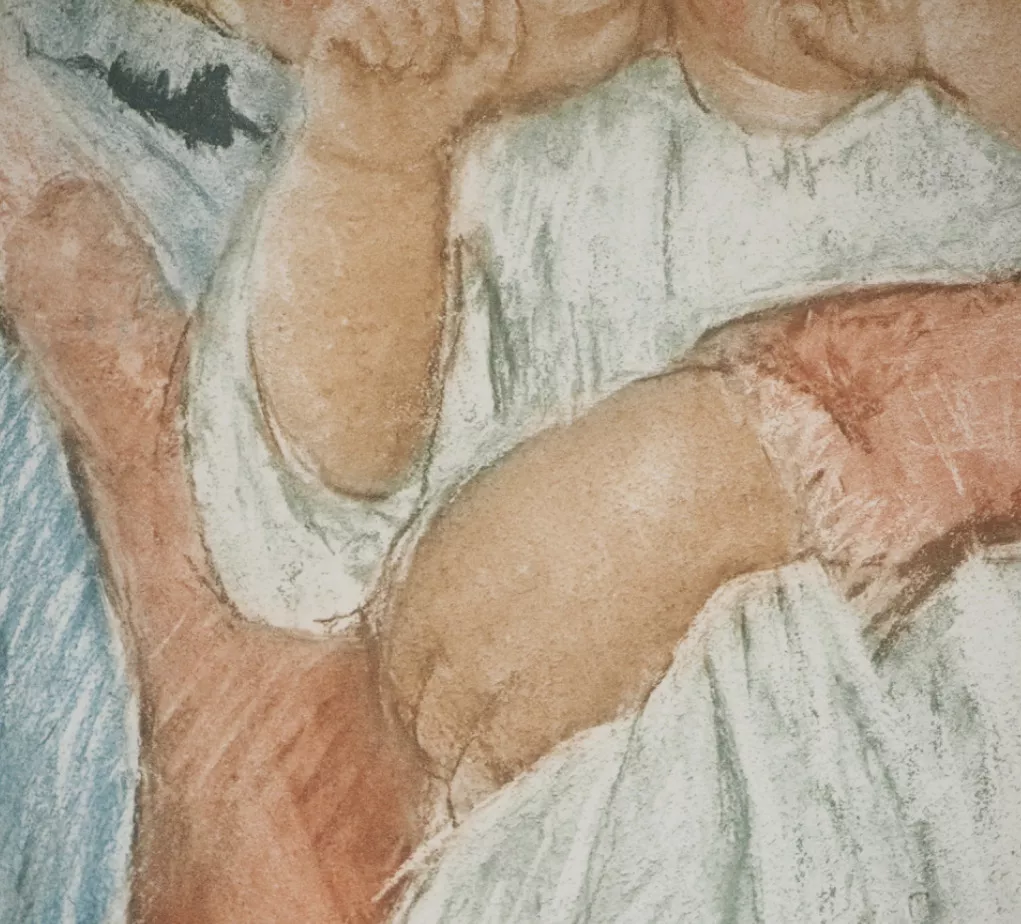
Cassatt was also an excellent pastelist, giving this medium an uncommon density and vivacity (visible pencil strokes, background left exposed, luminous vibrations). In oil painting, she favored medium-sized formats, clarity of tone and a material that was often smooth, without overloading or impasto.
In the 1890s, she explored Japanese-style color etching (etching, aquatint, drypoint) with a remarkable economy of graphic means. She focuses almost exclusively on women and children, depicted in ordinary gestures (washing, reading, sleeping, playing).
She rejects the picturesque and symbolism figures are treated with tenderness but without mawkishness, in bright interiors. Her palette is soft but assertive, containing lots of whites, blues and pinks, but frank contrasts in the pastel and etching series.
Mary Cassatt also rejected the spectacular and the historical scene, in favor of a sensitive vision of everyday women. She thus offered an alternative to the male gaze of the time : her female subjects are active, concentrated, absorbed, and never reduced to a decorative or seductive role.
Her style thus combines affective proximity and pictorial distance, creating a resolutely modern and profoundly human plastic language.
Mary Cassatt's career
Mary Cassatt was an American artist born in Pennsylvania in 1844. Her mother was of French origin, and they left for Europe when she was 7. They lived for some time in Paris, where Mary Cassatt had the opportunity to visit art galleries and museums.
On her return to Pennsylvania in 1855, she began taking drawing lessons.
She then moved back to Paris, where she studied painting with Paul-Constant Soyer and Charles Chaplin, and finally Jean-Léon Gérôme. Cassatt was still searching for her way, until the discovery of Manet and Courbet. After the war, she visits the key points of art history in Europe : Italy, Spain, the Netherlands.
At the Paris Salon, she is noticed by Edgar Degas, who steers her towards Impressionism and becomes her master. She also drew inspiration from Pissarro.
The artist represented her sister extensively until the latter's death, and then devoted herself to depicting mothers and children, which would become her preferred subject.
She died in 1926, aged 82.
Mary Cassatt's imprint on her period
Mary Cassatt left her mark on nineteenth-century art, and today she is a little-known but sought-after artist. As an American artist living in Paris, she played a major role as a cultural mediator, introducing Impressionism to wealthy American collectors (notably the Havemeyer family).
Thanks to her influence, masterpieces by Degas, Monet and Manet entered private American collections, prefiguring the future great American museums such as the Met and the Chicago Institute. In this way, Cassatt contributed to anchoring French taste in the American art world.
She was invited by Degas to exhibit with the Impressionists as early as 1879 (4th Impressionist exhibition) and was one of the few women in the group, as well as being the only fully integrated American.
Cassatt renewed the group's themes with her intimate, feminine vision, focusing her works on motherhood, the mother-child bond and domestic life. Her treatment of light, space and drawing brings to Impressionism a tension between sensibility and structure.
By choosing to represent women absorbed in their gestures, concentrated and autonomous, the artist proposes a vision of the feminine outside the traditional male gaze. She rejects decorative, sexual or anecdotal stereotypes. Cassatt also rejects the academic or mundane paths that were often imposed on women artists of her time.
She would inspire many American artists at the turn of her century, such as Cecilia Beaux and Alice Pike Barney.
Mary Cassatt was rediscovered in the 1970s by art historians, and is today considered one of the greatest American artists of her time. Her name is inextricably linked with Impressionism, but her singular vision sets her apart in the history of modern art.
She is featured in many exhibitions of Western art, and her work is studied as much for its plastic scope as for its social depth.
Recognizing the artist's signature
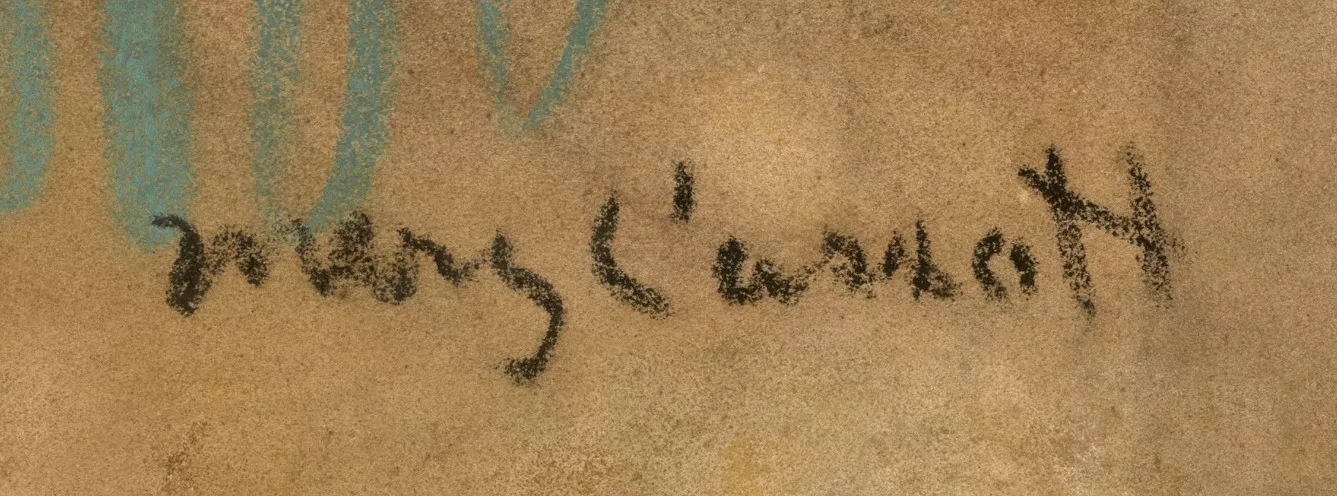
Mary Cassatt did not necessarily sign her works. Copies may exist, which is why expertise remains important.
Knowing the value of a work
If you happen to own a work by Mary Cassatt or after the artist, don't hesitate to request a free valuation using our form on our website.
A member of our team of experts and licensed auctioneers will contact you promptly to provide you with an estimate of the market value of your work, not forgetting to send you ad hoc information about it.
If you're thinking of selling your work, our specialists will also be on hand to offer you alternatives for selling it at the best possible price, taking into account market inclinations.
Estimate in less than 24h
Discover in the same theme

Value and estimate of Pierre Chapo's furniture
20th-century designer Pierre Chapo has left his artistic mark on 20th-century furniture. Estimated in less than 24h.
Learn more >

Rating and value of works, drawings and photographs by Chris...
Christo and Jeanne Claude are two contemporary artists who have collaborated to produce works in situ. The preparatory drawings are listed.
Learn more >

Rating and value of drawings and paintings by Ta Thuc Binh
Ta Thuc Binh is a painter of Vietnamese modernity who contributed to the depictions of independence. His works are gaining in value.
Learn more >
Similar works sold at auction

Estimated 40.000 - 80.000
Alexandre ROUBTZOFF (1884-1949), Portrait of Arbia, oil on canvas

Estimated 20.000 - 30.000
Alexandre ROUBTZOFF (1884-1949), Portrait of Marie-Madeleine Leroy, oil on canvas

Estimated 8.000 - 15.000
Maurice de VLAMINCK (1876-1958), Still life with jugs and leeks, oil on canvas

Estimated 3.000 - 5.000
Raphaël DELORME (1885-1962), Le Bain au Harem, oil on isorel

Estimated 10.000 - 15.000
ABBÉMA Louise, 1853-1927 Portrait of Mme ***, 1879 Oil and gold paint on canvas

Secure site, anonymity preserved

Auctioneer approved by the State

Free and certified estimates
Frequently asked questions
-
Who is Mary Cassatt, and what is her role in art history?Mary Cassatt (1844–1926) was a major American Impressionist artist and one of the few women to be fully integrated into the French Impressionist group. She distinguished herself through her intimate portrayal of motherhood and domestic life, offering an innovative feminine perspective that influenced the movement and helped spread Impressionism among American collectors, particularly through the Havemeyer family.
-
What is the price range for Mary Cassatt's works at auction?Mary Cassatt's works sell for between €10 and €4,087,050, depending on the medium and the piece's significance. Prints range from €10 to €327,680, watercolor drawings from €130 to €6,324,310, and oil paintings on canvas from €14,850 to €4,087,050. Her market value remains stable in the current market.
-
How can you authenticate a work by Mary Cassatt and determine its exact value?To authenticate a work attributed to Mary Cassatt and obtain an appraisal, we recommend that you contact our experts and state-certified auctioneers by submitting a request for a free appraisal. Our specialists will provide you with an accurate estimate of your item’s market value, with no obligation on your part.
-
What is Mary Cassatt's distinctive style, and what techniques did she favor?Mary Cassatt developed a structured Impressionist style, emphasizing the clarity of her lines and the readability of her compositions. She excelled in drawings, watercolors, pastels, and Japanese-style color prints, depicting almost exclusively women and children engaged in everyday activities (grooming, reading, playing) using a soft palette of whites, blues, and pinks.
-
How do I sell a Mary Cassatt painting at Auctie's?If you own a work by Mary Cassatt and would like to sell it, Auctie's will guide you through the process, from the initial free appraisal all the way to the final sale. After the appraisal, our specialists will advise you on the best sales options to help you achieve the best possible price based on current market conditions.
