



Pop Art: Appraisal and Auction

Icons, silkscreen prints, and mass culture: Pop Art values vary widely depending on the artist, the technique, and the rarity of the print.
Below you’ll find all our valuation guides dedicated to Pop Art—paintings, silkscreen prints, editions, and multiples. Each guide details the price ranges observed at auction and the factors that determine a work’s value before it is entrusted to our state-certified auctioneers.
Guides on this art movement
See all guides >
Rating and value of paintings, drawings and sculptures by Ya...
Yayoi Kusama is a Japanese artist known for the use of polka dots in her works, which are highly valued at auction.
Learn more >

Rating and value of paintings, drawings and lithographs by P...
Peter Klasen is a German artist of narrative figuration, whose works in a variety of media are highly regarded.
Learn more >

Rating and value of works, drawings, paintings by Niki de Sa...
Niki de Saint Phalle is an unclassifiable French artist who has produced a substantial body of work that is highly prized at auction.
Learn more >

Rating and value of works, lithographs, paintings by Keith H...
Keith Haring is an American artist who has produced works that are highly rated and valued at auction. 100% free estimate.
Learn more >

Cote and value of Robert Rauschenberg's paintings, drawings...
Robert Rauschenberg is a contemporary artist of the American avant-garde who has produced works that are quoted and valued at auction.
Learn more >

Rating and value of Ettore Sottsass furniture, lighting and...
Ettore Sottsass is a twentieth-century Italian designer whose works are highly valued at auction.
Learn more >

Rating and value of lithographs, serigraphs and prints by Ro...
Robert Indiana is a contemporary American Pop Art artist who has produced a number of highly-rated works of art that are valued at auction.
Learn more >

Rating and value of works, drawings, paintings by Yannis Gai...
Yannis Gaitis is a 20th-century Greek artist who produced highly-acclaimed oil paintings and drawings ranging from the figurative to the abstract.
Learn more >

Rating and value of works, drawings and paintings by Victor...
Victor Vasarely is a Bahaus-inspired 20th-century artist whose works are highly valued at auction.
Learn more >

Rating and value of works, prints and paintings by Roy Licht...
Roy Lichtenstein is a major artist of the 20th-century Pop Art movement. His prints and oils on canvas are highly prized at auction.
Learn more >

Rating and value of works, serigraphs, paintings by Alain Ja...
Alain Jacquet is a Figuration Nouvelle artist who introduced Pop Art. His works are quoted and successful at auction.
Learn more >

Rating and value of works, paintings, drawings by Larry Rive...
Larry Rivers is a twentieth-century American painter who produced drawings and oil paintings that are highly regarded at auction. His value is high.
Learn more >
Understanding the Value of a Pop Art Work
What Is Market Value in the Contemporary Art Market?
The market value of a Pop Art work refers to the benchmark value assigned to it by the secondary market at a given moment, based on the artist’s identity, the technique used, the edition size and numbering for multiple works, the condition of the piece, the strength of the documentation, and the current state of international demand.
Pop Art, which emerged at the turn of the 1950s and 1960s in both Great Britain and the United States, is today one of the most dynamic and highly publicized segments of the contemporary art market, with its most famous figures ranking among the highest-valued and most widely recognized artists by the general public worldwide.
This movement revolutionized art by drawing directly on imagery from popular culture and consumer society—advertising, comic books, tabloid press, and media celebrities—elevating it to the status of a noble subject for the first time in the history of Western art.
This democratization of artistic subject matter, combined with industrial reproduction techniques such as screen printing, has produced a body of work that is immediately accessible to the eye, which largely explains the popularity and enduring strength of demand for this movement.
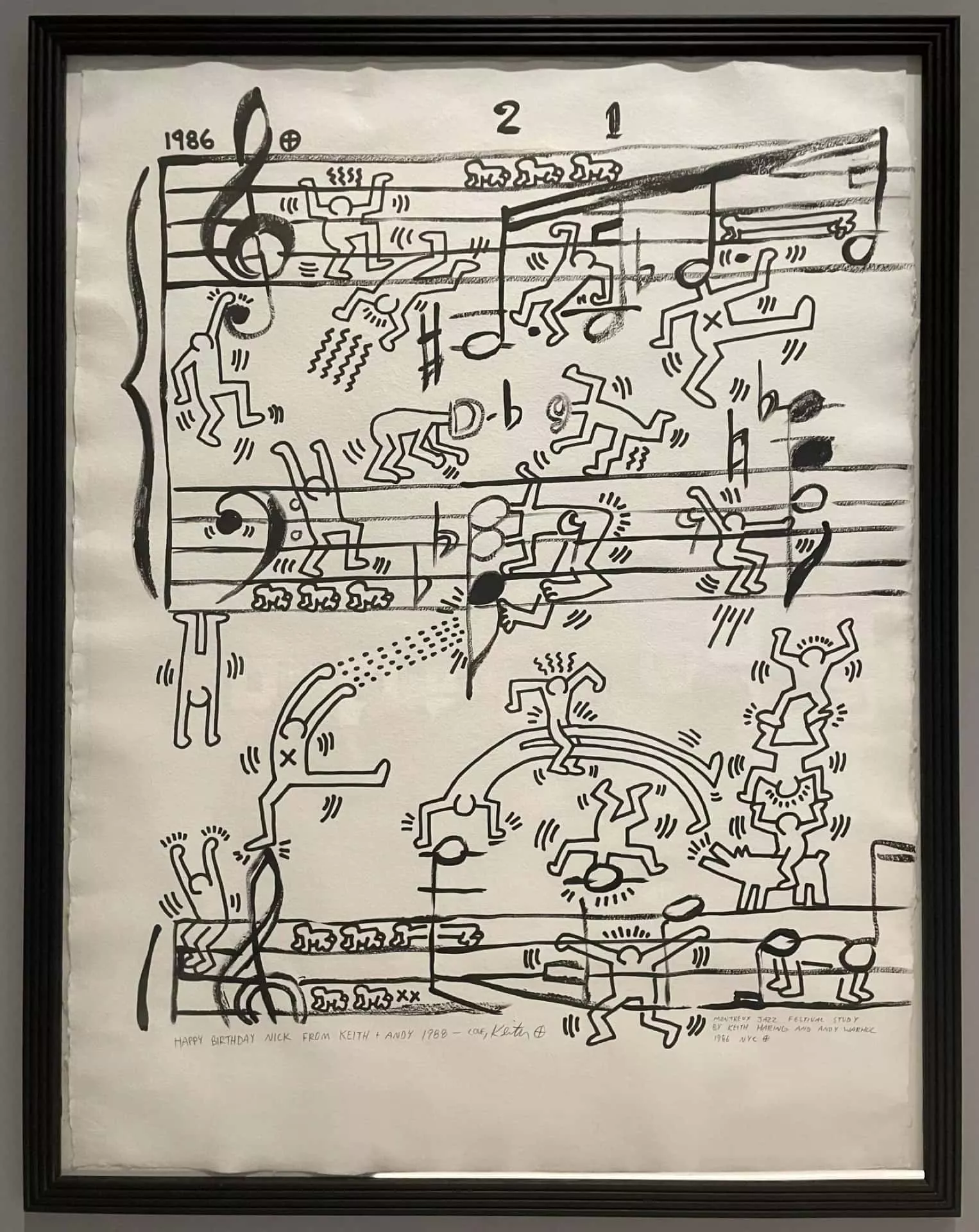
Bright colors, screen printing, and popular culture: what defines the value of Pop Art
The value of a Pop Art work rests on a combination of several factors specific to this movement: the immediate recognition of the subject, often borrowed from a cultural or commercial icon already familiar to the public, the radical nature of the artistic gesture—which consists of transforming this everyday imagery into a sophisticated work of art—and the technical mastery of industrial processes, such as silkscreen printing and offset printing, which represent a deliberate break with the traditional artisanal approach to painting.
Andy Warhol, whose New York Factory operated according to a quasi-industrial production model that was openly embraced as such, embodies more than any other artist this ambition to blur the boundary between art and mass culture.
Roy Lichtenstein, whose comic-book-inspired compositions reproduce even the halftone dot patterns of letterpress printing, and Keith Haring, whose simplified and instantly recognizable graphic vocabulary achieved exceptional popular reach through street art and merchandising, are among the other major figures whose standing enjoys recognition that extends far beyond the traditional circle of art collectors.
Period | Characteristics | Artists and Works | Market Demand Level |
British Pop Art (Origins) | 1956–1962 | Richard Hamilton, early Pop collages | Strong, with an established historical market |
Classic American Pop Art | 1960–1975 | Andy Warhol, Roy Lichtenstein, Tom Wesselmann, James Rosenquist | Exceptional, very high auction prices |
Sculptural Pop Art | 1960–1980 | Claes Oldenburg, Robert Indiana | Very strong, international |
Neo-Pop and street art (Pop-inspired) | 1980–1990 | Keith Haring | Very active, with a very broad popular appeal |
Contemporary Pop Art and its legacy | 1990–present | Various contemporary artists influenced by the movement | Active, market in consolidation |
Estimate in less than 24h
The Criteria That Determine the Value of a Pop Art Work
The market value of a Pop Art work is determined first and foremost by the artist’s identity, which has a significant impact: Warhol occupies the very top of this hierarchy, followed by Lichtenstein, then by Wesselmann, Indiana, and Haring, whose market value has risen significantly over the past few decades.
For multiple works—screen prints and lithographs in particular—the print run and numbering are essential criteria: a first print, which is rarer, is consistently worth more than a higher number in the same edition, and the presence or absence of the artist’s handwritten signature on each print also strongly influences its value.
The price ranges observed on the secondary market illustrate this variation. A signed and numbered silkscreen by Warhol or Lichtenstein, depending on the subject and series, can range from 20,000 to 300,000 euros.
An original medium-sized painting by these same artists ranges from 500,000 to several million euros, depending on the period and subject.
Warhol’s iconic portraits—particularly those of Marilyn Monroe and other cultural icons of that era—as well as Lichtenstein’s large-scale compositions inspired by comic books, frequently exceed tens of millions of dollars for the most exceptional pieces.
Silkscreen prints, paintings, sculptures: all Pop Art works appraised
The hierarchy of Pop Art works and its impact on value
In Pop Art, original paintings occupy the top position in the hierarchy of value, particularly the large, iconic compositions that defined each artist’s visual identity.
Silkscreen prints—a technique favored by Warhol for its ability to produce series while introducing chromatic variations and printing irregularities that he fully integrated into his artistic approach—occupy a unique place: some of his silkscreen prints—particularly the portraits of the most iconic celebrities—achieve price levels that rival those of many original paintings by other artists.
Pop Art sculpture, though rarer within the movement’s overall body of work, is present in the work of figures such as Claes Oldenburg—whose monumental enlargements of everyday objects, such as hamburgers, clothespins, and badminton shuttlecocks, have left a lasting mark on American public spaces; and Robert Indiana, whose LOVE sculpture has become a global cultural icon even beyond the art world—constitutes a category unto itself, with prices that reflect this exceptional fame extending far beyond the art market itself.
Category | Characteristics | Indicative Price Range | Market Demand |
Large original painting (Warhol, Lichtenstein, major period) | Iconic subject, ambitious format, comprehensive documentation | €5 million — tens of millions | Institutional, exceptional |
Signed and numbered silkscreen print (Warhol, limited edition) | Portrait or iconic subject, high-quality print | €30,000 — €500,000 | Very strong, international |
Medium-sized painting (Wesselmann, Rosenquist) | Top-tier quality, distinctive subject matter | €200,000 — €5 million | Very active, strong demand |
Iconic sculpture (Indiana LOVE, Oldenburg) | Cultural icon, recognition extending beyond the art market | €300,000 — several million € | Exceptional, highly publicized |
Work by Keith Haring (painting or drawing) | Simplified graphic style, urban energy | €50,000 — €2 million | Very active, strong growth |
Serial print or lithograph, higher edition number | Multiple, relatively affordable | €5,000 — €50,000 | Highly liquid, broad buyer base |
Warhol, Lichtenstein, Wesselmann, Haring: the artists leading the market
Andy Warhol remains the undisputed founder and leading figure of the Pop Art market; his vast and deliberately serial body of work has created a body of art of exceptional scope that fuels a market that is both highly active and structurally segmented between prestigious one-of-a-kind pieces and more accessible multiples.
His ability to transform subjects as diverse as Campbell’s soup cans, Coca-Cola bottles, and celebrity portraits into icons of fine art constitutes the defining act from which his entire market value stems directly.
Roy Lichtenstein, whose systematic appropriation of the aesthetics of popular comic strips has produced a body of work of remarkable stylistic coherence, occupies second place in this hierarchy, his institutional recognition now fully established.
Tom Wesselmann, whose brightly colored nudes and domestic compositions explore the advertising iconography of seduction and consumption, and Keith Haring, whose untimely death in 1990 froze a body of work whose value has continued to rise ever since, driven in particular by recognition of his social activism and his role in the fight against AIDS, round out this pantheon of figures whose popular fame sustains an exceptionally broad and diverse demand.
Estimate in less than 24h
Get a Free Appraisal of a Pop Art Piece
A certified appraisal by a licensed auctioneer in less than 24 hours
Appraising a Pop Art work requires precise knowledge of the reproduction techniques used by each artist and the specific printing characteristics of each series, as well as particular vigilance in the face of a thriving market for forgeries, especially among the most famous artists, Warhol foremost among them, whose global fame has led to a considerable circulation of unauthorized silkscreen prints and forged signatures.
A certified auctioneer has the necessary training to conduct this appraisal with the rigor it requires.
Auctie’s offers this appraisal free of charge, with a certified response within 24 hours.
Whether you’ve inherited a silkscreen print or a Pop Art painting, wish to have a sculpture or a multiple from this period appraised, or are considering compiling an estate inventory, the process is the same: submit your piece to a trained expert capable of accurately assessing its value.
What you need to provide for an online appraisal
For a silkscreen print or lithograph, please provide clear photographs of the front and back of the work, specifying the exact edition number as written in pencil, as well as a close-up of the signature, which may be handwritten or printed depending on the series.
For an original painting, the precise dimensions and any provenance information—such as a gallery label, purchase invoice, or previous certificate—must be provided. For a sculpture, photographs of the entire piece and of any signature or foundry mark are required.
Any certificate of authenticity issued by the artist’s foundation or by the artist’s gallery at the time of acquisition must be retained and provided, as this document is a key factor in the appraisal process in a market particularly vulnerable to the circulation of forgeries.
In the event of serious doubt regarding attribution, a thorough physical examination will be offered before any steps are taken to put the work up for sale.
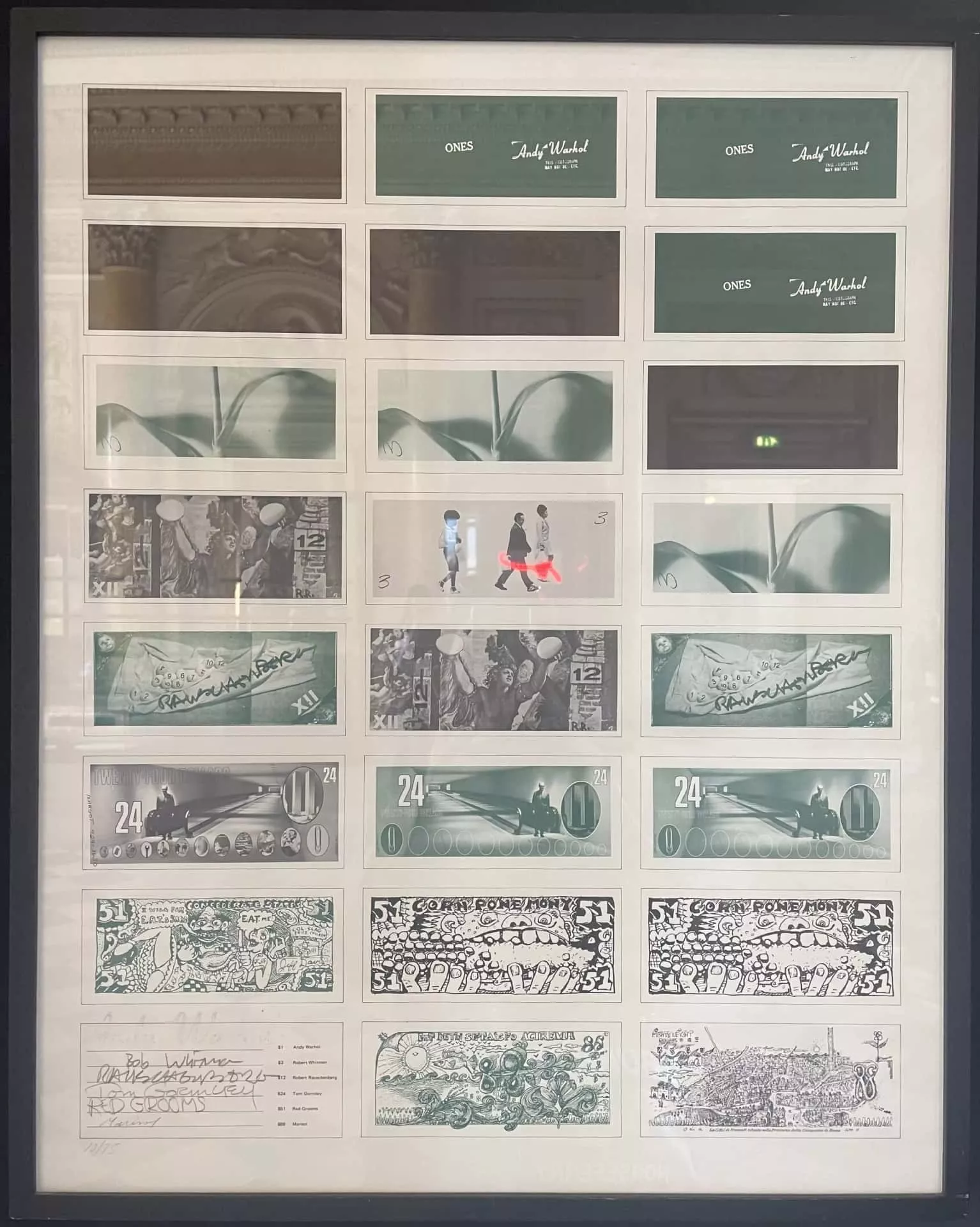
Signature, Print Run, and Authenticity: The Pillars of Value
Signature, Edition, and Numbering: Their Impact on Value
The authentication of a Pop Art work relies on a set of converging indicators, the rigor of which must be proportional to the artist’s reputation.
For multiples, verifying the consistency between the inscribed number, the announced total edition size, and the records kept by the artist or their studio is essential, as numerous forgeries have circulated in the form of unauthorized prints reproducing authentic works.
The nature of the signature—whether handwritten in ink or printed within the composition itself—varies by series and must be compared with each artist’s documented practices.
For the movement’s major artists, foundations and catalogs raisonné serve as authoritative references in the market.
The Andy Warhol Foundation for the Visual Arts has long had an authentication committee whose opinions—although its activities have evolved over time—remain essential references; the catalog raisonné of Warhol’s work, compiled by several specialists, is also an indispensable tool.
For Lichtenstein, the Roy Lichtenstein Foundation is the authoritative source. A work listed in one of these collections enjoys the highest level of scholarly endorsement, which is directly reflected in its market value.
Level of Documentation | Impact on Market Value |
Work listed in the catalogue raisonné or validated by the artist’s foundation | Maximum assurance; often an essential condition for sale |
Numbering consistent with the artist’s known edition records | Essential guarantee for multiples; provides significant security for the buyer |
Work published in specialized literature or exhibited in a major retrospective | Strong scholarly endorsement; significantly increases the work’s value |
Work accompanied by a written appraisal from a recognized expert on the artist’s body of work | Good guarantee; facilitates the sale and reduces risk |
Work with documented provenance dating back to the original gallery | Solid foundation; direct traceability to the artist or their circle |
Work without documentation; isolated signature without context | Maximum uncertainty; sale not recommended without prior in-depth appraisal |
Provenance and Condition: Their Impact on Valuation
The provenance of a Pop Art work is a key factor in building trust and determining value. The galleries that represented these artists—the Leo Castelli Gallery in particular for Warhol and Lichtenstein—have compiled archives that often make it possible to trace a work’s history from its creation.
A work with an unbroken chain of ownership from the artist’s studio to the current seller enjoys near-absolute legitimacy in the market, which is particularly valuable in this segment, where forgeries are common.
Condition is a major concern for this movement, whose artists often used industrial materials and processes whose long-term chemical stability poses specific challenges.
Warhol’s silkscreen prints, printed with inks that are sometimes light-sensitive, can exhibit significant discoloration if they have not been stored under appropriate conditions.
Examination under raking light and ultraviolet light reveals these alterations and allows for an assessment of their considerable impact on value, as chromatic intensity is central to the aesthetic and market appreciation of these works.
Sell a Pop Art piece at auction with Auctie's
From the reserve price to the hammer price: how the price is determined
Auctions are the preferred method of sale for high-quality Pop Art works, particularly for major pieces whose international renown—often extending far beyond the circle of art enthusiasts—justifies exposure to the entire global market.
The reserve price, set in consultation with the seller, must be carefully calibrated based on the exact nature of the work—whether it is a unique painting or a multiple—and the strength of its edition documentation.
For major works by Warhol and Lichtenstein, the sale is accompanied by a sophisticated marketing strategy, given the intense global demand—from both institutional and private collectors—for their most iconic pieces.
For lesser-known artists or more common multiples, the quality of the cataloging and the accuracy of the attribution remain the most decisive factors in achieving a good result.
Hôtel Drouot and online auctions: reaching the right bidders
Auctie’s holds its auctions at Hôtel Drouot, the leading auction venue in continental Europe, founded in 1852 and frequented by a dense network of dealers, collectors, and contemporary art specialists.
For a Pop Art piece, Drouot offers visibility among European enthusiasts of this movement, complemented by an online presence that significantly expands the reach of each auction on an international scale.
An American collector passionate about the icons of contemporary art, an Asian museum seeking a Warhol silkscreen, or a collector from the Gulf region drawn to Robert Indiana’s LOVE sculpture can bid in real time from their home countries.
For Pop Art, whose popularity extends far beyond the circle of serious art collectors, this international dimension is almost always decisive in securing the highest hammer price.
Estimate in less than 24h
Estate Planning, Inheritance: Valuing an Inherited Pop Art Work
Inventory and Distribution of an Estate
Pop Art works are appearing with increasing frequency in the estates of collectors who acquired these pieces in the decades following their creation, at a time when these artists—though already recognized—were still accessible to collectors with substantial but not exceptional means.
A silkscreen print or painting acquired in the 1970s or 1980s may now be worth considerably more than the heirs realize, making a preliminary appraisal all the more essential before any distribution of the estate.
Auctie’s regularly works alongside notaries to compile comprehensive estate inventories that include contemporary artworks.
Each piece is appraised individually, with particular attention paid to issues of attribution and authenticity, which—in this segment, where the market is rife with forgeries—are absolutely critical factors in determining value.
The resulting report is an official document that is legally enforceable and can be included in the estate file without reservation.
Confidentiality of the process and preservation of anonymity
The circumstances that lead to having an inherited Pop Art work appraised are often personal and sensitive: discovery as part of an inheritance, reorganization of a family collection, or a decision to sell after a long period of ownership.
Auctie’s handles each case with absolute discretion. The owner’s identity is never disclosed to third parties without their explicit consent, and the works can be offered for sale under complete anonymity if the owner so desires.
This confidentiality is a core commitment of Auctie’s, valid at every stage of the relationship, from the initial contact through to the receipt of the proceeds from the sale.
Entrust the appraisal of your Pop Art work to Auctie’s
A Pop Art work deserves an appraisal commensurate with its popularity and the significant authentication challenges it may present.
The sophistication of the counterfeit market for the most famous artists, the critical importance of numbering for multiples, and the extreme sensitivity of valuations to documentation and provenance: all reasons to entrust the appraisal of your piece to a state-certified auctioneer well-versed in the specifics of this demanding segment.
Auctie’s guides you from the initial appraisal through to the final auction, with the rigor of an expert trained in these matters and the discretion your financial decisions deserve. The appraisal is free, confidential, and non-binding, and you’ll receive a response within 24 hours.
Discover in the same theme
Rating and value of paintings, drawings and sculptures by Ya...
Yayoi Kusama is a Japanese artist known for the use of polka dots in her works, which are highly valued at auction.
Learn more >
Rating and value of works, drawings, paintings by Niki de Sa...
Niki de Saint Phalle is an unclassifiable French artist who has produced a substantial body of work that is highly prized at auction.
Learn more >
Cote and value of Robert Rauschenberg's paintings, drawings...
Robert Rauschenberg is a contemporary artist of the American avant-garde who has produced works that are quoted and valued at auction.
Learn more >
Estimate in less than 24h
Frequently asked questions
-
Quelles sont les fourchettes de prix du Pop Art selon le type d'œuvre ?Les prix varient considérablement selon l'artiste et la technique. Une sérigraphie signée et numérotée de Warhol ou Lichtenstein se situe entre 20 000 et 300 000 euros, une peinture originale de format moyen entre 500 000 euros et plusieurs millions, tandis qu'une estampe ou lithographie en série plus accessible se négocie entre 5 000 et 50 000 euros. Les grandes peintures iconiques et les sculptures emblématiques dépassent plusieurs millions d'euros pour les pièces exceptionnelles.
-
Comment authentifier une œuvre Pop Art et vérifier son authenticité ?L'authentification repose sur plusieurs critères : la vérification de la signature (manuscrite ou imprimée selon les séries), du numéro d'édition exact pour les multiples, de la cohérence avec les registres de l'artiste, et de la provenance documentée. Pour les artistes majeurs, des fondations et catalogues raisonnés font autorité. Auctie's propose une expertise gratuite confiée à des commissaires-priseurs agréés, avec réponse certifiée en moins de 24 heures, particulièrement vigilants face au marché développé des contrefaçons.
-
Quels facteurs déterminent la valeur d'une œuvre Pop Art ?La valeur dépend principalement de l'identité de l'artiste (Warhol en tête, suivi de Lichtenstein), de la technique employée (la peinture originale étant plus prisée que les multiples), du tirage et de la numérotation pour les œuvres en multiple, de l'état de conservation, et de la documentation solide. Pour les sérigraphies, un tirage de tête vaut systématiquement plus qu'un numéro plus élevé de la même édition, et la présence d'une signature manuscrite influence fortement le prix.
-
Est-ce le bon moment pour vendre une œuvre Pop Art ?Oui, le Pop Art constitue actuellement l'un des segments les plus dynamiques et les plus médiatisés du marché de l'art contemporain, avec une demande internationale très soutenue. Les figures majeures du mouvement comptent parmi les artistes les plus reconnus et les plus cotés au monde, et la popularité durable du mouvement garantit une excellente liquidité pour les pièces authentifiées, notamment pour Warhol, Lichtenstein et Haring dont la cote progresse régulièrement.
-
Comment se déroule l'estimation et la vente d'une œuvre Pop Art chez Auctie's ?L'estimation est gratuite et sans engagement : vous transmettez des photographies et informations précises (numérotation, signature, provenance, dimensions), et un commissaire-priseur agréé vous répond sous 48 heures. Auctie's vous accompagne ensuite de l'estimation à l'adjudication, en assurant l'expertise, la documentation et la mise en vente de votre œuvre auprès d'une clientèle internationale.
