



Rating and value of works, lithographs, paintings by Keith Haring

Key takeaways
- Keith Haring, a pioneer of contemporary art, has seen his market value rise steadily, with paintings fetching up to 5.1 million euros at auction.
- Prices vary by medium: prints range from €5 to €830,000, drawings from €50 to €4 million, and sculptures from €10 to €2.9 million.
- The official authentication committee, led by Julia Gruen, was dissolved in 2012, making rigorous expert appraisal and documented provenance essential for validating the works.
American painter and visual artist, Keith Haring is considered one of the pioneers of contemporary art.
If you own a work by artist Keith Haring or based on his work and would like to know its value, our state-approved experts and auctioneers will guide you.
Our specialists will carry out a free appraisal of your work, and provide you with a precise estimate of its value on the current market.
Then, should you wish to sell your work, we will direct you to the best possible arrangement to obtain the optimum price.
Artist's rating and value
Considered one of the leaders of contemporary art, Keith Haring exhibited extensively during his lifetime. His reputation and presence on the art market are therefore already immense.
Today, his value continues to rise, with the artist establishing himself as a sure bet on the art market. For example, a work signed by Keith Haring can fetch millions of euros at auction.
An acrylic by the artist, for example, sold for €5,102,720 at Sotheby's in 2017.
Order of value from the most basic to the most prestigious
Technique used | Result |
|---|---|
Upholstery | From €135 to €7,000 |
Photography | From €90 to €24,390 |
Ceramics | From €100 to €32 480€ |
Estamp | From €5 to €830,000 |
Sculpture - volume | From €10 to €2,908,950 |
Drawing | From €50 to €4,009,530 |
Painting | From €100 to €5,102,720 |
Estimate in less than 24h
Keith Haring's style and technique
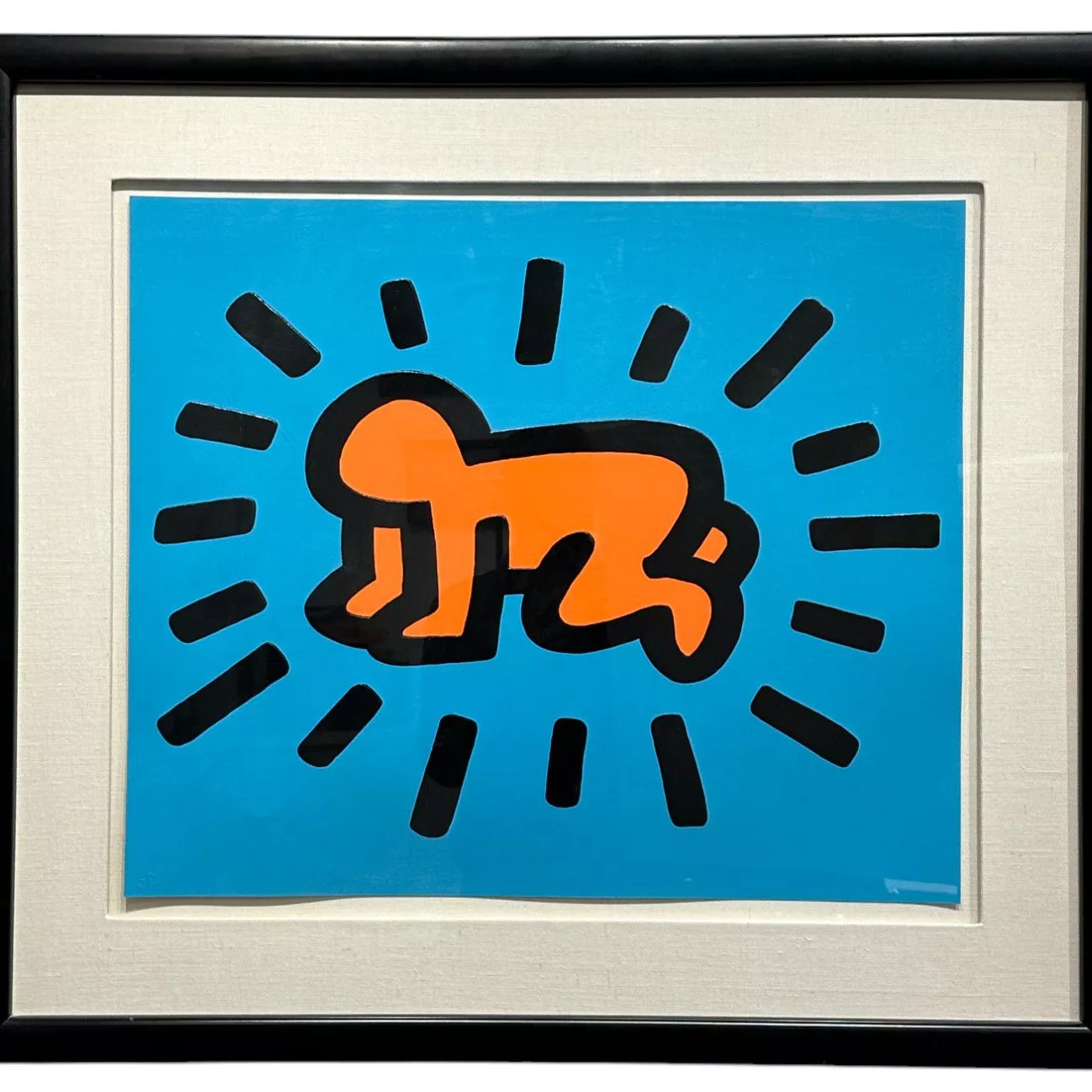
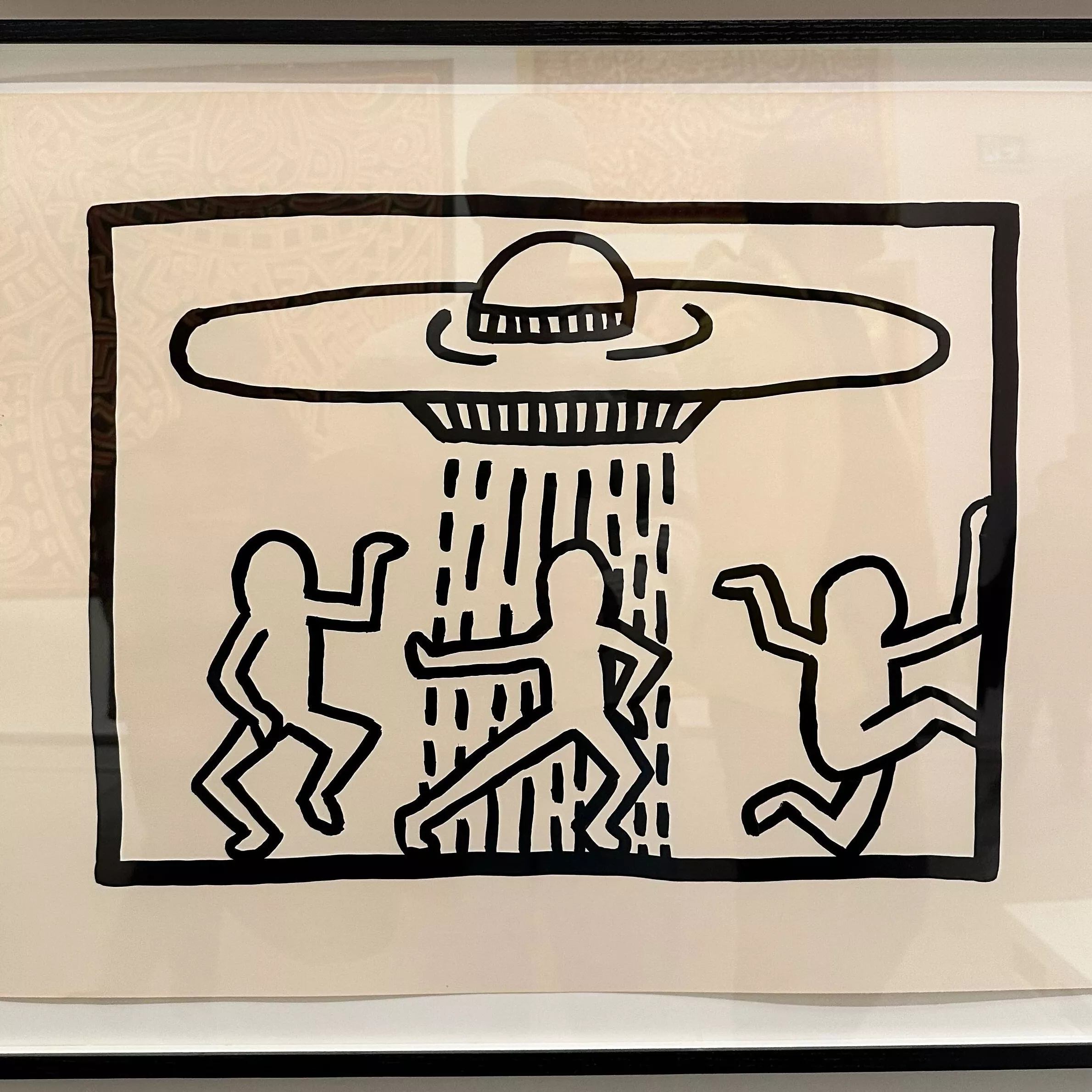
Keith Haring develops a unique and immediately identifiable style, characterized by precise lines, clean forms and bright colors.
His creations, frequently produced on urban supports such as the walls of the New York subway, are part of the street art movement.
His work, however, quickly transcends this environment to find its way into art galleries.
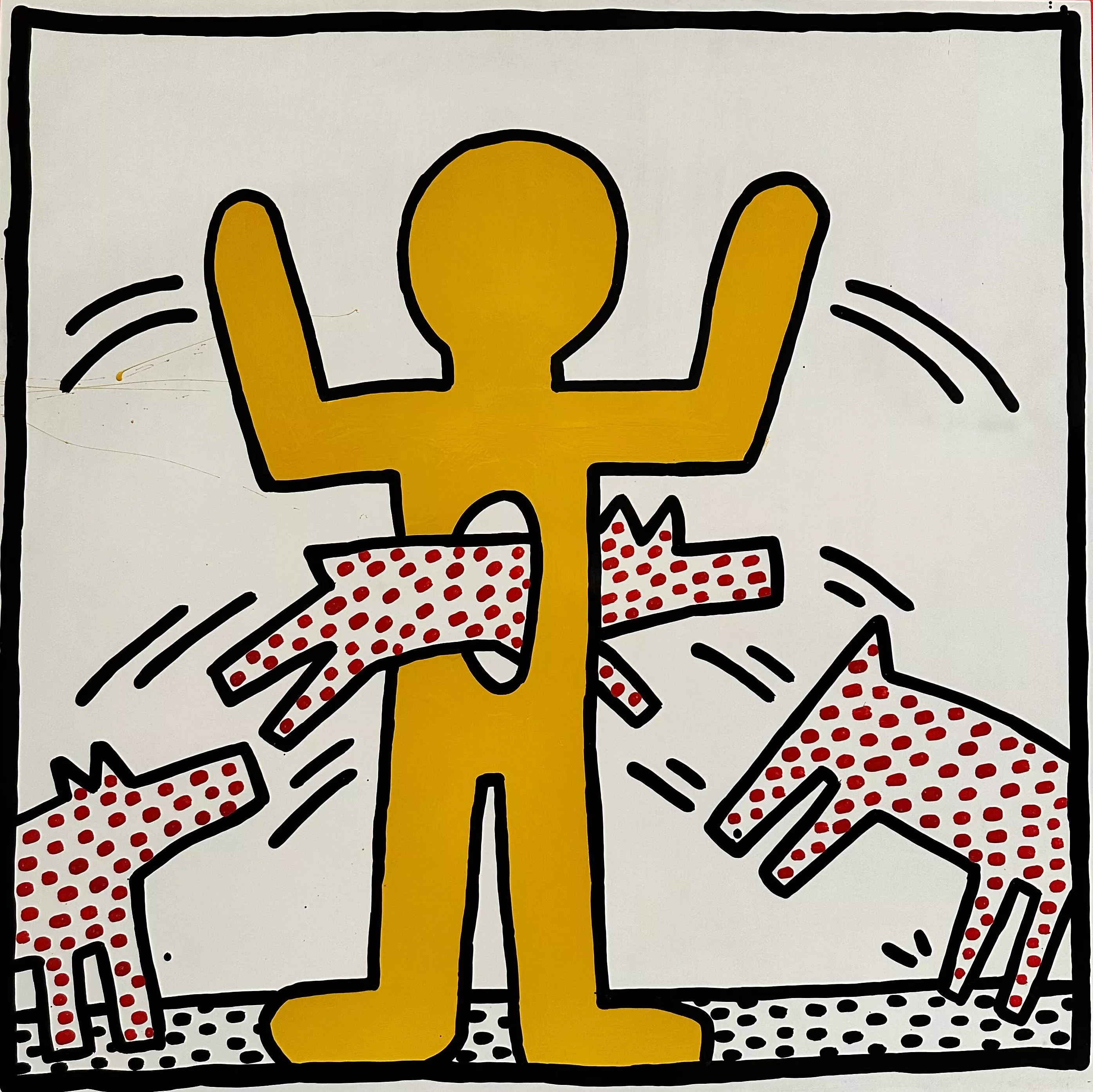
Influenced by Pop Art and graffiti, Haring favors thick contours that frame his figures, composing dynamic scenes populated by stylized characters, animals and abstract symbols.
One of the distinctive features of his technique lies in the absence of traditional perspective or depth. His figures, treated in a flat manner, are animated by simple lines and graphic flashes, which surround bodies to express energy or emotions.
His fluid lines are reminiscent of cartoons and pictograms, giving his work a visual immediacy that makes it particularly accessible.
The artist also draws inspiration from primitive art, notably through geometric patterns similar to those found in the geoglyphs of the Nazca desert.
Integrating these references with elements of popular culture, Haring invents a universal visual language, addressing subjects such as life, death, love and sexuality in iconographic form.
His technique allows him to explore a wide variety of media: murals, sculptures, clothing and more.
Haring seeks to democratize art by using accessible materials, such as acrylic paint, and by choosing public places for his works.
The bright colors he applies in broad solids express a resolutely contemporary optimism and echo a joyful, energetic vision of the world around him.
Keith Haring, his life, his work
Keith Allen Haring developed an immediately identifiable style, marked by clean lines, uncluttered shapes and vibrant colors.
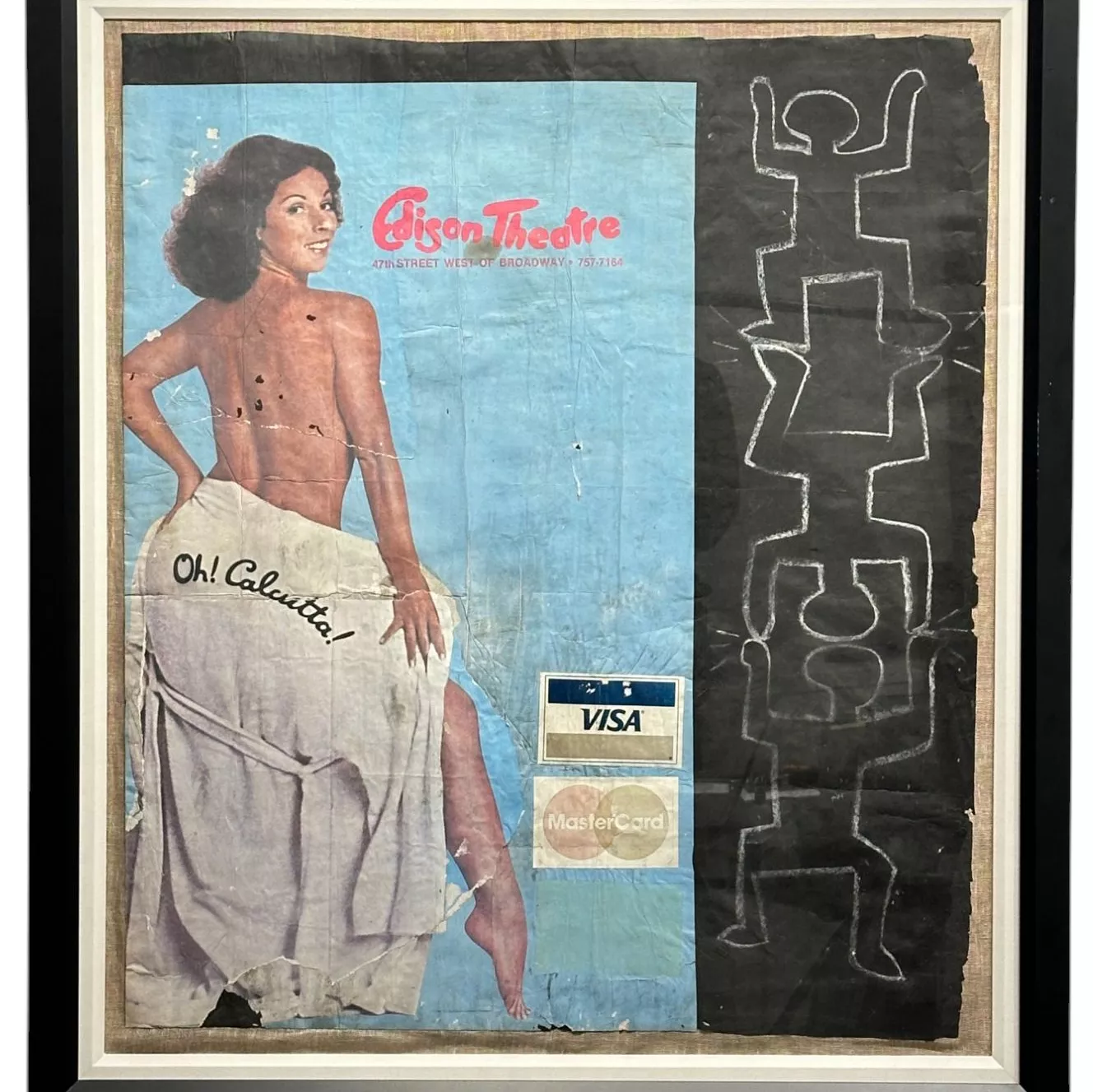
Born in the creative tumult of 1980s New York, he first made his mark in subway stations, where he transformed vacant advertising hoardings into chalk-based, on-the-spot works.
Inspired by Pop Art and nurtured by the raw energy of graffiti, Haring embraced an approach in which urban space became a place of free, direct expression. His figures, with their thick black outlines, dance within dynamic compositions populated by stylized characters, animals and symbolic motifs.
Like Robert Rauschenberg, he seeks to break down the barriers between the artistic elite and the street, advocating an art accessible to all, which dialogues with everyday life and popular culture.
One of the most singular aspects of his art lies in his deliberate rejection of the conventions of traditional perspective.
Haring favors flat, depthless figures whose movements are suggested by fluid lines and graphic flourishes.
These elements, which surround his figures, evoke the vibrant energy or intense emotions that drive them. This approach finds echoes in the work of Jean-Michel Basquiat, a close friend, with whom Haring shares a fascination for primitive art and universal symbols.
An admirer of the geoglyphs of the Nazca desert, Haring integrates geometric patterns and repetitive figures into his works, constructing a visual language that transcends cultural and social boundaries.
His work also reflects the influence of his contemporaries. Rauschenberg, with his ability to mix media and supports, encouraged him to broaden his scope.
Haring thus explored many fields, from monumental murals to colorful sculptures, not forgetting textiles and collaborations with consumer brands.
This versatility testifies to a desire to integrate art into all aspects of everyday life, an ideal shared with other artists of his generation.
Haring works with simple materials, such as acrylic paint, which he applies in luminous flat tints, giving his creations an immediacy and freshness that appeal to a wide audience.
Beneath the apparent simplicity of his compositions lies an unexpected depth. Haring tackles complex and often audacious subjects, such as sexuality, illness, death and the fight against social inequality.
Through his works, he defends a vision of the world in which art becomes a means of raising awareness and resistance.
His frescoes, often created in public spaces, embody this commitment, while retaining a playful, optimistic aesthetic.
His work, deeply rooted in its time, remains disturbingly topical and continues to resonate, like the timeless works of his friends and peers such as Basquiat, Rauschenberg, Warhol or Lichtenstein.
Focus on Crack is Wack, Keith Haring, 1982
Crack is Wack, created in 1986, is a must-see mural by Keith Haring, located on a playground on Harlem River Drive in New York. This work, unofficially commissioned by the artist himself, denounces the epidemic of crack addiction that ravaged underprivileged communities in the 1980s.
The composition features stylized figures with distorted bodies and frenzied gestures. These figures, surrounded by strokes suggesting movement, convey the urgency and violence of the crisis.
The inscriptions, like the title "Crack is Wack", reinforce the work's impact by adding an explicit dimension to the message.
This blend of graphic simplicity and political intent recalls the works of Jean-Michel Basquiat, a close friend of Haring's, with whom he shared a common sensitivity for social issues and a raw yet striking aesthetic.
The absence of depth or classical perspective in this fresco places the focus on form and content. Here, Haring uses a universal visual language of symbols and colors to reach as wide an audience as possible.
His choice to paint on a public wall, without permission, reaffirms his commitment to democratic, accessible art, following the example of Robert Rauschenberg, whose works also carried strong messages while appealing to a wide range of viewers.
Originally painted as a warning to a young gambler in his entourage, "Crack is Wack" quickly became a symbol of the fight against a crisis that went beyond the neighborhoods affected.
Far from being limited to a denunciation, the work also embodies hope and resilience, recurring themes in Haring's work.
Now restored and protected, it remains one of the most striking expressions of his activism, confirming his desire to make art a tool for social transformation and universal dialogue.
Understanding the authentication process for Keith Haring's works
The authentication process for Keith Haring's works, particularly crucial due to his worldwide success, is based on several precise criteria, including provenance, signatures and inscriptions characteristic of the artist.
Haring frequently signed his works with his full name, accompanied by the date and sometimes an additional drawing or motif, such as his iconic "Radiant Baby" or other pictograms.
Works produced for specific events may also include contextual mentions.
When working on walls or other unconventional media, Haring would sometimes affix direct inscriptions to the works to emphasize their intent or provenance, making each piece unique.
The importance of a dedicated authentication committee was recognized after the artist's untimely death in 1990, in order to deal with the influx of forgeries and misunderstandings about his works.
Lead by Julia Gruen, Haring's personal assistant, this committee played a central role in establishing the authenticity of the pieces.
It relied on experts, exhaustive documentation and in-depth knowledge of the artist's visual universe and practices.
As a result, many works in circulation on the art market still bear Julia Gruen's certificate (on the back of the work, cf photo below). The committee was also able to apply embossing (see other photo below).
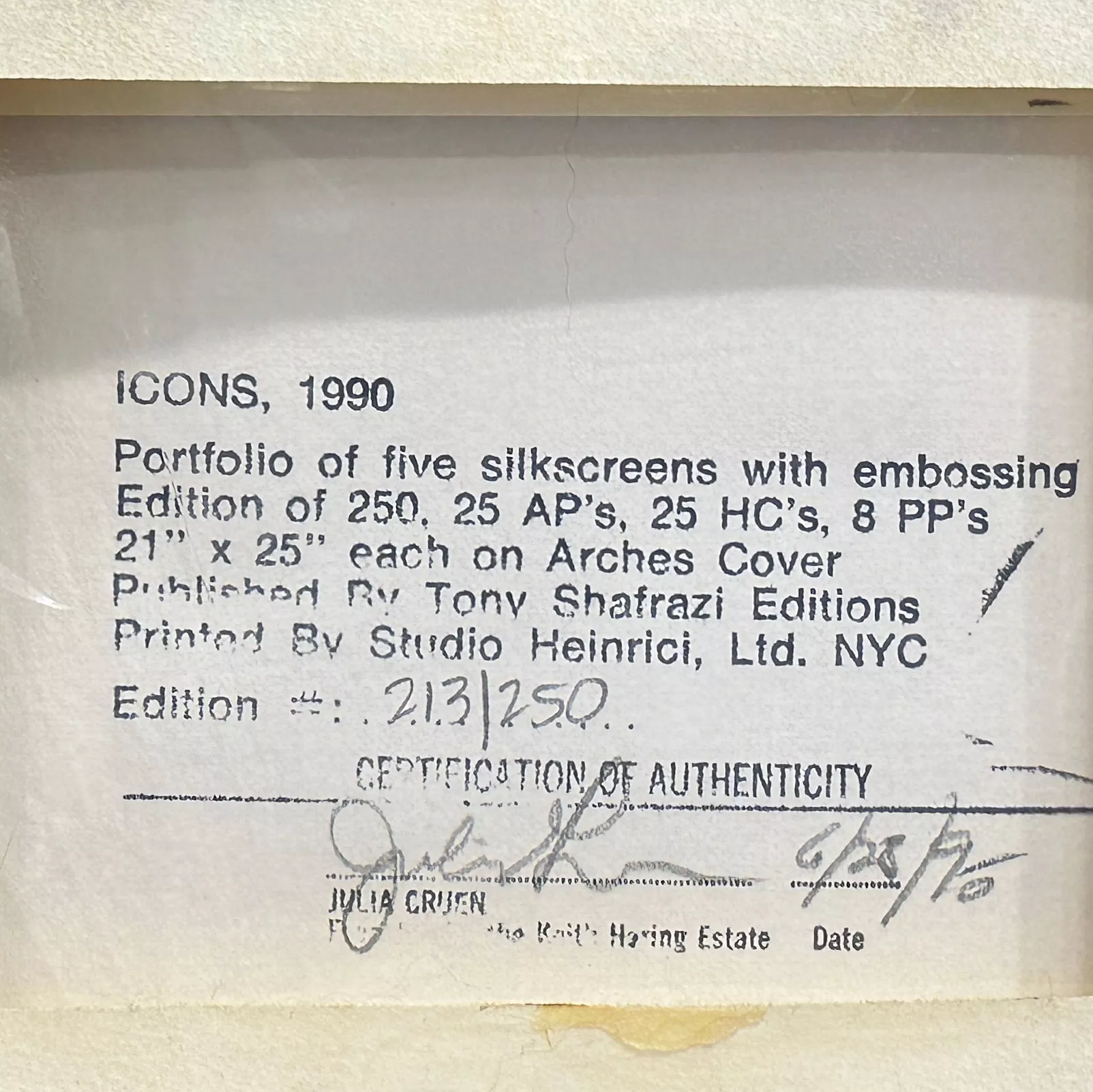
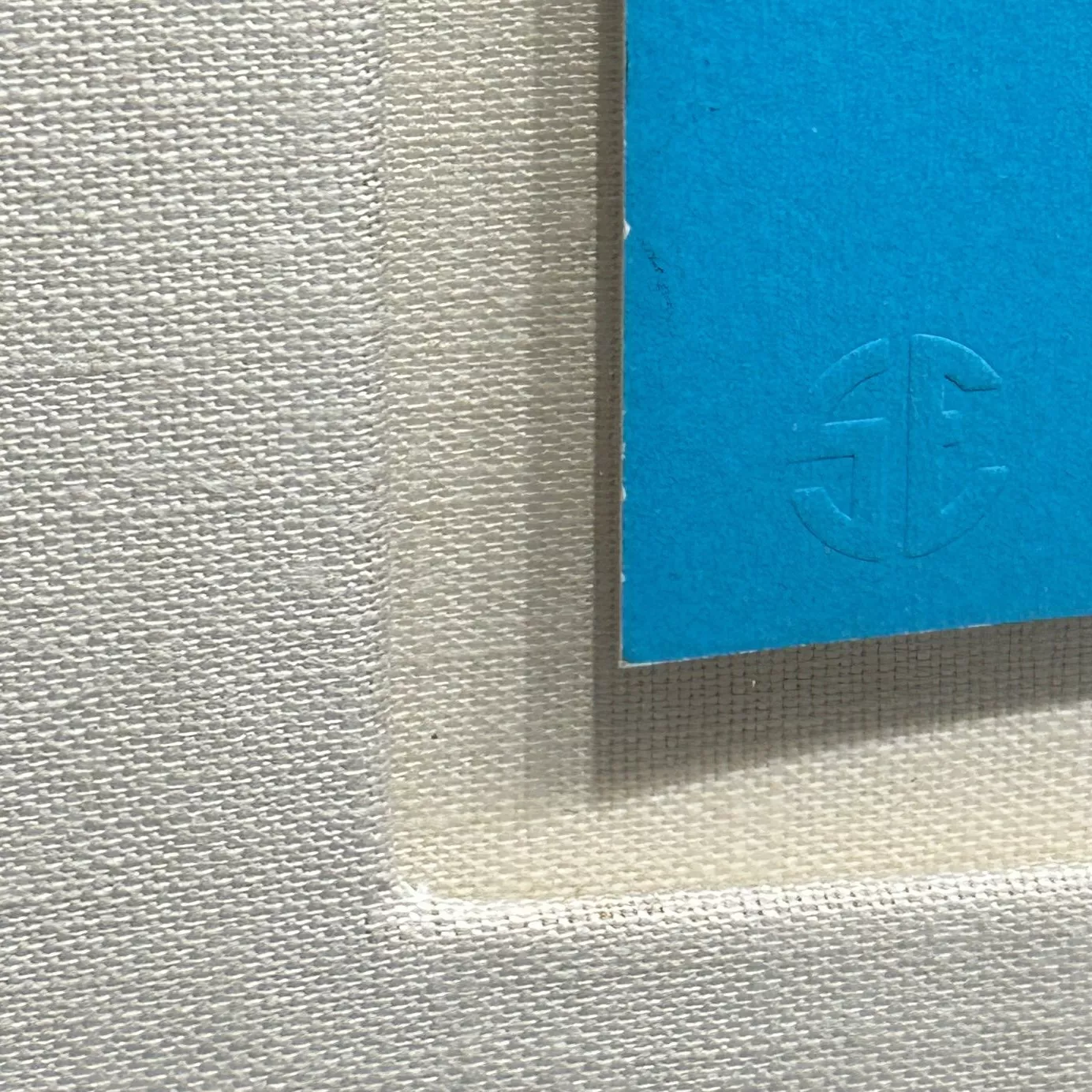
However, in 2012, Julia Gruen took the decision to dissolve the Keith Haring Authentication Committee, citing the numerous legal disputes that were complicating the organization's operations.
This dissolution, while unusual, reflected the growing challenges facing authentication committees for contemporary artists, including the increasing number of challenges around the decisions made.
Despite this, Haring's legacy is today preserved by the Keith Haring Foundation, which continues to promote his work while supporting social and charitable causes close to his heart, notably the fight against AIDS.
The absence of an official authentication committee reinforces the importance of rigorous documentation and quality expertise in evaluating works attributed to Haring.
This situation, although it has given rise to debate, does not detract from the scope and impact of his work, which remains a benchmark in contemporary art and a model of universal artistic commitment.
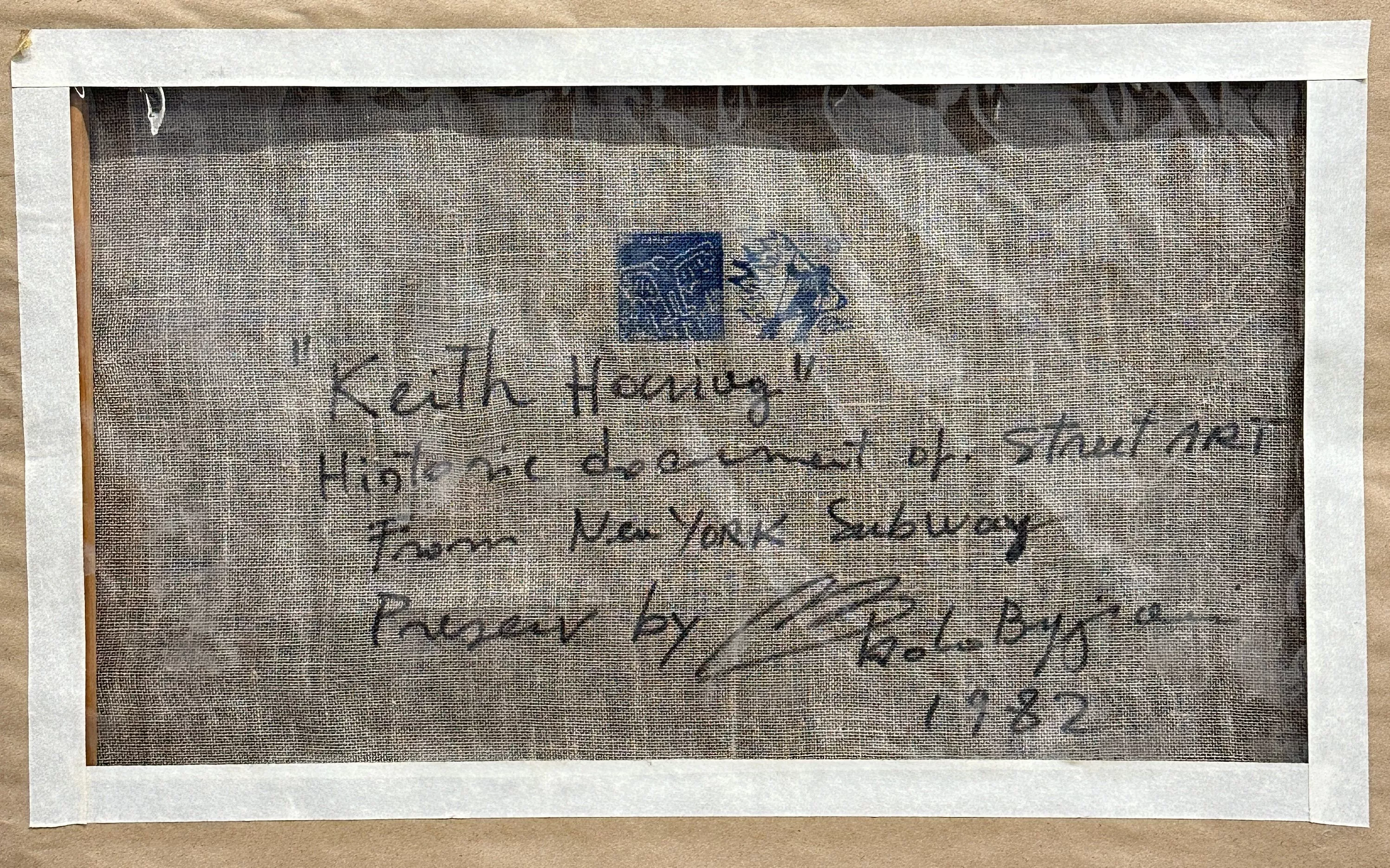
His signature
Although there are variations, here is a first example of his signature :
Our team remains at your disposal to identify your works.
Expertise your property
If you own a Keith Haring work, don't hesitate to request a free appraisal by filling in our online form.
A member of our team of experts and certified auctioneers will contact you to provide an estimate of the market value of your work.
If you are considering selling your work, our specialists will also guide you through the various alternatives available to obtain the best possible price, taking into account market trends and the specific features of each work.
Estimate in less than 24h
Discover in the same theme

The value and quotation of Géo Verbanck's works
Geo Verbanck is a 20th-century bronzemaker. His works are still very valuable, and their auction prices are high.
Learn more >

Rating and value of paintings by François Gall
François Gall is a Post-Impressionist painter who produced works that are highly valued at auction. Estimated in 24h.
Learn more >

Rating and value of paintings by Arnold Borisovich Lakhovsky
Arnold Lakhovsky is a Russian painter who produced many paintings that are highly valued at auction. 100% free estimate
Learn more >
D'autres tableaux abstraits vendus aux enchères

Estimated 2.000 - 4.000
Serge POLIAKOFF (1900-1969), Composition en rouge et bleu. 1965, Lithograph

Estimated Between €5,000 and €8,000
Jean MIOTTE (1926-2016), acrylic on canvas

Estimated 3.000 - 5.000
Roberto MATTA (1911-2002), Composition, Gouache on canvas

Secure site, anonymity preserved

Auctioneer approved by the State

Free and certified estimates
Frequently asked questions
-
Who is Keith Haring, and what is his artistic background?Keith Haring was an American painter and visual artist considered one of the pioneers of contemporary art. Born into the creative scene of 1980s New York, he first made a name for himself in subway stations by transforming advertising panels into chalk drawings. Influenced by Pop Art and graffiti, he developed an instantly recognizable style characterized by clean lines, dynamic shapes, and vibrant colors, seeking to democratize art by making it accessible to everyone.
-
What are the price ranges for Keith Haring's works based on the medium used?Estimates vary considerably depending on the medium. Tapestries range from €135 to €7,000, photographs from €90 to €24,390, and ceramics from €100 to €32,480. Prints range from €5 to €830,000, sculptures from €10 to €2,908,950, drawings from €50 to €4,009,530, and paintings from €100 to €5,102,720. His market value continues to rise, and some of his major paintings can fetch several million euros at auction.
-
How do you authenticate a work attributed to Keith Haring?The authentication of a work by Keith Haring is based on several criteria: provenance, the signature (usually his full name accompanied by the date), and the visual characteristics of his artistic style. After his death in 1990, an authentication committee led by Julia Gruen established the authenticity of the pieces, affixing certificates or embossed marks to the backs of the works. To verify the authenticity of your artwork, we recommend submitting a request for a free appraisal at Auctie’s with our auctioneers and experts.
-
Is this the right time to sell a Keith Haring artwork?Yes, this is an excellent time to sell a work by Keith Haring. The artist has established himself as a safe bet in the contemporary art market, with prices steadily rising. His global recognition, his legacy preserved by the Keith Haring Foundation, and the growing demand for his works on the market mean that prices are currently favorable for sellers.
-
How does the appraisal process work at Auctie's?Appraisals at Auctie's are free and non-binding. To have your artwork appraised, simply fill out our online form. A member of our team—composed of experts and state-certified auctioneers—will contact you to provide an accurate estimate of your item’s market value. If you’d like to sell, our specialists will guide you toward the best options for achieving the highest possible price.
