



Paris School Art: Appraisal and Auction

Montparnasse, fruitful exiles, and cosmopolitan modernity: the value of works from the École de Paris varies greatly depending on the artist, the period, and the provenance.
Below you’ll find all our valuation guides dedicated to the School of Paris—paintings, drawings, and sculptures by artists from Montparnasse and Montmartre. Each guide details the price ranges observed at auction and the factors that determine a work’s value before it is entrusted to our state-certified auctioneers.
Guides on this art movement
See all guides >
Rating and value of drawings and paintings by Vladimir Baran...
Vladimir Baranoff Rossiné is a painter associated with Cubism whose works command high prices and are highly valued at auction.
Learn more >

Rating and value of drawings and paintings by Dimitrie Berea
Dimitrie Berea is a Post-Impressionist painter and follower of Bonnard who produced numerous works that command high prices and are highly valued.
Learn more >

Rating and value of drawings and paintings by Jean Peské
Jean Peské is a French-Polish artist who has produced numerous works that command high prices at auction.
Learn more >

Rating and value of drawings and paintings by Nicolas Eekman
Nicolas Eekman is an original painter from Brussels whose style defies categorization. His work is reminiscent of the School of Paris and is highly va...
Learn more >

Rating and value of drawings and paintings by Arbit Blatas
Arbit Blatas is a painter from the School of Paris whose paintings and sculptures command high prices at auction.
Learn more >

Rating and value of drawings and paintings by Emile Schuffen...
Emile Schuffenecker is a Post-Impressionist painter whose works command high prices at auction. 24-hour estimate.
Learn more >

Rating and value of drawings and paintings by Simon Mondzain
Simon Mondzain is a painter from the École de Paris who has produced numerous paintings that command high prices and are highly valued. 24-hour estima...
Learn more >

Rating and value of drawings and paintings by Marc Desgranch...
Marc Desgrandchamps is a contemporary figurative painter who has produced numerous paintings and drawings that are highly valued and command high pric...
Learn more >

Rating and value of sculptures and drawings by Constantin Br...
Constantin Brancusi was a sculptor and photographer of the École de Paris whose works are highly prized and of great value.
Learn more >

Rating and value of paintings and laquers by Le Quoc Loc
Le Quoc Loc is a modern Vietnamese artist who has worked mainly in lacquer. His works are highly valued.
Learn more >

Rating and value of drawings and paintings by Max Jacob
Max Jacob was a French poet and draughtsman who produced a number of works that have now been revised upwards. Estimated 24h.
Learn more >

Rating and value of paintings by Marcel Mouillot
Marcel Mouillot is a twentieth-century figurative painter who produced many works that are highly valued at auction.
Learn more >
Understanding the Value of a Work from the École de Paris
What Is Market Value in the Modern Art Market?
The market value of a work from the École de Paris refers to the benchmark value assigned to it by the secondary market at a given moment, based on the artist’s identity, the subject matter, the medium, the period of creation, the condition, the strength of the documentation, and the current state of international demand.
The School of Paris does not refer to a homogeneous aesthetic movement but rather to a geographic and sociological phenomenon: that of a community of foreign artists who came from all over the world to settle in Paris—and more specifically in Montparnasse—during the early decades of the 20th century, seeking the creative freedom and intellectual vibrancy that could not be found elsewhere at the time.
This diversity of origins—Amedeo Modigliani and Gino Severini from Italy, Chaïm Soutine and Marc Chagall from the Russian Empire, Tsuguharu Foujita from Japan, and Moïse Kisling from Poland—to name only the most iconic figures—endows the School of Paris with considerable stylistic richness that defies any single aesthetic classification.
It is precisely this absence of a common doctrine—unlike Cubism or Fauvism—that explains the diversity of valuation patterns observed within this vast body of work, as each artist developed a highly personal pictorial language.
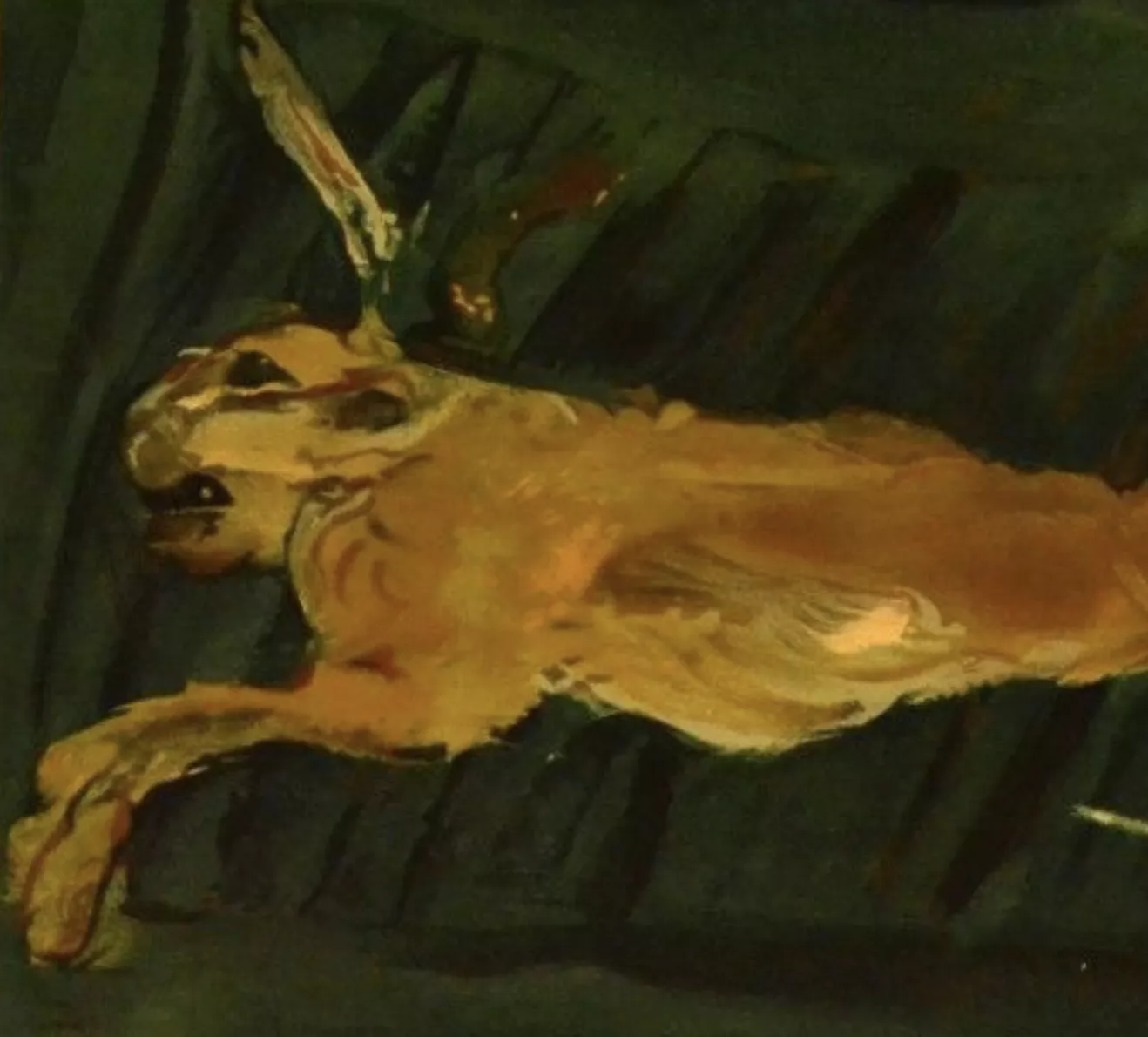
The School of Paris: Artists from Around the World in Montparnasse
Montparnasse—and, to a lesser extent, Montmartre for the previous generation—served as the geographical setting for this collective artistic adventure.
The neighborhood cafés—La Rotonde, Le Dôme, La Closerie des Lilas, became meeting places for a cosmopolitan community of artists, models, dealers, and collectors, whose interactions fueled an exceptional creative effervescence between the early 1900s and World War II.
This period is generally divided into two generations: that of the pioneers, active before 1914, and that of the interwar period—sometimes referred to as the École de Paris in the strictest sense—which saw the flourishing of Soutine, Modigliani, and Foujita, among others.
World War II and anti-Semitic persecution brought a tragic halt to this community, as several of its most prominent members—including artists of Eastern European Jewish origin—were deported or forced into hiding.
In retrospect, this historic rupture lends the School of Paris a commemorative dimension that complements its strictly artistic value and has not gone unnoticed by institutions and collectors today.
Period | Key Artists | Type of works | Market demand level |
Pioneering Generation (1900–1914) | Modigliani (early works), Chagall (early works), Severini, Soutine (emerging) | Painting, drawing, early sculptures | Strong, specialized collectors |
Interwar period (1918–1939) | Modigliani, Soutine, Chagall, Foujita, Kisling, Pascin | Portraits, nudes, Montparnasse scenes, silk paintings for Foujita | Exceptional, very high auction prices |
Postwar generation | Survivors and heirs of the pre-war School of Paris | Painting, printmaking, sculpture | Active, market consolidating |
École de Paris in the broad sense (related artists) | Many foreign artists about whom less is known | All media | Variable; depends heavily on the artist |
Estimate in less than 24h
The criteria that determine the value of a work of art
The market value of a work from the École de Paris is determined first and foremost by the artist’s identity, which has a considerable impact in this diverse segment: the gap between the market value of a Modigliani or a Soutine and that of a lesser-known artist from the same circle can be as much as several hundred times greater.
The subject matter also plays a decisive role for certain artists: for Modigliani, nudes and portraits with his characteristic elongated faces command the highest prices; for Foujita, nudes with milky skin and scenes featuring cats are among the most sought-after subjects.
The price ranges observed on the secondary market illustrate the considerable breadth of this body of work. A drawing or work on paper by a second-tier artist of the École de Paris can range from 2,000 to 20,000 euros.
A medium-sized oil on canvas by Kisling, Pascin, or an artist of comparable renown ranges from 50,000 to 800,000 euros, depending on the period and quality.
Modigliani’s large-scale nudes and the major compositions by Soutine or Chagall frequently exceed several million euros and can reach tens of millions for the most exceptional pieces, with Modigliani ranking among the most expensive artists in the history of the art market.
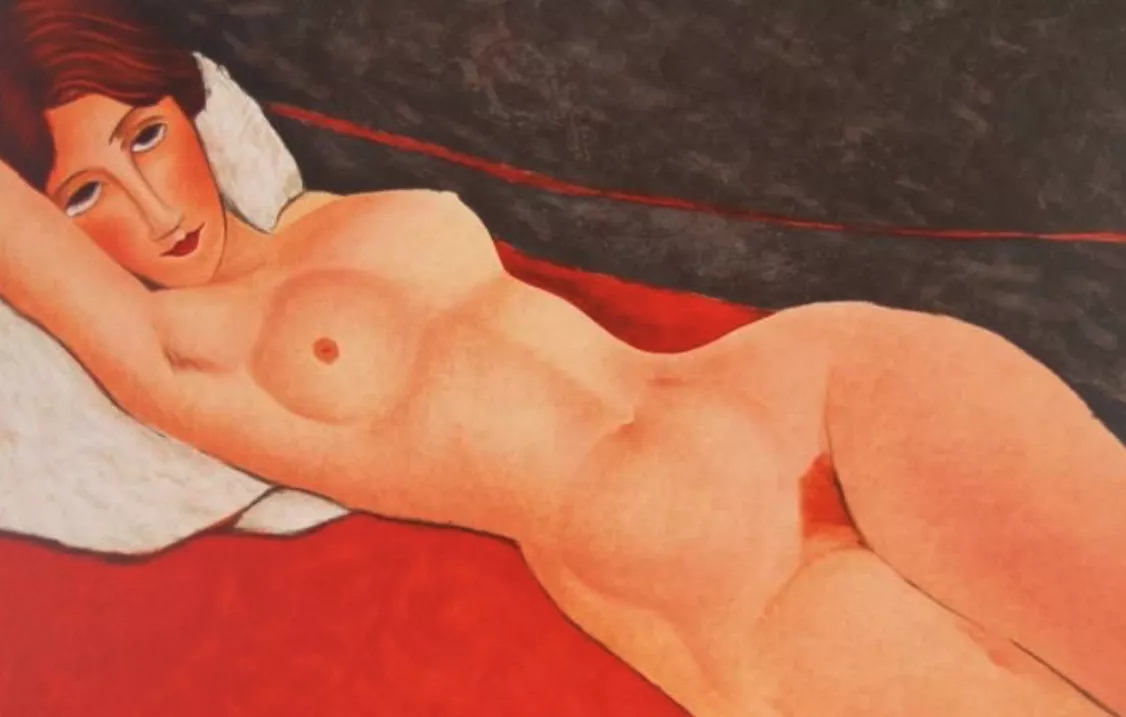
Paintings, drawings, prints, and sculptures: all works appraised
The hierarchy of works and its impact on value
Within the output of the École de Paris, oil painting naturally occupies the dominant position, particularly portraits and nudes, which constitute the movement’s most iconic and sought-after body of work.
Drawings—particularly numerous in Modigliani’s oeuvre, whose graphic work is almost as sought-after as his paintings—occupy an important place in the hierarchy of value, unlike in other segments of modern art where drawing remains secondary to painting.
Prints—particularly those by Chagall, who produced a substantial body of graphic work throughout his very long career—and sculptures, which are rarer but present in the work of several artists within the movement (with Ossip Zadkine being one of the major sculptors associated with this group), round out this overview.
Tsuguharu Foujita, for his part, developed a highly personal pictorial technique, blending the influence of Japanese printmaking with the Western tradition of oil painting, which constitutes an immediately recognizable stylistic signature highly sought after by collectors.
Category | Characteristics | Estimated Price Range | Market demand |
Large nude or portrait (Modigliani, classical period) | Characteristic elongated face, ambitious format | €5 million — tens of millions | Institutional, exceptional |
Medium-sized canvas (Soutine, Chagall, Foujita) | Top-tier quality, iconic subject | €500,000 — €10 million | Strong demand, international |
Painting by a recognized second-tier artist (Kisling, Pascin) | Solid quality, well-documented period | €50,000 — €800,000 | Active market, specialized collectors |
Drawing (notably Modigliani) | Distinctive style, intimate format | €20,000 — €500,000 | Very active, sought-after segment |
Signed engraving or lithograph (notably Chagall) | Numbered edition, relatively affordable | €2,000 — €50,000 | Highly liquid, broad buyer base |
Sculpture (Zadkine and other sculptors of the movement) | Rare, three-dimensional interpretation of the group’s aesthetic | €30,000 — 1 million | Strong market, specialists |
Work by a related artist with limited documentation | Variable quality; attribution sometimes uncertain | €2,000 — €20,000 | Variable, depends on the artist |
Portraits, nudes, and scenes from Montparnasse: the most sought-after works
Modigliani’s nudes rank among the most sought-after and expensive works in the history of the modern art market. Their bold sensuality—which caused a resounding scandal during their first public exhibition in 1917—and the formal purity of their execution explain their status as absolute icons of the School of Paris.
The artist’s portraits, which share the same elongated face and often vacant or almond-shaped eyes that became his stylistic signature, occupy a comparable position in the hierarchy of his market value.
The Montparnasse scenes, which document the daily life of this cosmopolitan community—cafés, studios, and popular dances—constitute another highly sought-after category, particularly when they are by artists who themselves experienced this creative effervescence.
Portraits of Montparnasse figures—art dealers, models, and other artists in the circle—painted by their peers are also in steady demand among collectors and institutions drawn to both the artistic and historical dimensions of this exceptional social document.
Estimate in less than 24h
Get a free appraisal of a work from the École de Paris
A certified appraisal by a licensed auctioneer in less than 24 hours
Appraising a work from the École de Paris requires in-depth knowledge of this cosmopolitan community of artists with highly diverse individual trajectories, as well as particular vigilance in the face of a market for forgeries that is, unfortunately, very widespread, especially regarding Modigliani, whose authenticated works remain limited in number, while a considerable number of forgeries have been circulating for decades—some of which were even featured in museum exhibitions before being exposed.
A licensed auctioneer possesses the necessary training and caution to conduct this appraisal with the rigor it demands.
Auctie’s offers this appraisal free of charge, with a certified response within 24 hours.
Whether you have inherited a painting attributed to an artist of the École de Paris, wish to have a drawing or engraving from this period appraised, or are considering compiling an inventory of your family’s art collection, the process is the same: submit your piece to a trained expert capable of accurately assessing its value.
What you need to provide for an online appraisal
For a painting, clear photographs of the front and back of the work are essential, as well as a close-up of the signature and any inscriptions on the back of the support, the precise dimensions of the composition, and any known provenance information: gallery label, purchase invoice, previous certificate of authenticity, or reference in an exhibition catalog or specialized publication.
For engravings and lithographs, the edition number and any mention of a proof must be specified.
For drawings, the condition of the paper must be documented: pinholes, foxing, creases, and tears. For sculptures, photographs of the entire piece and significant details—including the base and foundry marks—are essential.
In cases of serious doubt regarding attribution—particularly for artists most vulnerable to the counterfeit market—a thorough physical examination will be offered before any steps are taken to put the work up for sale.
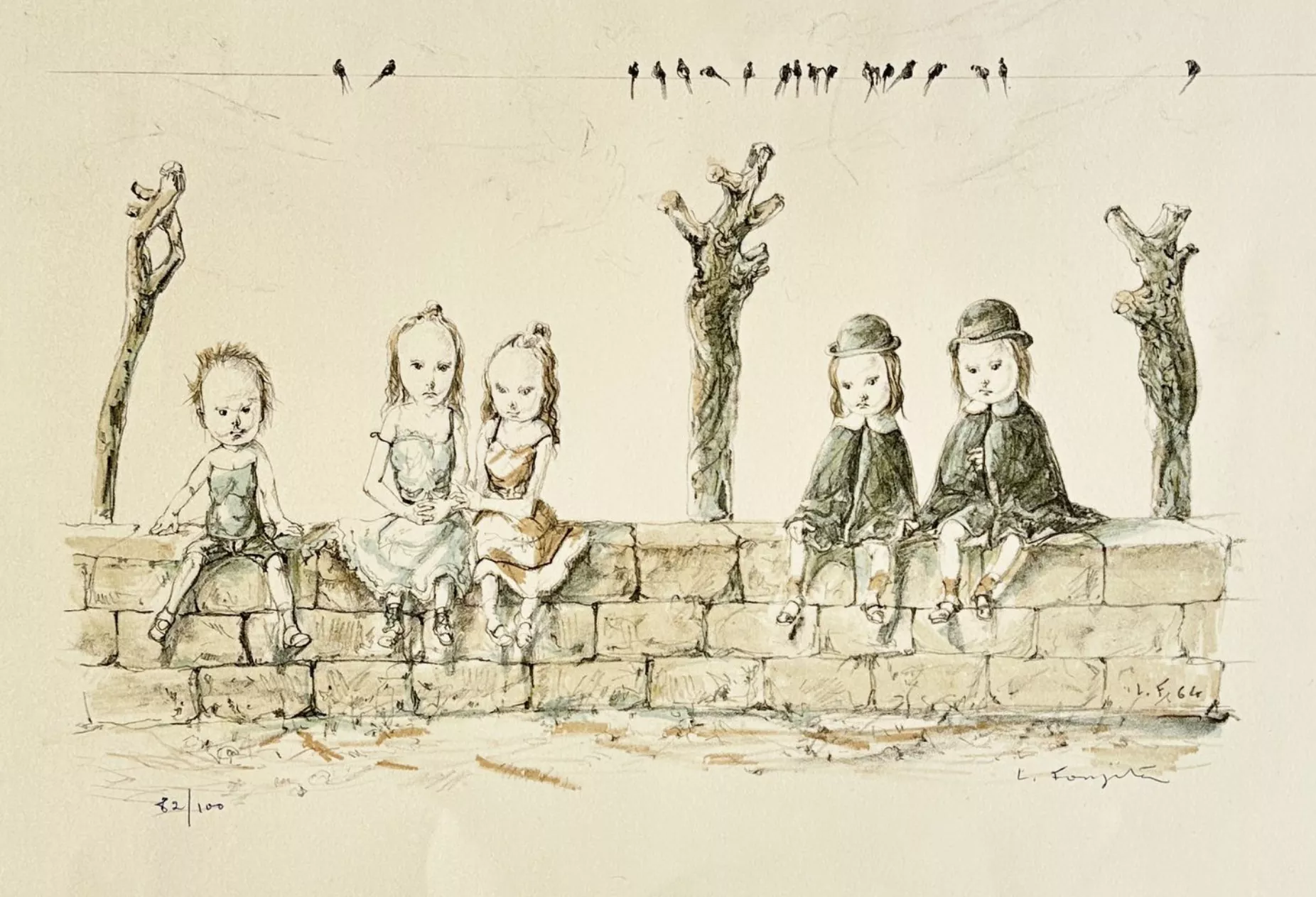
Signature, provenance, and authenticity: the pillars of valuation
Signatures and Attributions: Their Impact on Value
The authentication of a work from the École de Paris relies on a set of converging clues, the rigor of which must be proportional to the artist’s reputation.
The signature, when present, is a primary indicator, but it is far from sufficient for the most highly valued and most frequently copied artists: caution is particularly warranted in the case of Modigliani, whose market for forgeries constitutes one of the most well-documented and problematic cases in the history of modern art, with several high-profile legal cases having revealed the extent of the fraud over the past few decades.
For the movement’s major artists, catalogs raisonné or authentication committees serve as the definitive authority in the market. Modigliani’s work is documented in several catalogs, including those compiled by Ambrogio Ceroni and later by Christian Parisot, although the latter has himself been the subject of controversies that necessitate systematic cross-checking.
For Soutine, the works of Maurice Tuchman and Esti Dunow serve as references. For Chagall, the Marc and Ida Chagall Committee oversees the authentication of his works. A work listed in one of these catalogs or validated by the relevant committee benefits from scientific endorsement, which is directly reflected in its valuation.
Level of Documentation | Impact on the valuation |
Work listed in the catalogue raisonné or validated by a recognized committee | Maximum assurance; often an essential condition for sale |
Work published in specialized literature or exhibited in a major retrospective | Strong scientific backing; value highly sensitive |
Work with conclusive scientific analysis (pigments, supports) | Guarantee of material authenticity; provides strong assurance to the buyer |
Work accompanied by a written appraisal from a recognized expert on the artist’s body of work | Good guarantee; facilitates the sale and reduces risk |
Work with documented provenance from the original gallery or dealer | Solid foundation; direct traceability to the artist or their circle |
Work without documentation; isolated signature without context | Maximum uncertainty; sale not recommended without prior in-depth appraisal |
Provenance and Condition: Their Impact on Valuation
The provenance of a work from the École de Paris is a key factor in building trust and determining value. Dealers who represented these artists—notably Léopold Zborowski for Modigliani and Soutine—or galleries that exhibited this group as early as the 1910s and 1920s have compiled archives that often make it possible to trace a work’s history from its creation.
A work with an unbroken chain of ownership from the artist’s studio to the current seller enjoys near-absolute legitimacy in this market, which is particularly vulnerable to issues of attribution.
Condition is the other key factor. Paintings from this period have sometimes been subjected to harsh storage conditions, particularly during World War II, when many were hidden, moved, or looted.
Crackling, old repainting, and abrasive cleaning are common alterations that can be revealed by examination under oblique and ultraviolet light.
For works whose history is linked to this turbulent period, provenance research must also include a rigorous verification to ensure the absence of any looting—a legal and ethical issue that is now unavoidable in this market.
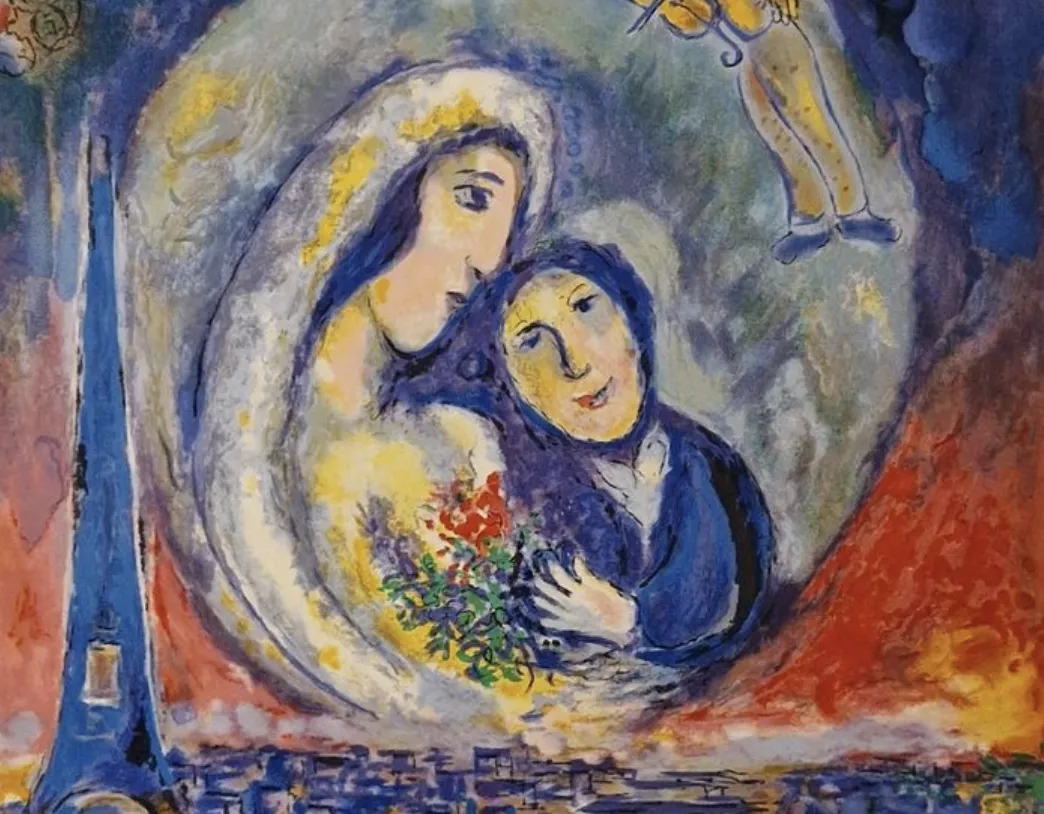
Sell a Work from the École de Paris at Auction with Auctie's
From the reserve price to the hammer price: how the price is determined
Auctions are the most advantageous method of sale for high-quality works from the École de Paris, in a market where the historical significance and nostalgic appeal of this movement generate particularly broad and international demand.
The reserve price, set in consultation with the seller, must be carefully calibrated, taking into account the work’s specific place within the artist’s body of work, its subject matter, and its documentation—all factors that can cause significant variations in value within an artist’s body of work.
For major, well-documented works, the dynamics of the auction can lead to final prices far exceeding initial estimates, as several collectors are willing to engage in intense competition to acquire iconic pieces from this cosmopolitan artistic community.
The auctioneer plays a decisive role here by structuring the auction in a way that fosters this competition among bidders.
Hôtel Drouot and Online Auctions: Reaching the Right Bidders
Auctie’s holds its auctions at Hôtel Drouot, the leading auction venue in continental Europe, founded in 1852 and frequented by a dense network of dealers, collectors, and specialists in modern art.
For a work from the École de Paris, Drouot offers optimal visibility among French and European enthusiasts of this movement, complemented by an online presence that significantly broadens the reach of each auction on an international scale.
An American collector passionate about Modigliani, a Japanese museum seeking a work by Foujita for its connection to Japanese art history, or an Israeli art lover drawn to Chagall’s work and its link to 20th-century Jewish history can bid in real time from their home countries.
For the École de Paris, whose historical and commemorative significance extends far beyond the circle of fine art enthusiasts, this international dimension is almost always decisive in securing the highest hammer price.
Estimate in less than 24h
Estate Planning, Inheritance: Valuing an Inherited Work from the École de Paris
Inventory and Distribution of an Estate
Works from the École de Paris frequently appear in the estates of families whose collections were assembled in the early decades of the 20th century, at a time when these artists—though sometimes already recognized in connoisseur circles—remained accessible to collectors of substantial but not exceptional means.
A painting or drawing acquired in the 1920s or 1930s may today be worth considerably more than the heirs realize, making a preliminary appraisal all the more essential before any division of the estate.
Auctie’s regularly works alongside notaries to compile comprehensive estate inventories that include works from the École de Paris.
Each piece is appraised individually, with particular attention paid to issues of attribution and authenticity—factors that are absolutely critical to determining value in this segment, which is particularly vulnerable to forgeries.
The resulting report is an official document that is legally enforceable and may be included in the estate file without reservation.
Confidentiality of the process and preservation of anonymity
The circumstances leading to the appraisal of a work from the École de Paris are often personal and sensitive: discovery in an inheritance, reorganization of a family collection built up over several generations, or a decision to sell after a long period of holding the work.
Auctie’s handles each case with absolute discretion. The owner’s identity is never disclosed to third parties without their explicit consent, and the works may be offered for sale under complete anonymity if the owner so desires.
This confidentiality is a fundamental commitment of Auctie’s, applicable at every stage of the relationship, from the initial contact through to the receipt of the proceeds from the sale.
Entrust the appraisal of your work from the École de Paris to Auctie’s
A work from the École de Paris deserves an appraisal that reflects the cosmopolitan richness of this movement and the considerable challenges of attribution it raises, particularly in light of a market for forgeries that remains one of the most problematic in the history of modern art for some of its most famous artists.
The diversity of individual artistic trajectories, the sensitivity of valuations to documentation, and the unique historical significance of this movement: these are all factors that only a state-certified auctioneer, well-versed in the specifics of this segment, can assess with the rigor they require.
Auctie’s guides you from the initial appraisal through to the final auction, offering the expertise of a state-certified appraiser and the discretion your financial decisions deserve. The appraisal is free, confidential, and non-binding, and you’ll receive a response within 24 hours.
Discover in the same theme
Rating and value of drawings and paintings by Marc Desgranch...
Marc Desgrandchamps is a contemporary figurative painter who has produced numerous paintings and drawings that are highly valued and command high pric...
Learn more >

Rating and value of Amedeo Modigliani's drawings
Amedeo Modigliani was an artist of the Parisian avant-garde who produced drawings whose value at auction is extremely high.
Learn more >

Rating and value of works, drawings, paintings by Léonard Fo...
Léonard Foujita is a twentieth-century Japanese artist who produced a huge number of works, much appreciated and sought-after at auction.
Learn more >
Estimate in less than 24h
Frequently asked questions
-
Quelles sont les fourchettes de prix pour une œuvre de l'École de Paris ?Les prix varient considérablement selon l'artiste et le type d'œuvre. Un dessin d'un artiste de second rang se situe entre 2 000 et 20 000 euros, une huile sur toile de Kisling ou Pascin entre 50 000 et 800 000 euros, tandis que les grands nus de Modigliani ou les compositions majeures de Soutine et Chagall dépassent fréquemment plusieurs millions d'euros, atteignant parfois des dizaines de millions pour les pièces exceptionnelles.
-
Comment faire authentifier une œuvre de l'École de Paris ?Auctie's propose une estimation gratuite et sans engagement, menée par un commissaire-priseur agréé par l'État. Il vous suffit de soumettre des photographies nettes de l'œuvre (recto, verso, signature, dimensions) et tout élément de provenance disponible. Une réponse certifiée vous sera transmise en moins de 24 heures, avec un examen physique approfondi proposé en cas de doute sérieux sur l'attribution.
-
Quels sont les facteurs qui déterminent la valeur d'une œuvre de l'École de Paris ?La valeur dépend principalement de l'identité de l'artiste, du sujet représenté (les nus et portraits sont les plus recherchés), du support (la peinture à l'huile prime sur le dessin), de la période de création, de l'état de conservation, de la solidité de la documentation et de la provenance. L'authenticité revêt une importance capitale, particulièrement pour les artistes exposés au marché du faux comme Modigliani.
-
Est-ce le bon moment pour vendre une œuvre de l'École de Paris ?Oui, le marché de l'École de Paris demeure soutenu à très soutenu selon l'artiste et la période. La demande institutionnelle reste exceptionnelle pour les grands maîtres, tandis que les dessins, gravures et œuvres d'artistes de second cercle bénéficient d'une très bonne liquidité auprès d'une base large de collectionneurs spécialisés et de patrimoine.
-
Comment se déroule la vente d'une œuvre chez Auctie's ?Auctie's accompagne le vendeur de l'estimation gratuite jusqu'à l'adjudication. Après avoir soumis votre œuvre pour une expertise sans engagement, vous recevez une évaluation certifiée en moins de 24 heures. Auctie's, maison de ventes aux enchères agréée, gère ensuite l'ensemble du processus de mise en vente et d'adjudication de votre pièce.
