



Rating and value of sculptures and drawings by Constantin Brancusi

Key takeaways
- Constantin Brancusi's sculptures sell for between €600 and €52.9 million, with iconic pieces fetching €20 to €60 million depending on provenance and version.
- Mirror-polished bronze commands a 30 to 50 percent premium over less refined plaster or stone versions, significantly influencing the value.
- Iconic series such as *The Bird in Space* and *The Sleeping Muse* account for the majority of demand in this very niche, museum-oriented market.
Constantin Brancusi’s sculptures and bronzes sell for up to €52,905,700 at auction. An appraisal allows us to accurately determine the current market value of your Constantin Brancusi work and, if applicable, optimize the sale of the piece.
If you own a work by Constantin Brancusi and would like to know its value, our state-certified auctioneers will provide a free appraisal based on authenticity, market rating, and recent market results.
Market Value and Reputation of the Artist Constantin Brancusi
Considered one of the masters of sculpture in the School of Paris, Constantin Brancusi was recognized during his lifetime. His legacy therefore consists primarily of sculptures created using various materials, particularly bronze.
Currently, prices for his works are consistently rising at auction. His sculptures are prized especially by European buyers, and the prices at which they sell on the art market range from €600 to €52,905,700, a considerable range that nonetheless speaks volumes about the value that can be attributed to Constantin Brancusi’s works.
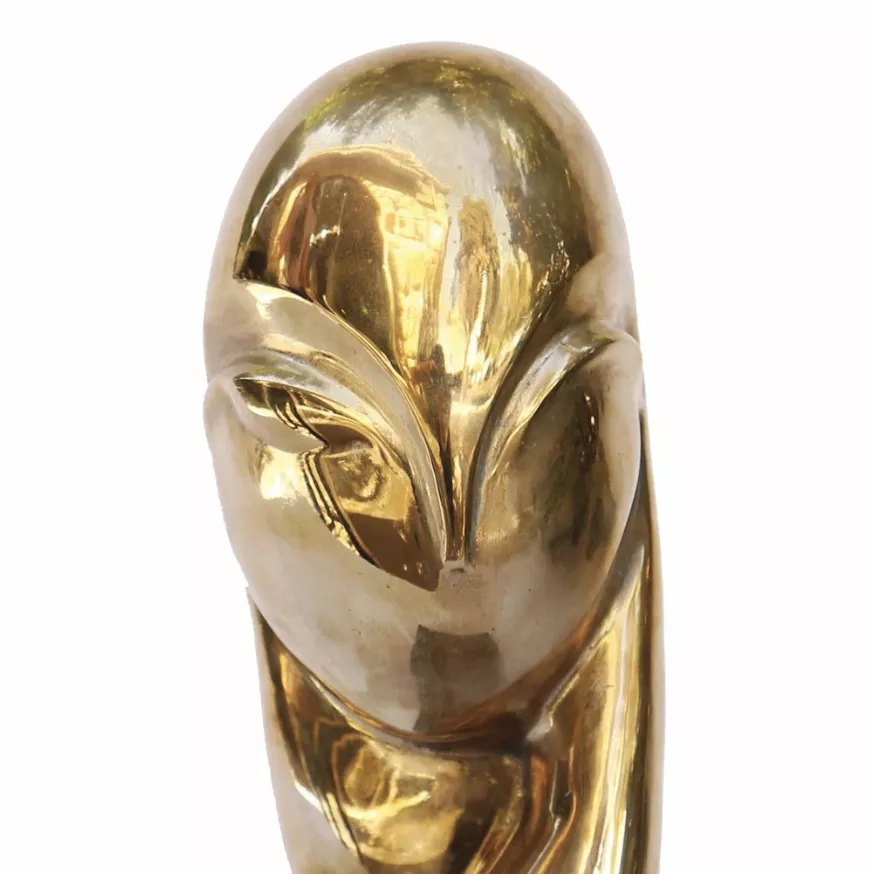
In 2018, one of his polished bronze sculptures, *The Sophisticated Girl*, sold for €52,905,700.
A range of values from a simple work to the most prestigious
Technique used | Result |
|---|---|
Photograph | From €500 to €71,800 |
Painting | From 146,800 to 320,100€ |
Drawing - Watercolor | From €2,000 to €1,531,400 |
Sculpture - three-dimensional works | From €600 to €52,905,700 |
Estimate in less than 24h
Placing the Artist in Context
Period
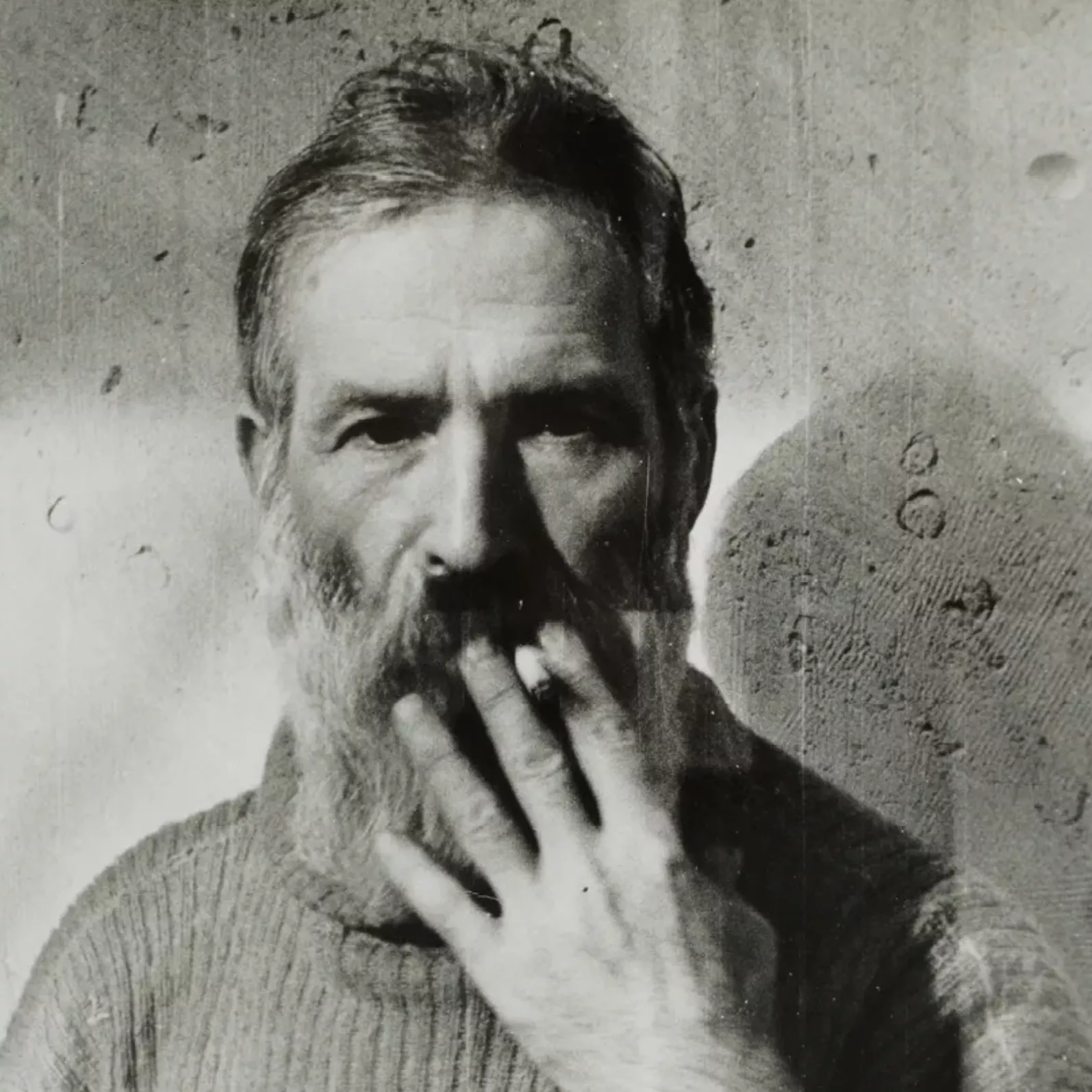
Constantin Brancusi (1876–1957) was a Romanian artist who became a naturalized French citizen, whose career spanned the late 19th century and the first half of the 20th century.
His artistic career developed primarily in Paris beginning in the early 20th century, within the context of the European avant-garde movements. This was a period of breaking with academic tradition and redefining the principles of modern sculpture.
He was part of the interwar art scene, a major hub of modernist experimentation.
Artistic Movements
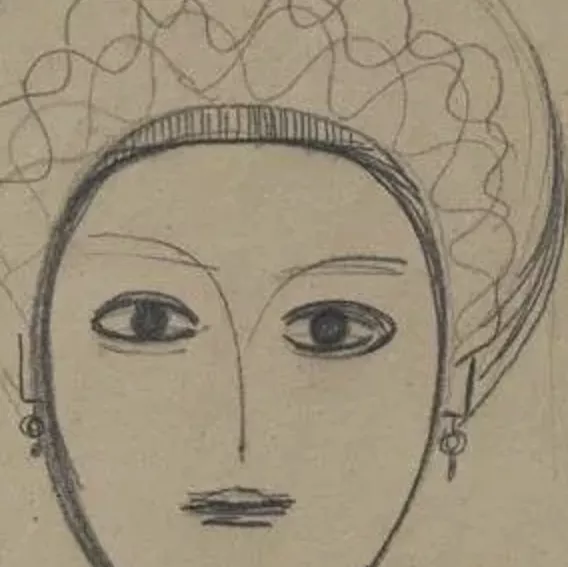
He is associated with sculptural modernism, characterized by the radical reduction of forms and the search for a fundamental plastic essence, breaking with descriptive naturalism. He is close to abstraction through the gradual simplification of figurative forms into geometric and streamlined structures.
His body of work is also influenced by so-called archaic and non-European arts in his search for elementary and symbolic forms.
Brancusi conceives of sculpture as a revelation of a subject’s essence rather than a reproduction of its appearance. He is closely associated with the Parisian avant-garde, such as Amedeo Modigliani and Marcel Duchamp, and played a role in redefining the languages of visual art.
The Artist's Life
Cultural Context
Constantin Brancusi was born in 1876 in Romania and developed his body of work within the context of the early 20th-century artistic avant-garde, a period marked by a radical reevaluation of the academic traditions of sculpture.
After receiving his initial training in his native country, he moved to Paris at the turn of the century, where he played an active role in the renewal of the modern sculptural language.
His work is characterized by a quest for the extreme simplification of forms, aiming to capture the sculptural essence of the subject rather than reproduce its naturalistic details. He favors clean volumes, polished surfaces, and geometric or organic forms.
Artistic and Intellectual Circle
Once settled in Paris, Brancusi moved in avant-garde artistic circles that included figures such as Modigliani, with whom he shared an interest in stylization and archaic forms.
His path also crossed that of Marcel Duchamp, who helped spread awareness of his work within the intellectual circles of the international avant-garde.
Although he briefly worked in Rodin’s studio, he quickly broke away from it to develop a radically personal style, thus marking a decisive break with the 19th-century sculptural tradition.

The Artist's Techniques
Style
Constantin Brancusi is a major figure in 20th-century modern sculpture, known for his radical pursuit of simplifying forms. He gradually reduced volumes to their essential forms in order to capture the essence of the subject.
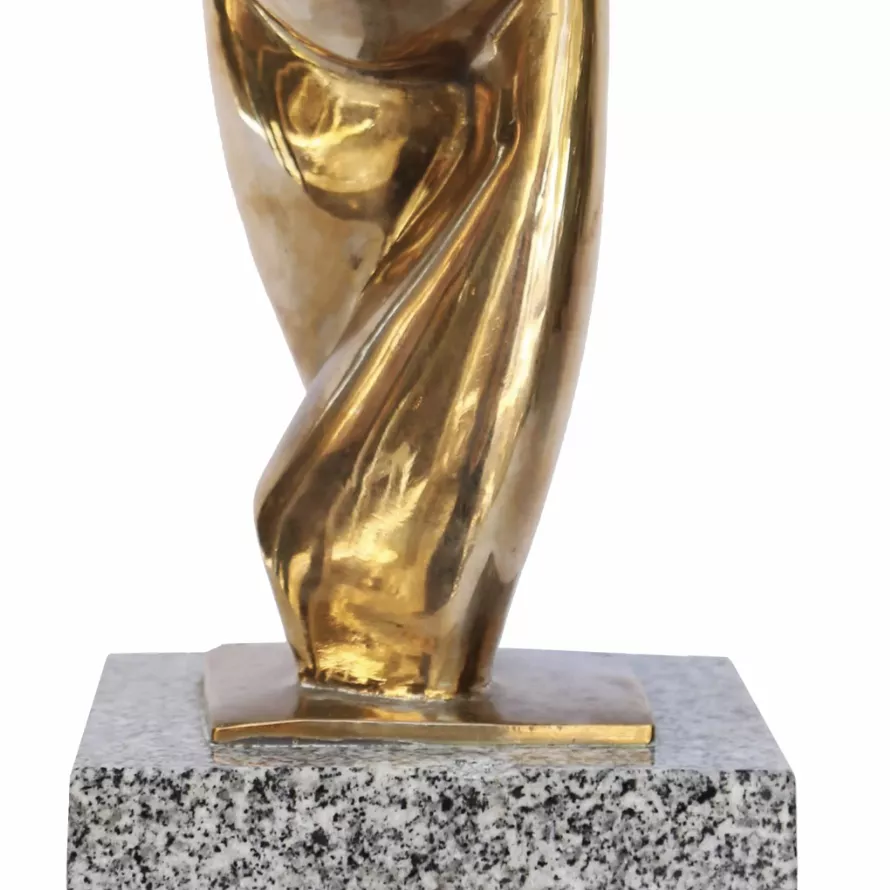
He placed fundamental importance on the sculpted surface, often polished to a reflective finish, creating a constant dialogue between the sculpture and its base, with the base becoming an integral part of the composition.
His inspiration drew from both Romanian folk tradition and the so-called “primitive” arts, as well as from modern abstraction. He used a variety of materials—stone, marble, wood, and polished bronze—chosen for their specific plastic qualities.
He seeks a balance between formal simplicity, spirituality, and symbolic meaning.
Focus on a Key Work
The Bird in Space (series, 1923–1940)
This sculpture by Brancusi is characterized by a slender, refined form that evokes the idea of flight rather than a literal representation of a bird. The polished bronze surface is reflective, partially dissolving the material perception of the object.
He drastically reduces anatomical details, replacing them with a continuous, ascending line. As always, there is a close relationship between the sculpture and its base, designed as a vertical extension of the form.
The sense of movement is suggested by the vertical tension and the fluidity of the contours. This work is emblematic of Brancusi’s sculptural philosophy, in which formal simplification becomes a means of expressing an abstract idea of movement and lightness.
FAQ – How do you appraise a work by Constantin Brancusi?
1) What stylistic criteria specific to Constantin Brancusi are key?
For Brancusi, the key is to analyze formal reduction, the purity of lines, and the pursuit of an essential form—major characteristics of his sculptural language, evident in iconic motifs such as the bird, the stylized head, or the ovoid shape.
2) How important is the distinction between an original version and a cast?
In the case of bronzes, particular attention is paid to the distinction between castings produced under the artist’s direct supervision and subsequent authorized casts. This distinction has a decisive influence on the work’s value and rarity.
3) What role do provenance and scholarly references play?
A well-documented provenance, as well as inclusion in catalogs raisonné, institutional exhibitions, or museum collections, is an essential factor in the authentication and valuation of the work.
Market Segmentation
Prices of Artworks
Constantin Brancusi is a founding figure of 20th-century abstract sculpture. He occupies a blue-chip segment of the international modern art market; the extreme rarity of available works and their historical significance ensure very high valuations.
Iconic sculptures can sell for between 20 and 60 million euros, depending on the version and provenance. Medium-sized sculptures or variations fall within a price range of 5 to 20 million euros.
Studio drawings and photographs fall within a more accessible market range of between 100,000 and 1 million euros.
Factors Affecting Value
Versions in polished marble or mirror-polished bronze command a significant premium, sometimes 30 to 50% higher than those in plaster or less refined stone.
Iconic series (Bird in Space, The Sleeping Muse, Mademoiselle Pogany) account for the bulk of demand. Later or lesser-known variations fall into lower price segments.
The market is extremely narrow due to the widespread presence of these works in museums. Appearances at public auctions are rare but generate intense international competition.
Growth is structural over the long term, driven by Brancusi’s central role in the history of modern sculpture and by constant demand from institutions and major international collectors.
Recognizing Constantin Brancusi’s Signature
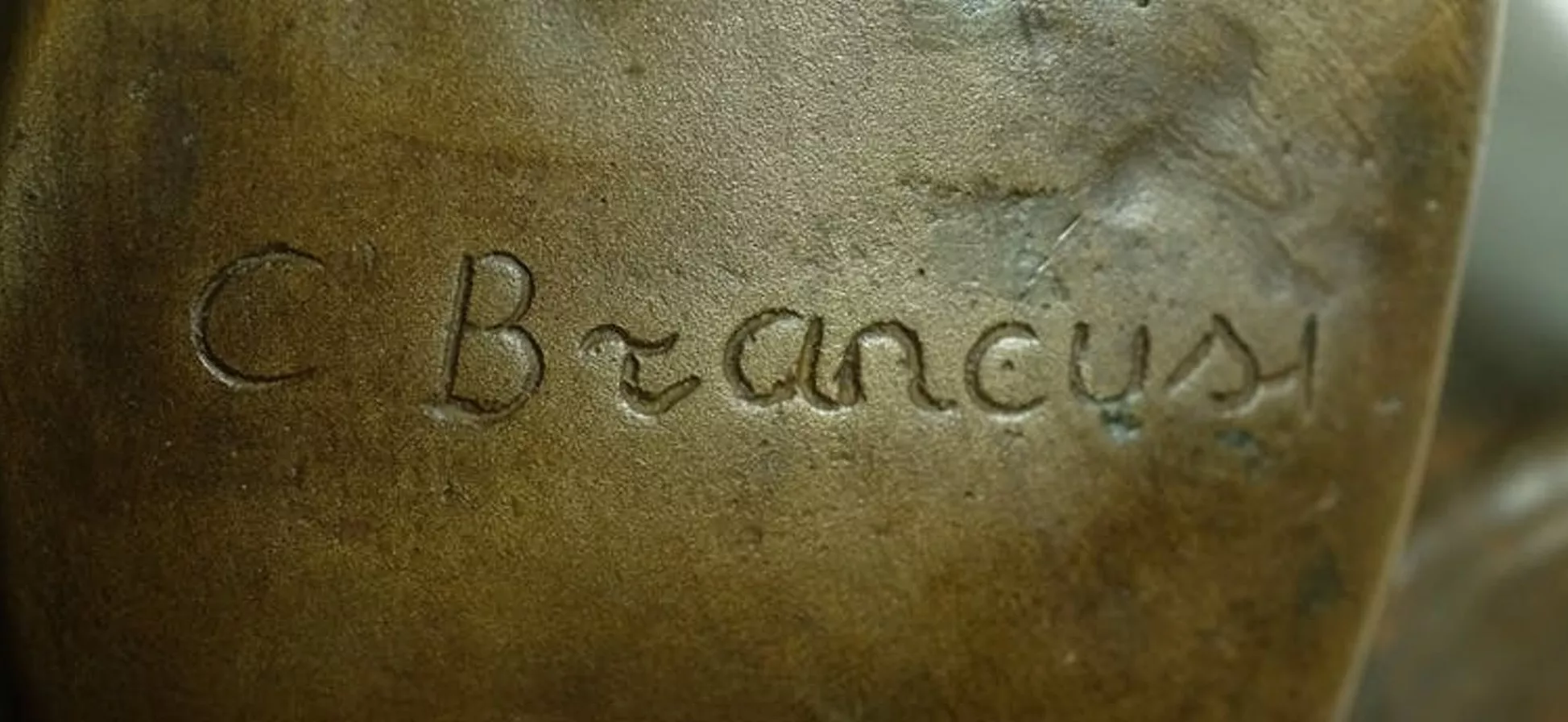
Constantin Brancusi usually signs his sculptures and works on paper “C Brancusi.” However, there are many copies, which is why expert appraisal is essential.
Get Your Constantin Brancusi Sculpture Appraised
If you own a sculpture or a work on paper by Constantin Brancusi, a valuation will help you determine its current market value.
Using our online form, our experts and certified auctioneers will conduct a free appraisal and provide you with a reliable estimate of your artwork’s market value.
If you’re considering selling it, we’ll guide you through the process to ensure you get the best possible price.
Estimate in less than 24h
D'autres bronzes modernes vendus aux enchères

Estimated Between €2,000 and €4,000
Edouard Marcel SANDOZ (1881-1971) curly stingray, bronze print

Estimated Between €1,500 and €3,000
Renato CARVILLANI (1896-1986), seated woman, gilded bronze print

Estimated Between €1,500 and €3,000
César BALDACCINI dit CESAR (1921-1998), Poule Cartier, bronze print

Estimated Between €10,000 and €20,000
Baltasar LOBO (1910-1993), female nude in bronze

Estimated 5.000 - 8.000
Igor MITORAJ (1944-2014), Bust of Asclepius, Green patina bronze sculpture
Discover in the same theme

Rating and value of works, drawings, paintings by Chu Teh Ch...
Grand master of Chinese art, millionaire auctioneer, major figure of Asian abstract art: Focus on Chu Teh-Chun.
Learn more >

Rating and value of furniture, bindings and drawings by Pier...
Pierre Legrain is a twentieth-century decorator and bookbinder whose works are highly prized at auction.
Learn more >

Rating and value of Jacques Blin's vases, ceramics and stone...
Jacques Blin is a 20th-century contemporary ceramist who has produced many works that are highly regarded and valued at auction.
Learn more >

Secure site, anonymity preserved

Auctioneer approved by the State

Free and certified estimates
Frequently asked questions
-
Who was Constantin Brancusi, and what is his role in the history of sculpture?Constantin Brancusi (1876–1957) was a Romanian sculptor who became a naturalized French citizen and is considered one of the founding figures of 20th-century abstract sculpture. Having settled in Paris at the turn of the century, he radically transformed the language of sculpture by reducing forms to their essence, breaking definitively with the 19th-century academic tradition and the influence of Rodin. His innovative approach, combined with the extreme simplification of forms and the pursuit of a plastic spirituality, placed him at the heart of the Parisian avant-garde alongside Modigliani and Duchamp.
-
What are the price ranges for Brancusi's sculptures and drawings?Prices for Brancusi’s works vary considerably depending on the type and rarity: iconic sculptures sell for between 20 and 60 million euros, intermediate sculptures between 5 and 20 million, while drawings and watercolors range from 2,000 to 1.5 million euros, and photographs from 500 to 71,800 euros. The record price was set in 2018 at 52.9 million euros for a polished bronze sculpture titled “The Sophisticated Girl.”
-
How do you authenticate a work by Brancusi, and what is the role of an expert appraisal?The authentication of a work by Brancusi is based on an analysis of stylistic criteria (formal reduction, purity of lines, pursuit of essence), verification of documented provenance, inclusion in catalogs raisonné, and institutional references. A comprehensive appraisal by a certified auctioneer confirms the work’s authenticity, distinguishes between original casts supervised by the artist and later reproductions, and verifies the work’s material characteristics. Auctie's offers a free, no-obligation appraisal conducted by specialized experts, with a response within 48 hours.
-
Is this the right time to sell a Brancusi sculpture?Yes, this is a good time to sell a work by Brancusi. The market is experiencing sustained structural growth driven by the artist’s central role in the history of modern sculpture, consistent demand from institutions and major international collectors, and the extreme rarity of available works. Prices are rising consistently, particularly for bronze or polished marble versions, which command significant premiums.
-
How does the appraisal process work at Auctie's, and how can I sell my Brancusi?Appraisals at Auctie's are free and non-binding: you submit your artwork via an online form, and our experts and certified auctioneers will examine it and provide you with a reliable estimate of its market value within 48 hours. If you decide to sell, Auctie’s, an auction house, will guide you from the appraisal to the auction, ensuring you get the best price for your Brancusi sculpture or drawing.
