



Rating and value of sculptures and drawings by Emile Gilioli

Key takeaways
- Gilioli’s sculptures and bronzes sell for between €40 and €50,000, with his record-breaking bronze, “Le clocher,” selling for €50,000 in 2021.
- An Italian abstract sculptor (1911–1977), Gilioli is recognized as a major figure of the 1950s avant-garde thanks to his geometric precision.
- The numbered bronzes (limited editions of 6) in marble or polished bronze, signed by the Tesconi foundry, command the highest estimates.
Emile Gilioli’s sculptures and bronzes sell for up to €50,000 at auction. An appraisal allows us to accurately determine the current market value of your Emile Gilioli artwork and, if applicable, optimize the sale of the piece.
If you own a work by Emile Gilioli and would like to know its value, our state-certified auctioneers will provide a free appraisal based on authenticity, market rating, and recent market results.
Market Value and Appraisal of Artist Emile Gilioli
Emile Gilioli is an Italian artist who created abstract sculptures. Today, the prices of these works can rise significantly at auction.
His sculptures are particularly sought after by buyers worldwide.
The prices at which they sell on the art market currently range from €40 to €50,000—a substantial gap that speaks volumes about the value that can be attributed to Emile Giolioli’s works.
In 2021, his 1958 bronze sculpture *Le Clocher* sold for €50,000, having been originally estimated at between €30,000 and €40,000.
A range of values from a simple work to the most prestigious
Technique used | Result |
|---|---|
Print - multiple | From €10 to €1,000 |
Drawing - watercolor | From 20 to 15,200€ |
Sculpture—three-dimensional | From €40 to €50,000 |
Estimate in less than 24h
Placing the Artist in Context
Period
Emile Gilioli (1911–1977) was an Italian sculptor whose career spanned the second half of the 20th century, a period of radical redefinition of visual arts in Europe in the aftermath of the war.
His training followed a dual path, beginning with an apprenticeship and later continuing with formal academic study. From a very young age, he was fascinated by working with materials and received an artisanal apprenticeship with a blacksmith in Reggiolo, then in Nice with a sculptor specializing in ornamentation, before enrolling at the École des Arts Décoratifs in Nice and the École des Beaux-Arts in Paris.
He was drafted in 1939 and sent to Grenoble, where he befriended Andry-Farcy, the museum’s curator, who shared his interest in Cubism with him and introduced him to the painter Colson, a pioneer of abstraction.
He quickly became part of the Parisian abstract avant-garde and exhibited in 1948 at the Denise René Gallery alongside Arp, Calder, Picasso, Giacometti, and Jacobsen; his solo exhibitions began to multiply.
Artistic Movements
Gilioli is unanimously recognized as one of the leading figures of abstract sculpture in the 1950s, a movement within which he held a prominent position on both the French and international art scenes.
His stylistic evolution stemmed from a gradual and conscious break with academic tradition: drafted into military service in 1939, he was deeply influenced by his various encounters in Grenoble, which led him to move toward a simplification of forms.
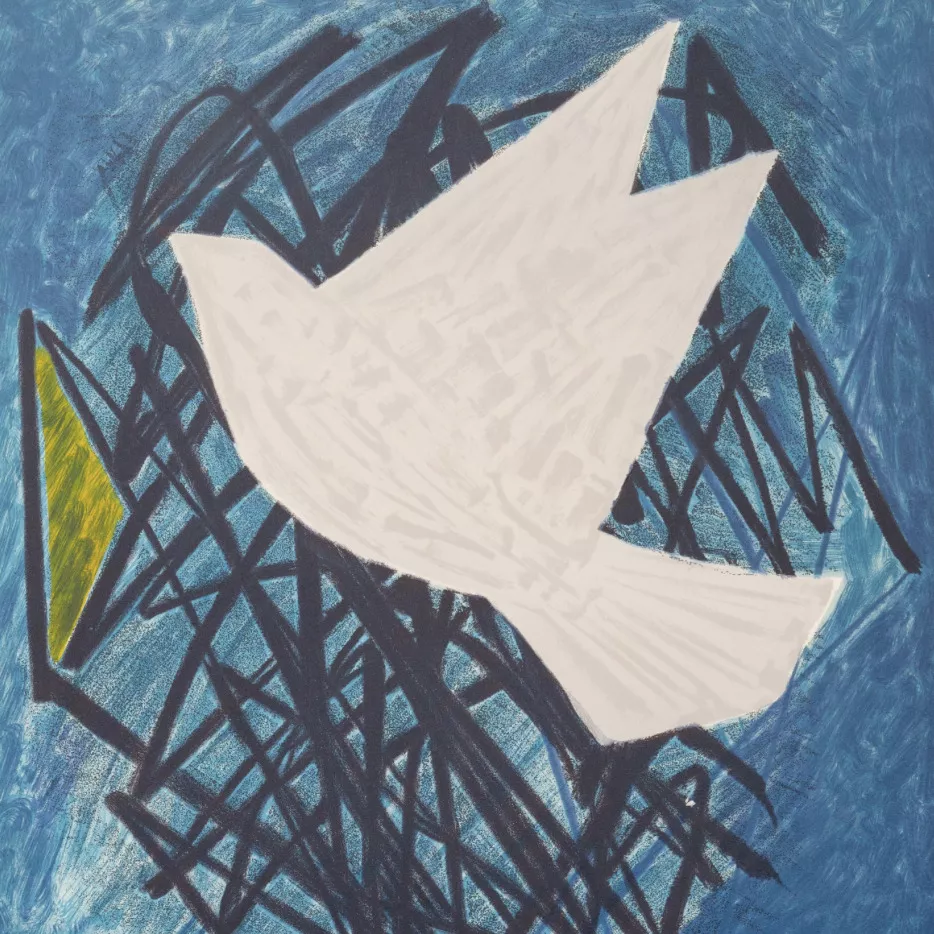
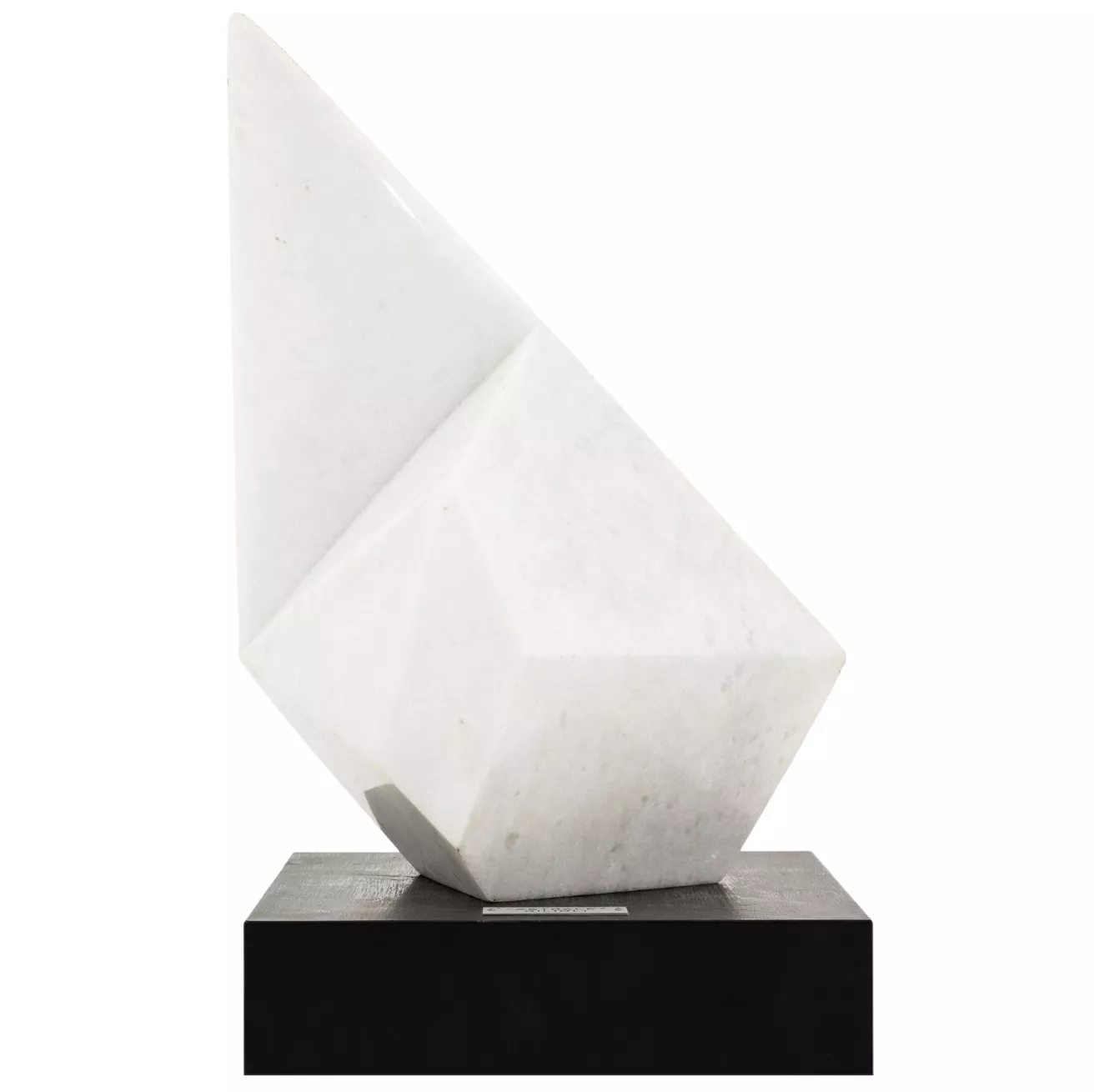
His abstract work is defined by geometric rigor and a spiritual exploration of form: from 1945 onward, extreme rigor and geometric simplification characterized a body of work that unquestionably ranks among the foremost examples of the avant-garde.
The Artist's Life
Cultural Background
Born in Paris in 1911 into a family of Italian shoemakers, he grew up in a working-class environment before being taken at the age of three to Mantua, Italy, where he worked in a blacksmith’s shop— an experience that would have a lasting impact on his material approach to sculpture.
At the École des Beaux-Arts in Paris, he joined Jean Boucher’s studio, where, like many artists of his generation, he was influenced by the work of Charles Malfray, a post-Cubist sculptor whose teaching shaped an entire generation prior to the postwar shift toward abstraction.
Upon his return to Paris in 1945, he resolutely committed himself to non-figurative art, participating in the Salon des Réalités Nouvelles and the Salon de Mai, two central institutions of the revival of abstraction in post-Liberation France.
Artistic and Intellectual Circle
At the École des Arts Décoratifs in Nice in 1932, he took classes with, among others, the Futurist Marie Raymond, mother of Yves Klein, a leading figure in French abstract lyricism.
After the war, his attention turned to Brancusi, whom he visited frequently and whose influence on his work cannot be overlooked. In 1947, he participated in the Salon des Réalités Nouvelles, and in 1948, his work was exhibited at the Denise René Gallery.
In 1949, he became one of the founding members of the Salon de la Jeune Sculpture and was appointed vice president of the Espace group, led by André Bloc, Fernand Léger, and Le Corbusier—an interdisciplinary group advocating for a synthesis of the arts that integrated sculpture with architecture and urban planning.
The Artist's Techniques
Style
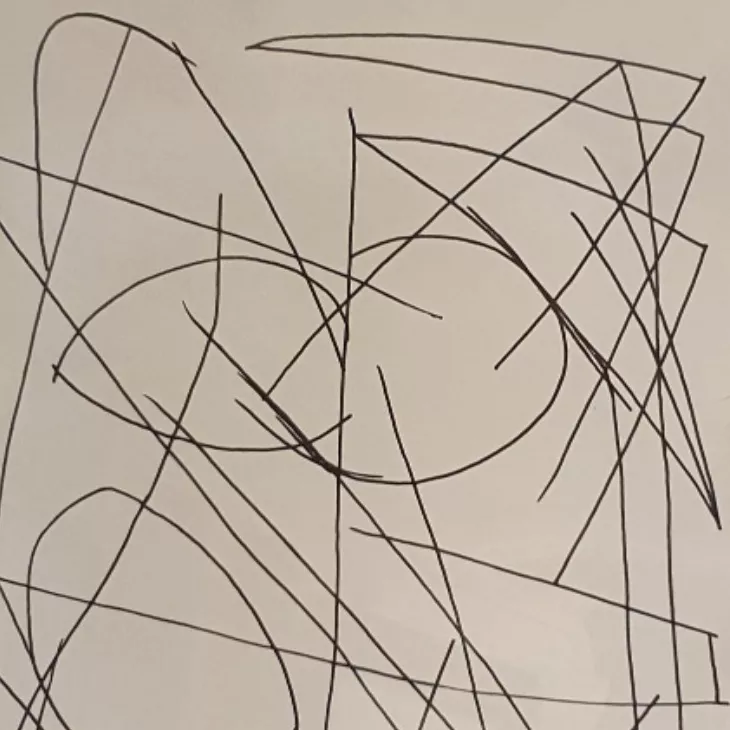
Fascinated from a very young age by working with materials and the power of drawing, Gilioli received an extremely comprehensive education, beginning with apprenticeship and later continuing with academic studies at the École des Arts Décoratifs in Nice and the École des Beaux-Arts in Paris, where he was admitted in 1931.
This dual training forged an extraordinary understanding of materials that permeates his entire body of work.
He was influenced by the spiritualist and purist tendencies of abstract art, and his work oscillates between the rigor of the line and the serene sensuality of forms where angles and curves converge, with an inherent tension that gives his volumes a distinctly sculptural inner dynamism.
Spotlight on a Key Work
Resistance Memorial, Glières Plateau, 1973
This work is part of a long series of official commissions related to the Resistance, for which Gilioli had been sought out since the postwar period. He successively created the Voreppe Memorial (1946), the monument to the deportees of Grenoble, and other works.
By opting for an abstract language rather than traditional commemorative figuration, Gilioli explores the capacity of pure form to convey values without resorting to iconographic narrative, marking a significant break with the tradition of the realistic war memorial.
The choice of concrete, a material of reconstruction associated with postwar modernity, gives the work a dimension that is both temporal and symbolic, deliberately contrasting with the marble or bronze of classical commemorative sculpture and affirming an aesthetic of simplicity in keeping with the sobriety of the message.
FAQ – How do you appraise a work by Emile Gilioli?
1) What materials did Gilioli use, and are they all equally valuable for valuation purposes?
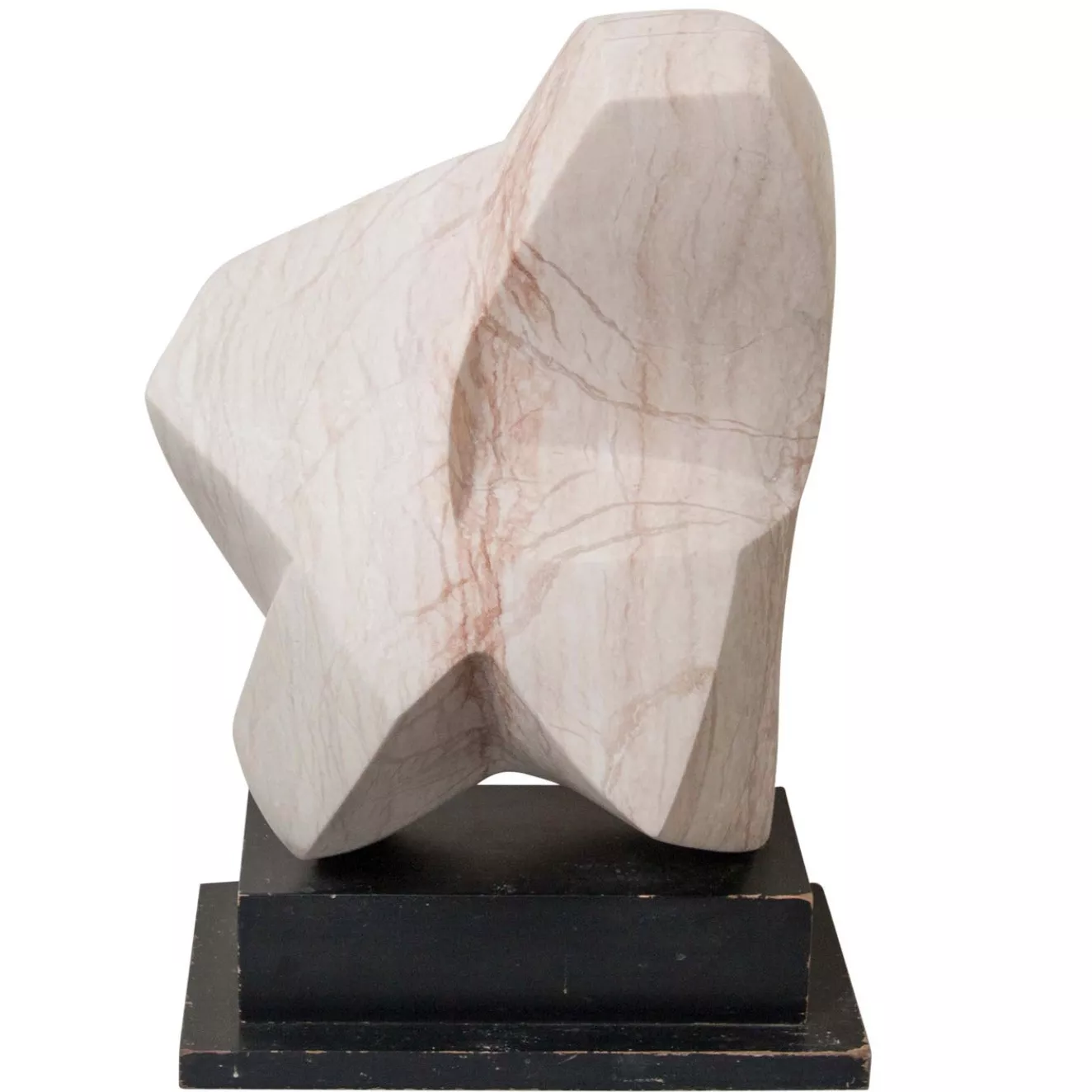
He is one of the most eclectic modern sculptors in his choice of materials. Throughout his career, he worked with a very wide range of materials: granite, marble, crystal, onyx, agate, alabaster, and cement, as well as polished bronze, steel, and concrete. Marble and bronze sculptures (numbered) often command the highest appraisals.
2) How are Gilioli’s bronzes numbered?
The bronzes are produced in limited editions, generally of 6 copies, plus artist’s proofs. The presence of the foundry’s mark is a guarantee of authenticity: the Tesconi foundry in Pietrasanta (Italy) is one of the foundries most closely associated with the artist.
3) Are certain titles or themes more sought-after than others?
Among the most sought-after series and titles are the bronzes from the “Soleil” series, sculptures with spiritual or commemorative themes (“Prayer and Strength,” “The Man of Peace”), and pieces related to his major public commissions.
Recognizing Emile Gilioli’s Signature
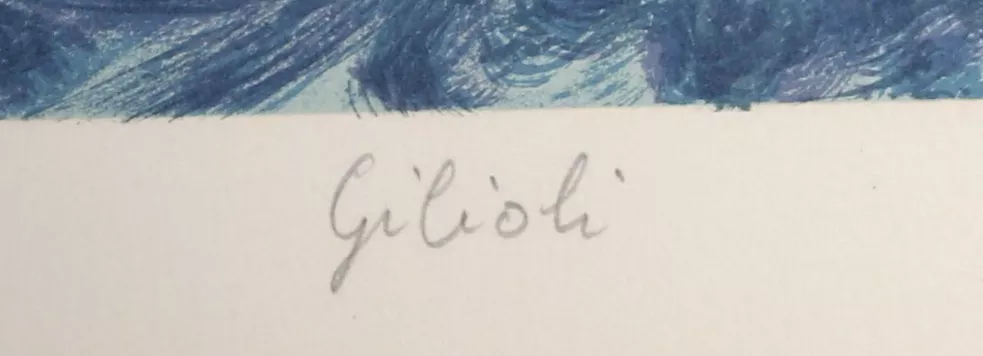
Emile Gilioli usually signs his sculptures and works on paper “Gilioli.” However, there are many copies, which is why expert appraisal is important.
Get Your Emile Gilioli Sculpture Appraised
If you own a sculpture by Emile Gilioli, a valuation will help you determine its current market value.
Using our online form, our experts and certified auctioneers will conduct a free appraisal and provide you with a reliable estimate of your artwork’s market value.
If you’re considering selling it, we’ll guide you through the process to ensure you get the best possible price.
Estimate in less than 24h
D'autres bronzes modernes vendus aux enchères

Estimated Between €2,000 and €4,000
Edouard Marcel SANDOZ (1881-1971) curly stingray, bronze print

Estimated Between €1,500 and €3,000
Renato CARVILLANI (1896-1986), seated woman, gilded bronze print

Estimated Between €1,500 and €3,000
César BALDACCINI dit CESAR (1921-1998), Poule Cartier, bronze print

Estimated Between €10,000 and €20,000
Baltasar LOBO (1910-1993), female nude in bronze

Estimated 5.000 - 8.000
Igor MITORAJ (1944-2014), Bust of Asclepius, Green patina bronze sculpture
Discover in the same theme

Rating and value of Sanyu's drawings, paintings and pictures
Sanyu is a Franco-Chinese artist who has produced many highly acclaimed paintings and drawings of nudes, which are highly prized at auction.
Learn more >

Rating and value of Ettore Sottsass furniture, lighting and...
Ettore Sottsass is a twentieth-century Italian designer whose works are highly valued at auction.
Learn more >

Rating and value of paintings by Marcel Mouillot
Marcel Mouillot is a twentieth-century figurative painter who produced many works that are highly valued at auction.
Learn more >

Secure site, anonymity preserved

Auctioneer approved by the State

Free and certified estimates
Frequently asked questions
-
Who was Emile Gilioli, and what artistic movement did he belong to?Emile Gilioli (1911–1977) was an Italian sculptor recognized as one of the leading figures in abstract sculpture of the 1950s. After receiving both traditional and academic training, he turned to non-figurative art after World War II, participating in key Parisian exhibitions of the abstract revival, such as the Salon des Réalités Nouvelles and the Denise René Gallery.
-
What is the price range for Emile Gilioli's works at auction?Prices for Gilioli’s sculptures and bronzes range from €40 to €50,000, depending on the type of work and its provenance. Three-dimensional sculptures command the highest estimates (up to 50,000 €), while drawings and watercolors range from 20 to 15,200 €, and prints from 10 to 1,000 €.
-
How can you authenticate a sculpture by Emile Gilioli?To authenticate a work by Gilioli, it is recommended to have it appraised by specialized experts. Our state-certified auctioneers provide a free, no-obligation appraisal, assessing the work’s authenticity based on factors such as the presence of a signature, the foundry mark (such as the Tesconi foundry in Pietrasanta), and the limited edition run for bronzes.
-
Is there currently a good opportunity to sell a work by Gilioli?Yes, now is a good time to sell a sculpture or drawing by Gilioli. The art market recognizes him as a major figure in modern abstraction, and his works remain highly sought after by international collectors, particularly his numbered bronzes and pieces related to his major public commissions.
-
How does the appraisal and sale of a work of art take place at Auctie's?At Auctie's, appraisals are free and non-binding: simply submit your artwork via our online form, and our certified auctioneers will evaluate it and provide you with a reliable estimate within 48 hours. If you decide to sell it, we’ll guide you through the process from the appraisal all the way to the auction to ensure you get the best possible price.
