



Rating and value of paintings by Judit Reigl

Key takeaways
- Judit Reigl’s oil-on-canvas paintings fetch prices ranging from €300 to €340,000, with her market value rising sharply since 2016.
- The Hungarian artist (1923–2020) is known for her gestural and materialistic approach, developed beginning in 1955, which fuses the body and painting.
- Her prints and watercolor drawings cost between €100 and €5,200 and €750 and €13,000, respectively, offering more affordable access to her work.
If you own a work by artist Judit Reigl or based on her work and would like to know its value, our state-approved experts and auctioneers will guide you.
Our specialists will carry out a free appraisal of your work, and provide you with an accurate estimate of its value on the current market.
Then, should you wish to sell your work, we will direct you to the best possible arrangement to obtain the optimum price.
Rating and value of the artist Judit Reigl
Judit Reigl is a well-known artist among modern and contemporary art lovers. Now, prices for her works are rising at the auctioneers' gavel.
Her oils on canvas are particularly prized, especially by American buyers, and the price at which they sell on the art market ranges from €100 to €340,000, a significant delta but one that speaks volumes about the value that can be attributed to the artist's works.
In 2016, his oil on canvas Éclatement dating from 1955 sold for €340,000, while it was estimated at between €200,000 and €300,000. His value is rising sharply.
Order of value from the most basic to the most prestigious
Technique used | Result |
|---|---|
Estamp - multiple | From €100 to €5,200 |
Drawing - watercolor | From €750 to €13,000 |
Oil on canvas | From €300 to €340,000 |
Estimate in less than 24h
The works and style of Judit Reigl
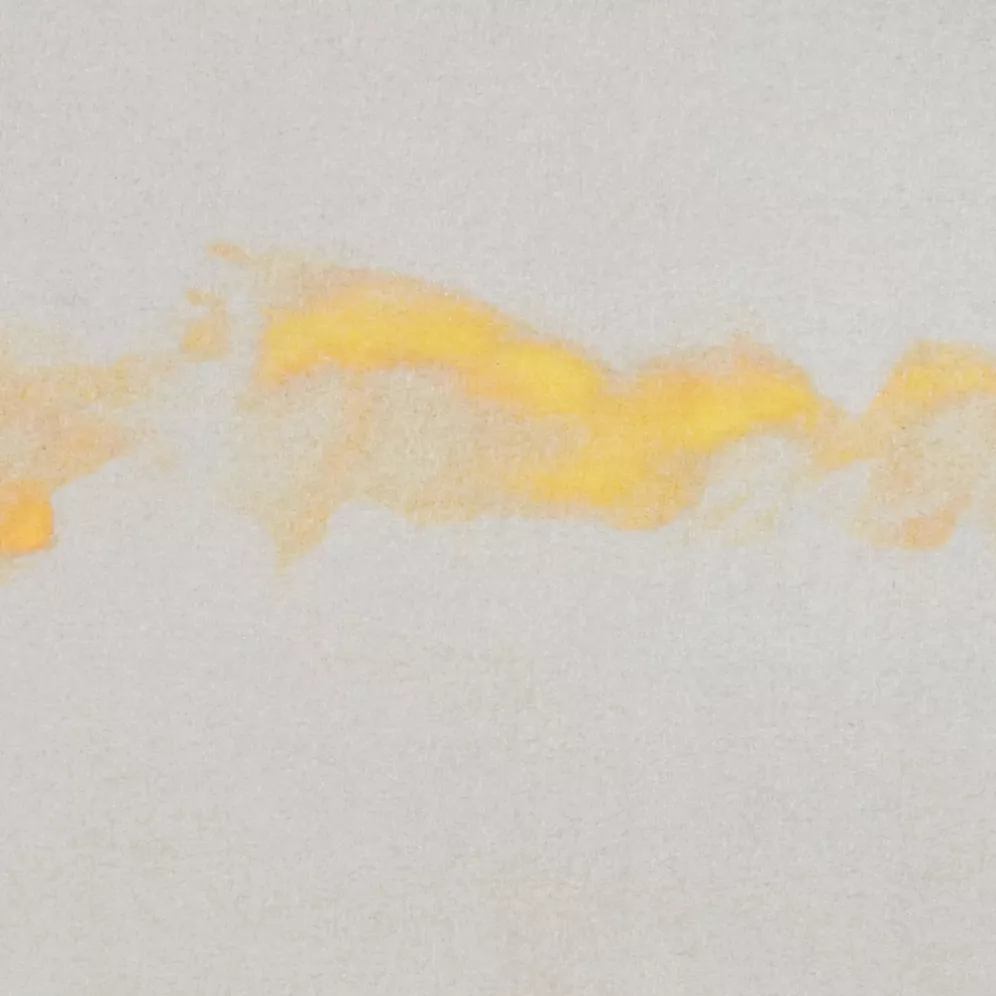
In 1955, in Éclatement, Judit Reigl chose to abandon any premeditated construction in favor of a gush of matter, projected, scraped, stretched in fluid sheets across the canvas.
Painting, now subject only to the logic of gesture, unfolds in a space where the surface, far from being a mere support, becomes a field of experimentation.
The impact of Action Painting, combined with a desire to go beyond the limits of the traditional frame, leads him to work on the ground, to inscribe in the material the imprint of movement, to replace composition with a process of accumulation and erasure.
Formlessness, here, is given as a necessity, a transitory state where the image occurs without being imposed.
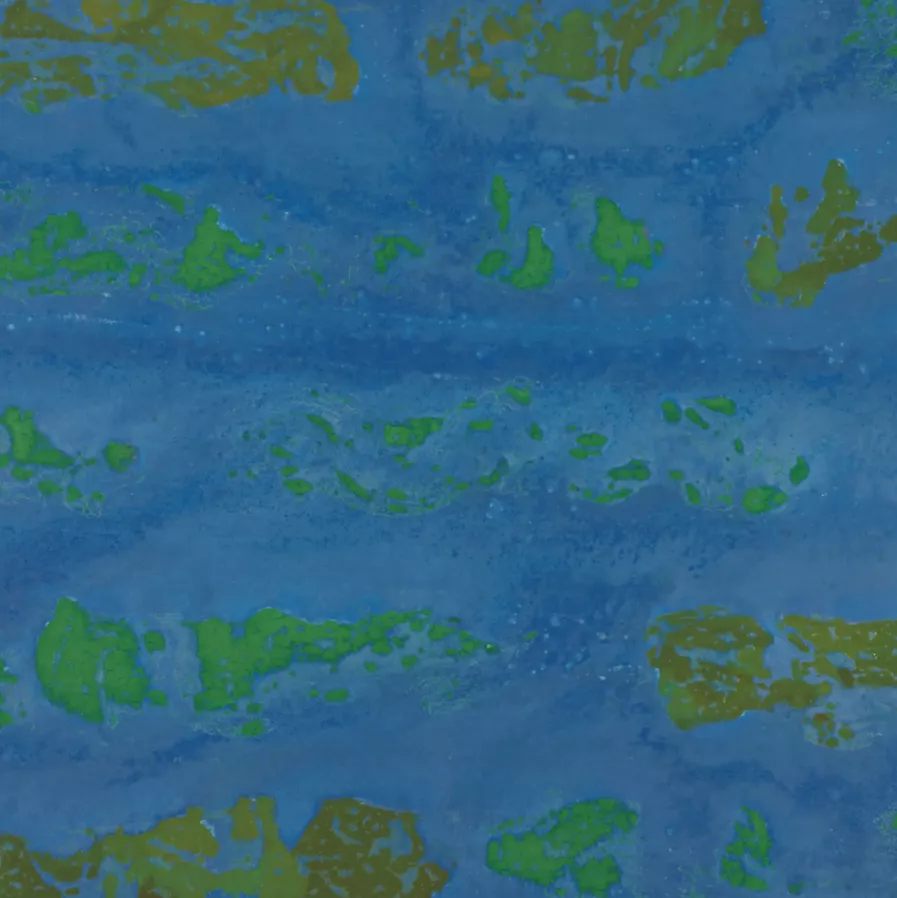
In the Guano, successive repaints sediment the surface, accumulating strata until the canvas is transformed into an uneven topography. The material, deposited, scraped, superimposed, becomes the site of a dialogue between chance and mastered intervention.
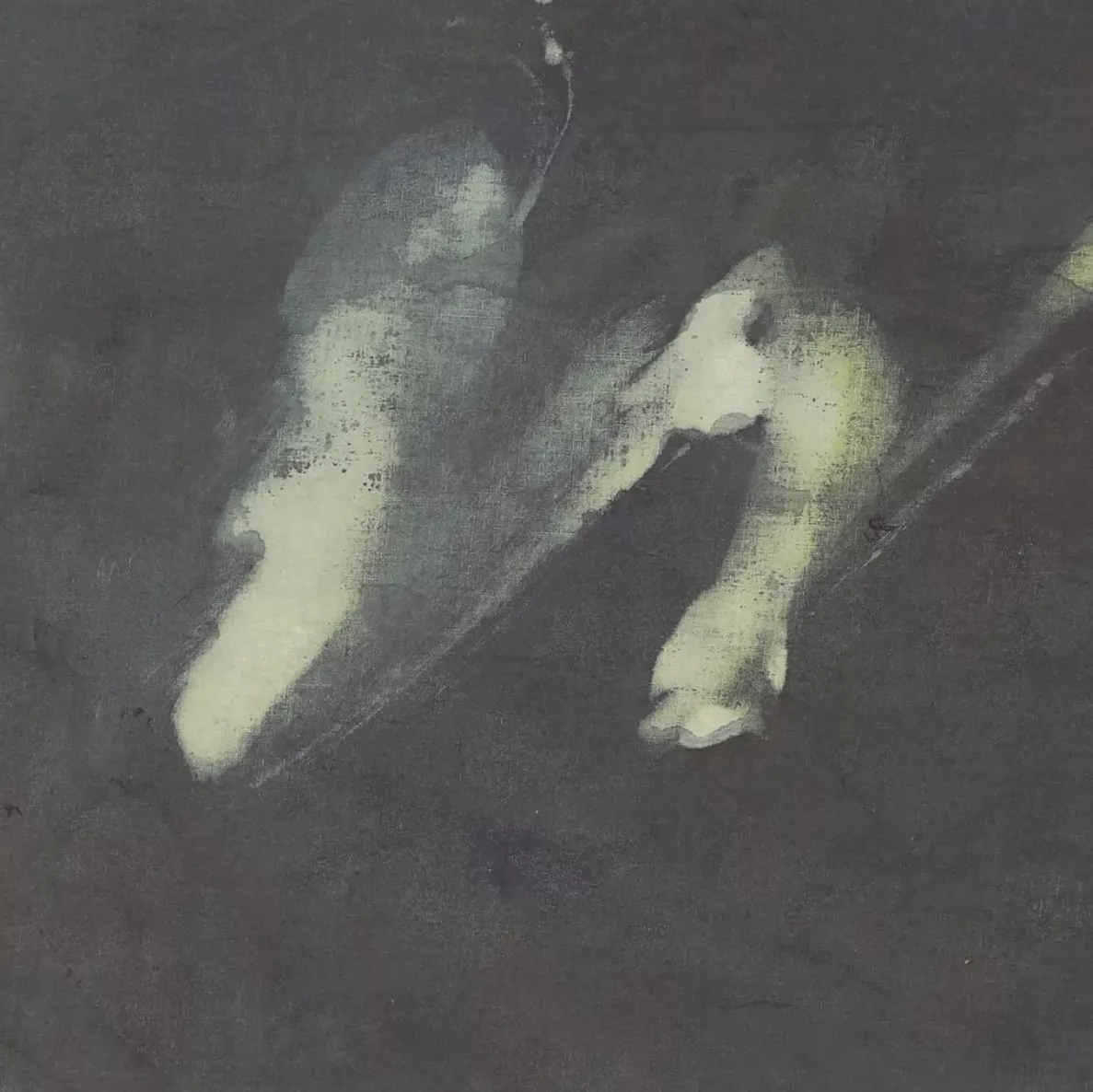
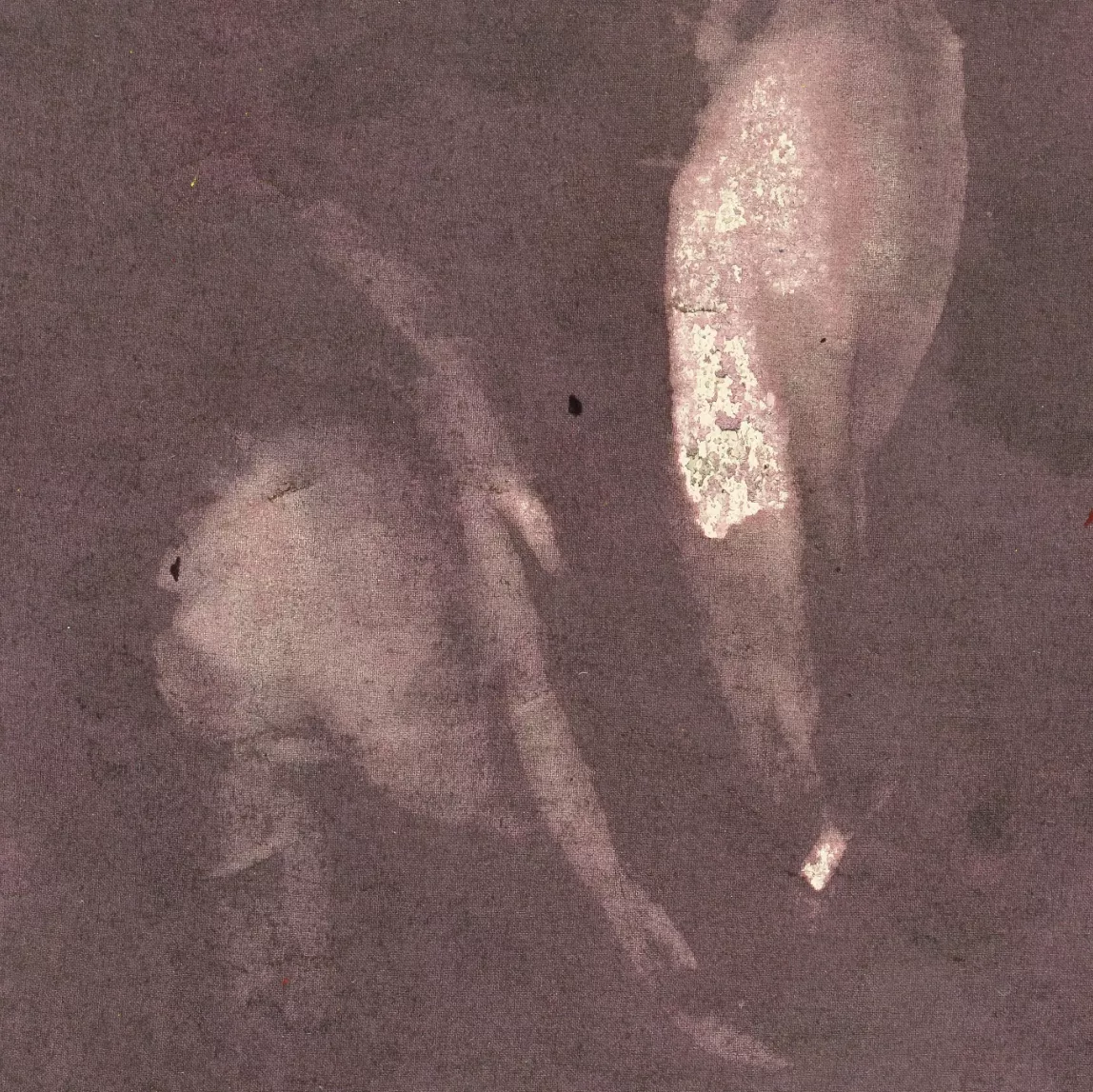
Later, with the Déroulements and the Hommes, the body itself becomes integrated into the pictorial act: traversing the canvas, Reigl inscribes the rhythm of her own presence, substituting the whole body for the hand as the instrument of tracing.
The gesture, amplified, then achieves a new monumentality where the line is liberated, where painting becomes pure movement. Here again, the unity of the surface takes precedence over any distinction between figure and background: the canvas, traversed, invested, is no longer a space of representation, but the site of an inscription where body and matter merge in an inseparable continuum.
The life of Judit Reigl
Judit Reigl (1923 - 2020), was a French artist of Hungarian origin, who produced figurative, then surrealist, then finally abstract works.
In 1950, after several unsuccessful attempts to flee Communist Hungary, Judit Reigl managed to cross the Iron Curtain to Italy, where she stayed briefly before settling in Paris.
Trained at the Academy of Fine Arts in Budapest, and steeped in the frescoes of Giotto and Piero della Francesca discovered during a trip to Italy in 1947, she approached painting with a freedom that the political context of her home country denied her.
On her arrival in France, she was welcomed by Simon Hantaï, who introduced her to André Breton. Seduced by the raw energy of her canvases, the poet invited her to exhibit at the gallery À l'Étoile scellée in 1954, briefly integrating the artist into the Surrealist group.
But Reigl, averse to any doctrinal allegiance, soon distanced herself from the movement and devoted herself to a pictorial research based on instinct, gesture and matter.From 1955, her Éclatements marked a turning point: painting, projected onto the canvas, responds to a logic of flow in which the body is fully engaged. Movement takes precedence, abolishing all premeditation in favor of an immediate relationship with the material.
This was followed by the Guano series, where the superimposition of layers lends the work an almost organic density, Écritures en masse, where the sign melts into the rhythm of the pictorial act, or Déroulements, where the spreading of pigment scans the surface of the canvas in a continuous dynamic.
Installed in Marcoussis, she refines an approach in which the body becomes the true driving force behind creation, engaging the artist in a physical dialogue with paint. Far from established frameworks, her work stands out as a quest for the absolute, a journey where the canvas becomes the site of reconquered freedom, freed from all dogma.
Judit Reigl and Jean Degottex - Mise en perspective
Focus on Écriture en masse, Judit Reigl, 1973 - 1975, and Sans titre (Suite Papiers d'Asie), Jean Degottex, 1974
The two works chosen here stand out first and foremost for a novel approach to gesture and writing.
Reigl, in Écriture en masse, inscribes his work in a gesture that is both dynamic and explosive, thanks to which the ink seems to spurt out with uncontrolled energy. The painter's body becomes a direct medium between mind and canvas, allowing the work to resemble automatic writing.
With Degottex's Sans Titre (Suite Papiers d'Asie), we witness the exploration of a refined, meditative calligraphy. His style is close to Zen aesthetics and the Japanese calligraphic gesture - each stroke is laid down with precision, in a quest for emptiness and silence.
As far as the relationship to pictorial space is concerned, this is saturated by accumulations of matter in Reigl's work, with stains and imprints of rapid movement, giving off an impression of structured chaos, where the artist finds his balance in the intensity of gesture.
Degottex adopts a different prism, letting the paper breathe, and creating zones of silence and emptiness - echoing the principles of oriental calligraphy. Space becomes an active element that proves just as essential as the stroke itself.
On the side of material and support, Reigl works with paint in a fluid, spontaneous manner, with splashes and impastos that convey a total physical commitment to the pictorial act.
In an almost automatic movement, the artist sprays ink and paint onto the canvas.
Degottex favors a more controlled, minimalist application, playing with the dilution and transparency of inks on paper, giving particular importance to texture, but also to the effects of matter, in a more rigorous economy of means.
The two artists do not have the same relationship to abstraction and spirituality: painting is an act of liberation of gesture for Reigl - who builds abstraction in an almost instinctive spontaneity, in a visceral and physical approach that translates a vital energy imprinted on the canvas.
As for Degottex, his art is conceived as a quest for the essence of the line. His abstraction is close to a spiritual and meditative approach, where the slightest sign carries meaning.
As a result, although both artists share the same gestural approach to painting, they are on two distinct registers : one in impulse and explosion, the other in purity and restraint.
They both engage in a dialogue with abstraction, rooted in a writing of the body and gesture, yet pursuing different ends. In Reigl's case, a raw energy, combined with Degottex's quest for purity.
Judit Reigl's stylistic influences
Trained at the Academy of Fine Arts in Budapest, steeped in the frescoes of Giotto and Piero della Francesca discovered on a trip to Italy, Judit Reigl approaches painting with a keen sense of composition and mass balance.
But it is in the immediacy of gesture and the physicality of the pictorial act that she sets her own course. While Surrealism welcomed her for a time, she quickly turned away from it to explore a style of painting in which the whole body is involved.
American Action Painting, notably Rauschenberg, Pollock and De Kooning, offers it an echo, as does the European matierist research of Fautrier and Wols.
Refusing to belong to any defined current, she forges a body of work where matter becomes language, where the freedom of gesture meets a quest to surpass, asserting an instinctive and physical painting, freed from all constraints.
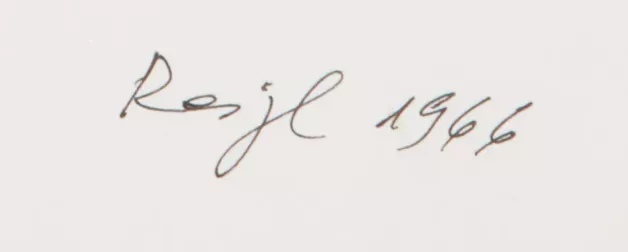
Her signature
Not all Judit Reigl's works are signed.
Although there are variations, here's a first example of her signature:
Expertise your property
If you own a Judit Reigl work, feel free to request a free appraisal by filling in our online form.
A member of our team of experts and licensed auctioneers will contact you to provide an estimate of the market value of your work.
If you are considering selling your work, our specialists will also guide you through the various alternatives available to obtain the best possible price, taking into account market trends and the specific features of each work.
Estimate in less than 24h
Discover in the same theme

Rating and value of paintings by Sergio de Castro
Sergio de Castro is a Franco-Argentinian abstract painter of the 20th century. He has produced works that are quoted and valued at auction.
Learn more >

Rating and value of paintings by Marie Raymond
Marie Raymond is an abstract artist who has produced many works that are highly valued at auction. 24h estimate
Learn more >

Rating and value of paintings and laquers by Tran Huu Chat
Tran Huu Chat is a modern Vietnamese painter who has produced panel lacquers and paintings of encouraging value.
Learn more >
D'autres tableaux abstraits vendus aux enchères

Estimated 2.000 - 4.000
Serge POLIAKOFF (1900-1969), Composition en rouge et bleu. 1965, Lithograph

Estimated Between €5,000 and €8,000
Jean MIOTTE (1926-2016), acrylic on canvas

Estimated 3.000 - 5.000
Roberto MATTA (1911-2002), Composition, Gouache on canvas

Secure site, anonymity preserved

Auctioneer approved by the State

Free and certified estimates
Frequently asked questions
-
Who is Judit Reigl, and what is her artistic background?Judit Reigl (1923–2020) was a French artist of Hungarian origin and a pioneer of gestural abstraction. Trained at the Academy of Fine Arts in Budapest and influenced by the Italian masters, she settled in Paris in 1950 and was briefly associated with Surrealism before developing a visceral style of painting based on gesture, texture, and the physical engagement of the body. Her work is akin to American Action Painting and European materialist explorations.
-
What are the prices and price range for Judit Reigl's works?Judit Reigl’s works sell for between €100 and €340,000, depending on the medium and her reputation. Prints range from €100 to €5,200, drawings and watercolors from €750 to €13,000, while oil paintings on canvas—her most sought-after works—fetch between €300 and €340,000. Her market value is rising sharply, particularly among American collectors.
-
How can you authenticate and appraise a work by Judit Reigl?To authenticate and appraise a work by Judit Reigl, you can request a free, no-obligation appraisal from our state-certified experts and auctioneers. Fill out our online form: a member of our team will contact you to provide an accurate estimate of your artwork’s market value within 48 hours.
-
Is this the right time to sell a work by Judit Reigl?Yes, now is an excellent time to sell a work by Judit Reigl. Her market value is rising sharply in the contemporary and modern art market, particularly at auctions, where her oil-on-canvas paintings regularly exceed their estimates. Demand from collectors, especially American ones, confirms this positive trend.
-
How does the sale of a work of art work at Auctie's?Auctie's supports you every step of the way: a free, no-obligation appraisal by an expert, followed by guidance on the best sales strategy, taking into account market trends and the unique characteristics of your artwork. Our specialists will help you maximize the final price of your Judit Reigl piece at auction.
