



Rating and value of paintings by Chaïm Soutine

Key takeaways
- Chaïm Soutine’s Expressionist paintings fetch millions of euros at auction, such as *Le Bœuf* (1923), which sold for 22.3 million euros in 2015.
- The values of his works vary considerably depending on the medium: prints €40–250, drawings €6,000–30,000, and oil-on-canvas paintings up to 22 million euros.
- A major artist of the School of Paris in the 20th century, Soutine established himself as early as the 1920s thanks to the American collector Albert Barnes, who propelled his international reputation.
If you own a work by or based on the artist Chaïm Soutine and would like to know its value, our state-approved experts and auctioneers will guide you.
Our specialists will carry out a free appraisal of your work, and send you a precise estimate of its value on the current market.
Then, if you wish to sell your work, we will direct you to the best possible arrangement to obtain the optimum price.
Rating and value of the artist
Chaïm Soutine's work is common and highly rated on the auction market. His works arouse interest among collectors and art lovers, particularly those who appreciate 20th-century painting.
The most sought-after pieces are his Expressionist paintings, which achieve record bidding amounts at auctioneers' gavels.
As such, a work signed by Soutine can fetch millions of euros at auction, like his painting Le Boeuf, dating from 1923 and sold for €22,325,000 in 2015, while it was estimated at between €17,860,000 and €26,790,000.
Order of value from the most basic to the most prestigious
Technique used | Result |
|---|---|
Estamp - multiple | From €40 to €250 |
Drawing - watercolor | From €6,000 to €30,000 |
Oil on canvas | From €100 to €22,325,000 |
Estimate in less than 24h
Artist's style and technique
Chaïm Soutine belongs to the Paris School, a group of foreign artists who produced work in Paris.
The majority of his works are expressionist, and he produced many prints, as well as drawings and oils on canvas.
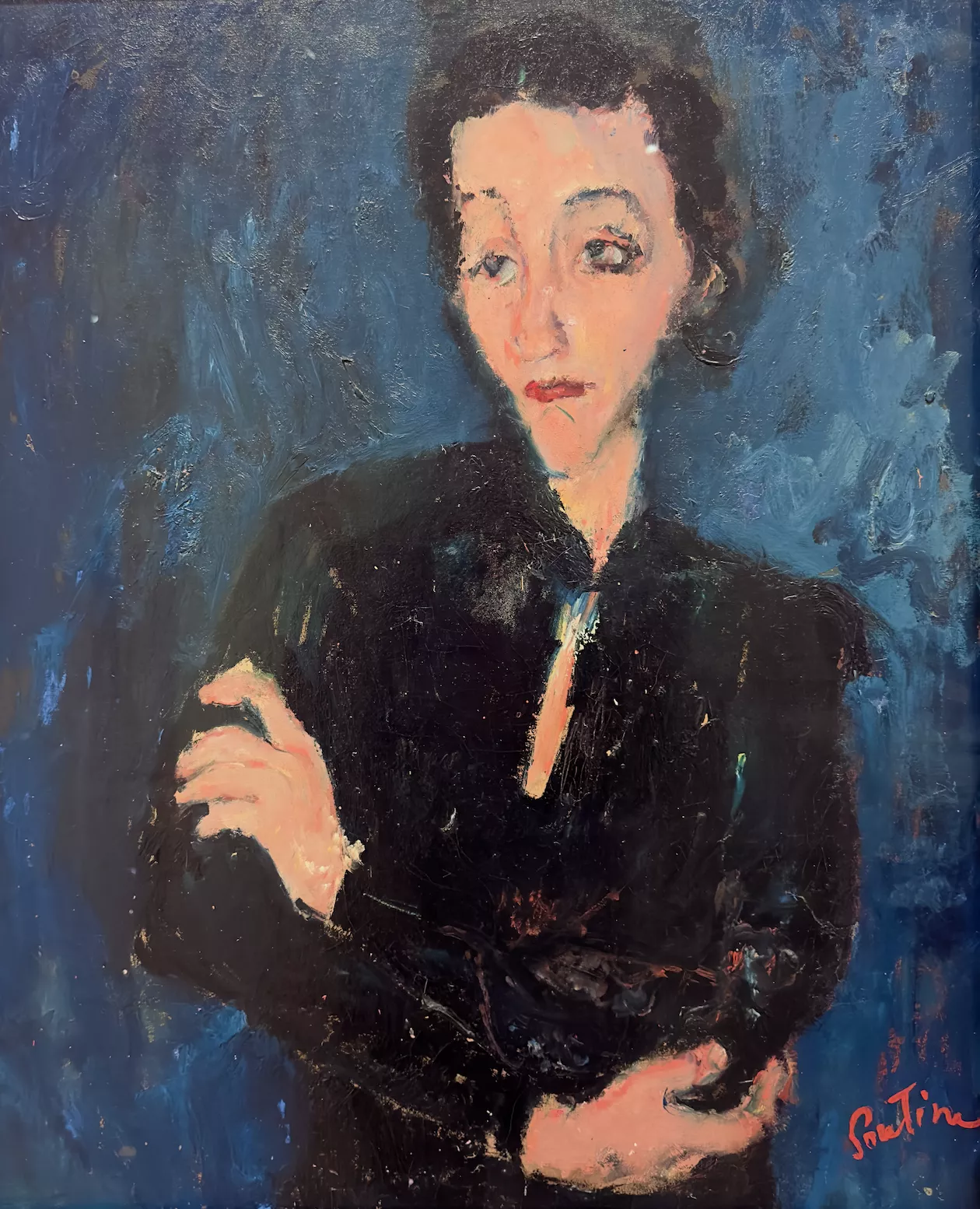
Chaïm Soutine uses vivid colors and expressive forms that bear witness to his unique personality and intense temperament. His painting technique is characterized by energetic brushstrokes and rich textures, bringing his subjects vibrantly to life.
Soutine draws inspiration from the Old Masters, but reinterprets them in his own way, creating bold compositions where the background is often blurred, bringing the main subject to the fore. His approach to color is also marked by saturated hues that evoke raw, visceral emotion.
Themes of still life and portraiture reveal psychological depth, transforming ordinary scenes into meaning-laden narratives. His expressionism, though deeply personal, resonates with the angst of his time, inviting the viewer to feel the intensity of his artistic vision.
The career of Chaïm Soutine
Chaïm Soutine, born in 1893 in Smilovitchi, in the Russian Empire, is a painter whose career is marked by suffering and resilience. Of Jewish origin, his childhood was spent in the Russian ghettos, where he faced extremely difficult living conditions.
In 1912, he managed to escape this reality and settled in Paris, an epicenter of artistic creativity at the time. He immersed himself in the Montparnasse district, where he rubbed shoulders with iconic artists, but didn't achieve success until the 1920s, when he caught the eye of American collector Albert Barnes.
The latter discovered his work, bought his canvases and commissioned works from him, propelling Soutine onto the international scene and boosting his standing as an artist. He then frequented rising figures such as Chagall, Kisling and Modigliani, both also seeking recognition in this artistic effervescence.
The years Soutine spent in Montparnasse, notably at the artists' residence La Ruche, were marked by internal struggles and instability, despite the creative effervescence that surrounded him. He travels frequently, exploring the Côte d'Azur with other artists, as well as cities such as Bordeaux, all the while seeking to refine his style.
His work is deeply influenced by Expressionism, which constitutes the essence of his approach, yet he does not deny the great artistic traditions. He skilfully combines his influences with the work of the old masters.
For example, in his still lifes, he draws inspiration from Rembrandt's The Flayed Ox, reactualizing the compositional structure. He creates a zoom effect, reducing the background, saturating colors and blurring contours, intensifying the emotional impact of his works.
Soutine's expressionism reveals an underlying violence and brings out complex nuances, giving unexpected depth to his depictions.
However, the artist hides a deep malaise behind his creativity. Soutine was often prone to intense anger, and his personal life was marked by instability. He had frequent conflicts with his friends and a string of unsteady love affairs.
Despite these inner turmoils, he managed to leave an indelible mark on the art world. Chaïm Soutine died in Paris in 1953, aged 50, leaving behind him a rich and complex artistic legacy.
Focus on Chaïm Soutine's Flayed Ox
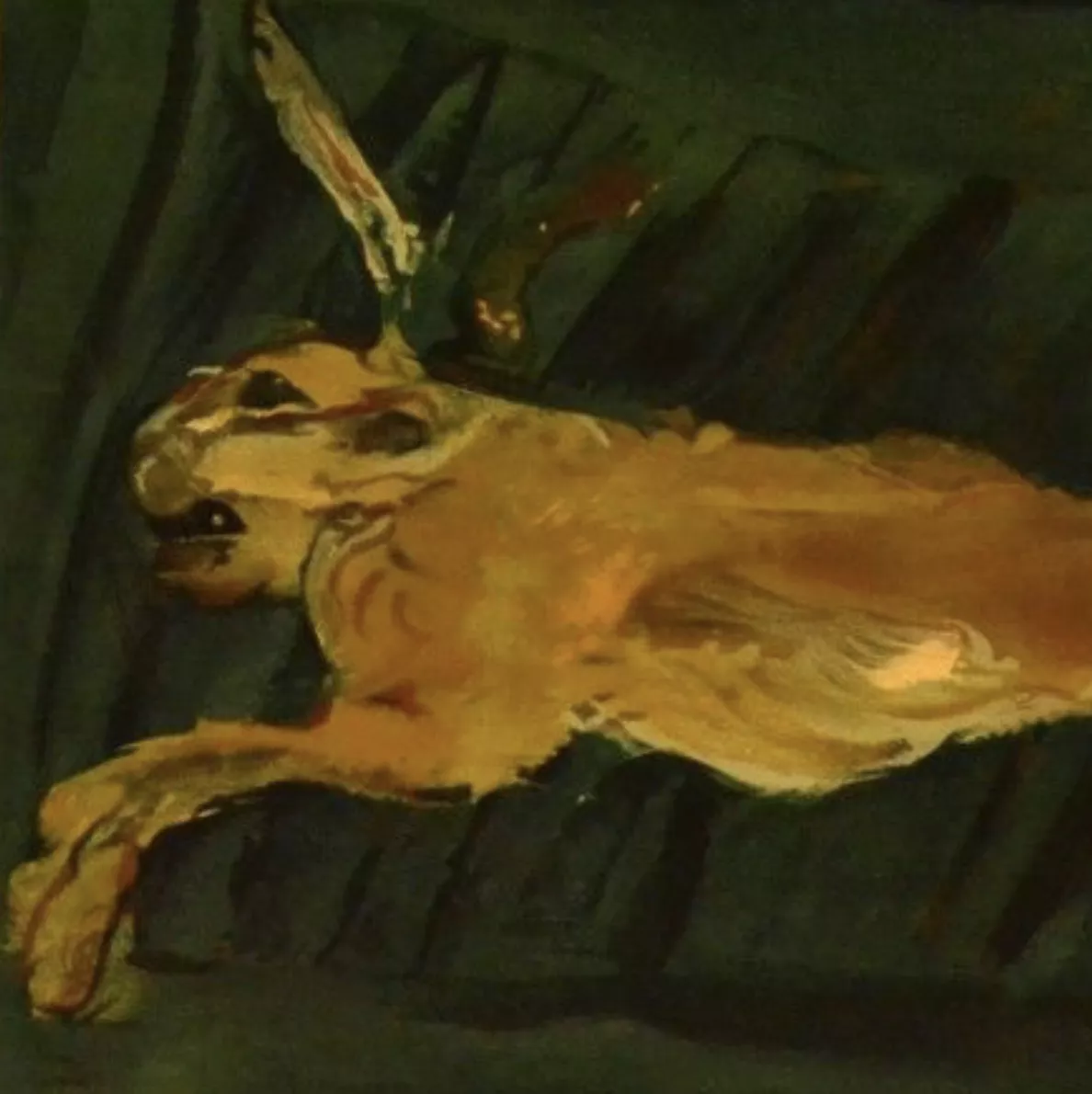
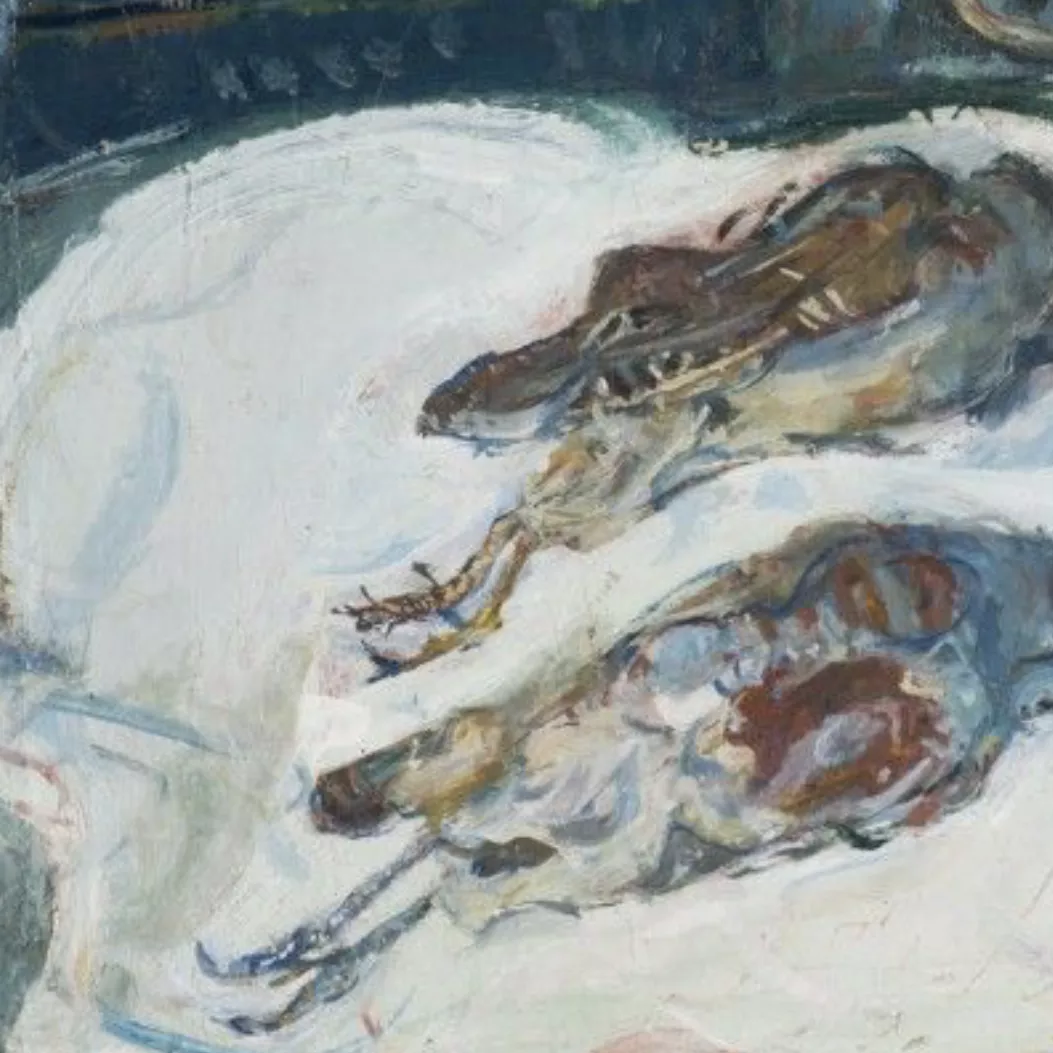
Focus on Chaïm Soutine's Flayed Ox, painted in 1925. This painting, part of a series of still lifes, highlights the artist's obsession with the representation of meat.
Soutine, inspired by Rembrandt's The Flayed Ox, appropriates this theme with an unprecedented expressive force. His style, deeply rooted in Expressionism, confronts us with a raw vision of reality. The suspended cattle are depicted with an unprecedented intensity, enhanced by the complementarity of nuances.
The colors, bright and saturated, range from madder red to amaranth red for the center of the composition, and from cerulean blue to aniline black for the background, creating a perfect contrast for the visual reception of the work.
The background is minimalist, allowing the flayed ox to occupy all the space, while the blurred outlines contribute to the work's absorbing effect on the viewer. Soutine achieves a real tour de force here by concentrating on the very essence of the subject, while avoiding superfluous detail.
The painting conveys a strong expression of life, where the artist translates his emotions through a vivid representation of flesh.
Light, for its part, plays a crucial role in this work. Deep shadows accentuate shapes and volumes, creating a dramatic atmosphere. Bursts of light on the meat accentuate the texture, giving the impression that the cattle could move at any moment.
This ability to breathe almost palpable life into his subjects is one of the characteristics that makes the work so unique. The brushstrokes, both energetic and delicate, convey Soutine's tormented state of mind, marking a great emotional intensity.
Le Bœuf écorché is not just a simple representation of meat. It is also a powerful metaphor for the human condition, addressing the themes of life and death. With this work, Soutine highlights the brutality and fragility of existence, revealing his inner torments.
The raw representation of flesh thus becomes a reflection of his own struggles, an echo of his personal suffering.
Soutine, by choosing to show livestock so explicitly confronts the public with a reality that can be disturbing. His expressionism, far from being a mere technique, is a means of sharing his vision of the world. In this, he succeeds in conveying a powerful message about the ephemeral nature of existence.
Today, The Flayed Ox is recognized as a masterpiece of modern art, an essential 20th-century piece that testifies to Soutine's creativity. Its impact endures, and the work continues to be celebrated in museums, attracting the attention of art lovers the world over.
The evocative power of this canvas, at the crossroads of life and death, makes Chaïm Soutine an essential figure of Expressionism, leaving a legacy that still resonates in the contemporary artistic landscape.
The Hill in Céret deciphered by the Orangerie
Chaïm Soutine's imprint on his period
Today, Chaïm Soutine is recognized as one of the most influential artists of the twentieth-century expressionist movement, although the general French public is not very sensitive to the productions of the École de Paris.
His figurative and expressionist paintings, imbued with a unique emotional intensity, captivate collectors and are highly prized on the art market, because they reflect both a plastic but also a very important theoretical work, which has left its mark on both art history and the art market, which are not necessarily correlated.
The success of his works at auction testifies to their value and the growing interest in his work. Some of his iconic pieces are exhibited in renowned museums in France, offering visibility to his art.
However, private collectors play a crucial role in preserving his work, acquiring canvases that enrich their personal collections. His quotation has remained stable in recent years, reflecting enduring admiration for his distinctive style and recognition of the importance of his artistic legacy.
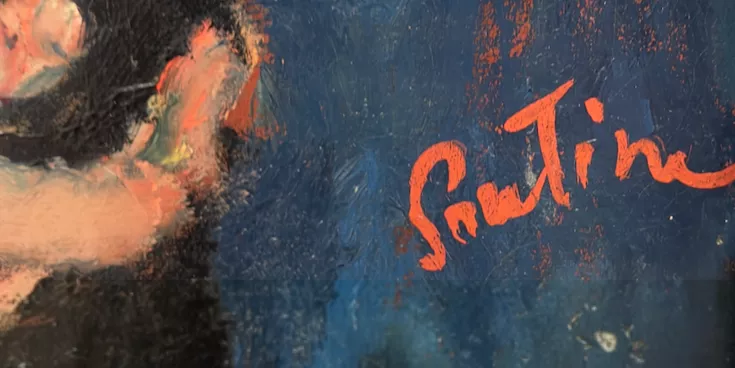
His signature
Not all of Chaïm Soutine's works are signed. It is also possible that it is a copy or that the mention has faded over time, which is why expertise is paramount.
Expertise your property
If you own a work by Chaïm Soutine, don't hesitate to request a free appraisal by filling in our online form.
A member of our team of experts and chartered auctioneers will contact you to provide an estimate of the market value of your work.
If you are considering selling your work, our specialists will also guide you through the various alternatives available to obtain the best possible price, taking into account market trends and the specific features of each work.
Estimate in less than 24h
Discover in the same theme

Rating and value of works, drawings, paintings by Suzanne Va...
Suzanne Valadon is a 20th-century artist who produced Impressionist and Naturalist works that are highly prized and sought-after at auction.
Learn more >

Rating and value of drawings, prints and lithographs by Igor...
Igor Mitoraj is a 20th-century sculptor and draughtsman who has produced works that are highly regarded and in demand on the auction market.
Learn more >

Amalric Walter vases rating and value
Amalric Walter is a twentieth-century glassmaker who produced works for Daum that are highly prized at auction.
Learn more >
Works from the same period sold at auction


Secure site, anonymity preserved

Auctioneer approved by the State

Free and certified estimates
Frequently asked questions
-
Who was Chaïm Soutine, and what artistic movement did he belong to?Chaïm Soutine (1893–1953) was a painter of Russian origin who moved to Paris in 1912 and became a major figure in the School of Paris and 20th-century Expressionism. His style is characterized by energetic brushstrokes, vivid and saturated colors, and a raw emotional intensity that transforms ordinary subjects into compositions rich in psychological meaning. Although he is recognized as one of the most influential artists of the Expressionist movement, he did not achieve international success until the 1920s, largely thanks to the American collector Albert Barnes.
-
What is the price range for works by Chaïm Soutine at auction?The value of Soutine’s works varies considerably depending on the medium and rarity. Multiple prints range from €40 to €250, drawings and watercolors from €6,000 to €30,000, while oil paintings on canvas can fetch millions of euros. His most prestigious Expressionist paintings, such as *Le Bœuf* from 1923, have fetched over 22 million euros at auction, reflecting the strong demand from collectors for his major works.
-
How do you authenticate a work by Chaïm Soutine?Authenticating a work by Soutine requires professional expertise, as not all of his paintings are signed, and the signature may have faded over time. Auctie's offers a free, no-obligation appraisal by filling out an online form: our experts and state-certified auctioneers will examine your artwork and provide you with an accurate appraisal within 48 hours, allowing you to verify the authenticity and market value of your piece.
-
Is this the right time to sell a work by Soutine?Yes, now is an excellent time to sell a work by Chaïm Soutine. The artist’s market value remains stable and highly regarded, reflecting enduring admiration for his distinctive style and international recognition of his significant artistic legacy. The market is showing growing interest in Expressionism and the School of Paris, particularly among international collectors, which is driving strong auction results.
-
How does the appraisal and sale of a work of art take place at Auctie's?The process is simple and free: you fill out our online form with information and photos of your artwork, and then an expert or auctioneer will contact you to refine the appraisal and provide you with an accurate estimate of the market value within 48 hours. If you decide to sell, Auctie's will support you from the appraisal through the auction, guiding you toward the best sales strategy to achieve the optimal price, taking into account market trends and the specific characteristics of your artwork.
