



Rating and value of paintings by Camille Bryen

Key takeaways
- Camille Bryen, a leading figure in lyrical abstraction, has seen his works sell for between €10 and €118,900, with prices on the rise for the past decade.
- Paintings on canvas fetch between €10,000 and €40,000 (occasionally €60,000–€80,000), ink and gouache works from €2,000 to €10,000, and engravings from €500 to €3,000.
- A poet-artist (1907–1977) who was long marginalized, he has enjoyed a critical resurgence since the 1970s thanks to museum retrospectives and interest in poetic informal art.
If you own a work by or after the artist Camille Bryen and would like to know its value, our state-approved experts and auctioneers will guide you.
Our specialists will carry out a free appraisal of your work, and provide you with a precise estimate of its value on the current market.
Then, if you wish to sell your work, we will direct you to the best possible arrangement to obtain the optimum price.
Rating and value of the artist
An important figure in lyrical abstraction, Camille Bryen has established himself as an indisputable player in the art market.
Highly prized and sought-after in auction rooms, some of her works can fetch up to a hundred thousand euros - they are sold on the auction market between €10 and €118,900, displaying a rising quotation.
As witness his oil on canvas Eclactique continue, dating from 1954-1955, sold for €75,000 in 2007, while it was estimated at between €30,000 and €40,000.
Order of value from the most basic to the most prestigious
Technique used | Result |
|---|---|
Estamp - multiple | From €10 to €1,500 |
Drawing - watercolor | From 30 to 10 400€ |
Painting | From 40 to 118 900€ |
Estimate in less than 24h
Artist's style and technique
Camille Bryen established himself as one of the leading exponents of lyrical abstraction and poetic non-figuration in the second half of the 20th century. His work is characterized by a fluid, nervous and fragmented pictorial style, in which gesture prevails over constructed form, in a logic of liberation from trace.
He rejects all academicism and closed composition, and develops a non-narrative, non-descriptive painting based on movement, spontaneity and inner vibration. He claims an open pictorial space, traversed by forces, flows and tensions.
His work is based on a wide variety of techniques (oil, ink, gouache, watercolor, scraping, dilution, absorption, which are applied to canvas or paper). He experiments with the chemical reactions of materials and plays on the effects of transparency, matter and dissolution, in a constant search for expressive fragility.
He uses a contrasting palette, but always breaks with aesthetic conventions. Colors, which are often washed-out, earthy or stained, are used intuitively, to create unstable climates. Far from a harmonious chromaticism, he searches for tensions and visual accidents.
The structure is lacunar and the composition vibrant, insofar as Bryen works without center or hierarchy, in a non-linear structure. The pictorial space is treated as an energetic field, where forms, always unfinished, appear and disappear.
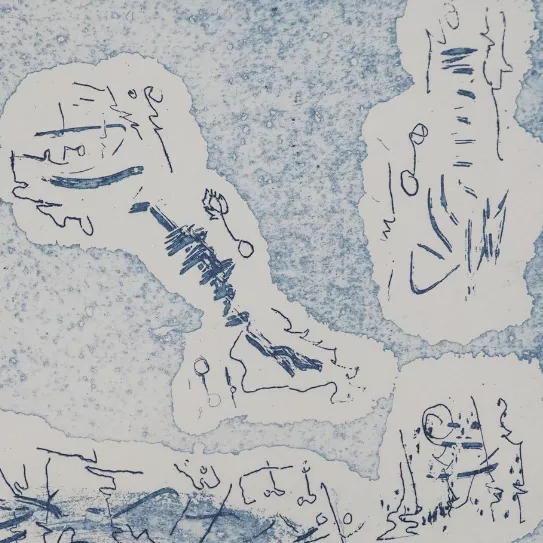
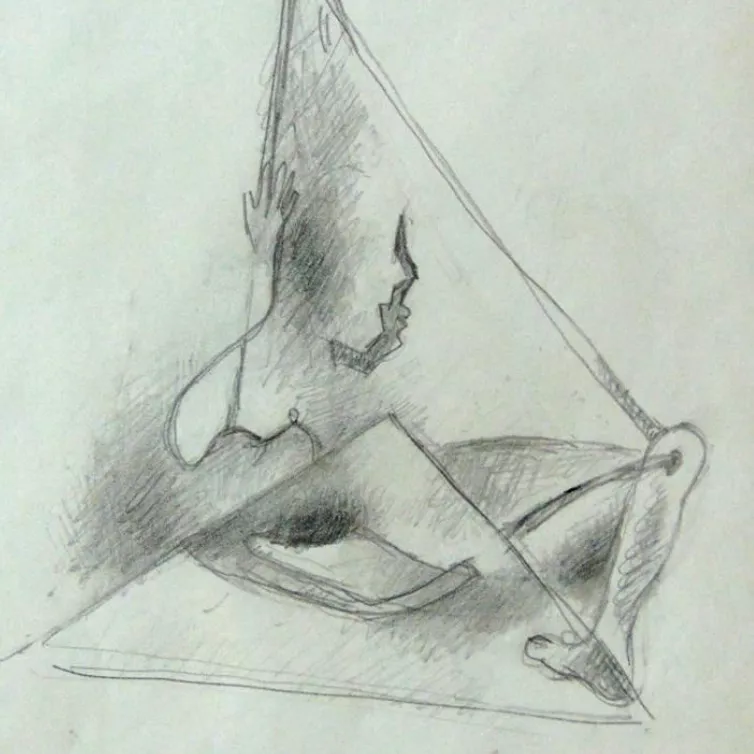
Poet as much as painter, Bryen conceives painting as an illegible script, where disjointed language escapes rational frameworks. He belongs to the tradition of visual writers and poets of the informal, for whom the image is born in the instant of the gesture, outside any narrative.
His work dialogues with the approaches of Wols, Michaux, Jean Degottex or Georges Mathieu, while retaining a more intimate, less spectacular tone, focused on the interiority of the gesture of the sign's wandering. He participates in the subjective abstraction movement that was theorized in the post-war period.
Parallel to his pictorial work, Bryen produces a dense graphic oeuvre, including etchings, etchings, monotypes and inks, in which he pushes even further the exploration of the sign, rhythm, emptiness and the irreversibility of gesture.
In contrast to classical constructions, his art is based on an ethic of rupture, interruption and the refusal of full form. Each work becomes a fragment, a suspended trace and a mental imprint, both inscribed in the world and foreign to any identifiable narrative.
The life of Camille Bryen
Camille Bryen (1907 - 1977), whose real name was Camille Briand, was born in Nantes. Poet, art critic, typographer and draughtsman, then finally painter, from the 1930s onwards he developed a multifaceted activity, between linguistic experimentation and plastic research, at the crossroads of the avant-gardes.
He did not follow a traditional academic training in the visual arts, but immersed himself early on in modern literature, Symbolist poets and European avant-garde movements.
He became involved in the Surrealist networks and the Dada group in the 1930s, though he never totally scoffed at them. He also frequented Dadaist, Lettrist and experimental circles, both in Paris and Nantes, establishing himself as a marginal but active figure in the nebula of poetic avant-gardes.
He published his first poems and manifestos in the 1930s, notably Expériences and Prose-objet. At the same time, he developed a graphic work (collages, automatic drawings, pseudo-calligraphic signs) in a logic of visual writing that prefigured his pictorial works of the following decades.
From 1947 - 1948, he fully committed himself to an autonomous pictorial approach, linked to the research of lyrical abstraction and informal art. He took part in the first Abstraction Lyrique exhibition in Paris in 1947, alongside Riopelle, Wols, Hartung and Mathieu.
Refusing all academicism and doctrinal affiliation, Bryen evolved on the bangs of the major artistic schools, while maintaining close intellectual ties with many major players on the post-war artistic and literary scene. His poetic and pictorial work is received as experimental, radical and introspective.
He continued throughout his career to publish critical texts, visual poems, artist's books and prints, in collaboration with avant-garde writers and publishers. This global approach, based on the crossing of languages, places him in the tradition of the artist-poet.
His institutional recognition came late, and for a long time he remained overshadowed by the more institutionalized figures of abstraction. It wasn't until the 1970s that museum retrospectives (notably at the Musée d'Art Moderne de la Ville de Paris) enabled a broader rereading of his work.
The artist died in 1977 in Paris. His work, long classified among the " irregulars of abstraction " is today the subject of a critical reappraisal, notably in the context of research into the poetic informal, artistic pluridisciplinarity and figurations of the unconscious in the post-war period.
Market segmentation and artist rating
Camille Bryen is today recognized as a singular figure of lyrical abstraction and informal art, at once poet, theorist and painter. He has long remained on the bangs of the market due to his interdisciplinary and non-academic positioning, and is now the subject of renewed critical and commercial interest, in the context of a broader rereading of the post-war avant-gardes.
The market consists mainly of paintings on canvas (gestural or tachist abstraction), inks and gouaches on paper, as well as original etchings (eux-fortes, aquatints, monotypes) often accompanied by texts.
Large canvases from the 1950s-60s, exhibited in major salons or from institutional exhibitions, are the most valued pieces. Works on paper, much more accessible, demonstrate the same plastic strength and attract a connoisseur public.
Paintings on canvas are sold for between €10,000 and €40,000 for significant works, with some occasionally exceeding €60,000 to €80,000, notably those exhibited in museum retrospectives. Inks and gouaches on paper fetch between €2,000 and €10,000, depending on date, format, provenance and condition.
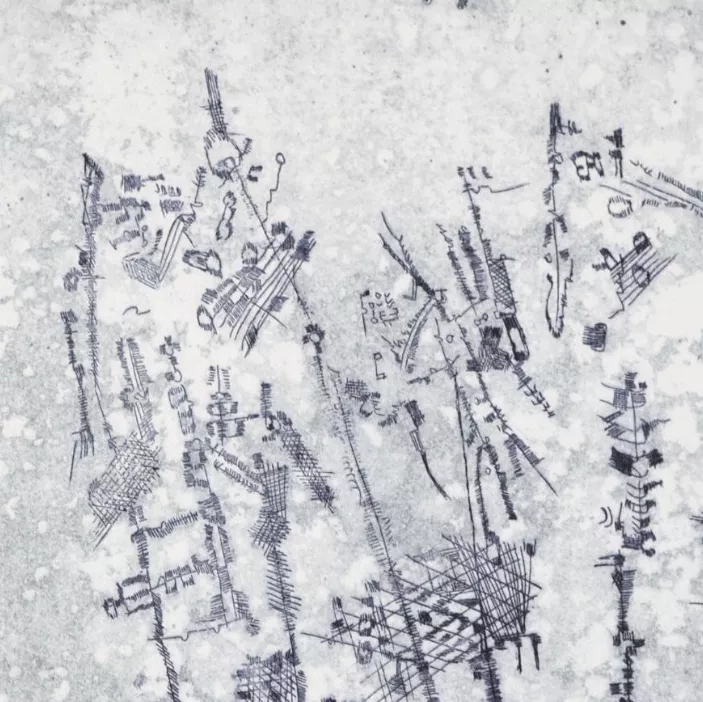
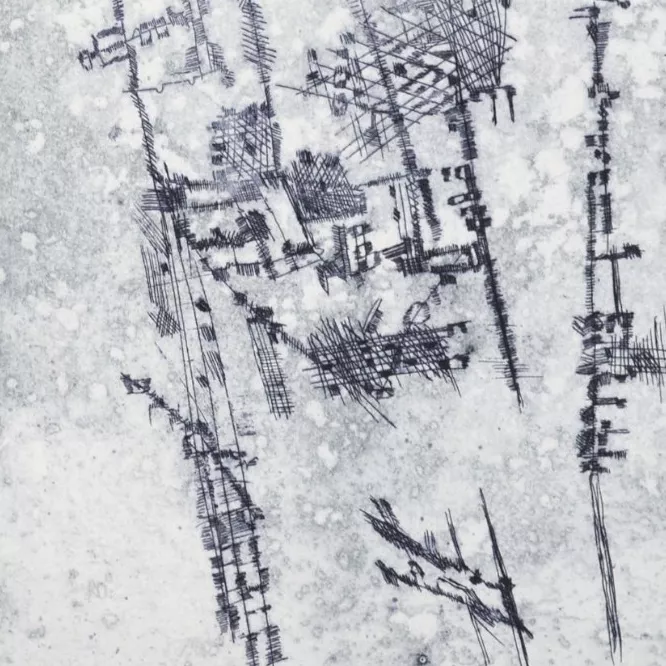
Original engravings and prints fetch between €500 and €3,000, depending on rarity, technique and possible association with a handwritten text or poem. Artist's books printed in small numbers can reach values comparable to single works, depending on the publisher and associated signatures.
After remaining relatively stable in the years 1990-2000, Bryen's quotation has experienced a controlled rise over the last ten years, fueled by museum recognition, the opening of the market to alternative modernities and the rise of informal artists on the international scene.
His name is now frequently associated with artists such as Wols, Michaux, Fautrier or Degottex in group sales, reinforcing his visibility with a wider public. In a context of critical re-reading of lyrical abstraction, Camille Bryen emerges as a pivotal figure between the visual arts and poetry, able to appeal to a cultivated international public sensitive to disciplinary crossovers.
His aesthetic independence and the richness of his graphic work make him an enduring heritage value within the modern and contemporary market.
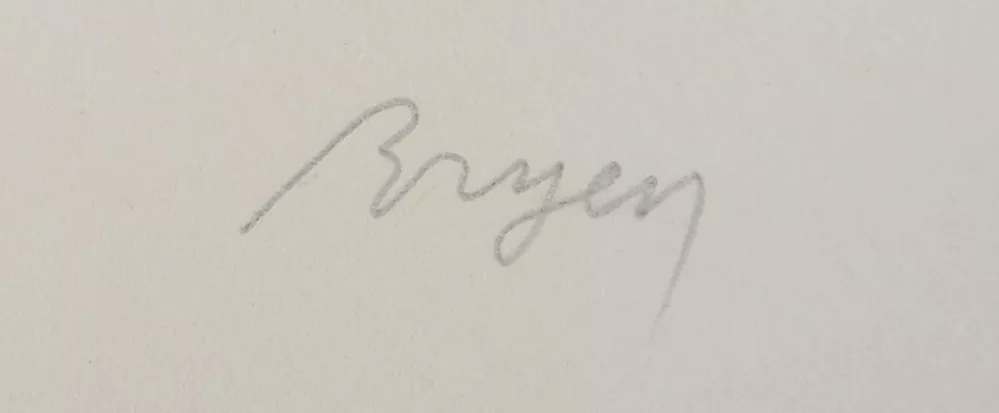
His signature
Not all of Camille Bryen's work is signed.
Although there are variations, here is a first example of his signature:
Expertise your property
If you happen to own a work by Camille Bryen, request a free appraisal without further delay via our form on our website.
A member of our team will contact you promptly to provide you with an estimate of the value of your work, not forgetting to send you ad hoc information about it.
If you are considering selling your work, you will also be accompanied by our specialists in order to benefit from alternatives for selling it at the best possible price.
.Estimate in less than 24h
Discover in the same theme

Rating and value of furniture, bindings and drawings by Pier...
Pierre Legrain is a twentieth-century decorator and bookbinder whose works are highly prized at auction.
Learn more >

Rating and value of sculptures, drawings and paintings by Pa...
Paul Troubetzkoy is a twentieth-century Russian sculptor whose works are highly valued on the auction market.
Learn more >

Rating and value of bronzes, sculptures and drawings by Anne...
Anne-Marie Profillet mainly produced animal sculptures, which today have a fairly high auction value.
Learn more >
D'autres tableaux abstraits vendus aux enchères

Estimated 2.000 - 4.000
Serge POLIAKOFF (1900-1969), Composition en rouge et bleu. 1965, Lithograph

Estimated Between €5,000 and €8,000
Jean MIOTTE (1926-2016), acrylic on canvas

Estimated 3.000 - 5.000
Roberto MATTA (1911-2002), Composition, Gouache on canvas

Secure site, anonymity preserved

Auctioneer approved by the State

Free and certified estimates
Frequently asked questions
-
Who was Camille Bryen, and what is her role in art history?Camille Bryen (1907–1977) was a leading figure in 20th-century lyrical abstraction and Informel art. A poet, art critic, and painter, he developed a transdisciplinary approach that combined poetry and painting, rejecting all forms of academicism to explore a fluid, dynamic pictorial style rooted in the spontaneity of the gesture. After receiving institutional recognition relatively late in his career, his work is now the subject of a major critical reappraisal within the postwar avant-garde movements.
-
What is the price range for Camille Bryen's works at auction?Camille Bryen’s paintings sell for between 10,000 and 40,000 euros for significant works, with some occasionally exceeding 60,000 to 80,000 euros. Inks and gouaches on paper range from €2,000 to €10,000, while original engravings and prints range from €500 to €3,000. Overall market values have been rising steadily over the past decade, driven by recognition from museums and growing interest in lyrical abstraction.
-
How can I authenticate a work by Camille Bryen and get an estimate?To authenticate and appraise a work by Camille Bryen, request a free, no-obligation estimate from Auctie's using our online form. A certified auctioneer or appraiser will contact you promptly to examine your item and provide you with an accurate assessment of its current market value within 48 hours.
-
Is this the right time to sell a work by Camille Bryen?Yes, now is a good time to sell a work by Camille Bryen. Over the past decade, the artist’s market value has been rising steadily, driven by growing recognition from museums, the market’s opening up to alternative modernist movements, and increased international interest in lyrical abstraction and the intersection of art and poetry. Her name is now frequently associated with the great masters of the Informel movement.
-
How does the sale of a work by Camille Bryen at Auctie's work?Auctie's supports you from the appraisal to the auction. After a free, no-obligation appraisal of your item, our specialists will guide you toward the best possible approach to sell your piece at the highest price. We’ll guide you through the entire auction house sales process, highlighting your piece’s provenance, condition, and historical significance.
