



Rating and value of paintings by Robert Falk

Key takeaways
- Robert Falk (1886–1958), a Russian Neo-Impressionist painter, has works valued between €470 and €1,315,440 on the current market.
- His oil-on-canvas paintings are particularly sought after by European and American collectors, while his watercolor drawings are valued between €510 and €39,410.
- The artist fused the Russian pictorial tradition with European Cubist and Impressionist influences, particularly during his stay in Paris from 1920 to 1938.
If you own a work by or after the artist Robert Falk, and would like to know its value, our state-approved experts and auctioneers will offer you their appraisal services.
Our specialists will carry out a free appraisal of your work, and will provide you with an accurate estimate of its value on the current market.
Then, if you wish to sell your work, we will direct you to the best possible arrangement to obtain the optimum price.
Robert Falk artist rating and value
Falk is a Russian-born painter who is fairly unknown to the general public. He leaves behind a unique artistic repertoire characteristic of Russian neo-impressionism.
This legacy consists of paintings that are predominantly oils on canvas. At present, the prices of his works are flying off the auctioneers' hammers.
His paintings and other works are particularly prized, especially by European and American buyers, and the price at which they sell on the art market ranges between €470 and €1,315,440, a considerable delta but one that speaks volumes about the value that can be attributed to Falk's works.
In 2005, his composition Woman with a pink fan, dating from 1922 sold for €1,315,440 at Christie's, while it was estimated at between €321,550 and €467,710.
Order of value from a simple work to the most prestigious
Technique used | Result |
|---|---|
Drawing - watercolor | From 510 to 39 410€ |
Oil on canvas | From 470 to 1 315 440€ |
Estimate in less than 24h
Style and technique by artist Robert Falk
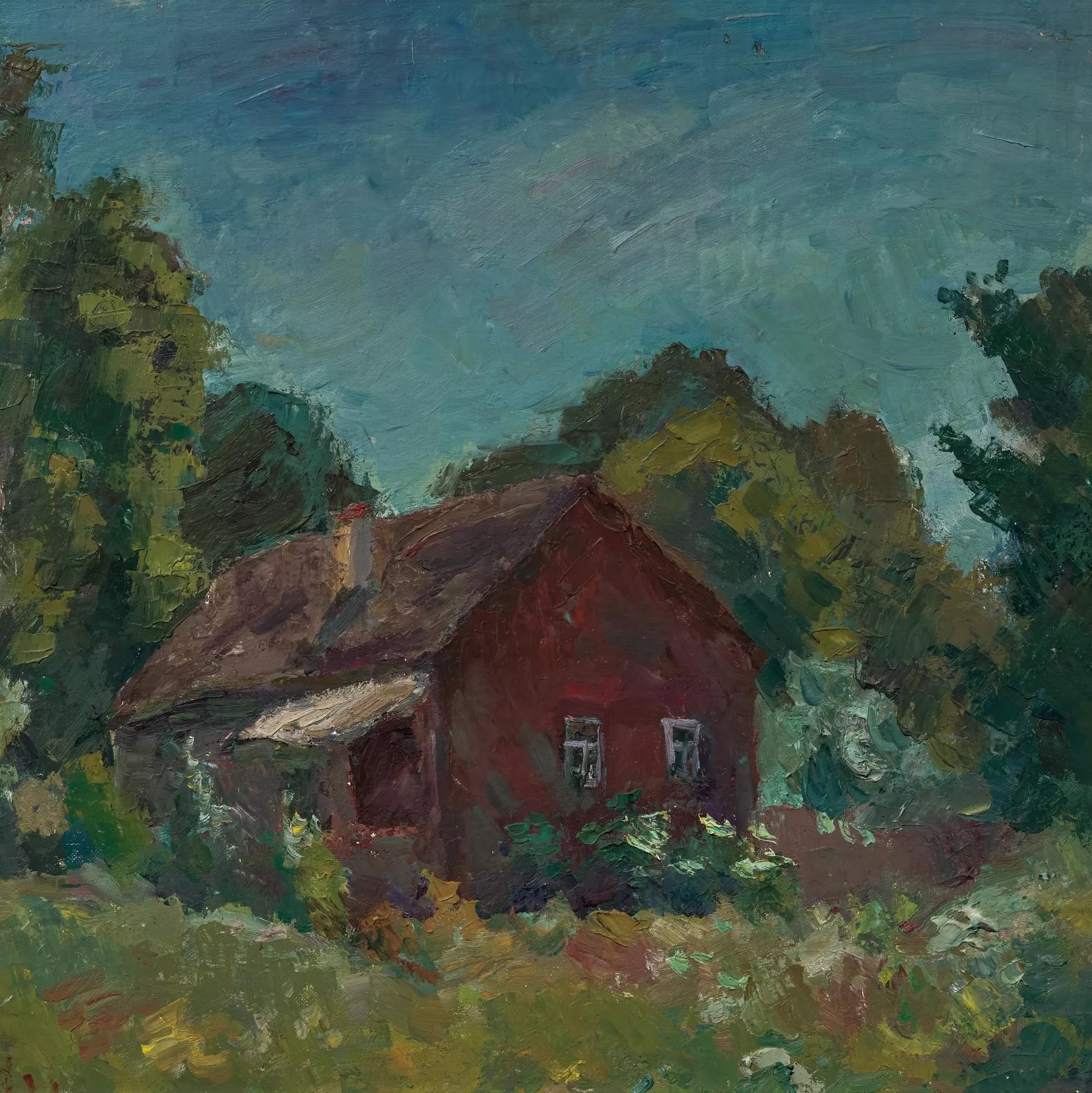
Robert Falk, a major player in Russian neo-impressionism, draws his inspiration from Western European landscapes.
His fascination with clear light led him to experiment with infinite variations in nuance, capturing changing atmospheres with a particular sensitivity.
In his works, light becomes a central element, playing a fundamental role in the composition and construction of space. He uses a palette where soft tones mingle with stronger shadows, accentuating contrasts and creating a subtle effect of depth.
The influence of the Northern schools is evident in his work, especially through his mastery of chiaroscuro, a technique he adapts to his own artistic vision.
This play between light and shadow, sometimes barely perceptible, gives his works a special dimension, where every detail seems bathed in a vibrant glow.
His landscapes, often imbued with serenity, reveal a soft, diffused light that seems to seep through the layers of paint.
Falk doesn't just faithfully depict nature; he seeks to transcribe the emotion aroused by these scenes, capturing the precise moment when light metamorphoses the landscape.
This almost instinctive approach to light allows him to express a personal and poetic vision of the world, where each canvas becomes an exploration of clarity and shadows, of nature and its infinite variations.
His touch, both precise and free, lends his works a unique vibrancy, a true signature of his style.
Robert Falk, a little-known but prized painter
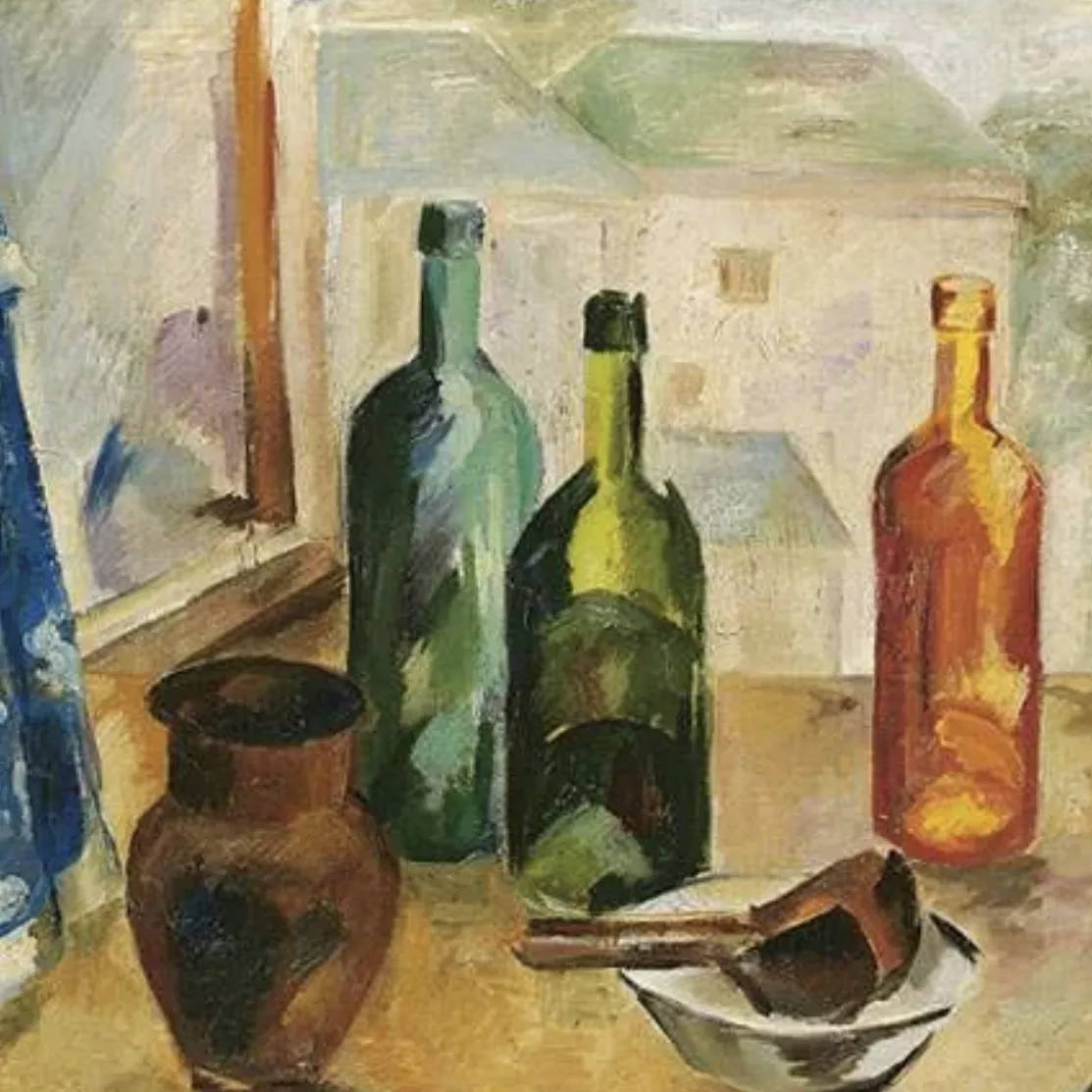
Robert Rafailovich Falk (1886-1958), an artist of Russian origin, remains an intriguing figure for collectors, often compared to Krachkowsky and Bessonov.
Born in Moscow, he initially trained in private studios before joining the Moscow School of Painting, Architecture and Sculpture, where he was influenced by two essential masters: Constantin Korovine and Valentin Serov.
At the beginning of the 20th century, when Russia was undergoing political and social upheaval, Falk co-founded the avant-garde group "Valet de Carreau". This collective rejected academic realism in favor of a more modern plastic language.
At this time, Falk discovered the work of Paul Cézanne, who became a major influence. He was inspired by the principles of analytic cubism, favoring large flat areas of color. This technique enabled him to structure the space of his canvases while playing with light and depth, creating works with geometric shapes and intense colors.
In the 1920s, like many Russian artists, Falk decided to settle in Paris, then the capital of modern art.
His style evolves: he gradually abandons the rigid compositions of Cubism to focus on more subtle color harmonies.
The Parisian light influences his palette, and his works become more nuanced, exploring the delicate variations of shadows and reflections.
This Parisian period, which lasted until 1938, enabled him to imbibe European innovations while maintaining a link with the Russian pictorial tradition.
On his return to Russia, Falk turned to a neo-Impressionist style, marked by luminous touches and a search for clarity.
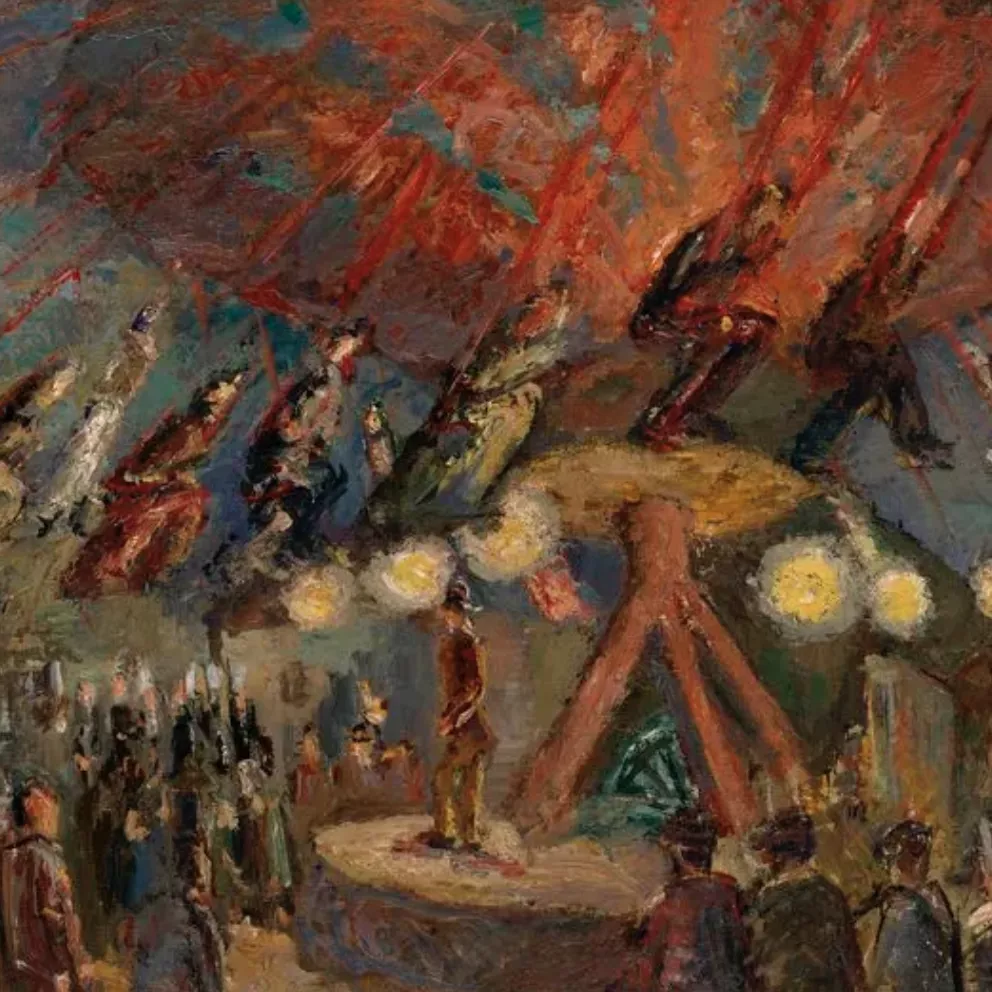
He also devoted himself to the creation of theater sets, using his mastery of the interplay of light and shadow to create captivating atmospheres. Through his works, he managed to capture the beauty and fragility of his time, between tradition and modernity, between Russia and Europe.
Until his death in 1958 in Moscow, Falk continued to explore the possibilities of color and light. His works, often marked by a certain melancholy, testify to the richness of his artistic journey, blending Western influences and Russian heritage.
His work, long overlooked, is today arousing growing interest, reaffirming Falk's singular place in the history of modern painting.
Focus on Winter Landscape by Robert Falk
In Winter Landscape, Robert Falk plunges us into a winter scene that captures all the tranquility of the vast Russian expanses. The painting is an invitation to contemplation, with cold tones of blue, gray and white dominating the whole.
These colors evoke a snow-covered landscape, frozen in the cold, but of silent, intense beauty.
The trees, with their bare branches, stand against a luminous, almost metallic gray sky. Their light, airy silhouettes seem to melt into the icy atmosphere, but their elongated shadows on the snow add a new dimension to this silent landscape.
The contours are sometimes blurred, as if the cold were diffusing a light mist across the scene, making the whole environment more ethereal.
In the center, a river meanders through this landscape, its shimmering surface contrasting delicately with the whiteness of the surrounding snow. The almost imperceptible current brings a touch of movement to this otherwise frozen scene.
The reflections of the trees in the water, too, are barely visible, like distant echoes of the world around them, diffused by the river's mirror.
The painting's atmosphere is imbued with calm and solitude. The absence of any human presence, replaced by the purity of nature, makes the scene almost unreal. The light, diffused and subdued by the clouds, illuminates just enough to reveal the shapes of the trees and the contours of the water.
This subtle interplay of light and shadow lends the work an almost poetic depth, like a moment suspended in time.
With Winter Landscape, Falk succeeds in capturing the essence of the Russian winter not in its harshness, but in its silent beauty.
He invites viewers to escape into this tranquil space, to feel the almost palpable cold and lose themselves in the contemplation of a calmed nature, far removed from the turbulence outside.
Robert Falk's imprint on his period
Robert Falk's legacy is that of an artist who was able to navigate between Russian tradition and European modernity.
Through his works, he brought a new sensibility, influenced by Cubism and Impressionism, while maintaining a strong link with Russian painting, making his work a quite unique artistic journey, highly sought after by collectors.
By participating in the creation of the "Valet de Carreau" group, he helped free Russian art from the academic constraints of the 19th century, fostering the emergence of a bolder style.
His stay in Paris enabled him to refine his approach to color and light, which influenced his paintings on his return to Russia.
The scenes and landscapes he painted, bathed in soft, nuanced light, became benchmarks for young Russian artists, eager to explore new avenues. Today, his work is seen as a testimony to the artistic effervescence of the early 20th century, between the decline of the old schools and the boldness of modern movements.
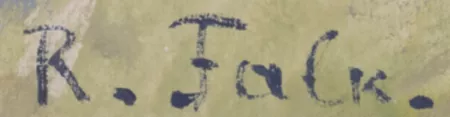
Recognizing Robert Falk's signature
Often, Robert Falk's paintings are signed at the bottom left of the painting. He signs with his first and last name, often in a dark tone; sometimes with the town where he painted the picture, or the date.
Knowing the value of a work
If you happen to own a work by or after Robert Falk, don't hesitate to request a free valuation using our form on our website.
A member of our team of experts and licensed auctioneers will contact you promptly to provide you with an estimate of the market value of your work, not forgetting to send you ad hoc information about it.
If you are considering selling your work, you will also be accompanied by our specialists in order to benefit from alternatives for selling it at the best possible price, taking into account market inclinations.
Estimate in less than 24h
Discover in the same theme

Rating and value of works, drawings, paintings by Marino Mar...
Marino Marini is a twentieth-century Italian painter and sculptor who produced a wide range of works that are sought-after and quoted at auction.
Learn more >

Rating and value of Axel Salto's ceramics, stoneware and scu...
Axel Salto is a 20th-century Danish ceramist who produced stoneware pieces that are appreciated and sought-after at auction. His price has risen sharp...
Learn more >

Rating and value of sculptures and bronzes by Georges Chauve...
Georges Chauvel is a figurative sculptor of the first half of the 20th century, and has produced some highly-rated and valuable works.
Learn more >

Secure site, anonymity preserved

Auctioneer approved by the State

Free and certified estimates
Frequently asked questions
-
Who was Robert Falk, and what was his artistic background?Robert Rafaïlovitch Falk (1886–1958) was a Russian painter who trained at the Moscow School of Painting, Architecture, and Sculpture under the influence of Konstantin Korovin and Valentin Serov. A co-founder of the avant-garde group “Valet de Carreau,” he navigated between Russian tradition and European modernity, influenced by Cézanne and Cubism. His stay in Paris from 1920 to 1938 refined his approach to color and light, before he returned to Russia, where he adopted a Neo-Impressionist style.
-
What are the price ranges for Robert Falk's works?The prices of Robert Falk’s paintings vary considerably depending on the medium and period: drawings and watercolors range from €510 to €39,410, while oil paintings on canvas range from €470 to €1,315,440. For example, “Woman with a Pink Fan” (1922) sold for €1,315,440 at Christie’s in 2005, far exceeding its initial estimate.
-
How can you authenticate a work by Robert Falk?To authenticate and appraise a work by Robert Falk, we recommend that you submit a request for a free, no-obligation appraisal via our online form. An expert or certified auctioneer from our team will contact you within 48 hours to assess the authenticity, condition, and market value of your artwork based on its specific characteristics.
-
Is this a good time to sell a work by Robert Falk?Yes, now is a good time to sell. Interest in Robert Falk’s works is steadily growing, particularly among European and American collectors, while the artist remains relatively unknown to the general public. This combination offers attractive appreciation potential, and the market is showing solid performance, as evidenced by auction results.
-
How does the sale of a work of art work at Auctie's?Auctie's supports you every step of the way: a free appraisal by a certified expert, followed by guidance on the best sales strategy to maximize the price. As an auction house, we manage the entire process from appraisal to auction, taking into account market trends and the profile of your artwork to achieve the best possible valuation.
