



Ratings and values of paintings by Jean-Paul Riopelle

Key takeaways
- Jean-Paul Riopelle’s works fetch prices ranging from €5 to €4,347,500, with his oil-on-canvas paintings from the 1950s and 1960s being the most sought-after.
- A leading figure in Surrealism and the Automatist movement, Riopelle has primarily used a palette knife since the 1950s to create his abstract mosaic compositions.
- His paintings on canvas sell for between €300,000 and €3,000,000, while his works on paper range from €20,000 to €100,000, with prices on the rise since 2000.
If you own a work by or based on the artist Jean-Paul Riopelle and would like to know its value, our state-approved experts and auctioneers will guide you.
Our specialists will carry out a free appraisal of your work, and send you a precise estimate of its value on the current market.
Then, if you wish to sell your work, we will direct you to the best possible arrangement to obtain the optimum price.
Rating and value of the artist
Great master of Surrealism and the Automatist group, Jean-Paul Riopelle made his mark on the art market at the beginning of the 20th century.
The prices his works fetch at auctioneers' gavels range from €5 to €4,347,500, a considerable gap but one that speaks volumes about the value that can be attributed to Jean-Paul Riopelle's works.
In 2022, his oil on canvas Austria III, dating from 1959 was sold for €4,347,500 while it was estimated at between €2,306,100 and €3,478,050.
Order of value from simplest to most prestigious work
Technique used | Result |
|---|---|
Estamp - multiple | From €5 to €16,000 |
Drawing - watercolor | From €40 to €103,500 |
Sculpture - volume | From €4,950 to €56,990 |
Oil on canvas | From €300 to €4,347,500 |
Estimate in less than 24h
Artist's style and technique
Jean-Paul Riopelle was a member of the Automatistes group, led by Paul-Émile Borduas, which took a stand against figuratism and geometric abstraction.
This had a major influence on his early career, before he turned to Surrealism. He works in several media, and produces some sculptures although the bulk of his work is concentrated on flat surfaces : printmaking, drawing, oil on canvas.
Oil on canvas is his main medium for his abstract, colorful compositions. He also explores etching, lithography, collage and sculpture. He cuts out prints or printed paper, which he integrates into his works to fragment the surface.
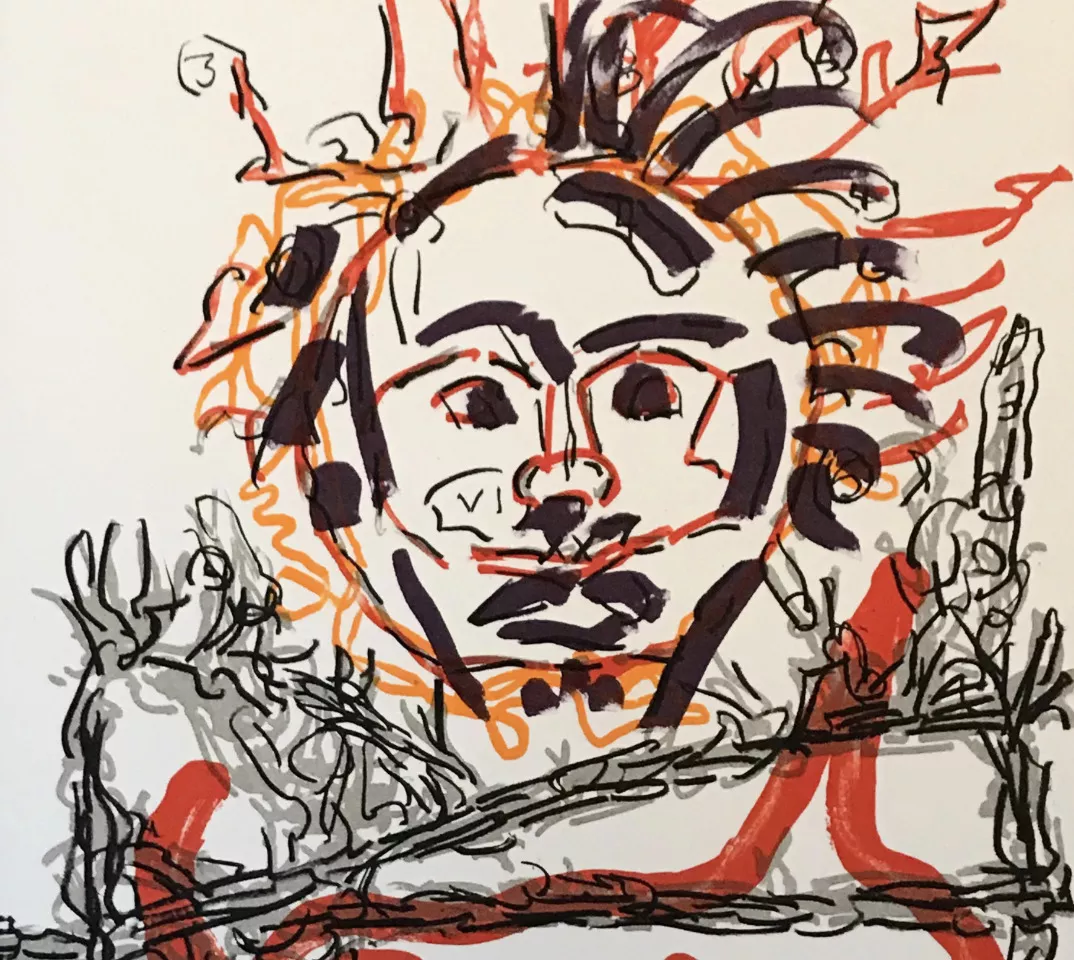
Ripoelle works in gestural abstraction and mosaic compositions, establishing himself as a central figure in lyrical abstraction and the Automatist movement. His stylistic signature is based on a dense network of fragmented touches, juxtaposed on the surface, evoking a chromatic mosaic in perpetual vibration.
Contrary to geometric abstraction, his painting is not based on structure, but on the rhythm of gesture and the saturation of the pictorial field. He works according to a logic of spontaneous overlapping, without preparatory drawing, central composition or formal hierarchy. The image is thus built up in an all-over manner, with an equivalent distribution of energies across the entire surface.
From the early 50s, Riopelle abandoned the brush in favor of the palette knife, which he used to project, deposit or spread color with vigor. This technique produces a substantial thickness of material, giving the canvas a tactile, almost sculptural dimension.
He deploys a vivid, high-contrast palette, blending opaque whites, deep reds, blacks, acid greens and bright yellows in an intuitive yet remarkably balanced organization. The color is laid down in distinct blocks, but without contour, which reinforces the effect of optical vibration.
The whole of his painting obeys a rhythmic logic close to contemporary music. His painting is never purely formal, but translates a sensitive, corporeal experience of the world, transposed into plastic language. Although he remained faithful to his gestural language, Riopelle developed significant technical variations over the course of his career.
In the 1950s, he produced his famous mosaic canvases; in the 1960s and 70s, he explored larger formats, collaged papers, and sometimes purer inks and watercolors. At the end of his life, he created monumental works such as Hommage à Rosa Luxembourg.
Riopelle is famous for his color, but also explores black and white to remarkable effect, particularly in his inks, lithographs and oils on paper, where the tension between form and void, gesture and silence reaches great intensity.
Although he is often likened to European lyrical abstraction (Mathieu, Bryen, Hartung) and American Abstract Expressionism (Pollock, de Kooning), he retains a radical aesthetic autonomy, rooted in a thinking of painting as a physical, intuitive experience.
The life of Jean-Paul Riopelle
Jean-Paul Riopelle (1923-2002), was a Quebec painter who produced surrealist works.
He was born in Montreal, where he began his artistic training with painter Henri Bisson, a teacher at Saint Louis de Gonzague. He kept in touch with him for a long time, painting alongside him.
He attended Montreal's Polytechnic School, and lost his brother during this period. This left a lasting impression on him, and after this ordeal he decided to abandon architecture to devote himself solely to painting.
He signed the manifesto Refus Global with members of the Automatistes group.
In 1947, Riopelle moved to Paris and turned to Surrealism after meeting André Breton. He painted using new pictorial techniques, including paint spraying and the use of knives, as Jacques Germain.
He is thrust into the limelight thanks to Pierre Loeb, who buys a large part of his production, and begins to produce sculptures, which he will exhibit with the help and assistance of Sam Szafran.
His career takes a turn when he travels to the USA and meets Joan Mitchell, who would have a lasting influence on his work. They produced works and worked together during their relationship in Paris. After their separation, he returned permanently to Canada.
He continued to produce until his death in 2002, his country offering him a national funeral.
Market segmentation and artist rating
Jean Paul Riopelle enjoys a consolidated position within the high-end modern art market, at the crossroads of European lyrical abstraction and North American abstract expressionism. He is one of the most highly-rated Canadian artists in the world, and his reputation extends far beyond Canadian borders.
His work is featured in the collections of the world's leading institutions (Pompidou, Tate), giving his name undisputed heritage legitimacy.
Oil paintings from the 1950s and 1960s, particularly the large-scale "mosaic" compositions, are the most sought-after, accounting for most of the records set at public sales. Works on paper (gouaches, inks, lithographs), although very present on the market, constitute a secondary segment, accessible but sustained, appreciated for its graphic expressiveness.
Sculptures, assemblages and monumental late works form an institutional segment, often reserved for public acquisitions or large private collectors. Multiples sell in an intermediate price range, depending on quality of execution, date and rarity.
Paintings on canvas are sold for between €300,000 and €3,000,000, with several records exceeding €5 million. Works on paper fetch between €20,000 and €100,000, depending on format, technique and period. Signed prints fetch between €3,000 and €15,000, with some rare series exceeding this threshold.
The Riopelle market is internationalized, with regular sales in Paris, New York, London, Toronto and Montreal. Canada is a structuring pole for his quotation, thanks in particular to museum institutions and active private collectors, but the heart of record auctions is now in the United States and Europe.
Riopelle's quotation has been structurally rising since the 2000s, and is experiencing a new boom since the celebrations of the centenary of his birth in 2023, with several major retrospectives.
The convergence of critical rediscovery, stable international demand and the limited supply of major works is supporting continued appreciation, particularly for canvases from the 1950s-1960s. The growing institutional visibility of his late works could, in the medium term, lead to a revaluation of his later series, still less quoted on the second market.
Riopelle's imprint on his time
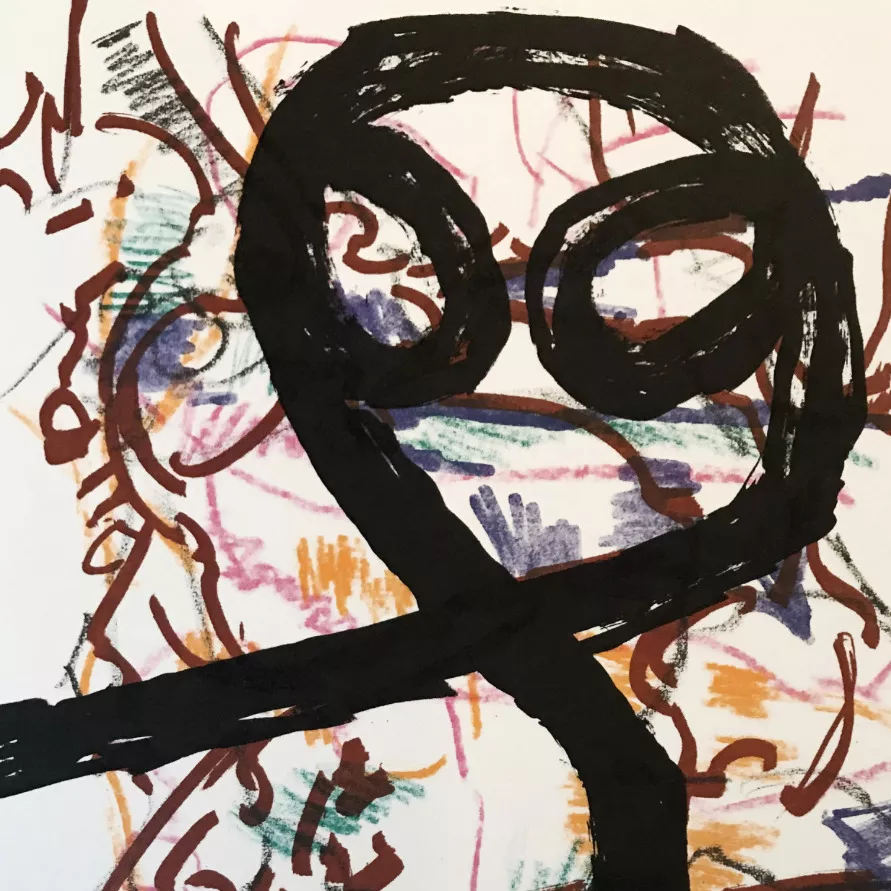
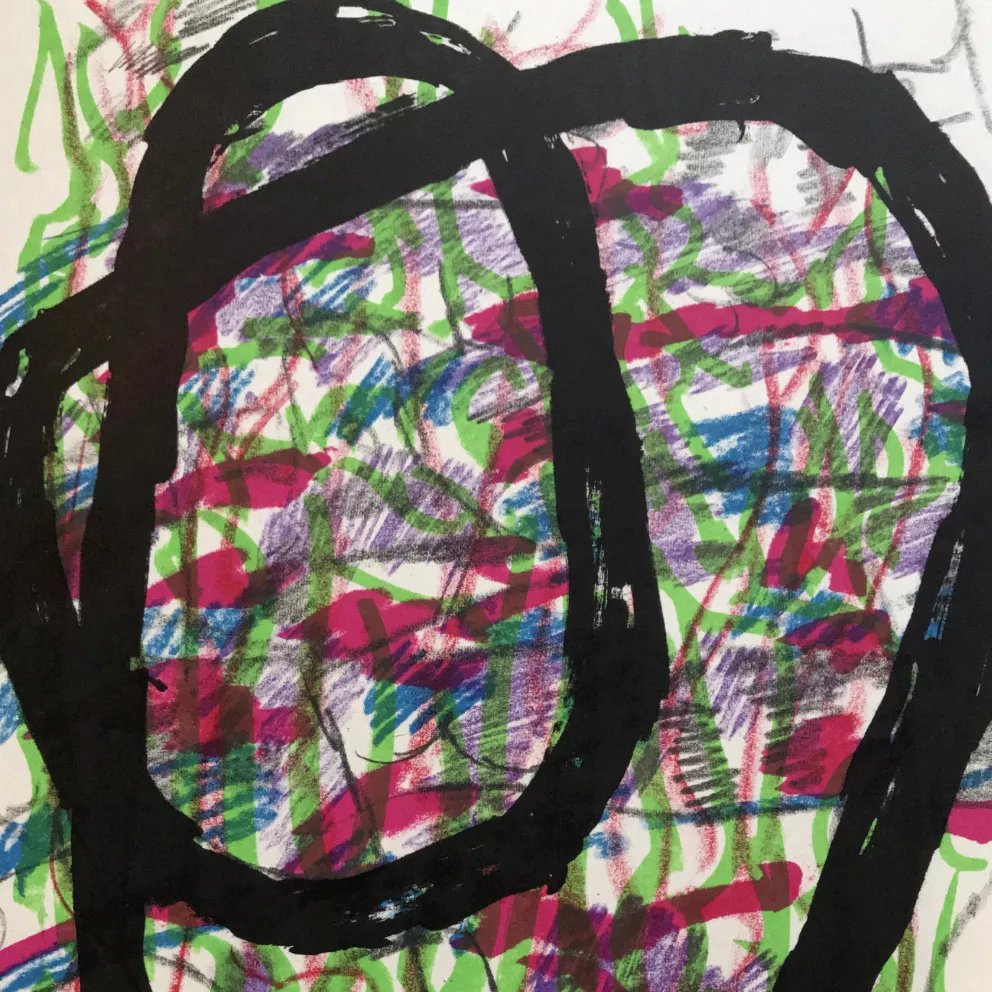
Jean-Paul Riopelle succeeds in creating a unique painting reflecting the energy of his time, and makes unrestrained use of contrasts of form and color, the keystone of his artistic style.
The artist then became a major player in the avant-garde, and the ensemble enabled him to develop his theory of contrasts, opposing straight and curved lines, flat and shaped surfaces, while producing remarkable works stemming from his collaboration with Mitchell.
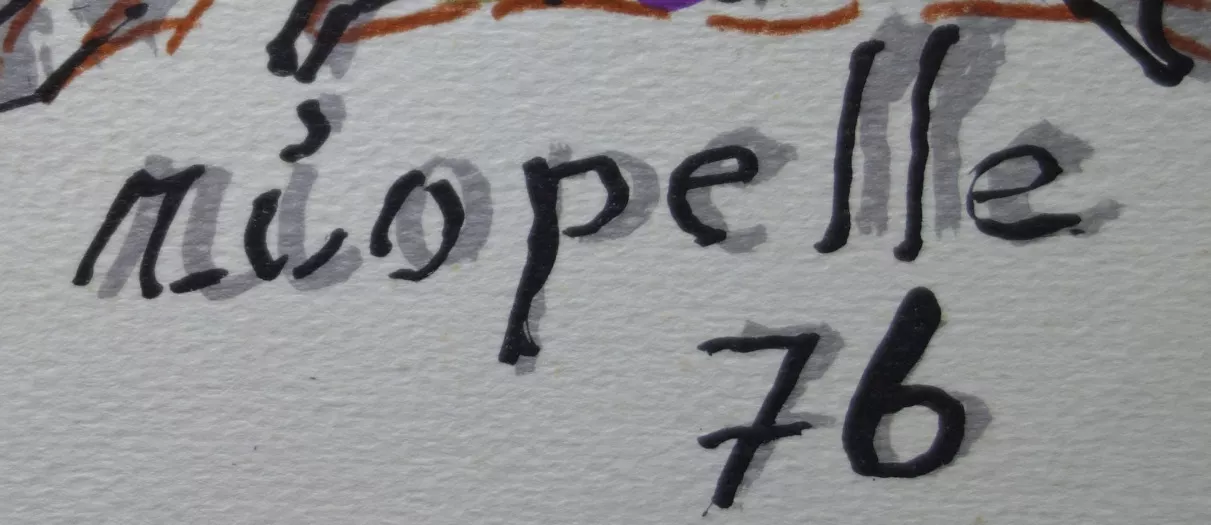
His signature
Although there are variations, here's a first example of his signature:
Expertise your property
If you happen to own a work by or after Jean-Paul Riopelle, don't hesitate to request a free valuation by filling in our form on our website.
A member of our team of experts and chartered auctioneers will contact you promptly to provide an estimate of the value of your work, and will ensure that you receive ad hoc information about it.
If you are planning to sell your work, you will also be accompanied by our specialists in order to benefit from alternatives for selling it at the best possible price, taking into account the inclinations of the market and its specificities.
Estimate in less than 24h
Discover in the same theme

Rating and value of Paul Milet's ceramics, vases, stoneware
Paul Milet is an Art Nouveau ceramist. His works are highly valued on the auction market. Estimate in 24h.
Learn more >

Rating and value of Jacques Villon's works
Jacques Villon was a Cubist painter and engraver who produced many works that are highly valued at auction.
Learn more >

Rating and value of paintings by Paul Madeline
Paul Madeline is a post-impressionist painter who produced many paintings that are highly valued at auction.
Learn more >
D'autres tableaux abstraits vendus aux enchères

Estimated 2.000 - 4.000
Serge POLIAKOFF (1900-1969), Composition en rouge et bleu. 1965, Lithograph

Estimated Between €5,000 and €8,000
Jean MIOTTE (1926-2016), acrylic on canvas

Estimated 3.000 - 5.000
Roberto MATTA (1911-2002), Composition, Gouache on canvas

Secure site, anonymity preserved

Auctioneer approved by the State

Free and certified estimates
Frequently asked questions
-
Who is Jean-Paul Riopelle, and what is his artistic background?Jean-Paul Riopelle (1923–2002) was a leading Quebec painter of lyrical abstraction and the Automatist movement. A leading figure in Surrealism, he made his mark on the 20th-century art world by developing a gestural abstraction characterized by fragmented brushstrokes juxtaposed in a chromatic mosaic. After moving to Paris in 1947 following his meeting with André Breton, he established himself as a central figure bridging European lyrical abstraction and American abstract expressionism.
-
What are the price ranges for Jean-Paul Riopelle's works, broken down by medium?Prices for Riopelle’s works vary considerably depending on the medium: prints and multiples sell for between €5 and €16,000, watercolor drawings for between €40 and €103,500, sculptures between €4,950 and €56,990, and oil-on-canvas paintings between €300 and €4,347,500. His oil-on-canvas paintings from the 1950s and 1960s, particularly the large mosaic compositions, are his most sought-after works and command the highest prices.
-
How do you authenticate a work by Jean-Paul Riopelle?To authenticate a work by Riopelle, we recommend that you request a free, no-obligation appraisal from Auctie's. Our team of experts and state-certified auctioneers will conduct a comprehensive appraisal of your item and provide you with an accurate estimate within 48 hours. This process will allow you to verify the authenticity of the work and obtain reliable information about your purchase.
-
Is this the right time to sell a work by Jean-Paul Riopelle?Yes, the market conditions are favorable. Riopelle’s market value has been on a steady upward trend since the 2000s and has seen a renewed surge since the centennial celebrations of his birth in 2023. The convergence of a critical rediscovery, stable international demand, and a limited supply of major works is supporting continued appreciation, particularly for paintings from the 1950s and 1960s.
-
How does the appraisal process work at Auctie's?Appraisals at Auctie's are free and non-binding. Simply fill out our online form, and our team of experts and licensed auctioneers will contact you promptly. We’ll provide you with an accurate appraisal of your artwork within 48 hours, along with all relevant information. If you’re considering selling, we’ll guide you toward the best options to get the highest possible price.
